Compact Clears Way For Sheriff’s Aviation Move To SB International

The long-awaited and thrice-delayed closure of Rialto Airport and the transfer of the sheriff’s department aviation wing to San Bernardino International Airport turned a crucial corner this week.
The governmental entity overseeing San Bernardino International Airport on Wednesday, March 28, 2012 entered into a mutual release and satisfaction agreement with the city of Rialto and the county of San Bernardino that is aimed at moving the San Bernardino County sheriff’s aviation fleet from Rialto Municipal Airport to the grounds of the former Norton Air Force Base, now called San Bernardino International Airport.
The civilian conversion of Norton is being overseen by a joint powers authority composed of representatives from the county of San Bernardino and the cities of Colton, Highland, Loma Linda and San Bernardino known as the San Bernardino International Airport Authority, which is also goes by its acronym, SBIAA.
In 2004, the city of Rialto resolved to shutter Rialto Airport as an aviation facility and proceed with its redevelopment. That would have required the departure of all of its aviation-related tenants, the most significant of which is the sheriff’s department, which operates ten helicopters and four airplanes from the 600-acre facility in north Rialto. Rialto officials envisioned transforming the airport property into both residential and commercial subdivisions. The city had hoped to begin to phase the airport out of operation beginning in 2007 and complete the process by 2010, but that conversion was slowed by the economic downturn. The city has, however, succeeded in lining up Lewis Properties, the corporate successor to Lewis Homes, to undertake the conversion of the property, though actual groundbreaking is as many as three years away by some estimates.
A further delay in transferring the sheriff’s aviation operation to San Bernardino International came about as a consequence of missteps taken by the former contract developer of San Bernardino International Airport, Scot Spencer, whose management of the aerodrome was in large measure focused upon promoting several of the businesses he had an interest in which were housed at San Bernardino International, including SBD Aircraft Services, Norton Aviation Maintenance Services, Unique Aviation, San Bernardino Airport Management, SBD Properties LLC, KCP Leasing and Services, SBAMTechnics, and SBD Aircraft Services, to the detriment of other aviation-related companies and concerns located at the airport.
Last year, the sheriff’s department contemplated remaining in  Rialto for at least another two years, but because of the need for upgrades to the sheriff’s Rialto aviation facilities and the expense those would entail, it was determined that it would be a more economical move long term to transfer operations to San Bernardino International Airport. Further complications at San Bernardino International, including the FBI’s serving of search warrants in September at SBIAA headquarters and a number of entities associated with Spencer, including his business offices and home as well as the resignation of former San Bernardino International Airport Authority Executive Director Don Rogers, delayed that transition.
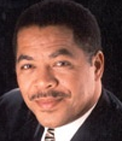
This week, under the direction of Rogers’s successor, A.J. Wilson, the board for the authority got around to effectuating a compact that will allow the contemplated changes to proceed.

A.J. Wilson

The Rialto Municipal Airport was owned by the Rialto Redevelopment Agency. The redevelopment agency, in accordance with the plan previously worked out amongst county, Rialto and SBIAA officials, was to sell the Rialto airport to a consortium of developers led by the Lewis Group of Companies at a price approaching $34 million. That money was then to have passed through to the city of Rialto. From that pool of available revenue, the city of Rialto was supposed to kick down $4.2 million to the sheriff’s department for the sale of the sheriff’s department facility at Rialto Municipal Airport. That cash would  then be  used toward the $5.2 million cost of constructing the sheriff’s new aviation facility at San Bernardino International Airport, which is to include mitigating impacts on any nearby uses there.
The chosen location for the permanent sheriff’s aviation headquarters in San Bernardino will now undergo as much as 18 months worth of grading, adaptation and new construction, including a hangar suitable for helicopters. Meanwhile, the sheriff will set up a temporary aviation headquarters in a modular building between the fuel farm and the Million Air corporate jet servicing operation.
The modular building will remain in place after the sheriff’s department moves to permanent digs and will be used for other aviation related purposes. The $200,000 per year lease the sheriff’s department will pay the airport authority includes use privileges of existing maintenance facilities at the airport.
Prior to Wednesday’s vote, Wilson told the board members, “The proposed mutual release and satisfaction agreement acknowledges key commitments on behalf of the city of Rialto and the county of San Bernardino related to the closure of the Rialto Municipal Airport and the relocation of the sheriff to a new facility in San Bernardino. Specifically, the agreement sets forth the dollar value of the relocation payment to the county at $4,200,000, identifies SBIAA as a third party beneficiary for the receipt of said funds, and provides for an early payment from Rialto to SBIAA equal to $375,000 to allow SBIAA to initiate the preparation of plans and specifications for the construction of the new facility for the sheriff.”
While all of the issues relating to the eventuality of the sheriff’s department relocating its helicopters at San Bernardino International Airport now appear to have been taken care of, the city of Rialto is yet beset with complications stemming from the state of California’s move last year to dissolve all of the municipal redevelopment agencies throughout the state. The city of Rialto has declared itself the successor agency to its redevelopment agency, and is claiming ownership of the Rialto Municipal Airport. Nevertheless, Rialto will need to have a state oversight board sign off on the city’s right to dispose of the property as it deems fit, in this case by selling the property for roughly $34 million to the development consortium. The state could yet reject that proposal and insist on a dissolution or liquidation sale with some or all of the money being confiscated by the state.

Upland Water Company Board Berths Have Political Upshot

UPLAND—The Upland City Council this week made appointments to the San Antonio Water Company’s board of directors that were rife with political implication.
Most noteworthy was that two of the newly appointed directors hail from San Antonio Heights, where the headwaters of the company’s water supply accumulate and which gives the company its name, even though residents of the area do not have direct control over how the seven-member board is to be composed. The council also reappointed to the board a longtime city activist and rising political star widely regarded as a likely, and strong, candidate for mayor in November.
The city of Upland owns 68 percent of the water company shares. As such, a majority of the city council controls the process by which all members of the board are appointed. The second largest block of share owners in the company are San Antonio Heights residents, who own 9.6 percent of the shares. The city of Ontario, Monte Vista Water District and Red Hill Country Club each own 4.95 percent of the shares. The remaining seven percent of the shares are distributed among a smattering of local interests and water users, such as citrus grove and quarry operators.
Traditionally, Upland’s mayor makes nominations to the company’s water board and those choices are considered and voted upon by the entire council.
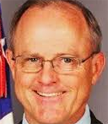
The previous board members were current Upland councilman Ken Willis; former council members Tom Thomas and Sue Sundell; city council advisory committee member Glenn Bozar; Will Elliot; Brian Brandt and Fred Gattas.

Glenn Bozar

There has been ongoing dissension among San Antonio Heights residents with regard to their lack of authority with regard to selecting board members. All residents in San Antonio Heights are San Antonio Water Company customers. Some of the more vocal members of that community, which is a 2.619 square-mile pocket of unincorporated county land north of the Upland City Limits with 3,122 residents, have asked for an arrangement by which San Antonio Heights can elect its own representative to the board.
Gattas and Brandt are Heights residents.
This week, Mayor Ray Musser nominated Willis, Thomas, Sundell, Bozar, and Elliott to return to the board, while suggesting that Cable Airport owner and San Antonio Heights resident Bob Cable  and San Antonio Heights resident John Gerardi replace Gattas and Brandt.
The council then voted 3-2 to ratify Musser’s nominations.
Cable was among the vocal critics of the city’s domination of the board nominating process. Bozar has long been active in Upland politics, particularly with regard to successfully opposing the city’s attempts to enact taxing mechanisms, such as a utility tax and a paramedic tax. He was nominated to the council advisory commission and the water board by Musser. Musser has yet to formally announce whether he will seek re-election as mayor in November. Meanwhile, a group of Upland residents and business owners is intensifying entreaties on Bozar in an effort to pressure him into declaring as a mayoral candidate.
It is unknown what impact such a declaration on Bozar’s part would have on Musser’s future political plans. He would have the option of running to remain as mayor, running for city council, or retiring. Musser, who was first elected to the city council in 1998, is in some quarters well respected because of his consistent opposition to now-discredited former Upland mayor John Pomierski, who was indicted by a federal grand jury last year on extortion, bribery and conspiracy charges. Musser, who unsuccessfully opposed Pomierski in the 2004 and 2008 elections, was appointed by his council colleagues to replace Pomierski after he resigned last year.
Musser’s slate of water company board members was opposed by council members Brendan Brandt and Gino Filippi. Filippi is a declared candidate for mayor in November.
On Tuesday, Filippi told the Sentinel “My vote against the slate as presented came as a result of much consideration. The process and decision of the mayor made me uncomfortable. The loss of Mr. Brandt could have been prevented. There should have been more open discussion with the full council vs. the sole discretion of the mayor. It reminds me of the past administration. I understand that as a ‘mutual benefit water company’ there is a process for nominations [and] the nomination committee is the mayor of Upland. I also understand that the mayor has authority to appoint to city of Upland committees. However, the San Antonio Water Company is not such a committee. I concur that the city has played too much of a role in this nomination process.”
Filippi further said he was opposed to having Willis or any other member of the council on the board. “There is also question regarding if having city council members on the San Antonio Water Company board represents a conflict of interest,” Filippi said. “I have been informed by outside counsel that any elected Upland councilmember accepting a stipend from the San Antonio Water Company is a conflict. The council member must abstain as regards any action that involves the water company and which may benefit him or her. Under Government Code 1090, the city and the water company can’t enter into contracts because of the potential for conflict but we address that by handling them administratively. So the impact is that the subject council member may be preempted from acting on some matters.”

Bagley Touts Experience In Board Run

In his run for Third District county supervisor, James Bagley is lagging well behind the incumbent, Neil Derry, and the other challenger in the race, James Ramos, in terms of campaign funding.
Nevertheless, Bagley maintains that his extensive experience in a multitude of capacities and positions in government render him the most qualified of the candidates.

Jim Bagley

Bagley was a member of the Twentynine Palms city council for three four-year terms from 1992 to 2004, including three two-year terms as mayor. Even before the city incorporated in 1987, Bagley was a board member of the Twentynine Palms Water District. As a council member and mayor, Bagley served on multiple intergovernmental boards and commissions and joint powers authorities, including stints as the chairman of the Local Agency Formation Commission, which hashes out jurisdictional issues within the county, and San Bernardino Associated Governments, known by its acronym SANBAG, the county’s transportation agency. He was also a member of SCAG, Southern California Associated Governments, the region’s major intergovernmental planning agency. While he does not currently hold elective office, he is a member of the county airport commission, which oversees the Daggett, Chino, Apple Valley,  Twentynine Palms, Needles and Baker airports.
“I have an extensive local government background,” Bagley said. “I was a water board member back in the 80s, which gave me a close understanding of county special districts. I served three terms on the city council, including three terms as mayor. I was a longtime member of LAFCO, where I was chairman, and I was chairman of SANBAG. If I am elected to the board of supervisors, I will bring to the position a very mature set of skills. I will rise into a leadership position to use the office to represent the cities of the Third District. That experience is important because we need to have someone with a vision for constructive change.”
Bagley said he did not believe the challenges facing the Third District were much different than those facing the other districts in the county.
“Employment is the biggest issue facing our community,” he said. “Anything the county can do to make economic development a reality will benefit the community.” He did say that the Third District, as the second largest geographically of the county’s districts, easily qualified as the most diverse in terms of character of the communities themselves.  “The district includes mountain areas, the desert, agricultural and rural communities along the foothills, urbanized downtown San Bernardino and the more suburban areas in the cities of Highland, Loma Linda, Redlands and Yucaipa. All of those places have unique issues, so it will require someone with not only a knowledge of the district but how to apply government. As the chairman of SANBAG, I saw what a good tool the county’s transportation agency is in facilitating the improvement of infrastructure. Improving roads and creating better access is a critical role for one of the largest districts in the county geographically. I think I have the understanding and experience to represent all of those unique communities on the board.”
Bagley made only passing reference to his opponents in the race. That comment was most pointed with respect to the incumbent, Derry. Obliquely, Bagley hinted at a criminal case that had been lodged against Derry last year relating to the handling of a $5,000 political donation by Arnold Stubblefield to Derry during his 2008 campaign. The state attorney general’s office originally alleged that the matter involved the laundering of campaign money through a political action committee that was under the control of then-county assessor Bill Postmus and that Derry had committed two felonies, including fund laundering and perjury, and a campaign reporting misdemeanor. Before the matter went to trial, however, Derry entered a no contest plea to the less serious misdemeanor charge of failing to properly report a campaign donation and the two felony charges were dropped. More directly, Bagley indicated that Derry had received money from the Colonies Partlners, a development company that built a controversial commercial and residential project in northeast Upland in the early 1990s and then sued the county over flood control issues at the project. The county board of supervisors by a 3-2 vote in November 2006 conferred a $102 million settlement on the Colonies Partners to bring that litigation to a close. But the state attorney general’s office and the district attorney have now alleged that the settlement was tainted by extortion and bribery. In an original 2010 indictment and a superseding 2011 indictment, it is alleged that Colonies Partners managing principal Jeff Burum in conjunction with former county sheriff’s deputies union president Jim Erwin first blackmailed Postmus and Paul Biane, who were then members of the board of supervisors, and then bribed them with rewards of $100,000 donations to their political action committees after they voted for the settlement. Postmus last year pleaded guilty to charges of conspiracy, yielding to extortion, soliciting a bribe and accepting a bribe. Burum, Erwin, Biane and another individual named in the indictment – Mark Kirk, who was the chief of staff to supervisor Gary Ovitt when Ovitt joined with Postmus and Biane in approving the $102 million payout to the Colonies Partners – have all pleaded not guilty to the charges in the indictment and are awaiting trial.
“Countywide there has been a problem with ethics on the board of supervisors,” Bagley said. “Too many officials are interfering with good government. Transparency in government is a critical issue at every level. The Colonies scandal is a symptom of the lack of transparency. The Colonies scandal is one of the reasons I am running for supervisor.  Mr Postmus and Jim Erwin have direct connections here, and are tied to Mr. Derry.  The current representative of the Third District has used his position for less than honorable purposes. I am running to offer constructive change to lead the board of supervisors in a better direction, toward good, effective governance that is free of the scandal that has impacted the board for decades.”

Business Recruitment Lovingood’s Theme In First District Race

Robert Lovingood, one of seven candidates vying to replace outgoing First District supervisor Brad Mitzelfelt, said he wants to bring to government the same employment-generating ethos that has sustained his career over the last 23 years in the High Desert’s private sector.

Robert Lovingood

Lovingood is the owner and chief executive officer of ICR Staffing Services in Victorville, which according to company records has found employment positions of one sort or another for 30,000 job seekers in the High Desert since the company began operating in 1989.
“We have to generate revenue,” Lovingood said. “We have to create jobs.”
The entire state of California has been plagued by the shutting down of businesses and the loss of employment opportunities. That has taken place, Lovingood said, because of the contraction of the national economy but also because California in general has engaged in policies that ward off businesses and it has been outhustled by other states that have undertaken policies to attract manufacturers and businesses.
“Look at what Rick Perry did in Texas,” Lovingood said. “He went to 100 companies in California that were contemplating closing down and offered them incentives to relocate to Texas, providing them with the opportunity to cut costs and increase profitability. We should be doing that here.”
The High Desert has in plentiful supply two of the elements that would allow that formula to be applied, he said.
“We have affordable land and a ready workforce,” Lovingood said. “The cost of property in the High Desert is well under the average cost in the rest of urbanized California. And we have 60,000 commuters from the High Desert going to work elsewhere in Southern California every day.  What we need to do is relocate jobs into the High Desert. We have the formula for success. Our water issues have been mitigated and resolved. We can do this.”
If he is elected to represent the First District and its more than 400,000 residents, Lovingood said, he will be proactive in seeking out employers currently located in the state that are contemplating leaving and endeavor to convince them to remain in California by relocating in the High Desert.
“There are multiple successful manufacturers in California that have been running for generations and their executives are asking themselves, ‘Do we go to Arizona or Texas to open operations?’ They are on the brink of leaving California. But many of those are anchored by families or other considerations and for that reason they are looking to stay here, even though they can’t afford to stay where they are now. If we can bring them in here and cut other costs, eliminate the borderline harassment from inspections and regulations they are experiencing and instead of raising fees lower the fees or waive the fees or eliminate the fees altogether, we can revive the local economy. I am involved in several trade associations. I am in contact with business people who want to expand, but government is not giving them the encouragement to do that. Government is actually discouraging them. I want to make things change from the status quo. I guarantee you those companies are out there. We can bring them in and have them locate their operations here by removing the barriers that stop companies from expanding.”
This approach is not merely a pipe dream, Lovingood insisted. The city of Adelanto years ago made a concerted effort to make itself attractive to manufacturers, and that approach was successful, he said.
“Look at what happened in the early 90s when we lost George Air Force Base,” he said. “Adelanto did an industrial operation outreach and created just short of 4,000 jobs by doing that. Every business created gives you a 3.2 muliplier of jobs into the community. Based on Adelanto’s success, it makes sense to build this region up, increase the manufacturing base and bring into the community more jobs.”
Lovingood is vying against Hesperia Mayor Russ Blewett, San Bernardino County fire department captain Bret Henry, congressional office staffer Michael Orme, Apple Valley Councilman Rick Roelle, current supervisorial district staffer Bob Smith and Adelanto School District Board Member Jermaine Wright. He had nothing bad to say about his opponents. “Everybody running is well intentioned,” he said. Nevertheless, he said his experience, skill set and vision differentiated him from the pack.
“I’ve sat on two publicly traded company boards, both of which sold for a solid return for their investors,” he said. “For a living, I work with businesses to find suitable employees and to help mitigate regulation. That is the atmosphere I work in. I am a business generator and have succeeded for nearly 23 years in the High Desert. I would like to give back. I understand business. I understand the demographics here and I know what companies we need to bring in, what jobs and businesses we need for citizens who live here. There is one other opponent in this race with business experience. All the others come from the background of working within government.”
Lovingood was born in Atlanta, Georgia.
He spent four years in the Air Force, receiving technical training working within the civil engineering division. He attended the University of Maryland through overseas extension courses, taking coursework in  business and economics. He is 54 years old and married with three children.

Jenkins Now Heading County Airport Division

James Jenkins, who has worked for the San Bernardino County Department of Airports for more than 21 years, last week succeeded Mike Williams as director of airports.
“We are lucky to have James in this role,” said county deputy executive officer Keith Lee, who oversees the Department of Airports. “Aviation is his passion, and no one knows the department better or has more enthusiasm for its mission. James has excelled in a variety of airport management roles, and the county will benefit from his leadership.”
Jenkins had ascended to the position of assistant director under Williams, who recently retired, and was designated as interim director after Williams left.
Jenkins began with the county airports department in 1991 as an electrician in the department’s maintenance division. He acceded to the position of maintenance supervisor, then operations supervisor, was later airport manager at Chino Airport, and was assistant director for the past seven years.
He is an executive member of the American Association of Airport Executives and has most recently served as the past president of the Association of California Airports.
The San Bernardino County Department of Airports provides for the management, maintenance and operation of six county-owned airports – Chino, Apple Valley, Barstow-Daggett, Twentynine Palms, Needles and Baker. The department also assists San Bernardino County private and municipal airport operators with planning, interpretation, and implementation of FAA general aviation requirements.

Judge Sides With Ramos In Dispute Over Derry’s “Businessman” Ballot Description

Supervisor Neil Derry will not be allowed to identify himself as a businessman on the ballot for the June election, San Bernardino County Superior Court Judge Brian McCarville ruled on March 27.
In the increasingly bitter race between Derry, the incumbent Third District supervisor, and James Ramos, the outgoing chairman of the San Manuel Tribe of Mission Indians, Ramos funded the filing of a writ of mandate by Patricia Amicone alleging Derry’s proposed reference to himself as supervisor/businessman on the ballot as well as all of the materials, including the sample ballots and candidate statements, to be mailed to voters in the run-up to the election was inaccurate. Amicone has described herself as a friend and political supporter to Ramos.
Ramos covered the $8,500 fee the Sacramento law firm Bell, McAndrews & Hiltachk charged to file the writ on Amicone’s behalf in San Bernardino Superior Court on March 16 and another $1,900 for a lawyer to reiterate in court the points made in the writ.
In responding court papers, Derry maintained that the businessman description was indeed accurate because he was renting out a residential property he and his wife own, netting $26,000 per year, and was doing all of the work that entailed, including managing and maintaining the property.
McCarville, however, ruled that Derry’s primary and principal occupation is county supervisor, for which he receives $263,000 in combined salary and benefits per year. As such, McCarville found, Derry cannot identify himself as a businessman for the purposes of election materials to be provided by the registrar of voters to the public. The judge ordered registrar of voters Michael Scarpello to amend the ballot designation for Derry from “supervisor/businessman” to “county supervisor,” finding that the latter is his principal occupation.

Board Of Supervisors Accepts Own Pay Reduction Measure For November Ballot

SAN BERNARDINO—With nary a comment, county supervisors this week approved the placement of an initiative on the November ballot to cut their salary and benefits from $270,000 per year to $60,000.
Advocates of the measure, which was drafted and  initially sponsored by Wrightwood resident and former grand jury member Kieran “Red” Brennan, needed to obtain the valid signatures of ten percent of the county’s electorate – 43,520 – to qualify the initiative for the ballot. Brennan’s effort was boosted when the union for the county’s general employees, the San Bernardino Public Employees Association, and the union for the county’s sheriff deputies, the Safety Employees Benefit Association, took up his cause and utilized union money to hire petition gatherers.  Three weeks ago supporters turned petitions containing 73,672 signatures over to the registrar of voters, who examined enough of those petitions and compared the signatures contained thereon against voter-registration documents to ascertain that the threshold to qualify the measure for the ballot had been achieved.
The only options left to the supervisors were to pass the initiative on a vote of their own, agree to place the measure on the November ballot or to delay doing so for a month while an analysis of its impact was undertaken. They chose to simply place it on the November ballot without discussion.
In addition to reducing their salaries from $151,000 per year to $50,000 per year and reducing their benefit packages from an average of $119,000 per year to $10,000 per year, the initiative if passed will limit their staff budgets to $250,000 each.
The pay reductions envisioned in the measure will not be applicable to those supervisors elected in the 2010 or current election cycles. Because the measure will not be considered until November, when voters will also be voting on who will serve as supervisor in the First, Third and Fifth supervisorial districts, those cuts would not go into effect for those office holders until after the 2016 election if the measure passes. The incumbent supervisors in the Second and Fourth supervisorial districts, Janice Rutherford and Gary Ovitt, would be subject to the reductions after the 2014 election if the measure passes.

Rialto Council Approves 30-Year Lease Of Water System To N.J. Company

The Rialto City Council this week voted 4-to-1 in favor of entering into a 30-year lease of the Rialto municipal water system with New Jersey-based American Water Works Co., Inc.
Under the terms of the deal, American Water Operations and Maintenance, Inc., a division of American Water Works that will function as a local company known as Rialto Water Services, will take over operation and maintenance of the water district. The city will retain the district’s water rights.
The company would further take on all aspects of operations, maintenance and billing, effectively running both the water and sewer utilities for the next three decades.
Water and wastewater division employees will be allowed to transfer into the city’s engineering or public works divisions if they wish, remaining as city employees with their public pension plans intact or can go to work with American Water, which would be required to guarantee those employees will remain employed for at least 18 months with salary and benefits equal to those offered by the city. That guarantee would sunset after 18 months
American Water Works is a for-profit investor-owned water and wastewater utility company. According to city officials, the company has agreed to make somewhere in the neighborhood of $45 million in upgrades to the water system. American Water has also agreed to assume all debt owed by the city’s water utility division and fund all needed infrastructure improvements to the system.
In return, city officials have agreed to a 114.8 percent increase in water and wastewater rates by 2016, such that the average water bill of Rialto households utilizing 17,000 gallons per month will jump from the current rate of $26.27 per month to $64.14 monthly and increase the wastewater treatment fee from $25.97 to $61.46 as of January 1, 2016.
Four-fifths of the city council indicated they had come to the conclusion that the arrangement with American Water is the only viable means of salvaging the decaying municipal water system.
Councilman Joe Baca Jr., who previously joined with councilwoman Deborah Robertson in opposing the American Water contract last year, was the only vote against it on Tuesday. He said the rate increases were too high and would fatten the company’s profit margin.
Mayor Grace Vargas, who because of a health-related absence missed the vote in June resulting in a 2-2 deadlock, joined with Robertson, councilman Ed Scott and councilman Ed Palmer to approve the lease arrangement on March 27.
Roughly half of the residents in this city of 99,171 are municipal water district customers who will now become American Water customers. The other half get their water from the West Valley Water District.
City residents will yet have an opportunity to reject the rate increases by means of a mail vote to be conducted by the city. If more than 50 percent of the ratepayers return the mail-in ballots rejecting the increase, it will not go into effect.

Deputy District Attorney Honored For Effort Toward Combating Truancy

Deputy District Attorney Agnes Murray was recognized Thursday at the 14th Annual “Shine a Light” on Child Abuse Awards Breakfast for her work with at-risk children in San Bernardino County. The annual event, hosted by Children’s Network, is held at the end of March as a kick-off for Child Abuse Prevention Awareness Month in April.
“Agnes is deserving of this award because she is improving the lives of students who might otherwise be led down the wrong path, and she deeply cares about the impact truancy has upon our community,” said supervising deputy district attorney Mary Ashley.
Murray joined the District Attorney’s Office in 1989 and is currently assigned to the truancy program, where her goals include improving school attendance for previously truant students and discouraging future truancy. She also teaches for the FLIP Academy (Fontana Leadership Intervention Program) and sits as an active member on the mentoring task force and Project Comeback for Colton Unified School District and the state School Attendance Review Board.
When necessary, Murray prosecutes the parents who, after all other voluntary efforts have been exhausted, continue to refuse to send their children to school.  This important step is taken to intervene in order to save a child from the inevitable grim path of not attending school and ultimately becoming a part of the juvenile delinquency problem.
According to Murray, her goal is to reduce the negative impacts caused by truancy and juvenile delinquency.
“It is always nice to be appreciated and recognized, but I do what I do because I want to make a difference in the lives of at-risk children,” said Murray. “I am very lucky to have supervisors who inspire me and give me the opportunity to do what I love.”

McNeeley Becomes Casualty Of Political Shift On SB City Council

SAN BERNARDINO — City Manager Charles McNeely resigned Thursday, effective May 1, an apparent casualty of the interminable struggle between the city’s two warring political factions.

Charles McNeely

McNeely, who had been city manager in Reno, Nevada for 13 years, was highly recruited by the city and hired by San Bernardino in March 2009, taking up his stewardship of City Hall in June 2009.
He was provided with an annual salary of $275,000 per year and a $15,000 up-front relocation fee. In addition to his salary, McNeely was given $73,000 per year in health, retirement and other benefits.
Valued for his strong leadership skills, McNeely for some time set the tenor at City Hall, making a ten percent giveback of his salary as part of an effort to convince other city employees to make salary and benefit concessions on their collective bargaining contracts. He emphasized city government going back to basics, such as redressing potholes that plagued city streets and maintaining street lights and other infrastructure. He championed what he called SB Direct, a call center to facilitate the handling of city residents’ requests for assistance.
As the city struggled with dwindling revenues, McNeely led the city in its efforts to reduce spending, including making cutbacks in the fire department as well as the police department, where more than fifty law enforcement officers saw their positions eliminated over the last two years.
During the first two years of his tenure, McNeely was able to function under the safe cover of the political majority then in ascendency at City Hall, that is, the then-city council majority aligned with mayor Patrick Morris. Morris’ rival in San Bernardino was and remains city attorney Jim Penman, whom Morris defeated in the race for Mayor in 2005 and again in 2009.
Morris’s support of McNeely left the city manager at odds with the city attorney. There were manifestations of that enmity that loomed into public view at various times.
In October 2010, Penman, angry with how certain items had been agendized for the city council meetings in a way he thought favored Morris, had an argument with McNeely that came to the public’s attention. That same month, McNeely received a memo from police chief Keith Kilmer, a Morris ally, in which Kilmer alleged Penman had challenged him to a fight. McNeely diffused that crisis.
A year later, in October 2011, McNeely had to referee a battle between San Bernardino Public Works Director Nadeem Majaj and Penman over Penman’s objection to Majaj having cooperated with a police department investigation into charges that Majaj’s predecessor, Randy Kuettle, had accepted gifts from a city contractor, Matich Corporation, and then removed an inspector who questioned the work on one of Matich’s road-paving jobs. The Matich Corporation had been a Penman political backer.
Morris’ hold on the council was tenuous at best. In 2009, Dennis Baxter, one of Morris’s allies on the council, was defeated by Jason Desjardins, who was backed by Penman. When Desjardins was forced to leave the council prematurely in 2011, he was replaced by another Penman ally, Robert Jenkins. Last November, the 4-3 majority Morris continued to enjoy on the council was reversed when Tobin Brinker was replaced by yet another Penman ally, John Valdivia.
While Valdivia has made statements for public consumption that diplomatically indicated his readiness to work with McNeely, he has also said that he is looking forward to forging a new city management team. McNeeley’s contract was set to expire or be extended in June. There were indications as early as December that he was contemplating leaving. In the end, McNeely did not have the energy to function in an atmosphere beset with a continuum of political bickering.
“I wish to express my gratitude for the opportunity to have worked with you over the last three years,” McNeeley wrote in a letter to city staff informing them of his resignation. “The residents of this community are fortunate to have such dedicated employees who sacrifice so much to maintain a high level of service to this community under the most difficult of circumstances. It truly has been great to get to know many of you personally and I want to thank you for your support during my tenure as city manager and wish you and the city the very best.”