Recent Colonies Case Developments Include Filing And Sentencing Delay

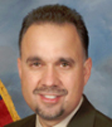
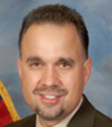
Judge Michael Smith last week continued the sentencing of former county supervisor and assessor Bill Postmus until July 19. In March 2011, Postmus entered into a plea deal with prosecutors, acknowledging he was guilty of perjury, conspiracy, bribe soliciting and bribe taking in connection with his vote as a member of the board of supervisors in November 2006 to confer a $102 million payment on the Colonies Partners. That payment was made to settle a lawsuit that development company brought against the county over flood control issues at the Colonies at San Antonio project in north Upland.

Bill Postmus

Prosecutors maintain Colonies co-managing principal Jeff Burum with the assistance of former county sheriff’s deputies union/assistant assessor Jim Erwin bribed Postmus and former supervisor Paul Biane, together with Mark Kirk, the former chief-of-staff to supervisor Gary Ovitt, by routing separate $100,000 contributions to political action committees Postmus, Biane and Kirk controlled. Postmus, Biane and Ovitt provided the three votes needed to make the $102 million settlement with the Colonies Partners.
Biane, Burum, Erwin and Kirk were indicted in May 2011 on extortion, bribery, and conspiracy charges. All four are maintaining their innocence. As part of his plea arrangement, Postmus agreed to testify against the four defendants when the case comes to trial.
Criminal proceedings in the case have been suspended pending an appellate court ruling on conflicting filings by both sides. The appellate court is considering the prosecution’s effort to reinstate some of the charges that were dismissed against three of the defendants last summer by Judge Brian McCarville in response to demurrers filed by defense attorneys. The appellate court is also considering motions by defense attorneys to dismiss even more of the charges.
The four defendants are set to return to court on April 20 for a discovery motion and lawyers said they seriously doubted the case will go to trial before July, which will perhaps entail a further delay in Postmus’s sentencing.
In the meantime, lawyers for Burum and the Colonies Partners are seeking dismissal of a civil lawsuit brought by two citizens groups seeking the return of the $102 million legal settlement to taxpayers.
In February, the Inland Oversight Committee and Citizens for Responsible Equitable Environmental Development filed suit, alleging that the indictment of Burum, Biane, Erwin and Kirk along with the guilty plea by Postmus presented grounds upon which to void the settlement and force the Colonies Partners to disgorge the $102 million.
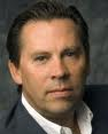
Jeff Burum

Four lawyers from two different law firms – Stephen Larson, Steven Bledsoe and Jonathan Phillips of Los Angeles-based Arent Fox and Scott Summer of San Francisco-based Pillsbury Winthrop Shaw Pittman – assert in a demurrer on behalf of Burum that the citizens groups do not have standing to file the lawsuit, that their legal argument is flawed and that the statute of limitations has lapsed.
Because the nonprofit citizens groups were not parties to the initial litigation, according to the demurrer, they do not have standing to bring the lawsuit. Moreover, according to Larson, Bledsoe, Phillips and Summer, the suit is six years late and should have been brought at the time of the settlement, putting it beyond the statute of limitations for a civil proceeding.
According to the demurrer, a trial relating to the flood control issues had been held in which the judge, Christopher Warner, had found in the Colonies favor but had not ruled as to the amount of damages.  Therefore, the demurrer states, “Plaintiffs’ complaint is a misguided, untimely and legally unsupported attempt to unwind the settlement and force Colonies to return the $102 million paid pursuant to the judgment.”
The demurrer further states “because plaintiffs are not parties to the settlement, they lack standing to bring an action” and that the “Plaintiff’s complaint fails because it is legally unsupported and untimely on its face.”
According to the demurrer, a validation action was carried out and completed by early 2007, in which those wishing to contest the settlement could have done so. None did so by the deadline, according to the demurrer, and so the settlement is now validated and irrevocable, attorneys say. The demurrer states, “as recognized by the court the validation judgment ‘binds and permanently enjoins and restrains all persons or entities, public or private, from the institution of any action or proceeding or maintaining any action or proceeding challenging, inter alia, the validity of the settlement agreement [or] the judgment.’”
But the matter is not that simple, said Cory Briggs, the attorney representing the Inland Oversight Committee and Citizens for Responsible Equitable Environmental Development in the suit. He said there are provisions in the law, specifically Government Code Section 1090, which prohibits an elected official from having a financial interest in any matter he or she votes on and that bribes paid to an elected official in return for a vote benefitting the bribe giver constitutes financial interest on the part of the elected official. He said the statute of limitations on a civil suit runs from the time that a plaintiff has firm and convincing evidence that something actionable occurred. That evidence manifested for the public, Briggs said, when Postmus entered his guilty plea.
“Bill Postmus pleaded guilty of violating Code 1090,” Briggs said. “The Supreme Court has said that a violation of Section 1090 required the beneficiary to return all the money. For that reason, the Colonies Partners have to give back the $102 million they obtained through governmental action tainted by bribery.”
Legal Challenge Spurs Legislative Fix For Calico Solar Project

The approval and environmental certification process for the Calico Solar project has complexified, as legislation to allow the undertaking to proceed has advanced in Sacramento even as environmentalists intensified their opposition to the project.
The project, to be built on 4,604 acres of public land in the Pisgah Valley north of Interstate 40 roughly 37 miles east of Barstow, was originally intended to utilize a cutting-edge process for converting the heat of the sun to drive a turbine and generate electricity. In that form the project’s then-sponsor, Arizona-based Tessera Solar, in 2010 obtained from  U.S. Secretary of the Interior  Ken Salazar approval for the project and qualified for federal stimulus money to defray a portion of the cost of the project. But last year, Tessera sold the project to New York-based K Road Power.  K Road has elected to abandon the original design, which involved parabolic mirrors to catch the sun’s rays and produce heat, and instead substitute photovoltaic cells.
Late last week, a bill to allow the Calico Solar project to receive state approval to change the technology upon which the project will rely, AB 1073, moved closer to passage in the state Legislature. AB 1073 was authored and sponsored by Assemblyman Felipe Fuentes, D-Sylmar. The bill passed the state Senate 28-2 on March 28 and is now being considered by the Assembly.
AB 1073 is an emergency measure, and as such it will take effect immediately upon passage by both houses and its signing into law by the governor. AB 1073 closes a loophole in a bill passed and signed by Governor Jerry Brown last year, SB 226, which permits the California Energy Commission to okay changes to approved projects rather than requiring rehearings and a repermitting process before local land use authorities. Under SB 226, opponents can still force rehearings or repermitting on altered projects if they are challenged in court, even if the case was dismissed.
Environmental groups have long been opposed to the Calico Solar project on the grounds that it will destroy or disrupt the habitat of the desert tortoises and golden eagles in the environs of Pisgah. The National Resources Defense Council last week filed a suit related to those issues in federal court, a move that under SB 226 would have forced K Road Power to reapply for approval.
As first proposed, the Calico Solar plant was to employ SunCatcher units, computer controlled parabolic mirrors.  The SunCatchers were to track the sun during daylight hours and focus an intense beam of light, i.e. heat, onto a glass tube filled with a synthetic petroleum product known as therminol. Therminol, based on its grade and rating, is capable of absorbing heat up to 1,400 degrees Fahrenheit. The therminol was then to be pumped across the outside of the differing chambers of a Sterling engine to heat gases within those chambers to drive the engine’s pistons. The engine would then turn a turbine that generates electricity.
Tessera’s  design was an improvement upon a similar computer-guided parabolic mirror solar ray-focusing set up that heated therminol, which was then routed into a heat converter that was brought into contact with water to create steam, which was used to run a turbine. It was believed the use of the Sterling engines would boost the efficiency  by as much as 17 percent over the steam driven turbine approach.
In October 2011, K Road abruptly switched to a plan to employ photovoltaic panels on the project.
Part of the rationale for changing the technology stemmed from the September bankruptcy filing of Sterling Energy Systems, which rendered ready availability of the Sterling engines problematic. Another factor was the decrease in the cost of photovoltaic cells over the last three years.
“The switch to PV was primarily based on our decision to use a more proven technology and to be online faster than we could with the SunCatchers,” K Road put out in a public statement.
While the photovoltaic cells will not generate as much electricity as the mirror/therminol/Stirling engine configuration, they can be erected and be brought on line much more quickly. Originally planned to generate 850 megawatts, the plant has been pared back to 663.5 megawatts. When fully operational, the project will provide electricity sufficient to power about 250,000 homes.

Manhole Cover Thefts Plaguing Barstow

There have been a wave of manhole cover thefts in Barstow in recent weeks.
The covers are an attractive target for thieves because their weight fetches a decent monetary return at scrapyards.
The circumstance represents a hazard to the public as the thefts often occur at night and leave passersby vulnerable to injury or death if they fall into the uncovered manholes.
Upon discovery of the thefts, city public works employees endeavor to cover the holes with plastic materials.
City manager Curt Mitchell said the city is now looking to purchase lighter but durable composite manhole covers with locking mechanisms, which have virtually no salvage value, as a permanent replacement.

R.C. Councilman Decries Red Tape, Bureaucracy & Governmental Interference

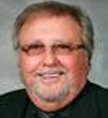
Rancho Cucamonga City Councilman Bill Alexander this week told the Sentinel  he believes government in general has become too complex and is nearly as much of a burden on businesses and citizens as it is a civilizing influence with a positive impact on the community and society.

Bill Alexander

Alexander spoke with a Sentinel reporter on April 2, while he was at Rancho Cucamonga City Hall to clarify for the city clerk’s office information requested with regard to his statements of economic interest, known in California as Form 700s. Alexander had come to the civic center after he was requested to fill out forms pertaining to his membership on committees, joint power authorities and commissions on which he is not currently or never was a member.
“They’re asking me for information that isn’t applicable, since I haven’t been on some of the commissions they are talking about for years,” he said.  “I can’t just not fill out the forms and that’s a little frustrating since the information they are requesting in some cases doesn’t exist.”
Alexander is a creature of government. A former fire captain with the city of Ontario, he is retired and pulling a public pension of more than $100,000. He was a member of the Rancho Cucamonga City Council from 1988 to 2004 and mayor of Rancho Cucamonga from 1994 to 2006. He ran for city council again in 2010 and was successful.
Nevertheless, he said, he considers government “way too complicated. The bureaucracy is ridiculous. It makes things way too difficult for people and businesses. I sometimes wonder why I ran for office.”
Alexander said his current mood was impacted by the challenge of having to fill out the Form 700s and a recent brush with federal tax authorities. “I was on the phone with the IRS,” he said. “They had me on hold for more than an hour and I never did get to talk to anybody.”
Asked point blank if he thought government has outlived its usefulness, Alexander said he still believed government to be necessary. “We need it,” he said.
He suggested there were reforms that could be applied.
“Well, for one, they could change the language in the documents and forms so the common person can understand them and you don’t need a lawyer to interpret them,” he said. “That would be a start.”

Barstow Councilman Cites Potential Conflict In Declining Board Berth

Barstow councilman Tim Silva this week declined an appointment to the oversight board for Barstow’s successor to its redevelopment agency. The seven member board is to consist of  two appointments by the mayor, two by the county board of supervisors, one by the Barstow Fire Protection District, one by the county superintendent of schools, and one by the chancellor of California community colleges.

Tim Silva

Silva was formerly the chairman of the city’s redevelopment agency board, which was composed of the members of the city council. Mayor Joe Gomez was set to appoint Silva to the oversight board, which is being formed to look after the utilization, disbursement and return of the redevelopment agency’s assets to the state in the aftermath of the state legislature’s elimination of municipal redevelopment agencies throughout California. But Silva said he believed there could be a conflict between his role on the panel and his employment in the mortgage industry, since the oversight board might have an impact on home mortgage-related issues.
Gomez instead appointed councilwoman Julie Hackbarth-McIntyre. Gomez also designated Margaret Carter, the city’s housing coordinator, as his second appointee on the board.

Newcombe Appointed Director Of County Public Works Department

Gerry Newcombe, who was previously serving in the capacity of deputy county executive officer, has been transferred into the position of county public works director.
Newcombe replaces Granville “Bow” Bowman, who has retired.
“Gerry has tackled many difficult assignments during his time as an executive with the county. Public works is one of the county’s most complex and challenging departments, and I am confident it will be in good hands with Gerry at the helm,” said county chief executive officer Greg Devereaux, who appointed Mr. Newcombe to the position.
As public works director, Newcombe will oversee the  department’s  transportation, flood control, solid waste, and surveying divisions. The department’s responsibilities are to maintain county roads, administer special transportation projects, manage surveyor functions, provide administrative oversights for the operation and management of the county’s solid waste system, and maintain an extensive system of flood control and water conservation facilities.
“I’ve gotten to know many of the excellent staff at public works over the years and am looking forward to the opportunity to work with them all. I appreciate Greg’s confidence in me and I’m anxious to get started,” Newcombe said.
Newcombe has been with the county for more than 30 years, most recently in the dual role of deputy executive officer and manager of the department of public works solid waste management division. As deputy executive officer, Newcombe has been responsible for managing the oversight of renewable energy projects in the county, working with cities on the possible regionalization of animal control, and overseeing several major capital projects, including the $150 million expansion of the jail system.
At one time, Newcombe also simultaneously oversaw five county departments, including land use, real estate services, architecture & engineering, fleet management, and facilities management.

World Class Oboist To Debut Castillo’s Rhapsody In Redlands April 14

REDLANDS –One of the world’s leading oboe players will be performing locally next week.  Liang Wang, principal oboe player with the New York Philharmonic, will be featured as a soloist  with the Redlands Symphony on April 14 in Memorial Chapel at the University of Redlands.
On tap for that evening will be several pieces, including the Straus Oboe Concerto, Mozart’s Overture to Figaro and Haydn’s Symphony No. 104, all of which will feature Wang. He will also provide his interpretation of Rhapsody, a concerto for oboe and horn written by the Redlands Symphony’s most accomplished oboist, Francisco Castillo.
“Liang Wang is one of the most extraordinary musicians performing in today’s world of classical music,” said Redlands Symphony Maestro Jon Robertson, “To have him here, playing with our orchestra, is a great honor and enormously exciting.”
Born in Qing Dao, China, Wang, now 32, has been playing the oboe since the age of seven. Wang is not new to Southern California, having achieved a full scholarship to Riverside County’s Idyllwild Arts Academy in 1995, after impressing his teachers at the Beijing Central Conservatory in the early 1990s. As a teenager, he captured the Jack Smith Award at the Pasadena Instrumental Spotlight Competition of the Los Angeles Philharmonic.
Wang completed his bachelor’s degree in 2003 at the Curtis Institute of Music in Philadelphia.
He later attended the Curtis Institute of Music in Philadelphia and was a fellow at the Aspen Music Festival and School, where he studied with John de Lance, the principal oboist of The Philadelphia Orchestra.
Wang’s resumé includes being the principal oboe with the San Francisco Ballet Orchestra in 2003-04, principal oboe of the Santa Fe Opera in 2004-05, principal oboe with the Cincinnati Symphony Orchestra in 2005-06 and associate principal oboe of the San Francisco Symphony as well as guest principal oboist with the Chicago and San Francisco Symphony orchestras.
Wang has taught at the Cincinnati Conservatory and the Juilliard School and was a faculty member at UC Berkeley. He is currently on the faculty of the Manhattan School of Music.
Wang joined the New York Philharmonic in September 2006 as principal oboe. In February 2008, he performed the Richard Strauss Oboe Concerto with The New York Philharmonic in Hong Kong.
At the April 14 performance, Maestro Robertson will conduct Castillo’s Rhapsody in what is to be its world premiere. Maestro Co Nguyen, the Symphony’s assistant conductor, will conduct the Mozart and the piece by Strauss.
The Memorial Chapel is located on the university campus at 1200 E. Colton Ave. The concert will commence at 8 p.m. Doors will open at 7 p.m. Tickets are available from $15.

SANBAG Hires Teichert As In-House Legal Counsel

San Bernardino Associated Governments (SANBAG), the county’s transportation commission, on April 4 named  Sacramento City Attorney Eileen Teichert as its first general counsel.
The hiring of Teichert as the agency’s in-house lawyer ends its traditional practice of relying upon the county’s stable of attorneys, known as county counsel, for legal advice and services.
SANBAG’s 29-member board consists of a mayor or council member from each of the county’s 24 incorporated cities and all five county  supervisors.
Despite the overlap, a major legal conflict has developed between SANBAG and the county as a consequence of a lawsuit the county filed over its 2006 payment of $102 million to the Colonies Partners’s lawsuit  against the county over flood control issues at the Colonies at San Antonio development in Upland. Those flood control issues were complicated by the placement of the 210 Freeway across the Colonies Partners’ property and the county wants SANBAG and the California Department of Transportation to cover a portion of that settlement cost, having launched the lawsuit to make that recovery.
Teichert, who has been with the city of Sacramento since 2006, was previously a deputy city attorney in Riverside. The SANBAG board last year resolved to hire its own attorney and Teichert was chosen for the $200,000 per year position after a 90-day recruitment effort. She is s expected to aggressively represent the agency in defending SANBAG’s position with regard to the suit.

Residents Wary Of Barstow Proposal To Annex Barstow Heights

The city of Barstow’s latest effort to annex Barstow Heights is being met with solid opposition by the residents of the district who would have to approve the takeover with a vote.
The Barstow City Council, led by councilman Tim Silva, has given city manager Curt Mitchell and his administrative staff direction to explore the issue.

Tim Silva

A formalized application to undertake the application would require a study of multiple issues by the county’s Local Agency Formation Commission, including an appraisal of existing infrastructure in the unincorporated county area, costs associated with having the city assume maintenance and/or operation of that infrastructure and the potential financial impact of the merger. Silva has indicated that by bringing Barstow Heights into incorporated Barstow, which now has a population within its city limits of 22,639, the city would qualify for more state and federal grants and revenue by virtue of the increase in population.
Silva referenced a 2008 report by the Local Agency Formation Commission (LAFCO) that recommended the dissolution of the Barstow Heights Community Services District, which was formed in 1957 for the provision of water, road maintenance and park and recreation services to the area southwest of Barstow near Rimrock Road and H Street.
The district remains in place, but its only current purpose is the maintenance of Panamint Park and H Street Park. The district’s former water and road powers are now being administered by the county’s special districts department.  The county would like to get out from under that responsibility and transfer it to the city of Barstow. Additionally, the city is already partially subsidizing the park and recreation function of the Barstow Heights Community Services District by defraying the cost of any park repairs less than $200. This arrangement exists because many Barstow residents avail themselves of the parks.
Buttressed by the four-year-old LAFCO report, Silva further suggested that Barstow Heights residents would see potential benefits by coming into the city through being able to participate in the local political process through voting in city elections. Moreover, he asserted, the neighborhood, which has in many respects substandard, aging or non-existent infrastructure, would be eligible for tying into the city’s systems or have municipal services extended into the area upon annexation.
That opportunity is dual-edged, however. At present Barstow Heights homes utilize septic systems, and annexation would eventually make it possible for those homes to be connected to the municipal sewer system. Yet hook-ups to the sewer lines would cost homeowners more than $20,000 in the most likely of scenarios.
Similarly, the inclusion of Barstow Heights into street lighting and landscape maintenance districts would be of conceivable benefit to the residents and might marginally improve property values, but would also entail assessments on the homeowners within those districts.
Whatever the suggestions of Silva and other Barstow or county officials, the residents of Barstow Heights are wary of the takeover proposal. Efforts by the Sentinel to find anyone in Barstow Heights in support of the annexation were unsuccessful. Several Barstow Heights residents, however, stated opposition to the concept, with many expressing the belief that it would entail an increase in taxes and fees and little return in benefits or enhanced services. Some said they did not want to be subjected to municipal code restrictions. They said that they were aware that at least some residents of the section of Lenwood that was annexed by Barstow in 2010 are upset over the enforcement of zoning codes and restrictions that are now in effect there.
To effectuate an annexation, proponents would need to get a majority approval of the registered voters in the area to be annexed. At present, there are 1,033 voters in Barstow Heights.

Dutton Decrying Partisan Bickering In Run

State senator Robert Dutton this week told the Sentinel he is embracing the spirit of California’s open primary in June and will shed the partisan edge to his persona that has thus far sustained him through his political career.

Bob Dutton

Dutton,  who served two terms on the Rancho Cucamonga City Council, two years in the California Assembly and seven years to date in the California Senate, the last two as Republican leader, is competing against another Republican and four Democrats to represent California’s 31st Congressional District in the House of Representatives.
Traditionally in California, as elsewhere in the nation, members of the same political party vie against one another in the primaries, and the winner in each partisan contest goes on to run against the winners of the other same-party races in the November election. This year, however, the state of California is holding an open primary in which voters are permitted to cross party lines and vote for any candidate they wish, regardless of party. The two top vote-getters will then go on to run against one another in November. It is thus possible that two members of the same party will compete against each other in November.
Throughout California, district lines have been redrawn in correspondence to the 2010 national census. In the newly drawn 31st Congressional District this year, incumbent  Republican congressman Gary Miller is running, along with four Democrats – Redlands Mayor Pete Aguilar, Loma Linda attorney Justin Kim, educator Rita Ramirez-Dean and nonprofit founder Renea Wickman. While the Democrats hold a slight voter registration advantage over Republicans in the 31st, the presence of four Democrats in the race and only two Republicans boosts the chances that the race in November could pit Republicans Dutton and Miller against one another.
Though he formerly proudly wore the sobriquet of a conservative Republican and crossed swords again and again with the Democratic majority and its leadership in Sacramento during his nine years there, he now says, “I have never been locked into one political philosophy. I don’t care about party politics. I am fed up with it.  I don’t care if it’s a Democratic or Republican idea as long as it’s a good idea. I will work with anyone if working together will help the small business people out there putting their life savings at risk to create something.”
If he has any political leaning or philosophy, Dutton said, it is that “I believe government has the tendency to overreach. Government is too large. It is too large in California and it is definitely too large at the national level. We need to tell government to stop doing a lot of what it is already doing and keep it from doing anything else because government has gotten itself into the business of inhibiting our economic recovery by discouraging people from making investments. The bottom line is jobs. We have got to get people back to work. The one place government should be getting involved in is regulatory reform. There is no place that has been harder hit by the recession than San Bernardino County. We need to make this effort for the betterment of our area, which gets hurt most because of the failure to strive for lean government. What we need to do is not that complicated.”
Dutton, who had a successful real estate and development company before he went into politics in his early 40s in the 1990s, said he is not ready to leave his second profession just yet.
“I’m running for Congress because I feel I have done a good job for the people of San Bernardino County and I would like to continue in that capacity and I would invite those who feel I’ll do a good job in Washington to support me.”
California’s term limits make remaining in Sacramento a complicated calculus for Dutton. State senators are limited to two four-year terms. Assembly members are limited to three two-year terms. Dutton cannot return to the position he now holds, state senator, because his second term will expire at the end of the year. He served just a single term in the Assembly before stepping up to run for state Senate in 2004 and could run for the Assembly again. But he said the announcement of the pending departure of two-long serving Republican congressman from this area – Representative Jerry Lewis, who was first elected to the House in 1978, and Congressman David Dreier, who was initially elected in the Ronald Reagan landslide of 1980 – convinced him he needed to make the transition from state politician to national politician now.
“I am termed out in the [state] senate and I have to run for something else because I’d like to continue in public service. I felt that when Jerry Lewis and David Dreier retire, this will be for me the next logical step forward. I’ve felt I’ve always done a good job. Without someone dedicated in Washington, D.C., you will see San Bernardino County’s interests falling through the cracks. The bottom line is jobs and getting people back to work.”
Much has been made of the match-up between Dutton, who until January was the Republican leader in the California Senate, and Miller, an incumbent Congressman. But Dutton said that focus is misplaced.
“People have got to remember this is an open primary,” Dutton said. “It is not a race between Republicans for the nomination any more. It is not a contest between Gary Miller and me. I am not running against Gary Miller. There are six of us in this race competing to come up with the best ideas. I happen to feel I have the right combination of background and experience to be an effective voice for San Bernardino County.”
Dutton at this point refused to criticize Miller, either on the basis of his voting record or his positions on issues in the current race. The closest he came to a negative observation about Miller was to note that Miller is less familiar with and less vested in the 31st District than he is.
Miller, a Diamond Bar resident, currently represents the  42nd Congressional District, which encompasses all or portions of Chino, Chino Hills, Rowland Heights, La Habra, Brea, Yorba Linda, and Diamond Bar.
“I have lived in the 31st District for 40 years,” Dutton said. “I met my wife in this district. My daughter was born and raised in this district. She went to schools in this district. I have served as a city councilman, assemblyman and state senator for the people living in this district. Mr. Miller comes from outside the area. He is certainly eligible to run for Congress in the 31st District because under federal election rules, a Congressman needs to just live in the state where the district he represents is. He could run anywhere in the state. I am a citizen statesman. I am not looking to represent some other area that I don’t know that well. When you live someplace and shop there and go to church there it is a different situation then when you are just looking for a place where you can run. I do not want to try to serve two masters. The people who live where I live are my priority. I want to take care of the people who elect me. I would not want them to worry that I won’t look after their interests because I’m living somewhere else.”