
By Mark Gutglueck
Defense attorneys this week set about discrediting one of the key witnesses in the Colonies Lawsuit Settlement Political Corruption Case.
Throughout Week 20 and abbreviated Week 21 in the trial, Adam Aleman, the 35th witness in the case whose testimony came on the heels of that of his former boss Bill Postmus, offered testimony that is central to the prosecution’s theory of the guilt of two of the defendants in the case, Jeff Burum and Jim Erwin. For most of May 17, the day on which Aleman began testifying, all of May 18, and again on May 22, the defendants and their legal teams sat by silently, with the exception of some spirited objections which Judge Michael Smith sporadically sustained, as California Supervising Deputy Attorney General Melissa Mandel walked Aleman through his testimony, during which he corroborated the version of events Postmus had provided when he was testifying under direct examination and before his reliability came under question during cross examination. Postmus’ testimony under direct examination was that while he and Burum were both in China in September 2005 in conjunction with a trade mission, Burum had lobbied him in an effort to obtain his support for the settlement of a lawsuit the Colonies Partners had brought against the county over flood control issues that delayed the completion of the Colonies at San Antonio residential and Colonies Crossroads commercial subdivisions in northeast Upland.. Postmus on direct examination said that in the latter half of 2006, Erwin, working on behalf of Burum and his company, the Colonies Partners, had threatened to expose elements of both his and former San Bernardino County Supervisor Paul Biane’s personal lives in an effort to persuade them to support the settlement. And Burum had promised to support him in either or both future political and business endeavors once the settlement was out of the way, Postmus said. Moreover, Postmus said, he believed the $102 million paid out to the Colonies Partners was “ridiculously more” than the development company was due. The threats and promises of reward, he said, along with the desire to put the whole thing behind him, he testified, prompted the settlement. And after the settlement was in place, Postmus testified, the Colonies Partners had come through with two separate $50,000 donations to political action committees he had control over. Postmus was chairman of the board when the final stages of the lawsuit settlement negotiations between the county board of supervisors and the Colonies Partners decision were taking place. Postmus affirmed the previous testimony by numerous witnesses who said he essentially commandeered from Paul Biane the role of the major champion on the board of supervisors with regard to forging some order of a settlement with the Colonies Partners to bring the litigation to a close.
During their cross examination of Postmus, defense attorneys, particularly Jennifer Keller, one of the attorneys representing Burum, made substantial inroads against the testimony he had offered against the defendants under direct examination, demonstrating that nearly a decade of escalating methamphetamine use capped by the use of the drug ecstacy and inhalants when the stimulant no longer produced the level of euphoria he craved had a devastating effect on his power of recall and therefore the reliability of his testimony. For that reason, Postmus had been followed to the witness stand by Aleman, his protégé and confidant, who was nearly a dozen years his junior and whom Postmus had employed as a field representative when he was supervisor and then elevated to the post of assistant assessor shortly after he was sworn in as assessor in 2007 following his election to that position in 2006. As much or more than anyone else, Aleman was in a position to provide a window on Postmus and the atmospherics around him during the last four years of his public life. The prosecution, composed of Mandel and Supervising Deputy District Attorney Lewis Cope, employed Aleman to reinforce Postmus’ direct examination testimony, bridge the gaps in his failing memory and recapture the ground that had been lost to the defense during the cross examination of Postmus in which he had controverted or compromised some elements of his direct examination testimony and had been driven by Keller to the brink of recanting other statements elicited from him by the prosecution.
Postmus said he had met numerous times with Burum in the first half of 2006, acknowledging discussions relating to the lawsuit settlement took place at those meetings. While Postmus could recollect Aleman being present at only one or perhaps two of those meetings, Aleman, whose power of recall was uncompromised by heavy drug use, contradicted his former boss and said he had met with Burum in the presence of Postmus “six to 12 times between January and June of 2006” at various restaurants, as well as at the Red Hill County Club. Aleman also said that he and Postmus had encountered Burum in the presence of his future attorney, Stephen Larson, at a Republican Women’s event during that time frame. Aleman said that during those meetings that the Colonies settlement “was probably the only subject of conversation.” Aleman said that at that point Burum “was very frustrated with Paul [Biane],” and Burum accused Biane of “pussyfooting around” with regard to reaching a settlement. Aleman confirmed a key element of Postmus’ testimony during direct examination that dovetailed with the prosecution’s theory of guilt, namely that Burum during one of those meetings indicated that “as soon as the Colonies settlement is over everyone would be taken care of politically.”
By 2005, Aleman said Biane was concerned about his image and the impact being seen as the prime mover on the board toward a settlement would have on his future political aspirations and that therefore Postmus “was being groomed to take over Paul’s position to be the point person to get the settlement done.” Aleman testified that Postmus, during his contact with Burum in China in 2005, had been subjected to pressure by Burum with regard to reaching a settlement and that Postmus had sent him text messages to that effect while he was still in China.
Aleman testified that he, Postmus, and Biane, the latter two who were then, respectively, the chairman and vice chairman of the San Bernardino County Republican Central Committee, were all aligned politically and that Burum was a key donor to Postmus’ and Biane’s electoral efforts as well as Republican political causes and candidates. He characterized Erwin, who was the head of the most powerful political organization in the county, the Safety Employees Benefit Association, which represented the county’s sheriff’s deputies, as also being one of Postmus’ supporters. Nevertheless, Aleman testified, Erwin, while working on behalf of Burum and the Colonies Partners to help effectuate a settlement of the lawsuit, utilized intimidation, extortion and blackmail against Postmus and Biane. The means of doing this, Aleman testified, consisted of political “hit mailers” targeting Postmus and Biane, dwelling on the former’s drug addiction and homosexuality and the latter’s financial difficulties. Those mailers were never actually sent out, according to the prosecution, but the threat that they would be, prosecutors allege, induced Postmus and Biane to come to terms with the Colonies Partners. Aleman testified that in 2006 Erwin, who was then the executive director of the Safety Employees Benefit Association, showed him “mockups” of several anti-Biane hit pieces when he had gone to Erwin’s office.
Aleman further offered attestation to another element of the prosecution’s case, testifying that Mark Kirk, who was at that time supervisor Gary Ovitt’s chief of staff, had been one of Postmus’ political allies. Ovitt provided the third crucial vote in support of the $102 million settlement with the Colonies Partners in November 2006. Kirk, Aleman testified, had political aspirations. Ovitt, Aleman testified, “was a rubber stamp of what Mr. Kirk wanted. Mr. Ovitt deferred most of the decision making to Mark Kirk.”
On Tuesday of this week, after the two juries hearing the case returned to the courtroom after a hiatus of seven full days consisting of the three-day Memorial Day Weekend and the four days preceding it, the defendants and their lawyers continued to bide their time as Mandel tied together some remaining loose ends with Aleman’s testimony. Mandel focused upon the second major element of the criminal case, the $100,000 donations made by the Colonies Partners to political action committees controlled by Postmus, Biane, Erwin and Kirk after the settlement was finalized. The prosecution alleges those donations were thinly-veiled bribes or kickbacks made in exchange for the effectuation of the $102 million settlement, in the case of Postmus and Biane for having voted to approve it, in the case of Kirk for having delivered Ovitt’s vote in favor of it, and in the case of Erwin, for his assistance in persuading Postmus and Biane to support it.
Mandel asked Aleman about his communications with Postmus regarding the political action committees, which Aleman had told district attorney investigator Hollis “Bud” Randles in 2008 were essentially money laundering mechanisms. The articles of incorporation of those committees were structured, according to Aleman, in such a way as to prevent them from being linked to those who actually had control over them, namely Postmus, Biane, Kirk and Erwin. Mandel asked Aleman how Postmus reacted when he found out that Kirk paid himself a $20,000 consulting fee from the Alliance for Ethical Government PAC Kirk had set up shortly after that PAC received a $100,000 contribution from Colonies Partners in May 2007.
Aleman said Postmus was infuriated upon finding out. “Mr. Postmus was very upset. He felt it was going to expose all the parties that had received money from the Colonies Partners,” Aleman said. “It was almost a direct link to receiving a cash contribution from Colonies Partners.”
Before ending her direct examination of Aleman, Mandel returned to the a subject she had previously covered during Aleman’s first day on the witness stand, that being his own culpability and criminal wrongdoing. Recognizing that defense attorneys would inevitably zero in on the consideration that Aleman had been caught up in a scandal pertaining to abuses in the assessor’s office, Mandel requestioned him about it. Aleman acknowledged his participation in the scheme in which the assessor’s office facilities had been used by him, Postmus and others for partisan political purposes, resulting in his being arrested and charged with six felonies and his eventual no contest pleas to four of those charges as part of a plea deal in which he agreed to cooperate with prosecutors in making cases against Postmus, the four now on trial and any others about whose alleged criminal acts he had knowledge.
At 2:43 p.m. on May 30 Jennifer Keller, representing Burum, began the cross examination of Aleman. The first issue she took up was the fashion in which Aleman was under constant escort by armed district attorney’s investigators from the point he arrives at the courthouse until the time he leaves, with two and as many as three shrouding him and at least one remaining in the gallery of the courtroom during his testimony.
“Are all three needed, in your opinion?” Keller asked him. “Do you need three armed people to protect you?”
Aleman indicated that many were not necessary.
“During the last eight years, were you in any form of witness protection?” she asked.
Aleman said that he had not been. When Aleman noted that he had moved out of the area to Orange County, Keller referenced his LinkedIn profile, saying it left out his experience with the assessor’s office and the board of supervisors. When Aleman said he thought his LinkedIn profile was private, Keller told him she had been able to review it. “Has anyone come to your home?” she asked.
“No,” Aleman said.
“Has anyone tried to do anything to you?”
“No,” he said.
“Has anyone threatened you?”
“No,” Aleman said
“Has anyone contacted your employer?” she asked
“No,” he said.
“Has anyone slashed your tires?”
“No,” he said.
“So, nevertheless, you felt you were in danger in this courthouse, sufficient danger that you need armed protection?” Keller asked
“Yes,” said Aleman
“You testified earlier you asked for armed protection,” Keller said.
“Yes,” said Aleman.
Keller then, essentially, accused Aleman of conspiring with the prosecution to lodge a false impression about the defendants.
“Aren’t you really trying to make the point that these are dangerous guys?” Keller asked.
“That wasn’t the intent,” Aleman said.
“It seems odd that you have asked for armed protection if no one has come to your home or gone to your work or is following you on your commute,” she said. Keller than made a full frontal assault on Aleman’s credibility.
“You have a history of lying if you think it will help you in this case, the assessor’s [criminal case]. Isn’t that true?” she asked.
“No,” he said.
Keller then cut right to the heart of the criminal case that had been lodged against Aleman, which mushroomed with his efforts to hide partisan political activity at the assessor’s office that had been ongoing there from the time Postmus assumed the assessor’s post and hired Aleman as assistant assessor. That criminal cover-up entailed his destruction of one of Postmus’ county-issued computers, his efforts to alter the meeting minutes of the assessor’s office’s executive staff and his misrepresentations and outright lies about his actions when he was initially interrogated by district attorney’s office investigators and then questioned by a civil grand jury on April 16, 2008. Aleman acknowledged telling numerous lies to protect both himself and Postmus.
“You knew you were not supposed to be running a political operation out of that [the assessor’s] office, correct?” Keller asked.
“Yes,” Aleman answered.
That political patronage included hiring Ted Lehrer, Mike Richman and Greg Eyler, who was one of Postmus’ boyfriends, as well as Aleman himself. Lehrer was given the official position of the assessor’s communication director but was engaged almost entirely in making postings to Republican Party web pages, internet chat rooms and blogs. Eyler rarely if ever showed up for work, Aleman testified. Richman was a straight-out political operative. Both Aleman and Postmus did not draw the line at misusing taxpayer supported facilities at the assessor’s office for political purposes, Aleman testified, but used those facilities and the time they were supposed to be engaged in the duties of the assessor’s office running a money-making business, known as ALP, a corporate acronym for Aleman Lehrer and Postmus, which tapped into revenue available from pop-ups and other forms of advertising on the Red County San Bernardino and Flashreport forums. Lehrer spent, Aleman estimated, “99 percent” of his time in the office making blog postings.
To prevent the illicit political activity in the assessor’s office that he was overseeing from being discovered, Aleman provided Lehrer with a laptop that was not linked to the county’s server, he said.
A major portion of his efforts was made in an effort for aggrandizement of both Postmus and himself, Aleman testified, including lengthening and solidifying their political reach.
Keller wrung from Aleman the concession that turning the assessor’s office into a political mill was set up before Postmus was sworn in, while Postmus was yet serving as chairman of the board of supervisors and had the power, with the assistance of his allies on the board, to confer an even larger budget on the assessor’s office so he and Aleman could take advantage of it once he was assessor.
“Before you went over to the assessor’s office, the two of you were looking to build up the assessor’s office,” she said. “You [meaning Aleman and Postmus] were instrumental in creating 13 new positions for the assessor’s office,” Keller said.
When Aleman did not acknowledge having done so, Keller referred him to a statement he had previously made, on September 30, 2010, when Aleman spoke about the creation of an executive board in the assessor’s office. “The plan was to have executives do political work and pay them with taxpayer money,” Aleman said. “The appropriate word is ‘subsidize’ political work through the county, to create a political army that didn’t have to be paid through any campaign funds.”
“You and Mr. Postmus filled these positions with your political operatives?” Keller asked.
“Yes,” said Aleman.
“These were sham jobs?” she asked.
“Yes,” Aleman said.
Though Mandel had explored the criminal activity Aleman had engaged in and had been convicted of in an effort to immunize him as a witness, Keller re-explored those issues, dwelling on them at length in an effort to paint Aleman as a disreputable, dishonest, self-serving, selfish, conniving personality who obfuscated what he was doing as the long arm of the law was closing in on him and did not acknowledge his criminal acts until he was caught outright. When the 2007-08 civil grand jury began looking into the exploitation of the assessor’s office for political purposes, Aleman grew concerned that the investigation would quickly circumscribe the activity of one of the political operatives Postmus had hired, Mike Richman. To frustrate that probe, Aleman asked the secretary to the executive staff, Wanda Nowicki, to alter the executive meeting minutes to reflect that Richman was indeed working on activity related to the assessor’s office’s actual function. Nowicki did so, providing Aleman with several altered documents, but she retained the original minutes to each of the executive staff meetings and provided those in response to the grand jury’s subpoena. When Aleman was called to testify before the grand jury, his efforts at keeping the political activity in the assessor’s office hidden unraveled when he produced the phony minutes and answered under oath the questions put to him based upon the information contained therein. It was at that point, after perjuring himself, that he learned the grand jury had copies of the original, unaltered minutes.
Under questioning by Keller, Aleman admitted he had instructed Nowicki to make the changes with regard to Richman. Keller noted that Aleman had thereby brought Nowicki into a conspiracy and had put her into the position of breaking the law.
“You asked Ms. Nowicki to help you alter the notes?” Keller asked.
“Yes,” Aleman said.
“You understood you were committing a crime when you ordered the secretary in the office to aid and abet you in committing that crime?” Keller asked.
“Yes,” said Aleman.
“You didn’t care what would happen to her,” said Keller. “You knew you were subjecting her to the possibility of serious repercussions, but you were willing to throw her right under the bus, so long as it helped you.”
“That wasn’t my intent,” Aleman said.
“But she knew better,” Keller said. “She gave the grand jury the original version. You did not know that. It was only when you were confronted with those that you knew you had a problem, right?”
“Yes,” said Aleman.
Keller explored, briefly, Aleman’s connection with Postmus. Aleman said he had gotten involved in Republican politics when he was still a teenager in 2002 through involvement in the Elia Pirozzi for California Assembly campaign. It was at that point that he met Postmus, who offered him a job with the San Bernardino County Republican Party, which he took. While still working for the Republican Party, he also moved into a part time position with Postmus’ supervisor’s office as a field representative, he said. Then, in his very early 20s, Aleman was promoted by Postmus to the position of the county party’s executive director. To Keller’s inquiries, Aleman acknowledged that by the age of 22, with no college degree and no previous experience he was on “the fast track to success in politics.” He said that when he learned that Postums was gay “it rocked me to the core.” He told Keller he could have quit, but decided to stay. “I saw the human side of Mr. Postmus,” he said.
“Did you think Mr. Postmus was going to take care of you?” Keller asked.
“Yes,” said Aleman.
Aleman said he learned about Postmus’ drug use and drug addiction relatively early on, discovering that his substance of choice was methamphetamine after initially assuming his problem was with prescription painkillers. He grew to recognize, Aleman said, that Postmus meth use was an outgrowth in some fashion of his avid homosexual lifestyle and that it got to the point that Postmus was snorting, smoking or injecting it every day and inhaling substances, including cassette cleaner. Aleman admitted he hid Postmus’ drug use from the public and much of those working within county government. He said that he; Greg Eyler; Bob Smith, who was a former sheriff’s deputy who was working as one of Postmus’ field representatives; Paula Nowicki, who was a senior analyst in Postmus’ supervisor’s office; and Erwin recognized that Postmus was using methamphetamine. A few other individuals, Paul Biane as the vice chairman of the board of supervisors and Brad Mitzelfelt as Postmus’ chief of staff, were told that Postmus was using drugs and had gone to a rehab clinic, but Aleman said they were told he was addicted to prescription drugs.
To a later question from Raj Maline, Erwin’s attorney, asking Aleman if he “kept his [Postmus’] secret from the public about being gay,” Aleman said, “Yes.”
“Even though he was still preaching Christian family values big time?” Maline asked.
“Yes,” said Aleman.
Noting that Aleman had said he was “rocked” upon learning that Postmus was homosexual, Maline inquired, “Why? What difference did it make to you?”
Aleman said such a circumstance was “uncommon, especially for a Republican leader in this county.” It was jarring he said, because “the outward conservative values he portrayed were contrary to his lifestyle.”
Maline asked if after “your introduction” to that element of Postmus’ reality, Aleman felt his obligation to “Mr. Postmus was to keep this lie under wraps?”
“Yes,” said Aleman.
“When you dealt with anyone on his behalf, you were expected to keep that a secret?”
“Yes,” said Aleman.
In her questioning of Aleman, Keller asked, with regard to both Postmus’ drug use and his sexuality, why he “hid the truth from the public.”
“It wasn’t my place to tell the public,” Aleman said.
Keller asked Aleman if he had remained loyal “to him because your job and your career were tied to Mr. Postmus’ success?”
“Yes,” said Aleman.
Keller got Aleman to say he did pretty well for himself by staying with Postmus. After serving as Postmus’s campaign manager when Postmus successfully ran for assessor in 2006, just as he was turning 24 years old and without a college degree, he was selected to serve in the capacity of communications director for the assessor’s office at a salary of between $86,000 and $90,000 plus benefits. He had not even moved into that position when he was promoted to assistant assessor, starting at a salary of over $120,000 per year plus benefits. Working for Postmus – the chairman of the county Republican Party and the chairman of the board of supervisors and then the assessor, the top ranking taxing official in the county – was like “working for the New York Yankees,” Aleman said.
“You were becoming more of a mover and a shaker because of Mr. Postmus,” Keller at one point observed.
“Yes,” said Aleman.
“But after your arrest in June 2008, everything changed,” Keller said. “You had to figure out a way of getting out of trouble. You had to look for a new way to protect yourself, right?”
“I’m not sure,” Aleman said.
“You turned to the DA’s office to help you,” Keller said.
“Yes,” said Aleman.
“You entered this nolo contender plea and in between you were cooperating with the DA. You started giving the DA’s office information,” Keller said.
“Yes,” said Aleman.
“You started secretly tape recording Mr. Postmus. You sent him thousands of text messages. You preyed on his vulnerability. You tried to make him think you were still his friend,” Keller said.
“Yes,” said Aleman
“You were trying to trap him into saying something that would put him into prison the whole time,” said Keller.
“Yes,” said Aleman.
Throughout it all, Keller noted, Aleman had lied and covered up. He had covered up Postmus’s drug use and helped him keep his homosexuality hidden from the Republicans who supported him. He had lied about and covered up the illicit activity in the assessor’s office. When the investigators had closed in on him, he lied some more. And then after he was caught, he lied and made false representations to Postmus, his patron, his boss, his friend, the man who had put him on the political fast track.
“We should believe you now, shouldn’t we?” Keller asked.
“That’s up to the jury to decide,” Aleman said.
Having established on Tuesday that Aleman was willing to lie to Postmus, Keller set about seeking to establish that in seeking to save his own skin, he is now lying with regard to the four defendants.
Keller, referencing Aleman’s continuous efforts over more than a year to maneuver Postmus into making incriminating statements against himself or any of the current defendants, noted he had little success in that regard. In those recordings, Postmus consistently fell short of saying that he had taken a bribe from Burum. In one of those exchanges, which was played for the jury, Postmus, unsuspecting he was being recorded, which renders it now all the more favorable to the defense, said he believed closing the settlement “was the right thing to do.”
Keller returned to the theme of Aleman, out of desperation to get out from under his own legal difficulty, either fabricating information he calculated would assist the prosecution in the case it was seeking to make against others or bending his statements into conformance with the prosecution narrative. “You knew the most valuable information that you could provide was anything showing there had been a bribe to Mr. Postmus, right?” Keller asked.
Aleman responded by saying he was bound by his commitment to provide the truth, whether it helped the prosecution or the defense and that the information he provided was not limited to the matter pertaining to the Colonies lawsuit settlement. “It was all encompassing,” he said in regard to the information he had given to the district attorney’s office, including that relating to misdeeds in the assessor’s office and extending to other areas of county operations and political interaction of which he had knowledge.
Keller drove home the point that the investigators with the district attorney’s office were fixated on the Colonies case and had suggested to Aleman it was in his interest to assist them in assembling a case against potential defendants in that matter.
Keller referenced a statement made by investigator Hollis Randles to Aleman during his November 11, 2009 interrogation. “It is very crucial to us and should be important to you and that’s why we’re here,” Randles said. “We need to discuss what occurred at the negotiations and what happened between Jeff Burum and Mr. Postmus and Mr. Biane and what part that played in this settlement of this lawsuit with the Colonies.”
Establishing that there was a quid pro quo in the case – that the public officials were bribed by Burum and his company, and that these rewards were provided as an inducement for the $102 million settlement – is crucial to the prosecution. On direct examination, Postmus offered testimony that could be interpreted that such an understanding was in place when he said that Burum had made a commitment to support him when he again ran for public office or in business ventures if he left politics, after the Colonies litigation had been settled. But Postmus indicated that no specific amount of money or support was mentioned and that he did not learn that the two $50,000 contributions were coming to his political action committees until after the settlement concluded. He grew shaky, inexact, contradictory and confused on cross examination when questioned about whether the money received had come to him as a result of a promise ahead of time. Thus, Aleman’s corroboration of the quid pro quo aspect of the Colonies Partners’ $100,000 donations to the two political action committees Postmus established in early 2007 to receive that money – the Inland Empire PAC and the Conservatives For A Republican Majority PAC – was key. Aleman did so on direct examination, testifying that he had been present at six to 12 meetings involving Postmus and Burum between January and June 2006 at restaurants and on the grounds of the Red Hill Country Club in Rancho Cucamonga. It was in the context of these meetings, that Aleman testified Burum had made commitments of monetary support to Postmus in exchange for his vote for the settlement and assistance in getting sufficient votes from the rest of his colleagues to get the settlement passed. Postmus, whose memory was admittedly ravaged by drug use, testified that he could recall just one or two meetings he had with Burum when Aleman was present and that had been because Aleman had come to assist Burum with either a broken or malfunctioning BlackBerry communication device.
On Wednesday, Keller sought to shake Aleman’s claim that he was present at the multiple meetings between Postmus and Burum. Aleman had identified the El Torito restaurant in Upland as one of meeting places. After dwelling on Aleman’s recollection of how crowded the restaurant was when the three had been there, to which Aleman gave ambiguous responses, Keller summoned up a previous statement Aleman made when he was being questioned by district attorney’s office investigators Hollis Randles and Robert Schreiber in February 2009 that such a meeting took place at the El Torito in Ontario. “You never were at the El Torito in Upland,” Keller asserted. “You told them in February 2009 you were at the Ontario El Torito, next to the Black Angus. You never said anything to investigators Randles and Schreiber about meeting at an El Torito in Upland.”
“Sorry, it may have been the one in Ontario,” Aleman acknowledged.
Another meeting location Aleman described was the Acapulco Restaurant at the Montclair Plaza. Keller replicated the circumstance with regard to the El Torito, demonstrating that in his statements to investigators eight years ago, he said that restaurant was in Ontario.
Keller then engaged with Aleman about the meetings he said he had attended with Postmus at the Red Hill Country Club, where Burum is a member. Aleman claimed those meetings took place on the patio of the clubhouse, which encircles the building and offers views of several of the fairways. She locked Aleman in on the location, and he described the patio as offering food service. She then asserted that the defense had obtained certification from the country club’s owners that in the January to June 2006 span during which Aleman said the meetings had taken place, the clubhouse had been razed for remodeling, insinuating that Aleman was deliberately lying. “At no time during your 70 interviews did you mention you met with Mr. Postmus and Mr. Burum at the Red Hill Country Club,” Keller charged.
“I can’t recall,” Aleman responded.
Keller sought to further degrade Aleman’s credibility by focusing on his assertion that he had been present for a hotel room meeting involving Postmus, Burum, Erwin and Patrick O’Reilly in Ontario just before or during settlement mediation sessions there involving former California Supreme Court Justice Edward Panelli on either October 19, 2006 or November 1, 2006. Aleman’s stated recollection of that occurrence referenced the Sheraton Hotel, which he testified to during his appearance before the grand jury that indicted Burum, Biane, Erwin and Kirk in 2011. Aleman again referred to the Sheraton during his ongoing testimony and mentioned a Denny’s restaurant, as well. Keller said the meeting actually occurred at the Doubletree Inn in Ontario, and none of the men attending recalled Aleman being there, Keller noted.
“You put yourself in a hotel where a meeting never happened,” Keller said.
“Those are your words,” Aleman responded.
“Those are the words of everybody but you, Mr. Aleman,” she replied. “All we have is your word. You don’t have anything to document your presence at those meetings.”
During her cross examination of Aleman, Keller further sought to exploit Aleman’s claim that he had been summoned to a Colonies lawsuit settlement negotiating session that took place at Biane’s supervisorial office located in the Rancho Cucamonga Courthouse on March 25, 2005, about which there has been substantial previous testimony. At that meeting, Postmus and Biane were present, accompanied by deputy county counsel Mitch Norton and the county’s outside counsel, Paul Watford and Steve Kristovich. Representing the Colonies Partners were Burum and the company’s co-managing principal, Dan Richards, two of the Colonies Partners lawyers, Scott Sommer and Heidi Timken; and former State Senator Jim Brulte, whom the Colonies Partners had hired as a consultant to assist in getting a favorable resolution to the litigation. At some point, Postmus and Biane insisted on having all of the attorneys leave the room, rendering themselves outnumbered and outgunned in the negotiating session with Burum and Richards that ensued with Brulte, whose sentiments, loyalty and financial interest were aligned with the Colonies Partners, refereeing the exchange. Roughly two hours later, the meeting concluded and it was announced to the waiting Norton, Watford and Kristovich that a $77.5 million settlement had been hammered out, consisting of a proposed $22 million cash payment to the Colonies Partners and the transfer of all or a portion of 1,400 acres of surplus county flood control property in Rancho Cucamonga valued at $55.5 million to the Colonies Partners. Ultimately, that deal fell apart when the public learned of those terms and outrage ensued. Aleman claimed he had been dispatched to the meeting, serving essentially as a courier to give Postmus some documents he had requested.
Keller pointed out that during the initial interrogation by district attorney’s office investigators he took part in after he entered into a plea arrangement with the district attorney’s office on November 1, 2008 and again during an exchange with investigators on February 19, 2009 were the only times among 70 interviews/interrogations with the investigators that Aleman mentioned being at the meeting.
“You know, none of the witness have mentioned seeing you at this meeting,” Keller said.
Aleman said he was there. “I don’t know if anybody would have recognized me,” he said.
After suggesting by the tone of her questions that Aleman was making a misrepresentation about being there, Keller moved on to discussing the upshot of the meeting, which was the proposed $77.5 million settlement and the implication this had and how it had fallen through upon being disclosed before it was ratified by the board of supervisors.
“You told the district attorney’s office how disappointed Mr. Postmus was that [the $77.5 million settlement failed to get official approval.] Mr. Postmus let you know how disappointed he was and he had worked so hard to achieve it,” Keller said. When Aleman acknowledged that, Keller pounced, pointing out that Aleman had previously testified that it was not until after Postmus had sojourned to China in the company of Brulte and Burum in September 2005 and was extensively lobbied that he began his intensive effort to settle the case.
Aleman responded, “I don’t know if he was trying to lead it [the settlement effort] at that time. It was important to him.”
“On direct examination you didn’t remember even discussing the Colonies before [Postmus’ return from the China Trip],” Keller said.
“I can’t recall a lot of instances, but I’m sure he did,” Aleman said. “It became his obsession after that trip.”
Keller accused Aleman of altering his testimony to fit the needs of the prosecution, saying he “came to understand it was important for you to say that [Postmus grew obsessive about settling the matter upon his return from China.]” Keller referenced Aleman’s February 19, 2009 interview with district attorney investigators in which he claimed he had “multiple” conversations with Postmus about the Colonies case and the settlement prospects in the aftermath of the March 25, 2005 meeting at Biane’s office.
By Thursday June 1, Keller and the defense attorney who followed her, Raj Maline, who represents Jim Erwin, had stepped up their attacks on Aleman and his credibility. For the most part, Keller had previously relied upon asking Aleman questions directly or querying him about displayed exhibits, previous statements and the transcripts of testimony before the grand jury, previous court hearings or the recorded and transcribed statements he made to investigators. She would then offer some evidence to contradict Aleman’s assertion or make a display of inconsistency in his own statements. On Thursday, however, Keller, and to an even greater extent Maline, engaged in outright accusations and deprecating statements about Aleman’s veracity and character, nearly all of which drew objections from Mandel, which were then sustained by Judge Smith. It was difficult to determine to what extent this approach resonated with the one jury hearing the case against Erwin and the other jury hearing the case against Burum, Biane and Kirk, or the degree to which the jurors may have considered the characterizations uncalled for or unnecessary.
Having confronted Aleman over the course of two days on the witness stand with contradictions between his testimony in this trial and his previous testimony before the indicting grand jury, a previous civil grand jury, his statements to investigators or documents, Keller accused him of out and out dishonesty. “Unless we have been able to confront you with a specific document to prove you are lying, you just keep lying, don’t you?” she asked, echoing her previous sally against Aleman, “You only give a more complete version of events after you are caught red-handed.” As Aleman began his response, Mandel objected and Judge Smith sustained it.
Among the issues Keller explored were Aleman’s previous complaints about threats, harassment and surveillance by private investigators. Keller asked about a claim Aleman had made about a car parked outside Postmus’ house. In his testimony at trial, he said it was a dark Crown Victoria occupied by individuals whom he had confronted. He said the car was parked in front of Postmus’ house at all hours of the day. Keller pointed out that he seven years ago he had described the car doing surveillance as a white Mercury.
“At no time did you write down a license plate number?” Keller asked.
“No,” Aleman said.
She stated that he claimed to have verbally confronted those in the car, but that his previous statement indicated it was people he caught digging through Postmus’ trash whom he confronted.
Keller also brought up Aleman’s provision of instructions by means of text messages or emails to Betty Presley about making disbursements out of the Inland Empire PAC, while posing as head of that political action committee, Dino DeFazio. Presley is an accountant whom many politicians and elected officials, most of them Republican, employed to serve as the treasurer of their campaigns. A consequence of Aleman’s instructions was that the district attorney’s office obtained and served a search warrant upon Presley’s home and her office.
“Ms. Presley had a good reputation,” Keller said. “But you sent her emails saying you were Dino DeFazio and put her at risk. Her office was shut down. Her business ended up in the newspaper.”
“Yes,” said Aleman.
When Keller angled for further information about his masquerading as DeFazio, Aleman suggested that Presley perhaps understood what was going on.
“She might have… I think she knew I had a hand in the political action committee,” Aleman said.
“You were going to great lengths to fool her,” Keller said. “You don’t do that to somebody who’s in on it.”
“Right, yes,” said Aleman.
A critical portion of Aleman’s testimony under direct examination by Mandel in favor of the prosecution related to mailers Aleman said he had been shown by Erwin at some point in the late summer or fall of 2006. Electioneering material attacking a particular candidate is referred to as a “hit piece.” Aleman in his testimony indicated Erwin had shown him mock-ups of such hit pieces targeting Biane, which dwelt upon his financial difficulties and use of alcohol, on one occasion during the run-up to the November 2006 election when he had been invited to the Safety Employee Benefit Association headquarters on E Street in San Bernardino. Erwin had formerly been the president of the Safety Employees Benefit Association, which is the union representing San Bernardino County’s sheriff’s deputies. In 2006, Erwin was the association’s executive director. Aleman said one of the mailers featured a photo of a young child forming with his right hand an “L” against his forehead and bearing the headline “loser.” Another referenced money and had, he said, bundles of cash. During his testimony in the ongoing trial Aleman did not say he had seen hit pieces targeting Postmus. The existence of the hit pieces is central to the prosecution’s case because the indictment alleges that Burum, in conjunction with Erwin, created mailers attacking Biane and Postmus and then withheld them as a form of blackmail or extortion to gain approval of the settlement. Biane was at that point sponsoring and campaigning on behalf of Measure P, an initiative to raise supervisors’ pay from $99,000 per year to $151,000 per year. The mailers were purported to attack Biane for being on brink of bankruptcy himself and unable to handle his own personal finances and to attack Postmus on the basis of his homosexuality and drug use. According to the prosecution, those mailers were never sent out. Aleman also testified that the Safety Employee Benefit Association had opposed Measure P.
Keller demonstrated with state campaign financing documents that the Safety Employees Benefit Association had actually supported Measure P with a $5,000 contribution from its political action committee. Keller produced for viewing upon the courtroom’s visual projectors a copy of a hit piece utilizing a child forming an “L” sign on his forehead featuring the headline “Why Should Rancho Support Ontario’s Loser?” which had originated with the Safety Employees Benefit Association. The target of that mailer was not Biane but rather Dieter Dammeier, a transplanted Ontario resident who was running for city council in Rancho Cucamonga in the 2006 election and was supporting the concept of ending that city’s contract with the sheriff’s department and creating its own municipal police force. And she displayed another mailer that indeed featured a photo of bundles of cash and propounded against Measure P, which came from the Committee Opposing Measure P and disclosed that it was paid for by the Colonies Partners. The implication was that such a mailer that took the high road in opposing Measure P and not attacking Biane on a personal basis existed and had not been withheld, contradicting the prosecution’s assertions and Aleman’s testimony.
Keller also displayed a copy of the $50,000 check that had been cut from the Colonies Partners to the Inland Empire PAC controlled by Postmus. The prosecution maintains that check constituted half of the $100,000 bribe given to Postmus for his vote in favor of the $102 million settlement. Keller asked Aleman and the juries to make close inspection of the two signatures on the check. Previously, under direct examination by Mandel, Aleman had identified the signatories as Burum and the other Colonies Partners managing principal, Dan Richards. Keller got Aleman to repeat the identification of Richards’ signature and then informed him – and the jury – that it was in fact the signature of Phil Burum, Jeff Burum’s brother. “You identified a signature you didn’t even know,” Keller said. “You did that because that’s what you thought the district attorney wanted.”
Relatively early in his questioning of Aleman, Maline angled at an issue that has been a subject of speculation for some time. While focusing on the issue of Postmus’ sexuality, Aleman’s discovery of it and his decision to remain in place as one of Postmus’ associates and to assist him in keeping those elements of his life which were incompatible with his political ambition hidden, Maline coyly inquired as to the exact nature of Aleman’s relationship with Postmus.
“He took a liking to you and you to him,” Maline said. “He confided to you about personal things in his life. Did you know that Mr. Postmus was attracted to you in a nonprofessional way?”
“We never had that discussion.” Aleman said.
“You knew he was gay,” Maline said. “He was attracted to young migrant Hispanic men.”
“They were of a certain type that were in his company,” Aleman said, suggesting that he was perhaps not Postmus’ type.
“You were a young Hispanic man and you used that to make yourself closer to Mr. Postmus,” Maline persisted.
“No, sir,” said Aleman.
Maline pointed out that Postmus had elevated Aleman to the position of executive director of the San Bernardino County Republican Party. Aleman downplayed the significance of that, saying that it was “common” for the young staff members in the county Republican Party to be moved into the post. He said that others who had held the executive director’s post had “moved past” it, citing Anthony Adams as an example. Adams had been subsequently elected to two terms in the California Assembly.
“It was a huge stepping stone,” Maline said.
“Yes,” Aleman said.
In addition, Maline noted, Postmus had conferred upon Aleman an office on the “Fifth Floor,” i.e., the top floor of the county’s administrative headquarters, which contains the suite of offices for the board of supervisors and the county’s top administrators. Aleman had achieved a vaunted position in a world where, Maline said, “everyone wanted to be top dog.”
Aleman did not dispute that.
Maline embarked on a series of questions and statements to Aleman aimed at establishing that it was his client, Erwin, who had touched off the investigation of the assessor’s office, which in turn led to Aleman being arrested and charged, thereby triggering the plea arrangement Aleman entered into with prosecutors. It was in this state of desperation and armed with the knowledge that it was Erwin who had brought him down, Maline suggested, that Aleman began fabricating evidence against his client and the other defendants.
After Aleman’s arrest, Maline said, Aleman had been provided with the investigative reports pertaining to the arrest and the charges against him, learning thereby that Erwin, who had been appointed, like Aleman, to one of the two assistant assessor’s positions in January 2007, had instigated the investigation of the assessor’s office. In October 2007, Erwin resigned as assistant assessor and went to the district attorney’s office the following month, lodging a report with the public integrity unit there about what Maline termed the “shenanigans” ongoing at the assessor’s office under Postmus, i.e., the partisan political activity of the employees there and their use of the office’s facilities, equipment and assets to so engage themselves.
“After looking at the reports,” Maline said, Aleman saw that Erwin had exposed the political activity that was ongoing within the assessor’s office. “You knew there was no way out for you. They had the goods on you. You were as guilty as sin, and had no choice but to go to the D.A.” Aleman acknowledged that was the case. Maline suggested that it was at this point that Aleman first considered providing the district attorney’s office with information on the other others that would divert attention from his own wrongdoing. “But you had to give them something [and] it had to be good stuff, serious criminal activity,” Maline said.
Maline suggested it was when investigator Hollis Randles explicitly stated that it was the Colonies case that was important to the district attorney’s office and that it should be important to Aleman that Aleman began feeding the investigators information he “made up as you went along,” first hinting at blackmail and kickbacks and then solidifying a tale of extortion and bribery. An indication of the fabricated nature of his story, Maline said, consisted of Aleman’s failure, in the 70 recorded conversations with Postmus and the more than one thousand text message exchanges with him during that time to simply mention the bribe or bribes specifically or point blank ask Postmus about the subject. Aleman responded by saying that Postmus was cagey, and doing something so direct would potentially alert him to the fact that Aleman was making the recordings and saving the text messages, which Postmus had instructed him to erase. “I believe he could tell the signs that someone was recording him,” Aleman said. “His father was in law enforcement, and I believed he could tell the tell-tale signs someone was recording him.”
As Keller had previously, Maline suggested that Aleman had exploited Postmus. Maline said that Aleman had enabled Postmus in his drug addiction because he stood to benefit from it. “What you discovered was the more meth he used, the more power you had,” Maline said. “So it was kind of in your best interest for him to be out of it.”
“That’s not correct,” Aleman said.
Throughout his testimony under cross examination, Aleman proved to be a somewhat awkward witness for defense attorneys as he occasionally would insert into his answers sentences or phrases which were only partially relevant or totally irrelevant to the question but which were potentially damaging to the defendants. Keller’s approach to dealing with this involved interrupting his answer, which was only partially successful, as Mandel would object to state that the witness had not been permitted to complete his answer, and Judge Smith consistently sustained those objections, giving Aleman a forum to present his recriminations. Maline more than once instructed Aleman to confine his answer to the question he asked.
In a testy display that may or may not have registered positively with the jury, Maline, at one point, frustrated with what he considered to be evasive answers, said Aleman was “pathological.” Mandel vociferously objected and even though Smith sustained the objection, Aleman persisted in his response, noting Maline’s description to be “your word,” moving on to say he was not equipped to determine the soundness of the characterization. “I’m not a psychologist,” he said.
Author Archives: Venturi
After 24 Years, Duncan Leaves As Chino City Councilman
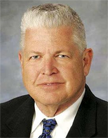
Glenn Duncan
Chino City Councilman Glenn Duncan has retired less than a year into his current elected four-year term.
A council member for 24 years and a Chino resident for 34 years, Duncan has been on the council since 1992. Though he never represented himself as an out-and-out opponent of Chino’s preservation as a rural agricultural community in the midst of increasingly urbanized Southern California, Duncan’s tenure corresponded with the demise of the Chino Agricultural Preserve. At the time of his ascension to the city council, the overwhelming presence of flies in the community had become an issue. Among his first assignments as a councilman was to chair a committee chartered to eradicate Chino’s fly infestation. Throughout his time on the council his was a voice in favor of greater rather than less density in residential subdivisions permitted into the city. Over the last year, he was a member of the council majority that has overruled the objections of citizens in two of the city’s remaining rural zones who took stands against the encroachment into their neighborhoods of more intensified development than has been historically allowed under the city’s zoning codes and general plan.
A grocer who later was the proprietor of GTS Financial Services, Duncan has shown himself to be a creature of both government and the development community. In addition to being on the city council, since 2012 Duncan has held an appointed position conferred on him by the San Bernardino County Board of Supervisors on the board of the San Bernardino County Employees Retirement Association, in which capacity he oversees the more than $6 billion pension fund for the county government’s retired employees.
Within the last year, Duncan encountered controversy along with the rest of the city council when the council imposed on the city a ward system which conferred on the incumbent council members political advantages going into future elections. After the city was threatened with a lawsuit over what was termed polarized voting that was claimed to be prejudicial to minorities, the council elected to move the city to an electoral ward system rather than the at-large election process the city previously used. Several ward plans were considered but the one that was eventually chosen created four wards, in each of which one, and only one, of the city’s four incumbent council members dwelt, thus ensuring that the incumbents would not need to run against one another and that each would be able to take full advantage of his or her individual incumbency against any challengers.
Somewhat ironically, Duncan will be unable to use that advantage he and his council colleagues provided him. His decision to retire was in some fashion imposed on him when he learned late last year that he is in the primary stage of Parkinson’s disease. This precipitated his plan to move with his wife to Palm Desert, a hot and dry environment that might serve to slow the progression of the disorder.
Duncan served as a trustee and board president on the West Valley Mosquito and Vector Control District, and was a member of the boards overseeing the Southern California Association of Governments, a regional planning agency known by its acronym SCAG; the Ontario Airport Noise Abatement Strategy Committee; and the Water Facilities Authority. He was declared by the Chino Champion, Chino’s local newspaper, the Outstanding Citizen for 2014. In 2010, Duncan and his wife, Cindy, were recognized by the California Park and Recreation Society as Laymen of the Year for their more than 20 years of community involvement promoting community recreational activities.
Axed Ontario Fire Chief Staking Racism Claims On Word Of Ex-Councilman Avila
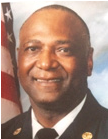
Floyd Clark
Former Ontario Fire Chief Floyd E. Clark has followed up on the original lawsuit he filed against the city that had hired him as the first African American fire chief in its history with a second amended complaint containing explicit charges of racial discrimination. Named in the complaint are the city, its fire department and city manager Al Boling. According to the suit, Boling created a hostile work environment and orchestrated Clark’s dismissal after Clark balked at providing a promotion for a fire engineer he considered unqualified. Central to the suit is Clark’s contention that the city was resistant to his efforts toward implementing a hiring practice aimed at creating a greater degree of racial diversification among the city’s firefighters.
There are countervailing contentions that Clark’s suit takes as its basis an invalid proposition that management was acting out of a prejudicial animus toward him and that Clark and his current and past attorneys have ignored or misconstrued and are continuing to ignore and misconstrue a series of events or complaints which originated or were perpetrated by others than those Clark blames, including most pointedly individuals whose actions are not at issue in the suit. In particular, the Sentinel is informed by well-placed and knowledgeable sources at City Hall that Clark has fixated on the action of city councilman Jim Bowman, who is described as being Clark’s leading advocate in the city, a consideration which may entail difficulty for Clark and his legal team as the suit progresses toward or actually goes to trial. Moreover, the latest version of the suit contains explosive charges of overt expressions of racial prejudice, including slurs, uttered by Bowman. This is complicated by the consideration that the allegation against Bowman is supported solely by former Ontario City Councilman Paul Vincent Avila, who was turned out of office last year following a four year-tenure in which his credibility had come under increasingly heavy fire.
On May 31, 2017, attorneys Lawrance Bohm and Bradley Mancuso filed a second amended complaint on Clark’s behalf in San Bernardino County Superior Court. That complaint alleges discrimination, harassment, Fair Employment and Housing Act retaliation, failure to prevent harassment, discrimination and retaliation, as well as violations of Labor Code Secions 98.6, 1102.5 and 6310.
Clark hired on with the Ontario Fire Department in 1986 as a fire investigator/inspector. He promoted through the ranks of fire captain, deputy fire marshal, operations battalion chief, deputy fire chief and fire marshal before he was selected in December 2011 to succeed Dave Carrier as Ontario fire chief. In turning to Clark, the city council made him the first African-American fire chief of the Ontario Fire Department in the municipal department’s more than a century of existence. Clark remained as fire chief for three-and-a-half years, a seeming success story, standing as an example of Ontario having joined the ranks of other San Bernardino County cities such as Montclair, San Bernardino, Grand Terrace, Colton and Victorville, which have embraced African Americans as top administrators or key members of management. Clark lasted in the chief’s position well beyond his 55th birthday, the age at which most firefighters retire, and looked to be aiming at staying in place until he was 60, an increasingly rare accomplishment for the firefighting profession in this day and age, with its emphasis on employing youthfully enthusiastic and robust personnel capable of meeting the physical challenges of the sometimes physically challenging assignments firefighting entails. Firefighters are promised lucrative pensions which incentivize early retirement, which generally keeps firemen from remaining in place into their 60s.
Having made his way to the top, however, Clark was intent upon hanging onto the post at least long enough to redress some of the shortcomings he perceived in Ontario’s fire department. Some of those issues had been longstanding.
According to the second amended complaint, “In or around the winter of 1992, chief Clark reported to Battalion Chief Larry Doan that some firefighters were presented with an unfair advantage on the fire captain’s promotional exam by going to a different terminal, re-entering information on the computer system, and completing the exam with unlimited time ramifications. Chief Clark was told by chief Doan that he was being an ‘instigator and that he should mind his own business.’ Based on information and belief, those accused of cheating were promoted and chief Clark was not selected for promotion.”
Clark’s suit maintains that favoritism toward unqualified individuals is ingrained in the department and that even as fire chief he did not have the power to combat it.
According to the second amended complaint, “Between, in, or around January 2012 through November 2015, during recruitment cycles, chief Clark was briefed by staff [training captain/deputy chief of operations Ray Gayk and deputy chief fire prevention Art Andres] on the current recruitment practices. These employees informed him that candidates went before an oral board [composed of one firefighter one engineer, and one captain]. From there, qualified candidates, based on the review of the panel, were selected for interviews. When chief Clark asked if any African-Americans were interviewed, he was told ‘yes.’ However, none were recommended to chief Clark for hiring. When chief Clark asked if he could see the ranking system used for previous candidates, he was denied. Chief Clark asked to participate in the oral board/selection process, but he was denied. Based upon information and belief, Caucasian employees who were similarly situated as plaintiff were given preferential treatment as it relates to job assignments, promotions and compensation. Since his employment thirty years ago, chief Clark was the last African-American employed by the fire department. Chief Clark petitioned city officials to correct and remedy the unfair treatment and discrimination within the department. However city officials and administration refused to listen to chief Clark’s concerns and provided no remedy to address the disparate treatment.”
The suit continues, “On or about December 29, 2013 Al Boling became the city manager for the City of Ontario. In or around January 2014, chief Clark told city manager Boling that he was excited to work with him on increasing diversity in the fire service, to which city manager Boling replied, he did not share chief Clark’s concern and that chief Clark’s focus should be solely on the budget concerns of the fire department.”
Bohn and Mancuso maintain that in 2015 Clark was pressured to recertify engineer Wayne Dennis as a paramedic despite Dennis not having worked as a paramedic for fifteen years. Clark maintained this would constitute an undeserved promotion that would have enhanced Dennis’s retirement benefits.
Clark’s suit alleges that in late July 2015 he was approached by Boling and told to promote Robert Elwell from battalion chief to deputy fire marshal, “despite Mr. Elwell not meeting the minimum qualification for the position. City manager Boling insisted that chief Clark do as instructed.”
Ultimately, a showdown between Bowman and Clark ensued during a meeting at which the fire chief, the councilman and the department’s deputy chiefs were present, according to the complaint. At that point, according to the lawsuit, Bowman told Clark point blank, “You need to go because you are not in touch with the culture of the department anymore.”
According to the suit, Clark went out on medical leave while dealing with carpal tunnel syndrome in November 2015. Boling harassed him during this period by proposing retirement and asking him to turn in the keys to his office and bring his staff car to the station. Clark was noncommittal, hoping at that point he might stay in position for as many as two to three more years. Boling sought to have him move up his retirement date to December 30, 2015. Clark refused. According to the suit, Boling on at least four occasions in December 2015 attempted to “coerce his retirement.” Then, to prevent future bullying, harassment and vexing, Clark gave a tentative commitment to retire in July 2016. But despite that compromise, according to the suit, Boling did not keep his end of the bargain. Boling presented Clark with a settlement agreement in December 2015 that specified his retirement would commence at the end of that month upon his voluntary resignation. Simultaneously, in what was intended as a fait accompli, Boling sent out a memo, without Clark’s knowledge or consent, informing fire department personnel that Clark had given notice of his retirement.
On February 10, 2016, when Clark returned from medical leave and intended to pick up where he had left off, Boling placed him on administrative leave with pay.
In Clark’s suit, Boling and Bowman are depicted as the primary actors forcing Clark’s departure.
Indeed, Bowman is especially demonized in the suit, which states that “On or about March 14, 2016, a City of Ontario council member overheard council member Bowman refer to chief Clark as a ‘coon,’ a ‘nigger,’ and a ‘token black’ to council member Alan Wapner and city manager Boling. City manager Boling replied, ‘I will take care of this. I have a plan.’”
The unidentified council member who claimed to have overheard Bowman’s use of the slurs is former councilman Paul Vincent Avila, the Sentinel has learned.
The complaint further states, “In or around October 2002, while serving as fire marshal, chief Clark was asked by former fire chief and current City of Ontario Council Member Jim W. Bowman to prejudicially favor Sam’s Club, Inc. to be able to sell fireworks, even though the sale of fireworks was forbidden by city law. Chief Clark reminded [then-fire chief] council member Bowman that this action was illegal. [Then-fire chief] council member Bowman responded, ‘Do as you’re told.’ Chief Clark wrote Sam’s Club, Inc., stating. ‘…per the direction of the fire chief [council member Bowman], you are permitted to sell fireworks.’ After [then-fire chief] council member Bowman saw the letter, he called chief Clark into his office and proceeded to harass and berate chief Clark by calling him “a dumb ass motherfucker [who will] never get away with this.’ Immediately thereafter [then-fire chief] council member Bowman asked chief Clark to take a demotion. Chief Clark went to the city’s human resources department to explain the unwarranted demotion and retaliation. The human resources department replied that [then-fire chief] council member Bowman had proper authority to ask chief Clark to demote. Chief Clark was demoted without reason.”
The Sentinel is informed that in actuality, Bowman, more than any other member of the council, intervened with his council colleagues and staff in defense of Clark. According to reliable sources functioning within Ontario municipal government, it was action by councilman Alan Wapner, which was rebuked in private by Bowman, that served as the catalyst for Clark’s forced exodus as fire chief.
With the Fourth of July celebrations around Ontario in 2015, events occurred which ultimately led to Clark’s once-unblemished reputation as a fixture of both Ontario history and within Ontario’s firefighting pantheon being at first questioned, then sullied. With subsequent events the situation devolved into a circumstance in which Clark was ignominiously terminated. Clark is now maintaining that Ontario’s government structure is a culture dominated by white Anglo Saxon males in which Clark had been given a token promotion but was unable to actually exercise true authority as fire chief.
At the July 7, 2015 Ontario City Council meeting, Wapner confronted both the chief of police, Brad Kaylor, and Clark, pressing them on the proliferation of illegal fireworks throughout the city on July 4, three days earlier. Kaylor responded, saying the city’s codes did not allow the police department to issue citations to those blasting off illegal fireworks within the city limits unless they were caught in the act of doing so. Wapner demanded of Clark how many warnings fire department personnel had issued with regard to the possession or use of fireworks. Clark said he did not have that information but would research it. Wapner’s exchange with Clark was a sharp one, and though Councilwoman Debra Dorst-Porada came across as concerned about the matter as well, the remainder of the council seemed reluctant to gang up on the fire chief over an issue that was a mere manifestation of jubilation that accompanies the most patriotic of American celebrations. Clark did not engage with Wapner at the time, but the public scolding Clark sustained continued to resonate. Subsequently, the Sentinel has learned, the other members of the council, Jim Bowman in particular, privately rebuffed Wapner for having taken the fire chief to the woodshed in public, prompting Wapner to offer a somewhat sheepish apology to his colleagues, claiming he did not fully realize what he had done. No apology was made to Clark, however, and the relationship between Clark and the city went downhill from there.
Ironically, Clark’s sallies against Bowman would result in Bowman becoming less reluctant to go to bat for Clark. In a double irony, Bowman’s defense of Clark precipitated a fissure in the once rock solid political alliance between Bowman and Wapner, and that relationship has yet to fully recover.
Wapner’s slap at Clark was the first public indication of any hint of dissatisfaction with Clark. That public demonstration, exposing Clark as politically vulnerable, triggered, it appears, some show of dissension in the fire department. That dissension manifested from down the chain of command upward, perhaps accentuated by the impatience of the most ambitious members of the department who were angling for promotions, ones that were being held up as Clark remained in a position atop the heap in the fire department beyond his expected retirement age.
One well-placed source has told the Sentinel that by September 2015 “ill will toward Floyd within the ranks” was apparent. That sentiment, involving a handful of firefighters, was conveyed to city manager Al Boling, who in October of 2015 was giving indication that the city was looking toward Clark’s upcoming departure sooner rather than later, and certainly no later than at some point in 2016. Boling articulated to a select group that it was anticipated the department would be moving on with Bob Elwell, who was Clark’s assistant fire chief at that point, succeeding him.
Indeed, Clark’s replacement was actuated in the interim after he went out on medical leave beginning in November 2015 and while he remained absent from the department.
The city’s legal defense is being handled by the Los Angeles-based law firm of Liebert Cassidy Whitmore. The lead attorney on the matter is Alison Kalinski.
Bohm and Mancuso exist as the fourth legal team to represent Clark in his dispute with the City of Ontario. While Bohm and Mancuso had sought to sharpen the legal rapier they had in store for the city by the addition of Paul Vincent Avila’s allegation regarding the statements by he said he overheard on March 14, 2016 into the second amended complaint, the Sentinel has learned that Kalinski and the attorneys at Liebert Cassidy Whitmore have the opposite perception, believing that by staking Clark’s case on the credibility of Avila, Bohm and Mancuso have engaged in overreach that will ultimately eviscerate the entirety of the case.
Bohm said, “It’s appalling what happened to chief Clark. We expect and demand better from people in positions of authority.”
Mancuso, said, “I have nothing but respect for those who serve our communities. Chief Clark was a dedicated firefighter and leader for the City of Ontario. He is one of those rare individuals who wants to make a real impact on people’s lives.”
“I was devastated and extremely disappointed with how I was treated,” Clark said. “I would often be afraid of going into work, worried about what they would do next to humiliate or degrade me. I endured my time there as long as I could because I wanted to fulfill my dream of equality in the Ontario Fire Department. I was not treated with dignity or respect. I was made to feel worthless, like I didn’t belong. This was my dream, and sadly, it was turned into a living nightmare.”
Clark added, “I hope this lawsuit changes the environment within the City of Ontario Fire Department so that there will be employees of all races and backgrounds. I hope more people who are being mistreated at their workplace become empowered and brave enough to speak out and seek justice.” -Mark Gutglueck
Needles Court To Reopen Once A Month Starting July 7
As of upcoming July 7, the San Bernardino County Superior Court will reopen the Needles Justice Court once a month. That development has been widely hailed as the second step toward attenuating the onerous impact of the 2014 realignment of San Bernardino County’s court system, formulated in large measure by then-presiding judge Marsha Slough, then-assistant presiding judge Larry Allen, then-court executive officer Stephen Nash and Nash’s successor, then-court executive officer Christine Volkers. That realignment revolved around the May 12, 2014 opening of the 11-story, 35-courtroom San Bernardino County Justice Center located at 247 West Third Street in the county seat. During the previous decade and intensifying during the two-year run-up to or simultaneous with the justice center’s opening, the county court system centralized a significant portion of its operation in the county seat, shuttering several courthouses around the county, including ones in Chino, Barstow, Needles, Redlands and the mountain communities. With the opening of the San Bernardino County Justice Center, San Bernardino District criminal cases, previously heard in the San Bernardino Central Courthouse built in 1927, were moved into the new San Bernardino Justice Center. The West Valley Superior Courthouse in Rancho Cucamonga, which had been a venue for all order of both civil and criminal cases originating on the west end of the county, lost most but not all of its civil calendar. With the realignment, it remained as the venue for criminal cases arising on the county’s west end and also took on most felony and misdemeanor cases from the county’s Central District, which were to that point routed to the Fontana Courthouse. The Rancho Cucamonga courthouse continued to host hearings on both civil and domestic violence restraining order matters and remained, until this month, a venue for name change petitions.
The historic San Bernardino Courthouse remains as the forum for the family law cases from the Central District previously adjudicated there and took on the family law cases previously heard in Rancho Cucamonga. The Fontana Courthouse became the stage for all small claims, landlord tenant disputes and traffic/non-traffic infractions from the San Bernardino, Fontana and Rancho Cucamonga districts. The Victorville Courthouse remained a venue for High Desert family law cases.
Many questioned the wisdom of Slough’s vision for the transformation of the county court system and the centralization of all civil courts in downtown San Bernardino. Far flung San Bernardino County, which spans 20,105 square miles, is the largest county in the lower 48 states, with a land mass greater than the states of Delaware, New Jersey, Rhode Island and Connecticut combined. Slough’s change has imposed a tremendous logistical burden on many of the county’s citizens who need to access the courts. Driving distance from Needles to San Bernardino is 212 miles, with an average one-way traveling time of three hours and nine minutes. Slough said her hands were tied by Sacramento, which had consistently over the preceding several years cut the Superior Court’s operating budget.
Hope that the realignment might be substantially reversed was dashed with the county’s sale of the Chino Courthouse in the summer of 2015. There was little prospect that other courthouses the county had closed down, such as the one in Redlands and another in Twin Peaks, might be reactivated. One small change perceived as a shift back toward better access was when the Barstow Court was reopened two days a week for certain types of cases.
In December 2015, Governor Jerry Brown elevated Slough to the Fourth Appellate Court, a move which many in the local legal community saw as reward for her having fulfilled budgetary mandates from Sacramento. Two months later, after Slough was no longer presiding judge, Volkers was put on administrative leave, which was suspected but never officially confirmed as being a manifestation of the widespread local discontent over the court closures and consolidations.
Last month, it was announced that the San Bernardino County Superior Court will open limited service in Needles to address traffic and non-traffic infraction matters. The Needles Clerk’s Office will be open to the public on the first Friday of each month during the business hours of 8:30 a.m. to 12:30 p.m. The Needles Court District is to be housed at 1111 Bailey Avenue, and will provide limited services including non-cash payments, traffic school sign-ups, payment extension and court date scheduling. This will be supported by remote video proceedings with a judge sitting in the Barstow District. According to the State of California, “Additional services will be provided gradually as resources become available.”
In addition, the Victor Valley Transit Authority Route 200 will continue to make one round-trip each Friday, departing from Needles, traveling to Barstow in the morning and returning to Needles in the afternoon for those individuals who wish to appear at the Barstow District.
According to the State of California, “This ongoing collaboration between the San Bernardino Superior Court, Needles City Council members and Robert Lovingood, San Bernrdino County First District Supervisor, represents a continuing effort to restore services that were reduced or eliminated due to budget cuts over the last several years.”
“Bringing video court proceedings and other services to Needles will save countless hours of travel time and increase convenience for Needles residents,” San Bernardino County Board of Supervisors Chairman Robert A. Lovingood said. “We have long advocated at the state level for increased services for Needles. It’s great to see this new development and the focused, ongoing effort of restoring more services for the community of Needles and surrounding areas.”
County Makes .001096 Percent Adjustment To Medical Imaging Storage & Retrieval Contract
San Bernardino County has made an adjustment equal to less than .001096 percent of the previously agreed to amount of one of its contracts.
On January 24, 2017, the board of supervisors approved a fourth amendment to a contract it has had with McKesson Technologies Inc. since 2006 for technical assistance and hardware, software, licensing and system maintenance in support of its medical imaging systems and the digital storage of those images at the Arrowhead Regional Medical Center, which is the main campus of the county hospital. That amendment reduced the price for the support of the hospital’s medical imaging picture archiving and communication system and its cardiology picture archiving and communication system due to the deletion of McKesson’s technicians’ travel and service days related to an upgrade, by $50,436, from $8,349,068 to $8,298,632, with no change to the May 18, 2020 expiration of the service contract.
Staff at Arrowhead was contacted by McKesson following approval of the amendment in January, according to William L. Gilbert, the director of the Arrowhead Regional Medical Center, “as it was discovered that McKesson had inadvertently omitted two additional cardiac workstations that were required for a recent upgrade.” Gilbert recommended the county amend the contract with McKesson to allow the medical center to receive the two additional cardiac workstations, at no additional cost, for use with the recently installed medical imaging picture archiving and communication system and the cardiology picture archiving and communication system utilized for viewing and storage of all images provided by the medical center’s medical imaging and cardiology departments. The county agreed to pick up the corresponding support in an amount of $303 annually, totaling $909 for the three-year period.
San Bernardino County Unemployment Rate Declines To 4.6 Percent
San Bernardino County’s unemployment rate plunged from 5.2 percent to 4.6 percent between the beginning of March and the end of April. A report by Chmura Economics and Analytics for the San Bernardino County Workforce Development Board stated that job growth is expected to continue, and will likely sustain itself into the next decade, with business growth and employment gains anticipated in most sectors.
The significant jobless rate decline was revealed in data released by the California Employment Development Department on May 19.
The unemployment rate in the county is now lower than that overall for the entire State of California, which fell to 4.8 percent when 16,300 jobs were added in April, according to the California Employment Development Department.
Extrapolating on economic trends from the third quarter of 2015 through the second quarter of 2016, Chmura Economics and Analytics in its missive “The State of the Inland Empire Economy” predicts employment growth will continue across all 21 major business sectors over the next 10 years, with particular growth in healthcare, social assistance, construction, and professional, scientific and technical services. The manufacturing sector should add more than 22,000 jobs by 2026, Chmura prognosticated.
The report is not completely optimistic, however, as the region’s workforce – consisting primarily of youthful high school and college graduates – is expected to grow at an annual rate of 0.5 percent to 0.6 percent, well beyond the projected statewide average of 0.2 percent to 0.4 percent, and outrunning the number of jobs to be created to employ those graduates.
Robert Lovingood, chairman of the San Bernardino County Board of Supervisors, said the results of the Chmura study are an important reminder of the Inland Empire’s growing status as a regional economic engine.
“We have what businesses, industries and employers need – land, access to transportation, a great quality of life and, most important, a strong pipeline of workers and job seekers with unlimited potential,” Lovingood said. “With all of this, the Inland Empire will be a leader in driving business growth and job creation across Southern California.”
The Inland Empire has recently outpaced California overall in terms of putting people to work, increasing the pay of those who are already working and in retail sales, according to the Chmura study. In the field of health care, that trend will continue, the Chmura study predicts.
“Overall, the Inland Empire is positioned for continued growth and is ripe with substantial opportunities for workforce development,” according to the report. “As many of these opportunities will occur at the intersection of workforce, economic, postsecondary, and community development, the San Bernardino Workforce Development Board is uniquely positioned to have a transformational impact on the region’s future.”
Forum… Or Against ’em
By Count Friedrich von Olsen
I am not much of a scientist. In fact, I am not anything resembling a scientist. But right here, before your very eyes, I am going to make a scientific prediction which I will lay you odds I am going to get right. And all of those egghead NASA scientists who have IQs on a magnitude of three or four times mine will, I am confidently prognosticating, get it wrong. Are you ready? Here is my prediction: The Parker Solar Probe will not complete its mission. It will fail. It will burn up…
For those of you who don’t know, the Parker Solar Probe is an unmanned mission that is supposed to travel to within four million miles of our sun’s surface, and actually reach a point inside its Corona, or outer layer. Mind you, the Parker Solar Probe is purposed to get seven times closer to the sun than the 1976 Helios 2 mission, which is the closest any earth-launched spacecraft has ever gotten to our sun, at something like 27 million miles…
According to NASA, after the Parker Solar Probe gets inside the Corona, sensory equipment aboard it will begin making a survey of the environs there, make all order of electronic measurements, and take visual metrics using telescopes. Some of the most critical observations will pertain to solar winds which reach speeds that dwarf our paltry 236 miles per hour top speed winds here on earth. It will make a study of solar storms and solar flares, the phenomena which cause problems with our power supply on earth and sometimes cause electronic circuits on the satellites circling earth to fritz out. In general, we will gather all order of physics data we heretofore never had and can only speculate about. All of this data will be collated and beamed back to us on earth…
Along the way there are going to be some really neat secondary things about the journey that would be of interest and excitement to even the dullest among us, like the way the spacecraft will maneuver to get where it is going by utilizing the gravitational pull of Venus to slow to a mere 400,000 miles per hour for its flights into the sun or the velocity it is designed to achieve as it passes around the Sun, something like 120 miles per second, making it three times faster than the fastest man-made object to date…
At least that’s the way it is supposed to work. But I am skeptical. Think about this: Here on earth, we are 92,955,807 miles from the sun. Put another way, that’s getting pretty close to 93 million miles. The Parker Solar Probe will reach a point roughly 3.8571 million miles from the sun. My guess is it is going to be pretty damn hot where this spacecraft is going. The Poindexters with NASA have pinpointed this at 1,400 degrees. I have a feeling it is going to be hotter than that, but as I said up top, I am not a scientist, so trust them rather than me. But, bear in mind, there will be other things to contend with, like solar flares and solar winds and what not. Supposedly they are outfitting the Parker Solar Probe with a 4.5-inch-thick heat shield with which to protect the probe’s instruments and antennae and all of its navigational and propulsion equipment so it can zoom in and zoom out and zoom in again and zoom out and so forth. My instinct tells me that four-and-a-half inches of insulation is insufficient and when the spacecraft gets somewhere in the neighborhood of ten million or nine million or eight million miles distant from the sun, the heat will get to it. That is just my unscientific, my ignorant, opinion…
Launch is scheduled for July 31, 2018. It will make flybys of Venus on September 27, 2018; December 21, 2019; July 5, 2020; February 15, 2021; October 10, 2021; August 15, 2023; and October 31, 2024. It is scheduled to make its first close approach to the sun on December 19, 2024…
La Vida Mineral Springs Resort
 Though the development of modern civilization is fast encroaching upon it, Carbon Canyon for decades was a rural oasis lying between the suburban sprawl of Orange and San Bernardino counties. The easternmost portion of Carbon Canyon lies within the southwesternmost corner of San Bernardino County.
Bracken Fern
 The bracken fern, which is also called the eagle fern, grows locally, and occurs in temperate and subtropical regions on all continents except Antarctica. The extreme lightness of its spores has led to its global distribution. This fern, known by its scientific name pteridium aquilinum was first described as pteris aquilina by the father of taxonomy, Carl Linnaeus, in 1753. The genus name comes from the diminutive of the Greek words pteris meaning fern. The Aquilina derives its name from the Latin aquila, meaning “eagle,” based upon the shape of the mature fronds resembling an eagle’s wing.
Common bracken is a herbaceous perennial plant, deciduous in winter. The large, roughly triangular fronds are produced singly, arising upwards from an underground rhizome, and normally grow to at least three feet to as high as ten feet tall. The main stem, or stipe, is up to 0.4 inch in diameter at the base. It is typically found in woods (including somewhat dry woodland areas), fields, old pastures, thickets, areas with disturbed soils, burned-out areas and marshes. Established plants tolerate brief periods of drought. Fronds of this deciduous fern die back somewhat rapidly after the first fall frost with new fiddleheads emerging from the ground in spring
An adaptable plant, bracken readily colonizes disturbed areas. It is easily grown in consistently moist soils in full sun to part shade, favoring sandy to peaty acidic soils. It is rarely found in areas with alkaline soils and grows well in poor soils. Hardy and vigorous, but often weedy, the bracken can prove difficult to control or eradicate once established due to deep creeping rootstock. Plants spring back quickly after fires or logging, often out-competing other species and impeding regeneration of trees and shrubs. It spreads by wind-blown spores and creeping rhizomes.
Considered edible, bracken is a widely eaten vegetable in Korea, Japan and parts of China. In Korea, soaked, parboiled, and stir-fried bracken is often eaten as namul, a seasoned vegetable side dish. It is also a classic ingredient of bibimbap. Nevertheless, the plant contains the carcinogenic compound ptaquiloside. High stomach cancer rates are found in Japan and North Wales, where the young stems are used as a vegetable. Consumption of ptaquiloside-contaminated milk is thought to contribute to human gastric cancer in the Andean states of Venezuela. The spores have also been implicated as carcinogens.
Romping Around
 The male romper is here, and it could be a thing of the moment that will change soon but the reality is that it’s definitely something new to the men’s fashion scene. Will it blow up or quickly blow over like an L.A. summer storm? That remains to be seen. The one piece has been hinting around for just a moment and it’s yet to define its true purpose. The one-piece is showing up in different patterns like stripes and polka dots and some subtle-to-bold colors. It goes without saying that men’s fashion is definitely ahead of the game and the trends are here to prove it. The romper is certainly something that hasn’t been a part of the street scene for males. Although the one-piece get-up comes with history, meaning men like James Bond have worn one on the big screen. Also many wore jumpsuits in the Air Force during the 40s, and this utilitarian use included painters and railroad workers. It’s a bit stunning to see men on the street and the all-in-one look has its followers who will recreate the look during this time. I don’t know that the romper will be a one hundred percent hit for all men, but it is sure to captivate the attention of the daring ones who enjoy the more edgy wardrobe. There are several choices out there with regard to the romper. It’s a matter of how you want to wear it. Enjoy the romper this season and have fun!
“Fashion is about something that comes from within you.” – Ralph Lauren