Business Recruitment Lovingood’s Theme In First District Race

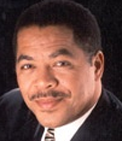
Robert Lovingood, one of seven candidates vying to replace outgoing First District supervisor Brad Mitzelfelt, said he wants to bring to government the same employment-generating ethos that has sustained his career over the last 23 years in the High Desert’s private sector.

Robert Lovingood

Lovingood is the owner and chief executive officer of ICR Staffing Services in Victorville, which according to company records has found employment positions of one sort or another for 30,000 job seekers in the High Desert since the company began operating in 1989.
“We have to generate revenue,” Lovingood said. “We have to create jobs.”
The entire state of California has been plagued by the shutting down of businesses and the loss of employment opportunities. That has taken place, Lovingood said, because of the contraction of the national economy but also because California in general has engaged in policies that ward off businesses and it has been outhustled by other states that have undertaken policies to attract manufacturers and businesses.
“Look at what Rick Perry did in Texas,” Lovingood said. “He went to 100 companies in California that were contemplating closing down and offered them incentives to relocate to Texas, providing them with the opportunity to cut costs and increase profitability. We should be doing that here.”
The High Desert has in plentiful supply two of the elements that would allow that formula to be applied, he said.
“We have affordable land and a ready workforce,” Lovingood said. “The cost of property in the High Desert is well under the average cost in the rest of urbanized California. And we have 60,000 commuters from the High Desert going to work elsewhere in Southern California every day.  What we need to do is relocate jobs into the High Desert. We have the formula for success. Our water issues have been mitigated and resolved. We can do this.”
If he is elected to represent the First District and its more than 400,000 residents, Lovingood said, he will be proactive in seeking out employers currently located in the state that are contemplating leaving and endeavor to convince them to remain in California by relocating in the High Desert.
“There are multiple successful manufacturers in California that have been running for generations and their executives are asking themselves, ‘Do we go to Arizona or Texas to open operations?’ They are on the brink of leaving California. But many of those are anchored by families or other considerations and for that reason they are looking to stay here, even though they can’t afford to stay where they are now. If we can bring them in here and cut other costs, eliminate the borderline harassment from inspections and regulations they are experiencing and instead of raising fees lower the fees or waive the fees or eliminate the fees altogether, we can revive the local economy. I am involved in several trade associations. I am in contact with business people who want to expand, but government is not giving them the encouragement to do that. Government is actually discouraging them. I want to make things change from the status quo. I guarantee you those companies are out there. We can bring them in and have them locate their operations here by removing the barriers that stop companies from expanding.”
This approach is not merely a pipe dream, Lovingood insisted. The city of Adelanto years ago made a concerted effort to make itself attractive to manufacturers, and that approach was successful, he said.
“Look at what happened in the early 90s when we lost George Air Force Base,” he said. “Adelanto did an industrial operation outreach and created just short of 4,000 jobs by doing that. Every business created gives you a 3.2 muliplier of jobs into the community. Based on Adelanto’s success, it makes sense to build this region up, increase the manufacturing base and bring into the community more jobs.”
Lovingood is vying against Hesperia Mayor Russ Blewett, San Bernardino County fire department captain Bret Henry, congressional office staffer Michael Orme, Apple Valley Councilman Rick Roelle, current supervisorial district staffer Bob Smith and Adelanto School District Board Member Jermaine Wright. He had nothing bad to say about his opponents. “Everybody running is well intentioned,” he said. Nevertheless, he said his experience, skill set and vision differentiated him from the pack.
“I’ve sat on two publicly traded company boards, both of which sold for a solid return for their investors,” he said. “For a living, I work with businesses to find suitable employees and to help mitigate regulation. That is the atmosphere I work in. I am a business generator and have succeeded for nearly 23 years in the High Desert. I would like to give back. I understand business. I understand the demographics here and I know what companies we need to bring in, what jobs and businesses we need for citizens who live here. There is one other opponent in this race with business experience. All the others come from the background of working within government.”
Lovingood was born in Atlanta, Georgia.
He spent four years in the Air Force, receiving technical training working within the civil engineering division. He attended the University of Maryland through overseas extension courses, taking coursework in  business and economics. He is 54 years old and married with three children.

Jenkins Now Heading County Airport Division

James Jenkins, who has worked for the San Bernardino County Department of Airports for more than 21 years, last week succeeded Mike Williams as director of airports.
“We are lucky to have James in this role,” said county deputy executive officer Keith Lee, who oversees the Department of Airports. “Aviation is his passion, and no one knows the department better or has more enthusiasm for its mission. James has excelled in a variety of airport management roles, and the county will benefit from his leadership.”
Jenkins had ascended to the position of assistant director under Williams, who recently retired, and was designated as interim director after Williams left.
Jenkins began with the county airports department in 1991 as an electrician in the department’s maintenance division. He acceded to the position of maintenance supervisor, then operations supervisor, was later airport manager at Chino Airport, and was assistant director for the past seven years.
He is an executive member of the American Association of Airport Executives and has most recently served as the past president of the Association of California Airports.
The San Bernardino County Department of Airports provides for the management, maintenance and operation of six county-owned airports – Chino, Apple Valley, Barstow-Daggett, Twentynine Palms, Needles and Baker. The department also assists San Bernardino County private and municipal airport operators with planning, interpretation, and implementation of FAA general aviation requirements.

Judge Sides With Ramos In Dispute Over Derry’s “Businessman” Ballot Description

Supervisor Neil Derry will not be allowed to identify himself as a businessman on the ballot for the June election, San Bernardino County Superior Court Judge Brian McCarville ruled on March 27.
In the increasingly bitter race between Derry, the incumbent Third District supervisor, and James Ramos, the outgoing chairman of the San Manuel Tribe of Mission Indians, Ramos funded the filing of a writ of mandate by Patricia Amicone alleging Derry’s proposed reference to himself as supervisor/businessman on the ballot as well as all of the materials, including the sample ballots and candidate statements, to be mailed to voters in the run-up to the election was inaccurate. Amicone has described herself as a friend and political supporter to Ramos.
Ramos covered the $8,500 fee the Sacramento law firm Bell, McAndrews & Hiltachk charged to file the writ on Amicone’s behalf in San Bernardino Superior Court on March 16 and another $1,900 for a lawyer to reiterate in court the points made in the writ.
In responding court papers, Derry maintained that the businessman description was indeed accurate because he was renting out a residential property he and his wife own, netting $26,000 per year, and was doing all of the work that entailed, including managing and maintaining the property.
McCarville, however, ruled that Derry’s primary and principal occupation is county supervisor, for which he receives $263,000 in combined salary and benefits per year. As such, McCarville found, Derry cannot identify himself as a businessman for the purposes of election materials to be provided by the registrar of voters to the public. The judge ordered registrar of voters Michael Scarpello to amend the ballot designation for Derry from “supervisor/businessman” to “county supervisor,” finding that the latter is his principal occupation.

Board Of Supervisors Accepts Own Pay Reduction Measure For November Ballot

SAN BERNARDINO—With nary a comment, county supervisors this week approved the placement of an initiative on the November ballot to cut their salary and benefits from $270,000 per year to $60,000.
Advocates of the measure, which was drafted and  initially sponsored by Wrightwood resident and former grand jury member Kieran “Red” Brennan, needed to obtain the valid signatures of ten percent of the county’s electorate – 43,520 – to qualify the initiative for the ballot. Brennan’s effort was boosted when the union for the county’s general employees, the San Bernardino Public Employees Association, and the union for the county’s sheriff deputies, the Safety Employees Benefit Association, took up his cause and utilized union money to hire petition gatherers.  Three weeks ago supporters turned petitions containing 73,672 signatures over to the registrar of voters, who examined enough of those petitions and compared the signatures contained thereon against voter-registration documents to ascertain that the threshold to qualify the measure for the ballot had been achieved.
The only options left to the supervisors were to pass the initiative on a vote of their own, agree to place the measure on the November ballot or to delay doing so for a month while an analysis of its impact was undertaken. They chose to simply place it on the November ballot without discussion.
In addition to reducing their salaries from $151,000 per year to $50,000 per year and reducing their benefit packages from an average of $119,000 per year to $10,000 per year, the initiative if passed will limit their staff budgets to $250,000 each.
The pay reductions envisioned in the measure will not be applicable to those supervisors elected in the 2010 or current election cycles. Because the measure will not be considered until November, when voters will also be voting on who will serve as supervisor in the First, Third and Fifth supervisorial districts, those cuts would not go into effect for those office holders until after the 2016 election if the measure passes. The incumbent supervisors in the Second and Fourth supervisorial districts, Janice Rutherford and Gary Ovitt, would be subject to the reductions after the 2014 election if the measure passes.

Rialto Council Approves 30-Year Lease Of Water System To N.J. Company

The Rialto City Council this week voted 4-to-1 in favor of entering into a 30-year lease of the Rialto municipal water system with New Jersey-based American Water Works Co., Inc.
Under the terms of the deal, American Water Operations and Maintenance, Inc., a division of American Water Works that will function as a local company known as Rialto Water Services, will take over operation and maintenance of the water district. The city will retain the district’s water rights.
The company would further take on all aspects of operations, maintenance and billing, effectively running both the water and sewer utilities for the next three decades.
Water and wastewater division employees will be allowed to transfer into the city’s engineering or public works divisions if they wish, remaining as city employees with their public pension plans intact or can go to work with American Water, which would be required to guarantee those employees will remain employed for at least 18 months with salary and benefits equal to those offered by the city. That guarantee would sunset after 18 months
American Water Works is a for-profit investor-owned water and wastewater utility company. According to city officials, the company has agreed to make somewhere in the neighborhood of $45 million in upgrades to the water system. American Water has also agreed to assume all debt owed by the city’s water utility division and fund all needed infrastructure improvements to the system.
In return, city officials have agreed to a 114.8 percent increase in water and wastewater rates by 2016, such that the average water bill of Rialto households utilizing 17,000 gallons per month will jump from the current rate of $26.27 per month to $64.14 monthly and increase the wastewater treatment fee from $25.97 to $61.46 as of January 1, 2016.
Four-fifths of the city council indicated they had come to the conclusion that the arrangement with American Water is the only viable means of salvaging the decaying municipal water system.
Councilman Joe Baca Jr., who previously joined with councilwoman Deborah Robertson in opposing the American Water contract last year, was the only vote against it on Tuesday. He said the rate increases were too high and would fatten the company’s profit margin.
Mayor Grace Vargas, who because of a health-related absence missed the vote in June resulting in a 2-2 deadlock, joined with Robertson, councilman Ed Scott and councilman Ed Palmer to approve the lease arrangement on March 27.
Roughly half of the residents in this city of 99,171 are municipal water district customers who will now become American Water customers. The other half get their water from the West Valley Water District.
City residents will yet have an opportunity to reject the rate increases by means of a mail vote to be conducted by the city. If more than 50 percent of the ratepayers return the mail-in ballots rejecting the increase, it will not go into effect.

Deputy District Attorney Honored For Effort Toward Combating Truancy

Deputy District Attorney Agnes Murray was recognized Thursday at the 14th Annual “Shine a Light” on Child Abuse Awards Breakfast for her work with at-risk children in San Bernardino County. The annual event, hosted by Children’s Network, is held at the end of March as a kick-off for Child Abuse Prevention Awareness Month in April.
“Agnes is deserving of this award because she is improving the lives of students who might otherwise be led down the wrong path, and she deeply cares about the impact truancy has upon our community,” said supervising deputy district attorney Mary Ashley.
Murray joined the District Attorney’s Office in 1989 and is currently assigned to the truancy program, where her goals include improving school attendance for previously truant students and discouraging future truancy. She also teaches for the FLIP Academy (Fontana Leadership Intervention Program) and sits as an active member on the mentoring task force and Project Comeback for Colton Unified School District and the state School Attendance Review Board.
When necessary, Murray prosecutes the parents who, after all other voluntary efforts have been exhausted, continue to refuse to send their children to school.  This important step is taken to intervene in order to save a child from the inevitable grim path of not attending school and ultimately becoming a part of the juvenile delinquency problem.
According to Murray, her goal is to reduce the negative impacts caused by truancy and juvenile delinquency.
“It is always nice to be appreciated and recognized, but I do what I do because I want to make a difference in the lives of at-risk children,” said Murray. “I am very lucky to have supervisors who inspire me and give me the opportunity to do what I love.”

McNeeley Becomes Casualty Of Political Shift On SB City Council

SAN BERNARDINO — City Manager Charles McNeely resigned Thursday, effective May 1, an apparent casualty of the interminable struggle between the city’s two warring political factions.

Charles McNeely

McNeely, who had been city manager in Reno, Nevada for 13 years, was highly recruited by the city and hired by San Bernardino in March 2009, taking up his stewardship of City Hall in June 2009.
He was provided with an annual salary of $275,000 per year and a $15,000 up-front relocation fee. In addition to his salary, McNeely was given $73,000 per year in health, retirement and other benefits.
Valued for his strong leadership skills, McNeely for some time set the tenor at City Hall, making a ten percent giveback of his salary as part of an effort to convince other city employees to make salary and benefit concessions on their collective bargaining contracts. He emphasized city government going back to basics, such as redressing potholes that plagued city streets and maintaining street lights and other infrastructure. He championed what he called SB Direct, a call center to facilitate the handling of city residents’ requests for assistance.
As the city struggled with dwindling revenues, McNeely led the city in its efforts to reduce spending, including making cutbacks in the fire department as well as the police department, where more than fifty law enforcement officers saw their positions eliminated over the last two years.
During the first two years of his tenure, McNeely was able to function under the safe cover of the political majority then in ascendency at City Hall, that is, the then-city council majority aligned with mayor Patrick Morris. Morris’ rival in San Bernardino was and remains city attorney Jim Penman, whom Morris defeated in the race for Mayor in 2005 and again in 2009.
Morris’s support of McNeely left the city manager at odds with the city attorney. There were manifestations of that enmity that loomed into public view at various times.
In October 2010, Penman, angry with how certain items had been agendized for the city council meetings in a way he thought favored Morris, had an argument with McNeely that came to the public’s attention. That same month, McNeely received a memo from police chief Keith Kilmer, a Morris ally, in which Kilmer alleged Penman had challenged him to a fight. McNeely diffused that crisis.
A year later, in October 2011, McNeely had to referee a battle between San Bernardino Public Works Director Nadeem Majaj and Penman over Penman’s objection to Majaj having cooperated with a police department investigation into charges that Majaj’s predecessor, Randy Kuettle, had accepted gifts from a city contractor, Matich Corporation, and then removed an inspector who questioned the work on one of Matich’s road-paving jobs. The Matich Corporation had been a Penman political backer.
Morris’ hold on the council was tenuous at best. In 2009, Dennis Baxter, one of Morris’s allies on the council, was defeated by Jason Desjardins, who was backed by Penman. When Desjardins was forced to leave the council prematurely in 2011, he was replaced by another Penman ally, Robert Jenkins. Last November, the 4-3 majority Morris continued to enjoy on the council was reversed when Tobin Brinker was replaced by yet another Penman ally, John Valdivia.
While Valdivia has made statements for public consumption that diplomatically indicated his readiness to work with McNeely, he has also said that he is looking forward to forging a new city management team. McNeeley’s contract was set to expire or be extended in June. There were indications as early as December that he was contemplating leaving. In the end, McNeely did not have the energy to function in an atmosphere beset with a continuum of political bickering.
“I wish to express my gratitude for the opportunity to have worked with you over the last three years,” McNeeley wrote in a letter to city staff informing them of his resignation. “The residents of this community are fortunate to have such dedicated employees who sacrifice so much to maintain a high level of service to this community under the most difficult of circumstances. It truly has been great to get to know many of you personally and I want to thank you for your support during my tenure as city manager and wish you and the city the very best.”

Hearing Officer Finds Nepotism, Cronyism & Racism At SBCUSD

Mel Albiso, the San Bernardino City Unified School District’s former assistant superintendent of human resources and its current associate superintendent and chief administrative officer, has engaged in numerous examples of nepotism, cronyism and race-driven favoritism, according to an independent hearing officer who looked into the district’s personnel practices.
The district retained administrative hearing officer Norman Brand, the past president of the California Dispute Resolution Council, to look into former personnel director Abe Flory’s contention that he was wrongfully terminated by the district in 2007. In reviewing more than a ream of documents Flory produced or referenced in support of his case, Brand came to the conclusion that Flory’s firing was unjustifiable and that he should be reinstated with $550,000 in back pay. In making that determination, Brand found merit in Flory’s assertions, posted in a newsletter and on a website, charging the district and Albiso engaged in hiring practices that were fraught with  “nepotism, cronyism and racism.” Brand told the district’s personnel commission “evidence shows at least two of the accusations are true.”
District officials maintained Flory’s sacking was justified because of 29 alleged acts characterized as insubordination, dishonesty or failure to perform his duties. Brand found merit in only two of the accusations against Flory, specifically that Flory had violated a district rule when he used overbearing or offensive language in penning a memo saying former superintendent Arturo Delgado had “lied to all district employees in writing and lied to the newspapers” and again violated district policy when he distributed a written account at a school board meeting that essentially accused four district administrators of “stealing” as well as being “unethical, discourteous, offensive and threatening.”  Brand recommended that Flory, who was pulling down more than $120,000 per year, be suspended for one week without pay and receive a letter of reprimand, but otherwise be reinstated.
Flory maintained that evaluations of personnel should have been carried out by the personnel commission rather than Albiso and other district administrators because of their bias.
The personnel commission, which presently carries out merit evaluations of the school district’s employees with the exception of administrators, teachers and counselors, has accepted Brand’s findings. The school board now has the option of confirming the personnel commission’s acceptance of Brand’s determination or appealing the matter to the superior court.
Under Delgado, who departed the district as superintendant last June to become superintendent of Los Angeles County Schools, Albiso had acceded to the second highest ranking position in the district. There have long been suggestions that Albiso advanced to the associate superintendent’s position because of a secret backroom deal Albiso and Delgado closed three years ago.
On January 27, 2009, the San Bernardino City Unified School District (SBCUSD) school board voted 6-0 to give Albiso, who had been the district’s director of personnel and was promoted to assistant superintendent in 2005, a 2 percent raise, retroactive to January 13, 2009. Undisclosed at that time was the salary enhancement was intended to put him into a higher compensation bracket  consistent with duties it had already been secretly agreed he would assume the following month. Indeed, the following month the school board created the position of associate superintendent – in effect the district’s number two staff position second only to superintendent, and promoted Albiso into that position. Among the position’s duties was supervising the district’s assistant superintendents.
Albiso was provided with a $151,188 annual base salary, such that he was receiving a total annual compensation package exceeding $210,000, including all benefits and salary. Albiso at that time was a member of the Colton school board.  Delgado utilized Albiso  as his budgetary axe-man, assigning him to the task of laying off other administrators. Albiso’s promotion into the second highest district office fell under criticism because of his lack of experience, qualifications and expertise with regard to the role he took on. He oversaw the non-educational, non-teaching departments, known as the district’s classified divisions: employee relations/human resources, facilities/maintenance & operations, and information technology.
Albiso does not have an educational degree or any type of state credential, including an administrative credential. His primary duty as an associate superintendent was to oversee non-credentialed personnel, i.e., non-teaching positions such as custodians, groundskeepers, cafeteria workers, clerical help, nurses, etc. Nevertheless, as associate superintendent, Albiso supervises the assistant principals whose job it is to oversee and manage instructors.
Albiso’s daughter, Nicole Ramirez, was recently working in a senior and lucrative position in the district’s nutrition services department without going through any competition or testing for the position. She is the proprietor of an Ontario-based business, Advanced Computing Concepts, which, according to its own website, is involved in advertising, website development and political campaigns. Ramirez touts herself and her company as being able to help a candidate “project the right image, have a clear and well articulated message, and adopt a campaign strategy with clear and concise goals. We offer a comprehensive approach to campaign consulting, including strategic planning and marketing, issue research and message development, and media consulting. A few of the many services we can provide for your campaign include: direct mail marketing targeted to the highest propensity voters, email marketing, Web development, campaign signs, fliers, and other marketing materials, fundraising event planning, [and] multimedia presentations.”
Ramirez and Advanced Computing Concepts have, her website boasts, been involved in school board, city government and school bond and municipal issues. Among those candidates referenced on the Advanced Computing Concepts website are former San Bernardino City Unified School District board members Dr. Elsa Valdez and Teresa Parra.
Both Valdez and Parra supported Albiso’s promotion to associate superintendent at SBCUSD and were his political supporters when he was with the Colton Joint Unified School District, where he was voted out of his position as a board member in November 2010. Both Valdez and Parra were defeated in their reelection bids in November 2011.
Complaints have cropped up that the hiring of Ramirez was improperly done and timed to provide her with medical benefits to cover the cost of the birth of her child. Ramirez’s position, a full-time one, was on occasion filled by her while she worked away from the district office, either at home or at her Ontario office. There have been suggestions that she was paid by the district while actually engaged in work for Advanced Computing Concepts.
In his examination of the matter, Brand found that Ramirez, then known as Nicole Albiso, was originally hired as a programmer with the district in 1999, even though she did not have a degree in information systems at that time. Brand said there was no record of Albiso/Ramirez’s test results for the programming position in the district’s personnel file. Three performance evaluations she was given during her probationary term with the district indicated she needed to improve her computer skills – including learning Visual Basic, which all other district employees in her department had already mastered. Nevertheless, she became a permanent employee at the end of her hiring probation. Subsequently, she resigned, but in 2001, after she changed her name to Nicole Ramirez, she applied with the district once more and was rehired.
Her immediate supervisor, Thomas McCauley Jr., complained up the district chain of command about Ramirez’s performance. McCauley maintained that his superior, Dilip Patel, told him to rescind his complaint because of who Ramirez’s father was. During a hearing before Brand, Patel contradicted McCauley, saying he merely remarked that as a new employee Ramirez needed time to acclimate herself and learn new skills. When Ramirez tested for the position of web developer in 2003, she was the only candidate who failed to finish the test, even after she was provided with an extra hour. According to McCauley, Ramirez passed because a panel member gave her 8 out of 10 points for two questions she did not answer. Despite her performance on the test, Ramirez was promoted to the position.
In 2005, Ramirez resigned from the web developer position and wangled being rehired two days later as a “substitute” web developer who did not need to work out of the district office and could function from home. She was provided the highest level of pay for the web designer position. Patel acknowledged Ramirez did not have the requisite five years experience working with Visual Basic, as required in the job description.
Brand told the commission that “The case of Nicole Ramirez, Albiso’s daughter, can only be explained by nepotism. The evidence of her special treatment is overwhelming.”
In several instances, according to Flory, the district showed a preference in hiring unqualified workers, either because they were blood related to district administrators, were associates of one sort or another of the administrators, or because they were Hispanic.
A custodian who spoke very little English was hired, despite the consideration that safety regulations dictated that all employees be conversant in English.
Last year, Albiso was buffeted with accusations that he engineered the hiring of Helen Rodriguez at San Bernardino City Unified as special education director in the aftermath of a problematic circumstance she had worked herself into at the Colton Joint Unified School District, where she had been protected in her position as director of pupil personnel services there when Albiso was on the school board. Rodriquez engendered a litany of complaints in Colton with regard to failure to comply with federal regulations pertaining to the preparation of education plans for students with disabilities and instead substituting an unapproved curriculum. Those complaints led to legal wrangling between the Colton Joint Unified School District and the Association of Colton Educators.
SBCUSD had for some time been seeking a special education director and held interviews to fill that slot, but, at Albiso’s prompting, the district held the position open for Rodriguez and she was hired by the board, upon Albiso’s recommendation, on June 21. Emanating from the district were indications that other more highly qualified individuals had applied for the special education post with SBCUSD.
Last year, a major rift developed between the district, its administrators and most of the school board on one side and the personnel commission on the other. The stalemate between the district and its personnel commission, which ranks job applicants and recommends to the board of trustees candidates for secretarial, custodian, food-service and other nonteaching assignments, reached a crisis point, as more than 300 nonteaching positions went unfilled for nine months. That contretemps arose out of a disagreement over the suitability of Bryan Astrachan to serve in the capacity of personnel commission director. The district’s management and administration favored Astrachan, while the commission’s three members were adamant that the district instead appoint Patrick Maher. Delgado, in seeking to come to some accommodation with the commission, hired Astrahan as a deputy director in the human resources department, perhaps to make way for bringing in Maher. That, however, infuriated the commission, which was collectively upset over the district’s unwillingness to hire Maher immediately. The stand-off did not end until October, when the board agreed to hire Mahler.


Measure To Reduce Supervisors To Part Time Status Qualifies For November Ballot

An initiative to change San Bernardino County supervisors to part-time status and significantly curtail their pay and office budgets has qualified for the November ballot, the San Bernardino County Registrar of Voters announced March 21.
Advocates of the measure, which was drafted and  initially sponsored by Wrightwood resident and former grand jury member Kieran “Red” Brennan, needed to obtain the valid signatures of ten percent of the county’s electorate – 43,520 – to qualify the initiative for the ballot. Brennan’s effort was boosted when the union for the county’s general employees, the San Bernardino Public Employees Association, and the union for the county’s sheriff deputies, the Safety Employees Benefit Association, took up his cause and utilized union money to hire petition gatherers.  Two weeks ago supporters turned petitions containing 73,672 signatures over to the registrar of voters. By Wednesday, the registrar had examined enough of those petitions and compared the signatures contained thereon against voter-registration documents to ascertain that the threshold to qualify the measure for the ballot had been achieved.
Framed as the “San Bernardino County Elected Officials Pay Reduction Act,” the measure if passed would provide for a charter amendment reducing the pay and benefits of the county’s five elected supervisors from an average of $271,000 to $60,000 annually, and cut their district budgets from a total of $6 million to $250,000 per supervisor.
The effort to qualify the measure for a vote brought together some disparate, even contradictory, elements. Much of the original impetus for reducing the supervisors to part time legislators stemmed from the desire to rein in county spending in general, including salaries and benefits to county employees.
Nevertheless, the unions became involved in large measure because county supervisors have given county chief executive officer Greg Devereaux wide latitude in pushing all of the county’s employee bargaining groups to accept either pay reductions, decreased benefits, greater employee contributions toward health coverage and pension funds or a combination thereof in preparation for upcoming contract negotiations.
The initiative will come before the board of supervisors on Tuesday, March 27. Under state law, the supervisors can directly adopt the measure as drafted, place it on the November 6 ballot or take up to 30 days to conduct a study before taking either of those actions. One issue the board is likely to seek information on is whether the measure’s provisions will go into immediate effect upon passage or whether the pay and benefit reductions will not go into effect until all current terms of the supervisors, including those elected in June or November, end.

Mitsubishi Expanding Lucerne Valley Facility

The Mitsubishi Cement Corporation is proposing to add another quarry at the south end of its existing operations in Lucerne Valley.
According to its application for the expansion on file with both the U.S. Forest Service and the San Bernardino County Land Use Services Department, most of the expansion site is located on federal land within the San Bernardino National Forest and will abut and encroach on the mountainside.
What is referred to as the South Quarry Project will have an approximate life of 125 years and cover 153.6 acres, including a 128-acre quarry, 2.7 acres of landscaping and a 1.8 mile long road covering 22.2 acres.
Today is the deadline for providing to the federal government comment regarding the scoping and analysis of the project. Mitsubishi will complete and release a draft environmental impact statement/environmental impact report by October, with the finalization of that document by April 2013