
Ontario city officials seem to be unconcerned about the perception or reality that they are putting the cart in front of the horse in their latest aggressive moves to wrest Ontario Airport back from the city of Los Angeles.
According to a press release disseminated early this week, the city is working toward forming an Ontario Airport Authority which is to exist as an entity involving Ontario, San Bernardino County and perhaps other local municipal governments. Ontario officials envision that this newly created authority will supersede the joint powers authority involving Ontario and the city of Los Angeles that was created in 1967.
After the formation of that original joint powers authority for the airport more than 44 years ago, Los Angeles used its influence with the airlines to induce them to establish flights into and out of Ontario and furthermore through its Department of Airports committed to making airline facility improvements worth at least $20 million in 1967 dollars. Whereas in 1966, passenger traffic out of Ontario Airport stood at under 200,000 passengers per year, by 1969, flights out of Ontario dramatically increased and continued to do so for the next 38 years, though a benchmark of 10 million passengers at the airport by 1975 was not achieved. Under Los Angeles’ management, the gravel parking lot was paved. In 1981, a modern, second east-to-west runway was built, necessitating the removal of the old northeast-to-southwest runway. A few years later, as Los Angeles officials stepped up pressure on Ontario officials to have them cede ownership of the airport in total to Los Angeles, then-Ontario mayor Robert Ellingwood resisted, instead seeking to have the joint powers authority rescinded so Ontario could again assume control of the aerodrome. But on February 19, 1985, at a council meeting when Ellingwood was too ill to attend, the city council voted 4-0 to transfer title to the airport to the city of Los Angeles. Ellingwood refused to endorse the transfer documents with his signature. Instead, the documents carried the signature of then-mayor pro tem Faye Myers Dastrup. Los Angeles took over ownership officially on July 1, 1985.
In 1987, the departure runway was extended to the east. In 1997 and 1998, Los Angeles built two modern 530,000-square foot terminals at the airport at a cost of $270 million. In 2005-2006, the airport’s departure runway was repaved, received storm drains, and runway lighting was improved. The airport’s taxiways were widened. The same year Aeroméxico started seasonal flights to Guadalajara and Mexico City, making Ontario a true international airport. The airport was also renamed Ontario/LA International Airport, ostensibly to avoid confusion with an airport in Canada.
Use of the airport continued on an upward trend for the first four decades it was under the control of Los Angeles, peaking in 2007, when 7.2 million passengers enplaned there. But from that point on, Ontario Airport has seen its use decline. In 2008, 6.2 million passengers took flights from the airport, a drop of 13.5 percent compared to 2007. In 2009, the airport had 4.95 million passengers pass through it. That trend continued in 2010, with 4.8 million travelers flying from Ontario International. Simultaneously Los Angeles World Airports undertook a flurry of improvements at Los Angeles International intended to make traveling in or out there more convenient to passengers.
In the last year, passenger volumes in Ontario continued to decline, with travel at Los Angeles International Airport picking up. Just under 4.6 million passengers took flights out of Ontario International in 2011. At Los Angeles International, passenger traffic increased by nearly 6 percent.
In 2009, Ontario officials began a dialogue with Los Angeles officials about combating the downward trend in passenger traffic at Ontario. But Los Angeles officials were not keen on surrendering any share of the market Los Angeles International had captured in the aftermath of extensive improvements to that airport.
Ontario officials gravitated toward the conclusion that reacquiring the airport was paramount and that not leaving its destiny in the care of Los Angeles officials, whose first loyalty consisted in keeping Los Angeles International Airport thriving, was the only realistic approach to the problem.
They began pushing Los Angeles to allow a public agency-to-public agency transfer of the airport at no consideration, reversing the 1985 action.
Los Angeles officials balked at that, asserting that over the past 45 years, Los Angeles World Airports has made significant investments to modernize Ontario Airport, entailing the expenditure of over $560 million toward capital improvements there. Los Angeles officials maintain that money consisted of a combination of Los Angeles and Ontario airport revenues, Federal Aviation Administration grants and bond proceeds secured by Los Angeles World Airports, which is the entity created by the Los Angeles Department of Airports to run Los Angeles International Airport, Van Nuys Airport, Palmdale Airport and Ontario Airport.
The once cordial relations between Ontario and Los Angeles municipal officials have grown increasingly acrimonious, with those in Ontario suggesting that their counterparts in Los Angeles are purposefully mismanaging Ontario Airport to ensure substantial passenger traffic levels are maintained at Los Angeles International. They are carrying out a public relations campaign aimed at propounding the concept of having Los Angeles and Ontario simply rescind both the 1967 joint powers agreement and the 1985 title transfer. In public pronouncements, Ontario officials have suggested that the title transfer should be made for no consideration, just as the 1985 transfer was made. They maintain that as a public benefit entity, the airport has no value as real estate per se. Privately, however, Ontario officials have offered what is tantamount to $250 million to Los Angeles for the return of the airport, consisting of $50 million cash, an agreement to pick up the remaining $75 million in outstanding bond obligations relating to financing for infrastructure at the airport and to over time divert $125 million in future passenger facility charges at the airport to Los Angeles.
Los Angeles World Airport officials have been privately advising members of the Los Angeles City Council to seek to recover as much of the money put into improvements at Ontario Airport since 1967 as possible and to accept no less than $450 million for the airport. Meanwhile, Los Angeles Mayor Anthony Villaraigosa and a majority of the Los Angeles City Council have indicated they are not inclined to consider a sale of the airport during the current down real estate market and want to wait at least two years before entertaining the notion of transferring the property back to Ontario.
Nevertheless, a two-person minority on the 15-member Los Angeles City Council, Dennis Zine and Bill Rosendahl, in January called for a study of how to return LA/Ontario International Airport to Ontario. Their motion was referred to the council’s Trade, Commerce and Tourism Committee, which was scheduled to meet on March 20 in an effort to “determine the fair market value of Ontario Airport, including the land, facilities, financial assets and liabilities, then report on the process by which a sale of this facility could occur between the city of Los Angeles and the city of Ontario.”
Rosendahl, a member of the three-person Commerce and Tourism Committee, was hopeful that he could convince the other two committee members, Tom LeBonge and Joe Buscaino, to recommend that the full council move forward with an appraisal and a report summarizing proposed terms of a sale. Before Tuesday’s meeting, the city of Ontario’s intention to form, in conjunction with San Bernardino County and possibly other municipal entities, a new airport authority was publicized. Against that backdrop, Zine was heard by the committee. He asserted that Los Angeles International Airport is “overburdened” and Ontario Airport “underutilized,” with terminals that on occasion stood “virtually empty.” While Zine made a case that some redistribution of the airport passenger traffic in Southern California would be desirable, he and Rosendahl were not successful in convincing LaBonge that an immediate title transfer was necessary to achieve that. Instead the committee asked for a report on the issues relating to the sale be completed in 90 days.
In Ontario, Mayor Paul Leon said he did not think that Ontario needed to be sensitive to diplomatic protocol in dealing with Los Angeles, which still owns the airport and ultimately will decide at what price the airport will be sold or whether it will be sold at all.
“I’m not in a place where I am concerned about offending anyone in Los Angeles,” Leon said. “Here in the Inland Empire, everyone in this region is offended by what Los Angeles is doing to us. We are suffering economically. We have lost 9,500 jobs because of what is happening to the airport. The regional economy has lost half of a billion dollars. We have one and a half of million more cars driving on the freeways every year because of what is happening, or not happening, at the airport. If anyone needs to be offended, it is us. Los Angeles and Los Angeles World Airports have been engaging in mismanagement of the airport. How they feel about it has nothing to do with what we have to do with expedience for Ontario and the Inland Empire, which is preparing ourselves to take back the Airport, and we have to do that now.”
Leon said the council was originally set to officially discuss the formation of an airport authority at this week’s council meeting but the item had been withdrawn. He said that the authority’s precise make-up “hasn’t been determined.”
In their effort to reestablish control and ownership of the airport, Ontario officials have sought the backing of other local municipalities in both San Bernardino and Riverside counties as well as the county government in San Bernardino County, where the current chief executive officer, Greg Devereaux, was formerly Ontario city manager. Based upon previously published reports and statements that have emanated from Ontario City Hall, the new joint powers authority will likely consist of a five-member board that will include two members of the Ontario City Council, one or two members of the county board of supervisors or county executive staff and one or two other members to be drawn from the business sector or a city council within the region.
Hazlett Departs As Public Safety Academy Director After Two Weeks
Peggi Hazlett has resigned as the interim executive director of the San Bernardino’s Public Safety Academy, less than a month after she assumed the job.

Peggi Hazlett
Hazlett, a member of the Public Safety Academy’s board of trustees and a special assistant to San Bernardino Mayor Patrick Morris, had resigned both of those posts to take up the $88,000-a-year job as the school’s top administrator on March 1. But on March 15, she abruptly tendered her resignation.
She gave no grounds for her action. There had been some degree of controversy over the board’s decision to elevate her to interim executive director, particularly with regard to the lack of advance public notice of the action and the consideration that Hazlett lacked both undergraduate and advanced degrees commonly held by school administrators and that her oversight of the academy’s financial circumstance was redundant.
That issue was smoothed over before Hazlett assumed the post, however, when it was agreed that she would carry the title of executive director rather than chief executive officer, and board president Rich Lawhead leapt to her defense in pointing out that she had strong organizational skills, extensive contacts in the community, a proven track record on the board and in previously running a Christian-based home-schooling academy in San Bernardino for two years.
The Public Safety Academy is a public charter school dedicated to preparing teens and pre-teens for careers in public safety. The California Education Code provides for the formation of charter schools under the aegis of a sponsoring local school district, which in this case is the San Bernardino City Unified School District. Charter schools function outside the normal parameters of normal schools and can offer a curriculum and educational smorgasbord unavailable in traditional public schools.
The academy, which now has its campus at the former Norton Air Force Base, was founded as an unaccredited educational seminar in 2000 by Michael Dickinson, a one-time arson investigator. In 2005, the school was given accreditation. Nevertheless, under Dickinson, the Public Safety Academy fell short of both educational and accounting goals over the several years of its operation, then plunged into chaos last year. Four years ago a financial review revealed the school had not kept accurate payroll and accounting records, and had spent $164,000 that was not budgeted for. There were also questions about $20,000 worth of expenditures for laptops that were either never delivered, misappropriated or stolen. In January of last year, a report commissioned by the district found the academy’s accounting practices deficient and cataloged arrearages with regard to accounts payable.
Last spring, Michael Dickinson’s wife who served as a principal at one of the school’s campuses, Susan Dickinson, fell under the charter school board’s focus after a report surfaced that she had crossed the line in prepping her students for questions contained in the state’s Standardized Testing and Reporting exam by showing them some of the questions contained in the test. When the charter school’s principal, Kathy Toy, recommended that the board of trustees terminate Susan Dickinson, Michael Dickinson dismissed the board of trustees before they could do so.
On June 20, 2011 the Public Safety Academy board, led by Hazlett, filed suit against Public Safety Academy Inc., an adjunct to the academy set up and controlled by Michael Dickinson, who received $121,000 per year in salary for his services. That suit sought to restore the authority of the board that Michael Dickinson had terminated. In July, the court ruled that the board had legal authority to run the charter academy, and the contracts of Michael Dickinson, as the chief executive officer, and Dickinson’s hand-picked chief financial officer, Mike Davis, who was paid $120,000 per year, were terminated.
In recent months, the Public Safety Academy has scrambled to maintain its existence and at its February 8 meeting, the board settled upon Hazlett as the dynamic leader needed to lead the school.
At present, the academy is in the process of seeking to have its charter renewed by the San Bernardino City Unified School District, and Hazlett had overseen the preparation of that charter reapplication. Her departure at this point could complicate the process.
The board was scheduled to meet late this week to discuss finding a replacement for her.
Rawland Leaving As Head Of County Behavioral Health
Allan Rawland, San Bernardino County’s director of behavioral health for the last seven years, will retire on April 7.
The board of supervisors last week appointed CaSonya Thomas, the department’s assistant director, to succeed Rawland.
Rawland is concluding a 46-year career in human services, having worked in six different counties in roles ranging from juvenile hall counselor, social worker, community organizer and activist, executive administrator in human and behavioral health departments, and as a faculty member with the California State University System.
Rawland mentored Thomas, hoping the board of supervisors would select her as his successor. “Ms. Thomas has my utmost support and I am confident that the Department of Behavioral Health is in excellent hands,” Rawland said.
Chairwoman of the board of supervisors Josie Gonzales told Rawland at the March 13 board of supervisors meeting, “You have brought about such a beautiful change in the department. We have nothing but productivity, wholesomeness, and progression taking place and it is you we have to thank for that.”
The county of San Bernardino Department of Behavioral Health employs 860 people and has an annual budget of $292 million.
Thomas began her career with San Bernardino County in 1991 as an eligibility worker with the Department of Public Social Services, now known as the Transitional Assistance Department. She gained extensive managerial experience through several successive positions in human services during the past 20 years. Most notable has been her six-year career with the Department of Behavioral Health, where she has held multiple leadership positions, including chief compliance officer, deputy director, and assistant director.
“Being appointed the director of behavioral health is a great responsibility and the board of supervisors can rest assured that I will continue the tenets of inclusiveness and collaboration that have contributed so much to the department’s success,” Thomas said.
Ms. Thomas has a bachelor’s degree in business administration and a post-graduate degree in public administration, both from Cal State San Bernardino. She is also certified in healthcare compliance by the National Health Care Compliance Board and is a graduate of the San Bernardino County Management Leadership Academy and continues to participate in the program as a mentor.
Hesperia Out $340,000 Over Failed Effort To Subsidize Restaurant
The city of Hesperia has sustained a $340,000 loss brought about by the failure of a restaurant more than three years after the now-defunct Hesperia Redevelopment Agency sought to kickstart it with a low interest loan.
In December 2008, the Hesperia Redevelopment Agency provided the owner/operator of Kid’s Planet, a Mexican food restaurant located at 15075 Main Street, with the $340,000 loan, which came on top of the mortgage on the property with Arrowhead Credit Union. Over the next two years, the proprietors sought to make a go of it, investing more into the operation and obtaining another $800,000 loan from the Small Business Administration. By last year, the business was on the ropes and the business and property were put up for sale at an asking price of $1.6 million. Simultaneously, Governor Jerry Brown pushed, and the state legislature passed, legislation that dissolved the authority of all of the state’s cities’ redevelopment agencies. The 15075 Main Street property failed to fetch any offers even approaching $1.6 million and in February Arrowhead Central Credit Union, which held the note on the property, unloaded it to a private investor for $750,000.
Neither the Small Business Administration nor the city, which has inherited the assets and liabilities of the redevelopment agency, recouped principal or interest from the loans.
Newly Elected San Bernardino City Clerk Has To Fight For Respect
SAN BERNARDINO—The recently elected city clerk in the county seat has found herself in the unwanted glare of publicity, controversy and challenge as the city council this week turned back her request to boost her salary even as the electoral opponent she narrowly defeated in February is taking her and the registrar of voters to court to contest her victory.
Hanna, who was sworn into office March 5, had expected to be paid a salary of $11,307 per month or $135,684 per year, based on the $2,713.68 filing fee she was required to pay to run for the office. In San Bernardino County the filing fee is calculated at two percent of the yearly salary for the elected office in question.
Hanna has since been informed she will actually be paid $9,302 per month, or $111,624 per year, the low end of the pay scale for city clerk in San Bernardino.
In San Bernardino, there are eleven levels, or steps, to the remuneration paid to the city clerk. In considering Hanna’s request, the council determined that Hanna will need to progress through each stage of experience and remuneration city clerks are traditionally subject to.
One councilwoman, Wendy McCammack even suggested that the council should consider having Hanna voluntarily give back ten percent of her salary as a show of solidarity with other city officials and employees who have agreed to such pay reductions to help the city with its efforts to offset its ongoing budget deficit.
When city attorney Jim Penman said that the giveback could not be imposed on the city clerk, the council stopped short of doing that, which would have reduced Hanna’s pay to $8,371.80 per month or $100,461.80 per year. Hanna did not accede to McCammack’s hint and offer to take the pay reduction. The entire episode prompted some residents in attendance at the city council meeting to question Hanna’s commitment to civic duty and suggest that she was being greedy.
Meanwhile, Amelia Sanchez-Lopez, against whom Hanna eked out a razor-thin victory in the February 7 election, is proceeding with legal action to contest Hanna’s victory.
Represented by the Los Angeles-based law firm of Leal-Trejo, Sanchez-Lopez is petitioning the court to require San Bernardino County Registrar of Voters Michael J. Scarpello to consider 28 sworn declarations of voters in which the affiants insist they cast ballots in the February 7 election that were wrongfully disqualified. Scarpello’s office threw those ballots and 36 others out because signatures on their mail-in envelopes were inconsistent with the signatures on those voters’ registration cards. The affiants claim they are and were indeed eligible to vote.
Shortly after the completion of mail-in balloting on February 7 in which 12,143 voters participated, Hanna was declared the winner by three votes. Sanchez-Lopez requested a recount, and on February 21, the registrar’s re-tallying of the votes gave Hanna a six-vote margin of victory.
Penman, who had supported Sanchez-Lopez during her campaign, assisted her in tracking down several of the 64 voters whose ballots were discarded by the registrar. Those voters had not been informed that their ballots were disqualified and 28 of them have now signed affidavits declaring themselves to be eligible voters. Twelve of those are plaintiffs in the suit asking for all 64 discarded votes to be considered in a final official vote count.
Hanna has retained Los Angeles-based lawyer Daniel K. Abramson to represent her in the matter. The registrar’s office will be represented by county counsel. Hanna appears to be secure in her office for at least six months, as the matter will not be heard until September 13.
Suggestions About Him Inaccurate, Dutton Says
Ted Dutton this week told the Sentinel that recent press reports relating to him with regard to his current involvement with the Cadiz Land Company and as a past contributor to his son’s political campaigns were inaccurate.
Last week, the Sentinel reported that the Needles City Council had declined to endorse the Cadiz Valley Water Conservation, Recovery and Storage Project, which is a proposal by Cadiz Inc., also known as the Cadiz Land Company, to pump an average of 50,000 acre feet of water out of the aquifer in the east Mojave Desert per year and sell it to five water purveyors serving consumers in Los Angeles, Orange and Riverside counties. Cadiz, Inc. has recruited the Santa Margarita Water District in Orange County to act as the lead agency for the environmental certification of the project and was hoping to get from the city of Needles a letter of support for the project to help offset the opposition raised by local residents and environmentalists to the project.
Dutton said he is no longer involved with Cadiz, Inc. and that it was not true that he was the owner or prime mover in the company.
“I was a stockholder and an employee but was far from being the majority owner,” he said. “I was the vice president of Cadiz, but I am not the VP now. I haven’t had stock in the company for at least thirteen years. I sold my stock when I left there.”
When he was vice president of the company in the 1990s, Dutton had taken a lead role in opposing a proposal by the Santa Fe Railroad and Waste Management, Inc. to locate a massive waste dump at Bolo Station near Cadiz. The Cadiz Land Company had opposed the project because of its potential to contaminate the water source upon which the Cadiz Land Company’s 500-acre citrus, melon, tomato and grape farm relied for irrigation. Dutton said, “I opposed the trash-by-rail plan because both as a citizen and a Cadiz employee, I thought it was wrong.” With regard to the Cadiz Valley Water Conservation, Recovery and Storage Project, Dutton said, “I think they have a viable project. Unfortunately, the way it is being looked at by others is making it difficult. But I am not personally involved.”
Dutton said he became less active in the company when he began spending more time in Sacramento during his stints as a member of the state’s Fish and Game Commission, a member of the State’s Employment Training Panel, executive offer with the State Allocation Board and the State Office of School Construction.
Dutton also took issue with another report in the March 16 edition of the Sentinel relating to developments in the ongoing political campaign for the GOP nomination in the newly redrawn 31st Congressional District. Ted Dutton’s son, Bob Dutton, currently a state Senator, is vying against incumbent congressman Gary Miller in that race.
The Sentinel article stated that in the past Ted Dutton had “bankrolled much of his son’s political career.” Ted Dutton insisted that was an overstatement.
“If you fully consider the situation, I could not legally give him any more money than anyone else could,” he said. “If you check with the Fair Political Practices Commission, which enforces the law that controls how much an individual can contribute to any single politician, you will see that I did not contribute any more to him than I provided to several other politicians or any more than others contributed to him. Yes, I donated to his campaign, just like you would donate to your son if he was running, or any candidate I believed would do a good job. But I did not contribute any more than the maximum allowable amount provided by law. I would have been fined or sanctioned if I had. I think that while he has been in office, Bob has studied the issues and has done the right thing. I think he is honest. I taught him to be. I think he would be a good congressman. As far as his political situation goes, if you want to write something political, write something about his opponent. How people in San Bernardino County would want a Congressman under FBI investigation, I don’t know.”
Needles Officials Refuse To Endorse Cadiz Water Project
NEEDLES—The Needles City Council has unanimously rejected making an endorsement of the Cadiz Valley Water Conservation, Recovery and Storage Project.
Cadiz Inc., also known as the Cadiz Land Company, is proposing to pump an average of 50,000 acre feet of water out of the aquifer in the east Mojave Desert per year and sell it to five water purveyors serving consumers in Los Angeles, Orange and Riverside counties.
Cadiz Inc., which operates a 500 acre citrus, table grape, tomato and melon growing agricultural operation in the Cadiz Valley, pursued and abandoned a plan a decade ago to extract water from the water table underlying the Cadiz Valley and pipe it to the Los Angeles metropolitan area for use there. That original plan was forsaken after questions about the ecological impact of the strategy were raised by environmentalists and the entity Cadiz intended to partner with to carry out the undertaking, the Metropolitan Water Agency. That plan called for taking water from the desert aquifer in what were deemed “wet” years and pumping water from the Colorado River into the desert aquifer during “dry” years.
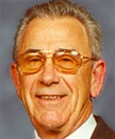
Ted Dutton
Four years ago, Cadiz Inc., revived the water plan, renaming it the Cadiz Valley Water Conservation, Recovery and Storage Project. Cadiz is working with Orange County-based Santa Margarita Water District, which services an area that is more than 200 miles from the Cadiz Valley, to obtain approval for the project. The Santa Margarita Water District is currently serving as the lead agency for the project and is charged with overseeing the California Environmental Quality Act (CEQA) review process for the undertaking.
Through an arrangement with the Cadiz Land Company, the Santa Margarita Water District will, if the project is approved, receive the lion’s share of the water. In addition, Cadiz, Inc. has entered into agreements with Three Valleys Water District, which provides water to the Pomona Valley, Walnut Valley, and Eastern San Gabriel Valley; the Golden State Water Company, which serves several communities in Southern California, including Claremont; Suburban Water Systems, which serves Covina, West Covina and La Mirada; and the Jurupa Community Services District, which serves Mira Loma in Riverside County.
Both Cadiz Inc. and the Santa Margarita Water District maintain the project is an environmentally responsible one that should not alarm environmentalists or local landowners. It will rely on a wellfield of 34 wells to “capture and conserve” the water resources in the East Mojave Desert using “safe, established groundwater management techniques to ensure the project is operated without causing harm to the local environment,” according to the Santa Margarita Water District.
In recent months, however, numerous critics of the plan have come forward, asserting that pumping from the aquifer 35,000 acre-feet to 65,000 acre-feet of water yearly as Cadiz Inc. proposes to do would cause a continuous drop in the desert water table that would dry up springs, deplete the local area of a water source crucial to life and future development of the area, create dust storms on nearby dry lake beds, adversely impact air quality, alter the flow of groundwater beneath the Mojave Desert by drawing water away from neighboring aquifers and have a devastating effect on bighorn sheep and other indigenous wildlife.
Cadiz Inc. and the Santa Margarita Water District have stepped up their lobbying efforts on behalf of the project, seeking to gain endorsements of the project from local governmental entities and other influential bodies in the desert to counter the efforts by local landowners and environmentalists to have the Santa Margarita Water District displaced as the lead agency overseeing the environmental certification and approval of the project. In seeking those endorsements, the project advocates maintain that the project is one that is aimed at “conservation” of water otherwise lost to evaporation. A major selling point is that the $536.25 million project will represent a $138 million boon to the East Mojave’s economy that will directly or indirectly create 2,090 jobs for four years, involving $53 million in wages or salaries to workers or proprietorships involved in building the pipeline and other elements of the project.
One such group that Cadiz Inc. made headway with was the Needles Chamber of Commerce, which last month went on record with a letter of support saying it was in favor of the project. Chamber board president Jeff Williams said the project will not only provide employment for many Needles residents but will also result in greater patronage of existing businesses in Needles.

Ed Paget
The Needles City Council, however, expressed opposition to the project with a greater intensity than which the chamber supported it.
Based on statements by city manager David Brownlee and municipal water department director Jerry Porter, both of whom evaluated the project, the city council on February 28 unanimously refused a request by Cadiz, Inc. to support the project. Cadiz Inc. founder and vice president Ted Dutton was in attendance at the February 28 meeting.
In a letter dated March 1, 2012 to Environmental Science Associates, the Los Angeles-based consulting company hired by Cadiz Inc. and the Santa Margarita Water District to do the environmental evaluation of the project, Needles Mayor Ed Paget wrote, “The city of Needles cannot endorse a project that will take 50,000 acre-feet of ground water annually from an extremely fragile ecosystem with no concrete plan for the replenishment of the aquifer. Natural recharge is estimated to be 14,000 acre-feet per annum. Taking the other 36,000 acre-feet from the Colorado River, the most over-subscribed waterway in America is unacceptable.”
Brownlee told the council that he was highly skeptical of the claim the aquifer could be recharged in the aftermath of the extraction of 50,000 acre-feet of water per year over a 20-year period.
Brownlee said the water the project will capture is a critical part of the desert ecosystem. “What is the definition of lost?” Brownlee asked. “Evaporation comes back as precipitation. It is a critical part of the natural cycle. It also sustains the desert vegetation and critters. I find it hard to believe that as much as 50,000 acre-feet (1.6 billion gallons) are ‘lost.’”
An acre-foot is equal to the amount of water that would cover an acre to the depth of one foot, i.e., 43,560 cubic feet, or 325,851.43 gallons, approximately the amount of water used by a typical household comprised of four people in a metropolitan area over the course of a year.

David Brownlee
Brownlee said he did not think it proper to be drawing water from the desert for use near the coast. “There isn’t even a pretense of a water conservation ethos,” Brownlee said.
Brownlee said he thought it “highly unlikely” that the second phase of the project, involving drawing water from the Colorado River to recharge the desert aquifer near Cadiz, will actually come to fruition, “given that the Colorado River is the most over drafted and litigated upon river in the world. It serves 17 million people in Southern California. There isn’t a drop to spare and the Bureau of Reclamation endeavors to measure every one of those drops.”
Brownlee said he felt it to be highly inappropriate for the Santa Margarita Water District, given its distance from the Cadiz Valley and its direct interest in the project, to be serving as the lead agency in the environmental certification process for the undertaking.
“The jurisdiction in which the potential environmental impacts are anticipated to occur should be and usually is the lead agency,” Brownlee said. “How can an entity that stands to benefit from a favorable environmental impact report finding be the responsible jurisdiction? Is that not a prima facie conflict?”
13 Vying In Three Board Elections
A total of 13 candidates are vying for three positions on the county board of supervisors which are up for election this year.
In two of those three positions, incumbents are seeking to return to the board.
In the First District, where Brad Mitzelfelt is supervisor, seven candidates are looking to replace him. Mitzelfelt, who has been supervisor since being appointed to replace Bill Postmus in 2007 and was elected in his own right in 2008, will vacate the supervisor’s post at the end of this current term. He has chosen to run for Congress in the recently redrawn 8th Congressional District.
The First District counts the cities of Adelanto, Hesperia, Victorville, Needles, the township of Apple Valley and much of the Mojave Desert, including the communities of Trona, Newberry Springs, Daggett, Landers, Essex, Danby, Amboy, Bolo Station, Cadiz, Hinkley and Ft. Irwin as within its jurisdiction.
First District hopefuls this year include Hesperia Mayor Russ Blewett, Apple Valley Town Councilman Rick Roelle, one time First District field representative Michael Orme, San Bernardino County fire captain Brett Henry, businessman Robert Lovingood, Jermaine Wright and Bob Smith.
Two individuals who earlier expressed interest in running for First District supervisor, deputy public defender and former Apple Valley mayor Mark Shoup and Phelan Pinon Hills Community Services District Board Member Ken Anderson, pulled papers to run for supervisor in the First District but have decided not to run.
In the Third District, Neil Derry, who was first elected to the board in 2008, is being challenged by James Ramos, the chief of the San Manuel Band of Mission Indians, and Jim Bagley, the former mayor of Twentynine Palms.
The Third District covers the cities of Big Bear, Redlands, Loma Linda, Grand Terrace, Highland, Yucaipa, Twentynine Palms, a portion of San Bernardino and the township of Yucca Valley, and the communities of Mentone, Bryn Mawr, Forrest Falls and Angeles Oaks. Two others, Ken Hunter and Robert Wilson, contemplated running in the Third District but did not file candidate papers by the deadline.
Fifth District county supervisor Josie Gonzales, who has been on the board since 2004, will face two opponents in this year’s race.
James Taack and Silvia Marroquin filed candidate papers on March 9 to run in the Fifth District, which includes the cities of Rialto and Colton, portions of the cities of Fontana and San Bernardino, and the communities of Bloomington and Muscoy.
All three of the races will be held in June. In each race, if no single candidate captures a majority of the June vote, a runoff will be held between the two top vote-getters.
SBIAA Board Transfers More of Spencer’s Authority To Wilson
The San Bernardino International Airport Authority Board onWednesday took action that signals in no uncertain terms that Scot Spencer is being removed from his position of authority at San Bernardino International Airport.
Since 2007, Spencer has served as the contract developer of the airport. In hiring Spencer, the airport board, consisting of representatives from the county of San Bernardino and the cities of San Bernardino, Highland, Loma Linda and Colton, overlooked the consideration that Spencer had spent four years in federal prison following his conviction for bankruptcy fraud in connection with his failed effort to revive Braniff Airways in the early 1990s. The board, gambling that Spencer’s extensive connections throughout the aviation industry would translate to success in transforming the former Norton Air Force Base into an international airport, provided him with autonomy in directing operations at the airport.

Scot Spencer
Over the last several years, however, airport officials have been driven to the conclusion that their trust in Spencer was misplaced. Spencer’s management of what was supposed to be a $38 million renovation of the airport’s passenger terminal and a $7 million development of its concourse was dogged by cost overruns, boosting the combined cost of the passenger terminal and the concourse to $142 million. No commercial airlines agreed to fly out of the airport upon the completion of those improvements, as Spencer had confidently predicted and the major beneficiary of the project was the corporate jet-servicing company, Million Air, for which Spencer was the franchisee. Million Air terminated its relationship with Spencer earlier this year after the company claimed Spencer had failed to pay it hundreds of thousands of dollars he was in arrears on. In controlling airport operations, Spencer showed favoritism toward companies he owned or controlled, including SBD Aircraft Services, Norton Aviation Maintenance Services, Unique Aviation, San Bernardino Airport Management, SBD Properties LLC, KCP Leasing and Services, SBAMTechnics, and SBD Aircraft Services, to the detriment of other aviation-related companies located at the airport, such as Aeros Aeronautical Systems Corp and BaySys West. Aeros and Baysis were making substantial lease payments for hangar space at the airport before they were essentially forced to leave.
Questions mounted when Spencer formed at least two business partnerships with T. Milford Harrison, who had formerly served as the executive director of the San Bernardino International Airport Authority (SBIAA) and its sister agency, the Inland Valley Development Authority (IVDA), which is dedicated to the development of the property surrounding the airport. While Spencer allowed vendors to go unpaid and the aviation fuel stores at the airport to deplete to levels that threatened the continuing operation of the airport as a host to corporate jets, Harrison ran up non-aviation related charges of $63,043.45 on an American Express Business Platinum card issued to him through the authority and another $4,642.86 on a second Starwood Preferred Guest Business credit card he secured through the airport authority. Meanwhile, by the summer of 2011, Spencer owed the county more than $604,000 in unpaid taxes on property and equipment at the airport since 2005 and was in arrears on interest and principal payments on $1.2 million in loans to him through the airport authority.
The coup de grace came on September 21, 2011 when federal authorities, in the person of FBI and IRS agents, together with state law enforcement officers descended upon San Bernardino International Airport, serving search warrants at five offices, businesses or facilities there as part of a comprehensive investigation into allegations that millions of taxpayer dollars were illegally diverted, mismanaged, laundered, misappropriated or siphoned off by officials or individuals affiliated with the airport’s development. Targeted in the raid were SBIAA and IVDA headquarters, the San Bernardino Million Air franchise; three hangars, including Hangar 763, where two Spencer-affiliated companies were located; a storage facility at the airport, and Spencer’s Riverside residence. According to the search warrants, the authorities were seeking information regarding suspected misuse of federal funds, bribery, mail fraud, wire fraud and conspiracy.

A.J. Wilson
On September 28, 2011 Don Rogers, who had served as the executive director of SBIAA and IVDA during Spencer’s tenure as contract developer, resigned. On November 9, the SBIAA board hired A.J. Wilson, a municipal manager with an extensive list of top administrative assignments inside and outside of California, to the position of interim executive director of San Bernardino International Airport.
On December 23, 2011, the airport board terminated the airport management and development agreement it had with Spencer’s San Bernardino Airport Management, LLC.
This week, on March 14, the board acted to grant Wilson even more control of the airport and entities Wilson created to take over management of the aerodrome from the companies Spencer held.
“A non-profit corporation, San Bernardino International Airport, Inc., has been formed for the purposes of facilitating and supporting the operations and maintenance functions of the airport,” according to a report dated March 14 prepared by assistant airport director Mike Burrows that was forwarded to the SBIAA and IVDA boards by Wilson. That report continues, “On January 25, 2012, the SBIAA Commission approved an agreement with Oasis Outsourcing III, Inc., to provide certain staffing services. Affected employees have now been enrolled in the new payroll systems. Subsequently, the fuel services management agreement between SBIAA and SBD Airport Services, LLC was also terminated due to specific defaults by SBD Airport Services, LLC. As such, the executive director took appropriate actions to regain control of the airport’s fuel farms, purchase adequate fuel inventories, and entered into an agreement with REW Inc, and Million Air Interlink, Inc. to provide professional services to assist in fueling operations and services performed by San Bernardino International Airport, Inc. personnel.”
Spencer could not be reached for comment.
Upland Proving Generous Toward Selected Businesses
While cash-strapped Upland is becoming increasingly stingy with the dwindling money it has available to sustain and promote itself as well as bolster local economic development, a subset of the city’s businesses are still tugging at City Hall’s apron strings, seeking shelter from the financial brutality of the real business world.
Currently, the city is landlord to 22 businesses in town. Whether those entities are standing on their own or are being propped up by taxpayer subsidizations in the way of discounted rent payments is a matter of debate, conjecture, perspective and relative consideration.
What is undeniable is that at least some of those businesses are struggling. City officials are divided as to whether the city should raise their rents, continue leasing the properties out to those entrepreneurs on the same terms as before, or actually lower some of the businesses’ lease payments in an effort to keep them from closing their doors.
Last week the Upland Finance and Economic Development Committee previewed a proposal to grant struggling businesses leasing space from the city a break on their rents if they can demonstrate they are enduring financial hardship. This week the city council took a look at its options.
Many if not most Upland residents are unaware that the city has any sort of a business relationship with Upland shops, stores and operations. But over the years, the city has acquired several properties, many within commercially zoned districts, and that space has been leased out, theoretically giving the city a return on its investments while promoting and boosting local economic development and employment.
Though some maintain the city’s lease rates on the properties are below that reflected in the current real estate market, some of the business owners leasing from the city have said they are paying too much in rent. They have asked the city to reduce their lease rates.
In response, the finance and economic development committee, consisting of councilman Brendan Brandt and councilwoman Debbie Stone, has considered a new rent modification policy for the city’s tenants, the particulars of which may at some point be submitted to the full council for approval.
The city is entertaining the notion of modifying rents in conjunction with the requests, according to Jeff Zwack, the city’s economic development director, because “based on real world information provided to us by four local commercial management companies, it is better to keep tenants than find new ones.”
Zwack said two of the city’s tenants – Boomers and RG Performance – are having difficulties and have actually requested assistance in the form of lease reductions. A third city tenant – Hubcap Annie – is likely to make such a request soon, he said.
As a consequence, Zwack said, he is proposing to formalize the rent reduction process, establishing criteria that if met would provide a tenant such a reduction. The prime criterion, Zwack said, would be “if the tenant is paying rent that exceeds eight percent of monthly gross sales.”
To qualify for the reduction, a tenant would have to subject his business operation, Zwack said, “to a third party review and show two years of gross sales, sales tax receipts and profit and loss statements to get a favorable report for reducing rent. That report we would then bring to the [city] council to approve lowering the lease.”
There would be the expense of employing the third party to do the review and that expense would ultimately have to be borne by the tenant, Zwack said, although perhaps not up front. “That fee we would add to end of the lease,” Zwack said.
Zwack said the rent reductions would be relatively limited in duration. “The leases would be reduced six months to a maximum twelve months,” he said. “And they would have to go for a two year period to request assistance again. To obtain a rent modification they would have to go to the small business center for free financial consulting, where analysts would look at cash flow and the products they are selling to make them more productive.”
City treasurer Dan Morgan said he was not necessarily opposed to the concept of granting lease payment reductions to struggling businesses, but that the businesses rather than the city would need to cover the cost of processing the reduction applications. “I would hate for us to be subsidizing this analysis,” he said. The cost of such an evaluaion could run as high as $1,500 to $2,000, Zwack said, which might offset much of the rent reduction.
Zwack said that by the city covering the cost of the analysis and placing it on the business’s tab to be paid at the end of the lease, the city would risk losing that money if the business failed.
The city of Upland is smarting from having suffered a significant loss on another ultimately unsuccessful attempt to kick start the local economy with the subsidization of Christophe’s Restaurant and Lounge at 296 N. 2nd Avenue in the city’s downtown core. Christophe’s closed January 7.
Christophe’s Restaurant was intended as an upscale eatery that would draw top paying customers to the downtown area as a complement to the Upland Playhouse, i.e., the former Grove Theater. That never panned out, however. In the case of Christophe’s, the city was not the landlord.
Barbara Polk actually owned the property at 296 North Second. Christophe’s Restaurant opened in October 2009, having participated as the maiden recipient in the city’s loan program, by which entrepreneurs were provided with loans from the city’s redevelopment agency if certain expectations with regard to the businesses in question were satisfied. In the case of Christophe’s, owner Christophe Jardillier was provided with a $350,000 loan, which has yet to be paid back. At present, he owes the city more than $405,000 in principal and interest on that loan. The city has little prospect of collecting on that debt. Jardillier likewise owes Polk upwards of $70,000 in back rent.
The city’s redevelopment agency was closed out by the state last year.