R.C. Councilman Decries Red Tape, Bureaucracy & Governmental Interference

Rancho Cucamonga City Councilman Bill Alexander this week told the Sentinel  he believes government in general has become too complex and is nearly as much of a burden on businesses and citizens as it is a civilizing influence with a positive impact on the community and society.

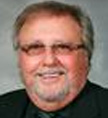
Bill Alexander

Alexander spoke with a Sentinel reporter on April 2, while he was at Rancho Cucamonga City Hall to clarify for the city clerk’s office information requested with regard to his statements of economic interest, known in California as Form 700s. Alexander had come to the civic center after he was requested to fill out forms pertaining to his membership on committees, joint power authorities and commissions on which he is not currently or never was a member.
“They’re asking me for information that isn’t applicable, since I haven’t been on some of the commissions they are talking about for years,” he said.  “I can’t just not fill out the forms and that’s a little frustrating since the information they are requesting in some cases doesn’t exist.”
Alexander is a creature of government. A former fire captain with the city of Ontario, he is retired and pulling a public pension of more than $100,000. He was a member of the Rancho Cucamonga City Council from 1988 to 2004 and mayor of Rancho Cucamonga from 1994 to 2006. He ran for city council again in 2010 and was successful.
Nevertheless, he said, he considers government “way too complicated. The bureaucracy is ridiculous. It makes things way too difficult for people and businesses. I sometimes wonder why I ran for office.”
Alexander said his current mood was impacted by the challenge of having to fill out the Form 700s and a recent brush with federal tax authorities. “I was on the phone with the IRS,” he said. “They had me on hold for more than an hour and I never did get to talk to anybody.”
Asked point blank if he thought government has outlived its usefulness, Alexander said he still believed government to be necessary. “We need it,” he said.
He suggested there were reforms that could be applied.
“Well, for one, they could change the language in the documents and forms so the common person can understand them and you don’t need a lawyer to interpret them,” he said. “That would be a start.”

Barstow Councilman Cites Potential Conflict In Declining Board Berth

Barstow councilman Tim Silva this week declined an appointment to the oversight board for Barstow’s successor to its redevelopment agency. The seven member board is to consist of  two appointments by the mayor, two by the county board of supervisors, one by the Barstow Fire Protection District, one by the county superintendent of schools, and one by the chancellor of California community colleges.

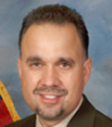
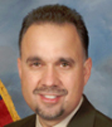
Tim Silva

Silva was formerly the chairman of the city’s redevelopment agency board, which was composed of the members of the city council. Mayor Joe Gomez was set to appoint Silva to the oversight board, which is being formed to look after the utilization, disbursement and return of the redevelopment agency’s assets to the state in the aftermath of the state legislature’s elimination of municipal redevelopment agencies throughout California. But Silva said he believed there could be a conflict between his role on the panel and his employment in the mortgage industry, since the oversight board might have an impact on home mortgage-related issues.
Gomez instead appointed councilwoman Julie Hackbarth-McIntyre. Gomez also designated Margaret Carter, the city’s housing coordinator, as his second appointee on the board.

Newcombe Appointed Director Of County Public Works Department

Gerry Newcombe, who was previously serving in the capacity of deputy county executive officer, has been transferred into the position of county public works director.
Newcombe replaces Granville “Bow” Bowman, who has retired.
“Gerry has tackled many difficult assignments during his time as an executive with the county. Public works is one of the county’s most complex and challenging departments, and I am confident it will be in good hands with Gerry at the helm,” said county chief executive officer Greg Devereaux, who appointed Mr. Newcombe to the position.
As public works director, Newcombe will oversee the  department’s  transportation, flood control, solid waste, and surveying divisions. The department’s responsibilities are to maintain county roads, administer special transportation projects, manage surveyor functions, provide administrative oversights for the operation and management of the county’s solid waste system, and maintain an extensive system of flood control and water conservation facilities.
“I’ve gotten to know many of the excellent staff at public works over the years and am looking forward to the opportunity to work with them all. I appreciate Greg’s confidence in me and I’m anxious to get started,” Newcombe said.
Newcombe has been with the county for more than 30 years, most recently in the dual role of deputy executive officer and manager of the department of public works solid waste management division. As deputy executive officer, Newcombe has been responsible for managing the oversight of renewable energy projects in the county, working with cities on the possible regionalization of animal control, and overseeing several major capital projects, including the $150 million expansion of the jail system.
At one time, Newcombe also simultaneously oversaw five county departments, including land use, real estate services, architecture & engineering, fleet management, and facilities management.

World Class Oboist To Debut Castillo’s Rhapsody In Redlands April 14

REDLANDS –One of the world’s leading oboe players will be performing locally next week.  Liang Wang, principal oboe player with the New York Philharmonic, will be featured as a soloist  with the Redlands Symphony on April 14 in Memorial Chapel at the University of Redlands.
On tap for that evening will be several pieces, including the Straus Oboe Concerto, Mozart’s Overture to Figaro and Haydn’s Symphony No. 104, all of which will feature Wang. He will also provide his interpretation of Rhapsody, a concerto for oboe and horn written by the Redlands Symphony’s most accomplished oboist, Francisco Castillo.
“Liang Wang is one of the most extraordinary musicians performing in today’s world of classical music,” said Redlands Symphony Maestro Jon Robertson, “To have him here, playing with our orchestra, is a great honor and enormously exciting.”
Born in Qing Dao, China, Wang, now 32, has been playing the oboe since the age of seven. Wang is not new to Southern California, having achieved a full scholarship to Riverside County’s Idyllwild Arts Academy in 1995, after impressing his teachers at the Beijing Central Conservatory in the early 1990s. As a teenager, he captured the Jack Smith Award at the Pasadena Instrumental Spotlight Competition of the Los Angeles Philharmonic.
Wang completed his bachelor’s degree in 2003 at the Curtis Institute of Music in Philadelphia.
He later attended the Curtis Institute of Music in Philadelphia and was a fellow at the Aspen Music Festival and School, where he studied with John de Lance, the principal oboist of The Philadelphia Orchestra.
Wang’s resumé includes being the principal oboe with the San Francisco Ballet Orchestra in 2003-04, principal oboe of the Santa Fe Opera in 2004-05, principal oboe with the Cincinnati Symphony Orchestra in 2005-06 and associate principal oboe of the San Francisco Symphony as well as guest principal oboist with the Chicago and San Francisco Symphony orchestras.
Wang has taught at the Cincinnati Conservatory and the Juilliard School and was a faculty member at UC Berkeley. He is currently on the faculty of the Manhattan School of Music.
Wang joined the New York Philharmonic in September 2006 as principal oboe. In February 2008, he performed the Richard Strauss Oboe Concerto with The New York Philharmonic in Hong Kong.
At the April 14 performance, Maestro Robertson will conduct Castillo’s Rhapsody in what is to be its world premiere. Maestro Co Nguyen, the Symphony’s assistant conductor, will conduct the Mozart and the piece by Strauss.
The Memorial Chapel is located on the university campus at 1200 E. Colton Ave. The concert will commence at 8 p.m. Doors will open at 7 p.m. Tickets are available from $15.

SANBAG Hires Teichert As In-House Legal Counsel

San Bernardino Associated Governments (SANBAG), the county’s transportation commission, on April 4 named  Sacramento City Attorney Eileen Teichert as its first general counsel.
The hiring of Teichert as the agency’s in-house lawyer ends its traditional practice of relying upon the county’s stable of attorneys, known as county counsel, for legal advice and services.
SANBAG’s 29-member board consists of a mayor or council member from each of the county’s 24 incorporated cities and all five county  supervisors.
Despite the overlap, a major legal conflict has developed between SANBAG and the county as a consequence of a lawsuit the county filed over its 2006 payment of $102 million to the Colonies Partners’s lawsuit  against the county over flood control issues at the Colonies at San Antonio development in Upland. Those flood control issues were complicated by the placement of the 210 Freeway across the Colonies Partners’ property and the county wants SANBAG and the California Department of Transportation to cover a portion of that settlement cost, having launched the lawsuit to make that recovery.
Teichert, who has been with the city of Sacramento since 2006, was previously a deputy city attorney in Riverside. The SANBAG board last year resolved to hire its own attorney and Teichert was chosen for the $200,000 per year position after a 90-day recruitment effort. She is s expected to aggressively represent the agency in defending SANBAG’s position with regard to the suit.

Residents Wary Of Barstow Proposal To Annex Barstow Heights

The city of Barstow’s latest effort to annex Barstow Heights is being met with solid opposition by the residents of the district who would have to approve the takeover with a vote.
The Barstow City Council, led by councilman Tim Silva, has given city manager Curt Mitchell and his administrative staff direction to explore the issue.

Tim Silva

A formalized application to undertake the application would require a study of multiple issues by the county’s Local Agency Formation Commission, including an appraisal of existing infrastructure in the unincorporated county area, costs associated with having the city assume maintenance and/or operation of that infrastructure and the potential financial impact of the merger. Silva has indicated that by bringing Barstow Heights into incorporated Barstow, which now has a population within its city limits of 22,639, the city would qualify for more state and federal grants and revenue by virtue of the increase in population.
Silva referenced a 2008 report by the Local Agency Formation Commission (LAFCO) that recommended the dissolution of the Barstow Heights Community Services District, which was formed in 1957 for the provision of water, road maintenance and park and recreation services to the area southwest of Barstow near Rimrock Road and H Street.
The district remains in place, but its only current purpose is the maintenance of Panamint Park and H Street Park. The district’s former water and road powers are now being administered by the county’s special districts department.  The county would like to get out from under that responsibility and transfer it to the city of Barstow. Additionally, the city is already partially subsidizing the park and recreation function of the Barstow Heights Community Services District by defraying the cost of any park repairs less than $200. This arrangement exists because many Barstow residents avail themselves of the parks.
Buttressed by the four-year-old LAFCO report, Silva further suggested that Barstow Heights residents would see potential benefits by coming into the city through being able to participate in the local political process through voting in city elections. Moreover, he asserted, the neighborhood, which has in many respects substandard, aging or non-existent infrastructure, would be eligible for tying into the city’s systems or have municipal services extended into the area upon annexation.
That opportunity is dual-edged, however. At present Barstow Heights homes utilize septic systems, and annexation would eventually make it possible for those homes to be connected to the municipal sewer system. Yet hook-ups to the sewer lines would cost homeowners more than $20,000 in the most likely of scenarios.
Similarly, the inclusion of Barstow Heights into street lighting and landscape maintenance districts would be of conceivable benefit to the residents and might marginally improve property values, but would also entail assessments on the homeowners within those districts.
Whatever the suggestions of Silva and other Barstow or county officials, the residents of Barstow Heights are wary of the takeover proposal. Efforts by the Sentinel to find anyone in Barstow Heights in support of the annexation were unsuccessful. Several Barstow Heights residents, however, stated opposition to the concept, with many expressing the belief that it would entail an increase in taxes and fees and little return in benefits or enhanced services. Some said they did not want to be subjected to municipal code restrictions. They said that they were aware that at least some residents of the section of Lenwood that was annexed by Barstow in 2010 are upset over the enforcement of zoning codes and restrictions that are now in effect there.
To effectuate an annexation, proponents would need to get a majority approval of the registered voters in the area to be annexed. At present, there are 1,033 voters in Barstow Heights.

Dutton Decrying Partisan Bickering In Run

State senator Robert Dutton this week told the Sentinel he is embracing the spirit of California’s open primary in June and will shed the partisan edge to his persona that has thus far sustained him through his political career.

Bob Dutton

Dutton,  who served two terms on the Rancho Cucamonga City Council, two years in the California Assembly and seven years to date in the California Senate, the last two as Republican leader, is competing against another Republican and four Democrats to represent California’s 31st Congressional District in the House of Representatives.
Traditionally in California, as elsewhere in the nation, members of the same political party vie against one another in the primaries, and the winner in each partisan contest goes on to run against the winners of the other same-party races in the November election. This year, however, the state of California is holding an open primary in which voters are permitted to cross party lines and vote for any candidate they wish, regardless of party. The two top vote-getters will then go on to run against one another in November. It is thus possible that two members of the same party will compete against each other in November.
Throughout California, district lines have been redrawn in correspondence to the 2010 national census. In the newly drawn 31st Congressional District this year, incumbent  Republican congressman Gary Miller is running, along with four Democrats – Redlands Mayor Pete Aguilar, Loma Linda attorney Justin Kim, educator Rita Ramirez-Dean and nonprofit founder Renea Wickman. While the Democrats hold a slight voter registration advantage over Republicans in the 31st, the presence of four Democrats in the race and only two Republicans boosts the chances that the race in November could pit Republicans Dutton and Miller against one another.
Though he formerly proudly wore the sobriquet of a conservative Republican and crossed swords again and again with the Democratic majority and its leadership in Sacramento during his nine years there, he now says, “I have never been locked into one political philosophy. I don’t care about party politics. I am fed up with it.  I don’t care if it’s a Democratic or Republican idea as long as it’s a good idea. I will work with anyone if working together will help the small business people out there putting their life savings at risk to create something.”
If he has any political leaning or philosophy, Dutton said, it is that “I believe government has the tendency to overreach. Government is too large. It is too large in California and it is definitely too large at the national level. We need to tell government to stop doing a lot of what it is already doing and keep it from doing anything else because government has gotten itself into the business of inhibiting our economic recovery by discouraging people from making investments. The bottom line is jobs. We have got to get people back to work. The one place government should be getting involved in is regulatory reform. There is no place that has been harder hit by the recession than San Bernardino County. We need to make this effort for the betterment of our area, which gets hurt most because of the failure to strive for lean government. What we need to do is not that complicated.”
Dutton, who had a successful real estate and development company before he went into politics in his early 40s in the 1990s, said he is not ready to leave his second profession just yet.
“I’m running for Congress because I feel I have done a good job for the people of San Bernardino County and I would like to continue in that capacity and I would invite those who feel I’ll do a good job in Washington to support me.”
California’s term limits make remaining in Sacramento a complicated calculus for Dutton. State senators are limited to two four-year terms. Assembly members are limited to three two-year terms. Dutton cannot return to the position he now holds, state senator, because his second term will expire at the end of the year. He served just a single term in the Assembly before stepping up to run for state Senate in 2004 and could run for the Assembly again. But he said the announcement of the pending departure of two-long serving Republican congressman from this area – Representative Jerry Lewis, who was first elected to the House in 1978, and Congressman David Dreier, who was initially elected in the Ronald Reagan landslide of 1980 – convinced him he needed to make the transition from state politician to national politician now.
“I am termed out in the [state] senate and I have to run for something else because I’d like to continue in public service. I felt that when Jerry Lewis and David Dreier retire, this will be for me the next logical step forward. I’ve felt I’ve always done a good job. Without someone dedicated in Washington, D.C., you will see San Bernardino County’s interests falling through the cracks. The bottom line is jobs and getting people back to work.”
Much has been made of the match-up between Dutton, who until January was the Republican leader in the California Senate, and Miller, an incumbent Congressman. But Dutton said that focus is misplaced.
“People have got to remember this is an open primary,” Dutton said. “It is not a race between Republicans for the nomination any more. It is not a contest between Gary Miller and me. I am not running against Gary Miller. There are six of us in this race competing to come up with the best ideas. I happen to feel I have the right combination of background and experience to be an effective voice for San Bernardino County.”
Dutton at this point refused to criticize Miller, either on the basis of his voting record or his positions on issues in the current race. The closest he came to a negative observation about Miller was to note that Miller is less familiar with and less vested in the 31st District than he is.
Miller, a Diamond Bar resident, currently represents the  42nd Congressional District, which encompasses all or portions of Chino, Chino Hills, Rowland Heights, La Habra, Brea, Yorba Linda, and Diamond Bar.
“I have lived in the 31st District for 40 years,” Dutton said. “I met my wife in this district. My daughter was born and raised in this district. She went to schools in this district. I have served as a city councilman, assemblyman and state senator for the people living in this district. Mr. Miller comes from outside the area. He is certainly eligible to run for Congress in the 31st District because under federal election rules, a Congressman needs to just live in the state where the district he represents is. He could run anywhere in the state. I am a citizen statesman. I am not looking to represent some other area that I don’t know that well. When you live someplace and shop there and go to church there it is a different situation then when you are just looking for a place where you can run. I do not want to try to serve two masters. The people who live where I live are my priority. I want to take care of the people who elect me. I would not want them to worry that I won’t look after their interests because I’m living somewhere else.”

Compact Clears Way For Sheriff’s Aviation Move To SB International

The long-awaited and thrice-delayed closure of Rialto Airport and the transfer of the sheriff’s department aviation wing to San Bernardino International Airport turned a crucial corner this week.
The governmental entity overseeing San Bernardino International Airport on Wednesday, March 28, 2012 entered into a mutual release and satisfaction agreement with the city of Rialto and the county of San Bernardino that is aimed at moving the San Bernardino County sheriff’s aviation fleet from Rialto Municipal Airport to the grounds of the former Norton Air Force Base, now called San Bernardino International Airport.
The civilian conversion of Norton is being overseen by a joint powers authority composed of representatives from the county of San Bernardino and the cities of Colton, Highland, Loma Linda and San Bernardino known as the San Bernardino International Airport Authority, which is also goes by its acronym, SBIAA.
In 2004, the city of Rialto resolved to shutter Rialto Airport as an aviation facility and proceed with its redevelopment. That would have required the departure of all of its aviation-related tenants, the most significant of which is the sheriff’s department, which operates ten helicopters and four airplanes from the 600-acre facility in north Rialto. Rialto officials envisioned transforming the airport property into both residential and commercial subdivisions. The city had hoped to begin to phase the airport out of operation beginning in 2007 and complete the process by 2010, but that conversion was slowed by the economic downturn. The city has, however, succeeded in lining up Lewis Properties, the corporate successor to Lewis Homes, to undertake the conversion of the property, though actual groundbreaking is as many as three years away by some estimates.
A further delay in transferring the sheriff’s aviation operation to San Bernardino International came about as a consequence of missteps taken by the former contract developer of San Bernardino International Airport, Scot Spencer, whose management of the aerodrome was in large measure focused upon promoting several of the businesses he had an interest in which were housed at San Bernardino International, including SBD Aircraft Services, Norton Aviation Maintenance Services, Unique Aviation, San Bernardino Airport Management, SBD Properties LLC, KCP Leasing and Services, SBAMTechnics, and SBD Aircraft Services, to the detriment of other aviation-related companies and concerns located at the airport.
Last year, the sheriff’s department contemplated remaining in  Rialto for at least another two years, but because of the need for upgrades to the sheriff’s Rialto aviation facilities and the expense those would entail, it was determined that it would be a more economical move long term to transfer operations to San Bernardino International Airport. Further complications at San Bernardino International, including the FBI’s serving of search warrants in September at SBIAA headquarters and a number of entities associated with Spencer, including his business offices and home as well as the resignation of former San Bernardino International Airport Authority Executive Director Don Rogers, delayed that transition.
This week, under the direction of Rogers’s successor, A.J. Wilson, the board for the authority got around to effectuating a compact that will allow the contemplated changes to proceed.

A.J. Wilson

The Rialto Municipal Airport was owned by the Rialto Redevelopment Agency. The redevelopment agency, in accordance with the plan previously worked out amongst county, Rialto and SBIAA officials, was to sell the Rialto airport to a consortium of developers led by the Lewis Group of Companies at a price approaching $34 million. That money was then to have passed through to the city of Rialto. From that pool of available revenue, the city of Rialto was supposed to kick down $4.2 million to the sheriff’s department for the sale of the sheriff’s department facility at Rialto Municipal Airport. That cash would  then be  used toward the $5.2 million cost of constructing the sheriff’s new aviation facility at San Bernardino International Airport, which is to include mitigating impacts on any nearby uses there.
The chosen location for the permanent sheriff’s aviation headquarters in San Bernardino will now undergo as much as 18 months worth of grading, adaptation and new construction, including a hangar suitable for helicopters. Meanwhile, the sheriff will set up a temporary aviation headquarters in a modular building between the fuel farm and the Million Air corporate jet servicing operation.
The modular building will remain in place after the sheriff’s department moves to permanent digs and will be used for other aviation related purposes. The $200,000 per year lease the sheriff’s department will pay the airport authority includes use privileges of existing maintenance facilities at the airport.
Prior to Wednesday’s vote, Wilson told the board members, “The proposed mutual release and satisfaction agreement acknowledges key commitments on behalf of the city of Rialto and the county of San Bernardino related to the closure of the Rialto Municipal Airport and the relocation of the sheriff to a new facility in San Bernardino. Specifically, the agreement sets forth the dollar value of the relocation payment to the county at $4,200,000, identifies SBIAA as a third party beneficiary for the receipt of said funds, and provides for an early payment from Rialto to SBIAA equal to $375,000 to allow SBIAA to initiate the preparation of plans and specifications for the construction of the new facility for the sheriff.”
While all of the issues relating to the eventuality of the sheriff’s department relocating its helicopters at San Bernardino International Airport now appear to have been taken care of, the city of Rialto is yet beset with complications stemming from the state of California’s move last year to dissolve all of the municipal redevelopment agencies throughout the state. The city of Rialto has declared itself the successor agency to its redevelopment agency, and is claiming ownership of the Rialto Municipal Airport. Nevertheless, Rialto will need to have a state oversight board sign off on the city’s right to dispose of the property as it deems fit, in this case by selling the property for roughly $34 million to the development consortium. The state could yet reject that proposal and insist on a dissolution or liquidation sale with some or all of the money being confiscated by the state.

Upland Water Company Board Berths Have Political Upshot

UPLAND—The Upland City Council this week made appointments to the San Antonio Water Company’s board of directors that were rife with political implication.
Most noteworthy was that two of the newly appointed directors hail from San Antonio Heights, where the headwaters of the company’s water supply accumulate and which gives the company its name, even though residents of the area do not have direct control over how the seven-member board is to be composed. The council also reappointed to the board a longtime city activist and rising political star widely regarded as a likely, and strong, candidate for mayor in November.
The city of Upland owns 68 percent of the water company shares. As such, a majority of the city council controls the process by which all members of the board are appointed. The second largest block of share owners in the company are San Antonio Heights residents, who own 9.6 percent of the shares. The city of Ontario, Monte Vista Water District and Red Hill Country Club each own 4.95 percent of the shares. The remaining seven percent of the shares are distributed among a smattering of local interests and water users, such as citrus grove and quarry operators.
Traditionally, Upland’s mayor makes nominations to the company’s water board and those choices are considered and voted upon by the entire council.
The previous board members were current Upland councilman Ken Willis; former council members Tom Thomas and Sue Sundell; city council advisory committee member Glenn Bozar; Will Elliot; Brian Brandt and Fred Gattas.

Glenn Bozar

There has been ongoing dissension among San Antonio Heights residents with regard to their lack of authority with regard to selecting board members. All residents in San Antonio Heights are San Antonio Water Company customers. Some of the more vocal members of that community, which is a 2.619 square-mile pocket of unincorporated county land north of the Upland City Limits with 3,122 residents, have asked for an arrangement by which San Antonio Heights can elect its own representative to the board.
Gattas and Brandt are Heights residents.
This week, Mayor Ray Musser nominated Willis, Thomas, Sundell, Bozar, and Elliott to return to the board, while suggesting that Cable Airport owner and San Antonio Heights resident Bob Cable  and San Antonio Heights resident John Gerardi replace Gattas and Brandt.
The council then voted 3-2 to ratify Musser’s nominations.
Cable was among the vocal critics of the city’s domination of the board nominating process. Bozar has long been active in Upland politics, particularly with regard to successfully opposing the city’s attempts to enact taxing mechanisms, such as a utility tax and a paramedic tax. He was nominated to the council advisory commission and the water board by Musser. Musser has yet to formally announce whether he will seek re-election as mayor in November. Meanwhile, a group of Upland residents and business owners is intensifying entreaties on Bozar in an effort to pressure him into declaring as a mayoral candidate.
It is unknown what impact such a declaration on Bozar’s part would have on Musser’s future political plans. He would have the option of running to remain as mayor, running for city council, or retiring. Musser, who was first elected to the city council in 1998, is in some quarters well respected because of his consistent opposition to now-discredited former Upland mayor John Pomierski, who was indicted by a federal grand jury last year on extortion, bribery and conspiracy charges. Musser, who unsuccessfully opposed Pomierski in the 2004 and 2008 elections, was appointed by his council colleagues to replace Pomierski after he resigned last year.
Musser’s slate of water company board members was opposed by council members Brendan Brandt and Gino Filippi. Filippi is a declared candidate for mayor in November.
On Tuesday, Filippi told the Sentinel “My vote against the slate as presented came as a result of much consideration. The process and decision of the mayor made me uncomfortable. The loss of Mr. Brandt could have been prevented. There should have been more open discussion with the full council vs. the sole discretion of the mayor. It reminds me of the past administration. I understand that as a ‘mutual benefit water company’ there is a process for nominations [and] the nomination committee is the mayor of Upland. I also understand that the mayor has authority to appoint to city of Upland committees. However, the San Antonio Water Company is not such a committee. I concur that the city has played too much of a role in this nomination process.”
Filippi further said he was opposed to having Willis or any other member of the council on the board. “There is also question regarding if having city council members on the San Antonio Water Company board represents a conflict of interest,” Filippi said. “I have been informed by outside counsel that any elected Upland councilmember accepting a stipend from the San Antonio Water Company is a conflict. The council member must abstain as regards any action that involves the water company and which may benefit him or her. Under Government Code 1090, the city and the water company can’t enter into contracts because of the potential for conflict but we address that by handling them administratively. So the impact is that the subject council member may be preempted from acting on some matters.”

Bagley Touts Experience In Board Run

In his run for Third District county supervisor, James Bagley is lagging well behind the incumbent, Neil Derry, and the other challenger in the race, James Ramos, in terms of campaign funding.
Nevertheless, Bagley maintains that his extensive experience in a multitude of capacities and positions in government render him the most qualified of the candidates.
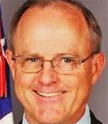
Jim Bagley

Bagley was a member of the Twentynine Palms city council for three four-year terms from 1992 to 2004, including three two-year terms as mayor. Even before the city incorporated in 1987, Bagley was a board member of the Twentynine Palms Water District. As a council member and mayor, Bagley served on multiple intergovernmental boards and commissions and joint powers authorities, including stints as the chairman of the Local Agency Formation Commission, which hashes out jurisdictional issues within the county, and San Bernardino Associated Governments, known by its acronym SANBAG, the county’s transportation agency. He was also a member of SCAG, Southern California Associated Governments, the region’s major intergovernmental planning agency. While he does not currently hold elective office, he is a member of the county airport commission, which oversees the Daggett, Chino, Apple Valley,  Twentynine Palms, Needles and Baker airports.
“I have an extensive local government background,” Bagley said. “I was a water board member back in the 80s, which gave me a close understanding of county special districts. I served three terms on the city council, including three terms as mayor. I was a longtime member of LAFCO, where I was chairman, and I was chairman of SANBAG. If I am elected to the board of supervisors, I will bring to the position a very mature set of skills. I will rise into a leadership position to use the office to represent the cities of the Third District. That experience is important because we need to have someone with a vision for constructive change.”
Bagley said he did not believe the challenges facing the Third District were much different than those facing the other districts in the county.
“Employment is the biggest issue facing our community,” he said. “Anything the county can do to make economic development a reality will benefit the community.” He did say that the Third District, as the second largest geographically of the county’s districts, easily qualified as the most diverse in terms of character of the communities themselves.  “The district includes mountain areas, the desert, agricultural and rural communities along the foothills, urbanized downtown San Bernardino and the more suburban areas in the cities of Highland, Loma Linda, Redlands and Yucaipa. All of those places have unique issues, so it will require someone with not only a knowledge of the district but how to apply government. As the chairman of SANBAG, I saw what a good tool the county’s transportation agency is in facilitating the improvement of infrastructure. Improving roads and creating better access is a critical role for one of the largest districts in the county geographically. I think I have the understanding and experience to represent all of those unique communities on the board.”
Bagley made only passing reference to his opponents in the race. That comment was most pointed with respect to the incumbent, Derry. Obliquely, Bagley hinted at a criminal case that had been lodged against Derry last year relating to the handling of a $5,000 political donation by Arnold Stubblefield to Derry during his 2008 campaign. The state attorney general’s office originally alleged that the matter involved the laundering of campaign money through a political action committee that was under the control of then-county assessor Bill Postmus and that Derry had committed two felonies, including fund laundering and perjury, and a campaign reporting misdemeanor. Before the matter went to trial, however, Derry entered a no contest plea to the less serious misdemeanor charge of failing to properly report a campaign donation and the two felony charges were dropped. More directly, Bagley indicated that Derry had received money from the Colonies Partlners, a development company that built a controversial commercial and residential project in northeast Upland in the early 1990s and then sued the county over flood control issues at the project. The county board of supervisors by a 3-2 vote in November 2006 conferred a $102 million settlement on the Colonies Partners to bring that litigation to a close. But the state attorney general’s office and the district attorney have now alleged that the settlement was tainted by extortion and bribery. In an original 2010 indictment and a superseding 2011 indictment, it is alleged that Colonies Partners managing principal Jeff Burum in conjunction with former county sheriff’s deputies union president Jim Erwin first blackmailed Postmus and Paul Biane, who were then members of the board of supervisors, and then bribed them with rewards of $100,000 donations to their political action committees after they voted for the settlement. Postmus last year pleaded guilty to charges of conspiracy, yielding to extortion, soliciting a bribe and accepting a bribe. Burum, Erwin, Biane and another individual named in the indictment – Mark Kirk, who was the chief of staff to supervisor Gary Ovitt when Ovitt joined with Postmus and Biane in approving the $102 million payout to the Colonies Partners – have all pleaded not guilty to the charges in the indictment and are awaiting trial.
“Countywide there has been a problem with ethics on the board of supervisors,” Bagley said. “Too many officials are interfering with good government. Transparency in government is a critical issue at every level. The Colonies scandal is a symptom of the lack of transparency. The Colonies scandal is one of the reasons I am running for supervisor.  Mr Postmus and Jim Erwin have direct connections here, and are tied to Mr. Derry.  The current representative of the Third District has used his position for less than honorable purposes. I am running to offer constructive change to lead the board of supervisors in a better direction, toward good, effective governance that is free of the scandal that has impacted the board for decades.”