Once Hailed As Upland’s Future Guru, Manis Departing After Less Than A Year

By Marian Nichols and Mark Gutglueck
Mystery and controversy are attending the abruptly announced but simultaneously extended leave-taking of Bill Manis as Upland City Manager.
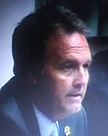
Bill Manis

Bill Manis

Last December, Manis was widely hailed as an excellent fit for 77,000-population Upland, when the city council moved to hire him after going 15 months without having officially filled the city manager void created when a 3-to-2 majority of the council in July 2016 handed Rod Butler his walking papers. In the interim, Marty Thouvenell, who had been the city’s police chief throughout most of the 1990s and the first five years of the Third Millennium until he was essentially forced into retirement from that position by later-disgraced, indicted and convicted Mayor John Pomierski in 2005, had functioned as acting city manager. Thouvenell’s tenure in the post was intended to be a short one that was to last only until a successor for Butler could be chosen. But that search dragged on beyond the three months it was originally anticipated it would take to attract a fair number of candidates from which a suitable manager might be selected. The recruitment drive eclipsed the six-month mark, then nine months and then a year, with speculation echoing that the council might simply confer the city manager’s post upon Thouvenell, who repeatedly insisted he did not want the job. The city at last settled upon filling the position with Manis, who was then the city manager in Rosemead. Previously he had been the deputy city manager in San Bernardino overseeing that city’s economic development, community development, public works and housing departments, had been the City of Banning’s economic development director and public information officer prior to that and he had held a series of progressively more responsible administrative positions with the cities of Cypress, Corona, Santa Ana, and Cerritos earlier in his career. The decision to hire Manis was represented as a carefully rendered one that had allowed the city to examine the full range of options. The depth of Manis’s experienced was emphasized by Thouvenell and the members of the council at the time his selection was announced, and it was strongly implied that all parties were looking toward Upland being the last stop in Manis’s career, where he would remain until his eventual retirement. Given that he was 57 at the time of his hiring, the suggestion was that he would serve as Upland’s city manager at least until 2021, at which point he would be 60, and that he might potentially remain in place until he eclipsed 65, such that he might not leave until late 2024 or early 2025. Such stability and capable leadership was what Upland had been lacking for some time, and it was hoped that Manis might provided the direction and continuity city officials and city residents were seeking.
There were a few complicating issues, not the least of which was that prior to Manis’s hiring, in 2017 following an initial inquiry made by the city in late 2016, Upland had proceeded with shuttering its more than a century-existant municipal fire department, annexing the entirety of the city limits and the adjacent unincorporated county area of San Antonio Heights into a county fire service district and having the county fire department assume the responsibility of providing the Upland and San Antonio communities firefighting and emergency medical service. That annexation was effectuated without a vote of the residents and in essence upon the action of both Thouvenell and the city council and a final ratification of the changeover by the county’s Local Agency Formation Commission, which serves as a final regional authority with regard to jurisdictional issues. The annexation into the fire service district carried with it the imposition of $157 per year assessments on all land parcels within the city and San Antonio Heights. There was massive resident and business owner discomfiture with the city’s action, which many interpreted as a violation of the electorate’s right to approve beforehand any newly enacted tax. Ultimately a group of San Antonio Heights residents functioning under the aegis of the San Antonio Heights Homeowners Association, which was supported and encouraged by a cross section of Upland residents and business owners, filed a lawsuit contesting the legality of the procedural propriety of the annexation. That lawsuit is yet progressing toward trial in the courtroom of Superior Court Judge David Cohn. Lingering animosity toward city officials is yet smoldering among Upland residents over the matter, and Manis has had to function in an atmosphere wherein the public’s hostility toward his political masters has made for some testy moments during public meetings. Nevertheless, to all appearances, Manis had been able to function with professional aplomb week in and week out over the more than eight months he had been with the city, with only the rarest of exceptions, most of which involved differences between the four-member council majority that found itself at odds with that panel’s lone dissident, Janice Elliott, who last year parted company with her colleagues primarily over her efforts to indulge resident protest of the fire service district annexation. In May, the council majority voted to censure Elliott, and the preparation of the resolutions to do so were in large measure coordinated and processed by Manis, which did not endear him to Elliott. Otherwise, however, Manis enjoyed a positive and professionally cordial working relationship with four-fifths of the council.
Earlier this month, Manis attended, on behalf of the City of Upland, the 2018 Annual Conference & Expo of the League of California Cities in Long Beach, which spanned three days from September 12 to September 14. Manis was there to take in as many of the seminars and expositions as time and the crush and conflict of the schedule would permit, which included updates with regard to a number of issues current in municipal governance, new legislation and both developments and programs pertaining to employing what are considered “best practices” in running a city. That Manis was in attendance at the conference at the expense of the city and on its behalf was an indication that his status with the city was intact and both he and the council anticipated his continuing and ongoing fulfillment of his role as city manager. Manis was back at Upland City Hall the following Monday, September 17. In Upland, the municipal work week runs Monday through Thursday. By 6 p.m. on Thursday September 20, the agenda for the September 24 city council meeting was posted. On that agenda was a single item scheduled for discussion during the closed hearing of the council that was to take place at 6 p.m. outside the earshot and sight of the public, an hour before the standard business portion of the meeting open to the public was to commence at 7 p.m. That item, according to the agenda, was to consist of “Consideration of public employee appointment pursuant to California Government Code Section 54957. Title: Acting City Manager.”
The language of the agenda, by implication, indicated that the position held by Manis was no longer, or would no longer be, occupied, necessitating the city’s hiring of a replacement.
On September 24, after the public portion of the meeting was underway, Mayor Debbie Stone designated Deputy City Attorney Steven Flower to disclose the reportable action that took place in closed session. Flower said, “The council considered [a] public employee appointment. The council on [a] motion by Councilman [Sid] Robinson and seconded by Councilman [Carol] Timm voted unanimously to confirm Jeannette Vagnozzi as the acting city manager as of November 2 of this year. And they also agreed to schedule a future closed session to discuss the process of appointing a permanent replacement for city manager. I believe the city manager would like to add something here at this point.”
Thereupon, Manis said, “After long thought and talking with my family, last Tuesday I sent the mayor and city council a memorandum announcing I would be retiring, effective my last day of regular business hours… November 1. That was my decision to step down, and pursue additional opportunities in my professional life. So, I just wanted to share that with the community and thank the mayor and the council for the opportunity to have served here, and that concludes my comments.”
No further explanation of the reason for Manis’s departure was given.
During the oral communications portion of the meeting, former City Councilman Glenn Bozar came to the podium. He arranged to have projected on the council chambers’ overhead viewing screen the first page of an information sheet relating to the pension stipend that Manis would have received upon retiring with an immediately effective departure date. “Mr. Manis, thank you very much for your service,” Bozar began. “It seems like yesterday I read in the paper of a yearlong search trying to find somebody like you to help us out. Interim City Manager Thouvenell said out of 40 or 50 applications you were the guy that was going to help us out and Mayor Stone, you [said] were looking forward to working with him and moving on the city. But, obviously, there’s greener pastures, and I wish you luck in your endeavors. One of the things that comes up when people retire out of government service that people need to know is their pension. According to what I read in the paper, you had 32 years of service [and] your estimated pension from the California Public Employee Retirement System would be approximately $190,800 per year.”
The projected image on the screen broke this down, showing the formula for deriving that $190,800 per year pension as 80 percent times Manis’s current $238,500 annual salary, as the pension formula used by the California Public Employees Retirement System entitles him to draw 2.5 percent of his top salary for every year he is employed by a public agency.
Bozar then had the second page of the information sheet relating to the pension stipend that Manis is to receive upon retiring with an effective departure date of November 1 projected. That image, viewable to all in the council chambers, showed a formula deriving a $196,763 annual pension based upon the same $238,5000 annual salary multiplied by 82.5 percent.
“If your anniversary date is prior to this November 1, then your estimated California Public Employees Retirement System pension is $196,763,” Bozar said. “Now that doesn’t count the $9,000 I think you have in some kind of deferred compensation. At any rate, I wish you the best in your future endeavors, whether you come back as a consultant for the City of Upland or for any other city. You’ve got 32 years experience you’ve gone through with different cities including this one, including San Bernardino  I wish you luck in your retirement and enjoy life. It’s short, and enjoy it.”
Bozar’s comments, which were confined to the three minute limit the council insists members of the public must adhere to, had double implication.
In the main, Bozar highlighted that the current council was assisting Manis, whose tenure with the city was less than a year and shorter than Thouvenell’s interim term as well as the 23 months Butler remained in place as city manager, to pad his pension by remaining in the official capacity of city manager roughly six weeks after his departure was settled upon. In practical terms, this favor to Manis will cost current and future Upland taxpayers $5,963 per year going forward for the rest of Manis’s life. If Manis predeceases his wife, she will continue to draw half that amount annually, $2,981.50 per year for the rest of her life. This is of some moment in Upland, as city officials have over the last several years made recurrent reference to the degree to which dwindling revenues are resulting in the city’s need to reduce basic municipal services so the city’s budgets can be balanced. The primary drain on city resources, those officials note, are the increasing pension costs the city is sustaining as more and more employees reach retirement age. Thus, artificially inflating Manis’s pension will contribute to future budgetary difficulties for the city.
Secondarily, Bozar made a reference to Manis potentially coming back to work for Upland as a consultant. Thouvenell, upon Manis’s hiring, discontinued drawing a salary as city manager but was still kept on the city’s payroll as a management consultant at a rate of $9,000 per month or $108,000 per year. With Jeannette Vagnozzi being elevated from her deputy city manager’s position to that of acting city manager officially in November and unofficially assuming the de facto city manager’s role immediately and with Manis for all intents and purposes now making his exit while yet being paid, the city finds itself at present essentially employing three city managers at once – Manis, Vagnozzi and Thouvenell, a redundancy that Bozar and others have said is unnecessary and a squandering of the city’s precious financial resources.
On Monday night, at the close of the council meeting, the Sentinel sought to engage with Manis and get from him a more substantive explanation for the reasons leading to his departure and what had precipitated it. He was unwilling to engage in any discussions relating to his leaving.

Crowe Gunning To Oust Leon As Ontario Mayor

Sam Crowe, who has been a part of Ontario’s social, political and governmental establishment off and on for more than a half of a century, is seeking to cap his public career with a stint as mayor.
In seeking the city’s highest elected office, Crowe has placed the incumbent mayor, Paul Leon, directly in the crosshairs, basing his campaign on an effort to illustrate the degree to which Leon is out of the mainstream with regard to not only the political orientation and party affiliation of the city’s current population, but ineffective in his function of looking after the interests of his constituents. Leon is at the top of a political hierarchy out of step with the residents of Ontario, Crowe said, promising his candidacy will give the common people of the 175,000 population city a realistic and politically viable alternative.
“I think people are aware of the mayor’s history since his appointment to the city council 19 years ago,” Crowe said. “If not, I will be happy to discuss those issues with anyone.  As the result of the mayor’s misdeeds, he lost any influence in the city, and the city has been run by others.”

Sam Crowe

Sam Crowe

Crowe alluded to the mayor’s one-time enmity with council members Alan Wapner and Jim Bowman, which resulted in them politically neutering him and trimming his mayor’s pay nine years ago, and then restoring it a little less than three years ago, which Crowe said now places Leon at the end of their leash.  Leon, who was appointed to the Ontario City Council in 1999 and then elected in his own right to the council position he held in 2000 and re-elected in 2004, was elected mayor in a special election held in June 2005 to select a replacement for Gary Ovitt, who had been elected to the San Bernardino County Board of Supervisors in 2004. Leon outdistanced Crowe in that election, 5,190 votes or 58.29 percent to 3,657votes or 41.08 percent. Leon then cultivated a working relationship with the other members of the city council, who then included Wapner, Jason Anderson, Jerry Dubois and after the 2006 election, Bowman. At that point, Ontario was flush with cash, as it had the largest budget of all of San Bernardino County’s 24 incorporated municipalities, with nearly $600 million running through all of its accounts, including those of its general fund, enterprise funds, its reserves, and its redevelopment agency. Saying that Leon deserved to be recognized and remunerated in accordance with his station, the city council conferred upon him a $30,000 raise in 2007, zooming his compensation to more than $50,000 per year. By 2009, however, the relationship between Leon and both Wapner and Bowman had soured and those two utilized their alliance with Debra Dorst-Porada, who had displaced Leon’s firm and fast ally on the council, Jason Anderson, to take the raise they had given him away. In 2014, when Leon, Bowman and Wapner were up for reelection, they set their political differences aside, and all three campaigned successfully by extolling what a fine job they had collectively done in managing the city’s affairs. The hatchet seemingly buried, Wapner, Bowman and Dorst-Porada voted to restore $33,549 in add-on pay for the mayor to the $25,135 yearly pay provided to all members of the council, bringing Leon’s monetary remuneration to $58,684. As of this year, the council’s members are provided with another $24,683 each in various benefits, so that currently Leon is receiving nearly $83,000 in total compensation per year to serve as mayor. That makes Leon the second highest paid elected municipal official in San Bernardino County, second only to San Bernardino Mayor Carey Davis, who receives roughly $100,000 in pay and another $30,000 in benefits for something like $130,000 per year in his capacity as mayor in the county seat, where the mayor, under that city’s charter that was put in place in 1905, fulfills a role somewhat akin to that of a city manager in which he has direct authority in the hiring and firing of city personnel, which differs to a considerable degree from the more modest duties performed by Leon in Ontario, which is a general California law city rather than one with its own charter.
“The mayor is loyal to the city council and his salary has not only been restored, he currently is the highest paid general law city mayor in the Inland Empire,” Crowe said. “The Ontario mayor is receiving $82,947 per year for a part time job.  Basically, Mayor Leon cannot afford to lose his position.  I am running to try to bring some sanity back to the city.”
Crowe said the City of Ontario is in need of political reform, and he will undertake to push those reforms through if he is elected.
Crowe is currently a member of the Ontario-Monclair School Board. He said, “I want to have the city council elected by districts.  The current incumbents have very large campaign accounts, making it hard to run against them.  District elections would reduce the necessary mail contact candidates must engage in to reach voters and will allow competition. A candidate could actually walk a smaller district. I achieved getting district elections in the school district.”
Continuing, Crowe said, “I want to introduce and pass campaign contribution limits.  I want the voters to decide if Ontario should have term limits.  I want an ethics code to ensure transparency.  It should be illegal to accept large donations and then vote on matters that donor is involved in.”
Crowe was on the Ontario City Council for eight years beginning in 1964 and running through 1972. While on the city council, he served on the Ontario Airport Commission, which ran the airport.  He was also a member of the Ontario Planning Committee from 1962 until 1972. He was Ontario’s city attorney from 1976 to 1996. He was Hesperia city attorney from 1998 until 2007. His firm, Covington & Crowe, served as the city attorney in Rancho Cucamonga from the time of that city’s inception in 1977 until 1985. He is on the Travelers’ Aid Board at Ontario Airport and has been on the Casa Colina board of directors for two decades. He has been on the Ontario-Montclair School Board from 2008 to present.
“I have lived in Ontario and been a part of the Ontario culture since 1960,” Crowe said. “I am ready to be mayor.”
Crowe said, “Unlike my opponents, I have specific things I want to do for the city. The current mayor campaigns on the fact that the city is doing well. That is true, but the mayor had little to do with the same. I negotiated the Ontario Mills agreement while city attorney and that agreement brought the City of Ontario into financial security.”
The major issue facing the city is graft at City Hall, Crowe said. “Every surrounding city is aware that the City of Ontario is run for the financial benefit of the individual council members,” he said. “The population has doubled without the growth of city facilities, including the police department.  The lack of community involvement is because the council has made no effort to keep the residents informed.  I will change that. In addition to the changes I want to accomplish, public involvement is needed. Regular meetings throughout the city will inform the residents.”
The city can easily afford to implement the reforms he is suggesting, Crowe said. “Except for increasing public services and police, the costs for district elections and the cost for term limits will not be a major cost to implement the rest of my proposal,” he said. “These costs will not create a budget problem.”
Crowe said, “I have lived in Ontario from 1960 to present. From 1944 to 1960, I lived in Upland. I attended Upland Elementary School, Upland Junior High School, and Chaffey High School.  I graduated from Chaffey High School in 1953.”
Crowe attended UCLA from 1953 to 1957, majoring in prelaw. He attended USC Law School from 1957 to 1960.
-M.G.

Community Activism, Familial Dedication To Montclair Qualifies Him For Council, Lopez Says

Benjamin Lopez, known to his family and friends as Ben, said his candidacy for city council in Montclair is a logical outgrowth of his immersion in the city.
“As a lifetime Montclair resident, businessman, Little League coach and volunteer, I want to build upon the progress being made in Montclair and bring a new, fresh and younger approach to solving the needs of our great city,” Lopez said. “I have devoted over 20 years of involvement to my community and giving back to my fellow residents and neighbors. Our family has been a part of Montclair’s fabric even before Montclair was a city. This is the only city I have ever called home. I want my fellow residents and future generations to come to experience the many joys, benefits, programs and safety I have experienced living here. We are a small but mighty city.”
His suitability and qualifications to serve on the city council is evinced, Lopez said, by his previous contributions to the Montclair community.

Ben Lopez

Ben Lopez

“I have given back and served my fellow residents in various positions dating back to the 1990s, and I was still in my teens then,” he said. “I have served as secretary of the Montclair Youth Accountability Board, which helped give first-time offender youth a second chance at making things right. I was appointed by Councilwoman Carolyn Raft to serve on the Fire Department Citizens Advisory Commission, where I fought to provide increased fire protection, more firefighters and equipment for our residents. I was appointed by County Supervisor Curt Hagman to a two-year term on the Mosquito and Vector Control Board, where I helped protect our residents from emerging threats from West Nile and Zika outbreaks. For the past several seasons I have volunteered my time as a Little League coach to the youngest of Montclair’s youth, ages 3 to 5. Our family has been sponsors of Montclair youth sports and high school programs.”
Moreover, Lopez said, his professional function has given him a window on the way in which everyday life intersects with government at the local level.
“I am a small businessman providing document and notary assistance to families and individuals,” he said. “Additionally, I am an independent consultant where I serve as a business advocate, solar energy advocate and grant-writing advocate. I know firsthand the needs of working families struggling to make ends meet and the needs of the business community.”
He is easily distinguished from the others vying for city council, Lopez said.
“I am only one of two lifetime residents running for Montclair City Council, with over 20-plus years of involvement,” he said. “Get that, over 20 years of involvement and I am 42 today. I cared about my city when I was young. I am president of a small consulting and public service business. As a local business advocate and recruiter in the region, I am well aware of the needs of business owners, the need for jobs in the city and region, and the need for increased investment and development to Montclair. Through my involvement as a Little League coach I see firsthand the needs of struggling families and the importance of programs needed to help families and youth. I also see firsthand the needs of our seniors and veterans. That is why I strongly support our senior center programs, a medical clinic for all residents young and old, meals on wheels, education programs for youth, programs assistance for low-income families, programs to help our veterans and more.”
In sizing up the major issues facing the city, Lopez said, “The first legitimate object of government is to provide for the safety of its residents. My number one issue will be increasing public safety, both in our police and fire departments. Our police and fire staff are doing a great job, despite having to do more with less. But we cannot afford to barely get by by providing minimal levels of staffing, equipment and compensation for public safety. We must upgrade the equipment used, find additional sources of revenue to fully fund important safety functions of both departments, and offer increased pay so we draw the best and keep the best police and fire staff. Montclair can no longer be near or at the bottom in many categories of public safety in the county.”
Lopez continued, “We must continue to build on the success of revitalizing the Montclair Plaza, now called Montclair Place. This is a huge component of our city’s source of income and we must do all we can to make sure we help the mall’s owners attract long-term investment from businesses. The addition of a dine-in AMC Theater and several upscale and popular restaurants, along with a new entertainment venue at the mall will draw in much needed sales revenue from shoppers throughout the region. This will be key to help fund necessary city programs and departments.”
Lopez also emphasized that “We must maintain the current level of funding for critical programs that serve our seniors, our youth, our low-income families and more. I opposed President [Donald] Trump’s budget proposal to cut funding to the Meals on Wheels program in 2017, which would have affected hundreds of our seniors, families and veterans who rely on this critical program. As a Little League coach, I see firsthand how families struggle to pay for the necessary jerseys, sports equipment, and other participation needs for their children. I would fight hard to gain funding to help our youth programs. With the recent sad death of an 11-year old boy in a crosswalk, I strongly support the need for a fully funded crossing guard program so every crosswalk near every school has a crossing guard. These are just some of the issues I see as being critical to the people of Montclair.”
Lopez said that “As a consultant for a grant-writing firm, I know of various grants and sources of funding to government agencies that could help fund many of the needs the city lacks the resources for in its current budget. Our city should actively pursue more funding in the areas we need. We could also refinance debt incurred by the current city council and city to save money. With new homes being built in areas of the city, additional property tax revenues will be received that will also help fund our priorities. We should also invest in an active business recruitment plan that specifically draws new businesses to open up in Montclair. Doing so will mean more tax revenue and jobs for our residents and those in nearby communities.”
Reiterating that “I have over 20 years of community activism and volunteering in Montclair and the region” and referencing his service on the Montclair Youth Accountability Board, the Montclair Citizens Advisory Fire Commission and the vector control board, Lopez said the highlights of his volunteerism included “partnering with the San Bernardino County Sheriff’s Department in offering first-time nonviolent youth a way to offer restitution and work off time from their penalty by giving back to the community, addressing ways to provide increased fire protection for our residents, and broadening the vector control effort beyond Montclair’s city limits to ensure that the City of Upland gained better service to treat mosquito and vector threats by pushing for their inclusion into the district and was given a voting seat on the board. This resulted in fast service, higher quality of service to their residents and a savings to the county.”
The Lopez family is not new to Montclair politics. Lopez’s father, Tony Lopez, is an elected member of the Monte Vista Water District Board of Directors, where he represents the entire city of Montclair and the northern part of Chino and unincorporated areas between the two cities. While the younger Ben Lopez has been active since the 1990s and has found himself in tough election races in the city, the elder Tony Lopez won political office in 2003 by a razor-thin 85 vote victory. Tony Lopez has been re-elected ever since. Ben Lopez came close to winning an open seat on the Montclair City Council in 2014. This year’s election finds the three major players from 2014 in a rematch. Incumbents Bill Ruh and Trisha Martinez face Lopez and three other challengers, Juliet Orozco, Remoushell Henry and Omar Zamarripa. In 2014 Martinez ran and won as a non-incumbent. In a very close contest, Martinez edged out Lopez by approximately 323 votes to win the open seat she holds today.
The Lopez family name is established in Montclair,” Lopez added. “My family has been here before Montclair was incorporated as a city. I’ve worked hard building the reputation of the name. Today, nearly every resident in town knows of the service and commitment I have given back to Montclair. The voters have been good to our family. They are the ones I will represent to move Montclair to the next level of prosperity we anticipate our city will see. It is time for another young, fresh face with a fresh outlook for the future to be sitting on the city council. We need someone who can relate to the people. It is my hope the people elect me come November. I’ll work hard as hell for every vote. Coming close is not an option for me. Three hundred-and-twenty-three is a number I’ll never forget.”
A lifetime resident of Montclair, Lopez attended Cal Poly Pomona where he studied political science, with an emphasis on political campaigns and strategy, law and origins of political philosophy.
His candidacy has been endorsed by State Senator Mike Morrell, Second District County Supervisor Janice Rutherford, Fourth District County Supervisor Curt Hagman and Monte Vista Water Board Member Tony Lopez.
-M.G.

Ramirez Touts Management & Academic Success In Vying For Hesperia Council

Dan Ramirez is seeking election to the Hesperia City Council in that city’s newly-drawn Second District, he said, “because I am tired of seeing elected representatives not heeding the concerns of the residents. I believe council members should represent the interests of the residents first. A cornerstone of my campaign is to provide transparency and be a voice for the residents of Hesperia.”

Dan Ramirez

Dan Ramirez

He is qualified to hold the position of city councilman, Ramirez said, by virtue of his professional training and performance. “I have over 40 years management experience leading different organizations,” he said. “I understand the complex world of running organizations, trying to solve problems, managing change and adverse situations.”
He stands above his competition for the post, Ramirez said, in that “Out of five candidates for District 2, I am the only one who has actual business experience running manufacturing firms, business departments. I am well acquainted with completing multimillion dollar projects, working with multimillion dollar budgets, working with diverse employees and staff to attain goals and objectives. And, out of the five candidates, I am the only one with advanced educational degrees, having attained both a bachelor’s and a master’s degree. In addition, I am the only one of the candidates that has a title of ‘professor,’ having taught business classes at Victor Valley College the last 24 years.”
“Crime, infrastructure, roads and the Tapestry Project,” Ramirez said, are the major issues facing the city at present.
In sizing up how those issues should be addressed, Ramirez said, “With 58 sworn law enforcement personnel, the San Bernardino County Sheriff’s Hesperia station is one of the busiest in the county. But they can’t be everywhere. With the rise in crime, residents need to partner with law enforcement and take an active role in combating crime. ‘Leave it to the cops’ is not an attitude that results in a safe community. We need to be involved, even if it is only picking up the phone and reporting suspicious behavior. The Hesperia station has 74 volunteers who do the work of 11 full-time deputies. Think of the impact on crime if at least 30 percent of our residents got involved in neighborhood watch programs, patrol programs, school programs, etc. We need active residents to make a difference in Hesperia.”
Ramirez continued, “Lake Arrowhead Road needs to be four lanes, with two lanes in each direction, from Main Street to Highway 138. Highway 138 needs to be four lanes from Lake Silverwood to the 15 Freeway. Ranchero needs to be four lanes from 7th St to the freeway. Hesperia Road, Maple Street 7th Street, 3rd Street, 11th, Street, Summit Valley Road and Mariposa all need to be 4 lanes. And all of the roads mentioned need to be repaved as a start in any discussion involving traffic problems in the city.”
Ramirez weighed in on the impact of the Tapestry Project, a master planned development consisting of 16,000 residential units on a portion of 9,365 acres controlled by the Terra Verde Group that lies north of the 138 and 173 highways and south of eastern extension of Main Street. “The Tapestry project needs to be revisited,” Ramirez said. “Bringing 16,000-plus dwelling units into a small mountainous valley would severely impact infrastructure, roads, police services, fire services, water supply. Look at just one scenario: how many times has the area been affected by fire in the past few years? Now add 25,000 to 40,000 people living in the area. How would evacuations be carried out given the woeful state of existing roads in the area? I was told Highway 138 would be widened to four lanes ‘in the future.’ No timetable was given. In the future. Well, in the future, all sorts of things could happen. We don’t need a tragic episode to point out the faults of cramming 40,000 people into a small area and not have the means to rapidly evacuate those people.”
The community of Hesperia can reduce the cost of implementing needed changes to the way the city conducts itself, Ramirez said.
“If we utilize more volunteers, there would be minimal costs involved in raising personal safety,” he said. “I am saying that residents need to take a personal interest in their safety by watching out for themselves and their neighbors. Instead of an attitude of ‘let the cops handle it,’ adopt an attitude of ‘This is my city. If I see something I am going to call the police and other neighbors.’ The state of the roads did not happen overnight. It will take years of consistently tackling neglected roads before we can have safe streets that can handle the expected volume of traffic. The city is experiencing an uptick in building requests which directly increase developer’s fees that add to the city coffers. The city is starting to increase commercial development along the 15 Freeway corridor which means increased funds through sales tax fees. Expected growth can bring in needed revenues to pay for needed infrastructure improvements.”
Ramirez said, “The costs involved in the Tapestry Project should be borne by the developer. There will be costs as the area around the project is improved, but once again, the expected revenue mentioned previously can be used to fund those expenses.”
Ramirez lays legitimate claim to having been involved in Hesperia’s civic affairs right from the time of its incorporation three decades ago. Professional commitments prevented him from remaining involved to the degree he would have wished in the interim, he said, but he now has the time and  opportunity to reengage.
“I was the chairman for City of Hesperia’s Citizen Advisory Committee in 1988,” he said. “Work requirements and eventually going back to school at night kept me from expanding my interests in civic activities. Starting to teach business classes at night at Victor Valley College in 1995 further kept me from acting on my civic interests.”
Ramirez has lived in Hesperia for 31 years. A graduate of Ontario High School, he obtained a bachelor’s degree in sociology from California State University at Fullerton and a masters degree in business administration from the University of La Verne. He was employed by Southern California Edison as the operations supervisor overseeing the company’s High Desert District facilities until he retired two years ago. For the past 24 years he has been on the Victor Valley College  staff as an adjunct faculty member teaching business classes at night. He has been married for 32 years and has two sons.
-M.G.

Revamp Ontario’s Central Core, Says Council Candidate Corona

Saying “It’s time for a change,” Norberto Corona explained that “I am running for Ontario City Council to address the increase in homelessness and gangs in the city.”
Corona says he envisions the revitalization of the city’s central core to reestablish it as the resplendent draw it was throughout most of the 20th Century. “I also want to focus on making the Ontario downtown area a place where people want to come to shop and eat great food every weekend, not just on the days they have a concert in the park.”

Norberto Corona

Norberto Corona

It is his work ethic that qualifies him to serve on the city council, Corona said. “I am a hard working dedicated individual who has experience in resolving issues by collaborating with other agencies to achieve a positive and productive solution.”
Moreover, Corona pointed out, he is a common man who sees, lives with, and appreciates the challenges the vast majority of Ontario’s residence are facing. The elitism of the current council has put it out of touch with the city’s mainstream, he said. “I live in the area where it’s not the nicest,” he said. “The candidates live in the nice areas of Ontario and they do not see what I see firsthand every day. Where I live, I see the crimes and homelessness and how it’s affecting the quality of life of our residents.”
The major issues facing Ontario are “homelessness, crime and limited business in the downtown area,” he said.
He has the tools and philosophy to make positive change, Corona insisted. “As a peace officer in L.A. County, I have experience working every day with individuals dealing with homelessness,” said.
His formula for reinvigorating Ontario consists of “providing housing, enforcing existing camping laws. enforcing current laws to prosecute criminals and enforcing existing ordinances,” Corona said. Additionally, Corona said, he would “work to provide incentives to encourage new business to come open their operations in the Ontario downtown area.”
Ontario has the wherewithal to accomplish what needs to be done, Corona said, but needs political leadership to recognize the problems and pursue the proper solutions. “We have current funds that the city needs to fix these things,” he said. “We simply need to readdress our priorities to focus on these issues.”
Corona acknowledged that he has never previously held elected public office, but said that is not a requisite to ensuring government is answerable to the citizens. “I have no political experience, but I understand that the one thing that is most important to all individuals is the quality of life,” he said.
Corona has lived in Ontario for 16 years and has a bachelor degree from Long Beach State in occupational studies/vocational arts. His professional training pertained primarily to law enforcement. He is currently a probation officer for the Los Angeles County Probation Department. He has been employed with Los Angeles County for 19 years, the last 17 of which have been in his current assignment. He is married, with five children, four boys and a girl, along with six grandchildren.
Corona said, “I would like the voters to know that I am dedicated. I am a hard worker who cares about Ontario. I live in the same area they live in, where the parks and apartments are close and see what they see and what issues need to be addressed.”
-M.G.

Dover Beach

By Matthew Arnold

The sea is calm to-night.
The tide is full, the moon lies fair
Upon the straits; on the French coast the light
Gleams and is gone; the cliffs of England stand;
Glimmering and vast, out in the tranquil bay.
Come to the window, sweet is the night-air!
Only, from the long line of spray
Where the sea meets the moon-blanched land,
Listen! you hear the grating roar
Of pebbles which the waves draw back, and fling,
At their return, up the high strand,
Begin, and cease, and then again begin,
With tremulous cadence slow, and bring
The eternal note of sadness in.

Sophocles long ago
Heard it on the A gaean, and it brought
Into his mind the turbid ebb and flow
Of human misery; we
Find also in the sound a thought,
Hearing it by this distant northern sea.

The Sea of Faith
Was once, too, at the full, and round earth’s shore
Lay like the folds of a bright girdle furled.
But now I only hear
Its melancholy, long, withdrawing roar,
Retreating, to the breath
Of the night-wind, down the vast edges drear
And naked shingles of the world.

Ah, love, let us be true
To one another! for the world, which seems
To lie before us like a land of dreams,
So various, so beautiful, so new,
Hath really neither joy, nor love, nor light,
Nor certitude, nor peace, nor help for pain;
And we are here as on a darkling plain
Swept with confused alarms of struggle and flight,
Where ignorant armies clash by night.

Lake Josephus Days

By Richard Brautigan

We left Little Redfish for Lake Josephus, traveling along the good names — from Stanley to Capehorn to Seafoam to the Rapid River, up Float Creek, past the Greyhound Mine and then to Lake Josephus, and a few days after that up the trail to Hell-diver Lake with the baby on my shoulders and a good limit of trout waiting in Hell-diver.

Knowing the trout would wait there like airplane tickets for us to come, we stopped at Mushroom Springs and had a drink of cold shadowy water and some photographs taken of the baby and me sitting together on a log.

I hope someday we’ll have enough money to get those pictures developed. Sometimes I get curious about them, wondering if they will turn out all right. They are in suspension now like seeds in a package. I’ll be older when they are developed and easier to please. Look there’s the baby! Look there’s Mushroom Springs! Look there’s me!

I caught the limit of trout within an hour of reaching Hell-diver, and my woman, in all the excitement of good fishing, let the baby fall asleep directly in the sun and when the baby woke up, she puked and I carried her back down the trail.

My woman trailed silently behind, carrying the rods and the fish. The baby puked a couple more times, thimblefuls of gentle lavender vomit, but still it got on my clothes, and her face was hot and flushed.

We stopped at Mushroom Springs. I gave her a small drink of water, not too much, and rinsed the vomit taste out of her mouth. Then I wiped the puke off my clothes and for some strange reason suddenly it was a perfect time, there at Mushroom Springs, to wonder whatever happened to the Zoot suit.

Along with World War II and the Andrews Sisters, the Zoot suit had been very popular in the early 40s. I guess they were all just passing fads.

A sick baby on the trail down from Hell-diver, July 1961, is probably a more important question. It cannot be left to go on forever, a sick baby to take her place in the galaxy, among the comets, bound to pass close to the earth every 173 years.

She stopped puking after Mushroom Springs, and I carried her back down along the path in and out of the shadows and across other nameless springs, and by the time we got down to Lake Josephus, she was all right.

She was soon running around with a big cutthroat trout in her hands, carrying it like a harp on her way to a concert — ten minutes late with no bus in sight and no taxi either.

Ein Mensch mit Namen Ziegler

Von Herman Hesse

Einst wohnte in der Brauergasse ein junger Herr mit Namen Ziegler. Er gehörte zu denen, die uns jeden Tag und immer wieder auf der Straße begegnen und deren Gesichter wir uns nie recht merken können, weil sie alle miteinander dasselbe Gesicht haben: ein Kollektivgesicht.