
COLTON – Arrowhead Regional Medical Center Medical Director Dr. Dev GnanaDev has announced that he will not ask for his medical director contract to be renewed when it expires at the end of June.
Dr. GnanaDev, who will continue to serve as chairman of the Arrowhead Regional Medical Center (ARMC) Department of Surgery, has served as medical director since 2000.
Arrowhead Regional is the main campus of the San Bernardino County Hospital.
In announcing GnanaDev’s exodus as medical director, the county referred to the post he is vacating as “a part-time position.” The press release announcing GnanaDev’s leaving said the “reasons for his decision” were based upon a “mutually agreed upon decision between Dr. GnanaDev and the county of San Bernardino Board of Supervisors to expand the medical director position to a full-time job” and that as a consequence GnanaDev had a “desire to continue devoting more time to his surgical practice.”
Chairman of the board of supervisors Josie Gonzales said, “We face unprecedented challenges in health care, particularly because of health reform and the rapid pace of change in the industry. In light of this, we feel that expanding the medical director position at ARMC to full-time status will help position our Medical Center to meet these challenges.”
Gonzales indicated that the board will begin a nationwide search soon for a full-time medical director, with input from ARMC Director Patrick Petre and Dr. GnanaDev. The medical director oversees programs of medical students, interns, residents, physicians, surgeons and other medical personnel in accordance with standards established by various federal, state and local accrediting agencies. In addition, the medical director along with the ARMC director plans the hospital’s medical programs and determines what facilities and personnel are required to carry out those programs.
During Dr. GnanaDev’s tenure as medical director, ARMC has enjoyed vast growth in the area of patient services, clinical training programs for physicians and other personnel. He helped to establish or expand ARMC’s level II trauma center, the busiest for adult trauma care in the county, ten residency training programs, a level I primary stroke center, palliative care program, and consistent, high quality care.
But there has been rocky sledding at ARMC under GnanaDev’s watch and charges of conflicts of interest involving GnanaDev as well as lapses in medical care. One issue in this regard is GnanaDev’s role as medical director while he was simultaneously the head of the surgical company that is contracted to perform all manner of surgeries at the hospital. Moreover, there have been persistent reports that under GnanaDev, the hospital’s normal triage protocols were bypassed to provide preferential treatment including surgeries and diagnoses, and the provision of treatment, drugs, pain medication and other medical services to individuals of stature and power within the county’s governmental structure. According to sources close to the hospital’s operations, there were binders designated “Do Not Bill” and further documentation showing that a host of county VIPs, including Gonzales, were given expedited treatment at the hospital which went uncharted on the hospital’s standard data recording system.
On November 4, 2010, the FBI, accompanied by district attorney’s office investigators, served search warrants at the Arrowhead Regional Medical Center. Investigators working on behalf of the U.S. Attorney in Los Angeles seized more than a score of boxes full of documentation relating to both operations and billing practices at the county hospital. No charges have been forthcoming in the more than 17 months since that raid, although there have been rumors of GnanaDev’s imminent departure ever since.
Neither the county nor GnanaDev, who in December was appointed to the Medical Board of California by Governor Jerry Brown, made mention of the allegations of conflict of interest, favoritism to elite county officials or the FBI investigation in announcing his departure.
“My heart will always be at ARMC,” Dr. GnanaDev said. “But the reality is that I simply can’t devote all of my time and energy as a full-time medical director because of the challenges my surgery group is facing, my desire to continue practicing as a surgeon and additional time commitment with other projects, such as the California Medical Board and EMS Commission.”
County spokesman David Wert said Gnana-Dev “has played an important role in helping to establish the Medical Center as a premier, full-service hospital.”
Replanting Shows Redlands’ Effort To Preserve Citrus Industry
A vestige of what was once a way of life in not only San Bernardino County but much of Southern California will survive another half century as work began this week on the city of Redlands’ effort to replant the trees in the 10-acre citrus grove on Fifth Street between Ford Street and Wabash Avenue.
The city is using labor provided by the Larry Jacinto Farming Co., which has an exclusive four-year $821,585 contract to farm all of Redlands’ groves, to remove existing trees at the grove and replace them with 1,000 navel orange trees the city purchased using a $25,000 South Coast Air Quality Management District grant and another 500 trees donated by Modesto-based Duarte Nursery.
The current trees in the Fifth Street grove, most of which were planted 80 years ago, produce fruit of diminished size and inferior color and texture, brought about by the aging of the trees and a condition affecting citrus called puff and crease.
Redlands is located in the midst of what was once the premier citrus growing region in the world. Over the last 50 years, however, California’s position as an agricultural powerhouse has diminished considerably. In no sector has this decline been more noteworthy than the wholesale uprooting of citrus groves and vineyards in Orange County and the Inland Empire to make way for the development of that land, in large measure as huge residential subdivisions.
As the viability of maintaining the land for agricultural purposes has ended and Florida has taken over from California as the leading producer of citrus, the city of Redlands remains one of the last entities in Southern California intent on preserving the orange, lemon and grapefruit groves that once predominated the local landscape. Beginning in the 1980s, the city embarked on an effort to purchase and preserve existing citrus groves, and at present owns and operates 200 acres of aging but still producing trees spread over 16 groves.
For a time, the city was able to break even on those operations or even realize a minimal profit, but after cost-saving cutbacks were made which diminished the cultivation, irrigation and condition of the groves, they ceased being productive and became even more of a burden on the city. Maintaining the groves entailed borrowing $200,000 from the general fund last year. Since 2008-09, the groves have cost Redlands taxpayers more than $400,000.
While there has been criticism of the city for engaging in an arena better left to the private sector, city officials remain committed to maintaining the groves as part of the city’s heritage and are hoping that the current arrangement with Jacinto will return the operation to profitability. The replacement trees will begin to produce fruit of marketable quality within the next six to eight years and will remain productive at that level, if cared for properly, for up to half of a century.
The city’s Citrus Preservation Commission was responsible for determining which of the city’s groves would be replanted first.
San Bernardino County Landfills To Accept 600 Tons Of Trash Per Day From LA
The county of San Bernardino is on the verge of becoming the largest recipient of garbage generated by the city of Los Angeles.
Within the next several weeks, it is anticipated San Bernardino County will close a deal that will allow the city of Los Angeles Sanitation Department to dispose of up to 600 tons of garbage a day at San Bernardino County landfills and pay less than the tipping fee paid by local cities and trash haulers.
County public works director Gerry Newcombe, who oversees the county’s solid waste management division, this week sought and obtained a directive from the board of supervisors authorizing county chief executive officer Greg Devereaux or Devereaux’s designee to submit a proposal responding to a request for proposal from the city of Los Angeles for processing/disposal services for residual municipal solid waste originating in the city of Los Angeles, at a charge of between $15 to $30 per ton.
According to Newcombe, “The city of Los Angeles is soliciting proposals for processing and/or disposal services for 300 tons per day (minimum) up to 600 tons per day (maximum) of residual municipal solid waste. The term of the agreement requested by the city will be for five years, with one five-year renewal option. The county currently allows waste to be imported into the Mid-Valley Sanitary Landfill through its operations contract with Burrtec Waste Industries at a price of $27.47 per ton and through an agreement with the city of Claremont at a price of $26.75 per ton. Those agreements differ in length of term and volume of waste from the agreement expected to result from this proposal. As a comparison, the various cities within the county that have 15 year waste disposal agreements pay $36.92 per ton.”
Despite widespread concern in communities worldwide about diminishing landfill capacity, Newcombe indicated that was not an issue in San Bernardino County, at 22,000 square miles the largest county in the United States outside of Alaska. Newcombe suggested that San Bernardino County could use its spaciousness and its multiplicity of landfills to generate money.
“The solid waste management division has determined that there is existing and future capacity at Mid-Valley Sanitary Landfill due to the decrease in the volume of the waste stream being delivered to the county’s solid waste disposal system as a result of the current economic downturn,” Newcombe said. “The Mid-Valley Sanitary Landfill currently has enough additional capacity to accept 2,500 tons per day of additional imported waste. The city’s proposal to import a minimum of 300 tons per day to a maximum of 600 tons per day will generate additional needed revenue.”
Newcombe said the county’s negotiator with Los Angeles should be authorized to accept the service fee range of $15 to $30 per ton offered by Los Angeles.
“Should the solid waste management division be selected for importation of solid waste, the solid waste management division will return to the board of supervisors for approval of the revenue contract and request any necessary budget adjustments. The revenue amount will be determined based on the number of tons per day and the negotiated cost per ton,” Newcombe said.
Victorville Escalates Defiance By Denying County Probation CUP
Victorville’s deteriorating relationship with the county of San Bernardino worsened this week when the city council refused to overturn two previous planning commission decisions to disallow the probation department permission to open a day reporting center for probationers near City Hall.
Not to be outdone, the county’s chief probation officer in the aftermath of the council’s decision indicated her department will process an increased number of released prisoners out of its existing facility which lies a stone’s throw from the civic center.
The issue in contention is a conditional use permit by Heide Hart to allow her property located at 15456 West Sage Street to be used as a day reporting center where from 145 to a maximum of 175 released convicted offenders would report on weekdays and where roughly 75 county employees would work.
On January 12, 2012, the city of Victorville’s planning commission heard that matter and voted 5-0, based upon planning staff’s recommendation and input heard at the meeting, to deny the conditional use permit. According to a staff report, the proposed reporting center as proposed failed to meet standards specified in the Victorville Municipal Code.
Hart and the county probation department appealed the matter to the city council, which directed that the planning commission reconsider the matter. The planning commission did so on March 14, 2012 and again declined to issue the conditional use permit.
A petition for reconsideration was submitted to the city and this week, on Tuesday April 3, the city council heard the matter.
With councilman Jim Kennedy absent, the council voted 3-1 to uphold the planning commission’s original and follow-up denials of the conditional use permit. Councilwoman Angela Valles cast the dissenting vote.

Michelle Scray
County officials, including chief probation officer Michele Scray, along with attorneys Diana Carloni-Nourse and James Bruce Minton, who represented Hart, asserted that as many as 100 probationers already report to an existing smaller probation office that is proximate to City Hall. They maintained that denial of Hart’s and the county probation department’s application would not prevent convicted probationers from saturating the area, which is also host to the Victorville Courthouse, where large numbers of both criminal defendants and convicted criminals congregate. The larger facility was needed, probation officials insisted, to keep pace with the number of probationers already being seen as well as the increasing number of post-release prisoners from the state penal system placed into the community under county supervision, a consequence of Assembly Bill 109, the state’s prison realignment plan. County probation officials intended to shutter the current office on Civic Center Drive in favor of the more spacious facility on West Sage Street.
The county presented to the city letters from 41 business owners in the environs of City Hall who said they had not experienced problems as a consequence of the significant number of probationers massing in the area and that they did not believe the placement of the expanded office onto West Sage Street would endanger public safety or hamper the business climate.
Nevertheless, the city council voted against permitting the use.

Ryan McEachron
“It’s not compatible with the zoning in that area,” said mayor Ryan McEachron, speaking for the three-person majority.
One telling advocate against allowing the project approval was former Victorville mayor and councilmember Terry Caldwell, whose law office is located in the area. Caldwell called the probation reporting office in that section of town a “non-correctly permitted use” at the March 14 planning commission meeting.
Victorville continues to cooperate with the county on several levels, including contracting with the sheriff’s department for law enforcement service, and participates in a number of joint powers authorities and collectives with the county, such as San Bernardino Associated Governments (SANBAG), which serves as the county’s transportation agency, and the Victor Valley Economic Development Authority (VVEDA), which is overseeing the civilian conversion of the former George Air Force Base. Nevertheless, Victorville has been smarting ever since the county in 2008 elected to construct its major High Desert regional government center in Hesperia near Hesperia City Hall rather on property proximate to Victorville City Hall.
Scray indicated her department would not accept that Victorville could use its power to withhold conditional use permits to restrict probation operations and that the post-release community supervision program would simply function out of the existing smaller quarters.
“Irrespective of the decision by the Victorville City Council, the probation department is committed to public safety and will operate a day reporting center in the current Civic Drive location,” Scray said in a written statement.
Adelanto School At Ground Zero Of Parent Trigger Movement
In Adelanto, the seventh smallest of San Bernardino County’s 24 cities, a crucial test of an obscure provision of the state of California’s Educational Code is playing out, thrusting the mostly blue collar desert community of 31,765 into the national limelight.
A group of parents at Desert Trails Elementary School, backed and perhaps even prompted by a controversial organization advocating parental primacy over professional teachers in California’s public education system, is seeking to employ the Parent Empowerment Act, also known by the colloquialism parent trigger, in a bid to make a host of what they insist are necessary reforms, including sacking the school’s principal and a major portion of the faculty in favor of a parent-run charter school.
Adelanto, which is not a hotbed of intellectualism nor known for being on the cutting-edge of societal innovation, is an unlikely venue for the drama being played out. But a combination of factors, including disparate and even contradictory influences, is driving the effort to employ the parent trigger. Meanwhile, many parents in the district are opposing a parent takeover every bit as vigorously as others are encouraging it.
Under the state’s 2010 Parent Empowerment Act, authored by former state senator Gloria Romero, a majority of parents at a school at which students test out as low-performers on state academic tests can force a district to implement significant reforms, ranging from replacing the principal and up to half the staff to reopening the school as a charter academy.
In the Adelanto Unified School District, the “parent trigger” movement manifested at 642-student Desert Trails Elementary, located on Bellflower Street north of Palmdale Road, where pupils there have consistently scored among the bottom 10 percent of students statewide in California’s standardized testing program for the last eight years. The school has been on the federal Program Improvement watch list for failing schools since 2005.
Parent Revolution, a nonprofit promoting parental control of schools in the Greater Los Angeles area, last year undertook to use the Parent Empowerment Act to effectuate a parent takeover at low performing McKinley Elementary in Compton, but that undertaking ultimately failed in a tangle of bureaucratic, legal and political resistance from the Compton School District. As early as last summer, Parent Revolution organizers approached parents in Adelanto in an effort to interest them in the concept of utilizing the parent trigger.
In November, a handful of Desert Trails parents signed onto the effort and by January, the movement had become something of a juggernaut. Ultimately, petition gatherers for the group succeeded in gathering 464 parent signatures, putatively representing nearly 69 percent of the students at Desert Trails. Those petitions, which were turned over to the district on January 12, called upon the district to relieve David Mobley as Desert Trails principal and surrender to the school’s parents authority in hiring his successor, infuse in the new principal hiring authority for the school’s faculty, reduce class sizes and increase the number of school days and instructional hours, and include more science, history and art in the curriculum. If those demands were met, parents were amenable to keeping the school under the authority of the school district. If the demands were not met, they called for Desert Trails Elementary to be converted to a community charter academy operated under the aegis of the Desert Trails Kids First nonprofit.
Yet even as the group was experiencing success in its push for the so-called reforms, it suffered setbacks. As the movement progressed, it garnered attention from local media and the community at large. Some of the parents openly advocating for a parent takeover made statements at a variance with those made by other parent trigger advocates. Some publicly revealed they had withdrawn their children from the school, invalidating their participation as petitioners. It was soon revealed that the Parent Trigger movement in Adelanto was a less-than-indigenous one, with activists from the Parent Revolution organization having used donations from the Bill and Melinda Gates Foundation to rent a house in Adelanto to serve as the parent union headquarters.
A counter-parental trigger group formed, initially consisting of parents from Desert Trails Elementary who questioned whether the parents of poor-performing students in the district had the education, understanding, intelligence level, expertise or sophistication to take on the function, individually or collectively, of school administrators. In time, though, that group would find its independence questioned, when it was demonstrated that it was being assisted by the California Teachers Association.
In February, the school district, to whom the parent trigger petitions had been entrusted, announced that it had validated the signatures of only 317 of the 666 signatures on the petitions.

Darrin Brawley
Thus, district superintendent Darin Brawley, maintained, the petition drive had failed.
According to Brawley, 252 of the invalidated signatures either did not match the signatures for the parents on file, or the attached information was plagued by wrong or missing grade levels, names and addresses. The district also invalidated petitions in English that were signed by the parents of children who had previously requested that the district provide them with communications in Spanish.
In addition, at least 97 parents rescinded their signatures, amid the accusations on both sides that harassment and intimidation tactics were used in the effort to have parents affix their signatures to or withdraw their signatures from the petition.
Overall, the district maintained, the percentage of parents endorsing the parent-led reform package dropped from the 69 percent initially claimed by the Desert Trail Kids First organization to 47.6 percent, less than the 50 percent plus one threshold required.
The district’s action at once prompted a virulent reaction. Kirkland & Ellis LLP, a multinational law firm with offices in Chicago, Hong Kong, London, Munich, New York, Palo Alto, San Francisco, Shanghai, Washington, D.C. and Los Angeles that represented Compton parents when they had sought to utilize the parent trigger law to force the overhaul of McKinley Elementary School last year, leapt into the breach. Mark Holscher, a Kirkland & Ellis attorney, charged that the counter-reform parents group had been assisted by the California Teachers Association and had engaged in fraud and misrepresentations in inducing parents who had signed the petition to rescind their endorsements.
“I write to demand, on behalf of the parents and their children, that the Adelanto School District Board of Trustees immediately reverse its February 21, 2012 board findings and action with respect to the petition, which unlawfully returned the petition to the parents claiming it included signatures representing less than 50% of the students actively enrolled at Desert Trails,” Holscher wrote in a letter dated February 27. “Among other things, the board improperly discounted valid petition signatures from parents representing 97 students based on alleged ‘revocations,’ which are not authorized under the parent trigger law. Even more disturbing, we have uncovered improper conduct based on ample evidence that these improper ‘revocations’ were secured through harassment, false statements, and intimidation. Finally, and most alarmingly, we have also discovered compelling evidence of potential criminal conduct, that the revocations submitted here were falsified or forged. The petition submitted to the board on January 12, 2012 met all of the requirements set forth under the parent trigger law and regulations, including all disclosure obligations to ensure that parents were provided adequate and accurate information about the reforms sought.”
In his letter, Holscher charged that Brawley “and the board of trustees have failed to uphold the parents’ right to petition by your unlawful action. Among other things, the board discounted signatures representing 97 students whose parents signed and submitted valid petitions. Its basis for doing, relying on so-called ‘revocations,’ was improper. The Election Code forbids voters from withdrawing their signature from a petition once it is filed with election officials. School districts are expressly instructed to determine the number of signatures based on the date of submission of the petition. There is no basis to discount signatures based on purported misunderstandings, particularly where the petition was already submitted to the district and complied with all disclosure obligations.”
Holscher said a review of the revocations received from the district showed they were “flatly inadequate. Here, the ‘revocations’ consist of nothing more than a check-list form providing a number of purported reasons for revoking a signature and a line for a parent to sign and identify his or her child. This form does not identify who created it, does not disclose the identity of the person or entity circulating it, and doesn’t provide any of the detailed information required for petitions themselves under the Parent Trigger law. All of the supposed ‘reasons’ listed on the form are nothing more than conclusory, boiler-plate, pre-printed statements, such as claiming the signor was ‘misinformed,’ ‘did not understand’ or was ‘given false statements or false promises.’ While the form provides parents’ space to ‘explain’ certain answers, almost none of the parents supposedly signing these forms provided any explanation. It is also obvious that the district made no effort to investigate the validity of these forms, nor did it purport to contact any of the parents who supposedly signed these forms. In several cases, the parent signing the revocation form was not even the parent who signed the petition form (in which case it would be absurd for that non-signing parent to make claims in connection with a petition he or she did not sign). Several of these revocation forms are not even signed. In sum, it is clear that the forms themselves are insufficient to justify discounting valid petition signatures, and the district compounded its improper conduct by failing to make any effort to investigate or authenticate the information or signatures supposedly provided in these forms.”
Holscher said his law firm had documented proof of “two examples where revocation forms submitted on behalf of two parents appear to have been fraudulently altered. In one version of the form, no boxes listing reasons for rescinding the petition are checked, and another version includes one or more boxes checked. The only plausible explanation is that some person or organization with access to these revocation forms filled in these boxes after the parent signed the form without checking any boxes. Both parents have signed sworn declarations stating that they did not check any boxes on the revocation form.” According to Holscher, the parents also claimed they did not understand that they were revoking their earlier endorsement of the parent trigger plan.
District officials maintain that if any alterations of the rescission documents were made, they occurred before the documents were provided to the district.
Holscher said the district and those involved in the counter-trigger group engaged in “an improper campaign of harassment, false statements, and intimidation. Among other things, there are reports that parents were told blatant lies about the goals of the petition in order to secure signatures on these revocation forms. Some parents were told that their children would not be able to attend Desert Trails if it was converted to a charter school, despite a requirement under the regulations that any school transformed under the parent trigger law must continue to serve ‘all pupils.’ In other cases, parents were falsely told that if the petition succeeded, the school would be closed down, or that all of the teachers would be fired.”
Holscher warned Brawley and the board, “We are contacting the local district attorney to request that he investigate these falsifications. On behalf of the parents, we demand that the board reverse its findings to reject those signatures, and proceed with approving the petition.”
In response to Holscher’s letter, the district has agreed to reinstate as valid two of the revoked signatures. Still the same, on March 28, the Adelanto School District’s board of trustees voted 5-0 to reject the Desert Trails Parent Union’s petition to transform Desert Trails Elementary into a charter campus, based upon its finding that the parent’s union failed to win the support of parents representing at least half of the school’s 642 students.
Parents on both sides of the issue maintain those on the opposing end have used deception, harassment and unacceptable intimidation in pursuing their ends. The California Teachers Association acknowledges it was opposed to the parent trigger bill when it was being considered by the legislature and that it had provided information and assistance in the way of advice and references to the law to anti-Trigger parents in Adelanto, but that the actual gathering of the rescission petitions was left to parents.
Holscher vowed his firm will proceed with a writ in San Bernardino Superior Court for an order for the district to comply with the parents’ request under the Parent Empowerment Act. Thus, the matter appears yet to be resolved.
Some consider the bid to have Adelanto achieve notoriety as the locality where parent empowerment was first activated as a tribute to the community and the commitment and tenacity of its citizens as legislation similar to the California Parent Trigger Law is being considered in at least 18 other states. Others see the drama in the Adelanto School District as an unseemly spectacle, with agitators in the parent trigger movement seeking to exploit large numbers of parents at Desert Trail Elementary School whose own educational shortcomings, including a lack of facility in the English language, has contributed to the poor academic performance of their own children.
Twice Approved Mosque Now Hit With Third Legal Challenge
After twice succeeding at the county planning and governmental level with its application to establish a mosque in an unincorporated pocket of county land between Ontario and the Los Angeles County line on the east and west and between the Chino and Montclair city limits on the south and north, the Al-Nur Islamic Center will now have to sustain the expense of defending its effort to build a temple in court.
A group of homeowners living near the proposed project site on a 1.54-acre parcel at 4797 W. Phillips Boulevard approximately 330 feet east of Yorba Avenue have filed a lawsuit to block or delay the construction of the mosque, asserting it will harm the environment and overwhelm the rural character of their neighborhood with excessive traffic.
Rashid Ahmed, chairman of the Al-Nur Islamic Center, applied on March 12, 2010 for a permit that would provide for the establishment of a 16,763 square foot structure that was to include a variety of ancillary uses such as a caretaker’s unit, a multipurpose hall, senior citizen activity center, senior citizen library, kitchen, health clinic, and nine classrooms. Ultimately, the scope of the project was scaled back and the county planning commission by a 4-1 vote on December 8, 2011 granted a conditional use permit for the 7,512-square religious center, which is to have a maximum occupancy of 262 people.
Nearby residents, however, led by Jim Weedell, appealed the county planning commission’s approval to the county board of supervisors. On February 28, the board heard that appeal and voted 4-1, with supervisor Gary Ovitt dissenting, to follow county land use director Christine Kelly’s recommendation to deny the appeal and uphold the project approval. That approval of the project included conditions for the inclusion of 88 parking spaces at the site, limitations on motorists entering and exiting the project site such that they could do so by means of right turns only, the requirement of a minimum 10-foot wide landscaped setback in conjunction with a maximum six-foot high decorative block wall to provide buffering between the mosque and the existing residences, which is intended to shield the adjacent properties from any headlights from cars exiting or entering the site. There was also an apparent requirement that the property be annexed to the city of Chino so the property could hook into that city’s sewer system.
Despite those conditions, a local homeowners group calling itself “Save Our Uniquely Rural Community Environment” hired an attorney, Torrance-based attorney Victor Otten, who filed a lawsuit last week on the group’s behalf in San Bernardino Superior Court.
Citing the California Environmental Quality Act, the suit alleges the approved plans for the mosque do not adequately mitigate negative effects on residents’ views, traffic, wastewater system and water runoff.
“This proposed project changes the quiet rural character of the neighborhood with an unwanted increase of vehicular traffic and parking,” the suit states. “It will also result in environmental impacts related to aesthetics, landscape, views, construction, sewage and runoff impacts from the project.”
The suit requests that the court cancel the county’s approval of the mosque and require the completion of an environmental impact report that must be incorporated into a future application for reapproval.
Embattled Upland Fire Chief Put Out To Pasture
After nearly a year of vituperation and criticism from a portion of the community, Upland fire chief Michael Antonucci has departed the city for good.
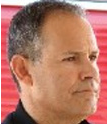
Michael Antonucci
Antonucci was forced into retirement in September, but was given a $78,163 six-month contract to remain as chief while his successor was sought.
Beginning last April, a campaign aimed at convincing the Upland City Council to terminate Antonucci was waged by a coterie of residents and former and current department employees. Many of the attacks on the chief manifested in the form of anonymous emails posted to the city council.
Antonucci was taken to task on a number of points, including allegations he had disciplined, fired or punished some department employees unjustifiably, promoted or kept in place unqualified personnel, and squandered money made available to the city from both the federal government and Lewis Operating Company on equipment that has been deployed in a way that endangers rather than enhances citizen safety.
One issue Antonucci was chastised for was the decision to purchase two vehicles for the department: a ladder truck and a Type IV engine.
The $1.5 million ladder truck was purchased with development fees paid to the city by Lewis Operating Company, the corporate parent to Lewis Homes, one of the city’s largest corporations and also one of the major builders of residential and commercial property in town.
The ladder truck is the capital engine at Fire Station 164, the city’s newest fire station, located at 1825 N. Campus Avenue. The ladder truck, which allows firefighters to access and exit from heights up to four stories, carries no fire suppression equipment, i.e., no water pump and no water tank. This use of the $1.5 million vehicle was questioned because as the primary first response piece of equipment run out of Station #164, which services the northeast portion of Upland, critics maintained, immediate fire suppression in that section of the city would be delayed because no pump truck is stationed at Station #164.
The $170,000 Type IV engine was purchased with a combination of redevelopment funds, Community Development Block grants and federal stimulus and recovery money. The engine had gone unmanned at Station 162, on San Antonio Ave., in the northern area of the city. The placement of the truck into that area has been criticized because Community Development Block grant funding of a project carries with it a requirement that the program benefit an area deemed a so-called CDBG fund area. The area served by Station 162 is not designated as a CDBG fund area.
While Antonucci, at the insistence of Upland’s city attorney Bill Curley, remained silent in the face of those attacks, other Upland municipal officials downplayed the charges, insisting that Antonucci was apportioning the city’s firefighting resources as sensibly as the limitations in equipment, facilities and manpower allowed.
Upland city manager Stephen Dunn pointed out that the ladder truck carries 500 gallons of foam and 60 gallons of water to make up to 1,200 gallons of air injected foam, which in the fire department’s estimation was more than enough for initial response, and the truck had the capability of tapping into the fire hydrants in most areas of the city and all of the fire hydrants in the Station 164 area, which Dunn said would buy sufficient time for a second response truck to arrive. Dunn defended the acquisition and use of the ladder truck, saying having a panoply of equipment and vehicles in a modern municipal circumstance enhanced public safety and did not harm it.
“In Upland there are not a whole lot but there are some buildings where a ladder truck would be advantageous and a better option than other trucks, which are advantageous in other scenarios,” Dunn said.
Antonucci was also criticized for having spent money extravagantly in outfitting Station #164 with granite counter-tops and full granite back-splashes and stainless steel appliances, and he came under attack for having the department purchase a command vehicle that could not be justified in terms of the austere budgetary climate and the simple mission of ensuring public safety.
In the spring of last year, even as the attacks against him were reaching a crescendo, Antonucci applied for the position of county fire chief but was ultimately passed over in favor of Mark Hartwig, an assistant chief then employed by the Rancho Cucamonga Fire Department.
Ultimately, Dunn resolved to winnow the city of much of its executive staff, including Antonucci, who was being paid a base salary and add-ons of $170,698, plus benefits of $71,692 for a total of $242,390 yearly. But no new fire chief was hired to replace him and before Antonucci left in September, he was permitted to write his own ticket as a consultant at $13,027.16 per month while the city sought to recruit his replacement. This led to stepped up criticism of the city.
It was announced this week that police chief Jeff Mendenhall will serve as interim fire chief in the aftermath of Antonucci’s departure.
Dunn’s move to place the police chief into that position broaches the possibility of the city eliminating the position of fire chief altogether and consolidating the police and fire chief positions into the single post of public safety manager, which was a system used in the city of Arcadia until 1936 and currently in Grants Pass, Oregon.
There is some precedent for this arrangement in Upland. In the 1990s, then-police chief Martin Thouvenell served as both police and fire chief for almost six years.
Recent Colonies Case Developments Include Filing And Sentencing Delay
Judge Michael Smith last week continued the sentencing of former county supervisor and assessor Bill Postmus until July 19. In March 2011, Postmus entered into a plea deal with prosecutors, acknowledging he was guilty of perjury, conspiracy, bribe soliciting and bribe taking in connection with his vote as a member of the board of supervisors in November 2006 to confer a $102 million payment on the Colonies Partners. That payment was made to settle a lawsuit that development company brought against the county over flood control issues at the Colonies at San Antonio project in north Upland.

Bill Postmus
Prosecutors maintain Colonies co-managing principal Jeff Burum with the assistance of former county sheriff’s deputies union/assistant assessor Jim Erwin bribed Postmus and former supervisor Paul Biane, together with Mark Kirk, the former chief-of-staff to supervisor Gary Ovitt, by routing separate $100,000 contributions to political action committees Postmus, Biane and Kirk controlled. Postmus, Biane and Ovitt provided the three votes needed to make the $102 million settlement with the Colonies Partners.
Biane, Burum, Erwin and Kirk were indicted in May 2011 on extortion, bribery, and conspiracy charges. All four are maintaining their innocence. As part of his plea arrangement, Postmus agreed to testify against the four defendants when the case comes to trial.
Criminal proceedings in the case have been suspended pending an appellate court ruling on conflicting filings by both sides. The appellate court is considering the prosecution’s effort to reinstate some of the charges that were dismissed against three of the defendants last summer by Judge Brian McCarville in response to demurrers filed by defense attorneys. The appellate court is also considering motions by defense attorneys to dismiss even more of the charges.
The four defendants are set to return to court on April 20 for a discovery motion and lawyers said they seriously doubted the case will go to trial before July, which will perhaps entail a further delay in Postmus’s sentencing.
In the meantime, lawyers for Burum and the Colonies Partners are seeking dismissal of a civil lawsuit brought by two citizens groups seeking the return of the $102 million legal settlement to taxpayers.
In February, the Inland Oversight Committee and Citizens for Responsible Equitable Environmental Development filed suit, alleging that the indictment of Burum, Biane, Erwin and Kirk along with the guilty plea by Postmus presented grounds upon which to void the settlement and force the Colonies Partners to disgorge the $102 million.

Jeff Burum
Four lawyers from two different law firms – Stephen Larson, Steven Bledsoe and Jonathan Phillips of Los Angeles-based Arent Fox and Scott Summer of San Francisco-based Pillsbury Winthrop Shaw Pittman – assert in a demurrer on behalf of Burum that the citizens groups do not have standing to file the lawsuit, that their legal argument is flawed and that the statute of limitations has lapsed.
Because the nonprofit citizens groups were not parties to the initial litigation, according to the demurrer, they do not have standing to bring the lawsuit. Moreover, according to Larson, Bledsoe, Phillips and Summer, the suit is six years late and should have been brought at the time of the settlement, putting it beyond the statute of limitations for a civil proceeding.
According to the demurrer, a trial relating to the flood control issues had been held in which the judge, Christopher Warner, had found in the Colonies favor but had not ruled as to the amount of damages. Therefore, the demurrer states, “Plaintiffs’ complaint is a misguided, untimely and legally unsupported attempt to unwind the settlement and force Colonies to return the $102 million paid pursuant to the judgment.”
The demurrer further states “because plaintiffs are not parties to the settlement, they lack standing to bring an action” and that the “Plaintiff’s complaint fails because it is legally unsupported and untimely on its face.”
According to the demurrer, a validation action was carried out and completed by early 2007, in which those wishing to contest the settlement could have done so. None did so by the deadline, according to the demurrer, and so the settlement is now validated and irrevocable, attorneys say. The demurrer states, “as recognized by the court the validation judgment ‘binds and permanently enjoins and restrains all persons or entities, public or private, from the institution of any action or proceeding or maintaining any action or proceeding challenging, inter alia, the validity of the settlement agreement [or] the judgment.’”
But the matter is not that simple, said Cory Briggs, the attorney representing the Inland Oversight Committee and Citizens for Responsible Equitable Environmental Development in the suit. He said there are provisions in the law, specifically Government Code Section 1090, which prohibits an elected official from having a financial interest in any matter he or she votes on and that bribes paid to an elected official in return for a vote benefitting the bribe giver constitutes financial interest on the part of the elected official. He said the statute of limitations on a civil suit runs from the time that a plaintiff has firm and convincing evidence that something actionable occurred. That evidence manifested for the public, Briggs said, when Postmus entered his guilty plea.
“Bill Postmus pleaded guilty of violating Code 1090,” Briggs said. “The Supreme Court has said that a violation of Section 1090 required the beneficiary to return all the money. For that reason, the Colonies Partners have to give back the $102 million they obtained through governmental action tainted by bribery.”
Legal Challenge Spurs Legislative Fix For Calico Solar Project
The approval and environmental certification process for the Calico Solar project has complexified, as legislation to allow the undertaking to proceed has advanced in Sacramento even as environmentalists intensified their opposition to the project.
The project, to be built on 4,604 acres of public land in the Pisgah Valley north of Interstate 40 roughly 37 miles east of Barstow, was originally intended to utilize a cutting-edge process for converting the heat of the sun to drive a turbine and generate electricity. In that form the project’s then-sponsor, Arizona-based Tessera Solar, in 2010 obtained from U.S. Secretary of the Interior Ken Salazar approval for the project and qualified for federal stimulus money to defray a portion of the cost of the project. But last year, Tessera sold the project to New York-based K Road Power. K Road has elected to abandon the original design, which involved parabolic mirrors to catch the sun’s rays and produce heat, and instead substitute photovoltaic cells.
Late last week, a bill to allow the Calico Solar project to receive state approval to change the technology upon which the project will rely, AB 1073, moved closer to passage in the state Legislature. AB 1073 was authored and sponsored by Assemblyman Felipe Fuentes, D-Sylmar. The bill passed the state Senate 28-2 on March 28 and is now being considered by the Assembly.
AB 1073 is an emergency measure, and as such it will take effect immediately upon passage by both houses and its signing into law by the governor. AB 1073 closes a loophole in a bill passed and signed by Governor Jerry Brown last year, SB 226, which permits the California Energy Commission to okay changes to approved projects rather than requiring rehearings and a repermitting process before local land use authorities. Under SB 226, opponents can still force rehearings or repermitting on altered projects if they are challenged in court, even if the case was dismissed.
Environmental groups have long been opposed to the Calico Solar project on the grounds that it will destroy or disrupt the habitat of the desert tortoises and golden eagles in the environs of Pisgah. The National Resources Defense Council last week filed a suit related to those issues in federal court, a move that under SB 226 would have forced K Road Power to reapply for approval.
As first proposed, the Calico Solar plant was to employ SunCatcher units, computer controlled parabolic mirrors. The SunCatchers were to track the sun during daylight hours and focus an intense beam of light, i.e. heat, onto a glass tube filled with a synthetic petroleum product known as therminol. Therminol, based on its grade and rating, is capable of absorbing heat up to 1,400 degrees Fahrenheit. The therminol was then to be pumped across the outside of the differing chambers of a Sterling engine to heat gases within those chambers to drive the engine’s pistons. The engine would then turn a turbine that generates electricity.
Tessera’s design was an improvement upon a similar computer-guided parabolic mirror solar ray-focusing set up that heated therminol, which was then routed into a heat converter that was brought into contact with water to create steam, which was used to run a turbine. It was believed the use of the Sterling engines would boost the efficiency by as much as 17 percent over the steam driven turbine approach.
In October 2011, K Road abruptly switched to a plan to employ photovoltaic panels on the project.
Part of the rationale for changing the technology stemmed from the September bankruptcy filing of Sterling Energy Systems, which rendered ready availability of the Sterling engines problematic. Another factor was the decrease in the cost of photovoltaic cells over the last three years.
“The switch to PV was primarily based on our decision to use a more proven technology and to be online faster than we could with the SunCatchers,” K Road put out in a public statement.
While the photovoltaic cells will not generate as much electricity as the mirror/therminol/Stirling engine configuration, they can be erected and be brought on line much more quickly. Originally planned to generate 850 megawatts, the plant has been pared back to 663.5 megawatts. When fully operational, the project will provide electricity sufficient to power about 250,000 homes.
Manhole Cover Thefts Plaguing Barstow
There have been a wave of manhole cover thefts in Barstow in recent weeks.
The covers are an attractive target for thieves because their weight fetches a decent monetary return at scrapyards.
The circumstance represents a hazard to the public as the thefts often occur at night and leave passersby vulnerable to injury or death if they fall into the uncovered manholes.
Upon discovery of the thefts, city public works employees endeavor to cover the holes with plastic materials.
City manager Curt Mitchell said the city is now looking to purchase lighter but durable composite manhole covers with locking mechanisms, which have virtually no salvage value, as a permanent replacement.