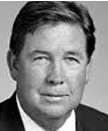
Ruben S. Ayala, Once Dominant In Local And State Politics, Dead At 89

Ruben Samuel Ayala, one of the most prominent politicians to arise out of Chino, passed away Wednesday, January 4, at the age of 89.
The grandson of a Mexican immigrant, he was born on March 6, 1922 to Mauricio and Ermina Martinez Ayala. He lived with his family on Chino’s Second Street and graduated from Chino High School in 1941 and attended Pomona Junior college in 1941 and 1942. From 1942 until 1946,  Ayala served in the U.S. Marine Corps, participating in the Battle of Tarawa in the Pacific.
Following extension courses at UCLA, he graduated from the National Electronic Institute in Los Angeles in 1948. For three years he worked as a field engineer for the Admiral Television Company in Los Angeles. From 1951 to 1954, he was assistant branch sales manager for the Homelite Corporation, manufacturers of small industrial construction equipment. From 1954 to 1964, he was an agent for the Farmers Insurance Group in Chino.

Ruben Ayala

Ayala was member of the Chino School Board from 1955 until 1962, at which point he was elected to the Chino City Council. In 1964, he ran to  become Chino’s first elected mayor.  In November 1966, he was elected to the San Bernardino County Board of Supervisors from the Fourth District and  served as chairman from 1968 to 1972.  As a supervisor he championed flood control projects throughout the county, including channels in Chino, San Timoteo Canyon, Mission-Zanja, Cable, Wildwood, Wilson and Carbon Creek, Live Oak Canyon, Plunge and Elder creeks and the South Rialto, Reche Canyon and Cypress channels, facilities along the Santa Ana River, the City Creek and Mill Creek levees and the highly controversial Mentone Dam.
Re-elected to the board of supervisors in 1970, Ayala resigned in January 1974 when he was elected in a special election to the California State Senate representing the 32nd Senatorial District. He was subsequently reelected to the Senate six times, leaving in 1998 when he was forced out of office due to term limits.
A  Democrat, Ayala in 1980 authored SB 200, legislation to expand the State Water Project by constructing a peripheral canal to transport water around the Sacramento-San Joaquin Delta. The measure was signed into law by Governor Jerry Brown but voters blocked it in a 1982 referendum.
In the Chino Unified School District, a high school is named after him.  The city of Chino’s largest park is also named in his honor.  The city of Rialto named a street after him in 1981.
His wife, Irene neé Morales, to whom he was married since 1945,  predeceased him in 2008. He is survived by three sons; Maurice; Ruben, also known as  “Buddy”; and Gary.
Assemblywoman Norma Torres, who now represents the Chino area, said the Ayala was an inspiration to the community.
“If you ever had the chance to meet and speak to the senator, you would’ve seen his passion for his family and the community he served,” Torres said.

Financial Challenges Deepen As Victorville Defaults On Two Bonds

VICTORVILLE—In what some observers are saying represents a major progression in  Victorville’s inevitable slide  toward bankruptcy, the city has defaulted on two bond issuances with a total value of $173 million.
The city was unable to cover $7.5 million of a $10.6 million payment due on December 1 after Bank of New York Mellon balked at the city seeking to utilize restricted funds for a $535,000 principal payment.
The default could trigger action by bondholders that would complicate Victorville’s already bleak financial picture. The city’s options in reversing the default also carry implications that will reduce the amount of investment, reserve and operating capital available to it.
At issue in the latest instance is the city’s propensity for interfund borrowing, a practice that always carries with it some degree of long term financial risk and in some cases entails skirting the law or bending financial protocols.
In 2007 and 2008, Victorville issued $173 million in bonds to cover the cost of a number of municipal programs, including $90 million to be used toward the escalating cost of the Foxborough power plant. Because the Foxborough plant was not completed, city officials were unable to repay the bondholders with proceeds generated from the Foxborough enterprise. Moreover, the staggering local economy has also impacted property values, decreasing property tax revenue to the city in recent years. To meet its bond debt obligations, the city instead rerouted money from the redevelopment agency and other funds to make those interest payments.  The city was unable this year to use redevelopment money for debt service because the California legislature sharply curtailed the charters of county and municipal redevelopment agencies up and down the state.
On December 1 a $10.6 million interest and principal payment on eight separate bond issuances made between 2005 and 2008 came due. In November,the finance department had scraped together $3.1 million to be used toward that payment, but was yet $7.5 million short. When they moved to tap into $7.5 million in reserves on deposit with the Bank of New York Mellon to cover the gap, the bank, which serves as a trustee on those funds for the city and does so in accordance with strictly defined guidelines laid out in federally regulated security filings, declined to make the transfer. Instead, it issued a notice to the city, dated December 16, informing city officials the reserve funds cannot be used to cover principal payments. When the payment to the bond holders was not received, Victorville was declared to be in default.
At press time, neither the bondholders, the underwriters nor the city had determined which of their options they would pursue.
The bondholders could sue for immediate payment of the money and attempt to have such a suit fast-tracked through the courts. They could also adjust the terms of the bond issuance to allow the city to use reserve funds to make a principal payment. They could also hold a forum and demand payment in full of the outstanding $173 million in bonds and/or seize whatever assets the city has in terms of collateral worth that amount used to secure the bonds.
The city has the option of sequestering its payment, that is, utilizing the $3.1 million that did not come from its reserves toward making that portion of the $10.6 million remittance which pertains to principal on the bonds and routing the $7.5 million toward payment on the interest. The city could also borrow money from some other source – perhaps by again issuing bonds – to raise the capital to make the payment. That would entail further debt down the road.
Questions about the fiscal health of Victorville have existed for some time, together with suggestions of mis- and malfeasance on the part of city officials and consultants and contractors working with the city.
An audit of city finances by Mayer Hoffman McCann released in March of this year indicated those problems have worsened, and its authors expressed “substantial doubt about the city’s ability to continue as a going concern.”
The audit uncovered tens of millions of dollars in internal loans that were never approved, three funds that were $180 million in the hole and dwindling cash reserves. As of March, according to the audit, the city’s utility fund was $78 million upside down, while cash in the water district had dropped from $15 million in 2009 to $8 million as of June 30, 2010 despite a $20 million loan made to the district from the Southern California Logistics Airport Authority, the agency devoted to converting the former George Air Force Base into a civilian airport.
That red ink, major losses approaching $200 million in the city’s effort to establish electricity generating plants, and apparent diversions of other funding intended for the development of the airport or infrastructure there to uses elsewhere in the city have captured the interest of the county grand jury, as well as the FBI.
Another federal oversight agency, the Securities and Exchange Commission, is probing Victorville’s questionable use of bond funding. The Securities and Exchange Commission more than 15 months ago subpoenaed documentation from the city relating to its bond issuances and expenditures. The commission has yet to release a report on its findings. The city’s attempt to breach protocol by using its reserves to make the December 1 payment could fall within the Securities and Exchange Commission’s scrutiny, as well.
City officials this week did not return calls from the Sentinel seeking comment on New York Mellon’s action or the default.
A number of Victorville residents, including longtime City Hall critic Ed Nemechek, suggested the default represents either a major step toward, or an indication of, the city’s insolvency.

Granlund Ducking Colonies Case Subpoena

As of earlier this week, former state assemblyman Brett Granlund had actively avoided several attempts to serve him with a subpoena relating to the Colonies Settlement case.

Brett Granlund

Well informed sources have told the Sentinel that lawyers for the defendants in the Colonies case want to question Granlund with regard to his knowledge about several aspects of the criminal prosecution of former county supervisor Paul Biane, former Fourth Supervisorial District chief-of-staff Mark Kirk, former sheriff’s deputy union president Jim Erwin and Rancho Cucamonga-based developer Jeff Burum.

In May, Biane, Erwin, Kirk and Burum were named in a 29-count indictment charging them with conspiracy, bribery and extortion related to what prosecutors allege was an effort to improperly settle for a $102 million payout a lawsuit Burum’s company, Colonies Partners, had brought against the county over flood control issues at its development project in northeast Upland. In November 2006, Biane, who was then the county’s Second District supervisor, Fourth District supervisor Gary Ovitt and then-First District supervisor Bill Postmus voted to approve that settlement in a 3-2 vote opposed by then-supervisor Dennis Hansberger and supervisor Josie Gonzales.

Postmus, who along with Erwin was previously charged with conspiracy and bribery in conjunction with his vote on the $102 million settlement, in March pleaded guilty to soliciting and receiving bribes, conspiracy and conflict of interest, and agreed to turn state’s evidence. In April, he was the star witness before the grand jury that indicted Biane, Burum and Kirk and reindicted Erwin.

Prosecutors’ allege Burum, together with Erwin, who was once the president of the county’s sheriff’s deputies’ union and was then working as a consultant to the Colonies Partners, prior to the November 2006 vote threatened to carry out an informational campaign involving mailers revealing Postmus’ homosexuality and use of illegal drugs and Biane’s insolvency, but ultimately refrained from the distribution of the information. These “threatening, menacing, commanding or coercing” acts, constituted extortion, the prosecution alleges. After the vote, Burum provided two political action committees controlled by former supervisor Bill Postmus with separate $50,000 checks, a political action committee controlled by Erwin with a $100,000 check, a political action committee created by Kirk with a $100,000 check, and a political action committee founded by Biane’s chief-of-staff Matt Brown, but which prosecutors claim was secretly controlled by Biane, with a check for $100,000. Those checks constituted bribes, prosecutors maintain. Prosecutors allege that Kirk influenced Ovitt’s vote. Kirk at that time was Ovitt’s chief of staff.

Defense attorneys, who are now seeking to obtain information to compromise the credibility of Postmus, are interested in obtaining from Granlund documents related to his communication with individuals close to the district attorney as well as the district attorney directly or indirectly and information bearing upon the motivation driving the prosecution. Granlund was once a powerful player in Republican politics in San Bernardino County, as was Postmus. Granlund has close ties to former supervisor Dennis Hansberger, Hansberger’s one-time chief of staff Jim Rissmiller, district attorney Mike Ramos and others within Ramos’s political circle. Reportedly, Granlund served as a go-between in discussions involving the district attorney’s office and Postmus in the months leading up to Postmus’ decision to turn state’s evidence. Both Hansberger and Rissmiller testified before the grand jury that indicted Biane, Burum, Erwin and Kirk.

Sources tell the Sentinel that a private investigator and process server working for one defendant’s legal team has sought to make contact with Granlund to serve him with a subpoena. As of early this week, that effort has not succeeded and in recent days, Granlund has gone to ever more extreme effort to avoid being served, refusing to answer knocks upon his door and using other tactics to evade the process server. Efforts to locate him at Platinum Advisors, the Sacramento-based lobbying firm that employs him, were thwarted when employees claimed that Granlund does not work out of that office.

In conversations he assumed to be confidential with friends and associates in San Bernardino County and the state capitol, Granlund has expressed anger with the defense’s efforts to “drag” him into the matter and he expressed concern that the questions he might be subjected to could raise issues problematic to him personally and professionally.

Pomierski Demanding Taxpayers Pay For His Legal Defense

UPLAND—The lawyer for former Upland mayor John Pomierski is threatening legal action against the city if it does not provide him with representation in defense of a civil suit filed against Pomierski, other former city officials and the city by the ownership of the now-shuttered Chronic Cantina restaurant and bar.

John Pomierski

Ontario-based attorney Robert Schauer this week lodged a claim against the city at the city clerk’s office on Pomierski’s behalf calling for the city to underwrite the cost of the former mayor’s defense against the suit. If the city refuses, Schauer intimated he will represent Pomierski in legal action to force the city to pay the now disgraced ex-mayor’s attorney’s fees and other damages.

The owners of the Chronic Cantina, Robert Mills, Scott Schaller, Thomas Smith, Keith Scheinberg and Dan Biello, collectively known as KSDB, Incorporated, filed a lawsuit against the city and several city officials including Pomierski in April in West Valley Superior Court in Rancho Cucamonga. The suit maintains that Pomierski, Upland contractor John Hennes and former Upland police chief Steve Adams extorted them by withholding and then withdrawing their operating permits.

While Pomierski denies all elements of the Chronic Cantina’s lawsuit, the issue is much more complicated than that. In March, Pomierski was indicted by a federal grand jury which criminally charged him with engaging in the same activity – conspiracy, extortion and bribery – which is at the center of the Chronic Cantina’s lawsuit. What is more, the federal indictment specifies the Chronic Cantina’s ownership and management as one of two entities extorted by Pomierski; his appointee to the city of Upland’s housing appeals board, John Hennes; and two others linked to Pomierski, Jason Crebs and Anthony Orlando Sanchez. Pomierski is maintaining his innocence in the face of the charges against him. Sanchez has fled and is now considered a fugitive from justice. Both Hennes and Crebs have entered guilty pleas and are cooperating with prosecutors.

In this way, the city is being asked to utilize taxpayer money to propound a defense of an individual facing accusations that he broke trust with the very people – Upland’s residents – Pomierski is asking for financial assistance from.

Schauer, nonetheless, maintains that state law requires that Upland’s taxpayers shell out money to defend his client. In the claim he filed for Pomierski, he cites California Government Code 995, which holds that “a public entity shall provide for the defense of any civil action or proceeding brought against him, in his official or individual capacity or both, on account of an act or omission in the scope of his employment as an employee of the public entity.” Schauer said he has consistently requested the city to indemnify Pomierski and that the city has an obligation to do so.

Schauer is something of a controversial figure, himself. He was an appointee to the Upland Planning Commission, a panel which Pomierski dominated during his tenure as mayor and which was involved in a number of the abuses of governmental authority under the Pomierski regime. As a member of the planning commission, Schauer once openly supported converting Old St. Mark’s Church on 18th Street in the midst of an upscale residential neighborhood immediately adjacent to a junior high school, into a tavern. Behind the scenes, Pomierski had pushed for the conversion of St. Mark’s Church, to provide him with a forum for carousing that was off the beaten track, out of the public lime light and relatively close to his own home.

After Pomierski was indicted and KSDB filed its suit, Schauer resigned his position on the planning commission.

No date for KSDB’s civil suit has been set. Pomierski’s trial date on the criminal charges has been set for April 24 in federal court.

Upland mayor Ray Musser, who was long the sole voice of dissent on the council led by Pomierski and twice opposed him in the 2004 and 2008 elections, said the city had yet to formulate a response to the claim.

“The city manager wanted to review it and delegate it out to key people, but he is on vacation at the moment. We will get it in its proper timetable. I don’t want to make any comment because if it turns up in litigation, it will be used against me and the city no matter what I say,” Musser said.

Supreme Court Rejects Chino Hills Appeal; Fate Now Rests With PUC

CHINO HILLS—The city of Chino Hills’ options for legal recourse in blocking the Tehachapi Line have been exhausted with the state Supreme Court’s refusal last week to review the city’s failed lawsuit against the installation of high-voltage power wires through the city.

The city’s lone hope in averting the permanent imposition of 200-foot high transmission towers through a significant portion of the city now rests with the state Public Utilities Commission, the same entity that three years ago gave go-ahead to the project but which is now reviewing that decision.

In seeking to meet state-mandated renewable energy goals, Southern California Edison has undertaken the Tehachapi Renewable Transmission Project, which is intended to generate at least 1,500 megawatts of power from new windmills to be erected within a 50-square mile windfield in the Tehachapi area, an undertaking three times the size of any existing wind farm in the United States.

To convey that power to the urbanized population centers of the Southland, Southern California Edison is utilizing its existing power corridors and easements, including a long-extant but less intensely used corridor through upscale Chino Hills.

Chino Hills, where homes typically list in the $400,000 range even in the currently down real estate market, is the most densely populated area through which the transmission lines will span. Chino Hills residents, convinced the power lines represent a negative impact on both their quality of life and property values, resisted the imposition of the corridor. For some time, through the auspices of City Hall and with the assistance of other champions, such as state Assemblyman Kurt Hagman, Chino Hills officials importuned Sacramento to do something to deliver them from the burden of the transmission lines traversing their community. While the environmental assessment for the transmission lines was being done, city officials floated a proposal to reroute a span of the power transmission line through Chino Hills State Park to keep it from passing through the city. That concept was shot down and the public utilities commission approved the line in most respects as Edison proposed it. Hagman, who was formerly Chino Hills mayor, introduced legislation, AB 2662, a bill that would have prohibited an electrical corporation from constructing substantially larger transmission towers in an easement intended for smaller transmission towers when the easement runs through an occupied residential area. That bill died at the committee stage.

The city of Chino Hills then sued Edison last year, claiming the company had “overburdened” the easements. That effort failed when West Valley Superior Court Judge Keith D. Davis ruled the California Public Utilities Commission has exclusive jurisdiction regarding the route used by Edison and that the matter fell entirely out of the Superior Court’s purview. Davis threw the suit out.

Chino Hills appealed Davis’s ruling to the 4th District Court of Appeal, asserting the city has the right to have the case heard by a jury because the Public Utilities Commission did not employ a standard set of guidelines in approving the placement of the Tehachapi line project. Rather, according to the city, the PUC allowed the imperative of completing the transmission line to facilitate the wind power project to take precedence over policy and safety and aesthetic guidelines, which should have been considered and adhered to as part of the approval process.

On June 29 Chino Hills assistant city attorney Elizabeth Calciano sought to convince a three-judge that Davis had erred when he ruled the California Public Utilities Commission possessed the authority to permit Southern California Edison to erect the towers.

But on September 12, the 4th District Court of Appeal panel, consisting of associate justices Betty Richli, Carol Dodrington and Jeff King, turned back the city of Chino Hills’ challenge and affirmed Davis’ 2010 Superior Court decision, ruling that the California Public Utilities Commission has exclusive jurisdiction over property rights issues between the city and Edison.

The city then petitioned the state Supreme Court to examine the issue and both Davis’s and the 4th District Court of Appeal’s findings.

Chino Hills assistant city attorney Elizabeth Calciano was informed December 21 that the Supreme Court declined to review the appellate court’s decision.

Michael Peevey

To date, the city of Chino Hills has expended $2.4 million in the effort to prevent the towers from being erected in its jurisdiction. Several of the towers are now in place. Even as the towers were being erected in October, mayor Ed Graham and city manager Mike Fleager escorted the president of the California Public Utilities Commission, Michael Peevey, around town, giving him a visual demonstration of the ominous nature of the towers and importuning him to have the commission reconsider its permitting of the line. In the presence of Chino Hills officials, Peevey was polite and indulgent, but restrained in his response, offering hope, but no promises. In email correspondences with some Chino Hills residents, Peevey indicated his visit to Chino Hills where he was actually able to see the 200-foot towers, had given him a new perspective. Since then, four of his utilities commission colleagues have sojourned to Chino Hills to see the towers. Since the permits were given by the commission, three of those members have left and been replaced by others who did not participate in the original vote.

In November the commission temporarily halted Edison’s construction and ordered the company to produce by January 10 an explanation/justification for continuing with the above ground route that is in progress. City officials and residents are pressing for a rerouting through Chino Hills State Park, a reduction in the height of the towers or undergrounding of the lines.

Feds Sustain Suspension of Victorville’s Investment For Visas Program

VICTORVILLE—The administrative appeals office of the U.S. Citizenship and Immigration Service has sustained the termination of Victorville’s EB-5 visas-for-investments program.

The EB-5 program is a federal one that allows entities such as cities or redevelopment agencies to arrange for the provision of visas for foreigners who invest at least $500,000 in projects pre-qualified by the federal government, in particular ones aimed at the civilian-use conversion of former military bases. In April 2008, the city entered into a relationship with CMB Export, LLC to manage an EB-5 program for Victorville at and around Southern California Logistics Airport, now being built on the grounds of the former George Air Force Base, which was shuttered by the Department of Defense in 1992.

Under its agreement with CMB, that company was supposed to recruit foreign nationals, in this case mainly ones from China and Korea, who were to put up at least $500,000 each in investments pertaining to the base. In exchange, the investors would receive visas, or green cards, for themselves and the members of their immediate families. The city, however, abrogated its contract with CMB in June 2008. In December 2008 CMB filed a $33 million lawsuit against the city, claiming breach of contract, fraud, unfair competition and business interference. CMB refiled the claim in February 2009, including charges of misrepresentation and fraud by former city manager Jon Roberts and former mayor Terry Caldwell.

Despite the lawsuit, U.S. Citizenship and Immigration Services approved Victorville’s application to participate in the EB-5 Program in 2009, allowing foreign nationals to supply at-risk loans to the city, with the proviso that the loans underwrite efforts to convert the former air base to civilian use and simultaneously create local employment opportunities. Investors were to be paid back with interest within five years. Nineteen Asian investors put up $500,000 each under the program. The city then committed to utilizing the money to refund a restricted municipal water department account from which money had been used to construct a wastewater plant at Southern California Logistics Airport.

In April 2010, the city of Victorville settled the lawsuit brought by CMB for $200,000. The following month, however, the U.S. Citizenship and Immigration Service suspended Victorville’s EB-5 program pending review, stating that city officials had misrepresented the projects to be funded by the investment program. In October 2010, the U.S. Citizenship and Immigration Service terminated Victorville’s program, citing “material factual discrepancies” in financial documents. It was the first time the federal government had moved to terminate an entity’s EB-5 authority.

In response, Victorville filed a lawsuit in Washington, D.C. District Court against the U.S. Citizenship and Immigration Service, the Department of Homeland Security and several senior federal officials. It also filed an appeal of the program cancellation with the U.S. Citizenship and Immigration Service’s Administrative Appeals Office, and temporarily agreed to a stay of the suit pending that appeal.

In a letter dated December 21, the administrative appeals office of the U.S. Citizenship and Immigration Service upheld the decision to terminate Victorville’s program, referencing Victorville’s failure to meet several EB-5 criteria. The appeals office determined Victorville had fallen short in generating jobs using the foreign investments. “At issue is whether the alien investors can be credited with job creation when, in actuality, they are merely preserving jobs,” according to the letter. The appeals office found examples of misrepresentation or contradiction between what councilman Mike Rothschild and the city’s attorneys said about the program and discrepancies in city representations about the city’s interdepartmental loans and their use. The wastewater plant, which is already running, is operating without an infusion of EB-5 money, though the city had declared its intent to pay the interfund loans with the EB-5 money.

Victorville has refunded the entirety of the $9.5 million in investments it received under the EB-5 program. At present, it is looking to sell the wastewater treatment plant to the regional Victor Valley Wastewater Reclamation Authority.

The city council is now scheduled to discuss on January 17 whether to proceed with its lawsuit against the U.S. Citizenship and Immigration Service and the Department of Homeland Security. That issue is problematic for several reasons. One is that public representations by Rothschild are at issue in the federal agency’s action. Another is a conflict involving city attorney Andre DeBortnowski, whose firm stands to make money if the city proceeds with the suit. DeBortnowski and his firm’s representations in documents have been cited as inconsistent with Rothschild’s statements. Bortnowki’s firm also failed to monitor the EB-5 program adequately in the past to ensure that it maintained federal certification. Pursuing the lawsuit in federal court will likely prove very costly.

SEBA Accepts Benefit Cutbacks

In the face of San Bernardino County’s imminent imposition of labor terms on them that would have included a 14 percent pay and benefit reduction, the county’s county’s probation corrections officers, deputy coroner’s investigators and welfare fraud investigators accepted terms they had previously rejected.

The probation officers, coroner’s investigators and welfare fraud investigators are represented by the same union that does the contract negotiating for the county’s sheriff’s deputies and district attorney’s office investigators, the Safety Employees Benefit Association, known by its acronym, SEBA.

SEBA and its president, Laren Lecihleiter, have proven resistant to the declared intention of county chief executive officer Greg Devereaux to make across-the-board reductions to the county’s personnel costs, including reducing salaries, pensions and benefits to all county employees in an effort to redress what Devereaux has termed the county’s structural deficit, which will manifest in a deficit of more than $120 million over the next five years if current spending patterns are not changed.

The county initiated negotiations with SEBA ten months ago with a mind toward Devereaux’s goal, but was unable to get the union to accept the cuts the county calculates it needs to put in place to make ends meet over the next several years.

There are different units within SEBA, including one that represents sheriff’s deputies, corporals, detectives, sergeants and lieutenants, another that represents the district attorney’s office investigators, and the one that represents the probation officers, coroner’s investigators and welfare fraud investigators. The unit representing the probation officers, coroner’s investigators and welfare fraud investigators is known as the special peace officers bargaining unit.

The special peace officers bargaining unit has the least clout among SEBA’s differing units. Nevertheless, the way in which negotiations between the county and the special peace officers unit fared was considered a bellwether for how negotiations will go between the county and the other units.

In June, the county made a last, best and final offer” calling for a 14 percent cut in pay and benefits. Normally, a last, best and final offer provides an employer with the legal authority to submit those terms to an arbitrator, who can then impose those terms on union workers if the employer can demonstrate the economic necessity of doing so. In October, an arbitrator made a determination that the county would be justified in imposing a 7 percent reduction on the special peace officers, but SEBA refused to accept those terms.

On December 13, the board of supervisors, in a show of impatience with SEBA, voted 3-2 to deliver an ultimatum that the bargaining unit accept what the arbitrator offered in October or that the county would otherwise impose its last, best and final offer. Supervisors Neil Derry and Brad Mitzelfelt dissented in the vote of the board of supervisors to impose the terms, but they were outmuscled politically by supervisors Josie Gonzales, Gary Ovitt and Janice Rutherford.

In short order, SEBA conducted a vote of its special peace officers bargaining unit, in which 72 percent of the unit’s members participated. In that polling, all who cast ballots voted unanimously to accept the arbitrator’s October terms, i.e., the elimination of the county’s 7 percent pickup of the employees’ share of retirement contributions, a reduction in annual merit raises from 5 percent to 2.5 percent, and the union’s agreement to the dismissal of a lawsuit challenging the county’s refusal to grant the employees a 3 percent at 50 retirement benefits package, which the union maintains is a standard benefit for sworn law-enforcement officers throughout the state.

The county began negotiations this month with SEBA representatives with regard to labor terms for the union’s safety unit, which includes sheriff’s deputies, sheriff’s detectives and district attorney’s investigators. Unspoken at this point is the county’s desire to have the deputies give back the 3 percent at 50 retirement benefit package the county has been providing to the safety unit since 2003.

While Leichleiter and SEBA are intent on maintaining the retirement benefit as it is, SEBA’s concession in withdrawing the lawsuit pertaining to extending the benefit to the special peace officer’s unit, the consideration that the Colton Police Officers Association recently agreed to withdraw that benefit from any new-hires to the Colton police department, and the county’s increasingly dire financial circumstance augers against the union.

Appellate Court Wants Prosecutors To Justify Colonies Graft Charges

A select group of prosecutors will not be able to spend a leisurely Christmas and New Year’s holiday over the coming weeks and must instead burn the midnight oil working on a response to writs of mandate filed with the state appellate court by three of the four defendants in the Colonies Settlement political corruption case.

Lawyers for Jeff Burum, Jim Erwin and Mark Kirk filed motions to have all or major portions of the cases filed against them dismissed.

On December 9, the Fourth District Court of Appeal, Division Two agreed to have a three judge panel hear the motions and gave the state attorney general’s office and the San Bernardino County district attorney’s office, which are jointly prosecuting the case, 25 days “to show cause before this court why relief prayed for should not be granted. Petitioner shall have 15 days thereafter to file a traverse.”

In May, Burum, Erwin and Kirk, along with former county supervisor Paul Biane, were named in a 29-count indictment charging them with conspiracy, bribery and extortion related to what prosecutors allege was an effort to improperly settle for a $102 million payout a lawsuit Burum’s company, Colonies Partners, had brought against the county over flood control issues at its development project in northeast Upland. In November 2006, Biane, supervisor Gary Ovitt and then-supervisor Bill Postmus voted to approve that settlement in a 3-2 vote opposed by then-supervisor Dennis Hansberger and supervisor Josie Gonzales.

Postmus, who along with Erwin was previously charged with conspiracy and bribery in conjunction with his vote on the $102 million settlement, in March pleaded guilty to soliciting and receiving bribes, conspiracy and conflict of interest, and agreed to turn state’s evidence. In April, he was the star witness before the grand jury that indicted Biane, Burum, Erwin and Kirk.

Jeff Burum

Prosecutors allege that Burum, together with Erwin, who was once the president of the county’s sheriff’s deputies’ union and was then working as a consultant to the Colonies Partners, prior to the November 2006 vote threatened to carry out an informational campaign involving mailers revealing Postmus’ homosexuality and use of illegal drugs and Biane’s financial insolvency, but ultimately refrained from the distribution of the information. These “threatening, menacing, commanding or coercing” acts, constituted extortion, the prosecution alleges. After the vote, Burum provided two political action committees controlled by Postmus with separate $50,000 checks, a political action committee controlled by Erwin with a $100,000 check, a political action committee created by Kirk with a $100,000 check, and a political action committee founded by Biane’s chief-of-staff Matt Brown, but which prosecutors claim was secretly controlled by Biane, with a check for $100,000. Those checks constituted bribes, prosecutors maintain. Prosecutors allege that Kirk influenced Ovitt’s vote. Kirk at that time was Ovitt’s chief of staff.

Jim Erwin

Lawyers for the four defendants filed demurrers on their clients’ behalf in August, asserting that the indictment is flawed on multiple legal grounds, overdrawn and misapplied. Judge Brian McCarville, who heard the demurrers, ruled that some of the charges should indeed be dismissed, finding that five of the charges against Burum should be thrown out and that one count against each of the other three pertaining to violating Penal Code Section 424, which relates to misappropriation of public funds, should also be dismissed.

The state attorney general’s office, represented by deputy attorney general Melissa Mandel, and the district attorney’s office, represented by deputy district attorneys Cameron Page and Lewis Cope, appealed McCarville’s ruling to the appellate court.

By temporarily removing the matter to the appellate court prosecutors gave defense attorneys an opportunity to further attack the sufficiency of the charges lodged against their clients. Burum’s attorney Stephen Larson, Kirk’s attorneys Paul Grech and Chad Firetag, and Erwin’s attorney Rajan Maline did just that, filing the writs of mandate. Only rarely does the appellate court entertain such writs, and in the vast majority of cases, a court clerk summarily rejects them by sending back what is known as a postcard denial. In the case of the writs of mandate filed by Larson, Grech/Firetag, and Maline, the court agreed to hear them.

Stephen Larson

In his motion and brief, Larson maintains there are grounds to dismiss all of the charges against Burum. Similarly, Grech and Firetag want the entire case against Kirk dropped. Maline is requesting that the six charges against Erwin pertaining to bribery, extortion and conspiracy be dismissed. In addition, Erwin is charged with income tax evasion stemming from the bribery counts and having failed to properly disclose on governmental reporting documents all of his sources of income, in particular the gift of a watch and airline fare and lodging accommodations provided to him by Burum. If the appellate court grants a dismissal of the extortion, bribery and conspiracy counts against Erwin based on the writ of mandate, Maline intends to use that dismissal to have the tax evasion charges quashed. He would then seek to have the income reporting violations, which are being prosecuted as felonies, addressed as allegations of violations of the California Political Reform Act that are more properly dealt with not as felonies but infractions to be adjudicated by the California Fair Political Practices Commission.

Biane’s attorney, David Goldstein, did not file a writ of mandate on his client’s behalf. Biane is the only one of the four defendants who was an elected official.

Efforts to obtain comment from Mandel, Page or Cope by press time were not successful.

Utility Dispute Hinges On Bribes

A decision on whether the city of Colton or a Riverside developer must pay for $4.9 million worth of infrastructure in south Colton has been postponed until March.

Bribes developer G.W. Singletary paid to former Colton city councilman James Grimbsy more than a decade ago have seriously complicated the question of who will pay for water and sewer improvements near property Singletary owned adjoining Center Street in south Colton.

Twenty years ago, the now-86-year-old Singletary applied with the city of Colton to develop 13 acres of 680 acres the city had annexed along its frontier with Riverside. He later put in, he claims, sewer and water lines, and paved a portion of Center Street near his property. Those sewer and water lines were not hooked up to the city’s existing system. Nevertheless, Singletary says the city committed to reimburse him for those improvements, which he undertook in good faith. He has said that the city promised to extend utilities to the area, pursuant to the annexation.

When the city did not execute as promised, Singletary in an attempt to get the city to facilitate his project in 1997, befriended Grimsby. The camaraderie between Singletary and Grimsby, it turned out, included the developer’s provision of $5,000 in bribes. When Grimsby was caught up in a much wider bribery scandal that involved other developers, former county supervisor Jerry Eaves, and former Colton city council members Abe Beltran, Don Sanders and then-mayor Karl Gaytan, all of whom were prosecuted by the U.S. Attorney’s office, the bribes from Singletary came to light. In April 2003, the then- 78-year-old Singletary pleaded guilty to bribing Grimsby.

Four years ago, Singletary and the city of Colton sued each other over issues relating to Singletary’s contention that the city failed to deliver on its commitment to provide infrastructure to the area near his property. At issue is who will pay for roughly $5 million worth of water and sewer improvements along Center Street.

One line of defense the city has asserted is that Singletary’s bribery conviction, involving as it did an attempt to corruptly influence a Colton city official, obviated the city’s obligation to provide any infrastructure that would benefit Singletary or his corporate affiliates.

In August, San Bernardino County Superior Court Judge John Pacheco put off until December 20 making a ruling on whether Colton or Singletary will pay for the improvements. on Both Singletary and Colton have sought summary judgments in the case. At the December 20 procedural conference, Pacheco’s authority was attenuated by the consideration that the city has filed with the appeals court in Riverside to reinstate a cause of action in its suit.

The judge rescheduled the hearing on the conflicting motions for March 14.

11 City Managers Drawing Pay Of Over Quarter Million Dollars Per Year

Salaries for the top administrators in San Bernardino County’s 24 cities range from a low of $129,000 per year to $304,968, according to data recently released by the California Controller’s office.
The city of Ontario, which is the county’s richest city, with more than two-thirds of a billion dollars – $680,000,000 – running through all of its various funds and accounts annually, has the highest paid city manager.
The city of Needles, which is the county’s smallest municipality population-wise, pays its city manager the least.
Salaries are not the only forms of remuneration city managers receive. Nearly all of them are provided compensation in the form of benefits and add-ons that significantly increases the money taxpayers shell out for their services. Those benefits include contributions toward pensions, deferred compensation, vacation pay, leave pay, education stipends, computer, cell phone and travel allowances and health, dental, and vision coverage.
The state controller did not supply the full range of compensation for city employees in the most recent updating to its website, but did provide the salary range, wages subject to Medicare deductions, the applicable defined benefit pension formula, the employees’ share of pension contributions picked up by the cities, deferred compensation and the value of health, dental and vision benefits received by all city employees for the county’s 24 municipalities.
In the city of Adelanto, which has a population of 28,540, city manager Jim Hart’s salary range is between $210,000 and $215,000 per year. Upon reaching the age of 60, he will be eligible to draw a pension equal to 2 percent of his maximum pay times the number of years he has been employed by the city. The city provides $14,700 toward his retirement fund each year and also picks up $4,002 of the cost of his medical, dental and vision plans.
In Apple Valley, which has a population of 70,040, town manager Frank Robinson is paid $222,280 in salary and is eligible at the age of 55 to retire and receive 2.7 percent of his maximum salary times the number of years he has worked with the city. The city pays $17,304 per year toward his pension and $11,346 in deferred compensation annually. The city also pays $12,526 in medical coverage for him and his spouse.
In Barstow, a city with a 24,281 population, interim city manager Curt Mitchell is paid $236,990 per year in salary. He is eligible at the age of 55 to retire and receive 2.7 percent of his maximum salary times the number of years he has worked with the city. The city provides $20,280 per year toward his pension and $13,968 in deferred compensation for him. The city picks up the $19,622 cost of medical, dental and visual coverage for him and his wife.
In Big Bear Lake, which has a population of 6,278, city manager Jeff Mathieu receives $221,000 per year in salary.  He is eligible at the age of 55 to retire and receive a pension equal to 2 percent of his maximum salary times the number of years he has worked for the city. He receives $10,000 in deferred compensation and the city covers the $13,210 cost of his and his wife’s health plan.
In Chino, where the population is 84,742, city manager Pat Glover, is paid $212,448 per year in salary.  He is eligible at the age of 55 to retire and receive a pension equal to 2.7 percent of his maximum salary times the number of years he has worked for the city.  The city pays $16,996 per year toward his retirement and $18,840 in deferred compensation to him. Chino taxpayers cover the $13,207 annual cost of his and his wife’s medical, dental and vision coverage.
In Chino Hills, which has a 78,971 population, city manager Mike Fleager receives an annual salary of  $202,800.  He is eligible at the age of 55 to retire and receive a pension equal to 2 percent of his maximum salary times the number of years he has worked for the city. The city provides $15,201 annually toward his pension fund and the same amount, $15,201, toward his and his spouse’s medical, dental and vision care.
In Colton, where the population is 51,816, city manager Rod Foster receives an annual $220,000 salary. He is eligible at the age of 55 to retire and receive a pension equal to 2.5 percent of his maximum salary times the number of years he has worked for the city. The city provides $9,504 toward his pension fund and $11,880 for his family’s medical, dental and vision coverage.
In Fontana, the county’s second largest city population-wise at 190,356, city manager Ken Hunt has a $264,596 annual salary. He is eligible at the age of 55 to retire and receive a pension equal to 2.5 percent of his maximum salary times the number of years he has worked for the city. The city provides him with $17,084 in health coverage.
In Grand Terrace, which boasts a population of 12,717, city manager Betsy Adams is paid a $209,001 annual salary. She is eligible at the age of 55 to retire and receive a pension equal to 2.7 percent of her maximum salary times the number of years she has worked for the city. The city puts up $13,936 toward her retirement fund and provides $1,589 toward her medical, dental and vision insurance plan.
In Hesperia, a city with an 88,479 population, city manager Mike Podegracz is paid between $202,350 and $213,000 annually.  He is eligible at the age of 55 to retire and receive a pension equal to 2.7 percent of his maximum salary times the number of years he has worked for the city. The city provides $9,683 per year toward his retirement fund, another $14,332 in deferred compensation and $9,420 annually for his and his wife’s medical insurance plan.
In Highland, with a population of 52,495, city manager Joe Hughes pulls in a $168,849 annual salary. He is eligible at the age of 55 to retire and receive a pension equal to 2 percent of his maximum salary times the number of years he has worked for the city.  The city provides $12,647 yearly toward his retirement fund, another $5,500 in deferred compensation and $10,200 to cover the cost of his health, dental and vision plans.
In Loma Linda, a city with a 22,760 population, city administrator T. Jarb Thaipejr, who is also the city engineer and director of public works, is paid a $185,000 salary annually. He is eligible at the age of 55 to retire and receive a pension equal to 2 percent of his maximum salary times the number of years he has worked for the city. The city provides $12,139 toward his retirement plan and $10,020 for his family’s medical, dental and vision care.
In Montclair, which has a population of 37,535, city manager Edward Starr receives a $164,004 annual salary.
He is eligible at the age of 60 to retire and receive a pension equal to 3 percent of his maximum salary times the number of years he has worked for the city. The city provides $12,792 toward his retirement fund, $2,271 annually in deferred compensation and $11,280 to cover the annual cost of his and his family’s health care.
In Needles, which has a population of 5,809, city manager David Brownlee receives a $129,000-to-$132,000 annual salary.
He is eligible at the age of 55 to retire and receive a pension equal to 2 percent of his maximum salary times the number of years he has worked for the city.
The city provides $9,000 per year toward his retirement fund and $13,500 for his family’s medical, dental and vision coverage.
In Ontario, which has a population of 174,536, city manager Chris Hughes is provided with a salary of $304,968 per year. He is eligible at the age of 55 to retire and receive a pension equal to 2.5 percent of his maximum salary times the number of years he has worked for the city.
The city provides $3,733 per year toward his retirement fund, another $3,518 in deferred compensation and $1,874 toward his health, dental and vision insurance.
In Rancho Cucamonga, which has a population of 178,904, city manager John Gillison is provided with a salary that ranges between $206,856 and $293,280 per year.
He is eligible at the age of 55 to retire and receive a pension equal to 2.5 percent of his maximum salary times the number of years he has worked for the city. The city provides $14,592 per year toward his retirement fund, $14,490 for deferred compensation and $7,189 to cover his health plan.
In Redlands, a city of 71,926, city manager Nabar Martinez has an annual salary of $240,488.
He is eligible at the age of 55 to retire and receive a pension equal to 2 percent of his maximum salary times the number of years he has worked for the city. The city is setting aside $16,723 per year for his retirement fund, another $5,935 in deferred compensation and is underwriting his and his wife’s health care at a cost of $19,189 per year.
In Rialto, where 100,260 people reside, city administrator Mike Story is provided with a $264,120 annual salary.
He is eligible at the age of 55 to retire and receive a pension equal to 2.7 percent of his maximum salary times the number of years he has worked for the city. The city is setting aside $19,489 per year for his retirement fund. It provides $11,978 per year for his  health plan.
In San Bernardino, the county’s largest city with a population of 204,800, city manager Charles McNeely is paid $288,749 in salary per year.
He is eligible at the age of 55 to retire and receive a pension equal to 2.7 percent of his maximum salary times the number of years he has worked for the city.
The city contributes $20,872 annually to his retirement fund and provides him with $12,922 to pay for his family’s health, dental and vision insurance policy.
In Twentynine Palms, which has a population of 30,649, city manager Richard Warne is paid a salary of $154,775 per year.
He is eligible at the age of 55 to retire and receive a pension equal to 2.5 percent of his maximum salary times the number of years he has worked for the city. The city contributes $12,432 per year to his retirement fund and provides $16,306 annually to cover his health plan.
In Upland, a city of 76,106, city manager Steve Dunn receives an annual salary of $271,700. He is eligible at the age of 55 to retire and receive a pension equal to 2.5 percent of his maximum salary times the number of years he has worked for the city. The city contributes $19,019 to his retirement fund, another $16,283 toward deferred compensation and $15,371 per year for his family’s medical, dental and vision insurance plan.
In Victorville, which has 112,097 residents, city manager Doug Robertson takes home a salary of $249,996 per year.
He is eligible at the age of 55 to retire and receive a pension equal to 2.5 percent of his maximum salary times the number of years he has worked for the city.
The city sets aside $21,294 per year to infuse his retirement fund, provides $25,143 for deferred compensation and $7,512 toward his medical, dental and vision plan.
In Yucaipa, a city with a population of 51,476, city manager Ray Casey receives $195,598 per year as a base salary.
He is eligible at the age of 55 to retire and receive a pension equal to 2 percent of his maximum salary times the number of years he has worked for the city.
The city is setting aside $11,023 for his retirement fund, another $5,127 toward deferred compensation and putting up $8,400 per year to provide him and his wife with health care.
In Yucca Valley, which has 21,292 residents, town manager Mark Nuami receives a salary of $190,000 per year.
He is eligible at the age of 55 to retire and receive a pension equal to 2.5 percent of his maximum salary times the number of years he has worked for the city.
The town is providing $7,802 per year toward his retirement and $6,019 to pay for his family’s health coverage.

The following clarification of this article was published in the Sentinel on December 30:

In an article published by the Sentinel last week pertaining to the salaries of city managers in San Bernardino County’s 24 incorporated cities and towns, the figures were provided by the California Controllers office. The Sentinel, relying on that information, reported that Needles, which is the county’s smallest city, has a population of 5,809, and that city manager David Brownlee receives a $129,000-to-$132,000 annual salary and is eligible at the age of 55 to retire and receive a pension equal to 2 percent of his maximum salary times the number of years he has worked for the city. Furthermore, the Sentinel reported, the city provides $9,000 per year toward Brownlee’s retirement fund and $13,500 for his family’s medical, dental and vision coverage.
Brownlee contacted the Sentinel this week to say that “Needles’ population, per the 2010 Census is 4,844. The population grew by 14 from 2000 to 2010 (0.002898551 percent).  The budgeted range for the Needles city manager position is indeed $129,000 to $132,000 per annum. I, however, make $50.47/hour based on furlough truncated annual hours of 1,976. All employees take furlough. My annual salary is $99,728.72. At an ex-furlough 2,080 hours it would be $104,977.60 per annum. Furloughs are the new norm and are essential to ensure solvency of the city.”
If you are aware of inaccuracies that have appeared in the Sentinel, you can bring them to our attention by emailing us at sbcsentinel@yahoo.com