
By clicking on the blue portal below, you can download a PDF of the November 4 edition of the San Bernardino County Sentinel.

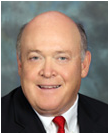
Dr. Renee Barnett
By Mark Gutglueck
In the closing weeks and days of the 2016 election season, the Central School District and its personnel have again stepped into controversy.
In the most recent case, one of the district’s school principals has actively campaigned on behalf of the two incumbent school district board members up for election.
Based upon one version of events and a reading of the state’s election code, that endorsement utilizing the principal’s official title bordered on, if not actually crossing the line into being, a violation of the California Educational Code.
In a public statement before the school board last night, the principal, whose six-year-old daughter is a student in the district, insisted she was speaking out as a parent who believes the board has created a quality learning environment within the district.
One of the two incumbent board members who received the endorsement said the arrangements for the so-called robo-calls by which the endorsement was disseminated involved no use of district or public facilities and backed up the principal’s contention that the recording did not take place on school grounds.
While there are differing versions of the events that took place, some basic facts are reliably known.
Two positions on the board are up reelection this year, those held by incumbents Joan Weiss and Kathy
Thompson. Both Weiss and Thompson are vying for reelection. Also running is Robert Moya.
On Friday, October 28, calls from the principal of Central Elementary School, Dr. Renee Barnett, were made to the phones of registered voters within the district. After identifying herself as the principal of Central Elementary, Barnett encouraged those called to vote for Weiss and Thompson.
“Hi, my name is Dr. Renee Barnett,” Barnett said. “I am the principal at Central Elementary School in Central School District. Please vote to re-elect board members Joan Weiss & Kathy Thompson on Tuesday November 8th to continue proven leadership that makes Central School District an excellent place for students to learn. When you go to vote just remember board members Joan Weiss and Kathy Thompson. Thank you.”
Given Barnett’s capacity as a principal in the district, the endorsement took on the patina of an official one.
While California law does not prohibit government officials or employees from engaging in political activity, they are not permitted to do so while on the job or to utilize public facilities, equipment or public funding to do so.
There was a lack of clarity, at least initially, as to whether the calls were made directly by Barnett or whether they were placed by another individual using a recording of Barnett’s voice, utilizing a technique called robo-calling. It would be subsequently established that the calls were indeed robo-calls. That discovery begat questions pertaining to the circumstances under which the phone messages were recorded.
Some parents and teachers, as well as legal authorities, took issue with Barnett’s lead-in identification of herself as the principal of Central Elementary in the calls. While this is an accurate summary of her professional status and stature within the community, that identification could have lent itself to the assumption or conclusion that the endorsement was being made in her official and professional capacity.
Available information suggests the phone calls originated from the phone number 909-241-5754. The number 909-241-5754 is registered with, according to caller identification software available from Verizon, Thompson, Ronald, i.e., Ronald Thompson. Ronald Thompson is Kathy Thompson’s husband.
909 241 5754 has been verified as Ronald Thompson’s phone number.
Documentation provided to the Sentinel shows that one of those calls came in at 11:39 a.m. on Friday, 10/28/16. This was in the middle of a school day, while school was in session at Central Elementary School.
California Education Code Sections 7050 to 7058 deal explicitly with the political activity on the part of public educators.
Section 7050 states, “The Legislature finds that political activities of school employees are of significant statewide concern. The provisions of this article shall supersede all provisions on this subject in any city, county, or city and county charter as well as in the general law of this state.”
Section 7051 lays out that “This article applies to all officers and employees of a local agency. ‘Local agency’ means a county superintendent of schools, an elementary, high, or unified school district, or a community college district. Officers and employees of a given local agency include officers and employees of any other local agency whose principal duties consist of providing services to the given local agency.”
Section 7052 states “Except as otherwise provided in this article, or as necessary to meet requirements of federal law as it pertains to a particular employee or employees, no restriction shall be placed on the political activities of any officer or employee of a local agency.”
According to Section 7053, “No one who holds, or who is seeking election or appointment to, any office or employment in a local agency shall, directly or indirectly, use, promise, threaten or attempt to use, any office, authority, or influence, whether then possessed or merely anticipated, to confer upon or secure for any person, or to aid or obstruct any person in securing, or to prevent any person from securing, any position, nomination, confirmation, promotion, change in compensation or position, within the local agency upon consideration or condition that the vote or political influence or action of such person or another shall be given or used in behalf of, or withheld from, any candidate, officer, or party, or upon any other corrupt condition or consideration. The prohibitions of this section shall apply to either urging or discouraging any political action of an employee.”
Section 7054 (a) states, “No school district or community college district funds, services, supplies, or equipment shall be used for the purpose of urging the support or defeat of any ballot measure or candidate, including, but not limited to, any candidate for election to the governing board of the district.”
Sections 7054 (b) applies to the use of public money to promote bond issues.
Section 7054 (c) states, “A violation of this section shall be a misdemeanor or felony punishable by imprisonment in a county jail not exceeding one year or by a fine not exceeding one thousand dollars ($1,000), or by both, or imprisonment pursuant to subdivision (h) of Section 1170 of the Penal Code for 16 months, or two or three years.”
Section 7054.1 relates to the activities of a school administrative officer or board members in appearing before a citizens’ group to discuss an election to submit to the voters of the district a proposition for the issuance of bonds.
Section 7055 relates to allowing a governing body of a local agency to establish its own rules and regulations relating to officers and employees engaging in political activity during working hours and political activities on the premises of the local agency.
Section 7056 makes clear that a school employee can solicit and receive political funds or contributions to promote the support or defeat of a ballot measure that might impact the rate of pay, hours of work, retirement, civil service, or other working conditions of officers or employees of the local agency, but states “These activities are prohibited during working hours. In addition, entry into buildings and grounds under the control of a local agency for such purposes during working hours is also prohibited.”
Section 7057 states that “No person who is in the classified service or who is upon any eligibility list shall be appointed, demoted, or removed, or in any way discriminated against because of his political acts, opinions, or affiliations.”
Section 7058 states that “Nothing in this article shall prohibit the use of a forum under the control of the governing board of a school district or community college district if the forum is made available to all sides on an equitable basis.”
At issue was whether Barnett ran afoul of the law by endorsing Weiss and Thompson in her official capacity as principal and by doing so during school hours.
Additionally, throughout the early part of this week, a rumor was extant that Barnett was either offered an inducement in the form of an employment bonus or a promise of reward or promotion for having made the endorsements.
It is widely recognized that the district’s superintendent, Donna Libutti, favors the reelection of Weiss and Thompson. There were suggestions that Lubutti is grooming Barnett as her successor. The district superintendent post provides $209,000 per year in total compensation, which includes salary and benefits. Barnett’s eventual ascendency to the superintendent’s post would be contingent upon a majority of the school board approving her elevation to that position.
Thursday evening, Barnett sought to dispel the untoward suggestions surrounding her endorsement of Weiss and Thompson and other elements of the controversy.
“I want the board to know and I want the cabinet [i.e., senior district staff] to know I have a mind of my own and I do what I do because that is what I believe in,” Barnett said. “I didn’t do this because somebody has coerced me. I did it because this is right and what I want.”
In providing background to the situation, Barnett said she left Georgia, where she had worked as an educator previously and had relocated to California. She said she did not learn of the opening with the Central School District and did not apply for the principal’s position until after she had moved to Rancho Cucamonga. She said her six-year-old daughter attending school in the Central School District was unrelated to her seeking and obtaining her present position with the district. She insisted she placed her daughter into the district on the basis of her belief that the Central School District offered her daughter a superior educational opportunity.
“You have a gem,” she said of the district. “I made the decision my daughter would go to the Central School District. I had to get a transfer. This is where I know she will thrive and get a great education.”
Her involvement in endorsing the two incumbents grew out of her belief that the district is on the right path and that political efforts to disrupt the current chemistry in the district would prove counterproductive. “I believe that if it’s not broke, you don’t need to fix it. It didn’t seem to me like it was broken. Nobody coerced me to do anything. I actually approached Joan and Kathy and I asked if I could help them with their campaign because I believed in them. I voluntarily went to Joan and Kathy to ask if I not only could do the robo-calls, I went out on a Sunday on my own accord.”
Barnett said she recorded the approximately half minute endorsement message at her home in the evening, offering her recollection that she had done so last Friday night, driving home the point that she had not been at work when the recording took place and that it was done on her own and not the district’s time.
“That would be considered my work hours,” she said, adding, “I want to say on the 28th about 8:30-ish.” She recorded the message and then recorded it again and re-recorded it again and again, she said, in reaction to the constant critiquing of her spiel by her 24-year-old son and six-year-old daughter. The approximately 30-second spot thus took her at least an hour and maybe as much as an hour-and-a-half to perfect, she said.
Barnett dismissed the suggestion that she had broken the law, either deliberately or inadvertently, and was equally insistent that she had acted neither naively nor gullibly.
“I’m a big girl and I have been in this game for a long time,” Barnett said. “I have been in education for well over 20 years. Here I am. I want the board to know I consider myself a person of integrity and consider myself smart enough not to mix my job in what is going on in politics,” she said.
Joan Weiss said of the use of the robo-calls, “Kathy and I decided to do this on our own,” adding the recording and work on the robo-calls was “done outside of the political boundaries of the district. It was not done on the district site. No district funds were expended on it.” Weiss said the robo-calls were handled by an outfit known as “Blue County.”
Kim Breen, a regional representative for the California Teachers Association who formerly represented teachers in the Central School District but is not currently doing so, told the Sentinel she had herself received one of robo-calls featuring Barnett.
“I live just a few blocks from the school,” Breen said. “A call was placed to me, but I did not answer it. It went to my voice mail. The caller ID showed it came from a cell phone and showed both the phone number and name of one of the incumbent school board members.”
Breen said of Barnett’s pitch, “She was not calling as a parent. She called as the principal.”
The timing of the call was significant, Breen said. “That she was calling during school hours gives the public the impression that the district and the school are supporting the incumbents,” Breen said. “The clear intent was to sway people to vote for the two incumbents that are running for reelection, based upon her position as a school principal. This came on the last Friday of October, very close to the election. As employees, teachers and administrators are supposed to remain neutral, at least during school hours. This came in about 11 a.m.”
Told that Barnett said she had made the call on her own, Breen said, “That is hard to believe. How could the superintendent not have known about this? The FPPC [California Fair Political Practices Commission] has regulations that are very tight. Public entities must remain neutral. A principal knows that. No principal would do something like that of her own volition without being given the okay or being told to do it. The superintendent had to know about it and approve of it ahead of time. It is unmistakable that the district administration is in favor of the incumbents on the board.”
Lovingood & Valles In Bitter Battle For 1st District Supervisor
Robert Lovingood
On Tuesday, voters in San Bernardino County’s First District will make what will be 2016’s final electoral choice pertaining to governance at the county level when they decide between incumbent supervisor Robert Lovingood and his challenger, Angela Valles.
Fifth District Supervisor Josie Gonzales was unopposed in this year’s election and Third District Supervisor James Ramos vanquished his only challenger, Donna Muñoz in the June Primary.
Valles earned a runoff against Lovingood in June, when she captured 14,809 votes or 26.06 percent to Lovingood’s 20,772 votes, or 36.55 percent. There were three others in the June race, including Valles’ husband, former Apple Valley mayor Rick Roelle, Hesperia Councilman Bill Holland and Hesperia Councilman Paul Russ. Lovingood and Valles are in a footrace for the 37.39 percent of the votes that went to the three also-rans in the June. contest.
Lovingood is the current office holder in the First District, thus running from a position of strength. Valles has held more political offices and is more travelled electorally than the incumbent. She was a Victor Valley Community College District board member first elected in 2007, from which position she successfully ran for Victorville City Council in 2010. Though Valles thus boasts twice as many electoral victories as Lovingood, she was unsuccessful in her run for Congress in 2012. Lovingood has yet to taste electoral defeat.
At present Valles is the director of finance for the Victor Valley Wastewater Reclamation Authority, a joint powers agency in which the cities of Hesperia and Victorville, the Town of Apple Valley and the County of San Bernardino participate, and for which, in years past, Valles was once the director of administration. Prior to that Valles was employed as a correctional officer and then the warden of the Victor Valley Medium Community Correctional Facility, a private institution that held contracts with the California Department of Corrections to house prisoners.

Angela Valles
The challenger, Valles, is essentially a creature of the public sector, having held employment for most of her adult life with public agencies or governmental entities, or in the case of the Victor Valley Medium Community Correctional Facility, a company with a governmental contract. Lovingood’s nearly four-year status as the primary county office-holder in San Bernardino County’s High Desert notwithstanding, he qualifies as primarily private-sector oriented.
This difference between the two does not offer a complete outline of their differences. Paradoxically, despite her work history as a public employee and her successful track record in being elected to office, Valles has garnered a reputation as a political outsider perennially cast, it seems, as a dissident challenging the status quo. Lovingood, though he is rooted in the business world, has in the last four years established himself as a pillar of the government and member of the political establishment, at least as it is currently composed. Lovingood has laid claim to the endorsements of all of his colleagues on the board of supervisors. Valles, in turn, has been endorsed by the union representing the county’s nearly 18,000 employees, Teamsters Local 1932.
Though both Lovingood and Valles are Republicans, neither abides by the 11th Commandment, which beseeches Republicans to not speak ill of another Republican.
Indeed the hostility and personal enmity between Lovingood and Valles comes across as particularly pronounced, even by the standard of San Bernardino County’s traditional vituperative politics. It is unclear, actually, who cast the first stone. In 2013, Valles, pursued a theory she had developed that Lovingood, as supervisor and as the owner of ICR Staffing Services, was entangled in a conflict of interest because ICR had a contract with the Victor Valley Wastewater Reclamation Authority, in which the county is a participant. Valles documented that ICR has received at least $560,000 in fees from the Victor Valley Wastewater Reclamation Authority and turned that information over to the FBI, the California Attorney General’s Office, the San Bernardino County district attorney and the California Fair Political Practices Commission, seeking to have Lovingood investigated, prosecuted, convicted and imprisoned.
Lovingood has refuted Valles’ claim, pointing out that ICR’s contract with the Victor Valley Wastewater Reclamation Authority predated his election as supervisor and that he prudently avoided being seated as one of the authority’s board members. The First District supervisor has historically been a member of that panel. Instead, Lovingood pointed out, James Ramos, one of his colleagues on the board of supervisors, has served in his stead on the Victor Valley Wastewater Reclamation Board.
Lovingood appears to have returned fire in Valles’ direction. In 2015, Valles was placed on paid leave by the Victor Valley Wastewater Reclamation Authority, while an extended investigation into allegations that she was responsible for creating a hostile working environment at the agency and was involved in other manifestations of “unethical behavior” was carried out. In tandem with that investigation, a number of individuals surfaced publicly with less than flattering information about Valles. In at least some of those instances, a connection between Valles’ accusers and Lovingood could be drawn. Ultimately, Valles returned to work at the Victor Valley Wastewater Reclamation Authority.
The bad blood between Lovingood and Valles may have predated this contretemps, extending back to 2012, when Lovingood defeated Valles’ husband, Rick Roelle.
This week, Lovingood told the Sentinel he believed he was the voters’ best choice for First District supervisor.
“As a first term supervisor, I’m very proud of my record,” he said. “I’ve worked hard to streamline government and improve transparency, enhance neighborhood safety and create jobs. The San Bernardino Sun says I helped ‘put an end to corruption’ in county government. Sheriff John McMahon calls me ‘a leader of exceptional integrity’ who is ‘making a difference.’ I am very proud of these successes and look forward to building upon them.”
Lovingood said he believed he had achieved milestones of good governance over the last four years, for which he merits reelection.
“When I ran for election I set out to change the way county government operated –– I wanted to better use tax dollars, help create jobs, improve public safety and restore a positive image of the county government,” he said. “The High Desert’s unemployment has fallen the past four years. Crime has fallen every year for the past four years. For the first time in years, the county budget is balanced and has a prudent ‘rainy day fund’ for fiscal emergencies. Government is more efficient. County spending has been reduced, while services have been increased and improved. We have added 25 new deputies to the High Desert without increasing the existing budget, and recently launched a successful inmate-to-work initiative —saving taxpayer dollars.
Valles told the Sentinel she believes she is the superior choice for First District supervisor.
“I truly believe in service above self and have worked as both a political leader and community activist to make it a practice to always conduct the business of the people openly, fairly, and receiving as much citizen input as possible,” she said. “My focus as county supervisor will be improving public safety in the High Desert, improving roads, protecting our abused and neglected children, bringing the economy and jobs back to the High Desert, protecting our quality of life with quality development and assuring that there is transparency in county government.”
Valles said she has a track record in the public sector and as an elected official that demonstrates she should be elected supervisor.
“I began my professional career as a correctional officer in 1997 at Victor Valley Medium Community Correctional Facility after earning my GED and AA at Victor Valley College. I was determined to provide for my family, worked hard and advanced, eventually becoming the warden at the facility. I am currently the director of finance for the Victor Valley Waste Water Reclamation Authority since 2005. I also hold a bachelor’s and master’s degree.”
Valles continued, “In 2007, I was elected to the Victor Valley College Board of Trustees, where I eventually served as board president. In 2010, I was then elected to the Victorville City Council where I worked hard to help them fix their financial woes and balance their $204.5-million-dollar budget.”
Lovingood explained why he felt Valles was inadequate for the job as First District supervisor.
“My opponent has a history of failure –– wrecking everything she has been involved in. As finance director at the Victor Valley Wastewater Reclamation Authority she’s mismanaged tax money. As a city councilmember, she pushed the city of Victorville towards bankruptcy. She has fought with colleagues and staff everywhere she has been, and has been demoted for bullying and unethical behavior. In addition, she is willing to say and do anything in a desperate attempt to gain office. I believe San Bernardino County residents deserve better.”
Valles offered her rationale for her assertion Lovingood should not be reelected.
“Supervisor Lovingood made over half a million dollars with his private temporary employee business while serving in his position as county supervisor,” Valles said. “I believe he influenced the decision by being the supervisor, and his position helped his company to secure these contracts. I stand out because I don’t think it’s right, and I was the first and only one asking for the Fair Political Practices Commission to investigation these violations.”
Furthermore, Valles said, “The constituents of First District want to elect a supervisor who cares about them and their needs, not about the needs of businesses and developers. I believe that Supervisor Lovingood hasn’t given the attention to the constituents that they deserve.”
County Admits Law Firm Conflict, Waives Right To Independent Representation
San Bernardino County officials acknowledged this week that one of the law firms representing them has a legal conflict by virtue of the other governmental entities it represents, but said it was okay for the situation to continue.
In San Bernardino County over the past half century, public officials have involved themselves in a myriad of political, jurisdictional, financial and legal conflicts of interest. In an uncommon number of those, the perpetrators have crossed over the line from a simple conflict into outright criminal acts.
The lion’s share of those conflicts were permitted to proceed unabated, as those involved in the conflicts were among those few who possessed the power to hold the conflicts in check or apply accountability to the situation. Though most of San Bernardino County’s officials caught up in such perfidies would get away with their depredations, occasionally a gesture toward bringing these miscreants to justice was made.
Indeed, in the last 30 years, 45 elected county, city or school district and senior county and city staff officials have been arrested, charged, indicted or convicted of criminal acts or violations of the public trust, with only three of those, former Fontana treasurer Ron Hibble, San Bernardino Police Department Technical Information Systems Manager Joe Kranyac and San Bernardino County District Attorney’s Investigator Tom Dawson able to show that the charges against them were unjustified, and they vindicated themselves in trials. Of the remaining 42, 39 were convicted and three yet maintain their innocence and are yet to stand trial.
Central to an overwhelming number of those cases were out-and-out conflicts of interest. So entangled is the county in these conflicts that any real prospect of sorting out the overlapping of interests of all of the county’s major power players is non-existent, and the vast majority of the conflicts are noted only in the course of being ignored. Occasionally, particularly in those instances where one of those involved in such a conflict finds him or herself at odds with the district attorney either personally or politically, criminal charges may be, and have been, filed against the offending party. Such filings are relatively rare.
This has had a deleterious impact on San Bernardino County’s reputation, such that it is widely perceived that corruption within its governmental structure is pervasive, with gross favoritism being provided to the county’s powerful elite and the higher ranking of its public officials.
Simultaneously, institutional conflicts persist. The government itself, departments or divisions of the government, agencies of the government, private business entities, companies, firms, and law firms find themselves enmeshed in conflicts of multiple sorts, involving circumstances where loyalty to themselves, to their ownership and management or their customers and/or clients is subject to conflict.
This week, the county and its board of supervisors, before man, God and everyone else, succeeded in blowing past everyone an acknowledgment of the intractable state of conflict local government finds itself in.
In response to a report by the county’s top in-house attorney, Jean-Rene Basle, who carries the title of county counsel, made a gesture toward disclosure of the conflict with regard to one such company involved in these conflicts. It is worth noting that Basle, in making the disclosure did not disclose the full range of conflict involving the company, the Santa Monica-based law firm of Stradling Yocca Carlson & Rauth.
In his report, which was also categorized as a “recommendation to the board of supervisors,” and was entitled “Conflicts to Representation and Waivers of Conflicts of Interest,” Basle called upon the board to make “approval of the consents to representation and waiver of potential conflict of interest arising out of ongoing representation of the County of San Bernardino by Stradling Yocca Carlson & Rauth.”
According to Basle, “The county has utilized Stradling Yocca Carlson & Rauth’s services in the structuring, negotiation and drafting of financial assistance and other documents in county financings. Stradling has been asked to represent the City of San Bernardino and the Successor Agency to the Redevelopment Agency of the City of San Bernardino, and the City of Rialto and the Successor Agency to the Redevelopment Agency of the City of Rialto in connection with the negotiation of compensation agreements with various taxing agencies, including the county. If Stradling Yocca Carlson & Rauth represents the City of San Bernardino and the San Bernardino Successor Agency and/or the City of Rialto and the Rialto Successor Agency in the negotiation of the compensation agreements relating to the disposition of real property pursuant to the respective long range property management plans of each of the city successor agencies, actual conflicts of interest will exist with the county. In addition, Stradling Yocca Carlson & Rauth’s representation of all the parties could lead to future potential conflicts of interest. The existence of an actual conflict as well as potential future conflicts requires the informed written consent of all the parties. Approval of this item would authorize consents to representation and waiver of the conflicts of interest arising out of ongoing representation of both the county and City of San Bernardino, San Bernardino Successor Agency, City of Rialto and Rialto Successor Agency by Stradling Yocca Carlson & Rauth.”
The successor agencies referenced in the report are those entities that were created to manage the assets left over after the dissolution of the more than 400 redevelopment agencies that were associated with all of California’s cities following legislation in 2011 that ended municipal redevelopment authority throughout the state. Those successor agencies are supposed to distribute the monetary assets once controlled by those redevelopment agencies to other governmental entities, such as school, water and fire districts, as well as entities within the municipalities such as police departments. Those successor agencies also have governance over non-monetary assets from the redevelopment agencies, such as real estate.
According to Basle, “Under the Rules of Professional Conduct of the State Bar of California (Rule 3-310 (C)), which governs conflict of interest for attorneys, Stradling Yocca Carlson & Rauth must disclose the fact and scope of its representation of the City of San Bernardino, San Bernardino Successor Agency, City of Rialto and Rialto Successor Agency, inform the county of the actual and potential conflicts of interest arising out of its representation of all the entities and must obtain the written consent (regarding the waiver of the potential conflict of interest) of the county to represent the other entities. If the board consents to the waivers of the potential conflicts of interest, it would be allowing Stradling Yocca Carlson & Rauth to represent the other entities and would be waiving its right to seek to disqualify Stradling Yocca Carlson & Rauth from its representation of those other entities, even if the county and the other entities end up in an adverse relationship arising out of Stradling Yocca Carlson & Rauth’s representation of those other entities. The County of San Bernardino Successor Agency to the former Redevelopment Agency of the County of San Bernardino is also being asked for waivers of potential conflicts of interest arising out of Stradling’s representation of the successor agency in financing transactions and the City of San Bernardino, San Bernardino Successor Agency, City of Rialto and Rialto Successor Agency.”
In his report, Basle informed the board, “County counsel has reviewed the consents to representation and waivers of actual and potential conflicts of interest. In addition to county counsel, the county and the county successor agency have independent representation provided by the Goldfarb & Lipman law firm with respect to matters involving dissolution of redevelopment agencies and compensation agreement issues.”
Basle noted, “With the exception of financing matters, by Stradling Yocca Carlson & Rauth has not represented the county or county successor agency on dissolution or compensation issues. The county’s interests would be adequately protected by the independent representation with respect to the compensation agreements. It would be appropriate for the board to approve the consents to representation and waivers of conflicts of interest.”
Curiously, Basle did not give exhaustive disclosure of Stradling Yocca Carlson & Rauth’s involvement in representing governments in San Bernardino County.
Stradling, Yocca, Carlson & Rauth is involved in many other circumstances relating to the county, the county’s cities, their collective former redevelopment agencies or adjuncts, most often, but not exclusively, with regard to the lucrative practice of providing legal services relating to the issuance of bonds.
For example, the county in 2013 signed off on allowing Stradling Yocca Carlson & Rauth to serve as disclosure counsel with regard to the issuance of $9.25 million worth of bonds to provide financing for infrastructure to facilitate the Lytle Creek North residential development project in the Lytle Creek area being undertaken by Lennar Homes. That bonded indebtedness is to be retired by Mello-Roos fees to be borne by the eventual occupants of the homes to be built.
Paul Glassman, is an attorney with Stradling Yocca Carlson & Rauth. He has represented San Bernardino in bankruptcy court throughout its 2012 bankruptcy filing.
In 2013, a citizens group, San Bernardino Residents For Responsible Government, sought to recall all seven of San Bernardino’s city council members, its mayor and city attorney. That effort eventually reduced down to an attempt to dislodge city attorney Jim Penman, councilwoman Wendy McCammack, Councilman John Valdivia and Councilman Chas Kelley. Straddling Yocca Carlson & Rauth at a cost of nearly $30,000, filed court papers on behalf of the city that maintained that the city could not comply with a writ of mandate filed with the Superior Court to force the city clerk to process the recall petitions and qualify the recall vote for the ballot because of the late filing of certain recall-related documents and delays in the submission of the petitions.
Basle’s report makes no indication of what many consider to be a serious conflict of interest involving Stradling Yocca Carlson & Rauth in the City of Upland that came to light earlier this year. In June, the Upland City Council allowed Stradling Yocca Carlson & Rauth to serve in the dual capacities of bond counsel and disclosure counsel with regard to a bond issuing arrangement that will transfer the responsibility for financing infrastructure at the Harvest At Upland project from the developer and current landowners to the future residents of that subdivision.
Stradling Yocca Carlson & Rauth was the special counsel for the City of Upland which recommended the bond issuance to facilitate the Harvest At Upland project, such that by its own legal advice to the city, it churned for itself further legal fees, so-called triple dipping.
In the public documents considered by the Upland City Council prior to its June 27, 2016 vote relating to the issuance of $22 million in bonds to defray the cost of building infrastructure at the Harvest project, the law firm of Stradling Yocca Carlson & Rauth is not mentioned. The Harvest project is being undertaken by the Lewis Operating Company. It was only after the June 27 meeting had concluded and the vote was already taken that it was revealed Stradling Yocca Carlson & Rauth had a multiple capacity role in the matter. That revelation was not provided until media inquiries were made into whether the law firm would serve in the bond counsel and disclosure counsel roles.
Stradling Yocca Carlson & Rauth had been retained by city staff to serve as special counsel on the matter at the recommendation of Marshall Linn of the firm Urban Futures. Linn is Upland’s financial adviser.
It is unknown how many other instances of Stradling Yocca Carlson & Rauth’s involvement in local government there are and how many of those have gone undisclosed.
Help For Blue Cut Fire Victims To Test And Remove Asbestos
The county is continuing its ongoing effort to reach out and provide assistance to victims of the recent Blue Cut Fire. The county’s latest effort is focused on helping property owners deal with asbestos testing and removal.
Many if not most of the homes and other buildings destroyed or damaged in the fire were built when asbestos was commonly used in many aspects of construction. Asbestos has since been deemed a highly hazardous material, and state law requires that it be collected and disposed of in accordance with specific protocols. Asbestos cannot be dumped in regular trash bins or taken to county landfills.
Testing debris for asbestos and removing it are both costly, and ordinarily these costs would be the sole responsibility of the property owner. There are no
standing government programs to assist property owners with the costs of asbestos testing and removal. However, as a special service to victims of the Blue Cut Fire, the San Bernardino County Board of Supervisors has set aside funding to cover the cost of asbestos testing and to assist with the asbestos remediation and demolition process. The county is distributing an informational flyer, in both English and Korean to property owners affected by the Blue Cut Fire through the Internet at http://www.sbcounty.gov/Uploads/CAO/Feature/Content/Blue_Cut_Asbestos_Flyer_10-12-16_FINAL.PDF and through social media, at the front counters of county and other public agency offices, direct mail, and in-person.
As Outsider, Gomez Reyes Tests Brown In Rare Intraparty General Election Challenge

Eloise Reyes
By Carlos Avalos
For many, the upcoming November 8 looms as one of the most important and significant presidential elections in recent memory. There is also a perception that there has not been a recent presidential election where the set of candidates running for the president of the United States could be further from each other ideologically when it comes to the direction they envision for the United States.
Something akin to that applies to the local 47th State Assembly District race, where two candidates are battling it out for the right to represent a significant portion of the Inland Empire in Sacramento. The 47th Assembly District consists of Bloomington, Fontana, Rialto, Colton, Grand Terrace, Muscoy, and parts of San Bernardino. Cheryl Brown is the incumbent and Eloise Gomez Reyes is the challenger. Just like the presidential race, one is a career politician and encompasses everything that embodies the political establishment, which is fueled by money, power, and friendships that make navigating the political landscape and winning more easily attainable.

Cheryl Brown
In every country, state, and local city when someone decides to run for office, there are usually a few constants that typify political races, no matter how big or small. Politics is messy and often serpentine; and the winner of any race usually has more money and political clout. Hand in hand with this is the nepotism and cronyism that too often defines politics.
Ideally, the best man or woman or candidate wins. Ideally, the cream rises to the top. But that is the ideal. It is a truism that many times the person who gets elected is not the better candidate. And often, if by whatever standard the person who does get elected can be deemed to have been the best person for the job, the rigors of representation and the pressure of conflict can result in the office holder losing sight of what it was that drove him or her to run for public office in the first place. The ideal of serving the public to the best of one’s ability and representing the needs of constituents is routinely compromised by or becomes secondary to the power, notoriety, and prestige that accompanies the political office. The exalted status of public official too often proves blinding, intoxicating, mind- and decision-altering.
The Los Angeles Times reported in August of this year that the state’s ethics watchdog agency has issued a warning letter to Assemblywoman Cheryl Brown (D-San Bernardino) for violating a requirement to report the disposal of a personal asset. The enforcement division of the Fair Political Practices Commission launched an investigation after receiving a complaint that alleged Brown reported a business entity that raised concern about a potential conflict of interest. It was found that in 2012 Brown transferred ownership of her business, Brown Publishing, to an adult child but erroneously continued to report that economic interest, on an annual statement of economic interests. Elected officials are required to report when they dispose of an asset, according to the Political Reform Act. Brown’s actions violated that act because she continued to report an interest in Brown Publishing on a subsequent annual statement. Brown later corrected her public documents.
The confusion that ensued raised these questions: Does the assemblywoman still own the publishing concern? Does she still have a financial interest in it? Is it, perhaps, now no longer her possession? Will she stand, later, perhaps after she is no longer in public office, to reassume ownership of that publishing business? Will it have grown in value during her hiatus from her ownership of it?
It is, of course, possible this was an honest mistake made by Mrs. Brown or her accountant or her legal representative. But as a seasoned State Assembly member and as the publisher or former publisher of a newspaper that monitors the behavior of public officials, Assemblywoman Brown has opened herself to a serious round of questioning.
Other publications, such as the Fontana Herald News, have questioned Brown’s voting record, not taking issue, per se, with the votes she has cast, but rather with the votes she has missed by not showing up to important voting sessions which involved gun reform laws.
The most serious criticism leveled against Assemblywoman Brown pertains to votes she did make, in particular a 2013 vote in favor of SB 4 and a more recent vote in favor of Senate Bill 350.
Senate Bill 4 began as an aggressive legislative effort to regulate hydraulic fracturing, also known as fracking, which is a technique of oil or natural gas well stimulation in which rock is fractured by a pressurized liquid, the high-pressure injection of a ‘fracking fluid’ into a wellbore to create cracks in the deep-rock formations through which natural gas and petroleum will flow more freely. While this can force oil to the surface in significant amounts, many environmentalists have reservations over the technique because it can cause the contamination of the water table by forcing petroleum and other substances into the water at varying depth levels and potentially result in geologic instability. In 2013, Brown voted against legislation that would have imposed strict conditions on and regulations for handling and monitoring fracking wastewater, voted against legislation that would have imposed a moratorium on fracking until regulations were in place and she withheld her support of Senate Bill 4, which would have provided the more comprehensive legislation intended to regulate fracking that environmentalists wanted, until many of its original provisions were weakened to the point that the oil and gas industry had ceased its lobbying against the bill.
In 2015, Senate Bill 350 was proposed, a far-reaching environmental law requiring that California get half of its electricity from renewable sources, primarily solar panels, solar-based heat/steam generators and wind plants, by 2030, that the energy efficiency in buildings be doubled in the same 15-year timeframe and that there be a corresponding reduction in petroleum use in California to match those goals. Once again, Brown took a lead in resisting the passage of that bill, finally agreeing to support it only after the specific petroleum use reductions were removed from it. Overall, Brown garnered a reputation of opposing any environmentalist-oriented legislation dealing with energy use until that legislation underwent a reduction in its scope and character that came into compliance with the goals of energy companies.
Chevron then used one of its political action committees, which goes by the awkward label Keeping Californians Working, Dentists, Housing Providers, Energy and Insurance Agents, to make a $1 million independent expenditure in support of Cheryl Brown in her run for reelection this year.
San Bernardino County once was, along with Orange County, a bastion of Republicanism. Indeed, even as the voter registration trends in the county have changed to the point where they in fact favor the Democrats, Republican voters still evince greater turnout at election time, such that the county is still one of the only counties in the state where Republican office holders outnumber Democrat office holders. As of this week 358,288, or 40.3 percent of the county’s 890,115 registered voters were registered Democrats. At the same time, 284,638 or 32 percent of the county’s voters are Republicans. In the 47th Assembly District, the registration advantage the Democrats enjoy over the Republicans is even more pronounced, with 91,539 or 50.5 percent of the district’s 181,108 voters registered Democrats and 36,664 or 20.2 percent of its voters registered as Republicans. The 47th Assembly District stands as one that is safe for Democrats, with little prospect that a Republican can win there. Thus, Brown finds herself opposed in this year’s election not by a Republican, but another Democrat, Eloise Gomes Reyes.
Brown’s embracing of big oil companies and their embracing of her, paired with her rejection of what many in her party consider to be progressive energy and environmental legislation, has resulted in her having fallen from favor with a key element of the Democratic constituency, environmentalists. She has been lambasted as “Chevron Cheryl.” Hakan Jackson of the Center for Community Action and Environmental Justice Action, said of the incumbent assemblywoman, “Brown’s record puts the profits of polluters above ensuring clean air and drinking water for the people of our district.”
Leo Briones, an Eloise Reyes consultant stated in July that “Brown can have every Sacramento politician and special interest group; but she is still a legislator that does not represent the progressive values of her district when it comes to issues of working families, of consumers, of guns and public safety and the environment.”
Sierra Club California Director Kathryn Phillips believes that Brown “is a nice person, but a bad law maker.” Phillips said, “Brown has collected too much money from the oil industry and let that guide too many of her votes.”
Brown, her critics charge, is driven by the money given to her rather than by her party’s principles or the dictates of her own conscience. By her own words, Brown has given the members of her own party, who now oppose her, ammunition to attempt to shoot her down politically.
In December of 2015, Brown was at her alma mater, Cal State San Bernardino, where she was talking to students. When a member of the student body asked her why she had in the past abstained and voted against important environmental legislation, Brown responded by saying “The utility companies give me so much money.” The Sierra Club called her out on this and gave her a failing grade of 67 percent, which was tied for third worst in the California Legislature. The Clean Water Action organization gave her a D grade, which put her in a ranking along with most of her Republican Assembly colleagues.
Equality California, which is a lesbian, gay, bisexual and transgender advocacy group, withdrew its endorsement of Cheryl Brown and five other Assembly members on September 20 of this year. Equality California is now endorsing the challenger in the 47th Assembly District race, Eloise Reyes. The reason for Equality California’s pulled endorsement was Brown’s abstention on Senate Bill 1146, which requires religious universities to disclose whether they have applied for an exemption to federal anti-discrimination laws. Equality California Executive Director Rick Zvbur stated that his group endorses legislators that demonstrate a “one hundred percent voting record” and support for his group’s priority legislation. Zvbur said he and Equality California would nonetheless still be open to working with candidates like Brown in the future.
Senate Bill 967, the so-called “Yes means yes” legislation relating to sexual assault on California’s college campuses, makes it standard practice to require that colleges engage in sex assault preventative education during student orientation, with increased access to counseling resources and training for adjudication panels. This makes all three parties – the school and the two people who potentially could be involved in unwanted sexual advances and/or sexual assault – more accountable. Cheryl Brown voted no on this bill.
On Saturday October 1, there was an informational candidate forum for Assembly districts 40 and 47 at the Sacred Heart Catholic Parish in Rancho Cucamonga. This forum was hosted by Inland Congregations United for Change, known by its acronym, ICUC. Cheryl Brown and Eloise Reyes were both invited to attend. Brown was a no-show. The Sentinel reached out to ICUC for comment about why Brown did not attend the forum. A spokesman for the group was unable to give the Sentinel comment about this, but it is rumored that Brown told ICUC that she would not be attending because it was outside of her district. This is, in fact, accurate; this specific forum that was held was about the walking distance of five hundred feet outside of her district.
This year, the California League of Conservation Voters placed Assemblywoman Cheryl Brown on a list of “most anti-environment” state candidates nationwide. Brown is distinguished to be the first Californian named to the list. The reason why Brown was placed on this list is because of her environmental voting record in the legislature. The League of Conservation Voters noted that six thousand people die annually in the region due to the air that they breathe, that is, nineteen people a day. In the recent legislative session, there were two major environmental bills that Brown refused to vote for. SB 1000 would require an environmental justice element and general plans that would recognize long forgotten communities and require cities to develop plans to address their pollution and lack of services. AB 1387 would have added two environmental justice seats to the state’s Air Quality Management Districts, ensuring the people most heavily burdened by pollution have a say in decisions.
Brown’s supporters say that in her professional capacities as a newspaper publisher and as a planner for the County of San Bernardino, as well as in serving as a planning commissioner for the City of San Bernardino, she has developed a comprehensive knowledge of the district, her constituents and their needs. She is, they maintain, sensitive to the need of keeping the existing businesses in the area flourishing, while attracting new ones. While she has demonstrated an ability to compromise and work across the aisle to make things happen in Sacramento, her supporters point out that she is at heart a Democrat, committed to the party and its ideals. She was endorsed by the statewide Democratic Party in her reelection bid.
In a mailer sent out to voters in the 47th Assembly District, one that was funded by the independent expenditure committee funded by the Chevron Corporation, Brown’s voting record on environmental issues as a legislator was lauded. In that mailer, Brown was celebrated as “an environmental champion for us all. Cheryl Brown voted for the strongest renewable energy bill in California’s history, which will double California’s renewable energy requirements. Cheryl Brown worked to pass a law that the California Environmental Justice Alliance called, ‘The biggest solar bill in the nation’s history’ for low income renters.”
San Bernardino Police Chief Jarrod Burguan has endorsed Brown, saying “she demonstrates integrity and effective leadership” and “has a deep understanding of the many issues facing our city and surrounding region.”
Cheryl Brown has had the honor and pleasure of being elected to the California Assembly for the 47th district since 2012. Many people agree that Cheryl Brown seems to have a genuinely good heart and she has done many good things for the 47th District and her constituents. She also has many people in the 47th District supporting her, as well as business entities and unions. Being an effective and consistent state assembly member is a daunting task. There are so many people to please and a person cannot but help being dragged in thousands of directions at once.
The duties of the office inevitably weigh on a person. Because of this inevitability as well as human imperfection, error, misjudgment and miscalculation are sure to happen. Because of the errors that will be made, most people have compassion if a person admits mistakes and seeks to correct his or her course. People love the underdog story and a person who rights his or her wrongs.
But in Sacramento or any legislative government, on any level common sense must accompany a politician and this must be rounded out with compassion and integrity. Whether a person is a politician or an Average Joe, this is a hard skill to master.
Cheryl Brown has not admitted that abstaining from voting on important legislation, voting against, or not even showing up to vote were mistakes. That element of her voting record is something now being considered by the people of the 47th Assembly District as the day on which they will cast their ballots nears.
The people residing in the 47th District are now pondering which of the two Democrats vying to represent them is best suited for the job. Should a fresh set of ideas be put into place by Eloise Reyes? Her supporters attest that she is intelligent and steadfast. Should the 47th District continue its collective support of the incumbent? Have the policies and legislation she has supported been in the best interest of her district and all of California? Her action and votes have raised some eyebrows. Can those actions and votes withstand the scrutiny of discerning voters? Can she justify those votes, not just to her campaign donors, but to her constituents? Brown, as the incumbent, has retained many endorsements. She has lost others, and a good sampling of Democrats who once endorsed her are now backing Eloise Reyes.
Cheryl Brown has experience as a state assembly woman. She knows how to navigate the political landscape in Sacramento and has many people supporting her. Brown’s record speaks for itself. In her many years as a newspaper publisher in association with her husband, Hardy Brown, himself a well-respected publisher, there was not even a fraction of the controversy and outrage towards her as she generated in her nearly four years in the state Assembly. She has entered what Teddy Roosevelt called “the arena.” It is now up to the voters in the 47th District to determine whether she will stay in place to lead them on the path that they have been on for nearly four years and whether she will remain in Sacramento as the representative of the heart of San Bernadino County. Will the voters of the 47th District change horses in the middle of the stream, trade in their current political horse for Eloise Reyes, someone who is not a career politician? Will Eloise Reyes, with her reputation of serving as a quiet Democratic Party activist for decades and her record of being a successful attorney in private practice while putting the community and people in it first in her set of priorities, topple the reigning political champion in the 47th Assembly District?
We will know sometime late in the evening on November 8 or early in the morning on November 9.
That is not the only question, however.
If incumbent Brown wins because the people of the 47th District elect to return her to Sacramento, will she in her third term come closer to voting in synchronization with the ideals of the Democratic Party than she did in her first two terms? Will she clean up her act as a progressive force in San Bernardino County and throughout the state, and restore again the trust and confidence she has lost among some of the people she serves in the last few years? Will she again listen to her conscience rather than the deep-pocketed political donors who have endowed her with millions of dollars to run her reelection campaigns? If Eloise Reyes wins and displaces Cheryl Brown in Sacramento, will her integrity be undermined by the same forces that have so concentrated their financial firepower on Cheryl Brown?
Major Bucks & Questionable Independence With Local Expenditure Committees
Independent expenditure committees, which in recent years have emerged as a part of a clever and what some call a devious stratagem to bypass local and state campaign funding limitations and campaign funding reporting laws and restrictions, this year have become major factors in two Assembly races in the heart of San Bernardino County as well as municipal elections in at least two of the county’s cities.
While these so-called independent committees operate under names and putative associations that often employ beneficent-sounding names and celebrate high-minded principles, in reality, the committees are neither independent nor beneficent and are engaged in bare-knuckled political tactics that eschew principle.
Independent expenditure committees evolved at the federal level before moving down the political food chain to become a staple of state and local politics, so the initial round of definitions and regulations relating to them were made at the federal level. State and local regulations in general mimic the federal regulations.
The Code of Federal Regulations, as contained in 11 CFR 100.16(a) and codified in 2003, defines an independent expenditure as an expenditure for a communication “expressly advocating the election or defeat of a clearly identified candidate that is not made in cooperation, consultation, or concert with, or at the request or suggestion of, a candidate, a candidate’s authorized committee, or their agents, or a political party or its agents.”
The Federal Election Commission defines an agent as someone who has “actual authority, either express or implied” to perform one or more of a list of actions on behalf of a campaign. It stipulates that
an otherwise independent expenditure would no longer be classified as independent and would be invalidated if an “agent” does something as simple as suggesting an advertisement be made. For this reason, there is supposed to be a “firewall” between the independent expenditure committee and its personnel separating it and them from a candidate and his campaign staff when that candidate is the beneficiary of the independent expenditure committee’s largesse. As a consequence, some groups claim that they sequester staff months before an election. With regard to federal elections, an organization making an independent expenditure must include a federally mandated disclaimer identifying the person or organization paying for the communication and stating that the communication was not authorized by a candidate or candidate’s committee.
Independent expenditures are distinct from and different than contributions.
Contributions normally consist of money, but sometimes can consist of goods, services or useful assets provided directly to a campaign. Candidates and groups then spend the money to pay for campaigns.
Under California law, independent committees, which obtain funding from a single source or pool funding from a variety of donors, cannot make direct contributions to a candidate and cannot legally coordinate activities with candidates or a candidate’s campaign. They can, however, undertake a whole host of campaign activities on behalf of a candidate or his or her campaign, independently. And unlike campaign donations, which are capped by state law or local ordinance, independent committees aren’t limited in what they can raise or spend.
In two of what appear to be the closest and hardest fought races for positions in the California Assembly representing districts in San Bernardino County this year the amount of independent expenditure money has climbed into the millions of dollars.
In the contest between incumbent Republican 40th District Assemblyman Marc Steinorth and Democrat Abigail Medina as well as in the intraparty Democratic race between incumbent Cheryl Brown and challenger Eloise Gomez Reyes in the 47th Assembly District, independent expenditure committee spending has surpassed seven figures.
Combined independent expenditures in the increasingly acrimonious slugfest between Steinorth and Medina had eclipsed $1.2 million by last week.
The California Alliance for Progress and Education, was one of the independent expenditure committees coming to Steinorth’s assistance, having provided $490,000 to the one-term Assemblyman from Rancho Cucamonga. That alliance drew some of its money from other independent committees, such as Keeping Californians Working, which is being bankrolled by Chevron and Farmers Insurance and residential construction and pharmaceutical industry lobbying groups.
The money provided by Keeping Californians Working and the money pooled by California for Progress and Education which helped Steinorth came in the form of ads opposing or “hit pieces” attacking Medina.
Medina, however, was not without her own independent backers. The largest of those so far has been the Morongo Band of Mission Indians, which paid for a pro-Medina mailer.
While the independent expenditure money at work in the Steinorth-Medina race is nothing to sneeze at, both of the candidates’ own campaigns were functioning on larger sums of money being directly expended on their electioneering efforts.
As of October 25, Medina had accumulated, and nearly burned through, a $3.057 million political war chest. Steinorth had taken in more than $2.3 million in direct campaign contributions and had likewise expended most of that.
Nevertheless, Steinorth and Medina appear as mere pikers in comparison to Cheryl Brown and Eloise Gomez Reyes in terms of the independent spending going on in support of their campaigns. Independent expenditure committees have given Brown and Reyes on the order of five times – in excess of $6.1 million – than what has been spent in support of or against Steinorth and Medina.
Indeed, the independent expenditures relating to Brown and Reyes are larger than the money their respective campaigns have raised directly.
A single independent committee, Neighbors United for a Stronger Middle Class, provided $1.4 million for electioneering materials, ads and general political support on Reyes’ behalf. Neighbors United for a Stronger Middle Class is a coalition of the United Food and Commercial Workers and the California League of Conservation Voters and other entities.
Giving Brown support are the Coalition to Restore California’s Middle Class, bankrolled in large measure by Chevron and Valero; Californians for Jobs and a Strong Economy, and Keeping Californians Working. The latter has given Brown over $1.5 million in independent help.
Two other independent expenditure committees, Californians For Responsible Government and the Inland Empire Business Alliance, are militating toward becoming major local political forces.
Californians for Responsible Government, of which Stephen Dunn is the principal officer and Jacqueline Dilley is the treasurer, has obtained over $102,000 from Randy Welty, the owner of at least seven adult entertainment venues and a partner in 52 medical marijuana dispensaries in California, and Welty’s associates. It has apportioned that money to efforts in Upland in support of Measure U, an initiative to legalize three medical marijuana dispensaries in the city, as well as sign and mailers in support of Upland mayoral candidate Debbie Stone and council candidate Sid Robinson.
Another independent expenditure committee, the Inland Empire Business Alliance, was also created, with Phil Cothran as the principal officer and Stephen Dunn as treasurer. Endowed with $5,000 from businessman Hae Park, $25,000 from developer David Weiner, $10,000 from trash hauler Burrtec Waste Industries, $20,000 from San Bernardino County Professional Firefighters Local 935 and a $23,537.47 loan from Cothran, the Inland Empire Business Alliance has sought to become a major player in both Upland and Fontana municipal politics and a lesser player in Rialto municipal politics.
The committee used $1,000 to support the city council candidacy of Lynn Hirtz in Rialto; $20,484.44 in support of the city council candidacy of Jesse Armendarez in Fontana; $3,065.75 to support Sid Robinson in his race for city council in Upland; $2,680.80 to support Debbie Stone in her race for mayor in Upland; $17,187.42 to support Mars Serna in his race for a position on the Fontana school board; and $15,418.45 to support Peter Garcia in his bid for election to the Fontana school board.
Of issue is the true independence of these independent expenditure committees.
Often, though not exclusively, independent expenditures are used to finance attack ads or “political hit pieces.” This distances the negativity from the candidate who benefits from the negative information. In many cases, however, the information revealed in these negative mailers originated with researchers working on behalf of the candidate who benefits from the mailer, a clear indication that the independence of the independent expenditure committees has been compromised.
According to state and federal regulations and law, the activity of the independent committees cannot be coordinated with the campaigns of the candidates who benefit from their assistance. But often, there is an appearance of coordination.
For example, in the case of Cheryl Brown, she made votes as a legislator that favored energy companies. Chevron then endowed the independent expenditure committees Coalition to Restore California’s Middle Class and Keeping Californians Working with more than $1.5 million, which then collectively provided electioneering material in support of Brown’s reelection effort that was “independent” from her campaign. This circumstance, while suspicious, falls below the threshold of provability.
In the case of the Inland Empire Business Alliance, however, the patina of “independence” may have been shattered. The Inland Empire Business Alliance’s treasurer is Stephen Dunn. Dunn is also Upland mayoral candidate Debbie Stone’s campaign treasurer and he asserted at a public forum that he was her campaign manager, as well. Consequently, if challenged, it would be difficult for Stone, her campaign and Dunn and the Inland Empire Business Alliance and its principal officer, Phil Cothran, to convincingly maintain the $2,680.80 the Inland Empire Business Alliance used to support Debbie Stone in her race for mayor in Upland was not in some fashion coordinated among the parties involved.
This would be of some significance because Upland has an ordinance limiting the amount of money a candidate can receive from a single source to $1,000 per election cycle.
Forum… Or Against ’em
By Count Friedrich von Olsen
As if we do not have enough to worry about with the seeming destruction (is it self-destruction?) of the Republican candidate for president, there is something else to make our hair go grayer or fall out completely. Yet, in the spirit that all of this might take our minds off the presidential election debacle, let’s consider one of the inroads the Russians are making against our military might…
The Russian-language news outlet Izvestia recently made the claim that Russian scientists have refined an active protection system for Armata tanks which can successfully intercept uranium core cannon shells. On top of the countermeasures the Russians have already designed against shaped-charge anti-tank rounds, this could make the Russians’ top-of-the-line Armata invulnerable to our tanks and any other ground-based forces we will be using in any conflict we happen to get into with them…
Let me familiarize you with some of the terminology and the concepts…
Several decades ago the United States and other Western powers went to the use of depleted uranium shells. Uranium is an extremely heavy, extremely dense material. Because it is so heavy, a shell or slug made from it has the effect of busting through virtually any other metal. The only metal that would be likely to withstand it is uranium. But building a tank out of uranium is impractical, because it is so heavy it would make the tank slow and less fuel efficient. And because uranium, even if it is depleted, has residual radiation in it, using it to construct a tank would not be good for the crew…
Another extremely effective anti-tank projectile is what is called a shaped-charge missile. A shaped charge is an explosive warhead shaped to focus the effect of its explosive energy to a very precise point in a very precise way. In anti-tank shaped charge weapons the head of the projectile has a lining with a V-shaped profile and varying length. The lining is surrounded with explosive, the explosive is then encased within a suitable material that serves to protect the explosive and to concentrate or tamp it on detonation. At detonation, the focusing of the explosive high pressure wave as it becomes incident to the side wall causes the metal liner of the shaped charge to collapse–creating the cutting force. The detonation projects into the lining, to form a continuous, knife-like jet, to put it mildly. More plainly, the force of this explosion is super-powerful, creating heat and blast that literally liquidizes the metal in front of it and creates an enveloping pocket of plasma – something that is neither liquid nor gas – as it plunges forward. If this makes it though into the inner chamber of the tank, it will take the starch out of the crew…
There are, of course, measures that physically counterattack an incoming threat…
A countermeasure against shaped charges is to construct the housing of the tank in layers and include in those layers metals and substances of different densities. Some of those layers, you might be surprised to learn, include ceramics, something like the dinner plate you eat off of. There may be five or six or seven or eight layers or more in a tank’s armor. The shaped charge is aimed directly at the tank. It will encounter a very hard, very tough outer shell. After it blasts through that outer layer, it will then encounter a slightly less dense but still heavy layer. After it encounters that layer, it will encounter a layer of ceramics. Because the ceramic layer is less dense than the next layer, the force of the explosion will begin to move laterally – that is sidewise in both directions as well as up and down. This will diffuse the blast force, at least somewhat. After obliterating that layer of ceramics, the blast force will continue forward, piercing the next layer and then the next layer, but will be losing steam as it makes its way forward. It will then encounter another layer of ceramics. Again, the force will begin to move laterally, lessening the force of its forward direction. Perhaps that will end the force’s forward projection. If not, it will encounter another heavy metallic layer and then yet another of different density. And then it will hit a third ceramic layer. Again the force will head off in a lateral direction, diffusing yet more. At that point, it is possible that the explosive force will have lessened to the degree it will be unable to penetrate any further metallic layers, leaving the crew inside the tank intact…
Another countermeasure tanks use is what is called explosive reactive armor. It may seem counterintuitive to drape explosives around a tank as a protective measure, but that is exactly what is done. Explosive reactive armor consists of a sheet or slab of high explosive sandwiched between two plates, sometimes metal, sometimes some other type of material. On attack by a penetrating weapon such as a shaped charge, the explosive detonates even before the anti-tank projectile has hit the actual outside of the tank itself, forcibly driving the metal plates apart to either damage the penetrator or push it to an angle that is not aimed directly at the tank, or both. Against a shaped charge, the projected plates disrupt the metallic jet penetrator, effectively providing a greater path-length of material to be penetrated. Against a kinetic energy penetrator, such as a depleted uranium slug, the projected plates serve to deflect and break up the rod…
Destroying or altering an anti-tank weapon’s payload or warhead by impeding its progress to the target is called a hard-kill measure…
Interfering with the targeting or detonating mechanism on an anti-tank weapon so that the angle of a kinetic penetrator is thrown askew or the timing of the explosion of a shaped charge is either delayed or made to occur prematurely is referred to as a soft-kill measure…
The most modern of anti-tank weaponry is now sensor-based, that is, involving projectiles that are electronically controlled after they are launched, such that they can be, if they are a kinetic energy penetrator, corrected midflight to drive into a tank at a very precise angle with a very precise vector of force, or if they are a shaped charge, hit the tank at the correct angle and then explode at a very precise point where the explosive force will launch directly forward with the most devastating destructive effect…
Soft-kill measures are applied when it is expected that a sensor-based weapon system can be successfully interfered with. Soft-kill measures generally interfere with the signature of the target to be protected. By signature, I mean the electromagnetic or acoustic profile of an object in either the ultraviolet (wavelength: 0.3–0.4 µm), visual (0.4–0.8 µm), or infrared (0.8 – 14 µm) spectral range as well as cm-radar range (frequency: 2–18 GHz), or mmw-radar (35, 94, 144 GHz).
According to Izvestia, the Russian Army has mounted on a handful of its T-14 Armata main battle tanks an early version of what is called the Afghanit active protection system, and the system has been proven effective at intercepting depleted uranium-core armor-piercing fin-stabilized discarding sabot cannon shells…
If Moscow orders up and produces enough of these Afghanit active protection systems to outfit all of the Russian Army’s tanks with them, mechanized warfare vis-à-vis the United States against the Russia will undergo a sea change…
Fortunately, we are no longer in the position we were back in the 1950s and 1960s and 1970s and 1980s and even in the early 1990s, when there were so many Soviet tanks lined up in what was then East Germany ready to pour through the Fulda Gap – that expanse between the Hesse-Thuringian border and Frankfurt am Main – that we could not get an accurate count of them. At that time, our supposed technical superiority prevented any such test of our mutual capabilities from occurring. But there are still places where there might be a U.S.-Russian military showdown – like Syria – and U.S. inability to stop an onslaught of Russian tanks could have dire consequences…
It was previously thought that active protection systems would prove effective mostly against incoming anti-tank missiles and rocket propelled grenades but would not fare well against the U.S. Army’s top of the line kinetic energy penetrating rounds. It now appears – unless Izvestia is having us all on – that the Russians could indeed counteract our kinetic energy rounds and U.S. and NATO ground forces could face a very serious problem when the Armata armed with Afghanit active protection system (APS) fully replaces the current fleet of Russian tanks…
Izvestia said a Russian Ministry of Defense source claims the Afghanit APS has been successfully tested against incoming depleted uranium-core rounds flying at speeds of between 1.5 kilometers to 2 kilometers per second. I hope that guy was bragging and he can’t actually back up that assertion…
The only good thing about this is that it helps take one’s mind off the consideration that in a few months, Hillary Clinton is going to be living at 1600 Pennsylvania Avenue…
Read The November 4 SBC Sentinel Here
By clicking on the blue portal below, you can download a PDF of the November 4 edition of the San Bernardino County Sentinel.
John & Lewis Cram

Lewis Cram
By Mark Gutglueck
Lewis Fillmore Cram was born on April 19, 1834 in Jay Township in Penship County, New York. He was the son of John Henry Cram IV, born in Jay Township in 1788 and Rebecca (Pease) Cram, the daughter of captain Isaac Pease, a navigator whose family had a fleet of whaling and trading ships. The family, which by then included nine children – Mariah, Sanborn, Chester, Lorenzo, Goodcell, William Henry, John, Van Rensslaer Pease and Lewis Filmore – moved to southeaster Michigan and then to Middlebury, Ohio. The family relocated to Bushville, Illinois, in 1843.
John Cram was a cooper by trade in both New York and Illinois, and after building a lathe from available materials, branched out to the manufacturing of wagon wheels and ladders.
When the news of the discovery of gold in California reached Illinois, John and Rebecca decided to head further west. The family minus Mariah, Sanborn and Chester, who were grown and living on their own, joined a wagon train bound for California, led by captain Daniel H. Rogers.
Contained in the Cram wagon was John Cram’s lathe.
The party consisted of the travelers, their wagons and 30 freighting wagons, necessitating that they avoid the routes utilizing the steepest roads and passes. This took them into Comanche territory, along the Cimarron Trail. Though they were followed by Indians, the Indians never attacked, though they did lose two mules to raiding parties.
The entire party made it intact to Santa Fe, after which the trail became far more forbidding, including ruts and other obstacles that made travel by wheeled wagons exceedingly difficult and risky. Some elected to remain in Santa Fe. The Crams, with five other families, set out for California, negotiating their way along a southern fork of the trail, along the periphery of the Rio Grande, over the mountains to the pueblo of Tucson and henceforward to Yuma by way of the Gila River. Apaches shadowed the wagon train.
While traversing what is today western New Mexico or eastern Arizona, Rebecca and Lewis came down with typhoid fever. Rebecca expired before the wagon train reached the settlement of Peoche, Arizona. Lewis recovered.
Following Rebecca’s death, the wagon train was raided by Indians as it was nearing Yuma. This created a stampede of both oxen and horses. Some of the stampeded beasts of burden were further driven off and stolen by the Indians. The families had to harness riding horses and cows to pull the wagons the rest of the way to get to Yuma. Despite this, John Cram did not part with the lathe.
In Yuma, the train split up, causing a further delay in the Cram family’s progression west. Some of their equipment and belongings had to be sold to obtain enough money for supplies and horses and mules to continue on to San Diego, where they arrived in 1852.
John Cram had lost his wife, but he had not lost his lathe. After moving from San Diego to Redlands in 1854, with two of his sons, Henry and Lewis, the four other sons having found work elsewhere, they set up their cooperage at the asistencia. An undershot waterwheel placed in the Zanja Creek provided power to their lathe. Thus was born the highly successful Cram Furniture Factory, which turned out over a thousand chairs and other articles of furniture which were sold throughout Southern California. In 1857, Lewis Cram purchased 160 acres of land in what is now East Highlands and planted deciduous fruits and grain and, in 1861, set out a few orange trees. Lewis Cram and Anson Van Leuven are recognized as having been the ones to introduce the first citrus plantings to this section of the country. Mr. Cram expanded his citrus plantings and set out his first of several orchards in 1869, becoming the first commercial grower in Southern California. Initially, the fruit was sent to market in lidded baskets which were succeeded by barrels and, finally, in uniform size boxes with graded fruit. He was awarded a prize at the Chicago World’s Fair in 1893 for getting the highest cash return in the country per acre of citrus fruit grown. Shortly after purchasing his initial tract of 160 acres, Lewis Cram filed for water rights on the Santa Ana River and channeled water from the mouth of the river to irrigate his fields and orchards.
Lewis Cram was elected to the position of San Bernardino County supervisor as one of three supervisors representing the Third District. Mr. Cram served from 1880 to 1883. In 1884, the three supervisorial districts were expanded to five with one supervisor from each district. Lewis Cram was elected again in 1892 for two years to fill the unexpired term of Fifth District Supervisor William H. Glass, who resigned in December 1891.
Lewis F. Cram and Sarah Ann Wakefield were married in Highland, on September 27, 1866. Sarah was the born on December 15. 1848, in Quincy, Adams County Illinois, the daughter of Andrew J. and Nancy Garner Wakefield. After a distinguished and productive life, Lewis Cram died on February 27, 1915, at his home in Highland. He was survived by his wife, Sarah, and seven children, Andrew J. William H, Mary E. Lewis F., John E., James E., and Robert E., and several grandchildren.
In 1983, Barbara Cram Riordan, a great-granddaughter of Lewis Cram, proudly followed in her great-grandfather’s footsteps by becoming San Bernardino County’s Third District Supervisor, serving with distinction from 1983 to 1996.