
By clicking on the blue portal below you can download a PDF of the March 3 edition of the San Bernardino County Sentinel.
County Surrendering Water Use Management Authority To The State
San Bernardino County government next week will surrender its authority over safeguarding eleven of the water tables below the surface of the land within the county’s boundaries, delivering that responsibility to the State Water Board or local agencies the state designates.
The action is being taken in compliance with the requirements and provisions of the California Sustainable Groundwater Management Act.
Effective as of January 1, 2015, the California Sustainable Groundwater Management Act called for local water and land use agencies to take measures to govern the use of water within 127 groundwater basins and sub-basins or basins throughout the state that have been designated by the California Department of Water Resources as medium or high priority. The act mandates that steps be taken to ensure those water supplies are not dried up by profligate drafting of water or overuse and that a groundwater sustainability agency be formed for each of the basins by June 30, 2017. Each agency has the responsibility of developing and implementing a groundwater sustainability plan for that particular basin.
Eighteen of the 127 medium/high priority basins in California underlie San Bernardino County; eleven are adjudicated and therefore exempt from groundwater sustainability agency/groundwater sustainability plan requirements. However, each adjudicated basin contains “fringe areas” that lie outside of the adjudicated area but within the official basin boundary established by the California Department of Water Resources. These fringe areas are subject to the groundwater sustainability agency/groundwater sustainability plan requirement unless they are included within an alternative plan covering the entire basin.
Local agencies were permitted, in lieu of a groundwater sustainability plan, to have submitted by January 1, 2017 an alternative plan to the California Department of Water Resources for approval.
Any portion of the medium/high priority basins in the county not managed by a groundwater sustainability agency or alternative plan, including fringe areas of adjudicated basins, are “presumed” under the California Sustainable Groundwater Management Act to be under the management of the county. The county may “opt out” of this role by providing notification to the state by June 30, 2017.
Accordingly, the county board of supervisors next week is set to vote on adopting a resolution that authorizes notification of the California Department of Water Resources that pursuant to California Water Code section 10724(b) the county will not be the groundwater sustainability agency for the San Gabriel Valley Basin, the Mission Creek Sub-Basin, the San Gorgonio Pass Sub-Basin, the Coastal Plain of Orange County Basin, the Cucamonga Sub-Basin, the Riverside-Arlington Sub-Basin, the Rialto-Colton Sub-Basin, the Bunker Hill Sub-Basin, the Yucaipa Sub-Basin, the San Timoteo Sub-Basin and the Bear Valley Basin.
A tool in the effort to reduce water use is the levying of fees on pumpers of more than two acre-feet per year.
Big Bear Man Accused Of “Firefighting Vigilantism” Acquitted In Federal Trial
By Mark Gutglueck
A Big Bear resident who took matters into his own hands by using his bulldozer to create an impromptu firebreak when what would become known as the Summit Fire threatened the City of Big Bear in August 2015 has been acquitted of violating federal law, which prosecutors alleged occurred when he damaged federal land during his effort.
Based upon Joaquin Andres Acosta’s actions on August 23, 2015, federal prosecutors charged him with a violation of Federal Code of Regulations Chapter 35 § 261.9 (a), which prohibits anyone “Damaging any natural feature or other property of the United States.” Acosta has lived in Big Bear since 1969. His profession as a logging contractor included significant firefighting experience and it also put into his possession and at his ready disposal earth moving and firefighting equipment which both he and others employed in the face of a fire that was sweeping toward Big Bear. The federal government alleged that Acosta engaged in “vigilante firefighting” that was not requested, was not needed and which ultimately wreaked havoc on a portion of the National Forest bordering Big Bear.
Acosta, maintaining his innocence, represented himself during the initial stages of the proceedings against him, until the court insisted that he be represented by a federal public defender.
In the case, there was no dispute between the federal government and Acosta over the essential facts and there were no material conflicts in the testimony of the various witnesses for both the prosecution and the defense.
On August 23, 2015 at 12:30 p.m. smoke was spotted coming from the San Bernardino National Forest south of Big Bear Lake in the area of Snow Summit. The United States Forest Service was alerted and launched what it referred to as “a massive response,” involving fire engines, water tenders, work crews and an aerial assault. Two bulldozers were ordered into the area, but ultimately were not used in the multi-agency coordinated response, which, according to fire logs, began within minutes. The first responders were on the scene by 12:42 p.m. Official accounts vary as to when the first engine arrived in proximity to the fire, with one showing a fire truck there at 12:52 p.m. and another indicating it was 1:24 p.m.
United States Forest Service Fire Captain Michael Dier was on duty on August 23, 2015, and he responded to the fire. He would testify that he arrived at the scene of where the incident for which Acosta was charged took place, Towne Trail, sometime after 1 pm. Towne Trail is in the San Bernardino National Forest and runs east-west near the edge of the National Forest, which abuts private property south of Big Bear Lake. At one time, Towne Trail had been used as a road, but it had been narrowed to become a hiking and biking trail, with no motor vehicles allowed to transit it. Captain Dier was on foot on Towne Trail and its adjacent slope, as were numerous other firefighters. The firefighting crew had no heavy equipment on the trail. Dier testified that the crew’s objective was to keep the fire south of Towne Trail, as there are homes north of Towne Trail. Dier first encountered Acosta operating a bulldozer on Towne Trail, and witnessed the bulldozer pushing debris and dirt. Dier contacted headquarters and confirmed that Acosta was not assigned to him. When Dier approached Acosta, Acosta said he was there to fight the fire. Acosta then, according to Dier, took his equipment and left.
United States Forest Service Law Enforcement Officer Mark Snyder was on duty on August 23, 2015. He located Acosta after Dier had his exchange with him. Snyder testified Acosta was near his bulldozer, which was parked on Oriole Drive, just north of Towne Trail. Snyder said that Acosta acknowledged he had operated the bulldozer on Towne Trail and that he knew he was not supposed to be there but that he felt he had to do so, given the exigency of the situation. Snyder said he could easily trace the heavy tracks of the bulldozer to Towne Trail and saw the disturbed area where it entered the trail. Two days later, Snyder followed the tracks along the entirety of Towne Trail and saw the bulldozer had widened the trail and “caused substantial damage.” Snyder said he investigated and found no evidence Acosta was employed the U.S. Forest Service or that his bulldozer was licensed to be operating in the National Forest.
Acosta has lived in Big Bear for 47 years. He is a logging industry professional and has significant firefighting experience including continuing to perform some private fire work. He has his own firefighting equipment which is beyond what any other private individual in Big Bear possesses now or on August 23, 2015.
At his trial, Acosta testified that he saw smoke while standing in the yard of his business and called one of his friends, Tom Elbert, who told him the mountain was on fire. Acosta then called the Forest Service about the fire and was told they were aware of it. Acosta said he had equipment available to assist in fighting the fire, but was informed his equipment was not needed and that the crews on the scene could “handle it.” Nevertheless, Acosta drove a 4,000-gallon water tank truck he owned from his yard to Elbert’s house on Oriole Drive, where he saw intense fire and smoke rising 1,000 feet in the air, with flames 100 feet above Towne Trail at Ford Lane, which is approximately 400 yards to the west of Oriole Drive. Both Acosta and Elbert testified that at that point there was ash in the air and “burners” were dropping behind Elbert’s house. Acosta said he saw only one hand crew at that time and he knew fire engines could not go on Towne Trail, and that consequently the crew had to pull thousands of feet of hose.
From listening to United States Forest Service radio transmissions and the communications between firefighters, Acosta concluded there were too many people involved and they were panicking about the fire raging out of control. Acosta testified he “new exactly what was going to happen” and decided to act. Acosta said he went back to his business and got a bulldozer, which he drove to Oriole Drive on a trailer. He then drove the bulldozer up Oriole Drive and turned onto Towne Trail, taking down vegetation to remove fuel for the fire. At one point he saw a burning manzanita on Towne Trail and drove through it, burying it with dirt. A fire crew followed him and put out the fire.
At his trial, Acosta admitted he did not coordinate his efforts with the forest service.
Another witness testifying was Philip Worsman, who lives in the Berkeley landing area of Big Bear. When the Summit Fire started, Worsman was at his shop in Big Bear City. He called his wife, who was at their shop in Big Bear Lake and learned the fire was just up the street. Worsman then went to the incident command center and, based on what he heard, he was concerned his home and business were at risk. Worsman, who has firefighting experience, decided to try to protect his home himself. He knew Acosta had fire hose, and lots of it, so he went to Acosta’s business and got a length of it from Acosta’s wife. He then took the hose and, with four other men, stretched the hose around his neighborhood and prepared to fight the fire from there.
Chad Johnson, a U.S. Forest Service contractor who has been utilized by the Forest Service to perform wildfire suppression with his bulldozer during forest conflagrations, did not testify at the trial but did provide a sworn declaration. He said that on August 23, 2015 he was contacted sometime between 5 p.m. and 6 p.m. and he arrived at the designated location in Big Bear Lake between 7:30 p.m. and 8 p.m. with his bulldozer. Upon reporting his arrival, the Forest Service told him to await further instructions. While Johnson waited, he saw flames from the fire on the mountain. After a wait of about 45 minutes, the Forest Service told Johnson he would not be needed and released him.
Captain Dier testified the fire never reached Town Trail and never threatened the structures near Towne Trail. Snyder testified that in his observations on August 23, the fire was at least 600 feet from any structure. Two days later, when Snyder inspected Towne Trail, he saw evidence of spot fires 75 feet and beyond from the trail. The Forest Service’s documentation in its incident reports for August 25 and August 26, 2015 reflect that there was an objective to keep the fire south of Towne Trail and thus, the fire never reached Towne Trail. In the opinions of both Captain Dier and Snyder, Acosta’s actions did not help the fire suppression efforts. Snyder said he had never heard of non-contract equipment being used to respond to a fire. He testified that it is his experience that individuals untrained in firefighting put themselves at risk and endanger the safety of firefighters who may need to rescue them.
In one of her findings, however, the judge hearing the case against Acosta, U.S. Magistrate Sheri Pym, stated that Acosta “has significant firefighting experience.”
John Swanson, an expert witness in the arena of wildland fire protection, testified on behalf of the defense. Swanson testified the U.S. Forest Service uniformly uses an incident command system to manage and organize firefighting efforts and that the system provides a standardized way to command and coordinate multi-agency firefighting efforts. Swanson said that under the strictures of such a system, the incident command has sole command and that all firefighting resources must be checked in with the command center. Swanson acknowledged that independent actions can cause problems. Nevertheless, Swanson testified every wildland fire is an emergency that threatens its surroundings. He said that in the case of the Summit Fire, as it threatened to sweep into Bear Lake, Towne Trail was an important barrier that defined the boundary between forest and private property. He said the incident card for the fire shows the incident commander assessed it as a potentially significant fire from the start and ordered a large response by ordering bulldozers. The commander, Swanson said, indicated he was anticipating the possible need to create fire lines by scraping vegetation down to the earth, although there is no indication in the reports the commander actuated the strategy of using the bulldozers. Swanson testified that creating fire lines is an established fire suppression method.
Johnson’s declaration established his usual fire suppression work consisted of attempting to “cut a fire line,” which means clearing a pathway of all brush and vegetation down to the surface, leaving bare soil with no fuel to burn.
U.S. Forest Service botanist Deveree Kopp, testified on behalf of the prosecution, which was handled by Assistant U.S. Attorney Anwer Khan. Kopp, who manages a forest service ecological protection program, was assigned after the Summit Fire to assess the damage caused by Acosta’s bulldozer and to formulate a restoration plan. She inspected Towne Trail two days after the fire and later.
Kopp testified that she found substantial damage to a variety of vegetation, soil and wetlands, including uprooted trees, destroyed shrubs and bushes, damage to a spring and substantial soil displacement.
She said that Acosta’s bulldozer widened the trail, gouging the sides and uprooting vegetation in the process.
The crime Acosta was accused of having perpetrated was cataloged as a Class B misdemeanor, with a maximum six-month sentence and a $5,000 fine upon conviction. As such, Acosta had no right to a jury trial or a trial before a district judge. The U.S. Attorney’s Office indicated it would not seek any prison time for Acosta, but that upon conviction the government wanted substantial restitution. The matter was assigned to Pym, who heard the case as a bench trial in which she served as both judge and jury. In the earliest stages of the matter, which was initiated with a citation issued to him on August 23, 2015, Acosta represented himself. In October 2015, Deputy Federal Public Defender Stephanie Thornton-Harris was appointed to represent him. Testifying on behalf of Acosta at his trial was Mario Longsworth, an investigator with the Federal Public Defender’s Office, who took photographs and a video of the areas at issue.
Trial was held in Pym’s courtroom at the Riverside Federal Courthouse beginning on January 27, 2017. On February 22, 2017, Pym issued her judgment in the case of United States of America v. Joaquin A. Acosta.
Pym found “there is no reasonable doubt, or even a dispute, that defendant damaged natural features of the United States in the San Bernardino National Forest on August 23, 2015. There was extensive evidence, including defendant’s own testimony, to prove beyond any reasonable doubt that defendant drove his bulldozer along Towne Trail and damaged many of its natural features by uprooting and destroying trees and other vegetation, inflicting major damage on a spring and other wetlands and re-shaping the trail by gouging its sides and displacing soil. Defendant’s actions were deliberate and intentional and he admitted he knew he was not supposed to be on Towne Trail with his bulldozer. Whether defendant specifically knew he was violating a federal regulation is unclear.”
Pym noted that the section of the law Acosta was charged with violating, Federal Code of Regulations Chapter 35 § 261.9 (a), qualifies as a strict liability offense. A strict liability offense is a type of crime that does not require any fault elements or criminal intent be proved in order to establish guilt. Thus the prosecution needed establish only that the accused performed the prohibited act.
The matter was complicated, however, by the consideration that Federal Code of Regulations Chapter 35 § 261.1 (d) states “(d) None of these prohibitions apply to any person engaged in fire suppression actions.”
Early on and then later in the proceedings against him, Acosta brought a motion under a protocol in the federal judicial system known as “Rule 29,” seeking dismissal of the charges against him based on his assertion the government had not produced sufficient evidence to prove he was not engaged in fire suppression actions. Pym said the common meaning assigned to the language in the law regarding the destruction of federal land and abiding by another element of “Rule 29,” which holds that “the court must view the evidence in the light most favorable to the government,” compelled her to deny the motions to dismiss. Nevertheless, it would ultimately be around the issue of Acosta’s sincere effort to prevent the fire from spreading into Big Bear that Pym at the conclusion of the trial acquitted Acosta.
“If the only issue before the court were whether defendant damaged a natural feature of the United States in a National Forest, the case would be a simple one,” wrote Pym in her decision. “But the regulations at issue provide for an exception for all the offenses. None of these prohibitions apply to any person engaged in fire suppression actions. Defendant contends he was engaged in fire suppression actions when he drove his bulldozer along Towne Trail on August 23, 2015. The government disputes that, arguing defendant’s actions were unauthorized and of no help in suppressing the fire.”
The government was in the position of having to establish by clear and convincing evidence that Acosta was not attempting to arrest the fire’s progression when he did what he did, Pym ruled.
”A further issue to consider is who has the burden of proof with respect to whether the defendant was engaged in fire suppression actions,” Pym said. “There is nothing in the regulatory language that suggests this exception should be treated like an affirmative defense for which the defendant would have the burden of proof. The burden is on the prosecution to plead and prove that the defendant is not within the exception. The court concludes the government had the burden of proving defendant was not engaged in fire suppression actions beyond a reasonable doubt.”
Pym said the government hung its hat on the assertion that it had not authorized Acosta to engage in firefighting activity. And while the government indeed established that Acosta’s action was not authorized, it failed to establish that he was not attempting to stop the fire. Indeed, Pym said, her finding was that he was doing just that. In one of her findings, Pym said she found Acosta, along with all of those who testified at the trial, credible.
“The evidence at trial established that cutting a fire line by scraping away vegetation down to the soil is a common and legitimate fire suppression method, and there is no doubt that is exactly what defendant here intended to do and in fact did,” wrote Pym. “His bulldozer brutally cleared away vegetation from Towne Trail and left a wider path of simply dirt in its wake. He told Captain Dier at the time he was there to fight the fire and indeed his actions would make no sense if that was not the case. The government does not dispute that cutting a fire line may be a legitimate fire suppression action. There is no question defendant was not authorized to operate his bulldozer on Towne Trail. Nonetheless, his lack of authorization does not disqualify him from § 261.1 (d)’ s exception as written.”
Pym responded to the government’s assertion that Acosta’s action did not “actually aid the U.S. Forest Service’s fire suppression efforts and thus were not genuine fire suppression actions.” Pym conceded that “Since the fire never reached the trail, the fire line defendant cut served no purpose. But hindsight is not the proper vantage from which to judge whether fire suppression actions were legitimate. Many fire suppression actions are necessarily precautionary. That certain fire suppression actions may ultimately prove unnecessary does not mean they are not legitimate. The question must be whether, at the time, the actions can be fairly characterized as legitimate fire suppression actions. The court concludes that they can. Although the fire never reached Towne Trail (apart from the burning Manzanita) it got very close. When the defendant acted, he saw flames he believed were only 100 feet above the trail and ‘burners’ were dropping in the residential area. In such circumstances, cutting a fire line along Towne Trail is fairly characterized as a genuine fire suppression action.”
Pym was not overly charitable in remarking on the rashness with which Acosta acted. She noted that a “massive, coordinated response to the fire” was under way “by at least shortly after defendant left the trail, if not before.” She was critical of his presumption that the U.S. Forest Service was moving too slowly or inadequately in meeting the challenge the fire presented. “Although defendant was unimpressed with the U.S. Forest Service response to the fire, it was not up to him to decide to take matters into his own hands – particularly after he was told by the U.S. Forest Service he was not needed,” wrote Pym. “While another Big Bear resident, Philip Worsman, chose to protect his home with a fire hose in his neighborhood, defendant defied the U.S. Forest Service and decided it was his prerogative to destroy public lands because he alone saw the need. By acting on his own outside the incident command system, defendant created a potential hazard – namely [to] himself – as even his own expert witness John Swanson acknowledged. Defendant’s actions were dangerous and destructive and frankly outrageous. Nevertheless, the fact remains defendant was cutting a fire line along a trail with flames only 100 feet away. However misguided defendant’s actions were, under all the circumstances they are fairly characterized as legitimate fire suppression actions within the plain meaning of § 261.1 (d). Accordingly, while not condoning defendant’s unauthorized actions, the court concludes the government has not proved beyond a reasonable doubt that defendant was not engaged in fire suppression actions. For the foregoing reasons, the court finds defendant Joaquin A. Acosta not guilty.”
Acosta told the Sentinel he considered it “the duty of every citizen to serve and protect their family and community and I care deeply for the people and the community of the Big Bear Valley.”
Three High Ranking County Officials Give Crucial Testimony in Corruption Case
By Ruth Musser-Lopez and Mark Gutglueck
Testimony during week nine in the Colonies Partners Lawsuit Settlement Public Corruption Case ranged from a version of events by former Fourth District San Bernardino County Supervisor Gary Ovitt which was in much of its aspect favorable to the defense to the sandwiching accounts provided by the county’s one-time top administrator, Mark Uffer, and one of Ovitt’s board colleagues, current Fifth District Supervisor Josie Gonzales, that were far more damaging to the accused.
In the case, Rancho Cucamonga-based developer Jeff Burum is alleged to have extorted former supervisors Bill Postmus and Paul Biane to obtain their support in the narrow 3-2 November 2006 vote conferring a $102 million payment on his company to settle litigation that had been dragging on for four years. That litigation pertained to flood control issues at the Colonies at San Antonio residential and the Crossroads Colonies commercial subdivisions in northeast Upland, including a dispute as to whether the county still had the right to use some of the property for a massive water retention basin, based upon flood control easements the county had recorded against the property in 1933, 1934 and 1939. After the lawsuit was settled, Burum’s company, the Colonies Partners, provided a $100,000 donation to a political action committee prosecutors say was controlled by Biane, and separate $50,000 donations to two political action committees Postmus had his political associates create for him. Prosecutors allege those donations, provided in the spring and early summer of 2007, were bribes, as was a $100,000 donation to a political action committee set up by Mark Kirk, who had been Ovitt’s chief of staff. Ovitt cast a third and crucial vote to approve the settlement, and prosecutors maintain Kirk influenced Ovitt in that vote and was rewarded by Burum with the kickback disguised as a political donation for delivering that vote. In the same March-to-June 2007 timeframe, the Colonies Partners also provided $100,000 to a political action committee created by Jim Erwin, a former sheriff’s deputies union president, who had been one of Postmus’ political associates and who prosecutors allege assisted Burum in extorting Postmus in the months prior to the settlement vote, which was one of Postmus’s last acts as a supervisor before he acceded to the post of county assessor. Postmus, who would later say he had a “love-hate” relationship with Erwin, for nine months employed Erwin as assistant assessor. Postmus has already pleaded guilty to a bevy of political charges lodged against him; the guilt or innocence of Burum, Biane, Kirk and Erwin is what is at issue in the ongoing trial.
On Monday, Mark Uffer, who from 2004 until 2009 held the position of the county’s top staff member with the title of county administrative officer, returned to the witness stand after having been questioned late Wednesday and all of Thursday the previous week, most of that under direct examination. In that previous testimony, Uffer had bolstered certain elements of the prosecution theory, testifying that there was a push by Postmus and Biane to settle the lawsuit and that Postmus’ efforts in this regard intensified in the aftermath of a trade exposition trip he had taken to China in late 2005 which had also been attended by Burum. He had also testified that Kirk, with whom he had a personality conflict, dominated Ovitt’s office and had an uncommon degree of influence over Ovitt.
Raj Maline, Erwin’s attorney, on Monday morning made efforts to explore what he suggested by the tones of his questioning to have been Uffer’s failure to have reported property he had purchased in 2006 or 2007 when he had filled out a statement of economic interest for that period. Maline took up that line of questioning because one of the charges against his client is having failed to report gifts provided to him by Burum in the form of a wristwatch, airline travel and hotel accommodations during a January 2007 trip to New York City and Washington, D.C. Maline repeatedly sought to have Uffer acknowledge that he had acquired property in 2007 and had failed to disclose that acquisition in a timely manner on the disclosure forms public officials are required to complete. The prosecution objected to the questions and Judge Michael Smith, before whom the case is being tried, sustained those objections.
Maline explored the more and more frequent indications in late 2005 and lasting into 2006 that Postmus was descending into drug addiction and he pressed Uffer on why he had not taken some action or at least reported to law enforcement his suspicions.
Uffer acknowledged that there was talk “among county counsel and board members” about Postmus’ increasingly erratic behavior. “Everybody did not know what to do about it,” he said. “Everyone was concerned about his behavior.”
“What did you decide to do?” Maline asked.
“There was no proof that he was doing drugs,” Uffer said. “There was just suspicion and rumors.”
Maline seized upon Uffer’s previous experience as a hospital administrator, stating that Uffer’s “unique position” as a healthcare honcho would have allowed Uffer to recognize “that bizarre behavior was drugs.”
“It could have been stress or anything,” countered Uffer.
“But his bizarre behavior…” said Maline
“His behavior did change over the years,” Uffer acknowledged. “We were all concerned.”
“So, the consensus was that everyone knew, but you decided not to do anything about it,” Maline said, challenging Uffer.
“He [Postmus] is independent,” Uffer shot back. “I had no authority over him. There was no concrete evidence that he was doing any drugs. His behavior was just odd. I am not a policeman and I had no authority to do anything about it.”
Maline established that Uffer had attended close to all, if not all, of the board of supervisors’ meetings. When he testified supervisor Josie Gonzales was “never in favor of settling” the lawsuit by voting to approve some of the evolving lawsuit settlement proposals, Maline produced a record of one of the closed sessions, called a closed session form, to show that Gonzales had voted, on April 1, 2005, to accept a settlement proposal calling for the county paying the Colonies Partners $22 million for the basin on the Colonies Partners’ Upland property and throwing in 300 acres of surplus property the county had in north Rancho Cucamonga.
Uffer conceded that Gonzales indeed “appeared to be in favor of making that offer,” but said the offer “was not reportable” without “county counsel approval.” County counsel is the county’s stable of in-house attorneys.
Further documentation was shown to Uffer indicating Gonzales had cast votes in closed sessions of the board of supervisors four days later, On April 5, 2005, and again a week after that, on April 12, 2005, giving tentative approval to the $22 million and 300 acre settlement.
“That’s what the form says, but I don’t recall it being that way,” said Uffer.
“When you testified before the Grand Jury, the message that you sent was that, ‘Oh, Josie was not in favor of it from the beginning,” said Maline. “You just don’t remember being at those meetings?”
“This was years after,” said Uffer. “The Grand Jury was in 2011. As I sit here today, I think she was never in favor of the settlement. I don’t remember her voting in favor…I just don’t.”
Uffer was then asked about the decision rendered by Judge Christopher Warner when the matter went to trial in June of 2006 and the catalog of costs the Colonies Partners had sustained when the project was suspended while the litigation between the county and the Colonies Partners dragged on. That catalog, paid for by the Colonies Partners, is known as the Waldron appraisal. Warner, who heard the matter as a bench trial, meaning there was no jury and he rendered the verdict, made a finding in favor of the Colonies Partners, but had not addressed the issue of damages’ monetary value. Warner relied upon the Waldron appraisal in reaching his verdict.
When Maline suggested Uffer had not read the Waldron appraisal, Uffer said, “We all read it, but we just disagreed.”
“Would you agree that after Judge Warner’s decision, that was scathing, that the Colonies was in a stronger bargaining position?” Maline asked.
“It appears that way if you read the decision,” said Uffer.
To questions by Kirk’s attorney, Peter Scalisi, Uffer said he worked with people he did not get along with, such as Kirk. With regard to Ovitt, Uffer said he “was passive. He would speak only when he needed to. He was a quiet man.”
“You found him to be an honorable man?” asked Scalisi. “I thought so,” said Uffer.
“He was honest?” Scalisi asked.
“In retrospect, not so honest,” said Uffer. “I would go to discussions with him and he would concur with me, but later on he would change his story and go in a different direction.”
“Did he use his judgment when voting?”
“I would suspect that he was doing the best thing for the public.”
“You never saw anything to the contrary?” asked Scalisi.
“No,” said Uffer.
Asked about whether he got along with Kirk, Uffer said, “Well, I had to get along.”
Uffer said that Kirk was Ovitt’s at-will employee, meaning Ovitt had complete autonomy in firing him, but that it would have required the votes of four of the supervisors to have Kirk fired if Ovitt was not in favor of doing so if such a motion were to be made.
“You did not run around and try to get rid of him?” asked Scalisi
“No, I just ignored him,” said Uffer.
“Mark Kirk worked for Gary Ovitt?”
“Correct,” said Uffer.
Mr. Ovitt never fired Mark Kirk, did he?” asked Scalisi.
“No,” said Uffer. “He let him get away with a lot of things. Everyone thought he was like that, but Gary Ovitt, he was blind to it. Gary Ovitt did not know everything that Mark Kirk did.”
“Did you go to Mr. Ovitt to say, ‘You need to get rid of Mark Kirk’?”
“No. I would not do that,” said Uffer. “I cleaned up Mark’s messes.”
Uffer testified that neither the Colonies Partners nor its attorneys provided documentation to back up the claims being asserted about the expenses the company claimed to justify the $102 million settlement.
Uffer testified that after Postmus returned from a trade mission trip to China in 2005 at which Burum was present, he pressed for a settlement of the case with consuming urgency.
Uffer, who was relieved of his position as county administrative officer in December 2009 on a 3-2 vote with Ovitt and then-supervisors Brad Mitzelfelt and Neil Derry prevailing over Biane and supervisor Josie Gonzales, was kinder in his testimony with regard to Biane than he was toward Kirk. He testified that Biane was not attempting to stampede his colleagues into a settlement.
“Paul was focused on going through the processes,” Uffer said. “I think process was important to Paul.”
A difficulty in the rush to settlement, which the county’s attorneys warned about but which Postmus, Biane and Ovitt ignored in approving the $102 million settlement, Uffer testified, was that it obviated, or made very difficult proceeding with, litigation against the California Department of Transportation, the collective transportation agency for the county and its cities known as SANBAG and the City of Upland, all three of which had a hand in creating the situation which the Colonies Partners complained about in its lawsuit against the county.
Maline elicited from Uffer that the Colonies Partners lawsuit represented to him a significant matter that he had to deal with as the county’s top administrator and that he had cultivated an understanding of the suit and stayed abreast of its developments by means of regular briefings by the county’s attorneys. Maline asked him “Why is it you did not learn what the Colonies lawyers were saying?”
“I think it would have been improper for me to reach out and talk with the other party’s attorneys,” said Uffer.
When Uffer was asked about county flood control district director Ken Miller, whose actions and credibility had been impugned by Judge Warner in his decision in favor of the Colonies Partners, he said that for a short time Miller had served in the capacity of interim county administrator and that he personally “didn’t find him dishonest.”
Beginning late in the afternoon on Tuesday and running through all of Wednesday and into the afternoon on Thursday, former supervisor Gary Ovitt testified.
While Ovitt represented the third crucial vote to approve the $102 million settlement and his testimony has bearing on the overall case and all of the accused, he is most crucial to the case being propounded against Kirk. It was in the prosecution’s interest to have Ovitt come across as docile and weak-willed and thus capable of being dominated by Kirk. Supervising Deputy California Attorney General Melissa Mandel, who handled the direct examination of Ovitt, had little success in that regard, as Ovitt maintained a dignified bearing on the stand, was articulate and, if not combative, forceful on those occasions when characterizations were made in questions which he considered inaccurate. He forthrightly contested any negative characterization of Kirk. Moreover, as his time on the witness stand prolonged, he grew more and more comfortable in the role, it seemed, and he offered an essential defense of his vote on the settlement which countered that element of the prosecution’s case suggesting the settlement was out of keeping with any true damages the Colonies Partners had sustained and an ill-advised, rushed and illegal gift of public funds.
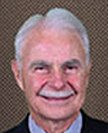
Gary Ovitt
Ovitt, who had been a councilman and then the mayor of Ontario, testified he “met Mark Kirk in 2004 when I was looking for a campaign manager. Mr. Kirk was recommended to me.”
Ovitt identified Bill Postmus as having made the recommendation. Ovitt said he met Kirk and learned he was “from Oklahoma, like my mother. He was of good stock. We agreed on a lot of things.”
He hired Kirk to manage his campaign for supervisor, Ovitt said. While Ovitt tended to fundraising and making campaign appearances, he said, Kirk handled all of the nuts and bolts of electioneering, including formulating mailers and sending them out, getting volunteers to walk precincts on Ovitt’s behalf, as well as coordinating other publicity and media contact in conjunction with a political consultant from Sacramento, Steve Presson. When he won the election, Ovitt testified, he hired Kirk as his chief of staff.
Ovitt said he knew Biane as a consequence of Biane being on the Rancho Cucamonga City Council previously when he was mayor of Ontario. He said he had “met Mr. Postmus by going to some of the Republican Central Committee meetings” in the early 2000s. By 2004, Postmus was the chairman of the San Bernardino County Republican Central Committee.
Ovitt acknowledged that in his 2004 election, he had received a $25,000 campaign contribution from the Colonies Partners and another $100,000 from the sheriff’s deputies union, known by its acronym SEBA. He further acknowledged that he knew SEBA’s political action committee had received some $520,000 from the Colonies Partners in that timeframe, and that the Colonies Partners had thus bankrolled his campaign by $125,000, as $100,000 of that $520,000 was intended for him.
“I think it was Colonies Crossroads [money] from SEBA,” Ovitt said. “I think, yes,” he said, when asked if the money from SEBA that came to him originated with the Colonies Partners. “I think it was 100 thousand [dollars].”
Mandel asked about what Ovitt knew of the lawsuit prior to his being elected to the board of supervisors.
“During the time while your campaign was going on before your election, did you have any conversations with Jeff Burum or Dan Richards?” Mandel asked. Dan Richards was a co-managing principal in the Colonies Partners with Burum.
“I talked with Dan Richards about that before the election at the Double Tree Hotel [in Ontario],” Ovitt said, in anticipation of what Ovitt might do if his election bid was successful. “He laid out the issues [involved in the lawsuit]. Basically, he told me the county needed to step up in regards to the flood control issues on the property.”
Ovitt said he believed the Colonies litigation “would be over before I was elected.”
Mandel inquired about whether Ovitt had made any promises to Richards.
“No, I did not,” said Ovitt.
“And he didn’t ask you for any?” Mandel asked.
“No, he did not,” said Ovitt. “Dan was concerned just as a friend about what was going on. Condition-wise, there were no strings attached [to the $125,000 in contributions]. They wanted the best candidate to win.”
“Do you know if Mark Kirk had a relationship with Jeff Burum and Dan Richards at that time?” Mandel asked.
“I think I introduced him to them,” said Ovitt. “I don’t think he knew them before then.”
Asked by Mandel if he thought Kirk, who is nearly a generation younger than Ovitt, was more politically sophisticated than he was, Ovitt said he did not believe so. Ovitt said that Kirk was more knowledgeable about running a campaign than he was but that in terms of governance, he felt he more than held his own. He pointed out that he had been a councilman and mayor before he ever met Kirk. “I somehow managed without him,” Ovitt said.
Ovitt acknowledged that Kirk had political ambitions of his own and had run for city council in Hesperia. He also acknowledged that money from his supervisorial campaign had been used to support Kirk’s father, Robert Kirk, in his run for school board in Hesperia.
To questions about Kirk’s strong and dominant personality, Ovitt said Kirk was “result oriented” and “does have a strong will.” But Ovitt said Kirk “did not act bullyish” in his presence. He acknowledged that supervisor Gonzales had complained that Kirk had acted inappropriately.
“Did you believe her?” Mandel asked.
“Josie is Josie,” Ovitt responded, “I talked the matter over with Mark. I mentioned that ‘Josie said you were acting inappropriately.’ He said, ‘I understand. Thank you.’”
“Did you scold or reprimand him?” Mandel asked.
“I would not say that, no,” said Ovitt. “I basically shared with him that Josie had an issue with how he treated her, but I realized that Josie looks at things differently than I do.”
Mandel asked about Kirk’s relationship with Mark Uffer.
“I know Mr. Uffer had an issue with him,” said Ovitt. “Mark was very vocal in standing up for things we believed in during the meetings we went to and Mr. Uffer wasn’t happy with that. I thought Mr. Uffer was the problem and not Mr. Kirk. I didn’t think Mark Kirk was in the wrong.”
When told that Uffer said Kirk “drove the agenda of the Fourth District,” Ovitt said, “That statement is incorrect.”
After further questions with regard to Uffer’s suggestions that Kirk had been dominating him, Ovitt used wit to diffuse the charge, offering “to take on Mr. Uffer” in a wrestling match.
Ovitt further sought to allay further insinuations about Kirk. When asked by Mandel if he felt “protective” of Kirk.
“I don’t know if I have to be, but I have a great respect for him,” Ovitt said. “He is an outstanding young man.”
Ovitt said he would have no hesitation in allowing Kirk to babysit his granddaughter.
There have been overt references during the trial to confidential information pertaining to the board’s deliberations and discussions with regard to the settlement proposals being leaked or provided to the Colonies Partners, in particular to Burum and/or to Burum through Erwin.
Ovitt found himself fending off suggestions weaved into Mandel’s questions that he was either a direct, indirect, witting or unwitting, source of that information that made its way to the Colonies Partners.
Ovitt said he had discussed with Kirk, who was not in the closed session discussions held by the board, information he gleaned from those settings, but that doing so was a consequence of his role as supervisor and Kirk’s role as his chief-of-staff and their collective dealing with the issues of governance.
Mandel delved into Ovitt having turned to Greg Devereaux, who in the 2004 to 2006 timeframe was the city manager in Ontario, for advice with regard to the Colonies Partners litigation. Ovitt acknowledged that he had “talked to an individual I have great respect for, Greg Devereaux” as he was trying to get a grip on the challenge the Colonies Partners litigation represented.
“He has a law degree,” Ovitt said of Devereaux. “He has ability. I saw him and I respect him, so I asked him ‘What do you think of the case, overall?’ He said there was some liability.”
Devereaux would later – in 2010 – be recruited by Ovitt to leave his post in Ontario to succeed Uffer as the county’s top administrator, and be given greater authority and latitude in running the county than Uffer was given, with the job title of county chief executive officer rather than county administrative officer. After obtaining Ovitt’s admission that he had disclosed to Devereaux information about the lawsuit while seeking his guidance, Mandel let the issue quietly drop, though many present in the courtroom including the lawyers, the accused, legal staff members, some observers, although perhaps not the judge and very likely not members of the jury, knew that Devereaux and Colonies co-managing principal Dan Richards are close friends.
Burum’s attorney, Stephen Larson, essentially used Ovitt as a prop to stage for the jury a close examination of the Waldron appraisal, a document produced at the behest of the Colonies Partners in 2006 as an exhibit in the trial before judge Warner to show that the Colonies Partners had suffered over $300 million in damages as a consequence of the county’s action that led to the lawsuit and the delay in settling it that ensued. Using the courtroom’s overhead projectors, Larson displayed excerpts from the appraisal. Among the costs delineated were the $85 million value of one of the basins constructed on the Colonies Partners’ property to hold the storm water, the Colonies Partners estimated $75 million cost of managing the basin over time, a $43 million devaluement of the lots the Colonies Partners claimed were impacted due to the cloud on their title which came about because of the county flood control district’s interpretation of its easements, the $36 million loss the Colonies Partners asserted came about because of the three-year delay in the construction of Phase II of the project, $28 million in basin construction costs and an $11.5 million loss the company sustained as a consequence of higher infrastructure development costs.
It was during Larson’s questioning that Ovitt transformed into a witness who strongly bolstered the defense. Larson’s questions were artfully designed to elicit from Ovitt his justification for having settled the case. Previously, in response to Mandel, Ovitt had testified that he had supported the $102 million settlement because “we had a liability. I would rather have had a lesser figure, but I voted for it.”
Larson marched Ovitt through the circumstances, conditions and atmosphere in which the settlement deal was finally arrived at, including Warner’s decision, which, Ovitt said, “excoriated” the county. He later said that Warner had “spanked” the county in rendering his decision, supporting his decision to join with Postmus and Biane in voting to be done with the lawsuit.
In his questions, Larson propounded that the county’s far lower estimation of the value of the Colonies Partners’ land was a consequence of the county evaluating it as bare and undeveloped as opposed to appraising it at its highest and best use.
Larson also suggested the county had wrongfully appropriated the Colonies Partners’ land by referencing “government encroaching on a private party’s property” and then asking Ovitt, “You are opposed to that?”
“I certainly don’t agree with the government taking private property unless it is extreme circumstances in that regard,” said Ovitt.
During one phase of his questioning of Ovitt, Larson sought to deliver what some in the defense camp were anticipating would be the coup-de-grace to the prosecution’s case, an exploration of the county’s failure, according to the defense theory, to have the county flood control division assume responsibility for alleviating the flood drainage issues on the Colonies property and its environs and instead leaving to the Colonies Partners the necessity and expense of constructing a flood basin on the property. This was tantamount, the defense implied, to the county shirking its responsibility to maintain public safety in the face of flood conditions.
“Ms. Mandel did not ask one question about the public safety impact of the development, did she?” asked Larson.
“No,” said Ovitt.
Larson was making progress toward placing the public safety issue front and center when Ovitt, in an off-handed and unexpected reference with regard to the suitability of the Colonies property for development, referenced a statement by local economist John Husing that the land is ripe for development because it provides the advantage of being “cheap dirt.” In one phrase, Ovitt had inadvertently dismantled a key element to the justification for the settlement, consisting of the assertion that the land consumed by the basin was valued at $1.5 million per acre.
Mandel sought to lasso Ovitt onto the prosecution reservation by angling questions at him to either further counter or dispute the Colonies Partners’ damage claims or at least bring them into question, as well as to illustrate that Postmus’ judgment was lapsing at the crucial time when the vote on the settlement was approaching.
In a deprecatingly ironic characterization of Miller Starr & Regalia, the law firm representing the Colonies Partners in its lawsuit against the county, as a “superstar law firm,” she asserted its lawyers had been either incapable of or unwilling to marshal the evidence to back up the claims of damages made in the Waldron appraisal.
To her questions, Ovitt acknowledged that the county’s attorneys had warned that providing the $102 million to the Colonies Partners would be an illegal “gift of public funds.” He also said that the Colonies Partners had never actually provided documentation to support the company’s assertions of its losses.
Ovitt said that Postmus was constantly and consistently using his Blackberry device to communicate with others during closed sessions, while confidential discussions were under way.
Ovitt acknowledged that he had watched Postmus decline from an impressive young, engaged and skillful politician into the morass of drug addiction during the time leading up to the settlement. “I think it was his own illness,” Ovitt said, clarifying that the illness was “his problem with methamphetamine.”
Without using Uffer’s language, Ovitt echoed the former’s description of Postmus’ consuming drive to settle the lawsuit, which Ovitt implied spilled over to all of Postmus’ political objectives.
“He was not looking for a consensus,” Ovitt said. “There is nothing wrong with just going for the majority vote, but it makes more sense if you can persuade and convince others.”
Postmus just wanted to get the settlement out of the way, Ovitt said.
When he was asked “Why didn’t you hold out for five votes on the Colonies litigation?” Ovitt said that it “was time to get things done.”
“Even if there were political consequences?” he was asked,
“Absolutely,” he responded.
In reference to the $100,000 the Colonies Partners provided to Kirk’s political action committee, Mandel asked Ovitt, “Were you aware of the contribution made to Mark Kirk?”
“Yes,” Ovitt said.
“Did you learn then, or now, or when the contribution was made?” she asked.
Ovitt said Kirk told him about it at the time.
“He told me,” Ovitt said.
She asked why the Colonies Partners had made the donation to Kirk.
“I don’t know the reason why,” he said. “I was just told it was made.”
“Did Mr. Kirk to your knowledge have to mend fences with them?” Mandel asked, reflecting the defense contention that the $100,000 in political contributions made by the Colonies Partners to Postmus, Biane and Kirk were simply political donations intended to redress hard feelings that might have developed over the contentious legal battle, and not bribes.
“No,” said Ovitt.
Peter Scalisi, Kirk’s lawyer, said he wanted Ovitt to “address what really is the central issue in the trial, which is whether this was an honest, good faith vote on your part or whether it was vote made under some undue influence or pressure by the Colonies. Was your vote in any way the result of corruption or undue pressure on you?”
“Absolutely not,” said Ovitt. “Only two people in this room know the answer to that, Mark and I. I was the one who made the decision in that particular case. Mark was not present in the closed session. It was absolutely my decision and my decision alone.”
Following Ovitt’s departure from the courtroom subject to recall, Josie Gonzales, the lone member of the board of supervisors who participated in the November 2006 vote who remains on the board, was sworn in. Deputy district attorney Lewis Cope asked her about her life and political career, giving her the opportunity to provide an expansive recollection of the challenges her parents, a tailor and seamstress, endured in their original profession, which led them to change careers when she was nine years old by founding a restaurant in Fontana. It was in Fontana that she began her political career, when she reluctantly accepted an appointment to the planning commission, from which position she ran successfully for city council in 1998. Six years later, against entrenched and well financed opposition, Gonzales used $365,000 she pulled from the restaurant she had inherited from her parents to run for supervisor and was successful.
Initially, Gonzales was reluctant to testify publicly about statements made in closed sessions, and had to be reassured by Cope that the county had provided waivers with regard to the confidentiality of the meeting contents.

Josie Gonzales
Gonzales, who was sworn in as Fifth District supervisor in December 2004, said she attended briefings with regard to the Colonies Partners lawsuit and was present in closed sessions when the matter was discussed but that it took her several months before she was conversant with the facts of the matter to the point she could actually participate in the discussions. Over time, she would vote to approve tentative settlements that were being kicked around in closed session on eight occasions, when those proposals called for the county putting up less than the $102 million that was finally approved. Ultimately, however, she rejected the settlements that were being finalized for approval, in some measure, she said, because the information she sought to back up the assertions by the Colonies Partners and the others who were endorsing the settlements was not forthcoming.
She said that Postmus and Biane had been designated as a subcommittee of the board to work with regard to negotiating or arranging a settlement of the lawsuit. She said initially she took her cue from the members of the subcommittee and was hopeful some order of settlement would be hashed out.
Aside from the complexity of the case, Gonzales said a difficulty she had was the substantial gulf between the dollar figures being thrown about by those on either side.
“I believe at that time [shortly after she came into office] the proposed settlement was near or about $60 million,” she testified. “I was quite uncertain as to how that amount had been arrived at. I had a previous occasion to speak to then-county supervisor Jon Mikels [who had been Biane’s predecessor as Second District supervisor] and he expressed to me that the settlement was not worth the $1 million that was the initial amount that had been discussed when he was in office. He had been a long term sitting supervisor and he was well versed on the issue.” She said “to have such an exaggerated difference between $1 million and $60 million” gave her pause. “That caused me to pay attention and want to evaluate said amount,” she said, saying she wanted to see “the many details about how much the settlement would be.”
She said she made requests for documentation “a minimum of four times.”
Cope asked if the “documentation you were seeking was actually provided by the Colonies?”
“No,” said Gonzales.
“Did that have an impact on your decision on whether to settle the lawsuit?” Cope asked.
“Yes,” she replied. “I came to the conclusion that the information was not going to be provided and I would gain no ground by continuing to ask, so I backed off.”
Asked why she dissented in the November 2006 vote to approve the $102 million settlement, Gonzales said, “I voted against paying the $102 million because I felt that it was a blatant outright wrongful act that violated the taxpayers’ trust. I don’t mind paying if I know what I am buying in the name of the people if I owe that money. My being unable to verify that in fact damages had been incurred by the Colonies of $102 million didn’t allow me to vote in favor of the settlement.”
Cope inquired of Gonzales as to her feeling with regard to the decision by Judge Warner that had held in large measure against the county, and which was cited by Postmus, Biane and Ovitt as their rationale for approving the $102 million settlement. Gonzales said Warner’s decision did not move her to simply hand the money the Colonies Partners was demanding over to it.
“I felt Judge Warner’s decision had been reached in haste and he had not looked out for the welfare of the people of this county,” she said. “I felt strongly enough I was willing to move forward with an appeal.”
She said the county’s attorneys were advising the board to appeal.
“In your view, how firm were they in terms of their recommendation?” Cope asked.
“They were very firm,” she said.
“Did you have a lack of confidence in the attorneys?” Cope asked.
“No,” Gonzales responded. “I knew that they had an exceedingly good reputation, a stalwart reputation. They believed in themselves and would not take on a case that would ruin their reputation. I knew by the facts and the dedication in which they were presenting those facts they had a solid case and that they could win.”
“Did you have the impression they were trying to milk the county for money?” Cope asked.
“No,” said Gonzales.
Cope asked, “Did Gary Ovitt reach out to you and ask for your vote in favor of the settlement at any time?”
Gonzales said, “Aside from perhaps discussion in close session? No.”
A portion of her testimony concerned Bill Postmus, whose specter hangs over the trial. In February 2010, he, along with Erwin, was charged in a case that underlies the one at trial now. He initially pled not guilty but entered into a plea arrangement with prosecutors in March 2011, turning state’s evidence and testified as the star witness before the grand jury that in May 2011 indicted Erwin on charges that superseded the ones filed against him in 2010 and additionally named Burum, Biane and Kirk. His testimony, anticipated later in this trial, is considered by most of those knowledgeable about the matter to be the linchpin of the case.
In her testimony, Gonzales came across as simultaneously empathetic toward and wary of Postmus.
She related one incident in which she implied or suggested without directly stating so that Postmus had acted in concert with Burum to corner her and pressure her into supporting the settlement. She said that what occurred happened while she was engaged in a mediation session at a hotel and office complex in the Century Plaza in Los Angeles in which the county board members and the county’s lawyers were in a separate room from the Colonies Partners and their legal representatives. Gonzales said, “I was in the room in which the mediation was taking place. I tried to excuse myself to use the facilities,” she said, saying she “felt awkward” doing so and that she did not want to interrupt the focus and intensity of the ongoing talks taking place in the conference room. She had to use a map of the building’s layout to find the ladies room. Once she was there, she said, across the hall was an opening to a kitchenette. “It looked rather dim but I saw a shadow move,” she said. “I didn’t think anything of it. I began to exit the ladies room and I heard my name. I stopped to look around and I heard my name again and as I approached the doorway someone came out a bit from the shadows, and I recognized Mr. Jeff Burum. I was a bit surprised… and I felt myself getting angry because I immediately knew I had been betrayed by someone inside the mediation conference room because there was no one who would know I left to use the facilities unless somebody had told Mr. Burum. He wasn’t forceful. He said kindly, ‘I need your vote. Please, please, please, please: I need your vote.’ I looked at him. I nodded and I walked away. I went back to the conference meeting room. It bothered me a great deal. I realized the stakes were so high that any action, any behavior, was on the table and I had just been played. I don’t treat other people that way and believed I had been betrayed by someone in the conference room.”
Cope asked who in the room might have signaled that she had left. “Did you see anyone using Blackberries during the course of that meeting? he asked.
“There were several people using Blackberries,” she said. “In particular, I remember supervisor Bill Postmus.”
Previously in the trial, the prosecution has suggested that Postmus was conveying inside information with regard to the board’s closed door settlement discussions to the Colonies Partners. Both Ovitt and Uffer testified Postmus would make continuous use of his Blackberry during closed sessions.
Gonzales also related an encounter she had with Postmus that occurred, she said, “I would say ten minutes before” the vote to confer the $102 million on the Colonies Partners. “Supervisor Postmus came into my office,” she said. “He was very agitated, very nervous. I had great concerns for his health. I asked, ‘Are you doing alright? Are you okay?’ He threw himself into one the armchairs, and as he fell back he put his arms up. He said, ‘Josie, don’t let these bastards do anything to you. Do not ever let them hurt you.’ He said it was awful what he was going through. I went up to him. I put my hands on his face. I said, ‘It will be alright. Do what is in your heart. Do what you think is right.’ He was always very concerned about me, and this morning was no different.”
Cope asked if Gonzales knew what and who Postmus was talking about.
“I knew who he was talking about,” she said.
Objections did not allow for that identification to take place.
Cope asked Gonzales to size Postmus up.
“I thought he was an extraordinarily bright young man,” she said. “I thought he and supervisor Biane were exactly what the future of government needed: bright, intelligent young men who hold office and build seniority and are dedicated.”
“Did you consider Mr. Postmus a friend?” Cope asked.
“No,” Gonzales responded. “You cannot make friends in politics. You can look for havens of opportunity in which you can work with other people. You can look for common needs that will match. You can coexist. Friendships cannot exist in a healthy environment as long as that environment is politics. It breeds nearsightedness. It convolutes the reasons you ran for office into what someone else wants you to do because you like them and are trying to please them and so forth. It is a luxury you cannot afford.”
Gonzales further related another incident in which she indicated the Colonies Partners had inappropriately sought to influence her vote. She said she had an encounter at her office with Patrick O’Reilly, who had a contract with the county for marketing the expansion of the Mid-Valley Landfill, a recycling program and to provide bilingual messaging on-line relating to payment of property taxes, among other things. She said she and one or more members of her staff met with him in regard to one of the contracts he had with the county. She said O’Reilly was “a gentleman I very much respected.”
On this particular day, she said, “We had our meeting in regard to issues discussed relative to one of his contracts. At the end of the meeting, my staff got up to leave. He asked for a private moment. My chief of staff exited and he closed the door. Mr. O’Reilly at that point – he didn’t ask me; he told me – it was very important that I give my vote to settle the Colonies lawsuit. I was quite taken aback. He stood there and I knew I had to go blank. There was no way I could betray what I was thinking. I tried to not react. I wanted to say ‘What are you doing? You shouldn’t be asking me this.’ But I know the risks that come with my job and I showed him to the door and said ‘Good afternoon. Thank you for sharing your opinion.’”
Cope asked Gonzales, “Did you know before that time he was also employed by Jeff Burum?”
“I became aware post-calendaring his appointment,” she said. “I thought it would be unprofessional to cancel an appointment with him. I held him in high regard.”
There were two tense moments in the courtroom on Thursday, in the morning and afternoon, both outside the presence of the jury.
Larson, who was once a federal judge, Thursday morning objected to questioning of Ovitt which Judge Smith had engaged in from the bench with regard to the water retention basin on the Colonies Partners property. Larson’s protest appeared to be based on Smith having blurred the distinction between the acreage of the basin originally on the property and the acreage of the basin after it was altered in conjunction with the project. Larson suggested the jury might, based on Smith’s authoritative status, assume the premise of Smith’s question as a fact.
That afternoon, again outside the presence of the jury, Smith defended his action, saying a judge asking questions of a witness is permissible, and he cited two cases in support of that assertion, People v. Cummings and People v. Spector. He is permitted, Smith said to engage in “limited clarifying” of testimony. “I have done that, I think, sparingly,” Smith said
Devereaux Began Preparations To Leave As CEO Last August
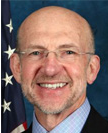
Greg Devereaux
The board of supervisors’ action last month to adjust the particulars of county chief executive officer Greg Devereaux’s transition into an administrative advisory role has revealed that he set up a consulting business in Chino last year in anticipation of stepping down from the CEO position.
Devereaux was hired by the county on January 12, 2010, pursuant to a five-year contract, with a provision that he would continue as an advisor for another five years beyond his time as chief executive officer. In May 2013, Devereaux was given a seven-year contract extension from that point forward, guaranteeing his remaining with the county in the capacity of CEO through March 2017 and an additional clause to allow him to continue as CEO or as an advisor past that point for three more years.
In January, Devereaux announced his retirement from the CEO’s position, which provided him with a yearly salary of $318,909 and $99,000 in benefits for a total annual compensation of $417,909.
Under the county’s 2013 employment agreement with the him, there were two terms to his 2013-2020 extension. Term A of the agreement was set to concluded today, effective March 3, 2017, and Term B was to commence effective March 4, 2017 and continue through February 29, 2020. The agreement also provided that Devereaux could request conversion of his employment relationship under Term B from contract employee to independent contractor. Devereaux requested and the county agreed to exercise that option.
Last month, official approval of that change along with an amendment of the existing employment agreement continuing Term A through March 31, 2017 and setting that as the termination date of the agreement came before the board of supervisors. The board agenda item memorializing the proposed action showed that the board would be approving a consulting agreement not with Devereaux directly but with Worthington Partners, LLC, to commence on April 1, 2017 and terminate on February 29, 2020, operating in lieu of Term B of the existing agreement.
Under the terms of the new agreement, Devereaux is being called upon to provide advice and input as requested by the board or the CEO who will replace him, to be coordinated through and by the CEO. It is anticipated his guidance will be sought with regard to the county’s fire district reorganization, contract[s] with [an] ambulance service provider[s], the so-called “Countywide Plan,” documentation of the county’s organizational response to the December 2, 2015 attack in San Bernardino that killed 14 county employees; the county budget and county finances, homeless programs, the county’s building acquisition and retrofit projects, the Ontario International Airport Authority and delivery of public services related to the county’s land use services division. Devereaux is also to provide consultation to the CEO or any member of the board of supervisors pertaining to the general administration of the county when requested.
A search of available records turned up that Worthington Partners, LLC, similarly named to three other firms located throughout the United States, including Timonium, Maryland/Fairfax Virginia-based Worthington Financial Partners, was registered by Devereaux with the State of California on August 11, 2016 as a California Domestic Limited-Liability Company, and is based at 12403 Central Avenue in Chino.
Thus, it would appear that Devereaux was committed to leaving as chief executive officer by last summer. No public mention of his leaving was provided until January.
Of note is that Devereaux has neither secured a business license in Chino nor registered Worthington Partners as a fictitious business name with the San Bernardino County Clerk’s Office.
While businesses are not legally required to register a fictitious business name, banks often require such before allowing a business to open up an account. All San Bernardino County municipalities require that businesses operating within their city limits secure a business license. Most, but not all, San Bernardino County cities require a business to have a fictitious business name on file with the county before granting a company a business license, Chino among them.
This week, David Wert, the official spokesman for San Bernardino County said “Worthington Partners LLC is not required to file a FBN statement. Greg said, basically, that is because Worthington Partners LLC is not a DBA [fictitiously-named enterprise] nor a sole proprietorship. It is an LLC [legal limited company] and a corporation.”
Lovingood Fills Out First District Western Desert & Mountain Advisory Councils
San Bernardino County First District Supervisor Robert Lovingood has filled positions on two advisory councils serving two of the county’s more removed areas.
Those panels – the Searles Valley-Trona Municipal Advisory Council and the Wrightwood Municipal Advisory Council – now consist of five members and six members, respectively.
Trona, which lies at the extreme northwest tip of San Bernardino County within the Searles Valley at the mouth of Death Valley, came into existence in the 1880s as a remote mining outpost, where borax and subsequently potash and the mineral trona, either in the form trisodium hydrogendicarbonate dihydrate or sodium sesquicarbonate dehydrate, was mined, giving the town its name. In 1913, the American Trona Corporation, a mineral mining company, undertook to establish a company town at Trona, and planned and designed a community that included a library, a school, a dance hall, recreation facilities including a bowling alley and other amenities. Trona became something of a world unto itself for the workforce employed at the mines and in the chemical plant, where company employees were not paid in greenbacks nor with checks but by company scrip, which was tender in the company-owned stores and shops in the town. The major link to the outside world was the Trona Railway built in 1913–14 as a rail connection to what was then the Southern Pacific Line at Searles.
World War I prompted an economic boom in Trona, which was at that time the only reliable American source of potash, an important element used in the production of gunpowder. The town’s population grew, peaking at around 7,000, making it what was at the time the eighth largest community in the county. Talk of incorporating did not advance to fruition since it was not in the American Trona Corporation’s interest to surrender control over the townsite.
The American Trona Corporation became the American Potash & Chemical Corporation in 1926, at which time its major products were borax, soda ash and sodium sulfate. Productions of these chemicals continued to expand and by the late 1950s the company had instituted an innovative solvent extraction process to recover boric acid and potassium sulfate from weak brines that kept it profitable. In 1967, Kerr-McGee Corporation acquired the American Potash and Chemical Corporation. In 1990 the operations were purchased from capital investors D. George Harris and Associates, resulting in the formation of the North American Chemical Company. Ownership changed yet again in 1998 when IMC Global Incorporated acquired the North American Chemical Company. In 2004 Sun Capital Partners purchased IMC Global Incorporated and renamed it Searles Valley Minerals, Inc. In November 2007, Nirma, based in Ahmedabad, India purchased the company from Sun Capital Partners. While the population of Trona in 2000 stood at 2,742, it has been steadily declining ever since.
The Trona Unified School District boasts two schools, an elementary school and a seventh through 12th grade high school. The district currently has an enrollment of 262. In 2016, 18 seniors graduated from the high school.
The closest population center to Trona is Ridgecrest in Kern County. Indian Wells Valley straddles southeastern Kern County, southwestern Inyo County and Northwestern San Bernardino County. Underlying it is the Indian Wells Valley Groundwater Basin, from which the City of Ridgecrest and its outlying area’s domestic, commercial, industrial and agricultural water users draw their water, as does the China Lake Naval Air Weapons Station, the Searles Valley Mineral Company in Trona and the remainder of industrial, commercial and domestic users in Trona. San Bernardino County has joined with Kern and Inyo counties, the City of Ridgecrest, the United States Navy and United States Department of the Interior Bureau of Land Management to initiate the formation of a joint power authority to counteract the overdraft of the aquifer.
A decade ago or more, an arsonist began his destructive work in Trona, and as many as two dozen homes all over the community have been destroyed.
Today, Trona boasts a post office, a sheriff’s substation, a fire station, a store and a single restaurant, called Esparza.
Trona lies within San Bernardino County’s First Supervisorial District and is the bailiwick of Supervisor Robert Lovingood. Last month, at Lovingood’s recommendation, the board of supervisors appointed to Margaret D. Brush, Christopher R. Darling, Zana C. Eisenhour, Lezlie L. Foreman and Doris Van Horn to the Searles Valley-Trona Municipal Advisory Council, all to full four-year terms ending on December 19, 2020.
Also contained within the First District is Wrightwood, a town of 4,525 people located in a pine-covered valley in the San Gabriel Mountains north of Mount Baldy and south of what is referred to as the Blue Ridge at close to the 6,000 foot level at the extreme west end of San Bernardino County bordering Los Angeles County. The area was first developed as cattle ranches in the 19th century by Nathan and Truman Swarthout. The main Swarthout ranch, then owned by Sumner Wright, was broken up into residential and commercial lots. In the 1920s, after ski enthusiasts took notice of the north facing slopes of the San Gabriels above Swarthout Valley, the area became a primary winter sport recreational/vacation area, with Los Angeles County developing the Big Pines ski area. Because of the area’s well developed road system to accommodate ski enthusiasts and tourists, along with the proliferation of mountain cabins, Wrightwood has evolved from a vacation enclave into a residential community, and shares with its neighbors Phelan and Pinon Hills, which are nine and twelve miles distant, respectively, the use of several public facilities, including Serrano High School.
Last month, at Lovingood’s recommendation, the board of supervisors appointed Paul M. Bauer, Chuck Carroll, Stephanie Carroll, Robert Comperini, Natalie R. Lopiccolo and Alex F. Peterson to full four-year terms on the Wrightwood Municipal Advisory Council ending on December 19, 2020.
Patton’s Needles Cabin Used During 1942 Desert Warfare Training Spared
The Needles City Council this week temporarily suspended its solicitation of proposals to remove a salt cedar tree and demolish an adjacent structure on private land after it was learned the structure had historical significance.
The demolition of the cabin that had had been used by General George S. Patton during desert fighting training maneuvers in 1942 was incidental to the removal of the tree, which city official said was interfering with erection of a privacy chain link fence around the city yard.
The limbs from the salt cedar have damaged city equipment, city officials maintained, and the trees extensive root mass was problematic as well. The privacy fencing is intended to obscure the “eyesore” the city yard represents. And some considered the cabin a visual blemish upon the community visible to those entering the community from the east end. Others do not share this view, and some refer to it as “quaint.” Upon the discovery of its historical association, some members of the community have said they would like the cabin to be rehabilitated and used as a point of interest to attract tourism.
In 1942, while he was First Battalion Commander preparing troops in the California desert for the WWII, Patton took up quarters in Needles because he was obliged to oversee the influx of tanks and other military equipment at the Needles train depot. He chose Needles for that reason and because of the presence of the nearby Needles airstrip, which Patton is said to have been responsible for lengthening to handle the B-17 bomber he used to fly between landing fields in the maneuvering areas out in the East Mojave and from which he sometimes monitored the maneuvers.
Having honed the First Armored Corps into a mobile and well coordinated fighting machine through intensified training in the Mojave between April to August 1942, Patton then departed with his troops toward the various staging areas on the other side of the Atlantic before launching Operation Torch with the invasion of North Africa in November 1942.
Upon Patton’s success in Africa, the Army decided to continue to train troops and use Needles as a cantonment in conjunction with other facilities in the California Army Maneuvering Area, more widely known as the Desert Training Center, until 1944.
Last week, archeologist Ruth Musser-Lopez, authored an account of Patton’s five–month presence in Needles in the early stages of the Second World War. This week Musser delivered a ten-minute Powerpoint presentation to the city council detailing the various places, facilities, houses, buildings and other structures conscripted, including the Needles airport and the cabin. Councilwoman Louise Evans asked Musser-Lopez how the city should deal with the tree that is in the way of the fence. Musser-Lopez suggested that a professional tree trimming service be contracted instead of a demolition expert and that if the property owner did not have the money to pay for the service that the city negotiate with her to provide that the cost of trimming the tree go toward purchasing the cabin which the city could then use for future tourism and interpretive purposes. She said that the vacant lot could either be added to the city yard or used as public parking and that an important historic Route 66 sign, the lighting for which is not currently maintained, could be located in the same lot and become public domain through the purchase of the property. “It’s not right that the taxpayers are paying to cut down a tree on private property. Work out a deal with the property owner to use the costs born by the city against the price of the property,” Musser-Lopez said.
In a related matter that city manager Rick Daniels had placed on the agenda, the council was asked to approve payment in the amount of $54,910 to Rutt Fence company for the “Public Works Yard Fencing” and to issue a “notice of completion to send to San Beranrdino County for recording.” Daniels was questioned by the council as to how it had come to be determined that the fence was complete when he previously said the salt cedar tree and cabin were in the way. The prior week the council had been positioned to approve $19,500 for the tree removal and cabin demotion. Addressing the question, Daniels said the tree provided a barrier and visual obstruction in that particular location. He said he negotiated with Rutt to exchange the cost of labor that would have been expended to erect the fence in that particular location for a large gate and that the entire property is now enclosed. Also, the fencing that would have been used in the area of the tree was left with the city for use in other locations.
The cabin and the tree appear to have been saved by three elements, the first being a delay in awarding the tree removal and demotion contract because a local company, Philips Construction, which had made a $19,500 bid on the work, requested a do-over when an out-of town contractor bid $16,000 on the job. The delay while a second set of bids were solicited gave time for the newspaper column about Patton’s experience in Needles and his residency at the cabin to be disseminated. That was followed with correspondence Musser-Lopez sent to the State Historic Preservation Office requesting an inquiry into the matter of historic properties on private land including Patton’s cabin being demolished without an environmental review.
Forum… Or Against ’em
By Count Friedrich von Olsen
Our current Republican vice president, Mike Pence, is under fire for having used, while he was Indiana governor, both a state email account and a personal email address from which he engaged in state-related and personal communications. I do not have an email address myself, as my butler, Hudson, handles that for me. But I do understand email to be an electronic form of communication, something like the teletype in my day…
Now the Democrats have their undergarments all wadded up because during last year’s presidential campaign, Mr. Pence leveled criticism at Hillary Clinton for relying on a private email server when she was of secretary of state. Her account was hacked into, apparently by some folks with mal-intent toward our country, perhaps even Russian intelligence. It turns out that Mr. Pence’s emails were hacked, as well. The Democrats suggest there is some hypocrisy here…
The difference I perceive is that when he was Indiana governor, Mike Pence was not involved, for the most part, in communicating with regard to sensitive secrets, whereas when Mrs. Clinton was firing off and receiving her missives, she was on a daily basis dealing with sensitive diplomatic matters of grave import, the compromising of which might well have threatened our national security…
San Bernardino’s Original Chinatown

The photo above is believed to have been taken in the late 1880s or early 1890s.
San Bernardino was host in the latter decades of the 19th Century and the early part of the 20th Century to what became known as Chinatown, a section of Third Street between Arrowhead Avenue and Sierra Way. There was an influx of Chinese immigrants to San Bernardino, consisting of little more than a dozen people, in August of 1867. The 1870 U.S. Census recorded 16 Chinese males between the ages of 19 and 31 in San Bernardino. They were employed as laundry men, cooks, farmhands and houseboys.
In 1878, with the steady growth of the Chinese population and its willingness to work for low wages that presented a challenge to others struggling in the aftermath of the 1875 California Depression, the city’s Chinese population was prevailed upon to move and settle just past what was then the extreme east portion of downtown.
By the 1890s, San Bernardino’s Chinatown was home to close to 600 residents, and it included not only wooden shacks but more permanent brick and mortar structures in which were housed groceries, chop suey restaurants, and mercantile shops.
By 1926, San Bernardino’s Chinatown was broken up as the consequence of fires and economic forces, which saw the land taken over for commercial and other purposes.
Forest Service Seeking Horticulture Volunteers

Mountaintop Nursery
The U.S. Forest Service and the Southern California Mountains Foundation are seeking volunteers of all ages who would enjoy working both in the forest and in the Forest Service’s commercial size greenhouse to assist with an ecological restoration program in the San Bernardino Mountains.
For over 20 years, volunteers in the Greenthumbs Program have restored disturbed lands across the San Bernardino National Forest. The volunteers work in the Forest Service’s native plant facilities at the Mountaintop Ranger Station in Big Bear to grow and then out-plant thousands of native plants to improve habitat and watershed conditions across the forest. Volunteers learn native seed collection, cleaning and germination techniques, plant propagation, site preparation, direct seeding, and out-planting of container plants. Volunteers also assist in the monitoring and maintenance of restoration sites which includes watering, weeding and mulching to promote restoration success. Activities vary from month to month as the seasons change. This summer a major project will consist of planting milkweed for monarchs!
How to get involved:
Join the Forest Service and the Southern California Mountains Foundation once a month on the third Saturday of each month (March through October) to conduct ecological restoration projects at the Mountaintop Ranger Station Native Plant Nursery and surrounding National Forest lands.
Greenthumb volunteer days are scheduled for March 18, April 15, May 20, June 17, July 15, August 19, September 16, and October 21st, from 9:00 a.m. to 3:00 p.m. On September 23 the Forest Service and the Southern California Mountains Foundation also sponsor a National Public Lands Day event with lunch provided.
Project information and logistics is emailed a week before the volunteer dates to those on the volunteer mailing list.
Volunteers meet at the flagpole on the left upon entering the Mountaintop Ranger Station located at 41374 North Shore Drive, Highway 38 in Fawnskin, CA 92333. It is a ¼ mile east of the Big Bear Discovery Center. On maps it is also shown as Big Bear Ranger Station and Fawnskin Ranger Station, so don’t be confused. The big sign out front says Mountaintop Ranger Station.
For all days, please bring lunch, water, hat and sunscreen. Gloves and tools will be provided.
Contact Deveree Kopp at dkopp@fs.fed.us or call (909) 382-2831 to confirm attendance to the volunteer days or to request to be added to the mailing list.
For additional information, please check out the USFS’s website (which will be updated with current dates soon) https://www.fs.usda.gov/detail/sbnf/workingtogether/volunteering/?cid=fsbdev7_007778