
By clicking on the blue portal below, you can download a PDF of the September 22 edition of the San Bernardino County Sentinel.
On Prosecution’s Motion, Charges Against Erwin In Colonies Case Dismissed
By Mark Gutglueck
On the first day of autumn, eight months and 18 days after opening arguments in the Colonies Lawsuit Settlement Public Corruption Trial began in the dead of winter, Judge Michael Smith this morning brought the proceedings to a close against the last of the four defendants who were tried in the matter, after prosecutors made a motion to dismiss the case against Jim Erwin under Penal Code Section 1385.
Shortly thereafter, Erwin walked from the courtroom an entirely free man, more than seven years after he was originally charged in the case and more than six years after he was named in a superseding indictment that also indicted Rancho Cucamonga-based developer Jeff Burum, former San Bernardino County Second District Supervisor Paul Biane and Mark Kirk, who had been the chief of staff to former San Bernardino County Fourth District Supervisor Gary Ovitt.
“Since the conclusion of jury deliberations, the people have carefully evaluated our current position,” said Senior Supervising Deputy San Bernardino County District Attorney Lewis Cope this morning. “We’ve identified some witness problems we felt we cannot resolve. As a result, we’re moving to dismiss this case in the interest of justice.”
Before Judge Smith granted that motion, he told Erwin and his attorney, Raj Maline, that Erwin had a right to seek exoneration by having the charges that were brought against him heard by a jury. Both Erwin and Maline indicated they were willing to have the matter terminated by dismissal, whereupon Smith dismissed all remaining counts against Erwin, after which spontaneous applause sounded throughout Smith’s sixth floor courtroom, which was packed with spectators.
Present for this morning’s proceedings were several of the jurors who heard the case, including at least three of the jurors on the panel who evaluated the case against Erwin and two of the jurors who considered the accusations against Burum, Biane and Kirk.
Today’s developments followed the September 13 declaration by the jurors hearing the case against Erwin that they were deadlocked without any prospect of resolving their differences with regard to the seven charges remaining against Erwin after deliberations that had been carried out over 20 days. That mistrial came two weeks and two days after another jury, one that sat through the proceedings in the same courtroom and heard the case against Burum, Biane and Kirk, on August 28 returned not guilty verdicts on all nine charges remaining against those defendants. Two juries heard the case because there was testimony and evidence against Erwin that was not admissible against the other defendants. When that testimony or evidence was presented to Erwin’s jury, the other jury was absent from the courtroom. The lion’s share of the testimony and evidence presented was applicable to all four defendants and was heard by both juries.
The just concluded-case began as a 29-count 40-charge indictment handed down in May 2011 citing the four with conspiracy, bribery, misappropriation of public funds and conflict of interest along with separate charges against Erwin pertaining to perjury on his statements of economic interest and failure to file his tax returns in 2008. The case revolved around allegations that Erwin, the one-time president of the county sheriff’s deputies union, assisted Burum in threatening, coercing, blackmailing and extorting both Biane and former San Bernardino County First District Supervisor Bill Postmus into settling a lawsuit Burum’s company, the Colonies Partners, had brought against the county over flood control issues at the Colonies at San Antonio residential and the Colonies Crossroads commercial subdivisions in northeast Upland. The indictment alleged that Kirk had participated in the scheme by influencing his boss, Ovitt, to join with Postmus and Biane in supporting the November 2006 lawsuit settlement. In return, according to the indictment, Burum through his company made two separate $50,000 donations for a total of $100,000 to political action committees set up and controlled by Postmus and three separate $100,000 donations to political action committees set up for or by Biane, Kirk and Erwin. Those donations were thinly-disguised bribes, according to prosecutors, that is, rewards for having supported or helping to effectuate the settlement.
One year and three months before the indictment, Postmus and Erwin were charged with a host of crimes relating to the settlement of the lawsuit with the Colonies Partners. In a plea agreement he entered into with the district attorney’s office in March 2011, Postmus pleaded guilty to 15 felony counts involving conspiracy to accept a bribe, receiving bribes, perjury, misappropriation of public funds, possession of a controlled substance, and conflict of interest. Those charges pertained to his vote to settle the lawsuit with the Colonies Partners as well as his action as county assessor, a post to which he was elected in November 2006. After entering his plea, Postmus turned state’s evidence and was the star witness before the grand jury that indicted Burum, Biane, Erwin and Kirk. He was a primary witness in the trial this year.
The lion’s share of the counts and charges against all four defendants were dismissed before the case went to the jury. Today’s development means that none of the original 29 counts and 40 charges were upheld.
“We’re thrilled with the outcome,” said Maline. “This case should never have been brought. Mr. Erwin asserted his innocence from day one and the prosecutors did not have what they are supposed to have when filing charges, which is tangible evidence. I am very pleased that there is at last some finality to this case for Mr. Erwin and his family and the dark cloud that has been hanging over him for these last eight-and-a-half years is removed.”
Maline said he was surprised by the prosecution’s motion to dismiss the case.
“Eight-and-a-half years is too long for anybody to go through this,” said Erwin. When the prosecution threw in the towel, he said, “I was indifferent. I was prepared to go to trial if that is what they were going to do. They never should have done this in the first place. What they said occurred never happened. The whole case was predicated on the lies and false testimony of certain witnesses and the action and miscalculations of overzealous prosecutors.”
There was much talk even before the trial as well as during it that the defendants would bring a civil suit against the county, the district attorney’s office and the California Attorney General’s Office, which participated with the district attorney’s office in prosecuting the case, once the four were exonerated. Speculation was that such a civil action would take as its basis prosecutorial overreach, malicious prosecution and civil rights violations.
Asked whether such a suit would be viable, Maline said, “It depends on what it is about. If there is a civil action to recover the money owed because of the indemnification the Colonies [Partners] had as part of the settlement, the answer is yes, I think it is very viable. When the settlement was made, the county agreed to pay the Colonies [Partners]’ legal fees, meaning Mr. Burum’s legal fees, if he were to be attacked because of the settlement. If the suit is to allege prosecutorial misconduct, that introduces a way higher burden. We would still have to do the analysis as to whether any of the prosecution’s action in court reached the level where we can positively state they engaged in intentional misconduct, but I can tell you right now prosecutors have a considerable degree of immunity. We can show that at the start they were saying that the proof of corruption was the outrageously high settlement amount, and that alone proved their case. They went before the grand jury with that to get the indictment. But they ran into the statement from [deputy county counsel] Mitch Norton, who said the settlement was ‘objectively reasonable.’”
Norton represented the county against the Colonies Partners in the lawsuit and was called upon by prosecutors to testify before the grand jury to demonstrate the county had overpaid when it settled the case for $102 million. But Norton also represented the county in the effort to collect insurance money to cover the settlement payout, during which he made representations that the Colonies Partners were due the amount paid in the settlement.
“They [prosecutors] used Mitch Norton to say that the settlement number was so out of whack that alone proved that something illegal had occurred,” Maline said. “But that was not what Mitch Norton said when he was seeking to have the insurance companies make good on their indemnification of the county. He said the settlement was reasonable. The prosecutors never mentioned that to the grand jury. They should not have done that. Prosecutors are not supposed to seek a conviction at any cost. They are supposed to seek justice. If early on they brought the case because they thought there was something fishy with the $102 million settlement, that is okay. But after they realized that their own witness was saying the settlement was reasonable, they should have admitted they had it wrong and that Paul Biane and Bill Postmus and Gary Ovitt had a good reason to support the settlement and that reason had nothing to do with bribery. They should have dismissed the case right then.”
Erwin told the Sentinel, “We probably can’t go after them for prosecutorial misconduct, but there are other possible causes of action. I lost my job with the county. Mark [Kirk] lost his job with the county. Paul [Biane] was voted out of office. The settlement had a clause that indemnified Jeff and the Colonies [Partners] for any legal expense that would come about as a result of the settlement. Those are all issue that could be crafted into a lawsuit or a possible lawsuit. We haven’t gotten together to discuss that yet, but we will. Right now, we’re just rebounding from the trial. Everyone needs to collect their thoughts. All of that is too much to deal with at this moment. I can tell you that if there are going to be civil claims, they are going to be made in federal court.”
In a prepared statement, Burum said, “I’m relieved and grateful that this is over for all of us. None of it should have happened. The board of supervisors needs to start holding people accountable. If county officials and lawyers had done their jobs, taxpayers would not be on the hook for $102 million. How much more was wasted because people refused to take responsibility for their actions and others acted for political reasons? This needs to end. I hope this is the beginning of positive change in our county, and I promise to do whatever I can to make that happen.”
Burum’s attorney, Stephen Larson, stated “[District attorney] Mike Ramos did right by dismissing this case, a case that should not have been brought. These four innocent men lost seven years of their lives, and the costs to them, their families, their business, and the communities they served have been huge. Those costs must be addressed, but the time has come to move forward.”
District attorney Mike Ramos said, “Since the conclusion of jury deliberations, we have carefully evaluated our current position and have identified witness problems that cannot be resolved. As a result, we are unable to proceed. One such issue is the trial testimony of Bill Postmus, who is a necessary witness in the case against Jim Erwin. Bill Postmus’ unexpected testimony on cross-examination at the last trial conflicted with his grand jury testimony, his statement to the FBI, and multiple interviews with the district attorney’s office.”
Ramos added that any retrial would have required the application of further judicial resources and litigation relating to the credibility of Bill Postmus and other witnesses.
Postmus is scheduled to return to court October 27 for sentencing.
Another witness used by prosecutors was Adam Aleman, one of Postmus’ political associates whom Postmus elevated, when he was 23 years old, to serve as assistant assessor after Postmus assumed the county assessor’s position in 2007. Aleman involved himself in a scandal in the assessor’s office and was charged with multiple felonies in 2008. In a plea agreement with the district attorney’s office, Aleman pleaded guilty in 2009 to theft, destruction, alteration or falsification of a public document, presenting a false claim, and vandalism. He was a key witness against Burum, Biane, Erwin and Kirk before the grand jury that indicted the four in 2011 and again at this year’s trial. On cross examination, Aleman was savaged by defense attorneys. Many of the jurors, in statements made after the verdicts were returned, said Aleman’s lack of credibility was for them a crucial weakness in the prosecution’s case. Aleman is scheduled to return to court on December 1 for sentencing.
The last defendant in the case is Dino DeFazio, who has not yet gone to trial. One of Postmus’ political associates and business partners, DeFazio was accused of assisting Postmus in laundering the $100,000 in bribe money Postmus admitted to receiving from the Colonies Partners. There is no indication when or if DeFazio will go to trial.
The Bratton Case: A Sad & Shameful Miscarriage Of Justice
By Carlos Avalos
Barbara Bratton is well known in her hometown of Ontario, where generations of her family have lived and thrived. The Brattons are known as being honest, caring, compassionate, and God-worshiping people, the type those who know them are proud to call their neighbors and friends. Horrible injustice was visited upon Barbara Bratton, despite her character and honesty.
Barbara Bratton moved into a house on Locust Avenue in Ontario in 1974 and would spend nearly 35 years there. In 2005 Barbara was approached by Fast Track Financial, a now-defunct mortgage broker. She was deceived into an illegal, fraudulent predatory loan, not unlike what happened to millions of people in the first decade of the present millennium. Because she trusted others as those who knew her trusted her, Mrs. Bratton’s paperwork, interest rates, and loan terms were illegally switched around and altered after she walked out of the Fast Track office. Within a short period, Barbara knew something was not right with her loan modification and she started doing her own research into what was going on with her new loan.
Because of this loan on her property, Barbara was put into financial distress, and the chance of losing her Locust property was becoming a possibility. Barbara’s mortgage payments increased tremendously, but she still found a way to make the predatory payments. During this time, Barbara constantly requested loan modifications but was denied. The lender told Barbara that at the time there was no loan modification that suited her. Knowing Bratton’s mortgage payments were causing financial problems, the lender offered Barbara an offer of buying the Locust property as a short sale.
Finally, in 2007, after years of asking for a loan modification, Barbara was informed by the lender a loan modification program for her was available, but for her to qualify she must be behind or miss at least three months of mortgage payments.
At that moment, Barbara acknowledges, she should have recognized something was not right. But being a woman of faith and seeing the best in flawed human character, Barbara missed her first mortgage payment on her Locust property in 33 years. Even after two years of inflated mortgage payments, this was the first time Barbara missed a mortgage payment, via a request from the people who were supposed to be helping her with saving her house.
Barbara was deceived into believing that after she missed three mortgage payments she would be put on a new seven-month payment plan and after she completed the seven month payment plan on her Locust property she would get the loan modification that she had been requesting with better terms, a lower interest rate and an affordable payment. Barbara made her first six payments in late 2007 and early 2008. Coincidentally or strategically, depending on who you ask, before Barbara was able to make the seventh and final payment that would get her the loan modification in her favor, she learned her home was sold at foreclosure. This was the very thing that Barbara was trying to avoid. She would have done anything to keep her house. While she was paying ridiculously high mortgage payments, she listened to the people who were leading her down a sinister path.
The Department of Justice calls this illegal tactic dual tracking. The lender gave her false hope that she could keep her house for six to seven months with a payment plan, and then she was blindsided and her home of 34 years was sold, despite every hoop she had threaded her way through and every hurdle she had vaulted.
Recognizing something fraudulent occurred, Barbara started the uphill battle of getting to the bottom of her home situation. After the first illegal foreclosure in 2008, Barbara became a tenant in her own home. Her Locust property was now technically owned by the bank. The foreclosure of Barbara’s home sent the Bratton family into overdrive in an effort to keep their home.
In 2008 Barbara’s brother-in-law, a retired federal agent, was talking directly to officers with the bank that owned the property with hopes he could buy the property from the bank. In February 2009, after much effort toward pre-qualification, the Brattons were told that it was too late to purchase the Locust property because it had already been sold to Rosela Guevara. After the first wrongful foreclosure in 2008, Barbara kept uncovering more and more evidence of fraud. Barbara issued several quiet title and wrongful foreclosure civil lawsuits against the lenders, loan services, and Rosela Guevara. But at every step of the way, Bratton found herself shut out, and the judges within the San Bernardino County court system did not take her allegations of foreclosure fraud seriously, even in the face of mounting discrepancies within Bratton’s mortgage history file and unmistakable evidence of fraud on the foreclosure of the Bratton property on Locust Avenue.
Barbara’s brother-in-law showed the bank that he had all the required paperwork and resources available to buy the home. It was at that time that the Brattons first learned – through a survey of county records – the name of Rosela Guevara, who was listed as the owner of the Bratton home on an officially recorded deed. There was confusion with this, but the Brattons kept pushing forward. Barbara’s brother-in-law was actually pre-approved and qualified to re-purchase the Locust property from the bank at fifty thousand dollars above what it would eventually be purchased from the bank for in 2012.
It was not until after Barbara initiated an FBI investigation in late 2009, in which she showed the federal agents clear evidence of fraud by the lenders, that the mistake of Rosela Guevara’s name on the Locust property deed was fixed. According to the Bratton family, Rosela Guevara was strategically placed on the deed by the bank in essence to strongarm Barbara out of her home. In 2011 San Bernardino County Superior Court Judge Barry Plotkin ordered the deed to be corrected. Rosela Guevara failed to follow through with the court order.
Fast forward to 2017: At a criminal trial, the lender and servicer for the Locust Property testified that somehow they made a mistake and wrongfully deeded the property to Rosela Guevara.
A key consideration in this sordid narrative is that Barbara’s brother-in-law, who was pre-approved to purchase the property in 2008, was denied because the house was already documented as having been sold to Rosela Guevara. In 2011 Rosela Guevara lost a quiet title civil lawsuit against U.S Bank. Only then did the lender, through Select Portfolio Services, start contacting Barbara, demanding a lump sum payment of over one hundred thousand dollars. In response, Barbara requested that U.S. Bank validate this debt that institution claimed she owed. Her request was denied and she was never given validation or confirmation of her rightful property debt. Curiously, however, U.S. Bank in 2011 did initiate a quiet title suit against Rosela Guevara for the Locust property that had been “mistakenly” deeded to her. In 2017, Rosela Guevara’s husband testified he and his wife immediately tried fixing this error upon hearing about it. But more than three years later, the deed was still in Rosela Guevara’s name. To make the correction, all the Guevaras had to do was drive from Montclair to San Bernardino to redress the mistake, action that would have taken a few hours rather than a few years. Why were LSI and LPS, lender processing service companies, paying the property taxes for three years on the Locust property and sending the bill to Rosela Guevara? The answer to that question is at the heart of the fraud that was perpetrated against Bratton.
Barbara requested and expected to make payments for the one hundred-thousand-dollar payment that was needed to get back on track with her home. She expected this from the lender or the servicer, Select Portfolio, because this problem was created by that company’s foreclosure mistakes in 2008.
In 2013, the San Bernardino County District Attorney’s Office, rather than moving forward in investigating the circumstance which had been brought to its attention by the FBI and the Bratton Family, instead assumed the recorded document that listed Rosela Guevara as the actual owner of the property to be valid and filed criminal charges against Barbara Bratton. Those charges included forgery, offering a false document for filing, engaging in an aggravated white collar offense and damage to property. Adding insult to injury, Bratton was charged with burglary for entering her own home.
Despite the district attorney’s office’s obligation to investigate the basis for the charges it files before those charges are filed, it proceeded with the case against Bratton, even after the falsified nature of the documents naming Guevara as the house’s title holder was revealed to prosecutors.
Just prior to four years into that prosecution, Bratton, through her attorneys, made further discoveries with regard to the level of fraud and deceit engaged in by the lending institution, the foreclosure company and other real estate professionals. The melange of actions all parties had engaged in – including two foreclosure proceedings against Bratton and unlawful detainer proceedings and quiet title actions initiated by Bratton – had become tangled. One thing learned was that there were multiple levels of fraud perpetrated by others that had kept Barbara Bratton from regaining access and title to her house. When she balked at paying the exorbitant amount of money Select Portfolio Services was demanding, that company initiated a second foreclosure sale. The name that appeared as the owner of the Locust property on the deed? This time it was not Rosela Guevara, but rather her husband, Salvadore Guevara. Once again Barbara lost her unlawful detainer proceeding and quiet title actions after the second foreclosure sale, in the same way she had lost it previously, based upon a fraudulent title document which both Guevaras now acknowledge had been phonied up.
But the towering financial power of U.S. Bank blinded the court to the obvious, and corrupted the district attorney’s office’s function. Bratton assumed the information her attorneys unearthed and provided to the district attorney’s office would result in the dropping of all of the charges. It did not. The matter went to trial. Bratton sought to place before the court how she had been fighting for her home and uncovering corruption in the mortgage lending market. The heart of the case against Bratton were the two counts of mortgage fraud with the intent to defraud. During her criminal trial, Select Portfolio Services admitted and testified to the fact that the company was previously sued by the Department of Justice for unlawful lending practices. A representative of Select Portfolio Services also admitted and testified that the company did not once send Barbara Bratton any monthly statements. This demonstrated, essentially, that there was a conspiracy from day one to deceive Barbara Bratton and she never really had any chance of getting her house back in her name.
The record shows that after Barbara refused to pay the large amount of money that was requested by Select Portfolio Services, the company initiated a second foreclosure sale. Also presented to the court was that Salvadore Guevara’s name appeared as the owner of the Locust property and was recorded on the deed. But the court, inexplicably, failed to understand the implication of that anomaly. Judge William Jefferson Powell IV, relying upon misrepresentations and incomplete information set before him by the district attorney’s office, refused to take judicial notice of Barbara’s Lis Pendens that had given notice to Salvatore Guevara that ownership of the property he was attempting to purchase was in legal dispute.
In April of 2013 Barbara Bratton had received information from the office of the California Secretary of State that the trustee deed upon sale in her foreclosure sale could not be authenticated and that the notary used on the operative foreclosure sale document, Brenda Perez, had her licensed revoked. This was the closure that Barbara Bratton knew in her heart existed. She marshaled that evidence. Barbara thought that the California Secretary of State trumped any county office or official, so in April of 2013 she without malice or deviant intention filed new Locust property deeds. On the day she filed those deeds, Barbara received confirmation that she had received an unlawful detainer/eviction judgment in her favor. Barbara also received confirmation before filing the new Locust deeds that in the same month of April 2013, LSI founder Lorraine Brown, who had processed all of Barbara’s documents and whose company was constantly used to record documents in San Bernardino County, had admitted under oath to conducting real estate fraud nationwide. She was sentenced in federal prison for the crimes she committed.
The felony case prosecuted against Barbara Bratton was fundamentally predicated on the foreclosure sale deed and the falsified documents the San Bernardino County prosecutor admitted into evidence, even though the office of the California Secretary of State determined key documents were fraudulent and could not be authenticated.
In the end, did Barbara get her home back? Did everything for her and her family return to normal? Sadly, not. In actuality, things just got worse for her. The jury in Barbara’s criminal trial was barred from hearing evidence that confirmed and validated foreclosure fraud. The jury was also barred from hearing and seeing the official California Secretary of State letter confirming the fraud on the Trustee Deed Upon Sale (the foreclosure sale deed) to the Locust property, which directly proved her allegations that it was she who was the victim of property theft rather than a perpetrator.
A further miscarriage of justice occurred when prosecutors made use of a document she had filed, which, they alleged, showed she had attempted to place herself outside the jurisdiction of the court. During the criminal investigation that was conducted into Barbara Bratton’s actions, investigators came across documentation in which she was labeled and soon charged as a “sovereign citizen.” Self-described sovereign citizens take the position that they’re answerable only to their particular interpretation of the common law and are not subject to any government statutes or proceedings. Records, documents, bills paid, and a variety of other evidence is out there that will show that this is not the case when it comes to Barbara Bratton. She was living very much within the rubric of an average, indeed exemplary, American citizen. She was charged with this because when she filed the two corrective deeds on her own, she used a template she found online that had some obscure wording that the San Bernardino County District Attorney’s Office twisted to label her as a sovereign citizen.
On April 14, 2017 Barbara Bratton was found guilty on six counts of real estate fraud. She has been in custody ever since. The events which precipitated her situation are hardly new, rare or unheard of. What happened to her happened to millions of people throughout the United States and very nearly caused a financial collapse. Banks, lender services, people, and government workers have been caught redhanded falsifying documents, backdating documents, forging or falsifying documents. San Bernardino County has some of the highest foreclosure rates in the country. Not all of those foreclosures were on the up and up. Some were bogus from the start, perpetrated by unscrupulous operators, who moved against property owners who were struggling but not in arrears and, by mixing a few good and earnest property owners in with many who were unable to meet or were plain skipping out on their mortgage payments, blurred the distinction between what was legitimate and what was made up. The functionaries in the system, the ones who should have been standing guard to make sure that those who were being foreclosed upon were indeed unforgivably behind in their payments, allowed illegitimate foreclosures to proceed, either through distraction, inattention, indolence or maybe even venality because they were themselves being cut in on the spoils. Few of those people responsible for these horrendous crimes have been put in jail. At the second and most crucial level – that of the courts and the justice system – a further failure occurred. Even though she had clear cut evidence to exonerate her, Barbara Bratton was ignored by the people who are supposed to be seeking justice and protecting her, the San Bernardino County District Attorney’s Office. A victim was victimized further. Those who engaged in the original victimizing have been rewarded, and are free to keep their ill-gotten gains.
It is believed by some that Barbara was going to blow the whistle and blow it loudly on the corruption within the San Bernardino County District Attorney’s Office, led by Michael Ramos, and that is why she was put in jail. The California State Bar recently implemented a new ethics rule. Under rule 5-110 “Special Responsibilities of a Prosecutor,” when a prosecutor knows of clear and convincing evidence establishing that a wrongful conviction occurred, the prosecutor must seek to remedy the conviction. This new provision is similar to the American Bar Association Model Rule 3.8 which states in order to ensure public trust in the justice system and to protect the rights of defendants, prosecutors should be held to high ethical standards.
Will the California Bar Association live up to the standard it has set for itself? Will the miscarriage of justice and the unethical and shoddy work of the San Bernardino County District Attorney’s Office be examined and exposed at a level where some salutary outcome will prevail? How many other innocent Barbara Brattons are sitting in our jails?
Tres Hermanos Conservation Authority To Parallel CH & DB Suits Vs Industry
The Tres Hermanos Conservation Authority Board met on Monday, that panel’s first meeting since the City of Industry’s purchase of 2,450-acre Tres Hermanos Ranch was ratified. The upshot of the discussion was that the authority’s executive staff will look into the efficacy of using its available resources to coordinate possible legal action to either contest altogether, limit or define the extent to which the City of Industry can pursue its publicly declared intention of constructing a solar farm on the property straddling the cities of Chino Hills and Diamond Bar.
Any legal action the authority will take will come in conformation with contemplated legal action by the cities of Chino Hills and Diamond Bar, along with challenges of the sale of the property to the City of Industry that both cities have already lodged with the California Department of Finance.
The ranch was for half of a century the playground of three fabulously wealthy men who acquired it in the early part of the 20th Century – oil baron Tom Scott; Harry Chandler, former publisher of the Los Angeles Times; and William Rowland, son of John Rowland, who led pioneers over the Santa Fe Trail to California and the San Gabriel Valley in the 1840s. In 1978 it was purchased from the Scott, Chandler and Rowland heirs by the City of Industry’s Redevelopment Agency for $12.1 million.
Industry’s acquisition of it was something of an anomaly, as redevelopment agencies were by definition engaged in the eradication of blight within the jurisdiction of their parent agencies. Tres Hermanos, which had never been disturbed other than to be used as a sprawling cattle ranch, did not meet the definition of blight. Nor was it within the City of Industry, but more than ten miles distant from its closest border. For 33 years the City of Industry allowed the property to remain relatively undisturbed, while there was occasional talk of using much of the property for a reservoir to ensure that the City of Industry would have adequate water to serve its industrial customers. Over the years, many people living on both sides of the Los Angeles County/San Bernardino County divide in Diamond Bar and Chino Hills came to assume the property was some sort of wildland preserve with its rolling hillsides, canyon creeks and oak woodlands beside verdant pastures for cattle, not to mention the bobcats, mountain lions, skunks and opossum that proliferated there.
In 2011, the California Legislature passed legislation closing out municipal redevelopment agencies up and down the state in a move that was intended to reroute much of the tax money and assets those entities monopolized to law enforcement and educational purposes as well as the other governmental agencies overlapping each individual redevelopment agency. Whereas the City of Industry formerly was able to control the Tres Hermanos Ranch property through its redevelopment agency, that control was attenuated with the eradication of its redevelopment agency. The legislation created so-called successor agencies to redevelopment agencies, which in the City of Industry’s case, consisted of the members of its city council. Thus, the successor agency was in the position of commandeering the property and perhaps wielding it in a way that was every bit as amenable to the will of Industry’s civic leaders as when the land was in the possession of the redevelopment agency.
There are, however, four limitations, or potential limitations, on the City of Industry’s autonomy with regard to the Tres Hermanos property. These consist of the California Department of Finance, which was installed by the legislature in conjunction with the 2011 redevelopment agency-terminating legislation with ensuring that the tax revenues and assets are fairly distributed among local governmental/taxing entities; an oversight board consisting of representatives of a cross section of those local governmental/taxing entities; and the cities of Diamond Bar and Chino Hills, which both ostensibly have land use authority over Tres Hermanos Ranch, given that it lies within their city limits. Moreover, cities possessing land outside their municipal limits are limited in how that land can be used, such that it can be utilized only for a public benefit, or in the alternative, preserved as open space.
As might have been expected, there was an inclination, indeed a financial incentive, shared by many of the stakeholders in the matter to maximize the amount of money to be realized from the liquidation of the property. It appeared as if that goal was being successfully pursued when Irvine-based GH America and South Coast Communities, which represented capital from mainland China, offered to buy all 2,450 acres of Tres Hermanos Ranch for $101 million. When no larger offer manifested, that sale seemed certain. But internally, things fell through with GH/South Coast when the capital needed to make the purchase dried up. A consideration was that currently Chino Hills and Diamond Bar have density restrictions on the property. The maximum number of units to be built on the 1,750 acres of Tres Hermanos Ranch in Chino Hills is 467. On the 700 acres in Diamond Bar, no more than 624 dwelling units might be built. This would make the profitability of entering into such a deal at this time marginal, at best. Nevertheless, there were persistent reports that GH/South Coast or another development company was intent on getting access to the property and constructing anywhere from 10,000 to 15,000 homes.
This created a general state of alarm among Chino Hills and Diamond Bar residents who already feel the pinch of overburdened transportation infrastructure, particularly in the morning and late afternoon commute rush hours. In May 2015, GH America without fanfare made a $100 million offer on the property. Thirteen months later, the offer climbed $1 million to $101 million and was made public. For more than a year, that reality percolated, registering deep within the cortexes of some local residents and at the periphery of others’ minds. Accompanying this was a lack of clarity and confusion, as the possibility that political and financial reality, in conjunction with the greed on the part of some powerful corporate officials and the ambition of some politicians might blend to make those 15,000 dwelling units a reality within the next decade. Then, a little less than a month ago, on August 24, the Industry oversight board, in a 4-3 vote, consented to selling the property to the City of Industry for $41.65 million.
It would not be fully accurate to say that Chino Hills officials were caught unaware by the development, as they made a challenge of the sale with the Department of Finance immediately, on August 24. Diamond Bar followed four days later with its own request. Both cities have begun to prepare legal action as well. It is anticipated that one cause of action in the Chino Hills suit is that the discounted sale will mean that the city missed out on tax revenue in the neighborhood of $5 million dollars. City of Industry is purposed to make a claim based on the same principle. In its case, its revenue loss is in the $2 million dollar range.
At the September 18 Tres Hermanos Conservation Authority Board meeting, Chino Hills City Manager Konradt Bartlam, who serves as the executive director of the authority, stated he and others who have analyzed the situation believe that Industry officials are using the implied threat of developing the ranch property residentially to stampede the Chino Hills and Diamond Bar communities into an acceptance of having the entirety of the undeveloped property blanketed with solar panels. In actuality, Bartlam said, representations that the only alternative to the solar energy project would consist of the construction of 10,000 to 15,000 residential units on the property are misleading, as the 1,091 unit maximum that applies to the entirety of the property represents a limitation that would be nearly impossible for any prospective developer to overcome, at least on the Chino Hills side of the divide. In 1999, Chino Hills residents approved, Bartlam reminded those present on Monday, Measure U, which prohibits zone changes increasing density designated in the Chino Hills Specific Plan, the Chino Hills General Plan, the city’s zoning map, or any finalized development agreements without approval by a majority vote of the electorate of the city. Thus, Bartlam shot down suggestions that the resistance to the City of Industry’s plans to develop the property as a massive renewable energy project – including filing suits in a multitude of venues challenging both the sale of the property and Industry’s intended solar energy project – might lead to a revival of the GH America/South Coast consortium agenda. Bartlam said that because of Measure U’s provisions and the opposition of the general populace to any intensified development activity that will further impact local roads, neither GH America/South Coast nor any other development company could hope to succeed with a multi-pronged effort to apply for a 10,000 unit-plus entitlement to build, ply city council members with hefty political donations and engage in legal action to force Chino Hills to accept ten times the residential density on that property than it is currently zoned for.
Diamond Bar does not have a similar restriction locking in its current land use designations and zoning map without a vote of its residents, however.
Chino Hills Mayor Ray Marquez, the authority’s chairman, steered the meeting through a discussion of legal action.
Jim Gallagher, one of the prime movers in the grass roots group Save Tres Hermanos Ranch, did enunciate concerns about “state housing mandates,” which he like others said could force the city into accepting greater density on the property if it is developed residentially.
“We need to keep that space as open as we can keep it,” Gallagher said. “It doesn’t make people much money but it does benefit the people who live around it.”
Ruth Smith, a Diamond Bar resident, said officials needed to “focus on quality of life rather than profit. Once this land is developed, it is gone,” she said.
Bob Goodwin asked with regard to the solar farm “What value does this add to the community?” Goodwin, the chairman of the group Hope for the Hills, which in 2013 was successful in lobbying the California Public Utilities Commission to rescind its approval of erecting 3.5 miles of the 173-mile Tehachapi Line, consisting of 197-foot high towers from which were strung 500 kilovolt cables carrying electricity from the world’s largest wind power farm in Kern County to Los Angeles, referenced that effort, saying it took five-and-a-half to six years for the residents of Chino Hills to prevail over Southern California Edison. He suggested some form of land swap could be negotiated for property closer to, on the border of, or within the City of Industry to secure Tres Hermanos Ranch as open space.
Bartlam referenced an appraisal done on the Tres Hermanos Ranch property in December 2016 that pegged its value as well above the less than $17,000 per acre the City of Industry is paying for it. He said that if the cities of Chino Hills and Diamond Bar had known that the property would sell for less than $42 million, both cities might have put up $10 million apiece and have sought out grants or donations or a combination thereof to more than match that price and could have purchased it with the goal of preserving it as open space into perpetuity. And, he said, the City of Industry has been less than forthcoming with information relating to the project and its scope. He pointed out that Industry officials have represented that the contemplated solar field will have an output of 447 megawatts and are simultaneously declaring they are purposed to retain a significant portion of the property as open space. Those stated goals are incompatible, Bartlam said, since covering the entirety of the 1,750 acres of Tres Hermanos Ranch in Chino Hills and all of the 700 acres in Diamond Bar with solar panels would not yield 447 megawatts. He suggested the City of Industry could only achieve its 447 megawatt electrical power generating objective by developing all of Tres Hermanos ranch and a significant portion of the 3,333 acres it owns in adjoining Tonner Canyon.
Bartlam said he and other officials had made efforts to nail down information with regard to the project but that Industry officials had not been forthcoming. Thereafter, an attempt to glean the information through publicly available sources was made, including attending the oversight board meetings. But, he said, eight straight oversight board meetings were cancelled. “From January to August, the oversight board had not met,” he said. “We think there was a variety of issues to be considered by the oversight board that was not. [We want to find out] Industry’s ultimate intent for land use. They have not been open and honest.”
Ultimately, Bartlam said, the City of Chino Hills had no alternative but to challenge the sale with the California Department of Finance and move toward the filing of a lawsuit against the City of Industry. “I suspect we will be in a tussle for a while,” he said.
Dan Fox, Diamond Bar’s city manager and the assistant executive director of the Tres Hermanos Conservation Authority, said “We [the City of Diamond Bar] are also trying to get information from the City of Industry.” He said the City of Industry’s acquisition of the Tres Hermanos property was legally questionable from the start in that “For a redevelopment agency to acquire property outside its borders, there had to be a finding the property was blighted and there was a need to remove that blight. It is difficult to establish Tres Hermanos Ranch was blighted if it has never been touched.”
Fox said those involved in the effort to preserve the land were working from a position of strength in that land owned by a public entity that lies outside its jurisdiction “under state law can only be used for a public purpose.”
Nevertheless, Fox sounded a caution, saying that the City of Industry could conceivably utilize state legislation now being debated in Sacramento which if passed will promote the construction of affordable housing to obviate the current density restrictions on the property. Under that authority, Fox suggested, Industry could work with a developer or developers to develop the property residentially for low to medium income homebuyers and in so doing bypass the land use and zoning restrictions that Diamond Bar and Chino Hills have in place. “There has been a great deal of press about state fair housing. The argument is they could define housing as a public purpose,” Fox said.
In the discussion with regard to legal action to be brought against the City of Industry, Ruth Low, a board member and Diamond Bar city councilwoman, said an effort to define “what a public purpose is” should be made. “We should flesh out what a public purpose entails and what, legally, public purposes have been,” she said.
Diamond Bar Councilwoman Carol Herrera, also a board member, said “The complication is the property is owned by a third party.”
Herrera, more than any of her board colleagues, was reluctant to allow the discussion to range too deeply into the issues of contention with the City of Industry.
“We are going into litigation and I don’t think a lot should be said in public,” she said.
– Mark Gutglueck
Local Lawyer’s Novel Examines SBC Milieu, Bares Truth Through Fiction
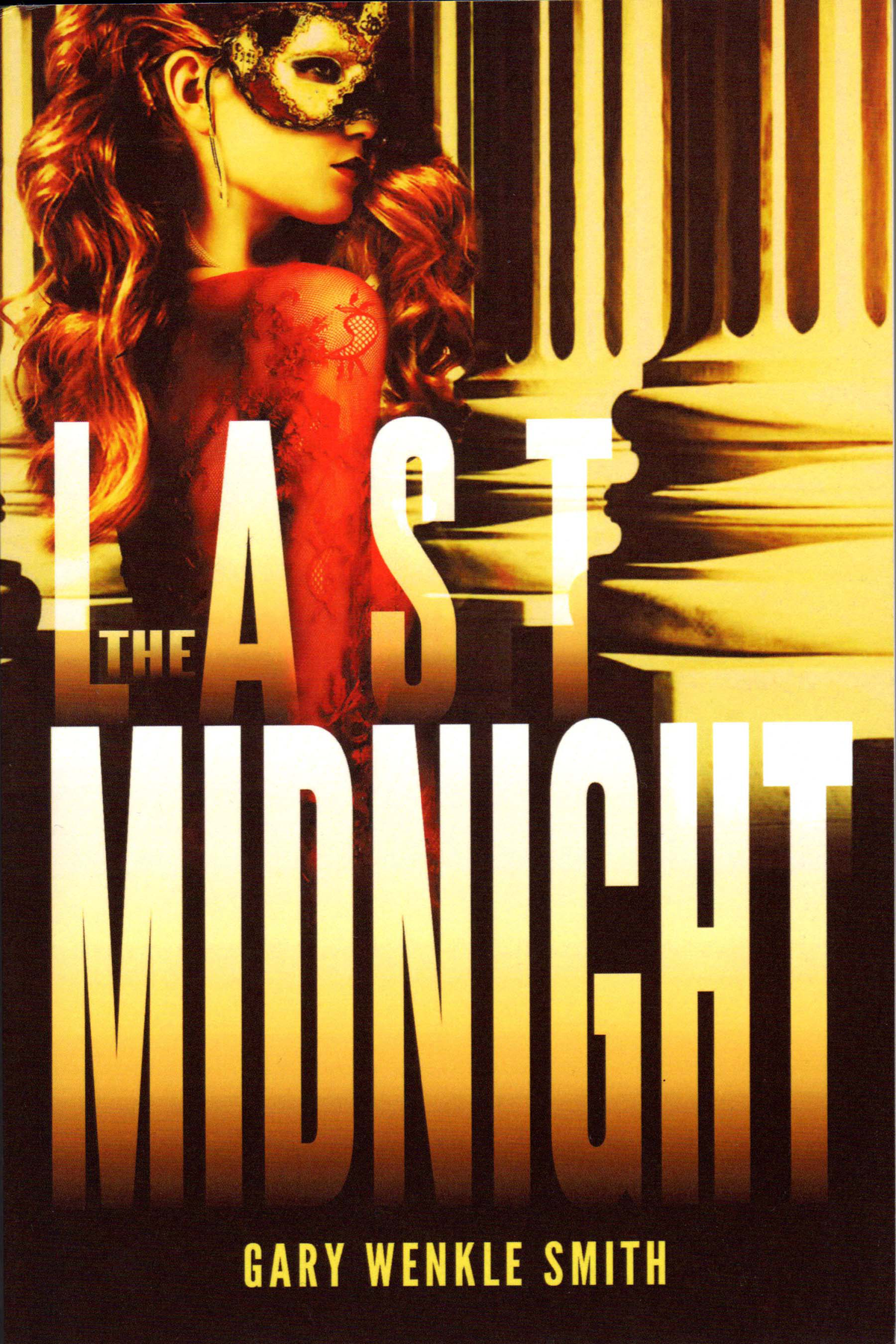 The Last Midnight is Gary Wenkle Smith’s first novel. It might make interesting reading to the Sentinel’s readers on several grounds. Of note is that Smith is a San Bernardino personage through and through. He is the son of Nancy E. Smith, who was San Bernardino County’s Fifth District Supervisor from 1956 until 1976, the second woman to serve as county supervisor in the county. Smith, who grew up in San Bernardino and attended Pacific High School, San Bernardino Valley College, and Cal State University San Bernardino, in his own right has gone on to have a storied law career, during which he has practiced criminal law almost exclusively. He has had notable success in defending individuals charged with murder, scoring acquittals for a host of his clients who were looking at a lifetime in prison or potentially the death penalty. He remains in practice with an office in San Bernardino, a stone’s throw from the new San Bernardino Courthouse.
The Last Midnight takes as its subject matter a murder case, perhaps not too unlike some of the cases Smith has himself been involved in defending. The central character is an attorney, Patrick Moynihan, practicing law in fictional Danbrier, located in fictional Danbrier County, both of which bear too many obvious similarities to San Bernardino and San Bernardino County to make believable the author’s halfhearted assertion, made directly to this reviewer, that no actual correlation between the fictional and the real was intended. Moynihan, as well, bears a somewhat sneaking resemblance, at least in certain aspects, to the author.
The novel opens in the immediate aftermath of a murder that has occurred in a fourth floor room in a Danbrier hotel, as investigators from the Danbrier Police Department and the sheriff’s department have arrived on the scene. Horrifically bludgeoned is the lover of the wife of the ne’er do well son of one of Danbrier County’s wealthiest citizens. Hotel security video footage has captured images that indicate, without actually proving, it is the wealthy young man who wielded the baseball bat used to beat the victim do death. Subsequently, further evidence, consisting of DNA findings implicating the young man, come into the possession of the sheriff’s department’s crime lab.
Moynihan has been retained by the defendant’s father to represent his son. A hard-charging, albeit alcoholic, prosecutor is gunning to convict the defendant and send him to prison for life. As Moynihan and his top-notch investigator carry out their own investigation into the facts for the purpose of being able to mount a convincing defense, they unearth further indicators that Moynihan’s client is a sadistic sociopath and other convincing evidence that he is guilty of the crime he has been charged with. Smith offers a graphic display of the defendant’s depravity, which includes an insatiable affinity for methamphetamine and a host of other sordid proclivities. The defendant’s character flaws do not keep Moynihan from living up to his professional commitment to offer his client an aggressive and effective defense. While he is working toward that end, playing within the rules and the ethical code of conduct he has adopted to justify to himself that he has buttered his bread and established a vaunted professional reputation by getting acquittals of some individuals who have been charged with the most heinous of acts, Moynihan and his investigator learn that someone within the law enforcement hierarchy is militating on his client’s behalf, obfuscating, losing, contaminating or altering, if not outright destroying, the evidence which Moynihan recognizes would under normal circumstances once presented in a court of law, his own spirited legal defense notwithstanding, convict his client of the crime he almost assuredly committed. Soon it becomes clear that his client’s wealthy father is using his financial means and his connection to the corrupt county sheriff to compromise the professional and ethical integrity of the backbone of Danbrier County law enforcement – the sheriff’s department’s investigators, evidence technicians and its crime lab personnel – in a push to have Moynihan’s client exonerated. That corruption of the law enforcement establishment bleeds over into the district attorney’s office, where the alcoholic-but-ever-determined deputy district attorney is himself being pressured to throw the case.
It is this element of Smith’s narrative that is the most compelling and poignant and which makes The Last Midnight for me worthwhile reading. Long before he decided to reinvent himself as a novelist, Gary Wenkle Smith was an attorney, indeed a pretty good one. It is a comment upon our society and our era – I will leave it to the reader to decide whether it is a favorable or unfavorable one – that Smith and his professional colleagues, when called upon to answer, even outside the courthouse, whether their clients are guilty or innocent will with a show of the utmost sincerity and conviction assert that those they represent are absolutely innocent. Reflexively, lawyers will insist that is the case even when a showing of the facts in a court of law has already established or will in time demonstrate, and a verdict has settled or will decree, their clients are guilty. It is as if engaging in the creation of fiction has freed Smith to tell the truth about his profession, or at least tell the truth in a way he cannot when he is in a court of law.
Smith succeeds in his fictional setting in posing questions that go right to the heart of the validity and morality of the venerated American Justice System, one that relies on the adversarial principle, a crucible in which a verdict, or what is supposed to be the truth, is crushed between the mortar and pestle of the prosecution and the defense, either side of which is free to engage in the application, or misapplication as it were, of truth, its own version of truth, misrepresentation, sleight-of-hand, half truth, deception, quarter-truth and even outright lies. The theory is, and all of those participating in this system just seem to accept, this presentation of facts, factoids and falsehoods, what is real and what is not, and what is truth and what is not will enable a jury of the accused’s 12 peers to ascertain some semblance of “real truth.” In this sense, Gary Wenkle Smith manages to inculpate his other self – the lawyer – and all of his fellow attorneys, prosecutors and judges in a philosophical indictment at least as scathing as any actual criminal filing down at the courthouse.
A key element of the plot of The Last Midnight is the deviation from the legal system’s adversarial principle, when sheriff’s department personnel and then the district attorney’s office, at the behest of corrupt higher-ups, undertake to assist the accused, which is the opposite of their traditional role. This creates an imbalance, one that registers with Moynihan, committed as he is to his defined role within the adversarial system. It raises the quintessential question of whether the system, which accepts falsity as one its key components, can ever lead to truth, and whether a system that openly involves the display of falsity, indeed embraces it, can render justice. One ponders whether and how often Gary Wenkle Smith the lawyer, in the quietude of his own reflection while engaged in his life’s work, struggled with these questions.
As the reviewer of the book, it is my role to interest you, a potential reader, in reading the book yourself, so I will not spoil for you whether Gary Wenkle Smith satisfactorily answers the questions he so skillfully poses. You can do that on your own by obtaining a copy in paperback or Kindle from Amazon.com. The Last Midnight is published by Story Merchant Books in Los Angeles. For further enticement, let me add that the novel covers a lot of ground, all of it in Southern California, save for a short interlude in Oregon. It brings in, beside the expected lawyer and police types, a healthy cast of characters, including gangsters, enforcers, hit men, former special forces operatives doing civilian contract work, and nude dancers. It does not lack for action or fast and shiny modern muscle cars. In addition to the murder that is the central element of the plot, there are by my count five other coldblooded, or hotblooded depending on how you look at it, killings that take place within the narrative. To those to whom genre is of significance, The Last Midnight perhaps might be described as a courtroom drama, though less than 20 percent of the action takes place in a courtroom. It is part action novel, suspense novel, crime novel, and novel of psychological realism. Add to that it is part fantasy and part Harlequin Romance, but I will not reveal whether the lawyer gets the girl. –Mark Gutglueck
Just Before The Fever Of Summer Broke, Violence & Retribution In YV
By Fritz Koenig & Mark Gutglueck
YUCCA VALLEY—A dog ran in off the streets into a home in Yucca Valley’s Paradise Valley neighborhood and killed a cat on September 5.
Paradise Valley is nothing like its name implies. Virtually all who live there are subsisting on fixed incomes. Many are receiving government assistance. There are a fair share of disabled individuals living there, along with drug addicts.
Indeed the neighborhood has been abandoned by the powers that be in Yucca Valley. The devout evangelicals from Calvary Chapel are reluctant, indeed resistant, to proselytizing there, though it has been said by observers that it is a perfect place for Jesus to do his work. But its many empty houses and duplexes seem to stand in mute warning to those who would come in to stay out. It comes across as a place that is dangerous for the old and the young.
Eighty-year-old Rose Kirton has found herself living there, in the 6400 block of Camarilla Avenue. Earlier this month, she suffered the terror and indignity of seeing her cat, known as Willy, throttled until it was lifeless by a mean-spirited dog.
The incident was phoned into the Town of Yucca Valley’s animal control department at 8:09 a.m. that Tuesday morning.
The dog, described as “large,” boldly pushed its way into the house after the door was left ajar to ventilate the home at the tail-end of what had been an extraordinarily hot summer season.
There was no stopping the dog’s bloodlust. The cat was no match for the more powerful animal, and the feline was slaughtered.
Animal control officers were able to locate the dog, based upon Kirton’s descriptions. Informed of what his pet had done, the owner of the dog relinquished custody of the pet to animal control officers. It has since been euthanized
Forum… Or Against ’em
By Count Friedrich von Olsen
Does he or doesn’t he? Only his nuclear physicists know for sure…
I have some relaxing things to say. With all this buzz about Kim Jong-un and atomic weaponry/nuclear devices, let’s take a stroll down memory lane and consider how weapons of mass destruction have proliferated since the United States and Britain let the atomic genii out of bottle way back in 1945…
To the best of my understanding, there are ten countries that have successfully detonated nuclear weapons: the United States, Great Britain, what used to be called the Soviet Union and is now known as the the Russian Federation, France, Israel, China, India, South Africa, Pakistan and North Korea. Furthermore, under some sharing arrangements, Belgium, Germany, Italy, the Netherlands, Turkey, Belarus, Kazakhstan and the Ukraine deploy and store some nuclear devices, although, supposedly, some of these have transferred them back to the countries that provided them…
The United States and Great Britain cooperated on the Manhattan Project to build the first atomic weapon and this triggered the compitetive instinct of the Russians, who in 1949 detonated their first atomic bomb. That pushed the Unitied States into creating the supercharged hydrogen bomb. By 1952 the British had built an atomic weapon independent of the ones they worked with us on. The Russians pushed back and they soon had their own hydrogen bomb, which some people call a thermonuclear device. The French, not to be outdone, set to work and were the next to officially build one of these destructive monstrosities, although there is some evidence to suggest that perhaps a year earlier than that the Israelis had achieved a big bang. Feeling hemmed in, China in 1964 responded by joining the club. Ten years later, after a decade of nervously contemplating that its neighbor had the awesome capability, India blasted one off at its testing ground in Pokhran, Rajasthan. That triggered Pakistan to compete…
Ironically, it was a patriotic Pakistani born in India, Abdul Qadeer Khan, who was instrumental in giving Pakistan its nuclear punch. After getting his doctorate in engineering from Leuven University in Belgium in 1972, Khan went to work at the Physics Dynamics Research Laboratory in Amsterdam, where he studied high-strength metals used in the development of centrifuges and was also able to look in on the Urenco Group’s uranium-enrichment plant in Almelo, Netherlands. In time, he was able to create centrifuges to supply enriched uranium to his country. While in the Netherlands, he was also able to very casually walk off with some defective krytrons – cold-cathode gas-filled tubes used as very high-speed switches – that had been thrown away. In Pakistan, he backwards engineered the krytrons, which his countrymen were eventually able to use as nuclear triggers. At the same time, he worked with Khalil Qureshi, a physical chemist, and devised a way to derive military-grade plutonium. You can’t keep a good man down, I say…
So we come to North Korea and Kim Jong-un. Does he or doesn’t he? Have a workable nuclear device, that is. In October 2006, North Korea conducted a nuclear test and claimed it had successfully detonated an explosive device. Our scientists detected something – a bunch of radioactive debris about – but did not know for sure that it was a controllable or even actual bomb. North Korea claimed to have carried out a successful nuclear test in May 2009. In December 2011, following the death of his father, Kim Jong-un, who was then either 29 years old or 27 years old – these North Koreans have a way with being inexact! – became what is essentially the supreme commander of North Korea. In February 2013 North Korea claimed to have conducted another successful test. Kim Jong-un bragged in January 2016 that his country had achieved hydrogen bomb capability. Almost three weeks ago, the North Koreans detonated a device below ground that caused a magnitude 6.1 earthquake, which our scientists believe is consistent with a low-powered thermonuclear detonation…
I told you I could get you to relax…
On Prosecution’s Motion, Charges Against Erwin In Colonies Case Dismissed
By Mark Gutglueck
On the first day of autumn, eight months and 18 days after opening arguments in the Colonies Lawsuit Settlement Public Corruption Trial began in the dead of winter, Judge Michael Smith this morning brought the proceedings to a close against the last of the four defendants who were tried in the matter, after prosecutors made a motion to dismiss the case against Jim Erwin under Penal Code Section 1385.
Shortly thereafter, Erwin walked from the courtroom an entirely free man, more than seven years after he was originally charged in the matter and more than six years after he was named in a superseding indictment that also indicted Rancho Cucamonga-based developer Jeff Burum, former San Bernardino County Second District Supervisor Paul Biane and Mark Kirk, who had been the chief of staff to former San Bernardino County Fourth District Supervisor Gary Ovitt.
“Since the conclusion of jury deliberations, the people have carefully evaluated our current position,” said Senior Supervising Deputy San Bernardino County District Attorney Lewis Cope this morning. “We’ve identified some witness problems we felt we cannot resolve. As a result, we’re moving to dismiss this case in the interest of justice.”
Before Judge Smith granted that motion, he told Erwin and his attorney, Raj Maline, that Erwin had a right to seek exoneration by having the charges that were brought against him heard by a jury. Both Erwin and Maline indicated they were willing to have the matter terminated by dismissal, whereupon Smith dismissed all remaining counts against Erwin, after which spontaneous applause sounded throughout Smith’s sixth floor courtroom, which was packed with spectators.
Present for this morning’s proceedings were several of the jurors who heard the case, including at least three of the jurors on the panel who evaluated the case against Erwin and two of the jurors who considered the accusations against Burum, Biane and Kirk.
Today’s developments followed the September 13 declaration by the jurors hearing the case against Erwin that they were deadlocked without any prospect of resolving their differences with regard to the seven charges remaining against Erwin after deliberations that had been carried out over 20 days. That mistrial came two weeks and two days after another jury, one that sat through the proceedings in the same courtroom and heard the case against Burum, Biane and Kirk, on August 28 returned not guilty verdicts on all nine charges remaining against those defendants. Two juries heard the case because there was testimony and evidence against Erwin that was not admissible against the other defendants. When that testimony or evidence was presented to Erwin’s jury, the other jury was absent from the courtroom. The lion’s share of the testimony and evidence presented was applicable to all four defendants.
The just concluded-case began as a 29-count 40-charge indictment handed down in May 2011 citing the four with conspiracy, bribery, misappropriation of public funds and conflict of interest along with separate charges against Erwin pertaining to perjury on his statements of economic interest and failure to file his tax returns in 2008. The case revolved around allegations that Erwin, the one-time president of the county sheriff’s deputies union, assisted Burum in threatening, coercing, blackmailing and extorting both Biane and former San Bernardino County First District Supervisor Bill Postmus into settling a lawsuit Burum’s company, the Colonies Partners, had brought against the county over flood control issues at the Colonies at San Antonio residential and the Colonies Crossroads commercial subdivisions in northeast Upland. The indictment alleged that Kirk had participated in the scheme by influencing his boss, Ovitt, to join with Postmus and Erwin in supporting the November 2006 lawsuit settlement. In return, according to the indictment, Burum through his company made two separate $50,000 donations for a total of $100,000 to political action committees set up and controlled by Postmus and three separate $100,000 donations to political action committees set up for or by Biane, Kirk and Erwin. Those donations were thinly-disguised bribes, according to prosecutors, that is, rewards for having supported or helping to effectuate the settlement.
One year and three months before the indictment, Postmus and Erwin were charged with a host of crimes relating to the settlement of the lawsuit with the Colonies Partners. In a plea agreement he entered into with the district attorney’s office in March 2011, Postmus pleaded guilty to 15 felony counts involving conspiracy to accept a bribe, receiving bribes, perjury, misappropriation of public funds, possession of a controlled substance, and conflict of interest. He then turned state’s evidence and was the star witness before the grand jury that indicted Burum, Biane, Erwin and Kirk. He was a primary witness in the trial this year.
The lion’s share of the counts and charges against all four defendants were dismissed before the case went to the jury. Today’s development means that none of the original 29 counts and 40 charges were upheld.
“We’re thrilled with the outcome,” said Maline. “This case should never have been brought. Mr. Erwin asserted his innocence from day one and the prosecutors did not have what they are supposed to have when filing charges, which is tangible evidence. I am very pleased that there is at last some finality to this case for Mr. Erwin and his family and the dark cloud that has been hanging over him for these last eight-and-a-half years is removed.”
Maline said he was surprised by the prosecution’s motion to dismiss the case.
“Eight-and-a-half years is too long for anybody to go through this,” said Erwin. When the prosecution threw in the towel, he said, “I was indifferent. I was prepared to go to trial if that is what they were going to do. They never should have done this in the first place. What they said occurred never happened. The whole case was predicated on the lies and false testimony of certain witnesses and the action and miscalculations of overzealous prosecutors.”
There was much talk even before the trial as well as during it that the defendants would bring a civil suit against the county, the district attorney’s office and the California Attorney General’s Office, which participated with the district attorney’s office in prosecuting the case, once the four were exonerated. Speculation was that such a civil action would take as its basis prosecutorial overreach, malicious prosecution and civil rights violations.
Asked whether such a suit would be viable, Maline said, “It depends on what it is about. If there is a civil action to recover the money owed because of the indemnification the Colonies [Partners] had as part of the settlement, the answer is yes, I think it is very viable. When the settlement was made, the county agreed to pay the Colonies [Partners]’ legal fees, meaning Mr. Burum’s legal fees, if he were to be attacked because of the settlement. If the suit is to allege prosecutorial misconduct, that introduces a way higher burden. We would still have to do the analysis as to whether any of the prosecution’s action in court reached the level where we can positively state they engaged in intentional misconduct, but I can tell you right now prosecutors have a considerable degree of immunity. We can show that at the start they were saying that the proof of corruption was the outrageously high settlement amount, and that alone proved their case. They went before the grand jury with that to get the indictment. But they ran into the statement from [deputy county counsel] Mitch Norton, who said the settlement was ‘objectively reasonable.’”
Norton represented the county against the Colonies Partners in the lawsuit and was called upon by prosecutors to testify before the grand jury to demonstrate the county had overpaid when it settled the case for $102 million. But Norton also represented the county in the effort to collect insurance money to cover the settlement payout, during which he made representations that the Colonies Partners were due the amount paid in the settlement.
“They [prosecutors] used Mitch Norton to say that the settlement number was so out of whack that alone proved that something illegal had occurred,” Maline said. “But that was not what Mitch Norton said when he was seeking to have the insurance companies make good on their indemnification of the county. They should not have done that. Prosecutors are not supposed to seek a conviction at any cost. They are supposed to seek justice. If early on they brought the case because they thought there was something fishy with the $102 million settlement, that is okay. But after they realized that their own witness was saying the settlement was reasonable, they should have admitted they had it wrong and that Paul Biane and Bill Postmus and Gary Ovitt had a good reason to support the settlement and that reason had nothing to do with bribery. They should have dismissed the case right then.”
Erwin told the Sentinel, “We probably can’t go after them for prosecutorial misconduct, but there are other possible causes of action. I lost my job with the county. Mark [Kirk] lost his job with the county. Paul [Biane] was voted out of office. The settlement had a clause that indemnified Jeff and the Colonies [Partners] for any legal expense that would come about as a result of the settlement. Those are all issue that could be crafted into a lawsuit or a possible lawsuit. We haven’t gotten together to discuss that yet, but we will. Right now, we’re just rebounding from the trial. Everyone needs to collect their thoughts. All of that is too much to deal with at this moment. I can tell you that if there are going to be civil claims, they are going to be made in federal court.”
In a prepared statement, Burum said, “I’m relieved and grateful that this is over for all of us. None of it should have happened. The board of supervisors needs to start holding people accountable. If county officials and lawyers had done their jobs, taxpayers would not be on the hook for $102 million. How much more was wasted because people refused to take responsibility for their actions and others acted for political reasons? This needs to end. I hope this is the beginning of positive change in our county, and I promise to do whatever I can to make that happen.”
Burum’s attorney, Stephen Larson, stated “[District attorney] Mike Ramos did right by dismissing this case, a case that should not have been brought. These four innocent men lost seven years of their lives, and the costs to them, their families, their business, and the communities they served have been huge. Those costs must be addressed, but the time has come to move forward.”
District Attorney Mike Ramos said, “Since the conclusion of jury deliberations, we have carefully evaluated our current position and have identified witness problems that cannot be resolved. As a result, we are unable to proceed. One such issue is the trial testimony of Bill Postmus, who is a necessary witness in the case against Jim Erwin. Bill Postmus’ unexpected testimony on cross-examination at the last trial conflicted with his grand jury testimony, his statement to the FBI, and multiple interviews with the district attorney’s office.”
Ramos added that any retrial would have required the application of further judicial resources and litigation relating to the credibility of Bill Postmus and other witnesses.
Postmus is scheduled to return to court October 27 for sentencing.
Another witness used by prosecutors was Adam Aleman, one of Postmus’ political associates whom Postmus elevated, when he was 23 years old, to serve as assistant assessor after Postmus was elected to the county assessor’s position. Aleman involved himself in a scandal in the assessor’s office and was charged with multiple felonies in 2008. In a plea agreement with the district attorney’s office, Aleman pleaded guilty in 2009 to theft, destruction, alteration or falsification of a public document, presenting a false claim, and vandalism. He was a key witness against Burum, Biane, Erwin and Kirk before the grand jury that indicted the four in 2011 and again at this year’s trial. On cross examination, Aleman was savaged by defense attorneys. Many of the jurors, in statements made after the verdicts were returned, said Aleman’s lack of credibility was for them a crucial weakness in the prosecution’s case. Aleman is scheduled to return to court on December 1 for sentencing.
The last defendant in the case is Dino DeFazio, who has not yet gone to trial. One of Postmus’ political associates and business partners, DeFazio was accused of assisting Postmus in laundering the $100,000 in bribe money Postmus admitted to receiving from the Colonies Partners. There is no indication when or if DeFazio will go to trial.
Bullock’s Oriole
The Bullock’s oriole, which is known by the scientific name Icterus bullockii, was once commonly confused with and considered indistinguishable from the Baltimore oriole. A small New World blackbird, it derives its name from William Bullock, an amateur English naturalist.
Bullock’s orioles are gender dimorphic, with males being more brightly colored and slightly larger and heavier than females. In general, adults range in weight from 29 to 43 grams or 1 to 1.5 ounces. Adults have a pointed bill with a straight upper beak ridge. In adult males, the tail is long, square, and jet black. All exposed skin is black, as are the claws and bill, though the base of the lower mandible lightens to bluish-gray.

Male
Adult males are characterized by strongly contrasting orange and black plumage, a black throat patch and a white wing bar. The underparts, breast, and face are orange or yellow; by contrast, the back, wings, and tail are black. A black line extends from each eye to the black crown. The feathers not directly used in flight, known as wing coverts, are fringed white, forming a wing patch. Although the tail is mostly black, the outermost three or four flight feathers, known as retrices, are tipped orange, forming a T shape. Adult females, by contrast, have gray-brown upperparts, duller yellow on the breast and underparts, and an olive crown. Some females may also have a dark throat patch, similar but less extensive to that common in adult males. In all cases females lack the black eye-line present in adult males. It is generally believed females’ throat patches become prominent with age.
Following the general pattern observed among icterids, the overall plumage pattern seen in immature male Bullock’s orioles closely resembles that seen in adult females. Juveniles resemble adult females but have darker wings, fresh wing coverts, and a pink or whitish bill. Sexual dimorphism is not obvious in juveniles.

Female
These birds engage in strong direct flight with rapid wing beats.
Bullock’s orioles are seasonally monogamous. The breeding season typically lasts from May until July. Breeding tends to begin later in the northernmost and westernmost portions of its geographic range. Mated pairs of Bullock’s orioles cooperate to weave deep, pendant baskets in which are deposited between three and six eggs, though females tend to do much of the work. The nest is woven of plant fibers, primarily bark and fine grass fiber, though animal hair is also commonly used. The nest is lined with down, hair, and moss.
Both males and females rear the young and defend the nest from predators and nest parasites.
Bullock’s orioles and Baltimore orioles typically hybridize in the Midwest where their geographic ranges overlap.
The Bullock Oriole’s call consists of a short rattle, given by both males and females, along with a sweet but faint kleek, or pheew. Both males and females sing. While males have a sweeter voice, females tend to be more prolific singers. Songs tend to be a musical, lively series of whistles ending in a sweeter note: kip, kit-tick, kit-tick, whew, wheet.
Bullock’s orioles are native to western North America, though they are sometimes found as vagrants in the eastern half of the continent. During the breeding season, they are found as far west as the eastern foothills of the Cascade Range. Their breeding range stretches east to the Dakotas, Kansas, and northern central Texas. This species can be found as far north as British Columbia in Canada and as far south as Sonora or Durango in Mexico. It is common throughout its range, but is absent in parts of Arizona and Idaho where a combination of extreme elevation and an arid climate make for poor living conditions. During winter, this species retreats to Mexico and northern Central America. Its winter range extends south and east from Sinaloa to Oaxaca.
Like other members of Icteridae, Bullock’s orioles prefer habitat edges. They especially prefer riparian corridors, open deciduous woodland, and scrub forest.California Black Oak is a preferred foraging substrate for many birds.
Observations during the breeding season indicate that members of this species prefer areas with an abundance of cottonwood, pecan, and (if near water) willow. In dry areas, this species prefers salt cedar and mesquite. In California, eucalyptus trees are used as major sources of nectar.
These birds forage in trees and shrubs, also making short flights to catch insects. They mainly eat insects, caterpillars, fruit, berries, and nectar. Other fruits eaten include oranges and sometimes grapes. In some locations, they may be seen using hummingbird feeders.
These birds will readily come to a dish filled with grape jelly left out for them by humans. Their parents lead the fledglings, feed them jelly and then the adult males leave the area. The young stay at the jelly dish from first feeding in early July and leave late September.
A member of the northern oriole group, Bullock’s orioles were once considered to be conspecific with Baltimore orioles and black-backed orioles. However, recent phylogenetic data suggest that Bullock’s orioles are members of a distinct species that does not share a most-recent common ancestor with Baltimore orioles, as was once assumed.
From Wikipedia, National Geographic and Whatbird.com
Grace Bernal’s California Style: Sock Boot
 Buying shoes is a favorite activity for many people, and this happens all year long. Whether it’s the one pair of sandals for the summer or what boots you’ll wear for fall, the current shoe collection calls for booties. And it looks like the boot trend coming up this fall is the sock boot. It’s definitely a bit different than your regular bootie, but it should feel good on the skin. The style is flattering, but also “sexy.” The sock-like boot is being spotted everywhere and summer can’t end soon enough. The boot pairs well with jeans, skirts, and dresses. These stylish boots are going to be the go-to shoe for the holiday season. If you’re getting ready for the fall season, be sure to check out the new sock boot that is trending at department stores and find one that suits your style. Have fun pairing them with your favorite garment and make sure you spread the sock boot word.
“One can never have enough socks,” said Dumbledore. “Another Christmas has come and gone and I didn’t get a single pair. People will insist on giving me books.”
― J.K. Rowling, Harry Potter and the Sorcerer’s Stone