Vedula Offers A Newcomer’s View In Making Redlands Run

Priya Vedula is seeking election to the Redlands City Council in the city’s newly drawn District 1, she said, “because I want to represent the views of my community and be its voice on the council. A council member’s job is to make important decisions that keep our city running. As a policy analyst, I have experience in understanding how to make those decisions that will provide the maximum benefit to the community in the short-and-long term. I believe I can bring in a fresh perspective to help develop a future for our community that is in line with the values and visions for the future of Redlands’ families and businesses. I also want to ensure that taxpayers are getting their money’s worth. As we move towards the future, making decisions to increase our economic prosperity, we must ensure that the culture and history of Redlands is respected and preserved. Redlands is my home and I want what every Redlands resident wants: a safe, affordable, thriving community for all generations.”

Priya Vedula

Priya Vedula

She has skills, talent and education that qualifies her to hold the position of city council member, Vedula said.
“I received my master’s degree in health policy analysis and I work as a health policy analyst at Loma Linda University Health,” she said. “I understand how to identify and critically think about the unintended effects of policies and thus, how to create effective policies. Moreover, my work has allowed me to study various issues that occur in our community, and I spend a great deal of my time finding solutions and offering recommendations to stakeholders to make life better for all people.”
She stands apart from her opponents for the council position, Vedula said, on multiple score.
“Firstly, I am the youngest person in the race,” she said. “I am passionate, driven, and motivated to help make necessary changes and I have the experience and necessary credentials to do so. Secondly, I am a minority. I have been through the experience of coming to our country as an immigrant, working hard to excel in studies, earning my citizenship, and then using what I learned to give back to my country and my community. Finally, I am a female candidate who understands the importance of having a seat at the table. I hope to be an inspiration for all young, minority females who are passionate about serving their communities through work in the government.”
In sizing up the major issues facing the city, Vedula said, “I’ve knocked on hundreds of doors and have spoken with residents from all over my district. Some of the major issues that are affecting our residents include the effects of having a large homeless population and the effects of the drought and policies that address water conservation. I also believe that a major issue that Redlands will be facing is learning how to adapt to a growing population and increasing revenue for our city while still maintaining the small-town feeling and preserving our city’s history and rich culture.”
Vedula said, “My plans for homelessness include a multi-pronged approach that targets various homeless populations. We will need to create collaborative partnerships with stakeholders to provide assistance to those with mental illness as well as those on the verge of homelessness. Our community has some amazing resources in place, such as the Redlands Family Services Association and Youth Hope that will always be in need of community support through donations and volunteering. By optimizing the resources in place through a communitywide initiative, we can empower individuals to get back on their feet and give back to our community. I would also like to come up with ways to enhance the role of our community outreach coordinator.”
“In terms of increasing revenue for our city, we must help recruit unique businesses that will thrive in Redlands,” Vedula said. “We also need to work with our local businesses to understand the barriers to entry that they faced and work to decrease those barriers and make it easier for them to operate. Redlands also has two very unique sources of untapped revenue: the local airport and its farmers. We need to continue to promote the airport in growing and becoming a hub for traveling, education, and dining. We also must work closely with our local farmers to help promote a local food economy that could only thrive in a place like Redlands.”
Taking on some of the city’s challenges will not require huge financial outlays, Vedula said. “For addressing homelessness, I believe the city doesn’t need to pay for it. There are plenty of resources already in place, and in fact, we may be able to cut down on wasteful spending by using a coherent and focused strategy,” she said.
Acknowledging “I don’t have any experience working in government,” Vedula said that nevertheless, “I am an avid reader who was inspired to take part in our government because of my love for the history of our country and the principles upon which it was founded. In no other country could I have had the opportunities that I did and now I am ready to give back and serve my government and my community. I am not interested in politics. I am interested in representing the voices of my community members. I promise to be accountable and transparent.”
Vedula has a bachelor of science degree from the University of Michigan where she majored in biology. She attained a master of public health degree from Columbia University where she specialized in health policy analysis.
“I am very excited about this opportunity and I am very passionate about finding solutions to problems through collaboration and listening to others,” Vedula said. “I have had the pleasure of meeting so many wonderful people and listening to their stories. I am committed to helping make their lives better. Whether or not I am elected, I promise the residents that I have heard you, and that I will continue to listen and fight for your cause.”
Priya Vedula is seeking election to the Redlands City Council in the city’s newly drawn District 1, she said, “because I want to represent the views of my community and be its voice on the council. A council member’s job is to make important decisions that keep our city running. As a policy analyst, I have experience in understanding how to make those decisions that will provide the maximum benefit to the community in the short-and-long term. I believe I can bring in a fresh perspective to help develop a future for our community that is in line with the values and visions for the future of Redlands’ families and businesses. I also want to ensure that taxpayers are getting their money’s worth. As we move towards the future, making decisions to increase our economic prosperity, we must ensure that the culture and history of Redlands is respected and preserved. Redlands is my home and I want what every Redlands resident wants: a safe, affordable, thriving community for all generations.”
She has skills, talent and education that qualifies her to hold the position of city council member, Vedula said.
“I received my master’s degree in health policy analysis and I work as a health policy analyst at Loma Linda University Health,” she said. “I understand how to identify and critically think about the unintended effects of policies and thus, how to create effective policies. Moreover, my work has allowed me to study various issues that occur in our community, and I spend a great deal of my time finding solutions and offering recommendations to stakeholders to make life better for all people.”
She stands apart from her opponents for the council position, Vedula said, on multiple score.
“Firstly, I am the youngest person in the race,” she said. “I am passionate, driven, and motivated to help make necessary changes and I have the experience and necessary credentials to do so. Secondly, I am a minority. I have been through the experience of coming to our country as an immigrant, working hard to excel in studies, earning my citizenship, and then using what I learned to give back to my country and my community. Finally, I am a female candidate who understands the importance of having a seat at the table. I hope to be an inspiration for all young, minority females who are passionate about serving their communities through work in the government.”
In sizing up the major issues facing the city, Vedula said, “I’ve knocked on hundreds of doors and have spoken with residents from all over my district. Some of the major issues that are affecting our residents include the effects of having a large homeless population and the effects of the drought and policies that address water conservation. I also believe that a major issue that Redlands will be facing is learning how to adapt to a growing population and increasing revenue for our city while still maintaining the small-town feeling and preserving our city’s history and rich culture.”
Vedula said, “My plans for homelessness include a multi-pronged approach that targets various homeless populations. We will need to create collaborative partnerships with stakeholders to provide assistance to those with mental illness as well as those on the verge of homelessness. Our community has some amazing resources in place, such as the Redlands Family Services Association and Youth Hope that will always be in need of community support through donations and volunteering. By optimizing the resources in place through a communitywide initiative, we can empower individuals to get back on their feet and give back to our community. I would also like to come up with ways to enhance the role of our community outreach coordinator.”
“In terms of increasing revenue for our city, we must help recruit unique businesses that will thrive in Redlands,” Vedula said. “We also need to work with our local businesses to understand the barriers to entry that they faced and work to decrease those barriers and make it easier for them to operate. Redlands also has two very unique sources of untapped revenue: the local airport and its farmers. We need to continue to promote the airport in growing and becoming a hub for traveling, education, and dining. We also must work closely with our local farmers to help promote a local food economy that could only thrive in a place like Redlands.”
Taking on some of the city’s challenges will not require huge financial outlays, Vedula said. “For addressing homelessness, I believe the city doesn’t need to pay for it. There are plenty of resources already in place, and in fact, we may be able to cut down on wasteful spending by using a coherent and focused strategy,” she said.
Acknowledging “I don’t have any experience working in government,” Vedula said that nevertheless, “I am an avid reader who was inspired to take part in our government because of my love for the history of our country and the principles upon which it was founded. In no other country could I have had the opportunities that I did and now I am ready to give back and serve my government and my community. I am not interested in politics. I am interested in representing the voices of my community members. I promise to be accountable and transparent.”
Vedula has a bachelor of science degree from the University of Michigan where she majored in biology. She attained a master of public health degree from Columbia University where she specialized in health policy analysis.
“I am very excited about this opportunity and I am very passionate about finding solutions to problems through collaboration and listening to others,” Vedula said. “I have had the pleasure of meeting so many wonderful people and listening to their stories. I am committed to helping make their lives better. Whether or not I am elected, I promise the residents that I have heard you, and that I will continue to listen and fight for your cause.”
-M.G


Irving Says Victorville Can Tap Her Savvy & Reach Its Social And Economic Potential

Her campaign for Victorville City Council, Leslie Irving said, is an outgrowth of her commitment “to public service and our City of Victorville and its future. As our city continues to experience rapid residential and business growth, I see an opportunity to use my experience and commitment to assist our city in realizing its potential to become the hub of economic, educational and social prosperity in the High Desert.”
She possess, Irving said, “the education and experience to serve as a strong steward for our city. I have previously served in elected office, as a former school board member and college board member. I have first-hand knowledge and experience of how to work together with other committed persons to accomplish our community’s mission. I will bring that knowledge and experience to our city to enable it to become the great city that it can become.”

Leslie Irving

Leslie Irving

In 2003, while she was then living in Los Angeles County, Irving was elected and served as a member of the Compton Unified School District Board of Trustees. In 2013, she served as a member of the Compton College Board of Trustees. She moved to Victorville two years ago after purchasing a home for her primary residence.
“During my tenure as a school board member, I experienced the complexities of leading the school district out of receivership and fiscal insolvency and to restoration of local control,” Irving said. “With sound knowledge of processes and systems, perseverance to stay the course and solid leadership skills, my former colleagues and I demonstrated a style of governance that made community control of the school district a viable and sensible reality.”
Irving said, “The major challenges facing our city relate to jobs creation, developing our infrastructure to accommodate our growing population, addressing our homeless population and providing more services for our youth and seniors.”
She said, “To address the issues facing our city, a comprehensive plan is required, and such a comprehensive plan calls for partnerships. We can partner with Victor Valley College and local high schools to bring more vocational training programs to our city, create career pathways and establish a Victorville promise program. This partnership will result in the creation of more local jobs and small business development.”
The California Promise ​Program, which is limited to students who are residents of California, enables entering first-time students who commit to completing a baccalaureate degree in four years to have guaranteed admission to one of several specific campuses of the California State University system.
“We can continue to develop and expand our partnerships with the California State University system,” Irving said. “A more developed partnership with CSU can potentially result in the establishment of our own four-year university within the City of Victorville.”
Additionally, Irving said, “There is the possible partnership to enhance the streetscape and lighting in Old Town. This partnership would include the creation of an economic development agency just for Old Town.”
She said, “Addressing homelessness within our city is a real opportunity for civic engagement and partnership. Together, we can partner to develop a coherent and coordinated plan to address this issue. This plan will require a commitment from all of us within our city’s community. Feeding homeless persons alone is not a coherent and coordinated plan. Short-term and long-term housing are critical components for the sustainable plan. If this plan is coordinated and developed with an entire committed community spirit, it allows us an opportunity to galvanize our city into action to develop a strategy to a problem that plagues other cities. It becomes an opportunity for us to realize an inclusive vision for our city to become an All-American City.”
Irving said, “As our population grows, we are moving from a retirement city to a city of young families. Our city services must reflect this demographic shift, and those services must take into consideration affordable housing, quality job opportunities, and strong educational services. Let us consider together the building of a public library on the west side of our city and a senior center. These types of developments engage all of our city residents and foster activities that increase their quality of life.”
Prudent financial management is crucial to the city, its future and its residents, Irving said. “I understand that there is one financial pie and we must prioritize how we will spend our dollars, she said. “We must be creative and responsible about identifying and pursuing potential funding programs, e.g., federal and state grants and private funding sources. Yes, the recession had an adverse impact on us; however, we are on the move again and we must seize the opportunities presented to us and created by us.”
Irving said, “While I did not attend a local high school – I attended Valley Christian High School in Los Cerritos – I am committed to education and making our city schools the best in the High Desert. I studied at the University of Southern California, and I was graduated with a bachelor of arts from California State University at Dominguez Hills in interdisciplinary studies with an emphasis in American Studies. I hold a master of science degree from National University in education administration, and next year, I will graduate from California State University at Dominguez Hills with a master of science degree in public administration with an emphasis in public management.”
Irving is employed full-time as a special education teacher with San Bernardino County Superintendent of Schools. She is not presently married and has one adult son, Ian.
-M.G.

Longtime Town Employee Now Vying For Yucca Valley Council Berth

James Schooler said his intimate knowledge of the Town of Yucca Valley’s municipal function and his involvement in the community in general stands him in good stead to serve on the town council.
“As a longtime Yucca Valley resident who has been very active in community affairs, I believe I can contribute to the stability and forward progress of the town council,” Schooler said. “With several important projects in the pipeline and on the horizon, I feel that my experience and insights will be beneficial as a member of the council. I retired from the Town of Yucca Valley after nearly 21 years as a department director.  I understand how our local government works, the processes, opportunities and restrictions.  I have managed the budgets and operations of several divisions including parks and recreation, animal control, street maintenance, youth and senior services and the use and care of public facilities.  I have worked closely with several community groups and non-profit organizations, as well as other public agencies in the local area and the region.”
This is the first time in the town’s 27-year history as an incorporated governmental entity that it has conducted ward elections for town council. Previously, council members were elected in at-large contests in which candidates from throughout 40-square mile Yucca Valley were eligible to run town-wide and voters were free to participate in electing all of the council’s members. This year, races are being held in the town’s 1st, 3rd and 5th districts. Each district is to be represented by a resident from within its confines and residents can vote only with regard to the representation of the district in which they reside.
Schooler is competing against Edmund Shadman in the race for District 1 councilman.

Jim Schooler

Jim Schooler

The 69-year-old Schooler said he is distinguished from his 33-year-old opponent by virtue of his more extensive experience in government and Yucca Valley government in particular.
“I believe that my background, training and experience in this community are valuable assets to help lead as a town councilmember with a minimal learning curve,” Schooler said.
Schooler indicated that he did not believe the major issues facing the town represented unassailable challenges. “As I see it, the current issues are more like opportunities,” he said. “The local residents approved a tax measure last year that has provided needed revenue for previously deferred projects and operations.  The town has managed the additional funds under the eye of a citizen oversight committee and the results have been significant, with more improvements now possible.  Yucca Valley is currently experiencing a major tourism spike, largely due to the increased popularity of Joshua Tree National Park. Regulating vacation rentals, dealing with increased traffic and public safety concerns, and maximizing the economic benefit are all priorities at this point.  We are also in the midst of a major town-wide sewer installation project which is bound to affect the community’s growth.  Additionally, we have a partnership with the county for a new library and will also be accessing state funds for a new sports & aquatic facility. I am also very excited about the prospect of bringing broadband internet to the area. I have attended community meetings on the subject and am convinced that the economic benefit will be substantial when residents can work, receive medical care, and pursue higher education online with the improved infrastructure. I see the coming years as exciting times in Yucca Valley.”
Schooler said that “With the exception of the broadband, the funding is mostly in place for these community improvements and I believe the current town staff has proven themselves to be quite professional in managing funds and addressing priorities. A group of community leaders from various agencies is working with IEBroadband to clarify the goals and path forward on this issue. My understanding is that competitive grant funds are available to cover most, if not all of the cost.”
Schooler said he is a creature of government. “Counting my service in the US Navy, I have worked for government agencies at the federal, state, county and local levels.  I am currently employed as a field representative for California State Senator Jean Fuller.  In my career, I have gained an understanding of how things work and how agencies at all levels can work together to advance initiatives, projects and programs. My belief is that local government is the most responsible and accountable level of government – because elected officials are neighbors to the people they serve.”
Schooler has lived in Yucca Valley for 22 years. “I moved to Yucca Valley in 1996 to accept a job as recreation supervisor with the Yucca Valley Parks and Recreation District,” he said. “What I thought might be a two or three-year stay for my family turned out be an exciting conversion to the small-town rural lifestyle in our new hometown.”
Schooler attended and graduated from Crespi Carmelite High School in Encino. He graduated with a bachelor of science degree in parks and recreation administration from California State University Northridge. He also completed two years of graduate school at California State University San Bernardino with a psychology major.
In addition to being a field representative for State Senator Fuller, Schooler is a licensed real estate agent.
With his wife Dawn, to whom he has been married for more than 30 years, Schooler has five grown children, who live in the Bay Area, Central Coast and in San Diego County.
Those who wish to learn more about Schooler and his candidacy can do so at www.electjimschooler.com.
-M.G.

Yucca Valley Resident Weighs In Against Assessment Zone Expansion

San Bernardino County Supervisors have sunk to a new low of sleaziness with the misguided FP-5 expansion fee. I am offended by the excise tax of $157 per year per parcel and I am even more offended by the way this has been orchestrated. The disclosure letters were sent out in what appears to be a junk mail envelope, causing many recipients to throw the letters in the trash. Then we have this alleged means to protest where the protest letters are not voluntarily provided and people without a computer or internet access are left out and unable to protest. County officials should be ashamed of themselves for perpetrating this scam on the citizens.
It is obvious that my supervisor, James Ramos, feels it is more advantageous to cozy up to the firemen’s union than it is to represent his constituents’ needs and opinions.
Having followed the workings of the San Bernardino County government the last 15 years, some things have become very apparent to me.
San Bernardino County is two very different places. We have the lowlands of Yucaipa, Highland, Redlands, Ontario and the City of San Bernardino. Our elected representatives reside there.
Then we have the mountain and desert communities of Big Bear, Lake Arrowhead, Victorville, Apple Valley, Barstow, Needles, Joshua Tree, Yucca Valley and Twentynine Palms. Supervisor Lovingood is the only Supervisor who resides in one of these areas.
The residents of the lowlands and the desert really have nothing in common. The lowlander’s can’t understand why anyone would want to live in the desert and the desert dwellers can’t understand why anyone would want to live in the city congestion.
San Bernardino County is the largest county in the lower 48 states and the rural areas of the county have no representation. Proof of that consists of this latest FP-5 sham being perpetrated on the citizens. My elected representative, Mr. James Ramos, did not consult with his constituents about this.
According to the website, TransparentCalifornia.com, Fire Chief Mark Hartwig had a compensation package of $362,249.19 in 2017. Not quite as high as San Bernardino County Sheriff John McMahon, the highest-paid elected official in the State of California with a compensation package of $503,975.01 in 2017.
On the TransparentCalifornia.com website I counted 980 San Bernardino County employees with compensation packages in excess of $200,000 per year. Average citizens cannot feel much sympathy for people who make more money in one year than they make in five or six years.
For those of you who are not aware, the firemen have a good ole boy network set up to pad their pensions, and the way it works is that a fireman’s pension is based on the last couple years of his wages before retirement, so when a fireman is approaching retirement age he magically gets to work massive overtime so his income for the few years previous to his retirement is drastically inflated and the person ends up with a pension in excess of $100,000 per year.
Before any tax increases are requested, the pensions and compensation packages of the firemen need to be renegotiated.
Firemen are paid to sleep. The firehouses have weight rooms plus kitchens. I have been in line behind firemen at the grocery store and can tell you that they eat better than I do.
It is just plain wrong to expect the low-income residents of the desert, many who live below the poverty level, to pay for the extravagant benefits and wages for firemen and other county employees.
I suggest an across-the-board 10 percent reduction in all firemen wage packages be implemented.
Why is our representatives’ and politicians’ answer to every problem, “Raise taxes and fees?” Why is cutting the budget and reducing expenses never considered? Their constituents tighten their belts and reduce expenses to balance their budgets. Why is the county incapable of doing this?
According to the statistics, only 20 percent of fire department calls are fire-related, with the remaining 80 percent of calls for medical response. So in actuality, our firemen are emergency medical technicians. Has the possibility of contracting out a large portion of the fire department responsibilities to a private ambulance vendor ever been explored? For some reason, private industry always seems to be able to accomplish more with less money than a government agency.
I also suspect that monies from the FP-5 fire tax will be diverted to help pay for the tremendous multimillion dollar lawsuits now pending against the county.
Last year the citizens of the Morongo Basin suffered too many tax/fee increases, including a 20 cents/gallon tax hike on gasoline, that is $240 per year for me; an increase of 50 percent on DMV fees, that was $90 for me; where we shop, in the Town of Yucca Valley, the sales tax there went up 112 percent.
Now the proposed $157 per year per parcel tax will cost me an additional $1,413 per year. And on top of this the fire chief tells us that after this multimillion dollar inflow into the fire department budget, our services will be deteriorating and the fire station by my home on Yucca Mesa will be closed down, causing my homeowners insurance to be increased, costing me even more money.
Now the Morongo Unified School District wants to add an additional $50 per $100,000 of property value to our taxes, which will cost me another several hundred additional dollars per year.
Will there never be an end to the constant gouging of the taxpayers? People are leaving California in droves to Arizona, Nevada and other states that are more affordable to escape this perpetual rip-off.
The United States seceded from England because of taxation without representation and that is exactly what is happening here. We, the citizens have elected officials who do not care about our desires or opinions.
In the 1980s there was a movement for the desert and mountain areas to secede from San Bernardino County and become Mojave County, which was on the ballot in 1988. I believe it is time to re-visit Mojave County.
Richard R Sayers II
Property Owner/Taxpayer
Yucca Valley

Ein Mensch Mit Namen Ziegler

By Hermann Hesse

There was once a young man by the name of Ziegler, who lived on Brauergasse. He was one of those people we see every day on the street, whose faces we can never really remember, because they all have the same face: a collective face.

Ziegler was everything and did everything that such people always are and do. He was not stupid, but neither was he gifted; he loved money and pleasure, liked to dress well, and was as cowardly as most people: his life and activities were governed less by desires and strivings than by prohibitions, by the fear of punishment. Still, he had a number of good qualities and all in all he was a gratifyingly normal young man, whose own person was most interesting and important to him. Like every other man, he regarded himself as an individual, though in reality he was only a specimen, and like other men he regarded himself and his life as the centre of the world. He was far removed from all doubts, and when facts contradicted his opinions, he shut his eyes disapprovingly.

As a modern man, he had unlimited respect for not only money, but also for a second power: science. He could not have said exactly what science was, he had in mind something on the order of statistics and perhaps a bit of bacteriology, and he knew how much money and honour the state accorded to science. He especially admired cancer research, for his father had died of cancer, and Ziegler firmly believed that science, which had developed so remarkably since then, would not let the same thing happen to him.

Outwardly Ziegler distinguished himself by his tendency to dress somewhat beyond his means, always in the fashion of the year. For since he could not afford the fashions of the month or season, it goes without saying that he despised them as foolish affectation. He was a great believer in independence of character and often spoke harshly, among friends and in safe places, of his employers and of the government. I am probably dwelling too long on this portrait. But Ziegler was a charming young fellow, and he has been a great loss to us. For he met with a strange and premature end, which set all his plans and justified hopes at naught.

One Sunday soon after his arrival in our town, he decided on a day’s recreation. He had not yet made any real friends and had not yet been able to make up his mind to join a club. Perhaps this was his undoing. It is not good for a man to be alone.

He could think of nothing else to do but go sightseeing. After conscientious inquiry and mature reflection he decided on the historical museum and the zoo. The museum was free of charge on Sunday mornings, and the zoo could be visited in the afternoon for a moderate fee.

Wearing his new suit with cloth buttons he was very fond of it  he set out for the historical museum. He was carrying his thin, elegant, red-lacquered walking cane, which lent him dignity and distinction, but which to his profound displeasure he was obliged to part with at the entrance.

There were all sorts of things to be seen in the lofty rooms, and in his heart the pious visitor sang the praises of almighty science, which, here again, as Ziegler observed in reading the meticulous inscriptions on the showcases, proved that it could be counted on. Thanks to these inscriptions, old bric-a-brac, such as rusty keys, broken and tarnished necklaces, and so on, became amazingly interesting. It was marvellous how science looked into everything, understood everything and found a name for it oh, yes, it would definitely get rid of cancer very soon, maybe it would even abolish death.

In the second room he found a glass case in which he was reflected so clearly that he was able to stop for a moment and check up, carefully and to his entire satisfaction, on his coat, trousers, and the knot of his tie. Pleasantly reassured, he passed on and devoted his attention to the products of some early wood carvers. Competent men, though shockingly naïve, he reflected benevolently. He also contemplated an old grandfather clock with ivory figures which danced the minuet when it struck the hour, and it too met with his patient approval. Then he began to feel rather bored; he yawned and looked more and more frequently at his watch, which he was not ashamed of showing, for it was solid gold, inherited from his father.

As he saw to his regret, he still had a long way to go till lunchtime, and so he entered another room. Here his curiosity revived. It contained objects of medieval superstition, books of magic, amulets, trappings of witchcraft, and in one corner a whole alchemist’s workshop, complete with forge, mortars, pot-bellied flasks dried-out pig’s bladders, bellows, and so on. This corner was roped off, and there was a sign forbidding the public to touch the objects. But one never reads such signs very attentively, and Ziegler was alone in the room.

Unthinkingly he stretched out his arm over the rope and touched a few of the weird things. He had heard and read about the Middle Ages and their comical superstitions; it was beyond him how the people of those days could have bothered with such childish nonsense, and he failed to see why such absurdities as witchcraft had not simply been prohibited. Alchemy, on the other hand, was pardonable, since the useful science of chemistry had developed from it. Good Lord, to think that these gold-makers’ crucibles and all this magic hocus-pocus may have been necessary, because without them there would be no aspirin or gas bombs today!

Absentmindedly he picked up a small dark-coloured pellet, rather like a pill, rolled the dry, weightless little thing between his fingers and was about to put it down again when he heard steps behind him. He turned round. A visitor had entered the room. Ziegler was embarrassed at having the pellet in his hand, for actually he had read the sign. So he closed his hand, put it in his pocket and left.

He did not think of the pellet again until he was on the street. He took it out and decided to throw it away. But first he raised it to his nose and sniffed it. It had a faint resinous smell that he found rather pleasing, so he put it back in his pocket.

Then he went to a restaurant, ordered, leafed through a few newspapers, toyed with his tie, and cast respectful or haughty glances at the guests around him, depending on how they were dressed. But when his meal was rather long in coming, he took out the alchemist’s pill that he had involuntarily stolen, and smelled it. Then he scratched it with his fingernail, and finally naïvely giving into a childlike impulse, he put it in his mouth. It did not taste bad and dissolved quickly; he washed it down with a sip of beer. And then his meal arrived.

At two o’clock the young man jumped off the street car, went to the zoo, and bought a Sunday ticket.

Smiling amiably, he went to the primate house and planted himself in front of the big cage where the chimpanzees were kept. A large chimpanzee blinked at him, gave him a good-natured nod, and said in a deep voice: “How goes it, brother?”

Repelled and strangely frightened, Ziegler turned away. As he was hurrying off, he heard the ape scolding: “What’s he got to be proud about! The stupid bastard!”

He went to see the long-tailed monkeys. They were dancing merrily. “Give us some sugar, old buddy!” they cried. And when he had no sugar, they grew angry and mimicked him, called him a cheapskate, and bared their teeth. That was more than he could stand; he fled in consternation and made for the deer, whom he expected to behave better.

A large stately elk stood close to the bars, looking him over. And suddenly Ziegler was stricken with horror. For since swallowing the magic pill, he understood the language of the animals. And the elk spoke with his eyes, two big brown eyes. His silent gaze expressed dignity, resignation, sadness, and with regard to the visitor a lofty and solemn contempt, a terrible contempt. In the language of these silent, majestic eyes, Ziegler read, he, with hat and cane, his gold watch and his Sunday suit, was no better than vermin, an absurd and repulsive bug.

From the elk he fled to the ibex, from the ibex to the chamois, the llama, and the gnu, to the wild boars and bears. They did not all insult him, but without exception they despised him. He listened to them and learned from their conversations what they thought of people in general. And what they thought was most distressing. Most of all they were surprised that these ugly, stinking, undignified bipeds with their foppish disguises should be allowed to run around loose.

He heard a puma talking to her cub, a conversation full of dignity and practical wisdom, such as one seldom hears among humans. He heard a beautiful panther expressing his opinions of this riffraff, the Sunday visitors, in succinct, well-turned, aristocratic phrases. He looked the blond lion in the eye and learned of the wonderful immensity of the wilderness, where there are no cages and no human beings. He saw a kestrel perched proud and forlorn, congealed in melancholy, on a dead branch and saw the jays bearing their imprisonment with dignity, resignation and humour.

Dejected and wrenched out of all habits of thought, Ziegler turned back to his fellow men in despair. He looked for eyes that would understand his terror and misery; he listened to conversations in the hope of hearing something comforting, something understandable and soothing; he observed the gestures of the visitors in the hope of finding nobility and quiet, natural dignity.

But he was disappointed. He heard voices and words, he saw movements, gestures and glances, but since now saw everything as through the eyes of an animal, he found nothing but a degenerate, dissembling mob of bestial fops, who seemed to be an unbeautiful mixture of all the animal species.

In despair Ziegler wandered about. He felt hopelessly ashamed of himself. He had long since thrown his red-lacquered cane into the bushes and his gloves after it. But when he threw away his hat, took off his shoes and tie, and shaken with sobs pressed against the bars of the elk’s cage, a crowd collected and the guards seized him, and he was taken away to an insane asylum.


So wird die Handystrahlung gemessen

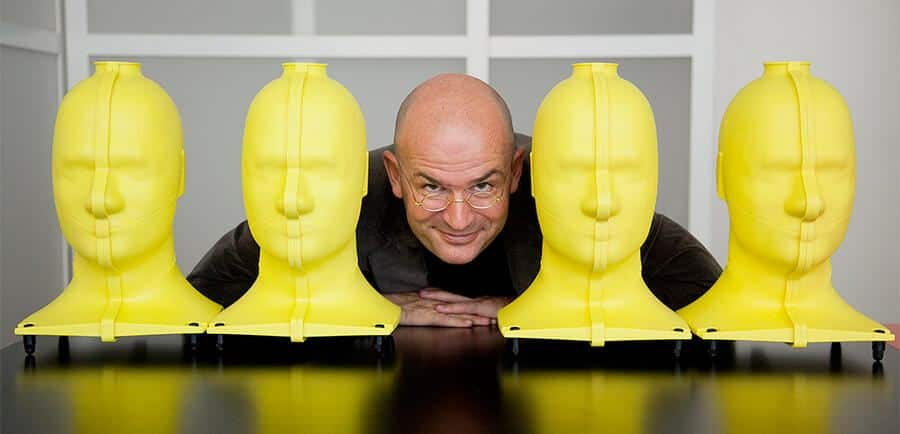
Der Dummy-Kopf ist mit einem speziellen Gel gefüllt, das menschliches Gewebe imitiert. Er enthält Sensoren, die messen, wo im Kopf bei verschiedenen Funktionsweisen des Handys wie viel Strahlung einwirkt. Aufgrund dieser Messungen kann die spezifische Absorptionsrate (SAR) ermittelt werden. Sie gibt an, wie viel Strahlungsleistung der Körper aufnimmt. Weltweit sind mehrere hundert dieser Systeme im Einsatz.

Quelle: It’is Foundation

Die Mäuse wurden Ganzkörper-SAR-Werten von 2,5, 5 und 10 Watt pro Kilogramm ausgesetzt. Bei den Ratten waren es 1,5, 3 und 6 Watt. SAR steht für spezifische Absorptionsrate und gibt an, wie viel Strahlungsleistung der Körper aufnimmt.

Zum Vergleich: Die Internationale Kommission für den Schutz vor nichtionisierender Strahlung (ICNIRP) empfiehlt, dass Mobiltelefone 2 Watt pro Kilogramm lokal nicht überschreiten. Selbst wenn ein Handy bei schlechter Verbindung maximal strahlt, sind Nutzer dieser Strahlung nur ganz lokal an Ohr und Hand ausgesetzt, nicht am ganzen Körper. Für die Bestrahlung des ganzen Körpers, etwa durch Mobilfunkantennen, empfiehlt die ICNIRP einen Grenzwert von 0,08 Watt pro Kilogramm.

Unter Dauerstrahlung

Die Versuchstiere wurden der Mobilfunkstrahlung zwei Jahre lang ausgesetzt, sieben Tage die Woche, jeweils neun Stunden täglich, beginnend bereits im Mutterleib. Vor zwei Jahren publizierten die Forschenden Teilergebnisse. Diesen März begutachteten Experten bei einem dreitägigen Treffen die Berichtsentwürfe. Im Herbst sollen nun die definitiven Ergebnisse publiziert werden.

So viel lässt sich schon jetzt sagen: Bei den Mäusen gab es keine eindeutigen Hinweise auf ein erhöhtes Krebsrisiko. Bei den Ratten wurden teilweise leicht erhöhte Tumorraten in GehirnProstataHirnanhangdrüse, Nebenniere, Leber und Bauchspeicheldrüsefestgestellt. Sie konnten jedoch nicht in klaren Zusammenhang mit der Mobilfunkstrahlung gebracht werden.

Allerdings fanden die Forscher bei männlichen Ratten ein leicht erhöhtes Auftreten von sogenannten Schwannomen am Herz – das sind Tumore der Schwann-Zellen, die der Isolation von Nervenzellen dienen. Die hochkarätig besetzte Kommission aus Toxikologen kam zum Schluss, dass das eine Folge der Mobilfunkstrahlung ist.

«Es ist eine gut gemachte Studie, die grösste Tierstudie bisher. Deshalb sind die Resultate sehr bedeutend.»

MARTIN RÖÖSLI, EPIDEMIOLOGE AM SCHWEIZERISCHEN TROPEN- UND PUBLIC-HEALTH-INSTITUT IN BASEL

«Die Resultate überraschten viele», sagt Niels Kuster. «Denn bisher ist kein Mechanismus bekannt, durch den elektromagnetische Strahlung Krebs verursachen könnte.» Er räumt ein: «Wenn diese Resultate Ende der neunziger Jahre herausgekommen wären, hätten sie wohl einen grossen politischen Effekt gehabt und die Forschungsförderung seriös angestossen. Doch unterdessen haben sich die Leute daran gewöhnt, ihr Handy immer und überall dabeizuhaben. Und Industrie und Behörden haben beschlossen, dass Mobilfunkstrahlung kein Risiko darstellt.»

Niels Kuster, ETH-Professor

«Industrie und Behörden haben beschlossen, dass Mobilfunkstrahlung kein Risiko darstellt.» – Niels Kuster, ETH Professor.

Quelle: It’is Foundation

«Schade, dass es keine Entwarnung gibt»

«Es ist eine gut gemachte Studie, die grösste Tierstudie bisher. Deshalb sind die Resultate sehr bedeutend», sagt Martin Röösli, Epidemiologe am Schweizerischen Tropen- und Public-Health-Institut in Basel. Er leitet die Beratende Expertengruppe nichtionisierende Strahlung des Bundes.

Doch die Fallzahlen seien trotz dem Umfang der Studie nicht gross, die Interpretation der Daten sei entsprechend sehr schwierig. «Wenn nun 3 von 100 bestrahlten Ratten einen Tumor entwickeln und in der Kontrollgruppe keine einzige, dann sieht das sofort nach sehr viel aus. Möglicherweise ist es aber nur ein Zufallsbefund», sagt Röösli. Man müsse sich auch fragen, warum die Effekte nur bei männlichen Ratten auftraten – und warum die bestrahlten Versuchstiere eine höhere Lebenserwartung aufwiesen als diejenigen der Kontrollgruppe, die keiner Strahlung ausgesetzt waren.

Die Resultate bereiten Röösli keine Sorgen. «Es ist natürlich schade, dass es keine Entwarnung gibt. Und möglicherweise gibt es tatsächlich einen Zusammenhang zwischen Mobilfunk und Krebs. Aber selbst wenn, ist er sicher nicht stark. Im Vergleich zu bekannten Krebserregern wie etwa ionisierender oder ultravioletter Strahlung waren die beobachteten Effekte hier sehr schwach.» Das Ganze habe aber eine gewisse Relevanz, weil Handynutzung so verbreitet sei: «Selbst wenn nur jeder millionste Handynutzer einen Tumor bekäme, wären das schon Tausende Tumore jedes Jahr.»

Anpassung auf «wahrscheinlich krebserregend» gefordert

«Die NTP-Studie hat eine hohe Qualität», sagt auch Meike Mevissen, die an der Uni Bern die Abteilung Veterinär-Pharmakologie und Toxikologie leitet und der beratenden Kommission des Bundes angehört. Gliome und Herz-Schwannome seien aber sehr seltene Krebsarten. Deshalb sei es bei nur 90 Tieren pro Gruppe schwierig, einen statistisch aussagekräftigen Effekt zu erzielen.

Aus ihrer Sicht stützen die Ergebnisse der Studie die Einschätzung der Internationalen Agentur für Krebsforschung (IARC). Sie stufte 2011 Mobilfunkstrahlung als «möglicherweise krebserregend» ein – aufgrund von Hinweisen aus Studien, dass die Langzeitnutzung von Handys eventuell in Verbindung steht mit Hörnerv-Tumoren und Gliomen im Gehirn. Bei Hörnerv-Tumoren sind wie bei der NTP-Studie Schwann-Zellen betroffen.

Die Resultate überraschten viele

Neue Studien bringen Mobilfunkstrahlung in Verbindung mit Krebs», titelte das Magazin «Scientific American» im März. Im Juli legte der britische «Guardian» nach: «Die unbequeme Wahrheit über Krebs und Mobiltelefone». Das US-Nachrichtenmagazin «Newsweek»fragte: «Verursachen Mobiltelefone Krebs? Studie der Regierung offenbart ‹beeindruckend wichtige› Ergebnisse».

Die genannte Studie ist die bisher grösste, robusteste zur Frage, ob Mobilfunkstrahlung das Krebsrisiko bei Mäusen und Ratten erhöht. Mit Kosten von 25 Millionen Dollar war sie auch die teuerste. Die US-Gesundheitsbehörde FDA gab sie beim National Toxicology Program (NTP) in Auftrag.

Die NTP-Forscher setzten mehr als 2500 Versuchstiere unterschiedlich starker Strahlung der Mobilfunkstandards GSM und CDMA aus. Diese Standards der zweiten und dritten Generation (2G und 3G) wurden bei Planung der Studie mehrheitlich eingesetzt und werden auch heute noch benutzt.

Die höchste Strahlendosis wurde so gewählt, dass sich das Gewebe nicht mehr als um ein Grad Celsius erwärmte. Man wollte so prüfen, ob ein anderer Effekt als die Erwärmung bei den Tieren Krebs auslösen kann. Zugleich musste die Strahlendosis hoch genug sein, um einen möglichen toxischen Effekt überhaupt sichtbar zu machen.

ADVERTISING

Herzstück der Studie stammt aus der Schweiz

«Im menschlichen Experiment haben wir fünf Milliarden Handynutzer. Das können wir im Tierversuch nicht nachstellen. Wenn wir da einen Effekt sehen wollen, muss die Dosis entsprechend hoch sein», sagt ETH-Professor Niels Kuster. Er hat 1999 die It’is-Stiftung für Forschung über Informationstechnologie in der Gesellschaft ins Leben gerufen. Ihr Ziel: die Sicherheit und Qualität von Geräten zu verbessern, die mit elektromagnetischen Feldern arbeiten.

Aus dem Umfeld der Stiftung stammt das System, mit dem weltweit geprüft wird, ob Geräte die maximal erlaubte Strahlung nicht überschreiten – den SAR-Wert von 2 Watt pro Kilogramm.

Niels Kuster und sein Team haben für die NTP-Studie das Herzstück entworfen: 21 strahlendichte Echokammern, in denen die Versuchstiere der Strahlung ausgesetzt werden konnten. Der Clou: In der ganzen Kammer wurde ein elektromagnetisches Feld erzeugt, das aus allen Richtungen gleich stark ist. So war es möglich, dass sich die Tiere frei bewegen konnten.

Red Monadella

The red monardella is a species of flowering plant in the mint family known by its scientific name monardella macrantha. It is native to coastal mountain ranges of southern California and Baja California, where it grows in several habitat types, including chaparralwoodlands, and forest.

A perennial, or evergreen, herb forming a low tuft of slender stems lined with thick, shiny green leaves variable in size from 1⁄4 to 11⁄2 inches long and from 1⁄8 to 1⁄2 inch wide, its larger leaves have long petioles, nearly half the length of the leaf. The red monardella has as an inflorescence a head of several tubular flowers blooming in a cup of red-tinged green bracts up to one and three-fifths inch wide. The clustered flowers are bright red to yellowish in color, sometimes exceeding one and three-fifths inch in length with narrow lobed mouths. This plant is lax and loosely matting, as well as rhizomatous. It will grow to around four inches tall and 12 to 18 inches wide. A single inflorescence resembles an old-fashioned shaving brush. There are up to twenty-five erect, narrow, tubular, red-orange flowers tightly bunched together in each flower head. The stamens and stigma are exerted about 1⁄8 inch beyond the five short corolla lobes. Showy red purple bracts, up to 1⁄4 inch wide and 1⁄2 inch long, subtend each inflorescence. Each flower has a showy, tubular, red purple calyx, 7⁄8 inch long. The shiny mid-green stems and leaves are often suffused a pale red purple. Unlike most monardellas, the leaves of M. macrantha ssp. macrantha  are not pleasantly aromatic, though they do have an unusual light scent that is difficult to classify.

The red monardella proves out as one of the most colorful of California’s native perennials.

Hummingbirds are strongly attracted to the rich nectar of the red orange tubular flowers. Unlike many California native plants, Monardella macrantha ssp. macrantha  flowers during the summer months, from June through August.

In addition to occurring naturally, this plant is favored by people looking to enhance their yards and gardens with color. Monardella macrantha is cultivated by specialty plant nurseries and available as an ornamental plant for native plantdrought tolerantnatural landscape, and habitat gardens; and for ecological restoration projects.

Ideal growing conditions for the monardella exist in bright partial shade in well-drained soil. In low-elevation gardens, it will benefit from an occasional summer watering, once it has become established. If kept too dry through the summer, it will not survive. Cold hardiness is not a problem for this plant. It can be grown reliably in Sunsetzones. It is generally not a long-lived plant, with a life span of about four years in open gardens when it is cultivated in domestic settings. Plants grown in containers live much longer. In containers, it will send out runners that may emerge from the drainage holes. Additional plants can easily be propagated either by division or from cuttings of vegetative shoots. Plants may need protection from rabbits, ground squirrels, or other rodents.

In nature, Monardella macrantha ssp. macrantha is found between 2,000 and 6,500 feet elevation from the Santa Lucia Mountains of California south to the Sierra San Pedro Martir of Baja California, Mexico. Throughout its range, this monardella is generally found in cooler, partially shaded environments that may receive moisture during the summer monsoon season, when occasional storms move into Southern California from Mexico.

The red monardella is but one of the 44 taxa of Monardella native to California. Within its range, it will be found in chaparral, woodland, and forest communities, most reliably in association with a melic grass (Melica imperfecta); other herbaceous plants with which it associates naturally are a California fescue. Native shrubs in its company include coffeeberry (Rhamnus californica), mountain pink currant (Ribesnevadense), and snowberry (Symphoricarpos rotundifolius var. parishii); and all will be found with trees such as white fir (Abies concolor), Coulter, Jeffrey, and sugar pines (Pinus coulteriP. jeffreyi, and P. lambertiana), bigcone Douglas fir (Pseudotsuga macrocarpa), and both coast and canyon live oaks (Quercus agrifolia and Q. chrysolepis).

From Wikipedia and https://www.pacifichorticulture.org

Grace Bernal’s California Style: Animal Magnetism

The animal kingdom has taken over autumn. Yes, fashion is full of animal prints, anything leopard to zebra and tiger. There’s also wild stripes and spots full of catty stuff. Prints tend to represent power and independence and anything  in between. The look is very bold and the policy goes from the head to the toes. The choice is really up to how daring you want to be when it comes to your prints. Pieces to shop for are midi dresses, which are perfect for work. Snaky ankle boots are perfect for the concert night out. Faux fur jackets will glam up  any outfit. Also zebra skirts will accentuate your figure. There’s also the leopard handbag, glasses, and hats. All of these represent a bunch of fun this season. Go bold! Go animal, if you dare. Have fun!


Leopard is an animal design, and my designs come from nature.” -Roberto Cavalli