Mystery Remains Over Brown’s Continuing Tenure With County

Questions continue to dog the second highest ranking member of the county auditor-controller/treasurer-tax collector’s office with regard to the role he and a political action committee he controlled played in illegally passing through and laundering money for those convicted of or charged with participation in a bribery and extortion conspiracy.
At issue is how Matt Brown, a former member of the Republican Central Committee and the one-time chief of staff to former Second District San Bernardino County supervisor Paul Biane, has been able to avoid being criminally charged after he became entangled in a set of circumstances that led to the indictment of Biane, as well as another former member of the board of supervisors, Bill Postmus, together with the chief of staff to another supervisor, a one-time county employee union president and the businessman accused of bribing them.

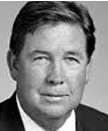
Matt Brown

Brown was moved into the position of assistant county auditor-controller in 2010 by county treasurer/auditor-controller Larry Walker. Brown is also the founder/principal of two political action committees, the San Bernardino County Young Republicans and the San Bernardino County Taxpayers Association.
In 2006, Brown, who was then supervisor Biane’s senior staff member, founded a political action committee (PAC) to assist Biane and other members of Biane’s political circle in distributing money to politicians they supported. That PAC, known as the San Bernardino County Young Republicans, has been alleged by the California Attorney General’s Office and the San Bernardino County District Attorney’s office to have been used as a vehicle to launder bribes and kickbacks to Biane.
During the first year of its existence, the San Bernardino County Young Republicans PAC had raised $7,500. In November 2006, Biane joined with his then-colleagues on the board of supervisors, Bill Postmus and Gary Ovitt, to approve a $102 million payout to Rancho Cucamonga-based Colonies Partners to settle a lawsuit that company had brought against the county over flood control issues at the Colonies at San Antonio residential subdivision and Colonies Crossroads commercial subdivision projects in northeast Upland. Supervisors Josie Gonzales and Dennis Hansberger opposed that settlement.
Campaign finance records show that the San Bernardino County Young Republicans PAC, received a $100,000 check from Colonies Partners, L.P. on June 17, 2007. In two separate indictments, one returned by a criminal grand jury in February 2010 against Postmus and his one time political associate Jim Erwin and in another indictment returned in May 2011 against Biane, Erwin, Colonies Partners managing principal Jeff Burum and the former chief of staff to supervisor Ovitt, Mark Kirk, it was alleged that Biane actually controlled the San Bernardino County Young Republicans PAC through Brown and that the $100,000 donation was a quid pro quo paid in exchange for Biane’s vote to approve the settlement.  Also delineated in the February 2010 indictment were five unindicted co-conspirators identified as John Does 1 through 5, who are identifiable through information contained elsewhere in the public record including the superseding May 2011 indictment  as Colonies Partners managing principals Burum and Dan Richards; Colonies Partners public relations consultant Patrick O’Reilly;  Kirk; and Biane.  According to prosecutors, Postmus controlled two political action committees, the Inland Empire PAC and the Conservatives For A Republican Majority PAC, which each received separate $50,000 donations from the Colonies Partners principals which were also bribes. Erwin’s Committee For Effective Government PAC likewise received a $100,000 donation from Burum and Richards that was a bribe, according to prosecutors; and Kirk’s Alliance For Ethical Government PAC received a $100,000 contribution from Burum and Richards that was also a bribe, per the indictment.
Postmus last March pleaded guilty to the five felonies alleged against him in the February 2010 indictment, including conspiracy, one count of accepting a bribe, one count of conflict of interest, and one count of misappropriation of funds. Postmus in April was the star witness before the second grand jury which indicted Burum, Biane and Kirk and reindicted Erwin. Erwin, who served as assistant assessor under Postmus after the latter was elected to that post in 2006 and took office in 2007, continues to maintain his innocence on the charges stemming from that case, including conspiracy, two counts of corrupt influencing, two counts of offering a bribe, two counts of extortion, one count of misappropriation of public funds and one count of forgery. Biane, Kirk and Burum maintain their innocence. As of yet, no charges have been filed against Richards or O’Reilly.
The indictments allege that Burum in 2006, with the assistance of Erwin and O’Reilly, had brochures prepared which purported that  Postmus, who was then the chairman of the board of supervisors as well as chairman of the San Bernardino County Republican Central Committee and was running for county assessor, was a homosexual who was addicted to methamphetamine, and that Biane, who was then the vice chair of both the board of supervisors and the Republican Central Committee and at that time engaged in an election campaign, was teetering on the brink of bankruptcy. Burum’s company, the Colonies Partners, had filed a lawsuit against the county in 2002 over flood control issues at the companies Colonies at San Antonio development in northeast Upland. Ultimately, Burum withheld the mailing of those brochures. It was three weeks after the November 2006 election, in which Postmus and Biane were elected and reelected, that the board of supervisors voted 3-2 to confer the $102 million settlement on the Colonies Partners. The indictments allege that the series of $100,000 donations to the political action committees founded and controlled by Postmus, Brown, Kirk and Erwin were in fact quid pro quos — bribes — paid in exchange for the approval of the settlement. Prosecutors allege that Biane, through Brown, secretly controlled the San Bernardino County Young Republicans PAC.
The Sentinel is informed that a complaint has been filed with the state Fair Political Practices Commission citing a PAC founded by Brown in 2008, the San Bernardino County Taxpayers Association, which is separate from the San Bernardino County Young Republicans PAC alluded to in the indictments. According to well placed sources, both the San Bernardino County Taxpayers Association and the San Bernardino County Young Republicans PAC were involved in the activity now under further investigation.
On March 17, 2008, Brown formed the San Bernardino County Taxpayers Association PAC and named J.M. Olchawa as the PAC’s treasurer. Both Brown and Olchawa are residents of Grand Terrace. Olchawa endowed the PAC with its first operating capital in the form of a $100 contribution.  Less than a month later, on April 9, the San Bernardino County Young Republicans PAC contributed $40,000, which had apparently originated with the $100,000 contribution from the Colonies Partners the previous year, to the San Bernardino County Taxpayers Association PAC. The following month, on May 29, 2008, one of the political action committees controlled by Postmus, the Inland Empire PAC, infused the San Bernardino County Taxpayers PAC with $3,000 and the month after that, on June 2, 2008, with another $2,000. That $5,000, too, had apparently been originally provided by the Colonies Partners.
In the less than two month period between the $40,000 contribution from Brown’s own Young Republicans PAC on April 9 and Postmus’ Inland Empire PAC’s $2,000 donation on June 2, the San Bernardino County Taxpayers Association PAC received a substantial amount of money in the form of both contributions and loans, all from other political figures. On April 25, 2008, the Committee to Elect Paul Biane gave  the San Bernardino County Taxpayers Association PAC a $15,000 contribution. On April 29, 2008 the Committee to Elect Dick Larsen provided the San Bernardino County Taxpayers Association PAC with a $10,000 loan. Larsen was then the county treasurer. On May 5, 2008 the Committee to Elect Gary C. Ovitt made a $15,000 contribution to Brown’s San Bernardino County Taxpayers Association PAC. That money may have originated with the Colonies Partners before being provided to Kirk’s Alliance For Ethical Government PAC and then being provided to Ovitt. On May 9, 2008, the Josie Gonzales for Supervisor campaign provided a $15,000 contribution to the San Bernardino County Taxpayers PAC. On May 16, 2008, Bill Emmerson for Assembly 2008 made a $5,000 contribution to Brown’s recently formed PAC. The same day, the San Bernardino Public Employees Association PAC provided Brown’s PAC with a $10,000 contribution. On May 23, 2008, the Committee to Elect Gary C. Ovitt provided Brown’s PAC with a $10,000 loan. On May 27, 2008, the Hansberger for Supervisor Committee made a $25,000 contribution to the San Bernardino County Taxpayers Association PAC. The next day, May 28, the Paul Cook for Assembly 2008 Committee provided Brown’s PAC with a $5,000 loan. The same day, the Committee to Elect Paul Biane made a $10,000 loan to Brown’s PAC. On May 29, Bill Emmerson for Assembly 2008 made a $5,000 contribution to the PAC and on June 2, 2008, the Hansberger for Supervisor Committee made a $15,000 contribution to the San Bernardino County Taxpayers Association PAC.
The lion’s share of the money Brown’s PAC took in was used to fund Hansberger’s effort to be reelected as county Third District supervisor that year. According to campaign disclosure documents, the San Bernardino County Taxpayers Association PAC  on May 18 provided the Hansberger for Supervisor Committee with $57,030.70 and on June 30, 2008, more than three weeks after Hansberger had lost the election to Neil Derry on June 3, Brown’s PAC gave the Hansberger for Supervisor Committee $100,920.29.
The Fair Political Practices Commission is now investigating the lack of any subsequent accounting for the $35, 000.00 in loans made to the San Bernardino County Taxpayers Association PAC by the Larsen, Ovitt, Cook and Biane campaign committees. All references to those loans disappeared from subsequent campaign filing statements made on behalf of the PAC by Olchawa. The loans in question appear to be outstanding. No explicit reference to repayments to any of the lending parties can be found in any of the San Bernardino County Taxpayers Association PAC’s financial disclosure statements. While the online filing made by the Committee to Elect Gary Ovitt shows an outstanding loan of $10,000 to the San Bernardino County Taxpayers Association PAC committee as of 12/31/2010, online filings for the other lending parties were not immediately available. There is no indication in any available documentation showing any of the loans were repaid.
The lack of repayment, and lack of accounting of the still existent outstanding loans or failure to note the loans were forgiven is alleged to be multiple violations of the Political Reform Act. Moreover, the lack of notation of the loans might suggest that the funds received by the committee during the 2008 electioneering season from the Larsen, Cook and Biane campaigns were being laundered for Hansberger, according to the complaint received by the FPPC.
Another issue in the complaint and the follow-up FPPC investigation is the connection between the PAC and the Hansberger Campaign, which contributed money to the PAC and was also the major beneficiary of the PAC’s expenditures. In this way, money provided to Brown’s PAC is suspected of having been used to attack Derry without adequate disclosure of the origin of that money. Those mailers sent out attacking Derry did not disclose that Hansberger’s campaign was involved in funding them.
Many familiar with Brown’s role in the Colonies matter have questioned why prosecutors did not seek and obtain from the grand jury an indictment of Brown. The indictment itself describes how the political action committee he founded and controlled served as a laundering vehicle through which bribes allegedly provided by Burum were passed, action virtually indistinguishable from that engaged in by the indicted Kirk, another chief of staff to a board member who voted to approve the Colonies settlement.
Brown was one of 45 witnesses who testified before the grand jury this spring before it handed down the indictment naming Burum, Biane, Kirk and Erwin. In that testimony Brown said SEBA, the sheriff’s deputies union that Erwin once headed, had promised to provide, but then failed to come through with, backing for a countywide measure Biane was sponsoring in 2006 to boost the pay for county supervisors. An examination of campaign reporting documents and other material, however, indicates that SEBA in fact did support the Biane-backed proposal, known as Measure P, which passed, resulting in an immediate $22,000 annual increase to supervisors’ salaries. Prosecutors declined to say whether Brown’s misstatement of fact before the grand jury constituted perjury. No charges have been filed against him.
A possible explanation of how it is that Brown has avoided prosecution on several counts is that he has been working as an informant for the district attorney’s office. It is known that beginning in 2009, Brown began wearing a “wire,” that is, a hidden electronic audio device at work while he was serving in the capacity of Biane’s chief of staff. Reportedly, the target of this effort was Biane himself. To date, no incriminating statements by Biane on any of those tapes have surfaced or been produced by the prosecution, despite requests by defense attorneys for their production. Transcripts of some of those conversations have been turned over to defense attorneys.
At some point in the spring of 2010, Biane became aware that his chief-of-staff was seeking to entrap him. There ensued strained relations between the two and Brown was put on paid leave after he filed a claim in which he alleged he was being harassed. Brown was then transferred to the county treasurer/auditor-controller office under Larry Walker. Walker installed Brown as his second-in-command, i.e. as the assistant auditor-controller. In so doing, Walker ousted his longtime assistant and close associate Betsy Starbuck, who was ignominiously sacked after having served more than twenty years as Walker’s right hand woman, both when Walker was  Fourth District supervisor, the position he held before  he ran for auditor-controller, and as auditor controller.
The displacement of Starbuck, who after more than eight years in the position of assistant auditor-controller practically ran the division, to accommodate the inexperienced Brown has sparked a widespread belief in the halls of the county that the move was imposed on Walker by county chief executive officer Greg Devereaux and district attorney Mike Ramos as part of an effort to protect a witness seen as crucial to the prosecution of the Colonies settlement criminal case. Collectively and individually, Walker, Brown, Devereaux and Ramos were unwilling to comment on the matter.

Upland Rejects Quincey Claim

UPLAND – The city of Upland has rejected a wrongful termination claim filed against it by former city manager Robb Quincey.
In his claim notice seeking unlimited damages over his May 4 termination filed on his behalf by attorney Joseph Wohrle in November, Quincey maintains the city breached his employment contract, violated the labor code and wrongfully terminated him.
Quincey, who was handpicked by then- mayor John Pomierski to serve as city manager in the aftermath of former city manager Mike Milhiser’s forced departure in 2005, had zoomed to a level of unprecedented authority in Upland while working for a city council dominated by Pomierski. But his fortunes shifted shortly after FBI and IRS agents in June 2010 descended on City Hall and Pomierski’s home to serve search warrants in conjunction with a federal probe of political corruption in Upland’s municipal government, including charges that Pomierski, with the assistance of city staff, was shaking down developers and others with business proposals or permits pending before the city.

Robb Quincey

In the aftermath of those law enforcement raids, information about questionable actions involving Quincey circulated in Upland, including a report he had retaliated against a police sergeant, John Moore, who had investigated an alleged domestic disturbance incident involving the city manager by preventing Moore from being promoted to  lieutenant and that he then acted improperly to create a third captain position in the department and promoted one of the department’s lieutenants into that newly formed post to ultimately promote Moore after Moore began to prepare a legal complaint alleging retaliation.
It was action Quincey took in the aftermath of Moore’s promotion in which he went beyond his legal authority to make maximum $25,000 disbursements without prior council authority to cover $50,000 of a $57,816 bill for services rendered to Moore by the law firm  Lackie, Dammeier & McGill that formed the basis of the city council’s decision to fire him. In his claim, Quincey maintained the payments to the law firm were properly processed by the city’s finance department. In firing Quincey, the city also relied on information pertaining to Quincey’s relationship with former assistant finance director Ruby Carrillo, who was reportedly involved in providing and documenting the payments to Lackie, Dammeir & McGill. Carrillo is no longer employed by Upland.
The claim asserts Quincey’s contention that he was actually terminated because in the latter part of 2010 he had undertaken a critical evaluation of the billing practices of the city’s legal counsel, the law firm of Richards, Watson & Gershon, which employs city attorney William Curley.  “For years, claimant expressed concern to his staff and the city council about legal fees generated by Richards, Watson & Gerschon,” the claim states.  Quincey’s claim sets forth that he balked at allowing the law firm to provide legal services to other cities and water agencies where there was some level of conflict with regard to those multiple representations.
Quincey’s claim also alleges mayor Ray Musser and councilman Ken Willis defamed him in statements to the press.  The official reason provided for terminating the 51-year old Quincey, who was receiving a base salary and add-ons  of $368,529, benefits of $92,096 for a total compensation package of $460,625 per year, was that he failed to follow specific city council directions and had breached his employment contract.
The city council quietly rejected Quincey’s claim on November 28. Wohrle has six months from that date to file a lawsuit on Quincey’s behalf. He has not done that, but last month Wohrle filed a petition with the San Bernardino County Superior Court at the West Valley Courthouse in Rancho Cucamonga for arbitration in accordance with Quincey’s employment contract. The court is to consider that request on February 14.

Class Action Suit To Seek $9 M Recovery For Red Light Camera Tickets

Barstow-based attorney Robert Conaway has taken several key steps toward filing a class action lawsuit against the city of Victorville and Australia-based Redflex Traffic Systems to recover over $9 million in actual damages on behalf of 4,300 people who’ve received tickets from Victorville’s red light camera system.

Bob Conaway

Conaway delivered a claim to the city and Redflex on December 9 informing both parties that he intends to proceed with a class action suit if the city and the company do not alter the fashion in which red light camera tickets are issued. In a December 23 letter he calculated the damages in the claim, stating that  based on numbers through the end of November 2011 the alleged victims of the illegally-run red light camera ticketing system were due $2,457,135.49 in restitution damages, $6,000,300 in estimated damages for higher insurance premiums paid, $215,000 in legal fees, and $860,000 in lost  wages for those required to attend arraignments and/or trials
Conaway said the $2,457,135.49 represented the amount of fines paid by those wrongfully ticketed by the Redflex system in Victorville and that the $6,000,300 in higher insurance premiums was based on a calculus of $1,500 per policyholder for three years times the 4,300 people issued tickets and who were forced to pay. He said the $215,000 in legal fees was derived by typical charges made by lawyers on red light ticket cases times ten percent of those issued tickets. The figure of $860,000 in lost  consumer wages was based on a formula of an average of $200 per day in wages times 4,300.
He said the claim was made against the city and Redflex due to the conduct by both parties that was and  is “unfair, unlawful, fraudulent and deceptive.”
Conaway said that he would also seek from the city “any additional award the court may permit in the way of a penalty per violation in its discretion” if the case is taken to trial. Moreover, Conaway said, if the matter is not settled prior to trial “as to Redflex, lead plaintiff Michael Curran and the class will seek punitive damages in the amount of three times the alleged actual damages based on the above figures, $28,597,000.”
Conaway said he anticipates both parties will reject the claim.
Conaway maintains the use of cameras to issue tickets is unconstitutional and illegal because those ticketed are not allowed to confront their accuser and that there is a conflict of interest in allowing Redflex, which has a financial interest in seeing alleged red light runners convicted, to collect, analyze, process and store the evidence used against those cited.
According to Conawy, “The declarations that appear in the citations sent to consumers as part of the Redflex-Victorville red light automated traffic enforcement system, are subscribed under ‘information and belief’“ which (1) under People v. Oppel (1990) 222 Cal.App.3d 1146, 1153] is unlawful, (2) is deceptive and misleading under Business & Profession Code 17200 et seq and finally (3) violates defendants’ rights under 42 USC 1983. ‘An affidavit based on “information and belief” is hearsay and must be disregarded, and it is “unavailing for any purpose” whatsoever,’” Conaway wrote in his letter of December 23. “Matters alleged on ‘information and belief’ do ‘not serve to establish the facts … because an affidavit which is to be used as evidence must be positive, direct and not based upon hearsay.’ A ruling ‘of the court is to be based upon acts which may be presented to it, and not upon the belief of the affiant.’ Such allegations on ‘information and belief’ furnish… ‘no  proof of the facts stated ….’”
As of press time this week, Conaway had not received a response from the city or the company. He vowed to file the class action suit by January 27 if the city and Redflex do not take action to stop issuing tickets based solely upon the images caught on camera as analyzed by Redflex personnel and instead utilize San Bernardino County Sheriff’s deputies, who are contracted to provide law and traffic enforcement in Victorville, to monitor the live video feed and issue tickets in real time.
Victorville maintains the red light cameras are a legitimate traffic law enforcement tool.
In a corporate statement, Redflex said “There’s no good excuse for running red lights.”

Hesperia Councilman Doubts EB-5 Viability

HESPERIA—While Victorville failed in establishing a federal visas-for-investments program to boost local development, Hesperia has now taken up the gauntlet. Nevertheless, the prospect for leveraging foreign money into job creation in the High Desert is far-fetched, a member of the Hesperia city council said.
In April 2008, the city of Victorville entered into a relationship with CMB Export, LLC to manage an EB-5 program for Victorville at and around Southern California Logistics Airport, now being built on the grounds of the former George Air Force Base, which was shuttered by the Department of Defense in 1992.
Under its agreement with CMB and the terms of the federal program regulations, that company was supposed to recruit foreign nationals, in this case mainly ones from China and Korea, who were to put up at least $500,000 each in investments pertaining to the base. In exchange, the investors would receive visas, or green cards, for themselves and the members of their immediate families. The city backed out of that arrangement with CMB in June 2008 and proceeded with an EB-5 program of its own, triggering a $33 million lawsuit against the city for breach of contract, fraud, unfair competition and business interference.
Victorville initially succeeded in getting licensing from the federal government for its EB-5 effort, but in May 2010, a month after the city settled the lawsuit with CMB for $200,000, the U.S. Citizenship and Immigration Service tentatively suspended Victorville’s EB-5 program pending review, stating that city officials had misrepresented the projects to be funded by the investment program. In October 2010, the U.S. Citizenship and Immigration Service terminated Victorville’s program, citing “material factual discrepancies” in financial documents.  It was the first time the federal government had moved to terminate an entity’s EB-5 authority.
In response, Victorville filed a lawsuit in Washington, D.C. District Court against the U.S. Citizenship and Immigration Service, the Department of Homeland Security and several senior federal officials. It also filed an appeal of the program cancellation with the U.S. Citizenship and Immigration Service’s Administrative Appeals Office, and temporarily agreed to a stay of the suit pending that appeal.
Last month, the administrative appeals office upheld the decision to terminate Victorville’s program, referencing Victorville’s failure to generate jobs using the foreign investments, misrepresentations or contradictions between what councilman Mike Rothschild and the city’s attorneys said about the program and discrepancies in city representations about the city’s interdepartmental loans and their use. Victorville has refunded the entirety of the $9.5 million in investments it received under the EB-5 program and city officials are now contemplating whether to proceed with the lawsuit.
Last year, a divided Hesperia city council voted to allow a private company, American Franchise Regional Center, to set up an EB-5 visa investor center in Hesperia. In August, American Franchise Regional Center got federal approval for the center and has been courting foreign investors ever since.
The EB-5 program was pushed in large measure by Hesperia councilman Russ Blewett. He was given assurance that even before the program was licensed two Chinese woman stood ready to make $500,000 investments in projects in and around Hesperia and that there were multiple prospects of landing other investors.
One gap in the understanding and representations on both sides, however, was the degree to which a synergy in the effort to develop Hesperia existed. The potential investors were given to understand that their money alone would not be fueling the entire development effort and that other infusions of money, including the application of redevelopment subsidizations, would create successful projects in the area in and around Hesperia.
In California, however, the state legislature last year withdrew cities’ redevelopment authority, foreclosing the ability to issue municipal bonds and have the cities use the proceeds to pay for the creation of infrastructure to spur development. Cities collectively challenged the state’s action, but last week the state Supreme Court ruled the state could close out the cities’ redevelopment agencies. Meanwhile, some city officials in Hesperia were hoping that potential foreign investors might ignore that reality and invest with the American Franchise Regional Center in Hesperia.

Paul Bosacki

Hesperia city councilman Paul Bosacki said that hope is a pipe dream.
“It was never a solid idea to being with,” Bosacki said. “I saw it as a scam. Russ Blewett said he knew these two Chinese women ready to invest here. I voted against it when it came up. They went ahead with it, hoping they could use the money to replace money from our  redevelopment agency. That won’t happen now. Good luck getting those Chinese ladies or anyone else to invest here now that redevelopment is dead. No businesses are interested in coming to the High Desert unless they get some kind of subsidization. Unless there are land swaps or incentives, they won’t come in. We are not going to get businesses to come in or developers to build. The state killed redevelopment and the city of Victorville is on the brink of bankruptcy. When Victorville goes down, it is going to go down hard and that is likely to suck the rest of the High Desert under with it.”
Bosacki added, “Right now, they are trying to hang on, and convince these people from China and everywhere else they can get a green card for 500,000 bucks and claim they are going to create jobs but I haven’t seen any jobs created out of it yet and that was before, when the investors were counting on redevelopment money. It ain’t happening. We were assured they could just set up in the city of Hesperia and that it was all tied into the RDA [redevelopment agency] but it turns out it is just another scam. We’ll see how long it lasts, even on paper. I think it is a non-issue. They were hoping to team up with the RDA, but there is no more city involvement in programs like that.”

Officials, Watchdogs At Odds Over RDA Springbacks To Staters In GT

GRAND TERRACE—Four months after Stater Bros. moved its supermarket into new and 72 percent larger quarters at 22201 Barton Road in the Grand Terrace Town Square than it occupied at Mt. Vernon and Barton Road during the previous 37 years, there are sharp differences between city officials and skeptical Grand Terrace residents over whether the $1.2 million in incentives the city offered the grocer to make that transition are justified.
In what would prove to be one of the last major uses of its redevelopment agency, the city in October 2010 entered into an economic development agreement with Stater Bros. to facilitate the transition from the 25,000 square foot location at Barton and Mt. Vernon  to the 44,000-square-foot digs in Grand Terrace Town Square. Under the terms of that agreement, Stater Bros. said it would create around 140 temporary construction jobs and 77 permanent full-time jobs and the city consented to paying Stater Bros. $2,500 per job, or up to $192,500 per year over five years. Another clause in the agreement called for the city utilizing up to 45 parking spaces at Grand Terrace Town Square for local ride-sharers, for which it would pay Stater Bros. $12,500 per quarter, or $50,000 per year.
Thus, the city through its redevelopment agency agreed to spring back to Stater Bros over the five year period, $1,212,500 if the grocer met all of the performance criteria.   Stater Bros. invested $17.5 million to build the 44,000-square-foot market and has acquired property around the site to add up to 80,000 square feet of additional retail space at the Town Square.
The new Stater Bros. had its grand opening on August 24, but a third of a year later, some Grand Terrace residents are questioning the wisdom of providing incentives to the corporation and expressed uncertainty about whether the company is providing the community with the promised improvements and employment.
A continuing point of confusion is whether or not a quarterly compliance audit of Stater Brother’s performance was done. This week the Sentinel received from Grandpa Terrace, a Grand Terrace resident who runs a community interest blog,  a list of questions submitted by his readers, including  “Did they [Stater Bros.] hire 75 employees?  How many of those employees live in Grand Terrace?  How many of those employees are full and part time?  What has been the change in sales tax revenue to the cIty?  In relation to an increase to our local financial stability, what has the net increase of wage earnings earned by Grand Terrace citizens been? Has Stater’s earned their 1.2 million RDA funds?”
Grandpa Terrace closed with the statement, “The public should be assured Staters has earned that money before the public pays for this in taxes as well as in increased prices.”
Mayor Walt Stanckiewitz this week told the Sentinel that the quarterly report on Stater Bros. performance under the economic development agreement was not immediately available but was “about due. As to how many full time jobs and full time equivalent jobs were created, I believe they exceed what they were supposed to do.  They are supposed to employ 70 to 75 full time equivalent workers. I believe there were  65 or 67 part time workers at the old store. How do you convert full time to the part time equivalent? I am confident they are meeting that goal.”
The success of the store is apparent in the level of customer traffic there, the mayor said.
“It is, I think, now one of their most popular stores,” Stanckiewitz said. “It has outpaced my wildest dreams, what Staters has done. I go through the store three or four times a week and I personally see customers from Moreno Valley and Redlands there that never shopped in Grand Terrace before. They are coming here because it is the nicest Stater Bros. around.”
Stanckiewitz said the redevelopment agency’s activity at Grand Terrace Town Center was limited to the incentives to Stater Bros. and was at a level less than what the city council had striven for. The city had wanted to use further incentives to bring in other retailers, he said, but had not done so because of multiple considerations.
“I’m glad that [Stater Bros. chairman] Jack Brown got tired of waiting and said we will buy the land,” Stanckiewitz said. “There will never again be another  75-year anniversary store. The fact is, there is nothing like it. We’ve got a one-of-a-kind.”
Stanckiewitz said that the $1.2 million springback was to take place “over five years, not up front but   retroactively and quarterly. Our redevelopment agency is gone now, so the city will handle it directly.”
In legislation passed last year and just upheld by the state Supreme Court under challenge from hundreds of California’s cities, municipal and county redevelopment agencies have been dissolved in the Golden State.
Stanckiewitz said the money the city will pay out will not impact the general fund, since the payments to Stater Bros. are “performance based.” He said the amount of revenue to be brought into the city by the larger store through increased sales tax revenue will at some future point be greater than the money the city shells out. “The last time I did that calculation was before the store opened,” Stanckiewitz said. “If nothing gets built in that center, and Staters is the only thing there, we will get our money back in the eight to ten year range. But their numbers are way beyond what they forecast and I am hoping they will bring in more business and that we will be paid back in increased property and sales tax before the program is over [i.e., in fewer than five years]. This is a performance-based incentive contract.”
Moreover, Stanckiewitz said, it is increasingly likely that the city will not pay Stater Bros. the full $1,212,500 specified in the agreement, but rather $962,500. That is because the grocer will not be building and reserving the 45 parking spaces in the Grand Terrace Town Square for car-poolers as was proposed under the agreement.
“They are thinking they need those parking spaces for their own customers given how successful the store is,” the mayor said. “There were a certain number of spaces they paved beyond what was normally required for them to open the store. That was built into the incentive package because we   have other business in town or places in town that are having parking issues. The city was going to take possession of those spaces and use them as a Park-and-Ride. In five or so years,  as the center filled out, they would revert back to parking for the commercial customers. But that day has come quicker than we anticipated and they probably will not be used for Park-and-Ride [carpooling parking]. We won’t be paying for that. This was an RDA [redevelopment] project that did not cost us anything.”
One consideration and concern about the springback of sales tax revenue to Stater Bros. is that as a grocery store, only a limited amount of its merchandize is taxable. The quarterly audit of sales tax revenue into the city will also be impacted by the sales tax generated by a new Dollar Tree store in town, which is heavily laden with taxable sales items.
Sylvia Robles was an unsuccessful council candidate in the 2010 Grand Terrace municipal election in which Stanckiewitz was elevated from an incumbent council position to mayor. Both Stanckiewitz and Robles ran on platforms that had as their central themes reform of the city’s redevelopment agency. In a statement to the Sentinel this week, Robles indicated her belief that reliable sales tax income figures could not be had to make any useful comparisons to see if the incentives provided to Stater Bros. were proving cost-effective for the city’s taxpayers.
“I am not aware of any compliance audit,” she said. “If there is one, it would not include sales taxes captured by Stater Bros as a result of its new grocery store. Sales tax revenues are confidential and the Board of Equalization does not release them. There are job subsidies. That is an ancillary feature and not $1.2 million, which is an aggregate number. I recall about $70,000 estimated per month.”
Robles continued, “The only thing I can comment on — without production of any compliance audit document —  is that redevelopment agencies are not required to provide any quantitative data that they actually produce  higher sales taxes or jobs.  The rationale for funding entities with RDA subsidies is to increase sales tax revenues to help support a city’s general fund.  Since sales tax revenues are secret or suppressed by the Board of Equalization, I do not see how one can audit new revenue generation compliance.”
Grand Terrace community development director Joyce Powers, who oversaw the city’s redevelopment agency and the Stater Bros. agreement, this week told the Sentinel, “There are reports that we have given them $1.2 million, but that is inaccurate. They can request it if they meet certain performance standards under the agreement but to date, no such requests have been made and no funds have been paid to Stater Bros.”

Needles Officials Reconsider Non-Profit Status For Hospital Operator

NEEDLES—The efforts of San Bernardino County’s smallest city to retain its community hospital entered a crucial stage recently as the city council discussed the parameters of the citizen-backed measure that mandates the sale of Colorado River Medical Center to a non-profit organization.
On December 13, the council devoted considerable time to examining Measure Q, which was passed by Needles voters in June 2010. Voters passed the ordinance, which was intended to keep the hospital’s doors open and absolve the city of the financial burden of subsidizing the facility.
The city took on ownership of the Colorado River Medical Center in April 2008 after Brentwood, Tennessee-based Lifepoint Hospitals, a for-profit corporation, embarked on an effort to move the institution’s equipment and personnel to another hospital it owned in Arizona, roughly 12 miles from Needles.
But because of long-running inadequate billing practices, including failures to invoice Medicare and Medi-Cal as well as insurance companies and patients in a timely fashion, the hospital has lost money, representing a financial liability to the city. The city created a board of trustees to oversee the hospital, and that panel, together with the city council, has come to a consensus that spinning the facility off to an independent operator is the best solution for ensuring that the community has adequate medical care without soaking the taxpayers.
There have been competing offers to take over the hospital’s operations, including a few from for-profit corporations. The only credible effort to mount a non-profit organization to take on ownership of the hospital is that of Needles Hospital Inc., which was founded by former Needles councilwoman Rebecca Valentine.
While Needles Hospital, Inc.’s proposal has progressed further than any other, one serious competitor to that proposal emerged from a for-profit company  – Los Angeles-based AM Pharmacy. Though AM does not meet the requirement that it be a non-profit entity, which is stipulated in Measure Q, a consensus of the hospital board and minority of the city council appears to be in favor of at least considering in depth the possibility of letting AM absorb Colorado River Medical Center into its portfolio. The reasoning here is that AM has real world experience in running hospitals.
Valentine, who is the president of Needles Hospital Inc., said her organization meets the objective of having a non-profit operate the hospital and ensuring quality care at an affordable rate to the local populace. According to Valentine, Needles Hospital Inc. has secured financing to make a $3.16 million purchase of the facility and can now  open escrow. Needles Hospital Inc. will contract with Quality Healthcare Solutions to manage the hospital, she said.
AM Pharmacy has said it will use one of its employees, Bing Lum, who was raised in Needles, to oversee the hospital operation if it is given the right to purchase the facility. Lum emphasized that his company has experienced hospital operators on staff who have dealt with start-up and troubled hospitals. He expressed confidence his company could turn Colorado River Medical Center around financially, making it both profitable and an asset to the community. He said AM Pharmacy’s financial solvency puts it into a position of being able to fund operations at the hospital until reforms are in place that will allow it to function on its own without subsidization. He suggested that his company could create a non-profit arm, build a firewall between AM Pharmacy’s for-profit and non-profit operations and that the non-profit could be used to run the hospital. Lum said the management team for the hospital would relocate from Los Angeles to Needles to oversee the hospital’s day-to-day operations. AM has also said it stands ready to form a board of directors for the hospital consisting entirely of local residents.
On December 13, city attorney John Pinkney said the city council must sign off on the sale of the hospital under the terms of Measure Q, but could use its discretion in whether to proceed with a sale or not. “In order to qualify, the purchaser would have to be a nonprofit corporation,” Pinkney said. “The initial board of directors of the nonprofit corporation would have to be approved by the city council and have to be residents of the city of Needles.”
The sale would need to be made at a price equivalent to fair market value, Pinkney said. A portion of property enclosing the hospital that is federal land would not be part of the sale. The hospital’s debt could be subtracted from the fair market value under the terms of the sale, Pinkney said, such that the purchaser would assume all outstanding liabilities at the hospital and be responsible for all accounts payable.
The buyer would have to meet strict licensing guidelines, Pinkney said. As such the purchaser will have to demonstrate licensing in a host of areas to include round-the-clock provision of emergency, intensive care, radiology, outpatient surgery, laboratory, dietary, surgery and anesthesiology services.
Per Measure Q, Pinkney said, if the hospital ceases to operate as a rural general acute care hospital, the nonprofit corporation has the first right of refusal to the city of Needles.
Pinkney said that the hospital board is definitely leaning against allowing Needles Hospital Inc. to assume operation of Colorado River Medical Center and had voted to cease negotiations with the non-profit. Instead, the board has called for brokering a deal with AM Pharmacy.
While city council members Linda Kidd and Jim Lopez as well as Mayor Ed Paget have in the past sought to be excused from any decisions relating to the hospital because of potential conflicts of interest, the council as a whole seems to be at odds with the hospital board and would appear to favor Needles Hospital Inc.’s overture.
An ad-hoc committee has been formed to hash out the differences. The ad-hoc committee has suggested that an evaluation of the relative merits of the competing offers could be better made if both entities were to submit proposed contracts.
The city council previously expressed concern that neither Needles Hospital Inc. nor AM Pharmacy had offered to purchase the facility for the $3.6 million specified in the original appraisal done for the hospital. Needles Hospital Inc. offered $3.16 million for the hospital. AM Pharmacy offered $3 million.
Pinkney said neither offer meets the requirements of Measure Q that fair market value as determined by an independent appraiser be paid. Pinkney did indicate, however that the appraisal the city obtained by the city is stale and it did not include the accounts receivable. Those would need to be determined and added to the appraisal.
Given that neither party met the specifications with regard to all criteria in Measure Q, Pinkney said the council could use its own discretion in making a determination. The council could legally, if it makes certain findings, allow the board to make a non-binding decision to sell to either bidder. The council could also negotiate different terms or entertain a bid or bids from another entity or entities.
Rebecca Valentine asked the council to abide by the language of Measure Q.
Tony Frazier appeared to be the member of the council most strongly in step with the hospital board in its desire to sell the facility to AM.
Pinkney suggested that the council allow the board to make its recommendation and then use its own discretion and judgment in confirming or vetoing the board.
On November 22, the council gave both Needles Hospital Inc and AM Pharmacy until January 10 to submit revamped offers.

Ruben S. Ayala, Once Dominant In Local And State Politics, Dead At 89

Ruben Samuel Ayala, one of the most prominent politicians to arise out of Chino, passed away Wednesday, January 4, at the age of 89.
The grandson of a Mexican immigrant, he was born on March 6, 1922 to Mauricio and Ermina Martinez Ayala. He lived with his family on Chino’s Second Street and graduated from Chino High School in 1941 and attended Pomona Junior college in 1941 and 1942. From 1942 until 1946,  Ayala served in the U.S. Marine Corps, participating in the Battle of Tarawa in the Pacific.
Following extension courses at UCLA, he graduated from the National Electronic Institute in Los Angeles in 1948. For three years he worked as a field engineer for the Admiral Television Company in Los Angeles. From 1951 to 1954, he was assistant branch sales manager for the Homelite Corporation, manufacturers of small industrial construction equipment. From 1954 to 1964, he was an agent for the Farmers Insurance Group in Chino.

Ruben Ayala

Ayala was member of the Chino School Board from 1955 until 1962, at which point he was elected to the Chino City Council. In 1964, he ran to  become Chino’s first elected mayor.  In November 1966, he was elected to the San Bernardino County Board of Supervisors from the Fourth District and  served as chairman from 1968 to 1972.  As a supervisor he championed flood control projects throughout the county, including channels in Chino, San Timoteo Canyon, Mission-Zanja, Cable, Wildwood, Wilson and Carbon Creek, Live Oak Canyon, Plunge and Elder creeks and the South Rialto, Reche Canyon and Cypress channels, facilities along the Santa Ana River, the City Creek and Mill Creek levees and the highly controversial Mentone Dam.
Re-elected to the board of supervisors in 1970, Ayala resigned in January 1974 when he was elected in a special election to the California State Senate representing the 32nd Senatorial District. He was subsequently reelected to the Senate six times, leaving in 1998 when he was forced out of office due to term limits.
A  Democrat, Ayala in 1980 authored SB 200, legislation to expand the State Water Project by constructing a peripheral canal to transport water around the Sacramento-San Joaquin Delta. The measure was signed into law by Governor Jerry Brown but voters blocked it in a 1982 referendum.
In the Chino Unified School District, a high school is named after him.  The city of Chino’s largest park is also named in his honor.  The city of Rialto named a street after him in 1981.
His wife, Irene neé Morales, to whom he was married since 1945,  predeceased him in 2008. He is survived by three sons; Maurice; Ruben, also known as  “Buddy”; and Gary.
Assemblywoman Norma Torres, who now represents the Chino area, said the Ayala was an inspiration to the community.
“If you ever had the chance to meet and speak to the senator, you would’ve seen his passion for his family and the community he served,” Torres said.

Financial Challenges Deepen As Victorville Defaults On Two Bonds

VICTORVILLE—In what some observers are saying represents a major progression in  Victorville’s inevitable slide  toward bankruptcy, the city has defaulted on two bond issuances with a total value of $173 million.
The city was unable to cover $7.5 million of a $10.6 million payment due on December 1 after Bank of New York Mellon balked at the city seeking to utilize restricted funds for a $535,000 principal payment.
The default could trigger action by bondholders that would complicate Victorville’s already bleak financial picture. The city’s options in reversing the default also carry implications that will reduce the amount of investment, reserve and operating capital available to it.
At issue in the latest instance is the city’s propensity for interfund borrowing, a practice that always carries with it some degree of long term financial risk and in some cases entails skirting the law or bending financial protocols.
In 2007 and 2008, Victorville issued $173 million in bonds to cover the cost of a number of municipal programs, including $90 million to be used toward the escalating cost of the Foxborough power plant. Because the Foxborough plant was not completed, city officials were unable to repay the bondholders with proceeds generated from the Foxborough enterprise. Moreover, the staggering local economy has also impacted property values, decreasing property tax revenue to the city in recent years. To meet its bond debt obligations, the city instead rerouted money from the redevelopment agency and other funds to make those interest payments.  The city was unable this year to use redevelopment money for debt service because the California legislature sharply curtailed the charters of county and municipal redevelopment agencies up and down the state.
On December 1 a $10.6 million interest and principal payment on eight separate bond issuances made between 2005 and 2008 came due. In November,the finance department had scraped together $3.1 million to be used toward that payment, but was yet $7.5 million short. When they moved to tap into $7.5 million in reserves on deposit with the Bank of New York Mellon to cover the gap, the bank, which serves as a trustee on those funds for the city and does so in accordance with strictly defined guidelines laid out in federally regulated security filings, declined to make the transfer. Instead, it issued a notice to the city, dated December 16, informing city officials the reserve funds cannot be used to cover principal payments. When the payment to the bond holders was not received, Victorville was declared to be in default.
At press time, neither the bondholders, the underwriters nor the city had determined which of their options they would pursue.
The bondholders could sue for immediate payment of the money and attempt to have such a suit fast-tracked through the courts. They could also adjust the terms of the bond issuance to allow the city to use reserve funds to make a principal payment. They could also hold a forum and demand payment in full of the outstanding $173 million in bonds and/or seize whatever assets the city has in terms of collateral worth that amount used to secure the bonds.
The city has the option of sequestering its payment, that is, utilizing the $3.1 million that did not come from its reserves toward making that portion of the $10.6 million remittance which pertains to principal on the bonds and routing the $7.5 million toward payment on the interest. The city could also borrow money from some other source – perhaps by again issuing bonds – to raise the capital to make the payment. That would entail further debt down the road.
Questions about the fiscal health of Victorville have existed for some time, together with suggestions of mis- and malfeasance on the part of city officials and consultants and contractors working with the city.
An audit of city finances by Mayer Hoffman McCann released in March of this year indicated those problems have worsened, and its authors expressed “substantial doubt about the city’s ability to continue as a going concern.”
The audit uncovered tens of millions of dollars in internal loans that were never approved, three funds that were $180 million in the hole and dwindling cash reserves. As of March, according to the audit, the city’s utility fund was $78 million upside down, while cash in the water district had dropped from $15 million in 2009 to $8 million as of June 30, 2010 despite a $20 million loan made to the district from the Southern California Logistics Airport Authority, the agency devoted to converting the former George Air Force Base into a civilian airport.
That red ink, major losses approaching $200 million in the city’s effort to establish electricity generating plants, and apparent diversions of other funding intended for the development of the airport or infrastructure there to uses elsewhere in the city have captured the interest of the county grand jury, as well as the FBI.
Another federal oversight agency, the Securities and Exchange Commission, is probing Victorville’s questionable use of bond funding. The Securities and Exchange Commission more than 15 months ago subpoenaed documentation from the city relating to its bond issuances and expenditures. The commission has yet to release a report on its findings. The city’s attempt to breach protocol by using its reserves to make the December 1 payment could fall within the Securities and Exchange Commission’s scrutiny, as well.
City officials this week did not return calls from the Sentinel seeking comment on New York Mellon’s action or the default.
A number of Victorville residents, including longtime City Hall critic Ed Nemechek, suggested the default represents either a major step toward, or an indication of, the city’s insolvency.

Granlund Ducking Colonies Case Subpoena

As of earlier this week, former state assemblyman Brett Granlund had actively avoided several attempts to serve him with a subpoena relating to the Colonies Settlement case.

Brett Granlund

Well informed sources have told the Sentinel that lawyers for the defendants in the Colonies case want to question Granlund with regard to his knowledge about several aspects of the criminal prosecution of former county supervisor Paul Biane, former Fourth Supervisorial District chief-of-staff Mark Kirk, former sheriff’s deputy union president Jim Erwin and Rancho Cucamonga-based developer Jeff Burum.

In May, Biane, Erwin, Kirk and Burum were named in a 29-count indictment charging them with conspiracy, bribery and extortion related to what prosecutors allege was an effort to improperly settle for a $102 million payout a lawsuit Burum’s company, Colonies Partners, had brought against the county over flood control issues at its development project in northeast Upland. In November 2006, Biane, who was then the county’s Second District supervisor, Fourth District supervisor Gary Ovitt and then-First District supervisor Bill Postmus voted to approve that settlement in a 3-2 vote opposed by then-supervisor Dennis Hansberger and supervisor Josie Gonzales.

Postmus, who along with Erwin was previously charged with conspiracy and bribery in conjunction with his vote on the $102 million settlement, in March pleaded guilty to soliciting and receiving bribes, conspiracy and conflict of interest, and agreed to turn state’s evidence. In April, he was the star witness before the grand jury that indicted Biane, Burum and Kirk and reindicted Erwin.

Prosecutors’ allege Burum, together with Erwin, who was once the president of the county’s sheriff’s deputies’ union and was then working as a consultant to the Colonies Partners, prior to the November 2006 vote threatened to carry out an informational campaign involving mailers revealing Postmus’ homosexuality and use of illegal drugs and Biane’s insolvency, but ultimately refrained from the distribution of the information. These “threatening, menacing, commanding or coercing” acts, constituted extortion, the prosecution alleges. After the vote, Burum provided two political action committees controlled by former supervisor Bill Postmus with separate $50,000 checks, a political action committee controlled by Erwin with a $100,000 check, a political action committee created by Kirk with a $100,000 check, and a political action committee founded by Biane’s chief-of-staff Matt Brown, but which prosecutors claim was secretly controlled by Biane, with a check for $100,000. Those checks constituted bribes, prosecutors maintain. Prosecutors allege that Kirk influenced Ovitt’s vote. Kirk at that time was Ovitt’s chief of staff.

Defense attorneys, who are now seeking to obtain information to compromise the credibility of Postmus, are interested in obtaining from Granlund documents related to his communication with individuals close to the district attorney as well as the district attorney directly or indirectly and information bearing upon the motivation driving the prosecution. Granlund was once a powerful player in Republican politics in San Bernardino County, as was Postmus. Granlund has close ties to former supervisor Dennis Hansberger, Hansberger’s one-time chief of staff Jim Rissmiller, district attorney Mike Ramos and others within Ramos’s political circle. Reportedly, Granlund served as a go-between in discussions involving the district attorney’s office and Postmus in the months leading up to Postmus’ decision to turn state’s evidence. Both Hansberger and Rissmiller testified before the grand jury that indicted Biane, Burum, Erwin and Kirk.

Sources tell the Sentinel that a private investigator and process server working for one defendant’s legal team has sought to make contact with Granlund to serve him with a subpoena. As of early this week, that effort has not succeeded and in recent days, Granlund has gone to ever more extreme effort to avoid being served, refusing to answer knocks upon his door and using other tactics to evade the process server. Efforts to locate him at Platinum Advisors, the Sacramento-based lobbying firm that employs him, were thwarted when employees claimed that Granlund does not work out of that office.

In conversations he assumed to be confidential with friends and associates in San Bernardino County and the state capitol, Granlund has expressed anger with the defense’s efforts to “drag” him into the matter and he expressed concern that the questions he might be subjected to could raise issues problematic to him personally and professionally.

Pomierski Demanding Taxpayers Pay For His Legal Defense

UPLAND—The lawyer for former Upland mayor John Pomierski is threatening legal action against the city if it does not provide him with representation in defense of a civil suit filed against Pomierski, other former city officials and the city by the ownership of the now-shuttered Chronic Cantina restaurant and bar.

John Pomierski

Ontario-based attorney Robert Schauer this week lodged a claim against the city at the city clerk’s office on Pomierski’s behalf calling for the city to underwrite the cost of the former mayor’s defense against the suit. If the city refuses, Schauer intimated he will represent Pomierski in legal action to force the city to pay the now disgraced ex-mayor’s attorney’s fees and other damages.

The owners of the Chronic Cantina, Robert Mills, Scott Schaller, Thomas Smith, Keith Scheinberg and Dan Biello, collectively known as KSDB, Incorporated, filed a lawsuit against the city and several city officials including Pomierski in April in West Valley Superior Court in Rancho Cucamonga. The suit maintains that Pomierski, Upland contractor John Hennes and former Upland police chief Steve Adams extorted them by withholding and then withdrawing their operating permits.

While Pomierski denies all elements of the Chronic Cantina’s lawsuit, the issue is much more complicated than that. In March, Pomierski was indicted by a federal grand jury which criminally charged him with engaging in the same activity – conspiracy, extortion and bribery – which is at the center of the Chronic Cantina’s lawsuit. What is more, the federal indictment specifies the Chronic Cantina’s ownership and management as one of two entities extorted by Pomierski; his appointee to the city of Upland’s housing appeals board, John Hennes; and two others linked to Pomierski, Jason Crebs and Anthony Orlando Sanchez. Pomierski is maintaining his innocence in the face of the charges against him. Sanchez has fled and is now considered a fugitive from justice. Both Hennes and Crebs have entered guilty pleas and are cooperating with prosecutors.

In this way, the city is being asked to utilize taxpayer money to propound a defense of an individual facing accusations that he broke trust with the very people – Upland’s residents – Pomierski is asking for financial assistance from.

Schauer, nonetheless, maintains that state law requires that Upland’s taxpayers shell out money to defend his client. In the claim he filed for Pomierski, he cites California Government Code 995, which holds that “a public entity shall provide for the defense of any civil action or proceeding brought against him, in his official or individual capacity or both, on account of an act or omission in the scope of his employment as an employee of the public entity.” Schauer said he has consistently requested the city to indemnify Pomierski and that the city has an obligation to do so.

Schauer is something of a controversial figure, himself. He was an appointee to the Upland Planning Commission, a panel which Pomierski dominated during his tenure as mayor and which was involved in a number of the abuses of governmental authority under the Pomierski regime. As a member of the planning commission, Schauer once openly supported converting Old St. Mark’s Church on 18th Street in the midst of an upscale residential neighborhood immediately adjacent to a junior high school, into a tavern. Behind the scenes, Pomierski had pushed for the conversion of St. Mark’s Church, to provide him with a forum for carousing that was off the beaten track, out of the public lime light and relatively close to his own home.

After Pomierski was indicted and KSDB filed its suit, Schauer resigned his position on the planning commission.

No date for KSDB’s civil suit has been set. Pomierski’s trial date on the criminal charges has been set for April 24 in federal court.

Upland mayor Ray Musser, who was long the sole voice of dissent on the council led by Pomierski and twice opposed him in the 2004 and 2008 elections, said the city had yet to formulate a response to the claim.

“The city manager wanted to review it and delegate it out to key people, but he is on vacation at the moment. We will get it in its proper timetable. I don’t want to make any comment because if it turns up in litigation, it will be used against me and the city no matter what I say,” Musser said.