
In a piece of bureaucratic sleight-of-hand by the city of Victorville, the Victorville Water District was this week included as a member entity to the Southern California Logistics Airport Authority.
The Southern California Logistics Airport Authority (SCLAA) was established as a joint powers authority on February 21, 2001 as comprised of the city of Victorville and the city of Victorville’s redevelopment agency for the purpose of serving as the redevelopment authority devoted to the conversion of the former George Air Force Base into a civilian airport.
Last year, as part of the 2011-12 state budget bill, the California Legislature enacted and Governor Jerry Brown signed AB IX 26, which requires that all municipal redevelopment agencies be dissolved. A collective of the state’s cities challenged that law, but on December 29, 2011, the California Supreme Court issued an opinion which effectively upheld the provisions of AB IX 26. Since AB IX 26 prohibits a redevelopment agency from taking any actions and since the Southern California Logistics Airport Authority was comprised of only two member entities, the Victorville Redevelopment Agency and the city, the authority was on the brink of demise.
Section 6502 of the Joint Powers Act provides that “two or more public agencies” are required to form a joint powers authority and exercise powers thereunder. With the expiration of the Victorville Redevelopment Agency’s charter, the Southern California Logistics Airport Authority was likewise on the brink of extinction.
By absorbing the Victorville Water District into the Southern California Logistics Airport Authority, city officials believe they can preserve its status as a joint powers authority.
In 2007, the Local Agency Formation Commission of the county of San Bernardino approved a reorganization consolidating the formerly independent Baldy Mesa Water District and the Victor Valley Water District into the Victorville Water District as a division of the city of Victorville.
According to a resolution passed by he Victorville city council this week, “in order to ensure the continued existence of the SCLAA given the mandates of AB IX 26 and in order to avoid defaults and or any unlawful or unintended termination of the SCLAA under the Joint Powers Act, it is deemed important and desirable to have the VWD become a member of the SCLAA.”
Accordingly, the resolution stipulates, “The Victorville Water District is hereby added as a member of the Southern California Logistics Airport Authority and shall possess all of the rights and privileges and assume all of the obligations and responsibilities associated with being a member of the Southern California Logistics Airport Authority.”
A question stands as to whether it is in the interest of the customers of the Victorville Water District for the purveyor of the water they utilize to have entangled itself in the effort to finance infrastructure and other improvements at the airport, undertakings that have no connection to the provision of water to customers outside the airport. The resolution, in tortured bureaucratese, references that consideration without, precisely, eliminating the possibility that water customers may end up paying for improvements at the airfield.
“The Victorville Water District and the city recognize and agree that as set forth in Section 31 of the Southern California Logistics Airport Authority Joint Exercise of Powers Agreement, all assets and liabilities of the Southern California Logistics Airport Authority are in fact the assets and liabilities of the Southern California Logistics Airport Authority, and such assets and liabilities are not and shall not be those of the members,” the resolution states.
The resolution also openly suggests that the absorption of the water district into the authority is an opportunistic ploy to preserve the airport authority and that the water district’s participation as a member will be terminated at such time as another member can be found.
“To the extent deemed necessary, the city has the right, at its sole discretion, to remove the Victorville Water District from the Southern California Logistics Airport Authority, and replace it with another appropriate body,” the resolution states.
The directors of the Victorville Water District are the members of the Victorville city council.
Redlands Gives Jacinto Exclusive Contract To Tend Citrus Groves
The Redlands City Council this week gave Mentone-based farmer Larry Jacinto an exclusive four year $821,585 contract to tend the city’s citrus groves.
Jacinto was given the contract with the lukewarm endorsement of the Citrus Preservation Commission, whose members preferred utilizing multiple caretakers for the groves. Most recently, Jacinto was sharing a contract for grove maintenance with Pet Marcum. The commission rejected the idea of leasing the groves to an agricultural concern.
The city has acquired many of the once-flourishing groves in Redlands with Measure O funds, an open-space bond measure approved in 1989, park fees and through dedicated donations. Past city officials said the city would commit to purchasing those properties to preserve a portion of the area’s citrus groves and to ensure open space in the community is maintained.
The concept now at play is for the groves to remain productive and profitable. In recent years the groves have proven a drain on city finances. Last year, maintaining the groves entailed borrowing $200,000 from the general fund. Since 2008-09, the groves have cost Redlands taxpayers more than $400,000.
City officials became alarmed late last year that both Jacinto and Marcum were turning a profit from managing the city’s citrus groves, i.e., bringing in considerable income for the sales of fruit on top of the money the city has paid them for looking after the trees.
Councilman Jerry Bean pushed his council colleagues to take steps to have the groves managed as a potential revenue producer rather than having he city simply subsidize their maintenance. In this way, Bean said the Citrus Preservation Commission could serve as a type of board of directors for the city’s citrus farming operation, with ultimate oversight being exercised by the city council. Bean said there was something wrong if “We have lost money when… the city’s farmers were making money.” Bean said he wanted bi-annual reports on the groves’ profits and losses.
While the council did not go beyond approving the exclusive contract with Jacinto this week, it gave staff direction to return with a plan for profitable operation of the city’s citrus groves next month.
Councilman Jon Harrison said he was not sure that the groves were “economically viable” but that an effort to preserve them for posterity as a reminder of the local heritage should be made even if there was some cost to that effort.
72 Square Mile Hesperia Closes Down One Of Its Three Fire Stations
HESPERIA—The San Bernardino County Fire Department has shuttered one of the three fire stations providing fire protection to this 72 square mile city with a population of 90,173.
Fire Station 301, located at 9430 11th Avenue, was shut down on January 14. Previously, one paramedic engine, one brush engine, one paramedic ambulance and one heavy rescue vehicle was staged out of the station.
The decision to close the station was made by county fire chief Mark Hartwig in the wake of the city’s inability to provide more funding. Three of the city’s council members and the fire union sponsored a citywide ballot measure in November that would have imposed an $85 per parcel per year tax to pay for augmenting fire service levels. That measure was defeated soundly, garnering only 19 percent support.
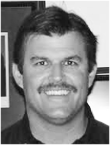
Mark Hartwig
That leaves only Fire Station 302, at 17288 Olive Street, with one paramedic engine, one brush engine and two paramedic ambulances, and Fire Station 304, at 15660 Eucalyptus Street, with one paramedic engine, one ladder truck, one paramedic ambulance, one water truck and one chief’s vehicle, still manned and running as city fire stations.
Station 301’s fire engine will be maintained as reserve capital equipment.
There is another fire station in Hesperia, Fire Station 305, located on Caliente Road, west of Interstate 15. While a city fire department paramedic unit, which uses the paramedic ambulance formerly staged out of Station 301, is housed at that station, the rest of the equipment and personnel there are intended to provide fire suppression for the Oak Hills area.
Indeed, it is the county fire division’s devotion of Fire Station 305 to firefighting service outside the city that fueled much of the citizen opposition to the passage of Measure F.
Fire Station 305, at 18,478 square feet, is the largest fire station in the county. The city of Hesperia covered $4.5 million of the $6.7 million cost of constructing the facility. Those positing arguments against Measure F maintained that Hesperia residents had already made financial sacrifices to beef up the fire department and that they had been abused by fire department management and fire department union leaders, who had made hefty political contributions to three of the city’s five council members and had received overly-generous salaries and benefits in return. It is the excessive personnel costs that are an outgrowth of the salaries, Measure F opponents propounded, that drained the fire division of the revenue needed to maintain appropriate staffing, equipment and facility levels.
Nine firefighter positions were cut out of Hesperia’s operations after the voters rejected Measure F. Those three fire captains, three engineers and three firefighter/paramedics were not laid off, but were transferred elsewhere in the county.
The closure of Fire Station 301, the city’s smallest, will result in savings of $752,000 in the department’s $9.2 million budget for the remainder of the 2011-12 fiscal year, which ends on June 30. The closure will net the district savings of $1.4 million in 2012-13.
Councilman Mike Leonard, who closed out his tenure as Hesperia mayor last month, said the closure of Fire Station 301 was “brought about by a $1.2 million shortfall in our budget. Our fire district basically survives on property tax, and assessed value is down by 28 percent. There’s the problem. When times were supposedly good, we had false highs and homes were assessed accordingly. Right now they are assessed way lower and that is what is hurting us. We have a $1.2 shortfall and we can’t continue to supplement the fire department out of the budget because we would be out of money in two or three years. We have to keep our whole city operating.”
Leonard, who was a Hesperia firefighter himself before the city closed out its own department to contract with the county for fire service, has an acute understanding of the issues related to fire safety in Hesperia.
“What we did is we had to cut nine position from the department,” Leonard said. “We left it up to the San Bernardino County fire chief as to what to do. He could have done layoffs. He could cut one paramedic off all the engines. He did not do that. Instead he chose to downstaff one engine completely. He shut down the engine at 301 and since the engine is no longer staffed, he shut down the station and moved one paramedic team to 305. They respond from there now. I am not going to say eliminating one engine is better than downstaffing three engines but something had to give and from a certain standpoint, it is better to have full teams than teams that are cut by fifty percent each. I think the biggest problem is medical response is now different. We have moved our main ambulance away from the center of town. That is going to increase response times. People have to be aware. If grandpa is experiencing chest pains, they have to be more alert and call for help at once.
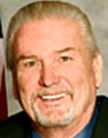
Mike Leonard
“We still have Station 302 on the east side of the city, where we have an engine and two paramedic ambulances,” Leonard continued. “There is station 22 in Spring Valley Lake, which is a county station, and it can cover our northeastern area with its engine. Station 305 in the southwest portion of the city is a combination county city station. We both kicked out money to build it. If there is a fire in the southern part of Hesperia, an engine from 305 is going to respond to it. If there is a fire in Oak Hills, the city of Hesperia is going to respond there. When I was with the city fire department, we responded to Oak Hills fires all the time. We still have auto-aid or mutual aid or whatever you want to call it. We don’t bill them and they don’t bill us. The fact is, Hesperia has never had the fire stations it needs. We have never been adequately staffed. And now the state has come in and further robbed our budget. I don’t know what we can do. The bottom line is dollars and cents. Property tax is down. We are not doing any development. What can you do? Apparently people have set the level of fire protection they want. I don’t blame people for not passing Measure F because I realize times are hard for everybody. It affects us all, the cut in fire protection. I hated to see Station 301 go. That was my career for so many years. I see what the fire guys are up against and I also see the other side of the problem. It is all dollars and cents.”
Assertions In Quincey Claim Create Conflict For Upland City Attorney
The wrongful termination claim filed against the city of Upland by former city manager Robb Quincey has put the Upland City Council in an awkward position that will result in the city finding someone other than city attorney Bill Curley to dispute the demands made in Quincey’s claim, the Sentinel has learned.

Bill Curley
The city council relied upon Curley for guidance in firing Quincey last year.
The city council on November 28 rejected Quincey’s claim notice seeking unlimited damages over his May 4 termination filed on his behalf by attorney Joseph Wohrle on November 1. In that claim, Quincey maintains the city breached his employment contract, violated the labor code and wrongfully terminated him. According to Wohrle, Quincey’s sacking was precipitated in large measure because of his efforts to rein in the legal billings made to the city by Curley and his law firm, Los Angeles-based Richards, Watson and Gershon.
Wohrle has six months from the November 28 rejection of that claim to file a lawsuit on Quincey’s behalf or otherwise seek arbitration on the matter as is specified in Quincey’s employment contract.Wohrle did just that last month, filing a petition with the San Bernardino County Superior Court at the West Valley Courthouse in Rancho Cucamonga for an arbitrator to be appointed. The court is to consider that request on February 14.
Whether the matter is heard by a arbitrator or in a trial, the consideration that Quincey is citing the activity of Curley and his firm as a central issue in the events leading up to his firing has resulted in a potential or real conflict-of-interest that cannot be laid to rest unless a lawyer or law firm independent of Richards, Watson & Gershon is brought in to advocate on behalf of the city.
Quincey, who was handpicked by then-mayor John Pomierski to serve as city manager in the aftermath of former city manager Mike Milhiser’s forced departure in 2005, had zoomed to a level of unprecedented authority in Upland while working for a city council dominated by Pomierski. But his fortunes shifted shortly after FBI and IRS agents on June 10, 2010 descended on City Hall and Pomierski’s home to serve search warrants in conjunction with a federal probe of political corruption in Upland’s municipal government, including charges that Pomierski, with the assistance of city staff, was shaking down developers and others with business proposals or permits pending before the city.
In the aftermath of those law enforcement raids, information about questionable actions involving Quincey circulated in Upland, including a report he had retaliated against a police sergeant, John Moore, who had investigated an alleged domestic disturbance incident involving the city manager, by preventing Moore from being promoted to lieutenant and that he then acted improperly to create a third captain position in the department and promoted one of the department’s lieutenants into that newly formed post to ultimately promote Moore after Moore began to prepare a legal complaint alleging retaliation.
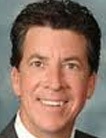
Robb Quincey
It was action Quincey took in the aftermath of Moore’s promotion in which he went beyond his legal authority as city manager to make maximum $25,000 disbursements without prior council authority to cover $50,000 of a $57,816 bill for services rendered to Moore by the law firm Lackie, Dammeier & McGill that formed the basis of the city council’s decision to fire him. In his claim, Quincey maintained the payments to the law firm were properly processed by the city’s finance department. In firing Quincey, the city also relied on information pertaining to Quincey’s relationship with former assistant finance director Ruby Carrillo, who was reportedly involved in providing and documenting the payments to Lackie, Dammeir & McGill. Carrillo is no longer employed by Upland.
The claim asserts Quincey’s contention that he was actually terminated because in the latter part of 2010 he had undertaken a critical evaluation of the billing practices of the city’s legal counsel, the law firm of Richards, Watson & Gershon, which employs city attorney Curley. “For years, claimant expressed concern to his staff and the city council about legal fees generated by Richards, Watson & Gerschon,” the claim states. “[D]uring October 2010 claimant engaged the city’s independent, third-party claims investigator, NovaPro, to audit one month of Richard, Watson & Gershon’s legal fees on two litigation matters it was handling for the city. The results of NovaPro’s audit shocked claimant. The NovaPro’s audit disclosed that on one litigation matter brought by the San Bernardino County Flood Control District against the City of Upland, Richards, Watson & Gershon racked up charges of $105,830 for September only. On this matter alone, just for this month, Richards, Watson & Gershon billed for the time of seven partners and employees who charged up to $348 per hour; the total hours billed were 367.3 at $288 per hour. The NovaPro audit also disclosed that on another litigation matter, People v. G3 Holistics, Inc., Richards, Watson & Gershon generated billings of $72.973.20, again, for September only. On this matter alone, just for this month, Richards, Watson & Gershon billed for the time of nine partners and employees who charged up to $348 per hour; the total hours billed were 269.5 at an average rate of $271 per hour. Notably again, just during September 2010, in the San Bernardino County Flood Control District matter, Richards, Watson & Gershon billed 22.5 hours for discussions amongst six partners and/or employees, at a cost of $6.079.60. During September 2010, in People vs. G3 Holistic, Inc., Richards, Watson & Gershon billed 20 hours for discussions amongst seven partners at a cost to the city of Upland of $5,954.80. The NovaPro auditors found that the city of Upland should not have been charged for conversations between Richards, Watson & Gershon, and it should have been charged a maximum hourly rate of $250 per hour per ICRMA [Independent Cities Risk Management Association] guidelines. Had Richards, Watson & Gershon merely refrained from charging for employee conversations and billed at the appropriate rate, the city of Upland would have saved $42,428.40 just during September 2010 and just on the two cases mentioned above.”
In his claim, Quincey furthermore maintains that “On December 2, 2010, claimant was provided with an additional report regarding the NovaPro audit by Mr. [Stephen] Dunn [who was then the city’s finance director and who has now succeeded Quincy as city manager]. The same day, claimant corresponded with the mayor and city council regarding his concerns over Richards, Watson & Gershon’s billings, which approached $250,000 per month, an enormous sum for a municipality of approximately 70,000 residents. Claimant also expressed concern over city attorney Curley’s recent actions toward claimant, Mr. Dunn and their support staff. On December 8, claimant advised the mayor and city council that a. City attorney Curley was requesting information from claimant’s staff without claimant’s consent; b. The information Curley was requesting involved, for example, a list of federal projects approved for the city of Upland; and c. The list of federal projects budgeted for the city of Upland that city attorney Curley was requesting was far beyond the scope of records sought by the federal grand jury subpoena served on the city of Upland on November 30, 2010. Claimant was concerned city attorney Curley was retaliating against claimant because of claimant’s audit of the billings of Richards, Watson & Gershon, and because of claimant’s refusal to execute any waiver of conflicts of interest that would allow Richards, Watson & Gershon to represent other local municipalities and/or water agencies of which the city of Upland was a member, in some instances, in litigation matters against the city of Upland. Such conflict waivers were requested by city attorney Curley and/or his law partner, James Markman.”
It thus appears that Curley and his firm will be a focus of the case Wohrle will be attempting to make on Quincey’s behalf. A platitude in the legal profession is that no one should ever represent himself or herself in a legal matter, as differing rights and privileges are extended to litigants and those who represent them. An oft-quoted witticism reflecting this principal is that “Anyone who serves as his own lawyer has a fool for a client.”
Experts in the realm of legal practice and legal ethics consulted by the Sentinel suggested that having Curley or anyone from Richards, Watson & Gershon representing the city could become problematic.
Stephen C. Yeazell, a professor at the UCLA School of Law who teaches theory of legal procedure and the dynamics of modern civil litigation, told the Sentinel that a lawyer or firm representing an entity in an arbitration or litigation in which the action of that lawyer or firm on behalf of the entity is an issue “would not necessarily be a violation of legal ethics, although it could be. I would think if you were the city you would want to get a second opinion from a disinterested source. I think it would be bad judgment by the city council not to check with someone else before going ahead with a defense.”
Yeazell’s colleague at the UCLA School of Law, Scott Cummings, who lectures on professional responsibility and legal ethics, told the Sentinel that Curley and Richard, Watson & Gershon’s circumstance vis-à-vis Quincey’s claim against Upland, “presents an interesting fact pattern which certainly tests whether the city attorney should be prohibited from representing the city because of a conflict. Without having read the complaint with great care, there doesn’t seem to be any current direct conflict that would disqualify the city attorney.”
Nevertheless, Cummings said, “One issue is that the city attorney might be called to testify against its own client, the city, and I suppose that, at some point, the city attorney could be named as a defendant itself. So a potential for conflict does exist if that is true.”
Cummings said that Curley and/or his firm could be permitted to represent Upland with regard to Quincey’s claim, but only if the city council fully understands the implications and consents to the arrangement and waives its reservations with regard to the potential conflict. “Their representation is fine, so long as the city is informed and agrees,” Cummings said.
Upland city manager Stephen Dunn told the Sentinel the city will not make that waiver or give its consent to Curley and Richards, Watson & Gershon representing it with regard to Quincey’s contention that he was wrongfully terminated.
“They will not be representing us because we look at them as a potential witness and we want to avoid any kind of conflict,” Dunn said of Curley and Richards, Watson & Gershon. “We are in the process of selecting an attorney to represent the city in this. We have not chosen an attorney yet and that is why Robb and his attorney have not gotten a response from us yet. Robb gave us until December 23 to come up with a list of arbitrators in response to a list of four arbitrators he wants to have us use. We did not meet that deadline because we are not going to go with Richards, Watson & Gershon or Bill Curley to represent us. After we select an attorney we will file the appropriate responses at that time.”
Repeated attempts by the Sentinel to reach Curley for comment were unsuccessful.
51 Drums Of Napalm Were Buried For Decades At Chino Airport
More than fifty drums of what is believed to have been napalm were buried at Chino Airport decades ago and remained there until they were discovered in 2010, documents obtained by the Sentinel show.
While the material represented a potential ecological hazard to the ground and groundwater beneath the airport, the prompt removal of the drums and their contents by county officials alleviated that danger and most or all of the contamination has been remediated, a state water resources official said.
On the afternoon of July 22, 2010, three buried drums were discovered at the airport during trenching for installation of a storm drain pipeline for a new Southern California Edison facility. The county of San Bernardino Department of Airports was notified and it contacted the county fire department’s hazardous materials division and TetraTech, an environmental assessment company under contract to the county. TetraTech retained Double Barrel, a commercial hazardous materials emergency responder, to assess the situation.
Additional drums were discovered that day and by sunset on July 22, 2010, eight buried drums had been removed from the excavation. The drums did not have lids and contained soil on top of a tan resinous material. The contents of the drums were field tested using a chemical identification kit and determined to be a non-explosive, flammable, non-corrosive, organic resin-type material. The eight drums were placed in a roll-off bin. Two more drums were visible in the excavation, but were left in place due to limited remaining daylight. Samples were collected of the soil, the material in the drums, and the liquid in one of the drums. The samples were delivered to Microbac Laboratory in Riverside, and analyzed for volatile organic compounds, semi-yolatile organic compounds, total petroleum hydrocarbons carbon range, polynuclear aromatic hydrocarbons, flashpoint and their content of antimony, arsenic, barium, beryllium, cadmium, chromium, cobalt, copper, lead, mercury, molybdenum, nickel, selenium, silver, thallium, vanadium, and zinc. The analytical results indicated that high concentrations of benzene were present in all of the samples. Benzene concentrations ranging from 1,600 milligrams/kilogram (mg/kg) to 6,800 mg/kg were detected in the resinous material in the drums. The benzene concentration in the soil sample was 170 mg/kg. Also detected were toluene, ethylbenzene, xylene, styrene, 1,2,4-trimethylbenzene, and naphthalene. The tan resinous material appeared to be a jellied fuel mixture.
On July 28, 2010, a geophysical survey was conducted in an effort to locate any additional buried drums. During the survey, anomalies were found in several areas to the east and west of the original excavation, and were marked as possible targets for further investigation. TetraTech formulated a removal strategy and submitted it to the California Regional Water Quality Control Board office in Riverside on August 9, 2010 and the staff for the board provided same-day verbal approval of that plan. Excavation and removal of the remaining drums was conducted between August 16 and August 25, 2010. A total of 51 drums, several aluminum canisters and pieces of wood were removed from the excavation and placed into six vapor tight closed top roll-offbins. Excavated soil without obvious contamination was stockpiled and additional soil was excavated from beneath the drums, placed in stockpiles and covered. The resulting excavation measured approximately 100 feet from east to west and 20 feet from north to south. The bottom of the excavation varied from 10 to 15 feet below ground surface.
Patricia Hannon, a staff member of the California Regional Water Quality Control Board, observed the collection of the final confirmation soil samples on August 26, 2010. Personnel from the U.S. Environmental Protection Agency and the California Department of Toxic Substances Control were also present. The samples were submitted to a California certified laboratory for analysis. The analytical results for the soil samples showed very low concentrations of benzene, ethylbenzene, xylene, trimethylbenzene, naphthalene, gasoline, diesel and motor oil.
The analytical results were reviewed by Hannon and discussed by phone with TetraTech employees Ben Wienk and David Bertolacci on August 31, 2010. Hannon informed TetraTech that based on the results of the confirmation samples, no further sampling of the excavation was needed and the excavation could be backfilled.
TetraTech’s analysis of the soil samples for volatile organic compounds, semi-volatile organic compounds, and total petroleum hydrocarbons showed concentrations of benzene up to 17.3 I-Ig/kg, ethylbenzene up to 3.2 I-Ig/kg, toluene up to 17.2 I-Ig/kg, xylene up to 7.54 I-Ig/kg, total petroleum hydrocarbons diesel range up to 32.2 mg/kg, and total petroleum hydrocarbons motor oil range up to 149 mg/kg. 1,2,4-trimethylbenzene was detected in only one sample at 5.91 pg/kg. Based on the analytical results of the stockpiled soil, TetraTech determined that the soil was non-hazardous and it was transported to TPS Technologies in Adelanto, California for disposal on August 20 and 21, 2010.
Based on the high benzene concentrations detected in the contents of the drums, the waste materials placed in the roll-off-bins were classified as hazardous. On October 11, 2010, the sealed bins, containing waste product, drums and debris, were transported and disposed of at Rineco in Benton, Arkansas.
Kurt Bechtold, the executive director at the Riverside office of the California Regional Water Quality Control Board for the Santa Ana Region, told the Sentinel, “Our staff oversaw and verified the adequacy of the clean-up. We were satisfied the county had done a thorough job of cleaning up. The material that was found in the drums was never conclusively identified. It was a jellied petroleum substance consistent with napalm. There was a chemical analysis to figure out what was in it and there were a number of petroleum compounds present in the material. The surrounding soil was removed. It appeared that the contamination of the soil was fairly minimal. The material in the drums was not particularly fluid. It was described as resinous in nature, which meant that was not particularly mobile in the environment. Nearly all of the material appeared to be contained within the drums. There was some amount of contamination in the vicinity of drums but the contaminated soil was removed with the drums.”
The county had acted responsibly with regard to the circumstance, Berchtold said. “We are satisfied the county has adequately investigated any potential source on the airport property and the county is adequately addressing the contamination found to date,” he said.
Chino Airport is an asset of the county overseen by the county’s airports division. Another problem there consists of a plume of perchloroethylene (PCE) and trichloroethene (TCE) that originated at Chino Airport migrating south-southwest from the western end of the airport property. The plume has reached a point about 7,500 feet from the airport, just south of Bickmore Avenue. There are 28 permanent wells in the area and 33 additional sample ground water collection probes that have monitored the extent of contamination and its movement. The highest level of TCE detected is 420 parts per billion. The allowable California safe drinking water standard is 5.0 parts of TCE per billion, such that some of the water in the basin is testing at a level that is 84 times higher than is considered safe.
There are multiple points within the plume where readings of over 100 parts per billion have been encountered.
Some of the plume is being captured by a desalter project that has wells within the area of the plume. The desalter plant was built to capture water and remove the high concentration of salt and nitrates present in the water as a consequence of the significant number of dairies in the area before the water reaches the Santa Ana River. The plant also pulls in TCE, so a portion of the TCE is not making it into the river but the desalter plant is inadequate to the task of effectuating the whole clean-up. The county is working with TetraTech in an effort to devise a plan to remediate the TCE and PCE contamination. That plan has yet to be effectuated.
Berchthold said the TCE and PCE contamination, which is likely to have originated as a consequence of the use of those solvents on aircraft at the airport, is unrelated to the drums of what appears to be napalm that were buried at the airport.
St. Mary Makes Bid For VVCH
VICTORVILLE—St. Mary Medical Center has made a highly competitive bid for Victor Valley Community Hospital, reducing considerably the likelihood that the bankrupt Victorville hospital, which for the last three months has been operating on an infusion of funds from Dr. Prem Reddy’s Prime Healthcare, Incorporated, will not be absorbed into Reddy’s portfolio.
St. Mary’s parent company, St. Joseph Health Systems, offered to purchase Victor Valley Community Hospital for $35 million and then pump an additional $25 million into the faltering hospital to make capital improvements over the next five years.
The St. Joseph/St. Mary offer brings to a total of three the number of health care entities willing to assume either sponsorship or ownership, control and operation of non-profit Victor Valley Community Hospital.

Alan Garrett
In 2010, Victor Valley Community Hospital, staggering under more than $20 million in debt, filed for Chapter 11 bankruptcy protection and the 101-bed hospital was put on the auction block. KPC Global Care, owned by Dr. Kali P. Chaudhuri, outbid Prime Healthcare, tendering a $37 million offer in November 2010 that was $2 million above Reddy’s offer. But after KPC obtained the state attorney general’s approval for the takeover, it failed to finalize the acquisition because it was not able to line up financing and that deal fell apart in May 2011. Subsequently, a federal bankruptcy court judge approved an agreement allowing the non-profit arm of Reddy’s for-profit venture, known as Prime Healthcare Service Foundation, to purchase the hospital for $35 million.
On September 20, however, the state attorney general’s office intervened, blocking Reddy’s plan. A major consideration was that Victor Valley Community was founded and set up as a non-profit institution. The attorney general’s office had moved to ensure that the High Desert preserve at least one non-profit hospital in an area with a multiplicity of for-profit medical centers, including one already owned by Reddy, Desert Valley Hospital.
“We have concluded that this proposed sale is not in the public interest and will likely create a significant effect on the availability or accessibility of health care services to the affected community,” acting chief deputy attorney general Michael Troncoso said at that time.
Nevertheless, with Victor Valley Community teetering on the brink of financial collapse, Reddy on October 14, 2011 proffered capital in the form of loans and a consulting arrangement to prevent the hospital from having to close its doors. That assistance was codified in the form of what was called a “post-petition revolving credit and security agreement between Victor Valley Community Hospital as borrower and Prime Healthcare Management, Inc. as lender.”
The California Attorney General’s office redoubled its effort to prevent that agreement from being actuated and filed on October 28 for a temporary restraining order to prevent the hospital from entering into a financing plan and consulting arrangement with Prime Healthcare. On October 31, Superior Court Judge Steve Malone tentatively denied the attorney general’s request for the restraining order. In November, Malone again denied the state attorney general office’s effort to block the $6 million financing and consulting agreement.
The scenario was made more complicated when, also in November, KPC Global reasserted its interest in acquiring Victor Valley Community, filing legal and financial documents to create an entity known as Victor Valley Hospital Acquisition Inc., and indicating it stood ready to put up $31.1 million toward that end. Victor Valley Community Hospital officials were somewhat resistant to the KPC Global offer at that point, and were seemingly more favorably disposed to working with Prime Healthcare.
The St. Joseph/St. Mary bid was provided to the Victor Valley Community Hospital board at its January 9 meeting.
Immediately, the Victor Valley Community Hospital board directed its legal team to open up a dialogue with regard to a sale. The board’s willingness to begin negotiations with St. Joseph/St. Mary demonstrated that Reddy’s grip on Victor Valley Community was tenuous, at best.
A complicating factor now facing Alan Garrett, the CEO of St. Mary Hospital in Apple Valley, is how much of the purchase price will go to Reddy.

Prem Reddy
According to the complaint for injunctive relief filed by the attorney general on October 28, “The consulting agreement transfers control of a material amount of the operations of VVCH [Victor Valley Community Hospital] to Prime Healthcare management. The loan agreement conveys and transfers a material amount of VVCH’s assets to Prime, Inc. By entering into this loan agreement without the attorney general’s consent, VVCH will incur additional administrative costs by $6 million, thereby increasing the amount of cash necessary for other potential buyers to purchase VVCH. By increasing VVCH’s debt, the parties will be manipulating the market value of the hospital. The loan agreement also subjects VVCH to default. The loan agreement provides that if VVCH subsequently defaults on the loan agreement, all of Prime Inc.’s loan must be paid in full, in cash immediately.”
It thus appears that at least $6 million of the agreed-upon purchase price will go to Prime Healtcare.
Victor Valley Community Hospital officials may be relieved that another viable entity has entered the picture. In recent months, Reddy and Prime Healthcare have been dogged with accusations of improper billing practices.
The Sentinel has learned that the FBI, at the direction of the U.S. Attorney’s Office, is looking into reports that Prime Healthcare facilities consistently billed Medicare for treating elderly patients with specific medical issues at a frequency far beyond the billing patterns of several other comparable hospitals.
One unconfirmed report was that the FBI investigation is touching upon previous accusations leveled at Prime Healthcare with regard to Medi-Cal and Medicare billing irregularities that were investigated by the state. That probe was closed out with no action when investigators failed to turn up sufficient evidence to warrant a prosecution or further action. According to that report, the referral to the U.S. Attorney’s Office originated with the California Attorney General’s Office.
Publicly obtained documents show that Prime Healthcare facilities have a pattern of billing for rare and serious medical conditions that typically generate bonus payments to the hospital. Elderly patients admitted to three Prime Healthcare facilities – Chino Valley Medical Center, Alvarado Medical Center in San Diego and Shasta Regional Medical Center – are listed as suffering from medical conditions such as acute heart failure, kwashiorkor (a form of severe malnutrition), accelerated hypertension, and septicemia at rates that are far beyond the statistical average at hospitals in California.
Medicare payment formulas remunerate doctors and medical facilities with more substantial payments for treating more serious conditions.
Fraudulently inflating Medicare billings by misrepresenting the gravity of a patient’s medical condition, known as “upcoding” in the medical business, is prohibited under federal statute. Prime Healthcare maintains it does not engage in upcoding and that diagnosing patient conditions is carried out by medical doctors and is not a function of the billing department.
While there are reports that the FBI has interested itself in allegations of upcoding at Prime Healthcare facilities, in October the California Department of Public Health closed out an investigation into whether Prime Healthcare Services had artificially inflated reports of its documentation of bloodstream infections, concluding there was insufficient evidence to proceed with a criminal or administrative case against the hospital chain.
Paul Cook Forsaking Board Bid For Congressional Run
Assemblyman Paul Cook (R-Yucca Valley), who in September said he would run for Third District San Bernardino County supervisor this year, will instead seek the Republican nomination in the newly created 8th Congressional District.
Neil Derry is the incumbent in the Third District, which includes Loma Linda, a portion of San Bernardino, Highland, Redlands, Mentone, Yucaipa, Yucca Valley, Twentynine Palms, Big Bear, and Barstow. Cook’s departure leaves Derry and James Ramos, Chairman of the San Manuel Band of Mission Indians, as the only declared candidates in the Third District race.
Cook, of Yucca Valley, currently represents the 65th Assembly District in Sacramento. He was elected to the Assembly in 2006 and will be termed out of office next year.

Paul Cook
Cook served 26 years in the US Marine Corps, including tours of duty in Vietnam where he earned a Bronze Star for combat bravery and two Purple Hearts. He ended his military career as an infantry officer stationed at the Twentynine Palms Marine Base before going on to serve as a council member and mayor in Yucca Valley. He also taught history and political science at Copper Mountain College and public administration at Cal State San Bernardino.
One of Cook’s longtime political allies, former Yucca Valley mayor Chad Mayes, who is now the chief of staff to Second District supervisor Janice Rutherford, has signed on as Cook’s campaign manager.
Local Governments Scramble To Create Successors To RDAs
A fortnight after the California Supreme Court ruled that the state of California has the authority to dissolve the redevelopment agencies maintained by counties and cities throughout the state, San Bernardino County and local municipalities have begun the process of designating themselves as the successors to their respective redevelopment agencies.
Redevelopment agencies are, or were, adjuncts to local government intended to eliminate blight by encouraging economic development. Redevelopment agencies were empowered to issue bonds and use the proceeds from the sale of those bonds to create infrastructure or undertake improvement projects within a designated redevelopment project area. That infrastructure was intended to spur development and eradicate blight, thereby increasing the value of the property in and around the project area. The increase in property tax realized as a consequence of the improvements would then theoretically be utilized to debt service the bonds, i.e., make annual payments over a period of time – usually 20 to 30 years – to the bondholders.
Last year, governor Jerry Brown induced the state legislature to pass a law that called for the elimination of redevelopment agencies and for money normally passed through to them by the state to be utilized for education and law enforcement funding.
On January 3, the Chino City Council adopted a resolution designating the city as the successor agency to the redevelopment agency.
That reorganization will have an impact on the city’s cultural arts center undertaking, which was to include a 350-seat theater. The council early last year earmarked $990,000 for a design contract that went to WLC Architects of Rancho Cucamonga. Those plans will now be abandoned or lie fallow until some alternate means of financing the project can be had. Also, plans for the completion of Ayala Park have been put on hold.
The city was also using roughly $2 million a year to cover the salaries of municipal employees who were reported as performing work related to the redevelopment agency. It is unclear how the city will continue to cover the cost of their salaries and benefits. One option is for the city to lay off seven to 13 employees.
On January 9, the Yucaipa City Council, with councilwoman Denise Hoyt absent, voted 4-0 to dissolve the city’s redevelopment agency and have the city inherit the agency’s debts and assets.
Yucaipa city manager Ray Casey told the council that timely action on the council’s part to comply with the new law will allow the city to recover $250,000 in administrative costs related to the phasing out of redevelopment.
California’s cities have until today, January 13, to declare themselves as the successor agency to their redevelopment agency or allow another agency such as the county to oversee bond payments, administer programs begun before the redevelopment abolishment law went into effect and dispose of properties acquired by the agency.
In Yucaipa’s case, it has $5.8 million tied up in the Uptown Streetscape program to recontour a half-mile portion of Yucaipa Boulevard and make improvements designed to benefit businesses in the area.
On January 10, the San Bernardino County Board of Supervisors voted to have the county become the successor agency and the successor housing agency for the county redevelopment agency and become the successor agency and the successor housing agency for any redevelopment agency of any city or joint powers authority within the county that chooses not to elect to become the successor agency of its respective redevelopment agency.
According to Mary Jane Olhasso, the administrator of the county’s economic development agency, the county, like Yucaipa, stands to gain “at least $250,000 for the express purpose of administration of the successor agency” by taking the action it did. Olhasso said, “At a future board meeting, the board will consider establishing a new budget, transferring all resources the successor agency is allowed to retain, approve semi-annual obligations schedules, and direct staff to transfer all real estate assets to the new entity. The successor agency is authorized to continue to pay and meet the enforceable obligations of each former redevelopment agency. The successor agency may retain the housing assets and functions previously performed by the redevelopment agency.”
On the evening of January 10, the Loma Linda City Council adopted a resolution activating the Housing Authority of the City of Loma Linda and a second resolution to have the city of Loma Linda serve as the successor agency to the Loma Linda Redevelopment Agency. By that action, the housing authority will retain the housing assets and function previously performed by the redevelopment agency.
In a specially-called meeting held at the Ontario Convention Center on January 11, the Ontario City Council pronounced itself as the successor agency to the Ontario Redevelopment Agency and transferred the agency’s housing assets and functions to the Ontario Housing Authority.
In a number of cities throughout the county, officials were rushing this week to meet the January 13 deadline. Upland city attorney Bill Curley, whose law firm Richards, Watson & Gershon represents more than two dozen municipalities in Southern California, was booked solid on Monday, Tuesday and Wednesday with meetings related to creating successor entities for redevelopment agencies.
Four In Office Without Standing For Election
Four individuals have been appointed to elective offices in the county without being elected.
The board of supervisors this week approved county registrar of voters Michael Scarpello’s recommendation to designate the four to positions as directors of the Barstow Heights Community Services District, the Apple Valley Foothill County Water District, and the Yucca Valley Airport District.
Those posts were up for election in the August 30, 2011 and November 8, 2011 elections, but an inadequate number of persons ran for those offices.
Elections Code Section 10515(b) provides that if no person has filed to vie for any office, the supervising authority, which in these cases is the board of supervisors, shall appoint any person to the office who is qualified on the date when the election would have been held, and those appointed shall serve exactly as if elected at a general district election for the office.
Following discussions between members of the affected governing districts and their respective supervisorial district staffs, Daryl R. Schendel was appointed to the Barstow Heights Community Services District; Sharon Silva-Houts was appointed to the Apple Valley Foothill County Water District; Timothy W. Lewis and Irving Craig were appointed to the Yucca Valley Airport District.
The Barstow Heights Community Services District and the Yucca Valley Airport District are in the Third District; the Apple Valley Foothill County Water District lies within the First District.
LA County Pays SB County $108,000 For Two 2010 Lost Hiker Search Efforts
In accordance with a rarely invoked section of the state’s Government Code, the county of Los Angeles this week paid San Bernardino County over $108,000 for the costs of carrying out two separate searches for Los Angeles County residents who became lost in remote areas in 2010.
On Tuesday the San Bernardino County Board of Supervisors accepted as a “full release and settlement of all claims” from the county of Los Angeles in the amount of $43,664.39, for the reimbursement of search and rescue costs for Los Angeles County resident Edward Rosenthal, and further accepted a “full release and settlement of all claims” from the county of Los Angeles, in the amount of $64,609.96, for the reimbursement of search and rescue costs for Los Angeles County resident Michelle Yu.
San Bernardino County Code Section 12.0511 gives the sheriff the authority to search for and rescue persons who are lost or are in danger of their lives within or in the immediate vicinity of the county. Government Code Section 26614.5 allows the county of residence to pay the county conducting the search and rescue for expenses in excess of $100.
From September 27 to September 30, 2010, the San Bernardino County sheriff’s department conducted a search and rescue operation for Los Angeles County resident Edward Rosenthal, then-64 of Culver City, who went missing during a hike near Black Rock Campground inside Joshua Tree National Park on September 24. He was found alive on September 30 and airlifted to a hospital.
San Bernardino County made a claim against Los Angeles County for reimbursement totaling $43,764.39, including labor ($15,747.39), vehicle mileage ($297), and aircraft services ($27,720). The Government Code only authorizes reimbursement of expenses that exceed $100; therefore the net claim against the county of Los Angeles was $43,664.39.
From December 5 through December 8, 2010, the sheriff’s department conducted a search and rescue operation for Los Angeles County resident Michelle Yu, 49 of Venice, who became lost while attempting to reach Mt. Baldy peak following the Sierra Hut Trail. The rescue operation was unsuccessful and Yu’s body was found at the 7,900 foot level in very steep and icy terrain.
San Bernardino County’s gross claim for reimbursement totaled $64,709.96, including labor ($17,677.46), vehicle mileage ($952.50), and aircraft services ($46,080). The net claim to the county of Los Angeles was $64,609.96.
Claims for searches for out-of-county residents are generally handled internally through the sheriff’s department, in conjunction with risk management and county counsel. Given the size of the claims relating to the Rosenthal and Yu rescue efforts, Los Angeles County processed them as tort claims, thus requiring approval from the board of supervisors before payment could be made.