
TWENTYNINE PALMS—A divided city council this month rejected Robertson’s Ready Mix’s request for the annexation of 150 acres into the city and a zone change on 37.5 of those acres.
Robertson’s Ready Mix wants to construct a batch plant on a portion of the 150 acres the company is in the process of acquiring at the northeast corner of Utah Trail and Valle Vista Road. The company had requested that the property, which is currently unincorporated county land, be annexed by Twentynine Palms. In processing Robertson’s request, the Local Agency Formation Commission (LAFCO) requested that the city change its current designated zoning in the area, which lies in Twentynine Palms’ sphere of influence, from rural residential to industrial.
Robertson’s had initially sought to have all 150 acres pre-zoned as industrial, but limited that request to the 37.5 acres needed to accommodate the batch plant, after coming before the planning commission in January with regard to the project proposal. The planning commission, after hearing protests about the plant and the proposed zone change, recommended that the project and zone change request be downscaled.
The council voted on February 14 to respond to Robertson’s request relayed though LAFCO by voting to pre-zone the entire property as rural residential, leaving the county’s current land designation in place. Currently, the land is zoned for residential use with a density of one house per five acres.
According to Robertson’s spokeswoman, Christine Goeyvaerts, the operation of the batch plant will not intrude on surrounding properties and the company will sprinkle water on the property to anchor the dirt and prevent dust from being stirred up. Goeyvaerts said the company was not trying to do an end run on Twentynine Palms by obtaining an operating permit through the county and was instead seeking to annex the property into the city first, so that local planning authority could be brought to bear on the project. She said there were numerous advantages to having the city annex the property.
Goeyvaerts said that her company had discussions with the California Department of Toxic Substances Control with regard to the batch plant operation and that Robertson’s would comply with the Department of Toxic Substance Control’s guidelines for the use of materials and chemicals at the plant and meet standards imposed by the Air Quality Management District.
“Annexing the property into the city of Twentynine Palms will allow us to be part of the community,” Goeyvaerts said. “We plan to be in the community for a long time.”
Local residents, however, were skittish over the close proximity of the proposed industrial operation to residential uses.
David Blake, a homeowner who lives roughly a half mile from the proposed batch plant on a homestead established by his father in 1948, said the plant would be “too close to the residential area. They’re going to choke the life out of us there. This [plant] is what we’re going to have to be looking at for the rest of our lives.”
Lloyd Johnson protested that he was not given adequate notice by Robertson’s Ready Mix nor by the county of a zone change request or the proposal for a concrete batch plant on the property. He questioned whether the batch plant would remain contained on the 37.5 acres and suggested the plant would be expanded in the future. “Why do they want to purchase so much more property than is necessary for the considered use?” Johnson asked.
Councilmen Joel Klink and Jay Corbin said it would be more desirable for Robertson’s to locate its batch plant in the city’s currently designated industrial area, which is well insulated from residences. Klink said putting the batch plant near the corner of Utah Trail and Valle Vista Road was “spot zoning. I just don’t feel it’s the right position out there at this time.”
Corbin said the proposal was inconsistent with the city’s general plan, which calls for industrial uses to be separated from residential land uses. “I don’t know how we can approve your project and say we’re complying with the general plan The residents who spoke here tonight bought land in a residential area. They had no reasonable expectation we would bring industrial land or an industrial park into their neighborhood.”
City manager Richard Warne told the council that even though it might recommend to the county that the current residential zoning on the property be maintained, if the city chose not to annex the property the ultimate land use authority would remain with the county and the county could approve the batch plant.
On a 3-2 vote, with mayor John Cole and Councilman Danny Mintz dissenting, the council denied the general plan amendment request.
Mosque Approval Under Appeal
Residents of the unincorporated county area between Montclair and Chino on the north and south and Ontario and the county line/Pomona City Limits on the east and west have appealed the county planning commission’s approval of a mosque in their neighborhood to the county board of supervisors.
On December 8, the San Bernardino County Planning Commission granted a conditional use permit to build the Al Nur Mosque on a 1.54-acre parcel at 4797 W. Phillips Boulevard, which is approximately 330 feet east of Yorba Avenue. The 7,512 square foot religious center would have a maximum occupancy of 262 people.
While some neighbors oppose the plan, certain members of the congregation at the Church of Jesus Christ of Latter-day Saints located at 4321 Philadelphia Street have gone on record as supporting the mosque, citing the principal of “Muslim and Mormon cooperation.”
Area resident Jim Weedell said he believes the site, which lies in the midst of residential and residential/agricultural uses, is not suitable for a mosque. “This should be put in a place where it will work,” he said. “The lot is too small and the road there is not wide enough.” Weedell said that the mosque will be out of place because “No one in the neighborhood is Muslim.”
Other residents say they are concerned that the land will not accommodate a large influx of visitors and that this will overwhelm the neighborhood during religious services that normally take place between noon and 3 p.m. on Fridays. The land there does not have a sewer system and homes in the area utilize cesspools and septic systems.
The project proponents will install a 2,000-gallon septic tank, which they maintain will handle a capacity crowd of worshippers.
Project supporters say their opponents are gripped with “Islamaphobia.”
Rashid Ahmed, chairman of the Al-Nur Islamic Center, spoke passionately about the need for the mosque.
Heidi Duron is the county land use specialist who vetted the project.
The board of supervisors will hear the appeal at the February 28 board meeting.
Class Action Suit Filed Against Redflex Over Red Light Cameras
Attorney Robert Conaway earlier this month filed a class-action lawsuit against Victorville and its red-light camera program, alleging due process rights violations. The suit seeks the recovery of fines paid and millions of dollars in damages.
Conaway, who is based in Barstow, filed the lawsuit in Victorville Superior Court February 14 on behalf of lead client Michael Curran and others who received red-light tickets issued as a consequence of the Redflex Traffic Systems camera devices mounted in Victorville.
According to the suit, in order for a peace officer to issue a citation for a misdemeanor or infraction, the offense must occur in that officer’s presence. Removing that requirement, as does the arrangement in Victorville, violates the California Penal Code, according to Conaway. Declarations for the red-light camera citations from the Redflex system issued in Victorville are certified under “information and belief,” which the lawsuit maintains is akin to hearsay, not a police officer’s personal knowledge.
The officer who issued Curran the citation, deputy Barbara Hill, did not contemporaneously witness the alleged red light violation, rendering the ticket Curran received invalid, according to Conaway. In addition, according to the lawsuit, the proof of service was signed by a Redflex computer operator and was bulk mailed, further rendering the ticket invalid.
Utilizing a computer controlled camera to initiate and carry out the citation process, Conaway asserts, deprives defendants of the opportunity to confront their accuser in court, a guarantee granted all citizens under the Bill of Rights. Beyond the Constitutional issue, Conaway contends Australia-based Redflex violated the California Business and Professions Code Sec. 17200 by engaging in unfair business practices that unjustly enriched the company. Moreover, according to Conaway, Redflex should be held accountable under the product liability doctrine because of the flaws in the design and operation of its system.
The suit seeks $9 million in damages and more in punitive damages for the roughly 5,000 motorists impacted by the system.
Redflex, which has a corporate office for the United States in Phoenix, Arizona, maintains that its processes are legal and constitutional and contribute to public safety. In a corporate statement, Redflex said “There’s no good excuse for running red lights.”
In March 2011, the Victorville city council agreed to look into the possibility of terminating its contract with Redflex but by July had concluded that penalties written into the contract for early termination were too expensive and that it would be best for the city to keep the cameras in place until the 2014 expiration of the contract with the Australian company.
Other cities in San Bernardino County have likewise expressed a desire to do away with the camera ticketing systems or have done so.
The city of San Bernardino last year considered shutting down its system but did not do so because of the expense in terminating it and instead its city council voted 5-2 in September to allow the red-light cameras operated by a different Arizona-based concern, American Traffic Solutions, to remain in place until 2014.
The Grand Terrace city council voted in July to discontinue its contract with Redflex when it expires in August after the program ended up costing the city $72,204.
The city of Loma Linda bailed on its contract with Redflex in December 2010.
Upland nearly three years ago ended its red light camera program, terminating its contract with Redflex.
The city of Highland has bucked that trend, and last April its city council in a 4-1 vote extended its contract with Redflex until later this year.
Needles City Council Unwilling To Take Out Loan For Hospital
NEEDLES–The Needles City Council last week rejected the hospital board of trustees’ request to have the city guarantee a $1 million loan for Colorado River Medical Center.
The hospital board of trustees, at the behest of former interim chief executive officer Jon Freeberg, voted on January 25 to ask the city to make the loan to tide the hospital over until the medical center’s sale to the non-profit Needles Hospital Inc. is completed.
The city council in January voted to sell the Colorado River Medical Center and the 5.71 acres it sits upon to Needles Hospital Inc. for $3,587,002. For that amount, Needles Hospital Inc. will purchase most assets and liabilities of the hospital, including accounts receivable, operating inventory in place, outstanding bills and unemployment obligations. Unassumed debts will be deducted from the purchase price but the city is to keep any cash in the hospital’s coffers at the time of sale.
On January 27, the city, represented by Mayor Ed Paget, and the board of hospital trustees, represented by chairman Jeff Williams, and Needles Hospital, Inc, represented by Rebecca Valentine, signed a purchase agreement, opening escrow. Needles Hospital Inc. has until April 26 to show proof of funding for the purchase of the hospital and until May 26 to close escrow.
Interim hospital chief executive officer Jon Freeberg’ wanted the city to seek the loan through United Health Care to guarantee that the hospital remains open until Needles Hospital Inc. can take over operations and so that the hospital can come into compliance with federal requirements related to record keeping, billing and patient management at the hospital.
The city took on ownership of the Colorado River Medical Center in April 2008 after Brentwood, Tennessee-based Lifepoint Hospitals, a for-profit corporation, embarked on an effort to move the institution’s equipment and personnel to another hospital it owned in Arizona, roughly 12 miles from Needles.
Because of long-running inadequate billing practices, including failures to invoice Medicare and Medi-Cal as well as insurance companies and patients in a timely fashion, the hospital has lost money, representing a financial liability to the city. The city created a board of trustees to oversee the hospital, and that panel, together with the city council, came to a consensus that spinning the facility off to an independent operator is the best solution for ensuring that the community has adequate medical care without soaking the taxpayers.
In June 2010, Needles voters passed Measure Q, which was intended to keep the hospital’s doors open and absolve the city of the financial burden of subsidizing the facility. Measure Q mandated that a non-profit entity be selected to run the hospital.
Freeberg was pressing for the loan to be taken out at this point because, he said, by obtaining the loan and acquiring computerized record keeping, billing and patient management systems, the hospital could qualify for reimbursement of up to $750,000 for that equipment and software. He said the hospital must be compliant with federal standards in record keeping and billing by 2014. The council members, however, were reluctant to encumber the city any further with regard to the hospital’s operations. Councilman Jim Lopez pointed out that the hospital will no longer be owned by the city in 2014 and that the city had agreed to sell the Colorado River Medical Center to Needles Hospital Inc. to wash its hands of the financial liability the hospital represents.
Upon councilman Tony Frazier’s motion, the council at its February 14 meeting voted unanimously to not seek or sign for the loan.
Upland’s Lawyer Fees Now Exceed Amount Of Settlement Offer
The city of Upland has now expended more in legal fees fighting a lawsuit brought against it by the county of San Bernardino over the Colonies Development than it would have paid if it had accepted a settlement offer on that suit previously made by the county.
Available city documents show Upland has paid its law firm, Richards Watson & Gershon, at least $2.2 million for legal work relating to the suit the county of San Bernardino brought against Upland. More recent billings by the firm, the precise amount of which have not yet been made publicly available, likely push that total to more than $2.4 million. County officials more than three years ago indicated they would have been willing to settle the case for $2 million.
At the basis of the lawsuit is the Colonies at San Antonio residential and Colonies Crossroads commercial developments in northeast Upland undertaken by the Colonies Partners, which the city gave final approval for in 2002. In 2002, the Colonies Partners sued the county after the county refused to pay for improvements necessitated by the extension of the 210 Freeway and the county’s construction of a flood control appurtenance for the city of Upland, known as the 20th Street storm drain. The issues were complicated by Caltrans’ construction of the 210 Freeway across roughly 40 acres of the 460 acres of the Colonies Partners’ property, for which the Colonies Partners were paid $17 million in severance damages.
The county and its flood control district filed a lawsuit in 2004 against the city, the county’s transportation agency, known as San Bernardino Associated Governments (SANBAG) and Caltrans, the state department of highways, seeking partial reimbursement for a possible future settlement.
In November 2006, a 3-2 vote of the county board of supervisors conferred a $102 million payment on the Colonies Partners as a settlement of the lawsuit. The settlement was supported by supervisor Gary Ovitt and then-supervisors Bill Postmus and Paul Biane. The county at that point moved ahead with the litigation against Upland, SANBAG and Caltrans, maintaining they shared responsibility for the freeway plan and the re-routing of storm water runoff onto the Colonies property that had created the circumstances underlying the original lawsuit.
The Sentinel has learned that nearly four years ago the county and its flood control district offered to drop all claims against the city for $2 million.
It is unclear how thoroughly that offer was shared with the Upland City Council. Current mayor Ray Musser, who was then a city council member, said he was never told of the $2 million settlement overture. At that time, then-mayor John Pomierski often gave directives to city staff without the full consent of the city council. City attorney Bill Curley was unavailable for comment.
Upland Councilman Ken Willis previously told the Sentinel that based upon the briefings he and the council had received from Curley, who is an employee of Richards, Watson & Gershon, he did not believe the county had a realistic case against Upland and the county had no legal basis to have Upland share in the cost of the $102 million settlement with the Colonies Partners.
The county’s lawsuit against Upland, SANBAG and Caltrans was removed to San Diego County Superior Court and the defendants made a motion in 2009 to have the case dismissed. But on April 3, 2009 San Diego County Superior Court Judge Jay M. Bloom ruled that the county and flood control district’s complaint “adequately alleges facts to support the causes of action” and the plaintiffs could proceed with the effort to obtain at least partial reimbursement of the $102 million.
Subsequently, the state attorney general’s office and the district attorney’s office brought charges against Postmus, Biane and Ovitt’s chief of staff at the time of the settlement, Mark Kirk, along with one of the managing principals of the Colonies Partners, Jeff Burum, alleging the $102 settlement was tainted by extortion, bribery and conspiracy.
Last year, Pomierski, who was mayor when the Colonies projects came to fruition, was indicted by a federal grand jury and charged with political corruption, including extorting individuals with business before the city of Upland. He has resigned from office.
The Sentinel has learned that around the time the county made the offer to settle the portion of the lawsuit against Upland for $2 million, Burum offered to split the cost with the city and put up $1 million of that settlement amount.
After the criminal charges were filed against Postmus, Biane, Kirk and Burum, the city made another motion to have the county’s case delayed pending the outcome of the criminal cases. Bloom denied that motion.
An earlier legal strategy contemplated by Richards, Watson & Gershon which was based upon asserting Upland should not be held to account for a settlement that was forged through Postmus and Biane’s entanglement in a bribery and extortion scheme has been compromised by the federal government’s allegations that Pomierski was involved in similar activity.
While lawyers with Richards, Watson & Gershon maintain that the county has not yet propounded proof of Upland’s liability, the case has yet to be fully litigated. Taking the matter to trial is likely to cost the city of Upland another $2 million. In a claim filed against the city of Upland last November, former city manager Robb Quincey asserted that Richard, Watson & Gershon’s billing of the city was out of control.
Quincey said he had hired a third-party claims investigator, NovaPro, to audit Richard, Watson & Gershon’s legal fees on litigation matters it was handling for the city in September 2010. “The NovaPro’s audit disclosed that on one litigation matter brought by the San Bernardino County Flood Control District against the City of Upland, Richards, Watson & Gershon racked up charges of $105,830 for September only,” Quincey’s claim states. “On this matter alone, just for this month, Richards, Watson & Gershon billed for the time of seven partners and employees who charged up to $348 per hour; the total hours billed were 367.3 at $288 per hour.”
Deadline On Desert Water EIR Feedback Extended
The review period for the draft environmental impact report on the Cadiz Valley Water Conservation, Recovery, and Storage Project has been extended until March 14.
The Cadiz Valley Water Conservation, Recovery, and Storage Project is a plan by Cadiz, Inc., which is also known as the Cadiz Land Company, to pump an average of 50,000 acre-feet of water per year out of the aquifer in San Bernardino County’s eastern Mojave Desert and convey it in a pipeline to Riverside, Orange and Los Angeles counties to replenish the water supply there.
The Santa Margarita Water District in Orange County was designated as the lead agency on the project with a tentative budget of $536.25 million that is to entail the sinking of 34 wells into the Cadiz Valley’s desert floor, together with the construction of a 44-mile pipeline along a railroad right-of-way until it meets up with the aqueduct that carries Colorado River water to the Los Angeles and Orange County metropolitan areas.
The Cadiz Land Company has proposed that the Santa Margarita Water District will receive the lion’s share of the water to be extracted from the desert aquifer. In addition, Cadiz, Inc. has entered into agreements with Three Valleys Water District, which provides water to the Pomona Valley, Walnut Valley, and Eastern San Gabriel Valley; the Golden State Water Company, which serves several communities in Southern California, including Claremont; Suburban Water Systems, which serves Covina, West Covina and La Mirada; and the Jurupa Community Services District, which serves Mira Loma in Riverside County.
The Cadiz Valley is located just south of the Marble Mountains and northeast of the Sheep Hole Mountains near the National Trails Highway. Cadiz is home to a former railroad stop along the Santa Fe line, 17 miles east of Amboy and 70 miles from Needles.
A firestorm of protest erupted earlier this month as East Mojave residents and landowners, as well as environmentalists learned that the comment period with regard to the environmental impact report was set to lapse on February 13 and that the county of San Bernardino was not serving as the lead agency on the project and was instead allowing the Santa Margarita Water District, which is located some 217 miles from the Cadiz Valley, to conduct the public hearings for the project and carry out its environmental certification under the California Environmental Quality Act.
While the Cadiz Land Company and the Santa Margarita Water Agency maintain that the proposed project will be a beneficial one that will only extract water that would otherwise be lost to evaporation, opponents maintain the environmental impact report (EIR), which is being undertaken by Environmental Science Associates, is flawed and that the project will deprive the Cadiz Valley of a precious resource for generations while wreaking ecological havoc not only on the Cadiz Valley, but on adjoining desert areas and their water tables which are interconnected to the Cadiz Valley aquifer.
The Santa Margarita Water District published a draft environmental impact report on the project on December 5, 2011, at which point 70 days for comment were provided. Many residents and landowners within the Cadiz Valley have said they had not received notification of the report. The district received dozens of letters demanding that fuller notice be provided and that the comment period on the environmental impact report be extended. In response, the Santa Margarita Water District (SMWD) last week issued a terse notice to the California Office of Planning and Research, which stated, “Although the initial comment period exceeded the minimal time requirements set forth under the California Environmental Quality Act, SMWD has received several requests to further extend the comment period. In response to these requests and in recognition of the importance of providing ample review of the project, SMWD is extending the comment period an additional 30 days, bringing the total public review period to 100 days. The comment period on the draft EIR will now close on March 14, 2012.”
Copies of the draft EIR and appendices are available at the Santa Margarita Water District Website, www.smwd.com; the Santa Margarita Water District Office, at 26111 Antonio Parkway, Rancho Santa Margarita, CA 92688; the Twentynine Palms Library, at 6078 Adobe Road, Twentynine Palms, CA 92277; the Rancho Santa Margarita Public Library, located at 30902 La Promesa Drive, Rancho Santa Margarita, CA 92688; the Joshua Tree Library, located at 6465 Park Blvd, Joshua Tree, CA 92252; and at the San Bernardino County Library, located at 104 W. 4th Street, San Bernardino, CA 92415.
Those wishing to comment upon the environmental impact report may do so by providing those comments in writing, together with a return address and contact name, on or before March 14 to Environmental Science Associates c/o Tom Barnes, 626 Wilshire Boulevard, Ste. 1100, Los Angeles, CA 90017, Telephone: 213-599-4300, FAX: 213-599-4301; or by email to: cadizproject@esassoc.com
Meanwhile, a coalition of desert residents and environmentalists are pushing the California Office of Planning and Research to use its authority to extend the comment period 60 days beyond the March 14 deadline and substitute San Bernardino County as the lead agency on the project.
LAWA Commits To Intensifed Marketing Of Ontario Airport
Los Angeles World Airports, the division of the city of Los Angeles which runs Los Angeles International, Ontario International and Van Nuys airports, indicated this week it will step up its marketing of Ontario Airport.
The city of Ontario, which entered into a cooperative airport operating agreement with the city of Los Angeles for Ontario Airport in 1967 and outright deeded the airport property to Los Angeles in 1985, in recent years has been pressing Los Angeles to relinquish control and ownership of the aerodrome back to Ontario. After Ontario Airport attracted a record 7.2 million passengers in 2007, its use has dropped off precipitously. Ontario officials blame Los Angeles World Airports for that drastic downturn, alleging that LAWA has been promoting Los Angeles International Airport at the expense of Ontario International. Ontario city manager Chris Hughes has said that the drop-off in passenger traffic at Ontario International has resulted in a serious dent in the local economy. “The region has lost half a billion dollars since 2007 and lost 9,000 jobs. Los Angeles World Airports has done nothing to stop the bleeding and improve passenger traffic at Ontario,” Hughes said.
Ontario officials maintain that Los Angeles World Airports officials have purposefully reduced their marketing campaign for Ontario Airport and have simultaneously escalated the per-enplaned passenger fees charged to the airlines at Ontario International to over $14, making it for the airlines the most expensive airport in the nation to fly from. Moreover, they claim, LAWA is employing far more support personnel at Ontario Airport than is necessary, making it more expensive still. Ontario officials maintain that if they regain control of the airport, they will change operational procedure and priorities and engage in a promotional campaign that will revive use of the airport.
In response, Los Angeles World Airports chief executive Gina Marie Lindsey this week publicly announced that LAWA is set to embark on “aggressive management techniques to market Ontario International Airport, and we will bring those ideas forward within 60 days.”
Lindsay said LAWA is in the process of assembling a new marketing team, including outside consultants, who will take “a fresh approach in marketing the airport.”

Gina Marie Lindsey
LAWA officials attribute the loss of passengers at Ontario Airport to the recession, the slow economic recovery of the Inland Empire, as well as changes in the airline industry that focus on building service at large hub airports at the expense of medium hub airports such as Ontario Airport. Los Angeles officials report that since taking over ownership and operation of Ontario Airport in 1967, LAWA has expanded the 485 acres Ontario Airport was situated on in 1967 to approximately 1,700 acres today, and has invested over half a billion dollars in improvements.
In recent weeks, the cities of Riverside, Jurupa Valley, Corona, Moreno Valley, Canyon Lake, Apple Valley, Fontana, Rancho Cucamonga, Walnut, Industry, Laguna Niguel, Diamond Bar, Victorville, Claremont, Chino Hills, Temecula and Lake Elsinore have endorsed the concept of Los Angeles returning control and ownership of Ontario Airport to Ontario.
At its January 23 meeting, the Los Angeles World Airports Board of Directors endorsed a resolution to delay the transfer or sale or Ontario Airport for at least two years. On January 24, however, Los Angeles councilmen Dennis Zine and Bill Rosendahl called for a study of how to return LA/Ontario International Airport to Ontario and asked for a report on the airport’s fair market value and the possibility of a sale. Their motion was not voted upon by the full council but instead referred to the council’s Trade, Commerce and Tourism Committee.
Estimates of the value of the airport range from $560 million to over $1 billion. Some Los Angeles officials have indicated that the city would be willing to let go of the airport for as little as $450 million.
Ontario city officials insist that the approximately $550 million which Los Angeles officials claim to have invested in Ontario Airport did not consist of taxpayer money but rather operating revenue generated at the airport along with federal grant money. Ontario has privately offered to pay Los Angeles $50 million in cash, assume $75 million in bonded indebtedness at the airport and provide up to $125 million to Los Angeles from future revenue to be generated at the airport in the way of passenger facility charges, pending the airport achieving certain passenger traffic levels.
Third District Race Now Features Five Candidates
The race for Third District county supervisor has intensified, with four hopefuls now challenging incumbent Neil Derry.
Much of the media focus on the Third District race so far has been San Manuel Band of Mission Indians tribal chairman James Ramos’ effort to unseat Derry and Derry’s counterfire at Ramos.
Three others, however, have tossed their hats in the ring, a development that could complicate and lengthen the electoral process. If no candidate achieves a majority of the vote in June, a run-off between the two top vote-getter will ensue in November. Kenneth Hunter of Redlands, Robert Wilson of Colton and Jim Bagley of Twentynine Palms have entered the race.
Ramos, a Democrat, is aligned with district attorney Mike Ramos, a Republican. Mike Ramos is a member of what is often referred to as the “Redlands Political Machine,” which counts among its leaders Congressman Jerry Lewis, former Third District San Bernardino County supervisor Dennis Hansberger and former Assemblyman Brett Granlund, as well as political operatives Dave Ellis and Dave Gilliard, Republicans all. In embracing James Ramos, the Redlands Political Machine crossed political lines. Derry is a Republican, a one-time field representative for former Assemblyman Fred Aguiar. In 2008, Derry, who was then a San Bernardino city councilman, challenged and defeated Hansberger.
The Redlands Political Machine joined forces with James Ramos, who as the chairman of the San Manuel Band of Mission Indians, is independently wealthy and can infuse his own campaign with a substantial amount of cash. In 2008, Hansberger was outmaneuvered by Derry, who secured the endorsement and monetary backing of SEBA, the Safety Employees Benefit Association, the union that represents the county’s sheriff’s deputies. Last year, Mike Ramos had his office’s investigators look into how Derry had acquired money for his 2008 run against Hansberger. When those investigators came across documentation to show that Derry had received $10,000 from a political action committee controlled by Bill Postmus, the Inland Empire PAC, and that the Inland Empire PAC had received $5,000 from a one-time Hansberger acquaintance, Arnold Stubblefield, a property owner and developer and a principal in the Highland Town Shop, they intensified their inquiry. Investigators learned that Stubblefield wanted to support Derry, but for political purposes, i.e., not wishing to offend Hansberger, he did not want to contribute directly to Derry’s campaign. Derry then, according to investigators, collected a $5,000 check from Stubblefield to Postmus’ PAC and passed it along to Postmus with the “understanding” that the Stubblefield funds were to support his campaign. That information was provided to the California state attorney general’s office, which charged Derry with one felony count of perjury, a second felony count of filing a false campaign report and a misdemeanor violation of failure to report a campaign contribution. Last summer, in a plea arrangement, the two felony charges were dropped and Derry pleaded guilty to the single misdemeanor of failing to report a campaign contribution.
James Ramos’ supporters have made much of the criminal charges against Derry and his admission to the misdemeanor. Ramos’ political operatives were able to use the plea to convince SEBA to back away from Derry and instead endorse Ramos.
Derry, meanwhile, has fired back, posting a mailer to more than 15,000 Third District voters, referencing Ramos’ connection to two of his relatives that are also tribe members who were convicted of an attempted murder for hire, along with Ramois’ alleged connections to “Mexican Mafia gang members” and “drug dealers” who have operated with impunity from the sanctuary of the San Manuel Reservation, allegedly under the protection of Ramos.
Previously, state Assemblyman Paul Cook, a Republican, had declared his intention of running for Third District supervisor. In his early campaigning, he had referenced Derry’s legal travails as a factor in his decision to run. Cook, however, abandoned the race for supervisor last month in favor of running for Congress in the 8th Congressional District.
Two relatively lesser known entities, Hunter and Wilson, have recently given indication they would seek the supervisorial post. Last week they were joined by a somewhat more renowned candidate, former Twentynine Palms Mayor Jim Bagley, who is currently the chairman of the San Bernardino County Airport Commission. Bagley was appointed to the airport commission by Derry. Bagley possesses the most extensive experience in government among Derry’s four challengers. He is a former president of San Bernardino Associated Governments, which serves as the county’s transportation agency; was the former chairman of the county’s Local Agency Formation Commission; and was on the boards of the California League of Cities and the Southern California Association of Governments.
Bagley, who serves on the airport commission at the pleasure of Derry, offered outright contradictory statements with regard to whether he thought Derry’s circumstance vis-à-vis his guilty plea to a campaign reporting-related misdemeanor was relevant to the campaign.
At one point he said that he was against “negative, divisive politics” and that he would “try to be an alternative to the negativity and mudslinging that’s already been part of this campaign.” Nevertheless, Bagley insisted he was a candidate who could reinstill “ethical leadership to the board of supervisors. I’m running because in San Bernardino County we have a long legacy of political corruption.” He accused both Derry and Ramos of being in league with “powerful moneyed interests. This has created an environment for corruption. I’m opposed to that. That’s why I’m running.”
Bare-Knuckled Brawl Between Baca And Negrete-McLeod In 35th District
An atypical internecine feud has broken out between two of San Bernardino County’s Democratic office holders.
Joe Baca, who has been the U.S. Representative for California’s 43rd Congressional District since 2003 and was the U.S. Representative for California’s former 42nd Congressional District from November 16, 1999 to January 3, 2003, state senator in the former 32nd Senatorial District in 1998 and 1999 and assemblyman in the former 62nd Assembly District from 1992 to 1998, is having his Congressional tenure challenged by state Senator Gloria Negrete McLeod.
In the first primary race in the redrawn 35th Congressional District, McLeod is at present the only one challenging Baca for the Democratic nomination.
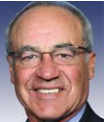
Joe Baca
Negrete-McLeod has been state sentator in the 32nd Senatorial District since December 2006. Prior to that, she served three terms in the California State Assembly from 2000 to 2006. Because of California’s term limits, she must vacate the state legislature.
For Negrete-McLeod, Congressman Joe Baca, Sr. is a logical opponent. In her drive to capture the state Senate seat in 2006, she defeated Joe Baca, Jr. in the Democratic primary. A degree of tension has remained between the Baca and Negrete-McLeod camps ever since, though Negrete-McLeod did begrudgingly endorse Joe Baca, Sr. in his last two reelection efforts. Young Joe Baca went on to win a seat on the Rialto City Council. The Baca Family Political Dynasty suffered something of a setback when another of Joe Baca’s sons, Jeremy, was defeated in his effort to be elected to the Colton City Council in 2008.

Gloria Negrete-McLeod
Negrete-McLeod beat Joe Baca to the punch in declaring her candidacy in the new 35th Congressional District. The state Citizens Redistricting Commission in May laid out the boundaries of California’s various political districts, and Negrete-McLeod, who lives in Montclair, almost immediately declared her candidacy in the 35th. Baca, who lives in a portion of Rialto just outside the 35th District boundaries, was at that time contemplating running in the newly formed 31st Congressional District, which includes San Bernardino, Redlands, Loma Linda, Grand Terrace, Rancho Cucamonga and southern Upland.
The 35th District consists of Chino, Montclair, Pomona, Ontario, Bloomington and portions of Fontana and Rialto. Members of Congress do not have to live in the district they represent.
Throughout his Congressional career, Baca has consistently achieved election and reelection in districts in which the Democrats had a substantial voter registration advantage over Republicans. In his current 43rd Congressional District, the Democrats enjoy a 48 percent to 32 percent advantage over Republicans. In the newly redrawn 35th Congressional District, Democrats hold a sizeable registration lead over Democrats as well. In the newly redrawn 31st District, Democrats hold a registration lead, but it is far less substantial, of just under four percent. Given the propensity for greater Republican turnout at the polls on election day as well as the consideration that incumbent Republican Congressman Gary Miller, who has a substantial campaign war chest, is a declared candidate in the 31st Congressional District, Baca’s calculation is that he stands a better chance of securing the Democratic nomination in the safely Democratic 35th against Negrete-McLeod in the June primary and then cruising to an easy victory in November than going toe-to-toe with Miller for all of the marbles in the 31st next November.
On February 11, Baca was able to test that strategy when the California Democratic Party convened in San Diego for a session aimed at determining party endorsements well in advance of the primary. On that day, Saturday, Baca ended in a 24-to-24 tie with Negrete-McLeod in the competition for the endorsements of local party delegates.
A series of charges and countercharges between the Baca and Negrete-McLeod camps ensued, with each accusing the other of falsifying ballot signatures. Early on Sunday, February 12, the party’s credentials review committee adjudicated the conflicting accusations by Baca and Negrete-McLeod supporters, declaring that 49 ballots had been cast and that Baca had prevailed 25-to-24 in the battle for the party’s endorsement. In a contest between two non-incumbent Democrats vying for an elected position, party rules require that a candidate clearly prevail by obtaining 60 percent of the ballots cast. But as an incumbent Congressman, Baca needed only fifty percent plus-one to take home the party’s official support. The dead heat between Baca and Negrete-McLeod was the narrowest finish between any of the state’s Democratic races involving an incumbent and a non-incumbent challenger.
“Winning this hard-fought battle is a critical step as I move forward in my quest for re-election,” Baca said. Negrete-McLeod did not meet a deadline to gather 300 conventioneer signatures to request the convention to rescind the endorsement because it did not meet the 60 percent threshold.
Baca will be able to make note of his endorsement by the party in the sample ballots sent to voters in advance of the primary. But observers believe Baca may have some rough sledding ahead, given Negrete-McLeod’s strong showing and her familiarity with voters in the 35th District.
Another consideration in this year’s primary contest is the top-two balloting being tried for the first time. If McLeod does well in the primary and outpolls all of the Republicans vying in the contest but does not defeat Baca outright, that will set up a run-off between her and Baca in November. Even if she is outdistanced by Baca in November among Democrats, she could still win if she captures the lion’s share of the Republican vote and has a respectable second place showing among Democratic voters.
County Tab With One Perchlorate Law Firm Up To $1.87 Million
The county is increasing by another $350,000 the $1.52 million it has already paid the law firm of Gallagher & Gallagher for assistance in staving off lawsuits relating to water contamination in northern Rialto.
The board of supervisors authorized increasing its tab with Gallagher & Gallagher by $350,000 to an amount presently authorized not to exceed $1,870,000, to provide legal services to the county related to the former Broco facility closure at the Mid Valley Sanitary Landfill and other specific perchlorate groundwater related actions.
In the late 1990s, a plume of contaminants containing perchlorate was found to be migrating through the local water table
It is believed that five corporate entities – Pyro Spectaculars, Ken Thompson Inc., Chung Ming Wong, BF Goodrich, and Emhart Industries – were engaged in manufacturing activities that resulted in the accumulation and release of the perchlorate.
Water agency officials, state officials and federal officials believe the county of San Bernardino may have engaged in activity that exacerbated the perchlorate problem.
The county runs the Mid-Valley Landfill in north Rialto.
Officials with the Rialto-based West Valley Water District and their lawyers have alleged that San Bernardino County razed and buried a haz-ardous waste-disposal facility at the site, an act those officials maintain was not only illegal but has worsened the contamination of the groundwater below Rialto.
Broco Inc. maintained the hazardous-waste disposal operation in northern Rialto from the mid-1960s until the late 1980s. The county purchased the property in 1994 and used it in the expansion of the Mid-Valley Sanitary Landfill.
According to attorney Barry Groveman, who represents the West Valley Water District, it appears the county simply knocked the hazardous waste facility down and spread the debris around before burying it. That action was against the law, Groveman said.
Groveman said the county was in violation of state hazardous waste handling regulations and the federal Resource Conservation and Re-covery Act.
Burying hazardous waste and storing it without a permit is illegal.
In the area around the Broco site, Pyro Spectaculars, Ken Thompson Inc., Chung Ming Wong, BF Goodrich and Emhart Industries had operations that were ongoing in the 1940s, 1950s, 1960s, 1970s and 1980s. Public health officials have identified that area as the origin of the plume of perchlorate.
Perchlorate is a product used in the manufacture of both fireworks and ordnance. In very minute quantities perchlorate can wreak havoc on the thyroid gland.
The site has been designated by the Environmental Protection Agency as one of its Superfund sites, which makes federal funding for the remediation available but also carries with it a requirement that the parties responsible for the contamination assist in the effort. Simultaneously, the EPA will apply the Superfund money toward the remediation. Eventually, if any of the parties deemed responsible for the contamina-tion refuse to sponsor or otherwise pay for a share of the remediation, the EPA will sue and under federal law, any party proven responsible will be required to pay triple the cost of that portion of the clean up for which they were the contaminating party.
The ability to impose triple damages serves as an incentive for the re-sponsible entities to undertake the clean-up on their own or participate in funding an EPA-sponsored remediation.
Previously, the city of Rialto sued BF Goodrich over the contamination issue. Rialto dropped that lawsuit after the company agreed to undertake a remediation effort. BF Goodrich did pay a total of $4 million – $1 million each to the cities of Fontana, Rialto and Colton as well as to the West Valley Water District. That money was used to treat specific wells that were producing perchlorate-laden water but did not redress the underlying problems in the aquifer. BF Goodrich, like the other companies, will yet likely be on the hook for millions of dollars more in decontamination efforts.
An EPA-designed program of remediation, consisting of contaminated water being pumped out of the ground to then be treated and distributed to water districts, is underway. It will likely take two decades or more for the perchlorate levels to be reduced to acceptable limits.
Rialto officials had initially resisted the call to have the area declared a Superfund site, largely because doing so could have a deleterious impact on property values in the area. As the expense of completing a remediation of the problem has been driven home to city officials, it is now accepted that the Superfund designation is the only realistic way of coming to terms with the problem.
The county of San Bernardino, nevertheless, appears to be poised to commit money to a court battle to obtain a finding that it is not responsible for the contamination.
In May 2009, then-county counsel Ruth Stringer convinced the county board of supervisors to increase funding for legal services provided by the law firm of Gallagher & Gallagher to set in motion an effort to contest the potential EPA pleading that the action related to the Broco facility destruction exacerbated the contamination problem. The county has also retained another law firm, Price, Postel & Parma, to assist it with legal issues relating both to the perchlorate contamination in Rialto and a State Water Resources Control Board investigation and proceeding in which the county is not a direct party but one with a stake in the outcome. Available records show Price Postel & Parma had been paid $4 million by the county as of December 2009.
Some see little rationale for the county spending millions of dollars to engage in a legal battle over the contamination issues rather than simply utilizing the money to fund a clean-up effort that would satisfy the federal and state government as well as the relevant water agencies and districts.
But current county counsel Jean-Rene Basle told the board of supervisors this week that the county remains committed to engaging in a potentially bruising legal battle over the perchlorate issue.
“[A]uthorization to increase the contract amount is requested to allow for the additional services needed,” Basle told the board of supervisors. Those services, he said consisted of “1. Assistance with the implementation of the now-approved Final Closure Plan for the Broco Facility under submission to the State Department of Toxic Substances Control (“DTSC”) including: a. Technical support from a specialized technical consultant, Geo-Logic Associates, who provides professional geologists, certified engineering geologists and certified hydrogeologists to address technical implementation questions; and b. Addressing the continuing vigorous opposition to the county’s proposed plan by the West Valley Water District; and 2. Coordination, communication, and meetings with other interested agencies and parties concerning other perchlorate issues in the Basin; and assistance with the defense of the Stout and Zambelli parties as required by the county’s settlement agreements with each of these parties; and 4. Various settlement issues to the extent not otherwise covered by county insurance policies.” Stout and Zambelli are entities named in the litigation.
“Gallagher & Gallagher APC currently represents the county in connection with the federal and state court litigation and federal and state agencies’ investigations of the perchlorate groundwater contamination in the Rialto-Colton Basin, and these costs are paid under general liability insurance policies,” Basle said. “As a result, Gallagher & Gallagher APC has gained significant experience with the groundwater contamination issues in and around the Rialto-Colton Basin and the issues concerning the county’s Mid Valley Sanitary Landfill. In addition, the firm has extensive experience working with the DTSC.”
The board of supervisors complied with Basle’s request and increased the contract amount by $350,000, from $1,520,000 to $1,870,000. The rate payable for legal services performed under this agreement ranges from $195 to $250 per hour.