
San Bernardino County Auditor-Controller-Treasurer-Tax Collector Larry Walker said he is running for state senator in the 32nd District because “We are at a crossroads in our state’s history, and I feel that many important things are on the line in the next two years. I believe that now more than ever we need somebody who brings an outsider’s perspective to Sacramento, but who has the years of experience necessary to be prepared to pursue these issues, and I believe that I have those qualities.”
Walker added, “As the San Bernardino County auditor-controller, recorder, commissioner of marriages, treasurer, and tax collector, and as a former county supervisor, a mayor, a realtor, an attorney, accountant, and officer in the US Naval Reserve, I have had varied and complementary experiences in the public and private sector throughout my career that allow me to view any government program from several different angles. My background will be valuable when asking the questions ‘is it efficient?’ and ‘how can we cut waste?’ Some legislators may have the background to look at an issue with a single type of expertise, but not many legislators have the background to approach an issue this comprehensively.’
The major challenges facing the state, Walker said, are “budget reform, unemployment and the need for improved economic growth, and improvements in education and transportation, and maintenance of public safety. Finding ways to overhaul the state budget is a critical challenge.”
In the 32nd District, Walker said, “The state’s fiscal mess has a huge impact on our community, including the reductions in school funding it has caused. Public safety and improving transportation are key challenges as well. We need to find ways to encourage economic growth and jobs in our region.”
In meeting these challenges, Walker said, “Fiscal discipline is an important tool that I hope to bring to Sacramento. I want to make sure that Proposition 30 money is being spent on things that matter – ending our structural deficit, returning money to education and public safety – and that it is not just being spent to kick the can down the road.” Proposition 30 was a statewide tax measure approved by the voters in 2012.
“Over the next two years, I want to bring the perspective of an accountant and a county auditor-controller to the state budget,” Walker said. “Sacramento needs a sober outside voice, a pragmatic accountant. I will seek to implement policies that encourage economic growth, balanced with maintaining our environmental values. Transportation improvements are important in our area. I will be a tireless advocate for return of Ontario Airport to local control, and for the extension of the Alameda Corridor East to include rail lines in this district.”
Walker said that he is a superior choice to the others vying for state senator. “Often there is a trade-off in electing a state legislator – either you get a tired old incumbent who is a part of the problem, or you get an outsider who has new ideas, but not very much experience,” he said. “Because of the range of my experience as a fiscal watchdog in local government, I can be an exception to that rule: a candidate free of the tired old partisan Sacramento groupthink, but who is ready to step into the job on day one.”
Coble Proudly Wears Long Shot & Spoiler Mantles In Seeking To Stop Torres
Assemblywoman Norma Torres is one of six candidates vying to replace Gloria Negrete-McLeod in California’s upper legislative house in the special election to be held in Senate District 32, encompassing all of Pomona, Montclair, Ontario, Fontana, Rialto, Bloomington and portions of Chino and San Bernardino, on March 12. That election was necessitated when Negrete-McLeod was elected to Congress in November with two years remaining on her State Senate term.
Torres said she is seeking to advance from her current position in the California Assembly to the State Senate because, “This was something I was planning to do all along. I have been in the Assembly for the last four years and this is my last term,” Torres said. “In 2014, when the sitting senator would have had to retire, I would have run then. I am taking this opportunity to run now.”
Torres said that among the major challenges facing the 32nd Senatorial District “is the economic downturn we have suffered. Since 2005 we have had had major job losses primarily in the construction industry. The housing market in the Inland Empire has been one of the hardest hit in the state in terms of foreclosures. I have been at the center of the fight to keep families in their homes. I also see Ontario Airport, where there has been a steady decline in flights with the downturn in the economy, as a major issue in this area. I think it was very shortsighted for the city of Ontario to have let Los Angeles take over the airport. At the time, they had what they thought were very good reasons, but I think it would have been better to keep it in the hands of the locals, not just the city of Ontario and the county of San Bernardino, but under the control of a regional board. I think the airport represents something that is of tremendous value to this area. It is an economic engine for the entire inland area stretching all the way down to northern San Diego County. I believe sensible management of the airport can provide huge opportunities for job growth in every part of the region’s job market.”
The major issue facing the state, Torres said, consists of obtaining “stability with our state budget. Since I have been a state elected official, I have seen huge budget deficits. We are four years into those deficits and those decisions we made to be able to rein in our expenses are my proudest achievements. We are now in a better position to grow our economy and grow jobs. At present we are now growing jobs faster than any other state in the nation. I see at present an opportunity to work with the folks in the [State] Senate to pay back on the huge wall of debt we have created and work toward structural change at the state level.”
Torres said her formula for curing the state’s economic ills is discipline.
“A very important factor is resisting the temptation to recreate programs that have been cut,” she said. “During these times we are still vulnerable. As Democrats we now have a supermajority in the state and with that comes a lot of responsibility. We have to resist the pressure so that we do not go out and spend the money that is coming in and then end up having to cut programs at the end of the year. The problem is we do not have a stable tax system. We do not have a stable inflow of tax into our budget. Just because we have a huge pot of money coming in at the beginning of the year does not mean we will have it at the end of the year. I believe we have to hold the line on taxes and support small businesses.”
Torres said this philosophy did not necessary put her out of step with the rest of the Democratic Party. She suggested the representation of Democrats as liberal spenders of taxpayer money was an inaccurate stereotype. “The great thing about being a Democrat is the party looks like the quilt that makes up the state. We have very different life experiences and backgrounds, but we are a close collective at the table, and working together we have been a benefit to the state the last four years.”
In sizing up her competition, Torres said she represents the best choice among the six candidates in the race to represent the 32nd District in Sacramento. Three of the candidates – current San Bernardino County Auditor-Controller-Treasurer-Tax Collector Larry Walker, Ontario Mayor Paul Leon and Torres – have served as mayors of good-sized cities, in her case, Pomona and in Walker’s case, Chino.
She said she was the best choice because “I have had the experience. A lot of my experience is shared with my opponents, Mr. Walker and Mr. Leon, who have been mayors like me. But I have also lived through the last four years as a state official during a very difficult state budget challenge. I think I have been a proven leader. I have stood my ground for my constituents in my community, in the local neighborhood and in Sacramento. While we are struggling with the budget, that would have been the time when most elected officials shy away from facing their constituents. I was still going door to door talking to my constituents and not just registered voters. I was posting and holding community outreach events to ensure my residents have the opportunity to meet me one on one and talk about the pressing issues for them and their community. I do not see any of my opponents having done that. It is one thing to go to parades and wave, but I have been a different type of representative. I have been able to balance the budget, but at the same time I have been supportive of bringing in some assistance to the homeowners in these communities. My approach has been to apply for federal funding through state agencies and then hold those agencies accountable to provide the assistance. We obtained a $2 billion federal grant that went into the Keep Your Home California program to help our families stay in their houses.”
Of the other five candidates in the race, the only one which Torres deigned to take a swipe at was Walker, who like her, is a Democrat. “Mr. Walker is the highest paid public official in this region. He is paid $256,000 in base salary and another $178,000 in benefits, including a gym membership. What corporate executive who makes over $400,000 also gets the perk of a gym membership? That he is the tax collector and is keeping that great of a portion of what he is collecting for himself when everyone else in government has taken a cut in pay is almost criminal. We are all taking pay cuts. We are imposing furloughs. In the last year, the board of supervisors took a cut in pay. Even though it was forced on them, they still took a pay cut. In the same time, Mr. Walker has received increases in his pay. When he was asked why, he said that no one had required him to reduce his salary or benefits. He should lead by example. As we work on pension reform, he is the poster boy for pension abuse. We need to focus on these half a million dollar salaries that are being retired at 90 percent. We have workers, state workers, making less than $50,000 who will be getting pensions of just $30,000. He will be getting a pension of $300,000 or more. That is not right.”
Torres is a graduate of Mountain View High School in El Monte. She attended Rio Hondo and Mount San Antonio community colleges and obtained her degree from in labor studies from National Labor College in Silver Springs, Maryland. She is married with three children.
Mitchell Cites Experience, Energy & Enthusiasm In Chino Hills Council Attempt
Rossana Mitchell has entered the political fray once more, and is now one of four candidates vying to replace Wilburn “Bill” Kruger on the Chino Hills City Council, following his abrupt September resignation. His vacancy came too late for the special election to choose someone to serve out the remaining two years on his term to be joined with the balloting in November, when two other positions on the city council were contested. Mitchell ran in November, but that contest was won by Art Bennett, the incumbent mayor, and Cynthia Moran.
Mitchell was on the council a decade ago. In 2003, she was elected to the city council in a special election to replace James Thalman after his death. The following year, she lost to Kurt Hagman. Mitchell has also served four years on the Chino Valley Unified School Board, which, she noted, has a larger annual budget than the city of Chino Hills.
“With this open seat coming available, I believe I have the experience and insight that has been missing on the council in the past,” she told the Sentinel. “Right now the city and the council are facing the challenges of the Edison towers,” she said, in reference to the utility giant’s efforts to traverse the city with its 500 kilovolt electrical line that is to carry electricity generated at what is to be the world’s largest wind farm near Tehachapi in Kern County. Residents have objected to the placement of the 197-foot high towers in upscale Chino Hills after the California Public Utilities Commission approved the transmission line. The above-ground placement of the line is now under review.
“I am a Hope for the Hills member,” she said, alluding to the group that has led the citizen-backed effort to have Edison underground the electrical cables. “I will continue to fight that good fight. We need a councilmember who is vigilant and non-complacent to ensure that Edison does everything that is asked of it in terms of burying those cables. It has now been revealed that they do not intend to underground the cables through Oak Tree Downs. Communication between staff and the city council broke down. That is unacceptable and there needs to be someone who will not back down in the face of this. The undergrounding of those cables at the mouth of Carbon Canyon needs to be addressed.”
“I am more than ready to stand up and address the challenges we face, such as the maternity hotels that were established in our city,” Mitchell said. “There were three of them.”
Those operations were birthing houses where pregnant foreign women took up temporary residence so their offspring would be born as American citizens.
“They are vacant now, closed down,” Mitchell said. “I was active in the fight against those. We should fight to remain a family-oriented community. It is clear that the council was not aware of those maternity hotels for the first eight months they existed. If I am on the council, I will continue to be vigilant. I will make sure that our general plan isn’t changed and that open space and low density in Chino Hills continues to be a part of our heritage.”
Mitchell said she favors “building our commercial base so we can meet our financial challenges.” She said the city should not give way to requests to intensify the level of development by increasing density or the number of units that can be build on one acre.
She said she has been “committed to the community for 23 years. I am very interested in establishing a city-run program for seniors. Chino Hills also does not have a dog park. Other cities do and several residents have expressed the wish that we get one. That is what I am hearing as I go door to door.”
Mitchell said taking on the responsibility of overseeing the city on the city council “requires experience and knowledge. I am an attorney. I have the knowledge. I also have the energy and enthusiasm to be non-complacent when things get rough. The city needs someone with experience but also with a fresh viewpoint.”
Singh Says Youth & Lack Of “Political Encumbrance” Recommend Him In Chino Hills
Yashdeep “Jesse” Singh said he is seeking a position on the Chino Hills City Council in the March 5 mail-in election because “I’ve lived in Chino Hills my entire life and I have wanted to give back to the city where I grew up. With my strong academic background, I believe I can be an advocate for everyone. I think my youth infuses me with a new energy that is needed on the city council. By not being politically encumbered, I believe I can bridge the gap between the different interest groups in our city.”
Singh said that as a resident and now as a candidate, “One of the things I have pushed for is small business growth. I have a three pronged approach. The first is actively recruiting new businesses and encouraging existing businesses to remain in Chino Hills. The second is assessing from the business perspective what we can do to make our city more business friendly. We need a long term open channel of communication. There has been a large disconnect between the business community and the city. We need to allow our businesses to be a part of policy making process. If we create positive relations with the businesses and make them feel they are a part of the community they will give back to the community. The third prong in my approach is to encourage our residents and those in the surrounding communities to shop in Chino Hills. We have already put together quality businesses. The more businesses we have, we will boost our economy and increase our tax revenue and provide jobs.”
Something he is serious about, as well, Singh said, is “youth engagement in civic matters.” He said that there are teens and young adults who have sought to become involved in local government but that they have met resistance by the established authorities and politicians. “It has not been the two way street I was hoping for,” Singh said. “There is room for the city to reach and engage youth in ways that have not been tried. I would look toward creating programs to bring in resident participation in our city government, including a city council or municipal advisory commission or committee with mandatory youth positions or participation. I am also interested in promoting a foundation for college scholarships for our high school graduates who show civic involvement. On many fronts the city has done well and people have responded well in terms of opportunities for involvement and we have supported many of our city’s demographics, but the one we have neglected, I think, is our teens. My youth will allow me to bridge that gap. I think we should explore how to do that in a cost-efficient way.”
An attorney since 2011, Singh said he believes that by virtue of his profession, he will assist the city in wrestling with its current challenges.
“With Southern California Edison trying to put 200-foot high electrical towers through our city and residents at odds with the city over encroachment in the city’s right-of-way, we have a lot of different legal issues,” Singh said. “Hopefully as an attorney I can bring an element to the council that has been missing in the past.”
His Leadership Skills And Experience Are What Yucca Valley Needs, Leone Says
Bob Leone is seeking to return to the Yucca Valley Town Council in the March 5 special election to replace Isaac Hagerman, who resigned last July. Leone and two others, Jennifer Collins and Michael Hildebrand, are vying to fill the remaining year and nine months that remain in Hagerman’s term.
Leone, a retired New York City and Los Angeles policeman, served 12 years on the council before deciding not to seek reelection in 2008 because of health challenges both he and his wife were then facing. They are both recovering now, Leone said, and he explained, “There are a number of issues facing the city at this time. I would like to complete road safety projects and other ones relating to the health and well being of our community. I would like to establish a senior citizens center. I want to return to the council because I believe there is unfinished business from before that I would like to complete.”
Leone was not on the ballot in November, when George Huntington and Robert Lombardo ran unopposed, though he did surface as a write-in candidate. That was part, Leone said, of his effort to defeat Measure U, which would have imposed a one cent sales tax in the town. Leone said he opposed Measure U, because it was a thirty year-long tax arrangement that was not dedicated to any specific application, although city officials said it would be used to defray the cost of building a municipal sewer system.
Though he supports the construction of a city sewer system, Leone said the use of an undedicated sales tax measure to fund such an undertaking was not something he favored.
“Measure U was not structured properly,” Leone said. “The major issue Yucca Valley is facing is we have a mandate from the state of California to put a sewer system in place with the first phase downtown by 2016. It is going to be very costly and an assessment will be a hardship for many people who live here and don’t have financial means or are living on fixed incomes. Measure U was offered to pay for that, but it did not guarantee the money would be used for the sewer system and it was scheduled to last for 30 years, meaning a future city council could use that money for other purposes. I opposed it and I took it as a victory that it failed. It only need fifty percent plus one to pass. I am in favor of a dedicated sales tax, of one-half percent, that will be used only for that purpose.”
Water and water quality is of tremendous moment in Yucca Valley, Leone said. “We need water, quality water, if we are to grow,” he said. “It is a serious problem. My own well has dropped considerably. We cannot have further septic seepage into our aquifer. I would support a modest half cent tax that will allow for the sewer system to be built, which will encourage growth and with economic growth in the future we will increase revenue into the town’s coffers. A dedicated tax initiative will require approval of 66 percent of the voters.”
A graduate of Samuel J. Tilden High School and Brooklyn College, Leone worked as a police officer in New York and Los Angeles, before retiring to Yucca Valley in 1989. He was a member of the planning commission before he ran for the council and served three one-year terms as mayor.
“I have the experience,” he said, in responding to how he is distinguished from the others in the race. “I know how to balance a budget. I know what is necessary to cut. I know the pulse of the people. I am ready to listen to people of various political affiliations, Democrat or Republican, progressive or conservative, fundamentalist Christians or atheists, as long as they express concerns about the town. No matter what their persuasion or standing, I will take what they say into consideration. I have leadership skills. I graduated from the California League of Cities Leadership Seminar and have that certification. I know how to lead and I have common sense. I think I reflect what everyone wants in Yucca Valley, which is that basically we have a safe community, with safe streets and clean water. I am a 77-year-old former policeman. I could have retired just about anywhere, but my choice was Yucca Valley.”
County’s Colonies Recovery Suit Vs Upland And Trans Agencies Dismissed
The egregious misconduct of former San Bernardino County officials obviates the county’s contention that the city of Upland, Caltrans and the county’s own transportation agency should reimburse any part of the $102 million legal settlement the board of supervisors conferred upon the Colonies Partners in 2006, a San Diego Superior Court judge ruled this week.
In his tentative ruling entered last week and officially confirmed on February 5, San Diego Superior Court Judge Ronald Prager dismissed the gist of a lawsuit the county brought against those three entities, leaving only a minor and peripheral issue in the case yet to be litigated.
The Colonies Partners sued San Bernardino County in 2002 over the county flood control division’s design and construction of a storm drain on behalf of the city of Upland. The Colonies Partners alleged that storm drain, which collected water originating in the northwestern portion of Upland, vectored water onto property at the Colonies at San Antonio subdivision, which damaged the company in that it inhibited the development and sale of that property.
In 2004, the county filed suit against Upland, the county’s own transportation agency, San Bernardino Associated Governments (known as SANBAG), and the California Department of Transportation (Caltrans), which had constructed the 210 Freeway in that vicinity, necessitating that the storm drain’s terminus be placed upon the Colonies Partners’ property, located in northeast Upland. That suit, which alleged both transportation agencies and Upland were at least partially responsible for the county’s undertaking of the project, known as the 20th Street Storm Drain, sought to have those entities partially defray the county’s costs if the Colonies Partners prevailed in the lawsuit.
Four years of legal wrangling over the matter included a trial before former Superior Court Judge Christopher Warner. Before Warner ruled with regard to the damages the Colonies Partners had sustained as a result of the placement of the storm drain, the board of supervisors, then led by board chairman Bill Postmus, in November 2006 voted 3-2 to end that litigation by conferring the $102 million settlement on the Colonies Partners, which had as its co-managing partners Jeff Burum and Dan Richards.
In 2010, Postmus, who was no longer on the board of supervisors, was indicted and charged with conspiracy, soliciting a bribe, accepting a bribe, fraud, perjury and criminal conflict of interest in conjunction with the settlement vote. In March 2011, Postmus pleaded guilty to 14 felony counts, in so doing acknowledging that he had been bribed by Burum to vote to approve the settlement. In May 2011, Burum was indicted along with Paul Biane, a former member of the board of supervisors who had voted with Postmus to approve the settlement, as well as Mark Kirk, the chief of staff of the other supervisor, Gary Ovitt, who had approved the payout. The indictment alleged conspiracy, bribery, extortion, fraud, perjury, misappropriation of public funds and conflict of interest stemming from the vote and Burum’s provision of separate $100,000 donations to political action committees controlled by Postmus, Biane and Kirk.
Lawyers for Upland, SANBAG and Caltrans held the settlement was tainted by bribery, extortion and other illegal actions that included corruption on the part of key county officials who were party to that settlement, rendering the county’s suit invalid.
San Diego Superior Court Judge Ronald Prager, to whose courtroom the case was removed to prevent a conflict of interest that might ensue in San Bernardino Superior Court, this week confirmed a tentative ruling he made last week that the county’s settlement vote was so tainted by the corruption of the officials who made it that the county has no basis to recover any damages from the other three public agencies.
The county maintained that its filing of the suit two years before the settlement was made centered on issues that had nothing to do with how the settlement was arrived at. Upland, Caltrans and SANBAG bore responsibility for mishandling the flood control issues at the center of the suit brought by the Colonies Partners against the county, the county claimed.
But Prager ruled that the county cannot compel Upland, SANBAG, and Caltrans to pay for a settlement that violated state law. He referenced both the state’s conflict of interest code, Government Code Section 1090, and Penal Code Section 182, the prohibition against bribery.
“Postmus’ guilty plea is evidence of a violation of section 1090,” Prager noted. He also cited the consideration that “the county issued a press release on April 8, 2011 admitting the settlement violated section 1090,” which he said rendered the settlement with the Colonies Partners null and void. “SANBAG presented evidence that Postmus pled guilty to conspiracy to accept a bribe, in violation of penal code section 182 and having a conflict of interest in violation of section 1090 by accepting bribes from Jeff Burum to vote in favor of the settlement agreement,” Prager wrote. The activity Postmus and others engaged in was “unseemly… disgusting” and representative of the “worst of the worst” in government, Prager said, making it “fundamentally wrong to perpetuate this case.” Prager all but directed the county to seek to recover the money from the Colonies Partners rather than pursuing redress from the three governmental entities it had sued. “I don’t understand why the County of San Bernardino is not going after the Colonies and getting their money back,” Prager said.
A single element of the case Prager will allow to proceed to trial is the county’s claim against Upland that it was responsible for the ownership of the storm drain and shared responsibility with Caltrans for certain elements of its design that led to the underlying suit brought against the county by the Colonies Partners.
Fire Funding Still Bedevils 29 Palms H2O District
TWENTYNINE PALMS — The Twentynine Palms Water District, its board of directors and its interim general manager have yet to formulate a precise financial strategy for keeping the fire department under the purview of the water district, two weeks after the board of directors voted to do just that.
Without making any commitment to a definite course of action, fire chief Jim Thompson is considering a range of options, including service cuts that would reduce operations by up to fifty percent of the current level of protection as well as an effort to generate further revenue that will allow the department to carry on in its current staffing and operational mode.
Since 1958, the Twentynine Palms Water District has overseen the fire department, defraying entirely fire protection operations in the 88-square-mile jurisdiction of the water district with a special parcel tax that at present generates $1.24 million per year. Currently, the seven-man, two-station fire department costs $1.48 million to run annually and carries with it a future unfunded liability in the form of pensions for its firefighters when they retire. Last year, voters turned thumbs down on an increase in the fire service per parcel tax.
The lion’s share of that $1.24 million is generated in the more densely developed 59-square mile incorporated area of Twentynine Palms that lies within the water district’s boundaries, which also includes 29 square miles of unincorporated county area.
The county Local Agency Formation Commission (LAFCO) in a review of all of Twentynine Palms’ governmental service agencies last year concluded that the water district could not sustain continuing to operate the fire department. As a consequence, the water district board voted last summer to have the county’s fire division take over the fire department’s operations, but missed an October 1 deadline to have the Local Agency Formation Commission initiate the processing of that merger. The water board’s members along with members of the community grew concerned that county fire chief Mark Hartwig‘s plan to reduce the department to a one-station, three-firefighter operation would be inadequate for the city and its outlying area.
Pressure mounted on the city, which has historically made no contribution to the operation of the fire department, to subsidize the water district, take over that element of the operation serving the incorporated portion of Twentynine Palms or take it over in whole. That eventuality seemed to pick up steam when Cora Heiser displaced John Cole on the Twentynine Palms City Council on December 11, following the November election. Heiser has made clear she wants to retain local control of the fire department.
On January 14, however, Twentynine Palms City Manager Richard Warne gave an unequivocal recommendation against the city taking up the financial burden of operating the fire department.
The fire department is “insolvent,” Warne said in warning the city council, telling its members, “The city cannot take on the fire department’s open-ended responsibilities” given the “new reality” of uncertain and diminishing revenue available to Twentynine Palms and government entities throughout California. “The water district has not recognized this new world and/or made adjustments to the new reality. As a result, the Twentynine Palms Fire Department is insolvent today due to decisions made by the firefighters union, fire chief, water district finance director and water district board. They all share responsibility for the current situation. The fire department’s controllable expenditures have significantly exceeded inflation as measured by the Consumer Price Index (CPI) and they have acquired huge unfunded firefighter pension obligations and post-employment retiree benefit obligations that appear to be impossible to pay. In this respect they are like many governments in California facing bankruptcy.”
Warne said that “after years of deficit spending and nine months after the failure of the ballot measure, the fire chief and the water district board still have no plan to bring expenditures into line with revenues. The fire department cash position is deteriorating each day due to deficit spending, while the unfunded firefighter pension obligations are growing each day.”
The city council, sobered by Warne’s assessment, balked at stepping in and subsuming the fire department, as several members of the community, including Heiser and members of the fire department and their families were hoping it would.
On January 23, in response to the intense lobbying by vocal members of the community who objected to the prospect of the fire department being relinquished to the county, the water district board voted 4-1 to retain control of the fire department.
More than two weeks later, however, the district is yet struggling with the harsh financial realities that created the crisis.
There is a general perception that the lower grade of pay provided to the department’s current crop of firefighters will allow the department to sustain its current staffing level. Last fall, San Bernardino County Fire Chief Mark Hartwig proposed reconstituting the Twentynine Palms Fire Department to consist of one chief and one firefighter/paramedic at Station 421 in downtown Twentynine Palms and two firefighters/paramedics at Station 422 on Lear Avenue, with a total operating budget of $1 million to $1.3 million annually. Subsequently, after Hartwig spoke in depth with current fire chief Jim Thompson and made a consideration of various staffing scenarios, it was determined that the most likely form the department would take would be three firefighters composing one engine company which would operate out of one station, most likely the one in town.
Crunching numbers and calculating the limits of what could be accomplished with the available revenue, Hartwig said four of the seven firefighters currently with the district would have to be laid off. With three employees, the department could sustain itself with $1.16 million per year. But upon hiring a fourth firefighter who would earn no overtime, the cost of running the department would jump to $1.3 million, exceeding the $1.24 million in available annual funding.
Hartwig’s calculations, however, were based upon a pay scale provided to county firefighters pursuant to a collective bargaining agreement between the firefighters’ union representing county firefighters and the county.
At the January 14 meeting, councilwoman Heiser inquired about the relative pay provided to the county’s firefighters and the firefighters currently employed by the Twentynine Palms Fire Department. She was told that Twentynine Palms firefighters average about $14.05 per hour and county firefighters are paid about twice that. On that basis, it is believed by some that the fire department can remain as a two-station, two-engine, seven-man entity under the administration of the water district, if a few adjustments are made and economies effectuated.
Warne, however, cast doubt on that conclusion, saying that a major challenge to the district remains in the form of institutional deficit spending represented by the unfunded pension account liability the district has. That problem is ongoing and will manifest in earnest when the current firefighters reach retirement age. He said the district had allowed those costs to move beyond the span of management and control when the board in the past acceded to contractual obligations with the firefighters that exceeded the water district’s means. He said the principles of sound governmental management demand that the water district take up that funding issue now to avoid the otherwise inevitable insolvency crisis that looms shortly in the future.
The water district board’s action on January 23 seemingly put the ball in the court of the water district’s management team, including interim general manager Ray Kolisz, fire chief Jim Thompson and the district’s finance director, to map out a strategy by which the water district can keep the fire department up and running under the funding limitations it is straddled with.
When reached by the Sentinel on February 4, Kolisz, who formerly served as the district’s operations manager before he was elevated to the temporary general manager position to replace Mike Wright in October, said, “Those questions are more geared for the fire chief,” Kolisz said. “You should talk to Jim Thompson in regard to that.”
Thompson told the Sentinel that he is in the course of drafting a financial plan, but that everything was subject to a sliding scale, given the uncertainty of future funding at this point.
“Under the worst case scenario we are preparing to implement what is essentially a 50 percent reduction of our service level, closing out the Lear Avenue Station and laying off three of our firefighters. We would downsize the volume of our activity by approximately half. If we do that, we should be able to sustain that across five years at our current funding levels.”
Thompson said such a reduction would still count on the department’s deployment of volunteer firefighters.
Reducing the department to a one-station, four-man operation, he said, “would put the western end of the city, Indian Cove, and the entire Desert Heights area outside the city limits more than five road miles from the responding fire station. Our ability to respond to structure fires in those areas will be compromised, no question.”
To sustain the department at its current level, Thompson said, “We are looking at identifying additional revenue.” He said that one approach to this involved making a “political” appeal to the decision makers in Twentynine Palms, i.e., the city council, to either augment the water district with subsidization funding for the fire department or take it over completely. “Twentynine Palms is the only city in the county that provides no portion of the general tax levy income it receives toward the fire department that operates within its city limits,” he said.
Simultaneously, Thompson said, the district is looking to create a citizen’s committee to gather community input and carry out an informational campaign related to seeking voter approval on another tax measure. He said that in 2004, an effort to up the per parcel tax to support the fire department failed. When the Lear station was shut down as a consequence of that vote, the following year the community voted to approve raising the per parcel fee to $80, he said.
At the same time, Thompson expressed doubt that the committee could be formed, an informational campaign carried out, and that the special election could be held prior to July 1, when the water district’s fire operations funding will be exhausted.
“In the meantime, we need to find stopgap funding,” Thompson said.
Thompson reiterated that the Twentynine Palms firefighters were paid at a scale far below firefighters with other agencies. His lowest paid firefighter received $13.68 per hour, he said, while his highest paid firefighter was remunerated $15.58 per hour. A fire captain with the county, he said, receives $31.07 per hour.
Though Thompson acknowledged that the fire department’s retirement account “is slightly underfunded,” he said this was generally the case with the majority of governmental entities in the county and state.
“That so-called unfunded retirement liability is only an unfunded liability if we terminate from the California Public Employees Retirement System,” he said.
Leon Says He Is The Right Candidate To Roll Back Job-Killing Regulation
Ontario Mayor Paul Leon said he is the best candidate in the field of six running for State Senate in the 32nd District.
That race, which involves polling to be held on March 12 to choose someone to fill out the remaining two years of Gloria Negrete-McLeod’s term, pits Leon against Assemblywoman Norma Torres, San Bernardino County Treasurer-Tax Collector-Auditor-Controller Larry Walker, Pomona Planning Commissioner Ken Coble, Ontario City Councilman Paul Vincent Avila and Rialto School Board Member Joanne Gilbert. The election was necessitated by Negrete-Mcleod’s election to Congress in November.
Leon said the theme of his campaign will be “Creating Jobs in the Inland Empire” and that he will achieve that goal by a wholesale slashing of red tape.
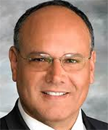
Paul Leon
“The first thing we have to do is roll back job killing regulation and prevent any further job killing bills from being passed,” Leon said. “I will go through the books like a Roto-Rooter to find the worst laws that are still in effect prohibiting businesses from being successful. I would also like to see put in place a program that replaces redevelopment and gives cities the tools to be productive again.”
Two of Leon’s strongest and best funded competitors in the race are Torres and Walker. All three have served as mayors. In Torres’ case, she was Pomona mayor before she went on to the Assembly. Walker was Chino mayor and later a member of the county board of supervisors before achieving the post of auditor controller. Leon acknowledged that Torres and Walker had held leadership posts equal to his own but said he stands over them in terms of what he has achieved in that leadership role.
“What distinguishes me from them is what distinguishes Ontario from Pomona and Chino,” he said. “Look at Pomona when Norma was mayor and the legacy of what she left. Look at Chino when Larry was mayor and what came afterward. Then look at Ontario. There is no comparison. The record speaks for itself.”
Ontario is the economic powerhouse among San Bernardino County’s 24 cities, with revenue into all of its funds – general, reserve, enterprise, special project, etc. – that dwarfs those of the others. The city’s $442,692,349 2012-13 budget is more than twice the size of the next largest spending city in the county.
“The success of the city of Ontario wasn’t an accident,” Leon said. “It took leadership that had the discipline and guts to say no when the money was flowing, so that now we are financially secure now that the flood gates of money coming in are closed. It wasn’t always popular to refuse growing our expenditures and expanding our programs, but today we aren’t closing our libraries and community centers and laying off our staff and reducing our city programs. All of those are just as robust and successful today as in the boom times. We are still living within our budget. The quality of life in Ontario never changed even though the economy fell through the floor. You cannot say that for those other cities. Ask anyone where they would want to live – in Chino of the 80s or Pomona of a few years ago or Ontario today and in the future. Investing in Ontario and living here is not a bad decision. Ontario has a bright future. I think I had something to do with that.”
Leon said that since he understands what it takes to run a city efficiently, he can take that knowledge to Sacramento and advocate on behalf of local citizens and governments to ensure that the state government does not bully smaller agencies and governments and the taxpayers to maintain its bloated and inefficient, tax-wasting programs.
“Becoming state senator will give me a great opportunity to speak with not only members of the legislature but public officials at the local level and share my ideas and vision,” he said. “I do believe local government is important. Local government should get every opportunity to control its own destiny and govern itself. I do not think the state should take away from local governments the opportunity to make decisions for themselves. My goal will be to make decisions in Sacramento that will support those at the local level and shape laws and regulations that are beneficial and not restrictive. Members of the legislature are permitted to go back after the fact and change the record on the way they voted, even though that doesn’t change the result of the vote. I will never change my vote or change the record to reflect that I voted any differently than the votes I actually cast. I will study the issues before I vote. I will not cast a vote if I do not know ahead of time the impact my vote will have. For a public official to vote one way and then say later he voted a different way is completely ridiculous.”
If he is sent to Sacramento, Leon vowed that he would fight to ensure that the state government “keeps its promise with Proposition 30,” which was passed by voters in November. “Proposition 30 was the best smoke and mirrors bait and switch proposition I have seen in years. They singled out schools and college tuition as the reason to increase our taxes, telling everyone that if this wasn’t passed they would have to take money from our schools and that the tax money would be kept for education. They used to say the same thing about the fire departments and the police departments but with pensions being the negative issue out there it became an easier target to threaten that the schools would be cut drastically. Now they are using that money for things other than schools. I would sponsor legislation that would prevent the legislature or the governor from threatening schools with budget reductions until Proposition 30 is no longer on the books.”
Leon said, “I believe I am the right person at the right time in the right place for this position. I think I look like and I share commonality with the population of this region. I share a culture and history with the people of the 32nd District, I have a great track record in running the most successful city in this region and I want to build on that by becoming a representative on a much broader level.”
Flap Ensues After Walker Omits Treasurer Tax Collector From His Ballot Designation
San Bernardino County Auditor-Controller-Treasurer-Tax Collector Larry Walker has dropped the treasurer-tax collector portion of his title on his official ballot designation in his run for State Senate.

Larry Walker
Walker has joined five others – Democrats Norma Torres, Paul Vincent Avila, and Joanne Gilbert as well as Republicans Paul Leon and Ken Coble – in the race to succeed Gloria Negrete-McLeod as state senator in the 32nd Senate District. McLeod was elected to Congress in November with two years remaining on her term.
Walker, a former Chino mayor and member of the board of supervisors, in 1998 successfully ran for county auditor-controller-recorder. Three years ago, in a reorganization, the county recorder’s function was transferred to the county assessor’s office and the auditor-controller was made the county treasurer-tax collector. In accepting those added duties and title, Walker became the highest paid elected official in the county. He also sustained and overrode criticism that the treasurer’s and auditor/controller’s functions were incompatible ones and his holding both positions created a conflict, akin to a bridge builder also serving as the bridge inspector.
In filling out the paperwork for his state senate candidacy, Walker listed himself as San Bernardino County Auditor-Controller, omitting the Treasurer-Tax Collector portion of his title.
Accordingly, the San Bernardino County Registrar of Voters is using only half of his official title in his ballot designation. The Leon and Torres political camps, upon belatedly learning of how Walker would be listed on the ballot, launched protests. They see Walker as deliberately mislabeling himself or misleading voters by that designation. Under one theory, Walker is disassociating himself from the governmental function of tax collection, one which is not particularly popular with taxpayers. Moreover, the title change is also seen as an attempt to deflect the charge that in accepting the potentially incompatible roles of treasurer and auditor, Walker has compromised the financial operations of the county by entering into a circumstance that is rife with conflicts-of-interest.
On behalf of Torres, attorney Sam Crowe, and on behalf of Leon, the San Francisco-based Sutton Law Firm, undertook to file legal challenges of Walker’s ballot designation. At issue is that provision in the California Election Code which provides that a candidate’s ballot designation is to run to no more than three words, with an exception provided for elected officials, who are to use their full officeholder title without limitation or abridgement.
Crowe’s filing, on behalf of the Democratic Party which last month endorsed Torres, was withdrawn because of an alleged filing error. By the time that issue was resolved and before those acting on Leon’s behalf had moved forward with their challenge, the deadline for such a suit had elapsed.
Walker’s abridged ballot designation will now be the one presented to voters for the March 12 election. This led to accusations that San Bernardino County Registrar of Voters Michael Scarpello, a Democrat appointed by the board of supervisors and with Walker a fellow county department head, had shown favoritism toward a sitting county official, a charge that has been made previously.
Scarpello this week denied that his office was in any sense responsible for any advantage Walker may have gleaned from his edited ballot designation. He said the special election and its terms and timing are issues beyond his office’s purview.
“The secretary of state is in charge of the ballot designations,” Scarpello said. He offered his view that Torres’ and Leon’s lawyers had elected not to proceed with the legal challenges because “After researching this thoroughly they probably thought they would not be able to prevail. He [Walker] has an extraordinarily long title that would not fit on the ballot. It is not unprecedented for abbreviations to be used.” In this case, Scarpello said, abbreviations for auditor, controller, treasurer and tax collector would potentially be confusing to voters.
“The decision wasn’t our office’s, but if it had been, we probably would have approved the title of auditor controller,” Scarpello said. “I think that if someone believed his title was incorrect they would have challenged it in court. The fact that no one challenged it in court, speaks for itself.”
Scarpello did not contradict the assertion that Walker may benefit from using the title auditor controller, but said, “That is up to the candidate, what they believe is the most descriptive title. Someone can argue that description is misleading, and I am not speaking for Mr. Walker, but I think Mr. Walker’s contention would be that for years he has been recognized as the auditor controller and he would argue that using all of these shorter abbreviations of his full title would be confusing to the voters. I can’t make his arguments for him. This is an interesting dilemma, but that is what the courts are there for, to work this out for our candidates if someone makes that challenge. In this case, no one did.”
Montclair Considering Outsourcing Fire Service
Montclair city officials are giving serious consideration to the outsourcing of that municipality’s fire department.
A confluence of issues in this city of 36,664 bordering Los Angeles County has led to the possible dissolution of the two-station Montclair Fire Department in favor of contracting with the San Bernardino County Fire Department or the California Department of Forestry and Fire Protection, also known as CAL FIRE.
Ironically, the dissolution of the department in some measure was instigated by members of the department and their union, who have now given second thought to wisdom of the outsourcing options as currently proposed.
Both the county and CAL FIRE proposals being contemplated by the city council would entail administrative, operational and salary realities that are not in keeping with those the firefighters had in mind when they made the request. At the same time, city officials have embraced the outsourcing concept as one which will entail the regionalization of fire service and an expansion of resources. As such, there appears to be significant momentum pushing the city of Montclair toward the dissolution of the fire department.
At the root of the move are financial causes, brought on by the downturn of the economy, dwindling governmental revenue and the conflation of governmental services. As a result of the state of California’s shuttering of municipal redevelopment agencies throughout the state, toward the end of the 2010-11 fiscal year, Montclair laid off 10 employees as part of its effort to make up for its loss of redevelopment money. Throughout much of 2010-11, one of the Montclair Fire Department’s paramedic units was parked and the paramedics functioned from the department’s remaining engines, which stayed in service. Over the last year-and-a-half, the 27-firefighter department has lost three positions to attrition, and has not filled those vacancies, making up for the manpower shortage with overtime. In September, city manager Edward Starr, in a cost-cutting move that saved the city nearly half a million dollars a year in wages and benefits, elevated police chief Keith Jones to the position of director of public safety and gave fire chief Troy Ament his two-week severance notice.
Firefighters, concerned at the city’s parsimonious approach, looked to pick up whatever leverage they could. That included floating a proposal to have the fire department outsourced to the Los Angeles County Fire Department, where firefighters receive more generous salaries and benefits than do Montclair’s firefighters. And in another bid for political pull, the firefighters joined with the police union in backing two challengers, Sean Brunske and Richard Beltran, in the 2012 city council election in which long time incumbents Carolyn Raft and John Dutrey were standing for reelection.
Previously, the city of Upland approached Los Angeles County to see if its fire department would provide it with a fire service proposal. Los Angeles County turned Upland down because Cal Fire and LA County Fire have an agreement that Cal Fire will not come into Los Angeles County to seek contracts and Los Angeles County has agreed not to go into San Bernardino County or Orange County for contract agencies. For that reason, and because the San Bernardino County Local Formation Commission is opposed to having service boundaries cross county lines, Montclair did not approach Los Angeles County to provide a fire service proposal. Montclair did, however, consider mergers with the city of Ontario, the Chino Valley Fire Protection District, the county of San Bernardino and CAL FIRE. The county of San Bernardino and CAL FIRE responded to the city’s request for proposals. Both Ontario and Chino Valley declined, Starr said. Starr has now evaluated the proposals from San Bernardino County and CAL FIRE. In addition, there had been some discussion with the city of Upland about creating a joint powers authority to operate a fire department in both cities.
“Neither the county fire division nor CAL FIRE are contiguous with Montclair,” Starr told the Sentinel, “but CAL FIRE has a contract with Chino Valley and operates a fire station in Chino Hills that is engaged mainly in grasslands and wildlands fire suppression. They also have a service area north of Upland. The county’s closest fire station is in Fontana. Those service areas are not contiguous to Montclair but are close enough to provide normal and routine service.”
Starr pointed out that the vast majority of fire department activity is now emergency medical call related. He said that only seven percent of the calls the fire department responds to in Montclair pertain to fires.
“We have the equipment to serve the community and they have the ability to meet our needs,” Starr said. “This enhances resources. It doesn’t represent a denigration of resources. Regionalization represents a greater expansion of resources. They can provide economies of scale that make sense and might be appropriate.”
Starr said there is a better than even possibility the city will outsource the fire department.
“I have not polled the council,” he said, “but we have scheduled to have members of the council look at stations CAL FIRE and the county operate. I have looked and carefully analyzed the proposals and have provided the council with my executive summary. I would not speak for the council but I heard positive reaction to some of the points. I would say it sounds like they will give outsourcing a fair consideration.”
Starr said the firefighters’ union was strongly in favor of outsourcing the department to the county of Los Angeles because “They would have greater opportunity for advancement there. Los Angeles County has more resources. They also offer a higher pay scale and more benefits.” But outsourcing to Los Angeles County is not on the table and neither Ontario nor Chino Valley, which would have been the firefighters second and third choices, responded, Starr said.
“The firefighters association wanted LA County,” Starr said. The association has since objected to at least one element of the way the San Bernardino County Fire Department does business. The law firm representing the firefighters association, Lackie, Dammeier, McGill & Ethir, wrote a letter to the city, Starr said, “protesting the county’s employment of limited term firefighter paramedics. The county hires new personnel to serve as apprentices for three years, who are then hired The association made clear in the letter it does not like the limited term firefighter concept. On the other hand, CAL FIRE pays less than the county but when CAL FIRE’s premium pay component is considered, that brings their firefighters up to Montclair’s standard.”
Having rued what they wrought, the firefighters may now take a stand against the outsourcing, Starr said, though they may not be able to change the city’s course.
“They may have the will to oppose this but it doesn’t appear they have the political muscle,” Starr said. “They could try to give the city council some grief, but I don’t think that will work. The only gauge I have is the November 2012 election campaign and its outcome. The firefighters’ union combined with the police union to run two candidates against the council incumbents up for election. They did terribly. Both unions put a significant amount of money into the campaign. The one of their candidates who came closest had nearly 1,000 fewer votes than the incumbent who ran in second place. Their other candidate was off by 2,300 or 2,400 votes. This council has been resolute in whatever direction they choose to take. There is no infighting. They are not divided. Whatever they decide to do they will stick to, whether it is to keep the fire department or outsource it. It will probably be a 5-0 vote. I think the recession has told us a lot. Residents are no longer listening to public employees’ message that they are not receiving adequate pay and benefits.”
Chris Jackson, who heads the Montclair Firefighters Association, told the Sentinel, “All we are aware of is requests for proposals were sent out to the California Division of Forestry and the San Bernardino Fire Department. We made a request using the California Public Records Act to see the proposals and were denied. So, we do not know what is in the proposals or the terms, whether they mean downsizing or increasing the level of service or if this will be more expensive. We are waiting in the wings.”
Without actually seeing the proposal from CAL FIRE, Jackson said he is certain that agency offered “a lower level of fire service that would be a disservice to every citizen and business in Montclair. CAL FIRE is a wildlands fire agency that has no presence here. I know city manager Ed Starr wanted to look at them as an option, but the way they do business will not work here and it just does not make sense logistically. We are absolutely opposed to the California Division of Forestry. Their fire chief is in Sacramento. There would be no local control.”
The best option, Jackson said, would have been the Los Angeles County Fire Department. It was absolutely untrue, he said, that jurisdictional conflicts would prevent such a takeover.
“The Los Angeles County Fire Department is one of the premier departments in the country,” he said. “There is nothing to keep us from going with L.A. County. Both Pomona and Claremont are on our border and we have mutual aid with both of those cities and Los Angeles County. We wanted the city to look at all options and they did not do that.”
Jackson said the city had limited its invitations to San Bernardino County and CAL FIRE, bypassing both Chino Valley and Ontario, both of which he said would have been excellent choices. “Large entities can provide more services, more quickly” he said. “Those departments are right next to us. There would be no delays in transport time with either Ontario or Chino Valley.”
At the same time, Jackson said, Montclair’s firefighters are favorably disposed toward the San Bernardino County Fire Department. “With them, we would still have local control. Their fire chief, Mark Hartwig, an outstanding individual, has an office in San Bernardino. The county would offer greatly enhanced availability of services. They would be able to put a whole lot of boots on the ground and they offer resources that are more than adequate. San Bernardino County would be far superior to CAL FIRE.”
Starr indicated the joint power Upland Montclair fire department concept is still under consideration, but is on “the back burner,” he said. “Upland has its own financial issues.”
He said that if CAL FIRE or the county subsumes the fire department, all 24 of the current firefighters working in Montclair will be absorbed into the new operations.