
ADELANTO—In an ironic twist, the “Parent Trigger” effort at Desert Trails Elementary School achieved precisely the opposite end that its participants intended.
The Parent Empowerment Act, authored by former state senator Gloria Romero and passed by the legislature in 2010, enables a majority of parents at a school at which students test out as low-performers on state academic tests to force a district to implement significant reforms, ranging from replacing the principal and up to half the staff to reopening the school as a charter academy. That process is known by the colloquialism “parent trigger.”
At Desert Trails Elementary, where pupils there have consistently scored among the bottom 10 percent of students statewide in California’s standardized testing program for the last eight years, a group of parents which was egged-on by a group committed to greater parental control of the public education system, Los Angeles-based nonprofit Parent Revolution, formed a parents union and sought to invoke the parent trigger. Their stated goal was to sack the school’s principal, David Mobley, and surrender to the school’s parents authority in hiring his successor, infuse in the new principal firing and hiring authority for the school’s faculty, get rid of several inexperienced teachers, reduce class sizes and increase the number of school days and instructional hours, and include more science, history and art in the curriculum.
Though the parent union gathered 466 signatures, which it claimed was more than enough signatures to advance its petition, district officials reviewing those petition forms threw out 165 of those signatures for technical reasons or on the basis of rescissions anti-parent trigger activists gathered from some of the signers. Thus, the district is claiming, the parent union fell 20 signatures short of the 331 required to force the school takeover.
As fate would have it, the dire financial circumstance facing the entire state and the school district seemed on track to accomplish at least part of what the parent trigger advocates were calling for, with the district having provided preliminary notification to 18 of the teachers in the district with the least seniority, including four at Desert Trails Elementary, that they were going to be laid off with the commencement of the 2012-13 school year.
The Desert Trail Elementary parent union, with the backing of Parent Revolution and its legal representative, the Los Angeles-based law firm of Kirkland & Ellis, contested the district’s action in disqualifying the petition, filing suit in Victorville Superior Court on behalf of five of the parents in the parent union on April 6. Meanwhile, an administrative law judge, Coren D. Wong, was enlisted to see if some compromise could be mediated between the district and the parent union.
Amid the parent union pushing for a radical makeover of the school and greater control of academic operations and the district seeking maintenance of the status quo, Wong on May 4 ruled the district, despite the pending legal action, had grounds to proceed as usual and layoff district personnel as the district’s administrators and board deemed fit.
But the school board, concerned that enforcing teacher layoffs that would increase class size at Desert Trail Elementary would feed the charge that the district is not being diligent about achieving educational goals at the school, at a specially called meeting on May 9 rescinded the layoff notices.
The school board in March voted to issue the preliminary notices because such notification is required under state law by March 15 in advance of terminating teachers’ employment with the onset of the next academic year. Had the parent trigger application succeeded, the district could have seen its funding by the state cut in proportion to the 660 students enrolled at Desert Trails.
This morning, at 8:30, a hearing on the Parent Desert Trails Elementary Parent Union’s pending petition for the takeover of the school is to be heard in Victorville Superior Court.
Author Archives: Venturi
Environmental Cooperative Protests Chino Hills Undergrounding
The California Public Utilities Commission’s agreement to enter into negotiations with the city of Chino Hills and Southern California Edison for the undergrounding of power lines Edison intends to span across the city elicited a protest from a coalition of environmentalists and companies devoted to producing non-polluting renewable energy.
In its effort to meet state-mandated renewable energy goals, Southern California Edison has undertaken the $2.1 billion Tehachapi Renewable Transmission Project, which is intended to generate at least 1,500 megawatts of power from new windmills to be erected within a 50-square mile wind field in the Tehachapi area, an undertaking three times the size of any existing wind farm in the United States. In routing the lines carrying that energy southward from Kern County to the Los Angeles Basin, Edison sought, and in 2009 obtained from the California Public Utility Commission over Chino Hills city officials’ objections, permission to utilize the power line right-of-way through Chino Hills from Tonner Canyon to the Riverside County line. The city of Chino Hills sued Edison in 2010, claiming the company was on the verge of “overburdening” the power line easements, but West Valley Superior Court Judge Keith D. Davis ruled the California Public Utilities Commission has exclusive jurisdiction regarding the route used by Edison. Chino Hills appealed Davis’s ruling to the 4th District Court of Appeal, but on September 12, 2011 the appeals court affirmed Davis’ finding that the California Public Utilities Commission and not the courts has exclusive jurisdiction over property rights issues between the city and Southern California Edison (SCE). That legal effort cost the city more than $2.3 million.
Beginning last year, Edison, which has long had a 150-foot wide right-of-way for its power lines that runs for 5.8 five miles through upscale Chino Hills, erected 12 of the towers within the city limits and another 5 in Carbon Canyon. In October, the city made a last ditch appeal to the California Public Utility Commission (PUC) and Public Utility Commission Chairman Michael Peevey in particular, and the commission in November moved to impose a temporary halt to the erection of more towers while a potential alternative, such as undergrounding the lines or rerouting them through Chino Hills State Park, is explored.
On May 3, the California Public Utilities Commission announced that confidential settlement negotiations between Southern California Edison and the city of Chino Hills on the routing of a 500-KV power line through the city were commencing. Those negotiations represent an effort by the commission, Edison and the city of Chino Hills to agree upon undergrounding the line beneath the existing right-of-way in the city. California Public Utility Commission President Michael Peevey said, “All of us at the CPUC are hopeful these negotiations, with the active involvement of our general counsel, will be successful and produce an outcome that satisfies the concerns of the citizens of Chino Hills, while fulfilling the transmission needs of SCE and its renewable energy suppliers.”
According to Edison officials, the cost of digging a six-foot wide, 3.8-mile long trench the entire length of the existing easement through town and burying a single 500 kV line will cost $300 million to $473 million and undergrounding a double-circuit line along the same span will cost from $703 million to $1 billion.
After the announcement that the confidential negotiations were ongoing, the Center for Energy Efficiency and Renewable Technologies, known by the acronym CEERT, filed a motion with the Public Utilities Commission, calling the negotiations on an issue already settled “an abuse of discretion” and asking the commission to halt the negotiations.
According to CEERT, straightjacketing Southern California Edison into negotiations which presuppose the specific requirement that Edison underground the lines constitutes “a due process violation.”
Moreover, according to CEERT, the confidential nature of the negotiations, together with the commission’s failure to give proper legal notice of the negotiation process, improperly excluded a number of parties, including CEERT, which had previously gone on record as being opposed to the reopening of the approval process for the lines.
Under discussion in the negotiations, which are being carried out behind closed doors, is how the additional cost of undergrounding the lines will be defrayed and by whom. At stake in those negotiations will be whether the city of Chino Hills will issue municipal bonds to pay for the undergrounding, whether SCE will place a surcharge on Chino Hills electricity customers to pay for the undergrounding, or whether Edison will spread the cost among all of its 15 million customers through general rate increases. Any municipal bonds issued by the city to pay for the undergrounding would be debt serviced by increased property taxes on Chino Hills homeowners and businesses for 25 to 30 years.
San Bernardino Hit With Eight Murders In Nine Days
The city of San Bernardino was beset with a rash of homicides commencing on April 28, resulting in eight murders in nine days.
At 11 a.m. on April 28, 2012, San Bernardino Police responding to a call of shots-fired in the 1200 block of North Mountain View Avenue found cousins Rudolfo Trujillo, 29, of Rialto, and Daniel Aguilar, 33, of Fontana, fatally wounded. Both men were pronounced dead at the scene by paramedics. The department’s homicide detail is continuing to investigate the incident.
On May 2, 2012 at 6 a.m., officers responding to a shots-fired call found Askia Salahuddin, 68, of Rialto, near the front porch of a home in the 700 block of North Anselmo Avenue, suffering upper body trauma from an apparent gunshot wound. Salahuddin was pronounced dead at the scene at approximately 6:30 a.m. Witness told officers a car-to-car shooting in the neighborhood preceded Salhuddin’s death. It appears that Salahuddin may have been a bystander.
On May 4, 2012, officers responding to a 5:47 a.m. shots-fired call in the general area of the 2000 block of Western Avenue were unable to locate any indication of a shooting. At 6:15 AM, officers were dispatched to the alley of the 2000 block of Western Avenue with regard to a person down, later identified as Djuna Joann Benjamin, a 48 year old resident of Rialto, who was suffering from upper body trauma. Benjamin was pronounced dead at the scene. The homicide squad has yet to develop suspects or a motive in the slaying.
At 9:17 p.m. on May 5, San Bernardino police officers were summoned to the Dellman Heights Recreational Center at 2696 N. Flores Street by a report of possible gunfire. Officers learned at the scene that two men, later identified as Corey Broussard, a 31 year old resident of Victorville and Ramiro Aguilar, a 35 year old resident of San Bernardino, had sustained upper body trauma and had been transported to a local hospital by private vehicle. Both Broussard and Aguilar were pronounced dead at the hospital. According to witnesses, an argument between Aguilar and Broussard led to the shooting, but it has not been established who did the shooting. Two others were also wounded, including Luisa Villalobos of Chino Hills, who sustained a gunshot wound to the head. She was transported to Arrowhead Regional Medical Center where she was placed on life support. She died on May 8 as a result of her injuries. The San Bernardino police department’s homicide division is investigating the matter.
On May 7, 2012 at approximately 8:27 p.m., paramedics and San Bernardino police responding to an emergency call to a home in the 700 block of North Pershing Avenue found David Jamieson, a 51 year old resident of the home, suffering from knife wounds. Jamieson was transported to Loma Linda University Medical Center where he succumbed to his injuries and was pronounced dead at 10:00 p.m. A long time friend of Jamieson who had been living with Jamieson and his wife, Donald David Martin, 47, went to the police station shortly after the incident and told police he had stabbed Jamieson in self defense, apparently with a kitchen knife. Based upon what investigators said were inconsistent statements Martin provided, he was arrested.
City Of Twentynine Palms In Daring Bid To Salvage Redevelopment Money
TWENTYNINE PALMS — The city of Twentynine Palms finds itself on the cutting edge of an innovative effort to blunt the state’s dissolution of municipal redevelopment authority. As a consequence, nearly a hundred cities up and down the state are watching to see whether the city of 25,048 deep in the outback of San Bernardino County’s Mojave Desert has successfully outmaneuvered Governor Jerry Brown, his staff and the state legislature.
All of California’s cities were forced to phase out their redevelopment authorities, which used a variety of financing mechanisms to eliminate blight and spur economic development.
Pursuant to two bills put forth by Brown and passed by the legislature last year which were challenged by a coalition of cities but upheld by the California Supreme Court, the agencies were closed out and their funding routed to law enforcement and education.
Effective February 1, all municipal redevelopment agencies were dissolved. Part of the legislation shelving the redevelopment agencies called for cities to create for themselves or have the county create for them a successor agency to each city’s former redevelopment agency to oversee and wind down that agency’s functions and dispose of its enforceable obligations by scheduling and executing the payments needed to discharge those obligations. The legislation also called for an oversight board to work in concert with each county’s auditor-controller and the California Department of Finance to oversee the successor agency through the dissolution process.
In 2011, while the redevelopment agency dissolution legislation was being considered in Sacramento, the Twentynine Palms City Council, which doubled as the city’s redevelopment agency board, issued two tax allocation bonds for a downtown revitalization undertaking known as Project Phoenix. That bond money was made available before the law went into effect but was never expended.
On April 11, 2012, the Twentynine Palms oversight board held its first meeting. At that convocation, the city’s legal counsel, A. Patrick Munoz, delivered his legal opinion that the non-taxable bonds issued last year created specific obligations between the city, the issuer, the bond underwriter and the bond purchasers, and as such are enforceable obligations. Munoz, of the law firm Rutan & Tucker, suggested that if the city were to turn the bond proceeds over to the state and the state were to use the money for a purpose other than what the city had specified that would constitute fraud.
“If the proceeds were turned over to the state to be re-allocated for operational purposes, these proceeds would no longer be tax-exempt if they were not used for public works projects,” Munoz maintained. “That creates concerns as to whether we violated federal tax laws and federal securities laws due to promises we made to the public when we sold the bonds versus the way we’re using the bonds.”
Building on that basis, Munoz announced publicly a bold strategy of having the successor agency lay claim to the redevelopment money and proceeding with the previously ratified redevelopment programs, including Project Phoenix. The state will have to go along with the city’s discharge plan because the bonds are enforceable obligations and the proceeds are secure, Munoz theorized. Munoz suggested the city will have to be very precise about how the money earmarked for Project Phoenix is expended.
Munoz said he is drafting a contract between the successor agency and the city, by which the successor agency will turn over the bond spending authority to the city with a directive that it go toward Project Phoenix. That contract will come before the city council on May 22. For the bond proceeds to then be utilized for Project Phoenix, the oversight board, which meets on May 23, will have to endorse the plan.
Munoz acknowledged there was a possibility the city will “end up in a legal fight with the Department of Finance.”
Some preliminary work in laying the ground for the ploy Munoz outlined has been done by a city consultant, Rosenow Spevacek Group.
The oversight board has approved the obligations payment schedules for the last six months of the current 2011-12 fiscal year and the first six months of 2012-13 and those schedules are being processed by the county auditor, state controller and State Department of Finance for approval.
The city had two earlier-issued tax allocation bonds outstanding for a total of $31 million and another $11.6 million for Project Phoenix, which was to include community housing and affordable housing, previously considered routine components of redevelopment projects. On April 17 the California Department of Finance sought supporting documentation for the schedules, in particular that pertaining to Project Phoenix. The Department of Finance followed up on April 27 with a letter expressing doubt that Project Phoenix’s housing components came under the definition of enforceable obligations since no contracts for the provision of the housing elements had been executed.
According to Rosenow Spevacek, however, even though Department of Finance supervisor Evelyn Suess on May 2 “stated that without contracts in place the redevelopment agency could not consider Project Phoenix an enforceable obligation, … the bond proceeds are considered enforceable obligations in the eyes of the Department of Finance” because the Twentynine Palms redevelopment agency issued the bonds prior to last year’s legislation shutting down the redevelopment agency.
In this way, it appears that Munoz’ theory that the city beat the bond issuing deadline last year and yet may be able to complete its last round of redevelopment projects might hold up if the city can ink the Project Phoenix contracts.
If the strategy works, Twentynine Palms might set a precedent for any other cities that like it issued bonds prior to the legislation taking effect last October
Ghost Of Postmus Past Haunts Gonzales
Board of spervisors chairwoman Josie Gonzales’ past endorsement of her one-time board colleague Bill Postmus surfaced to complicate her current run for reelection, as her political foes have raised her association with Postmus and other local Republicans as a ploy to deny her the San Bernardino County Democratic Central Committee’s party endorsement.
Gonzales is being challenged by Silvia Marroquin, of Fontana, and San Bernardino businessman John Taack, a Republican, in this year’s election for Fifth District supervisor. Gonzales was initially elected to the board of supervisors in 2004 and reelected without opposition in 2008, capturing 100 percent of the 14,972 votes cast in the Fifth District four years ago.
While county supervisor is a non-partisan office, San Bernardino County is a particularly partisan county. The First, Second, Third and Fourth Districts are predominantly Republican areas. The Fifth District, which encompasses portions of Fontana and San Bernardino, and all of Bloomington, Rialto, and Colton, alone among the county’s districts is predominantly Democrat.
Both Marroquin and Gonzales are Democrats. Previously, the incumbent Gonzales had assumed her party would automatically endorse her for reelection. But another Democrat. Gil Navarro, took exception with Gonzales’ past associations with Republican politicians, including former supervisors Bill Postmus and Paul Biane, who were also chairmen of the Republican Central Committee while each was serving as board chairman from, respectively, 2004 to 2006 and 2007 to 2009.
Navarro, cited Section 9 of the San Bernardino County Democratic Central Committee’s by-laws, which states, “The SBCDCC (San Bernardino County Democratic Central Committee) shall also consider any resolution of “do not support” for candidates in nonpartisan races. Such resolution may be made by any SBCDCC member. The resolutions must be in writing and accompanied by documentary proof specifying the reason. The reasons must be limited to failure to uphold the platform of the Democratic Party or support by the candidates in question of non-Democrats in other races.” Navarro submitted accompanying evidence that Gonzales had supported both Postmus and Biane in their past political contests.
The full Democratic Central Committee on April 26 turned back Navarro’s “do not support” resolution for Gonzales by a 14-13 margin. The resolution would have needed 60 percent passage to go into effect. The committee voted to endorse neither Gonzales nor Marroquin.
Navarro referenced several Republicans Gonzales had endorsed, including Fontana Mayor Acquanetta Warren and Fontana Councilman Michael Tahan. It was her endorsements of former county Republican leaders Postmus and Biane that were most damaging and embarrassing, however, and not just because of party affiliation.
Both Postmus and Biane were indicted in connection with accusations put forth by the county district attorney’s office and the state attorney general’s office that implicated them in an extortion and bribery plot relating to a November 2006 vote by the board of supervisors to confer a $102 million payment on the Colonies Partners development consortium to bring to a close a lawsuit that company had brought against the county over flood control issues at the Colonies at San Antonio and Colonies Crossroads residential and commercial subdivisions in northern Upland.
Postmus has pleaded guilty to multiple felony charges contained in the first of those two indictments, including charges he solicited and received bribes from Jeff Burum, a co-managing principal in the Colonies Partners, in the form of two separate $50,000 contributions to political action committees he controlled. Biane was charged in a second superseding indictment related to that matter. He is accused of taking a $100,000 bribe from Burum in the form of a single $100,000 contribution to a political action committee he controlled with his former chief-of-staff, Matt Brown.
Gonzales, in that November 2006 vote relating to the $102 million payment to the Colonies Partners, joined with then-supervisor Dennis Hansberger in opposing the settlement. Postmus, Biane and supervisor Gary Ovitt supported the payout. Ovitt’s then-chief-of-staff, Mark Kirk, likewise received a $100,000 contribution to his political action committee and was indicted along with Biane, Burum and Jim Erwin, a former county sheriff’s deputy union chief who was serving as a consultant to Burum. Burum, Biane, Erwin and Kirk have all pleaded not guilty.
One of the pieces of proof that Navarro provided to the Democratic Central Committee in support of his resolution was a 2006 mailer sent out during Postmus’ run for assessor which contained a photo of Postmus and Gonzales together and Gonzales’s laudatory comments about Postmus.

Josie Gonzales’ opponents dredged up this mailer from Bill Postmus’ 2006 campaign for county assessor to deny her the Democratic Party’s endorsement this year.
It is not anticipated that the Democratic Central Committee’s failure to endorse Gonzales will have more than a marginal impact on the election’s outcome. As of the most recent filing period for campaign finance reporting on March 17, the incumbent Gonzalez had $877,123.33 in her campaign coffers. As of the same date, Marroquin and Taack had no money at all.
Winkler-Beach Making A Stand As Dean Of Candidates
If Thelma Winkler-Beach is elected to the California Assembly this year, upon being sworn in she will become the senior member of the legislature. That is because, at the age of 94, she is the oldest candidate in California seeking state office.
Her age is no handicap, as she remains as spry as others four decades her junior and her mental alacrity surpasses that of her opponents as was demonstrated when she made herself available to the editorial board of the Riverside Press Enterprise, which was interviewing candidates in the 47th Assembly District collectively. While the other candidates whose ages combined did not equal Winkler-Beach’s responded to the board’s questions relying on index cards and pre-written position statements, Winkler-Beach was the only one who had no notes and she, in the words of one of the participants, was the only one to “spit out the answers short and quick.”
A Republican, Winkler-Beach is one of the leading members of her party as an alternate member of the San Bernardino County Republican Central Committee, which oversees the GOP at the local level.
In explaining to the Sentinel her position with regard to current issues facing the 47th Assembly District and California as a whole, Beach-Winkler sought to make a case for her candidacy.
To correct California’s chronic budget problems, Winkler-Beach said, she wanted to “look at cutting out waste and the duplication of services. I’d look at the budget with the budget director of all agencies. I’d listen to the heads of all departments. I would make a long, comprehensive review of the system and restructure the approach and responsibilities with new innovative methods of setting aside funds for pensions and education in a manner that does not impact negatively on our future generations.”
With respect to the state’s taxing structure, she said she would not support raising taxes but would plug the budget gap by jump-starting the economy to broaden the tax base. “I would support efforts to increase the tax base to raise greater revenues without the need for tax increases,” she said. “I oppose tax increases through rate hikes. Tax increases should be acquired through tax base growth. Loopholes in tax codes must be reviewed. Services should be provided through means of addressing loopholes and deregulation of laws that drive out businesses and are counterproductive to growth. Growth in the local economy will resolve many tight budget issues. I support cuts in areas that require greater expense than in the private sector. Each area of government services should provide the same quality as the private entities and at comparable costs. Once this baseline is established, then specific cuts can be applied. We must continue to support our senior citizens, and the disabled, without mitigating down their quality of care.”
Winkler-Beach said the current system of pension and health care benefits for public-sector retirees would soon bankrupt the state and had to be reformed. “The issue of pension reform and health care benefits must be on the table for sustainability for future generations, as the present system is not sustainable for the near future.”
She said she was opposed to pursuing a high speed rail system as a state project and made a pun in expressing her opposition. “The state is on the wrong track,” she said. “Let the private sector address rail projects.”
Winkler-Beach said the state had to ensure a reliable water supply through “programs that do not drain water resources, including water recycling. Innovative approaches such as desalinization and storage of excess snow runoff are important to mitigate water waste.”
With regard to turning around the markedly high poverty rate within portions of the 47th Assembly District, Winkler-Beach called for “Education programs oriented to vocations, coupled with development or manufacturing opportunities in the community; deregulation and working as partners with the private sector. Reassessing opportunities to tie into medical and pharmaceutical manufacturing business would be a first step.” This approach, she said, “would also allow individuals in the 47th to get a broader view of global opportunity.”
Winkler-Beach said her top three legislative priorities for the 2013-14 session would be to “fix the budget problems, create business growth incentives and to be a voice for issues related to senior citizens and the disabled.”
If the voters choose her to represent them, Winkler-Beach said, “I will go to Sacramento with an open mind and a good many years of experience, a copy of the Constitution, my Bible and a dictionary. I will concentrate on the economy, jobs, taxes and a no frills budget. I will stress free enterprise and less government intervention and be conservative in all areas, including pensions and a budget that is simple, specific and doable. I would look at all regulations the businesses complain are most troublesome and hamper them to see if they could be modulated.”
She said she intends to “address AB109, the early release of felons, and address securing our borders. I would alter some laws that would help prison overcrowding and stop putting felons on parole.”
Furthermore, she said, “I would support AB 1539, the $3 fee to all moving traffic fines in order to support spinal cord research, more specifically, the use of embryonic stem cell research. I would vote no on Proposition 28, which contains language written to confuse voters on term limits. I would want to know and read all the pending bills. I would ask all mayors to send me a list of five of their most pressing problems and work with them to help solve them.”
Winkler said, “I’d want to prohibit the schools from teaching what the parents should be teaching, or choose not to teach, at home, like homosexuality, etcetera.”
Winkler-Beach was born and raised in South Carolina. She married and moved to New York, where she began her career with the New York City Department of Corrections. In New York, she became active in trying to get physically disabled children in school. Working in conjunction with the PTA, the New York City Board of Education and legislators in Albany and Washington D.C., she obtained for disabled students the right to attend public schools, but was dissatisfied with a requirement that they be separated from the general student population into so-called “Health Improvement Classes.” She pushed for, and was successful in having the Mainstreaming Law included in the Civil Rights Law.
Her continuing commitment to equitable treatment of the handicapped was proven out in her efforts to ensure that educational funding for the handicapped was not diverted to other programs, as well as her advocacy for disabled veterans, including obtaining “kneeling” buses, curb cuts, and accessibility to the subway for those using wheelchairs and walkers.
A resident of Grand Terrace since 1983, she has been involved in a multitude of community improvement efforts, operating a referral center for senior citizens out of her home and successfully lobbying city officials to build a senior citizen center.
In 1995 she received from the state legislature and the Inland Caregiver Resource Board the California Family Caregiver Award for her “exemplary courage, dedication and commitment as a caregiver and her tireless commitment in meeting with local and state officials and their staffs, educating them on the challenges of long-term care and the needs of families that provide it.”
Among her organizational affiliations, Beach-Winkler is a member of the Friends of Reagan Park, Grand Terrace Republican Woman, the Grand Terrace Woman’s Club, the Grand Terrace Chamber of Commerce, the Grand Terrace Friends of the Library, and the San Bernardino County Federation of Republican Women.
Winkler was educated at Manhattan Community College and the John Jay College of Criminal Justice. She worked with the New York City Department of Corrections, where she promoted into a position of budget analyst and eventually achieved a position there as a senior administrative staff member before she retired.
She is widowed with two grown sons, William and John, one grandson, John, Jr., and “one beautiful great granddaughter,” Rhianon.
Undergrounding Power Line Cost Could Reach $1 Billion
A negotiated arrangement by which a 500 kilovolt power line Southern California Edison is routing through Chino Hills will be laid underground instead of being strung from 198-foot high towers could depend on how much taxpayer money city officials will be willing to commit to defray Edison’s cost in making that change, according to those involved in the negotiations.
In its effort to meet state-mandated renewable energy goals, Southern California Edison has undertaken the $2.1 billion Tehachapi Renewable Transmission Project, which is intended to generate at least 1,500 megawatts of power from new windmills to be erected within a 50-square mile wind field in the Tehachapi area, an undertaking three times the size of any existing wind farm in the United States. In routing the lines carrying that energy southward from Kern County to the Los Angeles Basin, Edison sought, and in 2009 obtained from the California Public Utility Commission over Chino Hills city officials’ objections, permission to utilize the power line right-of-way through Chino Hills from Tonner Canyon to the Riverside County line. The city of Chino Hills sued Edison in 2010, claiming the company had “overburdened” the power line easements, but West Valley Superior Court Judge Keith D. Davis ruled the California Public Utilities Commission has exclusive jurisdiction regarding the route used by Edison and the suit was thrown out. Chino Hills appealed Davis’s ruling to the 4th District Court of Appeal, asserting the city had the right to have the case heard by a jury, but on September 12 the appeals court affirmed Davis’ decision, ruling that the California Public Utilities Commission and not the courts has exclusive jurisdiction over property rights issues between the city and Southern California Edison (SCE). That legal effort cost the city more than $2.3 million.
Beginning last year, Edison, which has long had a 150-foot wide right-of-way for its power lines that runs for 5.8 five miles through upscale Chino Hills, erected 12 of the towers within the city limits and another 5 in Carbon Canyon before a city appeal to the California Public Utility Commission (PUC) and Public Utility Commission Chairman Michael Peevey in particular succeeded in the imposition of a temporary halt in November to the towers’ construction while a potential alternative, such as undergrounding the lines or rerouting them through Chino Hills State Park, is explored.
According to Edison officials, any change to the approval of the overall project already given by the California Public Utilities Commission would boost considerably the already budgeted $166 million cost of that portion of the project through Chino Hills per the specifications adopted in 2009, entailing an added expense that would be prohibitive. A 96-page document Edison provided to the PUC in January discussed feasibility, cost and timing on 16 alternatives for having the power lines originating in Tehachapi traverse Chino Hills, including routing the lines through Chino Hills State Park at a cost of $424 million to $589 million, trenching out a six-foot wide and six-foot deep, 3.5-mile long swath through town and undergrounding a single line at a cost of $300 million to $473 million, undergrounding a double-circuit line at a cost from $703 million to $1 billion, utilizing a different route through the city and/or state park, and utilizing the existing right-of-way in other ways, one of which entailed erecting a larger number of shorter towers.
On May 3, the California Public Utilities Commission announced that confidential settlement negotiations between Southern California Edison and the city of Chino Hills on the routing of a 500-KV power line through the city were commencing. Those negotiations represent an effort by the commission, Edison and the city of Chino Hills to agree upon undergrounding the line beneath the existing right-of-way in the city. California Public Utility Commission President Michael Peevey said, “All of us at the CPUC are hopeful these negotiations, with the active involvement of our general counsel, will be successful and produce an outcome that satisfies the concerns of the citizens of Chino Hills, while fulfilling the transmission needs of SCE and its renewable energy suppliers.”
An anticipated sticking point in those negotiations is the cost the change will entail and who will bear that cost. Edison, which is complying with a state mandate in pursuing the Tehachapi Renewable Transmission Project, will press for all of its add-on costs to be defrayed, either by increased rates to either its customers in general or those within Chino Hills as a special surcharge, or to have the city pay directly for the plan change, possibly through the issuance of municipal bonds to be financed by assessments placed on Chino Hills’ homeowners’ annual property tax bills.
City officials, citing the sensitivity and confidentiality of the negotiations with Edison, offered no official comment on what financial participation the city is prepared to agree to in ensuring the high voltage lines are placed beneath ground level and that the towers are taken down.
Chino Hills councilman Ed Graham in an exclusive interview with the Sentinel on May 6 expressed the belief that undergrounding the electrical lines will be less costly than is being represented by Southern California Edison.
“Our numbers are hundreds of millions lower than theirs,” Graham said. “As a public utility they are not allowed to go back for change orders, so their proposals are always super-inflated. If they don’t have to make those change orders, then as a public utility they keep all their money. The numbers they submit are always high. We, the city, hired transmission consultants who came up with numbers that are much lower. Depending on the size of the lines, it will cost $100 million to $600 million more than the cost of going above ground.”
The actual cost is up in the air, Graham indicated. “How much it will cost is dictated by the PUC,” Graham said. “They are the ones who will tell us what size of lines will go beneath the ground. Edison is arguing for a much bigger line than is needed for this project.”
Graham was reluctant to make any statement indicating the city would take on all or a portion of the financial responsibility for undergrounding the line.
“Who will pay?” he asked, rhetorically. “That is another issue that the PUC will decide.”
City taxpayers have to date paid enough, Graham said. “We have invested quite a bit of money into this project already,” he said, in reference to the city’s legal bills in opposing Edison. He suggested that the city’s taxpayers had already been soaked when they bankrolled the effort to force Edison to look into further options for transmitting the electricity through Chino Hills. “The PUC does not do studies,” Graham said. “They require the utility companies to do the studies. I would expect the PUC to determine how much Edison should pick up and how much the ratepayers should pick up.”
Ultimately, Graham said, the cost would be passed along to Edison’s electricity consumers. He said that the cost should and would be spread out among the entirety of Southern California Edison’s customer base rather than a surcharge limited to Chino Hills customers.
“I expect it to be everybody who pays,” he said. “This project is to serve all of the state, or at least all of SCE’s customers in the state, which I think is somewhere in the neighborhood of 15 million customers.”
Graham said that no matter the outcome of the negotiations, towers were likely to remain within a two-mile stretch within city limits.
“This agreement only deals with first 3.8 miles,” Graham said. “The last two miles will not be underground. Those two miles run through open space containing several large lot private parcels. Those currently aren’t proposed to be underground. The PUC made that decision because it is expensive and undergounding though the undulating hills would be astronomical even for this.”
Graham acknowledged that many of the owners of the property surrounding the two-mile stretch are well-heeled and would thus be in a position to further resist Edison. In this way, further delays in the project are possible.
Nevertheless, Graham said, he anticipates the project to underground the line and complete the project would move ahead “sooner than later. SCE has a desire to move along with the project They have been delayed a long time. For them it is time and money. We agree. We just want it underground. Single cable, double circuit, double cable, triple circuit and double cable, it doesn’t matter to me as long as they take down the towers and bury the cable,” he said.
Baca Puts In Good Word For Embattled Departing SBCUSD Administrator Albiso
Even as San Bernardino City Unified School District Associate Superintendent Mel Albiso is taking his leave from the district’s second highest ranking staff position as the consequence of a mushrooming controversy involving charges of nepotism and racial bias in hirings and firings at the district, one of the region’s leading political personages rallied to his defense, referring to him as “distinguished, dedicated and effective.”
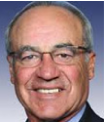
Joe Baca
Those accolades were offered by none other than Congressman Joe Baca, who lauded Albiso as “an administrator [who] has worked hard to ensure equal educational opportunity for all students.”
Albiso has been with the San Bernardino City Unified School District as an administrator in one capacity or another for 22 years. He was formerly a board member with the Colton Joint Unified School District until he was voted out of office there in 2010.
Over the last seven years, Albiso has been a figure of growing controversy.
Many view him in a positive light as a leader of the Hispanic community who has empowered himself and used his position to promote Chicano politics and Chicano economics and lead efforts in assisting Latinos being placed in places of authority within the educational arena in the Inland Empire.
Others, however, view him as someone who has cut corners and eroded the overall quality of the educational system by suspending standards when it comes to hiring or promoting Hispanics, his political and personal allies and members of his family.
In 2005 Albiso was promoted to the position of director of personnel for the San Bernardino City Unified School District. Largely on the strength of his relationship with then superintendent Arturo Delgado, Albiso in 2009 was promoted to the position of associate superintendent, despite the consideration that Albiso does not have an educational degree or any type of state credential, including an administrative credential.
In the associate superintendent’s position, which at $151,188 in annual salary and $60,000 in yearly benefits paid more than that of assistant superintendent, Albiso oversaw credentialed assistant superintendents and assistant principals, and was used in large measure by Delgado as an axe man in making layoffs and firings as the district dealt with declining revenues. This generated some degree of hostility toward Albiso.

Mel Albiso
There were suggestions that Delgado had promoted Albiso as part of a secret backroom arrangement by which Albiso would later arrange for Delgado to be hired as Colton Joint Unified’s superintendent if he were ever forced out of the San Bernardino position. Others were made suspicious by Albiso’s willingness to hire Arturo Delgado’s brother, David Delgado, as the principal of Cypress Elementary School.
Simultaneously, in the Colton Joint Unified School District, significant budgetary cuts were being made. As a member of the school board there, Albiso came under fire from that district’s teachers’ union.
Further controversy found Albiso as a consequence of what were perceived as nepotistic arrangements and cronyism involving his daughter and two members of the San Bernardino City Unified board.
Mel Albiso’s daughter, Nicole Albiso, was originally hired as a programmer with the district in 1999, even though she did not have a degree in information systems at that time. Despite poor evaluations during her probationary term, she was hired as a permanent employee. Subsequently, she resigned, but in 2001, after she changed her name to Nicole Ramirez, she applied with the district once more and was rehired. Despite objections by her immediate superior, Thomas McCauley Jr., that she lacked the proper qualifications, she was hired into the position of district web developer, a higher paying position, despite her competitors having outscored her on the job test and the consideration that she had herself not finished the test. In 2005, Ramirez resigned from the web developer position and wangled being rehired two days later as a “substitute” web developer who did not need to work out of the district office and could function from home or from the Ontario-based office of a company she operated, Advanced Computing Concepts. This led to suggestions that Nicole Albiso Ramirez was being paid by the district while actually engaged in work for Advanced Computing Concepts.
Complicating the matter was that among Advanced Computing Concepts’ clients were San Bernardino City Unified School District board members Dr. Elsa Valdez and Teresa Parra. Advanced Computing Concepts did work, according to its website, for the Valdez and Parra school board campaigns, including mail marketing of the candidates to voters, email marketing, Web development, campaign signs, fliers, fundraising event planning, and multimedia presentations.
Valdez and Parra endorsed Mel Albiso in his campaigns for the school district in Colton and he endorsed them in their races in San Bernardino.
Among those fired from their jobs with San Bernardino City Unified by Albiso were the district’s one-time director of maintenance and operations Ed Norton and the district’s personnel director Abe Flory. Both sued the district for wrongful termination, raising accusations that Albiso had based his firing and hiring decisions on ethnicity by sacking exemplary non-Hispanics and replacing them or seeking to replace them with less well qualified Latinos.
Norton prevailed in his lawsuit against the district based on allegations that Albiso had engaged in reverse racial discrimination in firing him. That suit cost the district $360,000.
Flory’s suit against the district was even more devastating to Albiso. To arbitrate that matter, the district brought in an administrative hearing officer, Norman Brand, the past president of the California Dispute Resolution Council, to look into accusations of racism and cronyism alleged against Albiso. Brand looked at Flory’s performance and the decision to fire him. He further examined Albiso’s decision to hire Teresa Parra’s daughter into a clerical position with the district along with his hiring of his sister-in-law, Laura Albiso, as a bi-lingual clerk with the district. Brand also pored over district documents to determine there was no record of Nicole Albiso’s test results for her hiring into the programming position in the district’s personnel file. Brand concluded Albiso had engaged in numerous examples of nepotism, cronyism and race-driven favoritism.
Brand told the district’s personnel commission that “The case of Nicole Ramirez, Albiso’s daughter, can only be explained by nepotism. The evidence of her special treatment is overwhelming.”
Brand found that Flory’s firing was unjustifiable and Brand recommended that Flory be reinstated with $550,000 in back pay. The district’s personnel commission confirmed Brand’s recommendation and called upon the district to pay Flory’s legal costs, consisting of $263,000 in attorney and court reporter fees.
The beleaguered 56-year-old Albiso last month accepted an early retirement offer in the form of what the district calls a Supplemental Early Retirement Plan, which will provide him with an annuity for five years based on his salary. He will officially leave the district in June.
While many in the community hailed Albiso’s departure as a positive development, Congressman Joe Baca was not one of those. He commended Albiso for a job well done.
“Mel Albiso has had a long and distinguished career in public service,” said Baca. “His 22 years of service with the San Bernardino City Unified School District have been of great benefit to students, parents and educators in San Bernardino and throughout the Inland Empire.”
Baca continued, “Mel has dedicated his career to improving student achievement and enhancing education in the Inland area. As an administrator, he has worked hard to ensure equal educational opportunity for all students. During his service on the Colton School Board, he promoted new construction and remodeling projects, including the building of a new high school and middle school, as well as significant upgrades to Bloomington High School and Colton High School. Mel was elected by the people to serve on the School Board and he never lost touch with the local community. He was active in numerous civic organizations, including the Kiwanis Club of Greater San Bernardino. He also demonstrated effective leadership through his participation in organizations such as the Association of Mexican American Educators. He also played an important role in organizing community events honoring Cesar Chavez, as well as raising money for the Inland Empire Scholarship Fund, which helps poor and disadvantaged students pay for college.”
Conaway Battling Ten Republicans In 8th Congressional District
Jackie Conaway, who is running for Congress in California’s Eighth Congressional District, proudly celebrates that she is a Democrat. Of her twelve competitors in the June primary, one is a fellow Democrat. Ten others are Republicans and one is a former conservative Republican state assemblyman who is attempting to reinvent himself as an independent. Conaway is a member of the California Democratic Party State Central Committee. She has received the Democratic Party’s endorsement in the race.
This June, California has gone to an open primary, such that all voters, regardless of party affiliation, will be able to vote for any candidate. The two top vote getters, again regardless of party affiliation, will then face each other in November. In this way, it is possible that in some November races throughout the state, Republicans may face each other or one Democrat may be pitted against another Democrat.
In the Eighth, the boundaries of which were redrawn as have been all Congressional districts statewide in compliance with the 2010 Census, Republicans hold a 41.9 percent to 32 percent voter registration advantage over Democrats.
Conaway, however, is not engaging in any torturous political calculations. She believes that despite party registration, voters in the High Desert are disenchanted with the GOP and its policies and are ready to support a populist.
When asked what she sees as the biggest problem facing the 8th Congressional District, Conaway answered tersely, “Republican Leadership.”
She said she was running because “We need to keep the government out of our bedrooms, our relationships and our doctors’ offices. As a woman, I will not give back the ground to those that would control our bodies based on their religious views and distorted views of the Constitution.”
Furthermore, she said, “We need to protect and fully fund Medicare, social security, VA benefits, school loan programs and the national park service.”
Conaway said her three top priorities are “protecting social security, Medicare and student loan programs by taking wasted dollars out of the defense budget going to contractors’ hands overseas that are not mission critical and rolling back the tax cuts extended two years ago for the upper one percent.”
Conaway said she is qualified to serve in Congress because “I have overseen technical and professional operations, educational programs, dealt with both domestic and international businesses and understand the importance of organized labor and technology to our future. On a personal level, I have acted as a general contractor in the building of two rural properties and refurbishing two others. I am ready for the challenge.”
If elected, Conaway said she would vote to “accelerate job growth by supporting the president’s infrastructure investment programs.”
She said she deserves the endorsement of the district’s voters because, “I have the ability to bring diverse people together to get jobs done.”
Conaway is currently employed as a law office manager. She was previously a principal in an English as a second language program for students from the Moscow Economic Academy & Moscow Gymnasium, a federal civil service clerk at the Yakima Firing Center in Washington, a health care worker and a private home school administrator.
She is married to attorney Bob Conaway, and with him has three adult children and three grandchildren
County Installs Call Boxes Along Treacherous Stretch Of Fort Irwin Road
FORT IRWIN—One of the most remote and dangerous stretches of highway in the county is being made a little less remote and somewhat more safe as 32 call boxes are now being installed along Fort Irwin Road.
The 30 miles of asphalt linking Barstow to Fort Irwin cuts through a particularly unforgiving portion of the desert and the road is statistically one of the most deadly corridors in both the Mojave Desert and San Bernardino County.
Historically, Fort Irwin Road has been a hazard because it was less than heavily travelled and accident victims often perished before help could arrive. Now, as many as 5,000 vehicles traverse the road in both directions daily, which on the positive side lessens the chance that accident victims will languish without notice for an extended period. But the more intense use of the highway as also upped the frequency of serious mishaps.
In this day and age, safety is usually enhanced by the ubiquitous presence of cell phones. Unfortunately, along much of Fort Irwin Road cell phone reception is hit and miss because of the scarcity of cell phone towers in the region and line of signal obstructions because of the curvature of the earth.
Using $41,276 provided by call box fees that are paid on all vehicle registrations, the county is erecting the boxes at strategically placed spots along the road. The call boxes incorporate higher-than-normal antennas to enable their signals to reach the region’s communication towers.
The call boxes can also be used by stranded motorists whose cars have broken down or given out in the oftentimes higher-than-100 degree heat of the Mojave.
The Fort Irwin Road boxes are among the first to be installed on a non-state or non-federal highway in San Bernardino County.