
The California Department of Finance is resisting the city of Chino’s efforts to stake a claim to a significant portion of the redevelopment funding it was forced to give up by the state of California last year.
Redevelopment agencies are, or were, adjuncts to local government intended to eliminate blight by encouraging economic development. Redevelopment agencies were empowered to issue bonds and use the proceeds from the sale of those bonds to create infrastructure or undertake improvement projects within a designated redevelopment project area. That infrastructure was intended to spur development and eradicate blight, thereby increasing the value of the property in and around the project area. The increase in property tax realized as a consequence of the improvements would then theoretically be utilized to debt service the bonds, i.e., make annual payments over a period of time – usually 20 to 30 years – to the bondholders. In other cases the redevelopment agencies would borrow money from the governmental entities that created them.
Last year, Governor Jerry Brown induced the state legislature to pass a law, ABX1 26, that called for the elimination of redevelopment agencies and for money normally passed through to them by the state to be utilized for education and law enforcement funding.
ABX1 26 and its companion law, ABX1 27, were challenged by a coalition of cities but upheld by the California Supreme Court and the state’s redevelopment agencies were closed out effective February 1. Part of the legislation shelving the redevelopment agencies called for cities to create for themselves or have the county create for them a successor agency to oversee and wind down that agency’s functions and dispose of its enforceable obligations by scheduling and executing the payments needed to discharge those obligations. The legislation also called for an oversight board to work in concert with each county’s auditor-controller and the California Department of Finance to oversee the successor agency through the dissolution process.
In April, after dissolving its redevelopment agency, Chino in compliance with the protocol laid out by the state, held a meeting of its redevelopment successor agency. That successor agency, taking stock of the consideration that the city of Chino had made more than $15 million in loans to its redevelopment agency for improvements in its redevelopment agency project areas, in April submitted to the state Department of Finance a recognized payment schedule for the first half of 2012 that called for the successor agency to begin retiring the debt on more than $15 million in promissory notes issued by the Chino Redevelopment Agency and held by the city of Chino.
Earlier this month, on May 16, the board for Chino’s successor redevelopment agency followed up on its April action, and again submitted to the state a recognized obligation payment schedule for the second half of 2012 that cited payment on the promissory notes as an outstanding obligation.
The Department of Finance, according to Jeff Oderman, an attorney for the Chino redevelopment successor agency, has rejected the approved list, holding that loans made to the redevelopment agency by the city that founded it are, with the dissolution of the redevelopment agency, invalid debts.
Chino is not alone among California cities in asserting it has a legitimate claim to be repaid for money it loaned to its now-defunct redevelopment agency. Chino appears to be leading the way among San Bernardino County cities in seeking to recover its loans, and other municipal officials are following the case. Either independently, or in concert with several other cities, Chino may file suit against the state to force the refunding of money in the form of loans made in the past.
According to a number of attorneys, the promissory notes from the Chino Redevelopment Agency held by the city of Chino, like many other debts pursuant to loan arrangements involving other cities and their respective redevelopment agencies, are enforceable under ABX1 26. ABX1 26 requires that any legal challenges to it take place in Sacramento Superior Court. That provision of the law was, ostensibly, intended to save the state the expense of having to send its lawyers into court in 58 different locations to respond to potential lawsuits. It also has the effect of making it expensive, perhaps prohibitively so, for cities to pursue such litigation. In this way, the state is calculating that most cities will elect to “write off” the loans.
Simultaneously, a move is on to apply a legislative fix to the dilemma. Assembly Bill 1585 would clarify a standard protocol for cities to collect on debts owed to them by their former redevelopment agencies. Governor Jerry Brown, who was the prime mover in the effort to shutter redevelopment agencies statewide with ABX1 26 and ABX1 27, is opposed to AB 1585 and is marshalling the Democratic Senate Leadership to kill the bill.
Author Archives: Venturi
Landowners Reject AV’s Annexation Overture
APPLE VALLEY—The owners of more than 2,700 acres on Apple Valley’s doorstep have turned down an invitation to be annexed into the town.
Town officials were pushing to have Apple Valley gobble up 2,774 acres referred to as the Golden Triangle, an area between Interstate 15 on the west, Dale Evans Parkway on the east, Johnson Road on the south and Morro Road on the north.
Last July, the town quietly proposed annexing the property, calculating that by taking over jurisdiction of what is now unincorporated county land, it could eventually impose up to $55 million in developer impact fees when the property is developed and that it would realize $1.3 million or more in property tax revenue over the next 20 years. The annexation would also have resulted in the area’s sales, property transfer and highway user taxes, and motor vehicle in-lieu fees accruing to the town, and it would have cleared the way for the Apple Valley Fire Protection District to net more than $5 million in fire developer impact fees. At a public hearing held last summer pertaining to the proposal, only one resident of the area objected to the annexation and the council unanimously approved initiating the annexation process.
The annexation would have provided the 2,774 acres and its residents with the full range of municipal services currently overseen by City Hall, including but not limited to law enforcement, road maintenance, street lights, code enforcement and animal control. The city further intended to allow for a mixture of housing and factories in the currently rural area with 168 residents, such that low density estate residential single family units would be allowed on 778 acres and industrial uses would have been permitted on 812 acres.
While town officials maintain the area’s residents were given adequate advance notice of the annexation attempt, many residents claimed they were not kept informed of the town’s intentions. Upon learning of the town’s application, many of the Golden Triangle’s residents objected to the takeover.
The county’s Local Agency Formation Commission, known by the acronym LAFCO, oversees such jurisdictional matters. An important criteria applied in annexation determinations is the willingness of the property owners to be annexed. By standards applied by LAFCO, if fewer than 25 percent of the landowners are opposed to the annexation, the town could proceed with the merger. If more than 25 percent but fewer than fifty percent express opposition to the annexation, the matter must be put up for a vote if the annexation is to proceed. And if more than fifty percent oppose the annexation, the annexation process must be suspended for at least one year.
A certificate of the termination of the annexation consideration dated May 3 signed by Rebecca Lowery, LAFCO’s deputy clerk, was received by the Apple Valley Community Development Department on May 10, informing town officials well over half of the area’s residents are opposed to the annexation. According to Lowery, the annexation consideration was terminated “due to protest by a majority of the registered voters within the reorganization area.”
The Golden Triangle in Apple Valley’s sphere of influence should not be confused with another area in the High Desert formerly referred to as the Golden Triangle, consisting of the property between the I-15 Freeway on the east, Highway 395 on the west and Bear Valley Road on the north. That property was the subject of an annexation war between Hesperia and Victorville in the late 1980s and early 1990s, a battle eventually won by Victorville.
Dire Financial Status Pushes CJUSD To Brink Of State Takeover
The financial condition of the Colton Joint Unified School District has deteriorated to the point that the California Department of Education, the San Bernardino County Superintendent of Schools or both will intervene by June 2014 if the district’s current spending patterns are not reduced.
In a highly sobering assessment May 17, Colton Joint Unified’s superintendent for business services Jaime Ayala informed the school board the district faces pending insolvency, such that it will likely have cumulative budget deficits approaching $26 million from the current and next two yearly budget cycles.
If the board, which has been hamstrung in the economies it has attempted to institute by an intransigent teachers union, does not substantially rein in spending, Ayala said the district will lose its spending authority altogether and the San Bernardino County Superintendent of Schools will take on oversight of the district’s coffers.
“If we do not start taking action quickly,” Ayala told the board, “I can almost guarantee you at this point that we will be insolvent sometime in 2013-14. The numbers draw no other conclusion. We are running out of time.”
Ayala’s warning galvanized the board into action. Three weeks ago the board, which is wrestling with a $7.8 million budget shortfall in the fiscal year ending June 30, had considered and then rejected cuts outlined by Ayala and district superintendent Jerry Almendarez which included reducing school bus transportation, delaying maintenance and making temporary swimming pool closures that would have saved the district $1.8 million in the current budget. At the suggestion of board members Patt Haro and Roger Kowalski, the board moved to reconsider making those cuts.
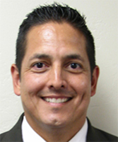
Jerry Almendarez
While many school districts utilize bonds and other forms of borrowing to finance the construction of schools, the Colton Joint Unified School District, which is responsible for the education of 23,000 public school students in all of Colton, Grand Terrace, Bloomington and parts of Fontana and Loma Linda, is a rarity in that in recent years it has taken to using borrowed funds to carry out operations and meet payroll. In the 2010-11 school year, 15.3 percent of the district’s revenues came from borrowed money, making Colton Joint Unified the largest deficit spender of all school districts in San Bernardino County. In addition to $10 million borrowed from private investors, the district to cover its operational costs has tapped into $19 million in bond financing and other funds set aside for such projects as building construction.
Beset with dwindling resources similar to those plaguing districts up and down the state, Colton Joint Unified does not appear to be in a position to sustain operations or keep up with the debt service on the existing loans. Indeed, were an audit of the district’s books to be carried out by the county superintendent at this point, Colton’s budget would be declared to be in so-called “negative status,” i.e., a circumstance in which the district is incapable of meeting its financial obligations, triggering the need for the state or the county superintendent to assume operational control.
There is a degree of irony in the district’s condition, since some of the district’s financial difficulty is a result of the state delaying payments as it struggles with its own fiscal challenges. At present, the district is considering borrowing another $32 million in the form of tax revenue anticipation notes, short-term instruments that will tide the district over until the state provides the remainder of the money due the district for the current fiscal year. That money should have arrived at the start of the final 2011-12 quarter April 1 but will not become available at least until July.
According to Ayala, Colton Joint Unified is heading toward a $7.8 million budget deficit in 2011-12, will be $20.2 million behind the eight ball in 2012-13 and will be $25.7 million in the red in 2013-14. “Deficit spending is destroying this district,” Ayala said.
The district’s deteriorating fiscal position has been accelerated by the Association of Colton Educators’ continuing efforts to challenge Almendarez. In May 2011, the district signaled that it would lay off 72 employees, including 57 teachers in a cost-cutting effort, but two months later indicated it had found funding to rehire 43 of the teachers. Teachers union agitators, however, engaged in ever more strident protests over salary and benefit cuts the district said it needed to impose to keep the district solvent.
Teachers insisted they had made more than adequate concessions and that the district was flush with money, including a surplus of $26 million. Almendarez insisted the teachers were mistaken and the $26 million referred to by protestors was a ledger anomaly. He said the money was actually due to be transferred into an account to be used for paying outstanding principal and interest on one of the loans to the district that was coming due.
More recently, the Association of Colton Educators have come to accept the dire financial circumstance of the district as a reality, and agreed to accept nine furlough days and some cuts in benefits during the upcoming fiscal year. District administrators have also accepted taking 14 furlough days in 2012-13. None of the district’s employee bargaining units have yet agreed to make salary concessions.
Hazlett Returns As PSA Business & Finance Head
SAN BERNARDINO – Peggi Hazlett, who was lionized as the prime mover in the effort to rehabilitate the Public Safety Academy last year but then resigned as the charter school’s executive director when it was suggested she was likewise profiting from her association with the school, has now returned to serve as the academy’s director of business, finance and communications.
The San Bernardino Public Safety Academy was founded by Michael Dickinson, a one-time arson investigator, in 1999 as an unaccredited educational seminar for teenagers pertaining to fire science. The seminars broadened to include law enforcement issues, and with the assistance of others, Dickinson established a campus at the former Norton Air Force Base. In 2005, the school received accreditation and Dickinson made a petition to transform the school into a charter academy under the sponsorship of the San Bernardino City Unified School District, achieving that goal in 2006. The academy found a niche among students who aspired to careers in the field of public safety. Nevertheless, under Dickinson the Public Safety Academy fell short of both educational and accounting goals over the several years of its operation, then plunged into chaos last year. Four years ago a financial review revealed the school had not kept accurate payroll and accounting records and had spent $164,000 that was not budgeted for. There were also questions about $20,000 worth of expenditures for laptops that were either never delivered, misappropriated or stolen. In January 2011, a report commissioned by the district found the academy’s accounting practices deficient and cataloged arrearages with regard to accounts payable.
In May 2011, Michael Dickinson’s wife who served as a principal at one of the school’s campuses, Susan Dickinson, fell under the charter school board’s focus after a report surfaced that she had crossed the line in prepping her students for questions contained in the state’s Standardized Testing and Reporting exam by showing them some of the questions contained in the test. When the charter school’s head principal, Kathy Toy, recommended that the board of trustees terminate Susan Dickinson, Michael Dickinson dismissed the board of trustees before they could do so.
At that point Hazlett, who was a board member of the Public Safety Academy, on June 20, 2011 filed suit on behalf of herself and her board colleagues against Public Safety Academy Inc., an adjunct to the academy set up and controlled by Michael Dickinson, who received $121,000 per year in salary for his services. That suit sought to restore the authority of the board that Michael Dickinson had terminated. In July, the court ruled that the board had legal authority to run the charter academy. The board then terminated the contracts of Michael Dickinson, as the chief executive officer, and Dickinson’s hand-picked chief financial officer, Mike Davis, who was paid $120,000 per year.
With the academy’s charter due for renewal earlier this year, the academy’s board began casting about to hire a new CEO to reassure the San Bernardino City Unified School District the academy was again focused on its educational mission. But the board succeeded only in stepping further into controversy on February 8, when without giving previous public notification it chose Hazlet to serve as what was first deemed to be CEO. To take the position, Hazlett abruptly resigned as special assistant to San Bernardino Mayor Patrick Morris. Hazlett’s hiring was undertaken so hastily that one of the academy’s board members who was absent from the meeting, San Bernardino Fire Chief Michael Conrad, did not learn that the hiring had occurred until after the meeting. While Hazlett and the board members present justified the alacrity of the move as being an emergency action, there was an immediate firestorm of controversy when it was learned that Hazlett boasted a rather thin academic record, with some college coursework in public administration at San Bernardino Valley College, but no college degree. As Conrad went public with statements to the effect that he disapproved of the process by which Hazlett had been elevated from the non-paying board of directors to the paid position of chief executive, other board members sought to defend selecting her, pointing out that she had worked as a special assistant to Morris and his predecessor as San Bernardino mayor, Judith Valles, before that was an environmental projects assistant with the city of San Bernardino and was also the chief financial officer as well as an administrator and instructor at the Dikaios Christian Academy in San Bernardino from July 1994 to July 1996. By virtue of that experience, the majority of the board deemed her to be qualified to serve as charter academy CEO. Charges that Hazlett simply lacked the academic credentials to serve in the capacity of a CEO of an educational institution were resounding, however, and on February 28, the board met to clarify that her status was actually that of executive director rather than chief executive officer and her area of responsibility would be to oversee the academy’s daily operations, finances and business affairs on an interim basis. She resigned from the board on February 29 and on March 1 began as executive director. But her secret elevation to the paying position by the board while she was a member of the board resulted in the filing of a complaint with the district attorney’s public integrity unit. On March 15, Hazlett abruptly resigned as executive director and the public integrity unit dropped its inquiry.
Last week, after more than a two-month cooling-off period, the charter school’s board moved to hire Hazlett as director of business, finance and communications. She went to work on May 17.
The district has decided to forego hiring an executive director, and Hazlett’s function will fill much of that role. One of the advertised qualifications for the post was “a college degree in business management, finance or related fields and five years experience” or in the alternative, “ten years experience of articulable progressive responsibility involving the described job responsibilities, preferably in either an educational or governmental environment.” According to the board, Hazlett met the alternative qualifications. Hazlett beat out two other applicants for the job.
Proponent Says Controversial Project Will Conserve, Not Waste, Desert Water
By Scott Slater
Cadiz, California is an eastern Mojave Desert railroad stop hidden along historic Route 66, crisscrossed by the Burlington Northern-Santa Fe (BNSF) and Arizona and California (ARZC) railroads. Traveling through this part of California, you may have noticed the splashes of green vineyards and lemon orchards that line the desert horizon. Cadiz Inc., a California public company, operates a 1,600 acre farm here. The company is the largest private landowner in the area, with a total of 34,000 acres (50 square miles) in Cadiz and 11,000 additional acres in other parts of the Mojave.
Cadiz sits atop a groundwater system in a 1,300 square mile watershed. Under natural conditions, millions of acre-feet of clean renewable groundwater move slowly downward beneath the Cadiz Valley property. This water ultimately reaches the nearby Cadiz and Bristol Dry-Lake playas, the low-point in the watershed, where it merges with highly-saline brine and becomes 10 times saltier than the Pacific Ocean. In this closed basin, the brine and dry surface crust demonstrate that the water, which has no other natural outlet to streams, rivers or lakes, is lost to evaporation.
When I joined Cadiz Inc. in 2008, we set aside an earlier proposal for a water storage project at the site and brought in top-notch hydrologists and groundwater experts to study the groundwater system. We chose to focus on conserving water that is presently being lost to the atmosphere after it has migrated to the dry lakes. Our goal is to put this conserved water to its highest and best beneficial use as a new municipal water supply that can alleviate pressure on imported water from Northern California and the Colorado River.
The people of California adopted a Constitutional Amendment, Article X Section 2, which compels maximizing the reasonable and beneficial use of water and the avoidance of waste. This provision has fostered a plethora of conservation efforts aimed at reducing and eliminating evaporative losses. This provision is the cornerstone of the project. But for the efforts of Cadiz, millions of acre-feet of fresh potable groundwater will be lost without further beneficial use.
While all of California’s water is a public resource, property rights to the use of water are commonly vested in cities, districts, businesses, farms and individuals. As the owner of 50 square-miles of real property overlying a groundwater basin, Cadiz maintains overlying rights to utilize groundwater beneath its land and to develop water through conservation. The Cadiz farm is presently developed on 1,600 acres, but an additional 8,000 acres of the Cadiz property is presently zoned for agriculture and permitted to use groundwater for irrigation of crops. In absence of the conservation project, Cadiz could pump an equivalent or even greater quantity of water than contemplated by the project for use on its overlying lands. State policy mandates putting water to its highest, most beneficial use and prohibits waste. These rights and policy form the basis for the conservation project.
In 2011, we began a permitting process for the Cadiz Valley Water Conservation, Recovery and Storage Project. It proposes to capture 50,000 acre-feet of groundwater per year, both water that is naturally recharging into the basin annually and water that could be retrieved to the well-field before it becomes hyper-saline and evaporates. The annual quantity is equivalent to approximately 1% of the estimated quantity of groundwater already in storage.
The conserved water will be delivered via a 43-mile pipeline to the Colorado River Aqueduct for customers throughout Southern California. Instead of building a pipeline across undisturbed desert, the pipeline to the aqueduct would be constructed along the existing ARZC railroad.
A second phase of the project would provide underground storage for imported surplus water in wet years but only after the first phase proves viable and after the second phase undergoes further environmental review. During the second phase, surplus water from the State Water Project or Colorado River Aqueduct could be banked in the aquifer system and held in storage until needed.
Those familiar with Cadiz may remember the project proposed in this area over 10 years ago. In 2000, the company developed a project with the Metropolitan Water District of Southern California that could have stored and recovered up to 150,000 acre-feet of groundwater in any year. The delivery pipeline would have crossed federal desert. The U.S. BLM and Metropolitan exhaustively reviewed this earlier project, and BLM issued permits to proceed. But ultimately the Metropolitan board decided not to implement the project.
The company was not blind to the criticisms of the earlier project, and the present project has been designed with respect for the historical concerns raised. More than three years were spent in revisiting commentary regarding the earlier project and gathering fresh data. As a result, the new project has been reduced in capacity, focuses on conservation, and will be built on disturbed land.
The project currently has six southern California water provider participants, including Santa Margarita Water District, Three Valleys Municipal Water District, Suburban Water Systems, Golden State Water Company, Jurupa Community Services District and California Water Service Company, with reserved rights to annual supplies from the project. Cadiz has also reserved up to 20% of the project’s supplies for future use by San Bernardino County water agencies.
As longtime members of the county’s business community, we are also committed to supporting local jobs and businesses. Inland Empire economist Dr. John Husing estimates that the project would have a four-year economic impact of $878 million and create an annual average of approximately 1,100 direct and indirect jobs during construction. In addition, the project is expected to increase the county’s annual property tax revenue by roughly $5.4 million per year, including approximately $613,000 per year for the Needles Unified School District.
Last month, in a pledge to local jobs & investment, Cadiz committed to purchase 80% of the materials needed for the project’s facilities from San Bernardino County businesses and dedicated 50% of jobs to county residents, including a goal of 10% for local veterans. Encouraged by the potential project benefits, many local chambers of commerce, including Adelanto, Fontana, Rancho Cucamonga, Twentynine Palms and Needles, expressed support for the project.
There are many misconceptions about the project, including that it will impact surrounding water users or wildlife in the watershed. As described in the project’s draft environmental impact report, extensive modeling and fieldwork found there would be no significant impacts to critical resources of the desert including water, air, springs, subsidence or saline/fresh water movement from the project. The Mojave National Preserve and landowners within it are also far outside the anticipated modeled areas of drawdown.
But to provide assurance that the desert ecosystem and local land uses will not be harmed, a state-of-the-art groundwater management program, called the Groundwater Management, Monitoring and Mitigation Plan, was designed by leading groundwater experts to monitor aquifer conditions and address any potential for impact. Many different monitoring features will be used throughout the watershed, including more than 40 monitoring wells at various locations, air monitoring devices and new weather stations.
Additionally, the plan protects third-party well owners in the area from economic harm. Any well owner can be monitored and any impact, though not anticipated, would be mitigated under the plan. In May 2012, Cadiz and San Bernardino County entered into an agreement granting the county full enforcement authority. All monitoring reports will be filed with the county and made available to the public. This independent role will enforce the commitments to protect the desert and other land users.
The project is currently undergoing an environmental review and permitting process. Many decisions about implementation and operation are yet to be made. As we move through this process, we look forward to working with the many stakeholders in the community to provide a safe and sustainable water supply solution. To learn more, visit http://cadizinc.com/water-project/.
Scott Slater is Cadiz Inc.’s president and general counsel and is also a member of the company’s board of directors. In addition to his role with the company, Mr. Slater is an attorney with and shareholder in Brownstein Hyatt Farber Schreck, a leading water practice firm. For 27 years, Mr. Slater’s legal practice has been focused on litigation and the negotiation of agreements related to the acquisition, distribution, and treatment of water. Mr. Slater is also the author of California Water Law and Policy, a treatise on the subject.
County Shelling Out $154.6 Million In 2012-13 For Pensions
The county’s taxpayers will spend $154,626,037 within the next two months to cover the cost of pensions for retired county employees in the upcoming fiscal year.
This week the board of supervisors authorized auditor-controller/treasurer/tax collector Larry Walker to make an advance payment of the county’s estimated fiscal year 2012-13 annual contribution to the board of retirement within 30 days after the commencement of the county’s fiscal year July 1.
According to Walker, “For fiscal year 2012-13, the total county general fund retirement contribution is estimated to be $160,533,900, discounted by $5,907,863, at a simple interest rate of 3.68%, for a prepayment amount of $154,626,037.”
Walker said “Government Code 31582 allows the county to advance pay part or all of the county’s estimated annual retirement contribution, if paid within 30 days after the commencement of the county’s fiscal year. The county has taken advantage of this alternative in the past, prepaying the general fund contribution to the Board of Retirement for the entire fiscal year. The prepaid amount is discounted by the Board of Retirement, resulting in savings for the general fund. For fiscal year 2012-13, the county has calculated a 3.68% simple interest discount rate, which results in a discount of $5,907,863 to the general fund.”
Walker said he and the office of county CEO Greg Devereaux had analyzed the financial impact of prepaying the retirement contribution, and “determined that the county will benefit from the transaction. The estimated retirement contribution of $160,533,900 and related discount amount of $5,907,863 are estimated and may decrease. These amounts may be recalculated to reflect estimated earnable compensation for 2012-13 at the time the advance payment to the Board of Retirement is made. Any benefit or loss realized by the Board of Retirement as a result of the retirement pre-payment will be incorporated into San Bernardino County’s employer contribution rates, thus ultimately accruing to the county.”
The payment reflects a potentially problematic trend that signals financial difficulty for the county in the future. Last year, the county likewise made a prepayment to the Board of Retirement to cover the cost of pensions for retired employees over the current 2011-12 fiscal year. That payment was for $132,263,097, which reflected a prepayment discount of $5,299,603 from the $137,562,700 owed by the county as its annual contribution to the retirement fund.
In this way, county taxpayers are currently seeing a $22,362,000 per year increase in the cost of paying for pensions.
Apaloo Detailed To Victorville Family Court
VICTORVILLE—Kymberli Apaloo, who earlier this year was hired to work as a family court commissioner, has been assigned to Division V10, a courtroom in Victorville Superior Court that has been vacant since January.
Apaloo, 41, had practiced family law almost exclusively since passing the bar 15 years ago. She was a partner at Ontario-based Haslam & Perri and in addition to representing parties in divorce court and child custody cases, had served as a mediator. She is an Upland High School and Cal Berkeley graduate, and obtained her law degree from New York University.
V10 had been vacated as a consequence of judge reassignments instituted at the beginning of the year. While Victorville now has three family law courtrooms, it has one less misdemeanor courtroom than it did last year.
Accounting Miscues In 29 Palms Cemetery District Invite DA & GJ Scrutiny
TWENTYNINE PALMS — The San Bernardino County Local Agency Formation Commission’s routine review of operations in the Twentynine Palms Public Cemetery District discovered some accounting irregularities that have now been brought to the attention of the district attorney’s public integrity unit and the grand jury.
The Local Agency Formation Commission (LAFCO), which oversees jurisdictional issues throughout the county, conducts community service reviews every five years. On May 7, 2012, LAFCO executive officer Kathleen Rollings-McDonald, assistant executive officer Samuel Martinez and project manager Michael Tuerpe delivered a report relating to the various agencies serving Twentynine Palms and the surrounding area. In carrying out that portion of the review pertaining to the cemetery district, Rollings-McDonald, Martinez and Tuerpe were unable to find any district records updated since the 2008/09 fiscal year. Their report states that the district did not complete audits in a statutory time frame and prepared its budgets without auditing or verifying the numbers utilized.
According to LAFCO, the most recent budget information provided to state and county controllers had not been adopted by the district board at a noticed public hearing. These shortcomings qualify as “a prime indicator of governance challenges,” according to Rollings-McDonald, Martinez and Tuerpe.
While district staff and the board are now racing to redress those shortcomings, LAFCO has referred the matter to the district attorney’s office and the grand jury.
At the district’s regularly scheduled board meeting on May 17, cemetery board secretary Casey Dobler provided board members with an agenda packet containing correspondence from LAFCO dated May 9 belatedly informing the board that the LAFCO board on May 16 was to hold a hearing at which the May 7 report would be reviewed.
The board on May 17 resolved to facilitate the review and audits of the district’s books that would bring it into compliance with standards applicable to governmental special districts by early next month.
County Sets Aside $1.7 Million For Disabled Access At Courthouses
The county board of supervisors this week earmarked $1.7 million to cover the cost of 19 separate improvement projects at 11 of the county’s courthouses which will improve access to those facilities for the handicapped.
The money was set aside as part of county chief executive officer Greg Devereaux’s requests contained in the third quarter budget review presented to the board at its meeting this week. The funding for the projects is to be provided by federal Community Development Block Grants received by the county. The projects are part of a settlement reached by the county in a lawsuit filed by Ruthee Goldkorn, John Lonberg, Kimberly Wilder, Michael Flippin and Alfred Chichester against the county of San Bernardino, San Bernardino Superior Court and Superior Court executive officer Stephen Nash that claimed the county’s courthouses are inaccessible to the disabled.
That suit was being heard in the courtroom of U.S. District Judge Virginia Phillips in Riverside when the case was mediated to a close by U.S. District Court Judge George H. King. That settlement called for the county to pay $80,000 in damages to the plaintiffs in the case or their estates, the payment of another $690,000 in attorneys’ fees and costs, the provision of $61,000 to oversee the efforts to render the courthouses accessible, together with an agreement to make all 13 of the county’s courthouses accessible to the disabled.
Devereaux’s plan calls for a $93,000 project and another $40,000 project at the Barstow Courthouse to bring it into compliance with the Americans with Disabilities Act; a $72,000 project and another $180,000 project at the Big Bear Courthouse to bring it into compliance with the Americans with Disabilities Act; a $140,000 project and another $30,000 project at the Central Courthouse in San Bernardino to bring it into compliance with the Americans with Disabilities Act; a $95,000 project at the Central Courthouse Annex to bring it into compliance with the Americans with Disabilities Act; a $60,000 project at the San Bernardino Civil Courthouse to bring it into compliance with the Americans with Disabilities Act; a $35,000 project at the Central Juvenile Dependency Courthouse to bring it into compliance with the Americans with Disabilities Act; a $73,000 project and a $40,000 project at the Chino Courthouse to bring it into compliance with the Americans with Disabilities Act; a $35,000 project at the Fontana Courthouse to bring it into compliance with the Americans with Disabilities Act; a $132,000 project and a $50,000 project at the Joshua Tree Courthouse to bring it into compliance with the Americans with Disabilities Act; a $46,000 project and a $40,000 project at the Needles Courthouse to bring it into compliance with the Americans with Disability Act; a $215,000 project at the West Valley Courthouse in Rancho Cucamonga to bring it into compliance with the Americans with Disabilities Act; together with a $104,000 contract and a $220,000 contract at the Victorville Courthouse to bring it into compliance with the Americans with Disabilities Act.
Chino, Chino Hills Both Looking To Use Reserves To Balance 2012-13 Budgets
It appears that both of the cities in San Bernardino County’s extreme southeast corner will utilize their reserves to balance their 2012-13 budgets.
In Chino, a marginal increase in sales tax and property tax revenues will not be sufficient to ensure that income in the upcoming fiscal year will match expenditures. Accordingly, city officials anticipate utilizing $2.9 million of $22.8 million in available reserves to balance its 2012-13 budget without curtailing critical services.
In Chino Hills, city manager Mike Fleager will recommend to the city council a more modest $442,000 disbursement from that municipality’s reserves to cover the cost of city operations next year.
As in the case of its neighbor, Chino Hills intends to spend more money next year than it anticipates bringing in to ensure that the city’s law enforcement, community development and construction regulation, code enforcement, park and recreation functions are adequately funded. It has roughly $15.5 million in available reserves and will tap into that money to make up the difference.
The governmental fiscal year runs from July 1 to June 30. It is anticipated that both Chino and Chino Hills will finalize their 2012-13 budgets by the middle of next month.