Self-Serving Has Feds Itching To Pull The Trigger On Graft In Adelanto

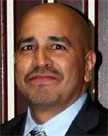
Jesse Flores

Jesse Flores

By Mark Gutglueck
Further indication emerged last week that federal investigators are getting closer to action with regard to insider trading conflicts involving Adelanto city officials.
Reports of collusion between city officials and a number of investors seeking marijuana cultivation and cannabis product licensing in Adelanto have persisted since even before the Adelanto City Council in November 2015 voted to legalize the massive scale cultivation of medical marijuana for commercial purposes within the city’s industrial park.
Earlier in 2015, a commanding majority of the Adelanto City Council demonstrated itself as stridently opposed to allowing the city to become a host for any type of marijuana-related commercial activity, which some individuals were touting as a panacea to the cash-strapped city’s financial woes. But by late summer 2015, the attitude of the council as a whole appeared to be shifting.
Just prior to the city becoming the first of San Bernardino County’s 24 cities to embrace cannabis horticulture, then-city attorney Todd Litfin tendered his resignation, refusing to declare his reason for doing so. At least some of the grounds for Litfin’s reservation became embarrassingly – indeed painfully – apparent before 2015 ended.
On December 9, 2015, the Adelanto City Council rather inexplicably sold 47 acres of land in the city’s industrial park that was in the possession of the successor to its former redevelopment agency to an investor, Newport Beach-based Kojima Development, Inc., at the bargain basement price of $375,000.
Yet the city’s action allowing large scale marijuana cultivation operations to function out of the same industrial park had transformed the value of those 47 acres – at least potentially – to somewhere in the $9 million to $12 million range, depending upon which market analyst was running the numbers. Overnight, reports were afoot that illegal inducements in the form of bribes and kickbacks had been or were soon to be provided to city officials in return for their having signed off on the land transaction.
Things grew even worse on December 23, 2015, the day which the city’s new marijuana cultivation-allowing ordinance went into effect. The day after the ordinance had been adopted, a mad frenzy of applicants came into City Hall to apply for marijuana cultivation permits. The ordinance was somewhat vague with regard to how those applications were to be evaluated, and the ultimate decision making standards were extraordinarily arbitrary. The ordinance states, “The city manager will accept applications for medical marijuana cultivation permits during a thirty day period after adoption of this ordinance. Such thirty day time period plus an additional seven days to complete the reviews and the preparation of the reports called for in this section shall be deemed the ‘application period.’”
There was no firm and fast standard on who would or would not pass muster with the city manager, who relied upon city staff to then evaluate and rank the applicants, ostensibly under the standards laid out in the ordinance. There was no formula for accountability and even less transparency on this score.
The circumstance deteriorated in March 2016 when the city retained Jesse Flores as its economic development consultant. Flores had been involved in the Adelanto Charter Academy scandal along with now-disgraced former supervisor Bill Postmus, convicted political corruption figure Adam Aleman, as well as C. Steven Cox and another Postmus political affiliate, Dino DeFazio, both of whom have now been indicted and are awaiting trial. Flores’ role in the Adelanto Charter School Debacle, in which those participating looted the school of $3.1 million between its chartering on August 19, 2009 and the time it was permanently shut down by the California Department of Education on April 17, 2012, involved the misuse of two of Flores’ entities, Professional Charter Management, Inc. and Diamond Limousines, to bilk the school of money that should otherwise have gone toward the education of students but instead was diverted to activities, purchases and disbursements having no conceivable academic application, such as ferrying Postmus, Cox, Aleman, DeFazio and Posmus’ successor as supervisor, Brad Mitzelfelt, around in Flores’ limousines.
Under its contractual arrangement with Flores, the City of Adelanto put no limitations on Flores’ relationships with the entities he was dealing with in his effort to interest them in locating their businesses in Adelanto or otherwise making investments in the city. Thus, Flores was free to serve as a consultant to those businesses and/or accept fees from those businesses or have an economic interest in those businesses. In this way, under the guise of inducing entrepreneurs or investors to come to Adelanto, Flores was in a position to offer favorable terms – ranging from sales tax springbacks to facilitating permits to engineering zone changes to all order of other perquisites – to entities he himself had an interest in. Throughout his tenure as economic development director, getting cannabis farms, with their potential of making millions upon millions of dollars, up and running was a major focus for him.
Deepening the intrigue at City Hall was that one of the members of the city council who had in fact been at the forefront of the effort to approve the marijuana cultivation strategy for enhancing city revenues was John Woodard. A real estate professional, Woodard stood poised to get a piece of the marijuana growing action by serving as a broker on property being sold to would-be cannabis growers. Last fall, it appears, Woodard did just that.
At one point, the city seemed content with just realizing tax revenue from levies on growers. The city would hold the line at farms, i.e., large wholesale operations, council members said. No retail sales in the city were to be permitted. In 2016, however, that prohibition against selling to end users faded, and the city began preparing to allow cannabis clinics and dispensaries to set up shop. There were indications that potential investors were provided with advance information that the City of Adelanto was not only going to reverse its policy of prohibiting marijuana retail sales within city limits but that they were told precisely where the zones where those sales were to be permitted would be designated. There was a flurry of activity with regard to land acquisition in Adelanto last fall, including six properties in the area being considered for the district in which marijuana sales will be permitted, four of which were finalized. In fact, on November 29, the very day the council held its workshop to discuss creating that retail zone, Industrial Integrity Solutions, which had already raised suspicions about its having previously participated in an inside information scheme in Adelanto when its parent company, Frontier Enterprises, bought 31 acres for its marijuana farm less than two weeks before the planning commission made a re-zoning of the property to accommodate that use, purchased property at 12011 Air Expressway. By buying the Air Expressway property before city officials indicated their readiness to put it into the marijuana sales district, Industrial Integrity Solutions cut hundreds of thousands of dollars or perhaps more than $1 million off the asking and eventual sales price on that property.
When the city council involved itself in the discussions of where and where not such operations would be permitted, Woodard was active in arriving at a decision on how those zoning maps would be drawn. In at least one case, he was the broker on a sale of property that, either by coincidence or deliberate calculation, was purchased just prior to the zoning being changed to that permitting marijuana sales. There was no proof that the buyer had benefited from inside information provided by Woodard, but the circumstance was suspicious enough that the Securities and Exchange Commission began looking into the matter. While the Securities and Exchange Commission normally does not interest itself in real estate transactions, even in matters where insider trading or deals made involving the sharing of insider information with investors is involved, it is chartered to look into circumstances involving financial instruments tied into real estate holdings or those involving real estate trading.
And the DEA and the FBI were not far behind. By last December, agents for all three federal agencies were nosing around Adelanto.
Certain elements of what had interested federal officials were not lost on at least some local residents. A group of them retained the Los Angeles-based Sutton Law Firm to take a look at Flores’ activity. This confluence of events – FBI agents asking questions and looking at documents, DEA agents doing spot checks and obtaining search warrants, the Securities and Exchange Commission churning through minutes to see who knew what when and investigators from a law firm engaging in embarrassing inquiries – made some city officials downright nervous. In January, the city moved to disentangle itself from Flores. On January 19, then-Adelanto City Manager Cindy Herrera posted to Flores a letter in which she said, “the city is terminating the independent contractor agreement entered into between Municipal Economic Development Service, Inc. [Flores’ company] and the City of Adelanto on March 29, 2016. The official date of termination will be February 3, 2017. The city is not accusing, or insinuating, that you engaged in any unethical behavior, but the city has a duty to investigate the repeated allegations of misconduct and must suspend this agreement in the meantime.”
Three weeks later, however, the city abruptly reversed course, announcing that Flores would remain in his capacity as the city’s economic development consultant.
The entire episode caused many people’s antennae to itch. Someone, or several someones, with maybe a few governmental entities into the mix, local and national, appeared to be playing a very deep game. Flores’ role was to glad-hand with everyone, and perhaps make them interested in setting up a business in Adelanto. His contract did not preclude him from representing business interests, and questions have emerged about his relationship to some entities looking to establish dispensaries in Adelanto. The question remained ‘Was money exchanging hands and how much?’ Word was that Flores had been turned by the FBI and had become an informant. Adelanto cashiering him in January had interrupted the FBI and DEA operations, locals speculated. The whisper to the wise went that Flores was wearing a wire and anyone dealing with him would do well to watch what was said as the discussions proceeded. If he were to casually mention that his contract with the city allowed him to represent those looking to locate into the city and that he was in a position to make sure that his clients succeeded in what they were trying to establish, it might be best to not take him up on that offer.
Adelanto, which stands at the cutting edge of the incipient era of cannabis tolerance in California triggered by the passage of Proposition 64 and its condoning of marijuana for recreational smoking purposes, presents a unique opportunity for the federal government, which yet classifies marijuana as a schedule 1 narcotic, to reassert its primacy over states like California with regard to drug laws. The stampede of would-be millionaires with dollar signs in their eyes into Adelanto City Hall has given rise to a circumstance wherein it is not unthinkable that a handful of municipal officials and perhaps dozens of applicants might be ensnared in sting operation wherein applicants for permits on highly lucrative cannabis-related enterprises consent to sharing a portion of their proceeds with those granting them licenses. Moreover, California’s law extends only within the state. Growing marijuana that is then transported across state lines for sale or any other purpose remains a serious federal crime which typically entails a ten-year prison sentence. Given the current atmosphere in Adelanto, federal officials might not want to pass up the opportunity to create an example for all other municipalities in California that illustrates to politicians that run a risk if they get too feverish in their promotion of cannabis as the newfound economic lifeblood of their community.
An FBI spokeswoman refused to confirm or deny her agency is actively involved in an operation in Adelanto.
Erin Stattel, the press officer with the U.S. Securities and Exchange Commission in Washington, D.C., while acknowledging the SEC had been provided with a full range of information about the situation in Adelanto, told the Sentinel in March, “We decline to comment.”
In May, the city council extended Flores’ consulting contract with the city, upping his hourly rate from $35 per hour to $75 per hour and obliterating the $30,000 per year ceiling on the amount he was to be paid to $80,000 per year. The new contract left intact his ability to accept money from any outside interests, including those seeking to set up operations or invest in Adelanto. City officials dismissed any suggestions that there was something untoward in the arrangement, saying Flores’ had been key to the city’s nascent economic recovery, including persuading manufacturing concerns and brand new businesses going into recently constructed buildings, retail and service operations locating into preexisting structures that were empty, to say nothing of the influx of commercial cannabis operations. Those criticizing Flores, mayor Rich Kerr said, were naysayers or the political allies of the failed Adelanto politicians of the past.
Last week, however, city attorney Curtis Wright, of the law firm Silver & Wright LLP, abruptly announced he would leave as city attorney effective July 12. Wright’s 15-month tenure as city attorney began in the immediate aftermath of Flores’ retention as economic development consultant. The previous city attorney had been Julia Sylva, who was brought in on the fly upon the equally abrupt resignation of Todd Litfin in November 2015. It was Sylva who had put the finishing touches on the cannabis cultivation permitting ordinance that had prompted Litfin’s exodus.
Wright, like Litfin and Sylva, did not provide a reason for his departure, although he was upbeat in assessing the city’s prospects as it moves into the future.
Attorneys must maintain confidentiality with regard to the inside knowledge they have obtained relating to the entities and individuals who have employed them, and are barred from disclosing any derogatory information they may have with regard to that knowledge under the principle of attorney-client privilege.
In response to the Sentinel’s inquiries of the city with regard to city official’s knowledge of the investigation and their degree of cooperation with it, including responses to any subpoenas, Adelanto’s official spokesman, Michael Stevens in a response cleared with mayor Rich Kerr said, “We know nothing of an investigation and no one in the city has been contacted – including me.”

Annexation Leaps Over Procedural Hurdle; Legal Test Awaits

by Ruth Musser-Lopez
The City of Upland this week vaulted one procedural hurdle but now must confront a potentially more daunting legal one in its effort to divest itself of its municipal fire department and assign fire protection service in the city of 74,000 to the county. San Antonio Heights, which lies north of Upland, has been pulled into the circumstance with Upland. Now, a contingent of residents from both communities has been prompted to activism in resisting a takeover that was neither requested nor perceived as necessary.
At the July 11 hearing held within the meeting chambers at Upland City Hall, it was ascertained that those opposed to the annexation of Upland and San Antonio Heights into the county’s Fire Protection District 5 had achieved nowhere near the needed threshold of 25 percent of the Upland and San Antonio Heights voters or parcel owners to trigger an up-or-down vote on the annexation, let alone the 50 percent plus one threshold required to nix the annexation outright.
In November the Upland City Council had voted to look into the possible annexation of Upland into a county fire service zone, and in December, Upland’s interim city manager, Martin Thouvenell, had filed papers with the San Bernardino County Local Agency Formation Commission, to initiate such an annexation.
In March the San Bernardino County Local Agency Formation Commission (LAFCO) board had voted to accept the application and then augmented it with the addition of neighboring San Antonio Heights into the mix, such that Upland and San Antonio Heights are to be placed into Fire Protection District 5 and all of its landowners assessed $152.68 per year. As a consequence, the Upland Fire Department is to be shuttered and the San Bernardino County Fire Department will now serve as the city’s de facto fire department. The county fire department was previously serving San Antonio Heights. Now residents there will be consigned to pay $152.68 for that service.
The annexation was carried out essentially under the authority of the Upland City Council, the San Bernardino County Board of Supervisors and the LAFCO board. The only means Upland and San Antonio residents had of preventing the takeover was by means of the aforementioned protest vote. It is a peculiarity of California law that when annexations are effectuated, those to annexed are deemed to have voted in favor of the annexation unless they lodge a protest.
A number of Upland and San Antonio Heights residents who are opposed to the county placing their communities into the fire service zone in question, which lies more than 47 miles distant as the crow flies from Upland and some 65 miles diving distance away, retained Upland-based attorney Cory Briggs to legally contest the city’s, county’s and LAFCO’s action.
Briggs was in the San Bernardino courtroom of Judge David Cohn on Monday to seek a restraining order against those three entities while the lawsuit he filed last week is adjudicated. Cohn said at that point it was premature to grant the restraining order, as the tallying of the protest votes, which might have stopped the annexation, had not occurred. Briggs was back on Thursday and from here on out the matter is in Cohn’s hands.
The city, the county and LAFCO are relying on the authority of a case, Sunset Beach vs. Orange County LAFCO, in confidently pronouncing that the annexation of Upland and San Antonio Heights into Fire Protection Zone 5 is permitted. The Sunset Beach case involved some residents of Sunset Beach, which was an unincorporated county area in Orange County adjoining and partially surrounded by Huntington Beach, objecting to paying preexisting Huntington Beach assessments after Sunset Beach was annexed into Huntington Beach. Those Sunset Beach residents maintained they had not voted on those assessments and therefore should not be forced to pay them. After the trial court agreed with the plaintiffs, Orange County LAFCO appealed to an appellate court, which ruled that the Sunset Beach residents had to accept the assessments once they were a part of the city.
Briggs is prepared to argue that the circumstance involving Upland and San Antonio Heights is significantly different from that in Sunset Beach. In the first place, Sunset Beach was an unincorporated county area that was annexed into an existing municipality and Sunset Beach was logically within Huntington Beach’s sphere of influence.
In the case of Upland, it is not an unincorporated county area but an existing municipality. Furthermore, whereas Huntington Beach was immediately adjacent to Sunset Beach, both Upland and San Antonio Heights are far removed from Helendale and Silver Lakes, and are in no way adjacent or contiguous. Nor are San Antonio Heights and Upland in Helendale’s or Silver Lake’s sphere of influence.
At the hearing at the Upland City Council chambers on Tuesday night, Teri Lyn Whitfield asked LAFCO Executive Director Kathleen Rollings-McDonald, “So when I have a fire, where will a fire engine come from?”
Rollings-McDonald said, “Closest available. Mutual aid for fire will come from all around you.”
Most of the same objections were repeated in Upland as were heard in the other communities where forced annexations into county fire service areas occurred, pertaining mainly to the loss of local control, loss of the fire department and more taxes, taxes that the taxpayers never had a say in at the ballot box. “Its an unfair tax—those who live in a bungalow pay the same as a Super Walmart” John Goss a San Antonio Heights resident said.
After the hearing, Rollings-McDonald announced that LAFCO is “not validating any protest submission, just counting to get a raw count on how many registered voters and how many land owners voted.” She announced that 4,099 signatures were received at the hearing and 831 were received at the LAFCO office for a total of 4,930. Of that number 11.9% of the 41,301 registered voters protested, which included the 3044 signatures gathered at the hearing and 777 at the LAFCO office. Within the territory, 4,621 or 13.2% of the 35,526 property owners protested, thus “Neither category meets the 25% quota” she said, “as there were insufficient signatures.”
Anthony N.Kim, with Briggs Law Corporation representing the San Antonio Heights Association, stated in the opening brief on Thursday, “That [the Sunset Beach] case is distinguishable in several ways, the most important being that Sunset Beach deals with the island-annexation statute wherein 971 Sunset Beach residents were annexed by 190,000 Huntington Beach residents. By contrast, defendants/respondents are attempting to impose a special tax approved by I,022 voters in Helendale on the 80,000 residents of the City of Upland and San Antonio Heights.” Making things worse, Kim said, the narrow, specific purpose of the special tax approved by Helendale voters was “to convert the [County Service Area] Fire Station #4 from a paid-call fire station operation to a 24-hour per day full-time firefighters/paramedic-staffed fire station within the improvement zone. Common sense tells us that any attempt to impose this special tax – which was approved for a specific purpose not applicable to the City and San Antonio Heights and by voters approximately 70 miles away – is unquestionably illegal.”
In response to the plaintiffs, the county asserted through its attorneys that it had “nearly” no involvement in the process and pointed to the fire district, claiming it to be a separate agency from the county. However, the an Bernardino County Board of Supervisors on December 20, 2016 passed a resolution, “Resolution No. 2016-242,” “acting as the governing body of the San Bernardino County Fire Protection District.” That body recommended adopting Resolution No. 2016 242 requesting LAFCO to commence proceedings for the sphere of influence amendment and reorganization to annex the City of Upland fire services into San Bernardino County Fire Protection District, its Valley and FP-5 service zones.

Supporting the item were supervisors Robert Lovingood, Janice Rutherford, James Ramos and Curt Hagman. Supervisor Josie Gonzales was absent.
Despite the Rutherford’s approval of the annexation, Linda Cagle, a San Antonio Heights resident told those assembled at Upland City Hall on Tuesday night that Rutherford told her twice that she had nothing to do with the annexation.

Prosecutor Makes Impassioned Presentation To Salvage Vestiges Of Colonies Case

By Ruth Musser-Lopez and Mark Gutglueck
This week, outside the presence of both juries hearing the case, one of the two main prosecutors in the Colonies Lawsuit Settlement Pubic Corruption trial provided what resonated around the largely empty courtroom as one of her more energetic and impassioned oratories to date in a trial that has gone on for more than six months.
This and last week, California Supervising Deputy Attorney General Melissa Mandel has been called upon to justify to Superior Court Judge Michael Smith why the matter should continue on to its next stage, in which defense attorneys for Rancho Cucamonga-based developer Jeff Burum, former San Bernardino County Second District Supervisor Paul Biane, one-time sheriff’s deputies union president/former assistant county assessor Jim Erwin, and former San Bernardino County Fourth District Chief of Staff Mark Kirk must seek to convince the jurors of their clients’ innocence.
After Mandel and the other prosecutor assigned to the case, Supervising San Bernardino County Deputy District Attorney Lewis Cope rested the prosecution’s case on June 29, the defense attorneys for Burum, Biane, Erwin and Kirk lodge so-called 1118.1 motions with the court.
Under Penal Code Section 1118.1, “In a case tried before a jury, the court on motion of the defendant or on its own motion, at the close of the evidence on either side and before the case is submitted to the jury for decision, shall order the entry of a judgment of acquittal of one or more of the offenses charged in the accusatory pleading if the evidence then before the court is insufficient to sustain a conviction of such offense or offenses on appeal.”
Beginning on January 4, the prosecution had initiated its case based upon the 29-count indictment handed down in May 2011 against the four defendants. After several rounds of pretrial sparring between prosecutors and defense attorneys in 2011, 2012, 2013, 2014, 2015 and lasting into 2016, 11 of the original 29 counts had been thrown out.
The prosecution’s case consisted of allegations that Burum, who with Dan Richards was a managing principal in the Colonies Partners, first used intimidation, threats, blackmail and extortion followed up with $100,000 kickbacks to persuade Bill Postmus and Paul Biane, who were then the chairman and co-chairman of the San Bernardino County Board of Supervisors, to support paying out $102 million to settle a lawsuit the Colonies Partners had lodged in 2002 against the county and its flood control district over drainage issues at the Colonies at San Antonio residential and Colonies Crossroads commercial subdivisions in northeast Upland. By 2006, with the litigation having dragged on for over four years, the indictment alleges Burum conspired with Jim Erwin to use highly personal derogatory information about Postmus and Biane to create “hit piece” mailers designed to harm their political careers which ultimately were withheld to pressure them to vote in favor of the settlement. Postmus and Biane joined with then-supervisor Gary Ovitt to support and pass by a bare 3-2 majority the $102 million settlement on November 28, 2006. Over the next seven months, Burum and Richards made two $50,000 donations to two political action committees controlled by Postmus and his associates along with separate $100,000 donations to political action committees controlled by Erwin, Mark Kirk, who at that time was Ovitt’s chief of staff, and Biane and his associates. Those donations were, the indictment alleges, thinly veiled bribes to Postmus and Biane for their votes in favor of the settlement and to Kirk for his having influenced Ovitt to support the settlement. Erwin was rewarded for his effort in having carried out the extortion and bribery scheme, prosecutors allege. Though Burum was indicted, Richards was not. Postmus, who had been charged along with Erwin with involvement in an extortion and bribery scheme growing out of the same set of overt acts laid out in the indictment, initially pleaded not guilty to those charges, as had Erwin. But 13 months later in March 2011, Postmus entered guilty pleas to 14 felony counts and agreed to turn state’s evidence. He was then the star witness before the grand jury that indicted the four current defendants. The charges in the indictment supersede the charges earlier brought against Erwin.
Two months ago, while the trial was in full swing in May, two of the counts against Erwin alleging felony filing of a false document were dismissed, based upon the California Supreme Court allowing an appellate court ruling on a similar case to that pertaining to Erwin to stand. That ruling held that a parallel statute in the California Government Code sets such disclosure failures at the level of a misdemeanor.
With the conclusion of testimony of the prosecution’s 39 witnesses on June 29, Burum’s attorney Stephen Larson, Biane’s attorney Mark McDonald, Erwin’s attorney Raj Maline and Kirk’s attorney Peter Scalisi moved to have the entirely of the case against all four of the defendants thrown out.
At that point, Burum faced five charges consisting of count 4, a violation of Penal Code Section 165: aiding and abetting Postmus in receiving and agreeing to receive a bribe to influence a vote; count 5, a violation of Penal Code Section 165: aiding and abetting Biane in receiving and agreeing to receive a bribe to influence a vote; count 7, a violation of Penal Code 86: consisting of aiding and abetting Postmus in receiving and agreeing to receive or asking for a bribe to influence a vote; count 8, violating Penal Code Section 86: aiding and abetting Biane in receiving and agreeing to receive or asking for a bribe to influence a vote; and count 12, aiding and abetting Postmus and Biane in the misappropriation of public funds.
Biane faced four charges, consisting of count 2, a violation of Penal Code 165: receiving and agreeing to receive a bribe to influence a vote; count 6, violating Penal Code Section 86: receiving and agreeing to receive or asking for a bribe to influence a vote; count 10, violating Government Code Section 1090: engaging in a conflict of interest as a government official; and count 11, violating Penal Code Section 424: engaging in a misappropriation of public funds.
Kirk faced four charges, consisting of count 3, violating Penal Code Section 68: receiving and agreeing to receive or asking for a bribe to influence a vote; count 9, a violation of Government Code Section 9054: improperly influencing a public official; count 10, violating Government Code Section 1090: engaging in a conflict of interest; and count 12, violating Penal Code Section 424: aiding and abetting Postmus and Biane in the misappropriation of public funds.
Erwin was looking at ten charges, including Count 4, violating Penal Code Section 165: aiding and abetting Postmus in receiving and agreeing to receive a bribe to influence a vote; Count 5, violating Penal Code Section 165: aiding and abetting Biane, in receiving and agreeing to receive a bribe to influence a vote; Count 7, violating Penal Code Section 86: aiding and abetting Postmus, in receiving, agreeing to receive and asking for a bribe to influence a vote; Count 8, violating Penal Code Section 86: aiding and abetting Biane in receiving, agreeing to receive and asking for a bribe to influence a vote; Count 12, violating Penal Code Section 424: aiding and abetting Postmus & Biane in the misappropriation of public funds; Count 13, a violation of Penal Code Section 470: forgery; Count 14, violating Revenue & Tax Code Section 19706: failure to file a tax return; and counts 15, 16 and 18, three violations of Penal Code Section 118: perjury, pertaining to his filing of his 2007/2008 State Form 700 relating to his economic interests, failure to disclose the true value of gifts on his Form 700, and failure to disclose receiving $7,500.00 in gifts or income on his Form 700.
Last week, with the juries hearing the case on an extended hiatus that will not conclude until July 17, Judge Smith carried out an extended discussion with both prosecutors and defense attorneys with regard to the jury instructions he will provide to the jurors after the defense puts on its case and final arguments have been made. Having gone through several, but not all of those instructions, Smith took up the 1118.1 motions.
In considering Scalisi’s motion on behalf of his client with regard to the Penal Code 68 charge, Judge Smith offered his reasoning that Kirk had not sought a bribe from Burum or the Colonies Partners, as his boss, Gary Ovitt, was predisposed to vote for the settlement. Thus, Judge Smith threw out count 3 relating to Kirk receiving and agreeing to receive or asking for a bribe to influence Ovitt’s vote. Kirk did not fare as well with regard to Scalisi’s motion to dismiss the Government Code Section 9054 charge of improperly influencing a public official and the Government Code Section 1090 charge of engaging in a conflict of interest. Rather, Judge Smith ruled a determination on Kirk’s guilt would be entrusted to the jury hearing the case against him, Biane and Burum.
Judge Smith deferred a decision with regard to the Penal Code Section 424 aiding and abetting in the misappropriation of public funds charge pertaining to Kirk, since the misappropriation of public funds issue was one pertaining to all of the defendants that would be best addressed collectively.
Smith then turned to Maline’s motion with regard to the charges against Erwin. Focusing first on count 13, the charge that Erwin had violated Penal Code Section 470 when he forged the name of his former sheriff’s department colleague Steve Hauer on a memo to Betty Presley, the bookkeeper for the political action committee Erwin had set up, Committee for Effective Government, authorizing a $5,000 payment to Erwin for consulting services in 2008. Erwin had created the committee to be able to receive the $100,000 political donation from the Colonies Partners which prosecutors allege was a bribe, naming himself as treasurer and Hauer as the committee’s executive director, though he had not informed Hauer he was doing so, Hauer testified in January. California Supervising Deputy Attorney General Melissa Mandel maintained that Erwin’s action was an effort by Erwin to hide the pass-through of the $100,000 from the Colonies Partners to himself. While the prosecution maintains, and Erwin has not effectively disputed, that he forged Hauer’s signature on that authorization, Erwin’s attorney Raj Maline maintained the note was of no legal significance, since Erwin submitted an invoice with his own signature and the authorization to Presley, the accountant who oversaw the committee’s accounts and signed the check with the knowledge that Erwin had control of the political action committee. Saying, “I see no evidence that Mr. Erwin could not have gotten the money on his own,” Smith further indicated, “I find there is no evidence to support the intent requirement of the forgery charge.” He dismissed the count of forgery against Erwin.
Judge Smith, however, refused to dismiss two of the three perjury charges against Erwin, counts 15 and 16, which was as far as he had progressed with the 1118.1 motions last week.
On Monday of this week, July 10, the prosecution and defense attorneys were back in Smith’s courtroom, where they went toe-to-toe against each other with regard to their diametrically opposite contentions about whether the charges against the defendants should remain at play or be dismissed. Most of the morning was devoted to the charges against Erwin about which no determination had been made. The discussion then turned to what is the remaining central element of the case – that relating to bribery. Because the district attorney’s office and the California Attorney General’s Office came to the issue of the Colonies Lawsuit Settlement so late, its charging options were limited due to statute of limitations considerations. The settlement occurred in November 2006 and the $100,000 contributions to the political action committees were made during the first six months of 2007. District attorney’s office investigators did not take up the matter in earnest until November 2008, and another 15 months passed before criminal charges were filed in the matter in February 2010, with a criminal complaint against Postmus and Erwin. Another 15 months would elapse until the May 2011 indictment, in which Burum, Biane and Kirk were added to those criminally charged. But the three-year statute on straight-out bribery had elapsed, so prosecutors had engaged in the rather obscure and creative indictment strategy – what Burum’s lawyer Larson would refer to as “an impermissible charging scheme” – of ringing Biane and Kirk up on “seeking to receive a bribe” and charging Burum and Erwin with “aiding and abetting” both Postmus and Biane “in receiving a bribe.” This torturous language remained as the central element of the case after the conspiracy charges were subsequently dismissed. The 1118.1 motions heard this week sought to have those charges against Burum, Biane and Erwin thrown out entirely. Smith’s ruling last week in eliminating the last bribery-related charge from the list of offenses upon which Kirk was charged galvanized Mandel.
Of some moment was that the 1118.1 motion with regard to the charges against Biane had not been brought up at all the previous week and there was widespread speculation around the courthouse that Biane might be dismissed from the case entirely. Indeed, the case against Biane had been severely undercut in March when the primary witness against him, his one-time chief of staff Matt Brown, appeared to go renegade on Mandel as she was questioning him during both direct and redirect examination. Brown had created the political action committee, San Bernardino County Young Republicans, into which the $100,000 which prosecutors allege was bribe money provided to Biane was deposited. And when Brown was approached by district attorney’s office investigators in April 2009 and aggressively interrogated about his role in helping Biane to launder what the investigators characterized as a $100,000 bribe to Biane, Brown panicked and agreed to cooperate with the investigators, including carrying a recording device and surreptitiously recording his conversations with Biane. Brown, however, was unable to capture any utterances from Biane implicating himself in a bribery scheme. On the witness stand under questioning by Mandel, Brown grew rather uncooperative, asserting his inability to recall previous statements to investigators or his testimony before two grand juries during which he had given indication of his suspicions with regard to the rectitude of the lawsuit settlement and the events that preceded it.
On Monday morning July 10, McDonald told Judge Smith that “Paul Biane should be set aside from all of the defendants including Mark Kirk. He should be excised from the entire case.”
McDonald said that as a real estate professional, Biane had independently arrived at the conclusion the lawsuit should be settled. In this respect, McDonald said, Biane was no different than supervisor Gary Ovitt, who consistently supported the settlement of the lawsuit and was not indicted. Biane had held steady to the conclusion that the settlement should be effectuated, with the exception of a lone vote opposing settlement while the county was in the midst of a trial with the Colonies Partners over the title to the property that was at issue in the litigation, McDonald said. The only testimony supporting the allegations against his client lodged by the prosecution, McDonald said, was that provided by Adam Aleman. “You can’t believe a single word that comes out of Aleman,” McDonald asserted. There was no quid pro quo involving Biane, McDonald said and he asserted that prior to the settlement being approved, “There is no evidence that Paul was aware of any contributions” that were to come his way. “Even Postmus maintained that he [Biane] had no prior knowledge [of the donation to the political action committee] before the vote.”
Moreover, McDonald said, “The San Bernardino [County] Young Republicans was formed well before the settlement. It was in existence and was a developed, operating PAC. Paul got no professional gain out of it.”
Burum’s attorney, Stephen Larson, similarly asserted that Biane had been wrongfully inserted into the role of a defendant in the case.
“There is no evidence in this case that Mr. Biane had any knowledge or understanding with Mr. Burum” with regard to the $100,000 donation that went to the San Bernardino County Young Republicans several months after the board voted 3-2 to approve the $102 million settlement with the Colonies Partners, Larson said.
Without pleading, but nevertheless passionately, Mandel forcefully importuned Judge Smith to leave the bribery element of the case yet relating to Burum, Biane and Erwin intact. In so doing, she reiterated the highlights of the case as the prosecution had presented it, and in addition to referencing testimony and evidence presented to the jury in the form of exhibits, brought in other exhibits which had not been previewed for the jury but were rather stipulated to by both the prosecution and defense, and which the juries will have access to when they begin their deliberations. A separate jury for Erwin will rule on whether it considers him guilty or not guilty of the charges lodged against him, while another jury will do the same for Burum, Biane and Kirk.
After listening to Larson, McDonald and Maline expound on why they felt the bribery related charges pertaining to their clients were not justified, Mandel told Judge Smith she had the impression she was in a “parallel universe” to that inhabited by the defense attorneys, who were arguing in essence, she said, to “let Mr. Biane loose because the evidence against him is slimmer [than against the others].” The evidence against Biane is every bit as damning, she said, as that against Postmus, who had admitted guilt to a whole variety of charges, including misappropriation of public funds, soliciting and accepting a bribe, and criminal conflict of interest. She said that she and her prosecutorial colleague, Cope, had possibly made a “tactical mistake” in seeking to shorten the trial by not marching through all of the evidence that was stipulated to. “Maybe we should have brought more [to the direct attention of the jury through testimony],” she said. She then expounded on how the exhibits in the case “show a secret flow of money.” The consideration that Postmus, Erwin and Kirk formed the political action committees into which the $100,000 contributions were deposited after the settlement was made and that the San Bernardino County Young Republicans PAC preexisted the settlement did not exonerate Biane, she said. Rather, she said, the creation of San Bernardino County Young Republicans in October 2004 coincided with Biane’s stepped up effort to push the county toward a settlement of the lawsuit. After Brown had created the PAC, she said, it was the Colonies Partners that initially endowed it with money, which she said was laundered through SEBA, the Safety Employees Benefit Association, the sheriff’s deputies union, of which Erwin had been the president and was later the executive director. The Colonies Partners donated the money to SEBA, she said, and then Erwin diverted the money to the San Bernardino County Young Republicans.
“This was a conspiracy case all along,” Mandel said. “Mr. Postmus never had an innocent intent. They all had a corrupt intent. In 2004 and 2005 all three of the public personalities involved [Postmus, Biane and Kirk] understood that they needed three votes to get it [the settlement] done. There were secret contributions during the beginning in that time frame. The case for bribery against Paul Biane is different but equally strong as the case against Bill Postmus.”
Mandel said that as time progressed and the public became more and more convinced that the demands the Colonies Partners were making were unrealistic, “Mr. Biane got scared” and grew less and less willing to be publicly seen as supporting the settlement. “Things changed,” Mandel said. It was at that point that the extortion element of the case manifested, she said, with Burum seeking the result he wanted – a settlement of the lawsuit – through blackmail as well as bribery.
Proof of the conspiracy exists in that “Mr. Burum was funneling secret payments” to Postmus and Biane through donations he or the Colonies Partners were making to SEBA, which in turn was then making contributions to Postmus and Biane and their various committees, while at the same time Burum was publicly maintaining, Mandel said, “’I am not going to pay you until this [litigation] is over.’ It is here in the document and here in the testimony. That part does not even depend on the compromised testimony [from Adam Aleman].”
Mandel said, “Matt Brown and a number of witnesses talked about that, and how Jeff Burum would make contributions to SEBA so it would look like it was coming from the sheriff’s deputies’ union.”
The evidence presented at trial demands that the questions raised be decided by the juries, Mandel said.
“The question for the jury is whether the reason they did those acts was because of the bribes,” Mandel said, “ and whether the activities of Mr. Postmus and Biane to get this settlement done was done with the understanding that they were going to get that money after.”
She rejected the defense premise that the concepts of extortion and bribery were incompatible. She said the defense attorneys were saying that because “threats were used that means the promise to pay was no longer in effect.” She countered this, insisting, “The promise to pay was always there.” She said both Postmus and Biane were given a choice by Burum and Erwin: vote for the settlement and take the reward they were being offered or have their political careers ruined.
“As to the implication of the inconsistency about the idea that Mr. Postmus could be influenced by threats but have a corrupt intent himself,” Mandel cited the principle employed by South American drug cartels in compromising public officials and law enforcement officers, an offer that cannot be refused: “plata o plomo,” i.e., silver or lead, take your pick, coins in your pocket or lead bullets in the head. Thus, Mandel said, both Postmus and Biane acceded to the extortion and bribery, voting in favor of the settlement and taking the bribes in the form of the political action committee contributions afterward.
Mandel said attempts to assert that Biane truly believed that the $102 million settlement was justified did not hold up. He was well versed in the representations of the county’s attorneys that the county settling with the Colonies Partners on the terms the Colonies Partners were demanding would compromise the county’s position vis-à-vis recovering from the other parties involved – the City of Upland, CalTrans, and the county’s regional transportation agency known as SanBAG – those entities’ share of any conceivable liability they had for the creation of the circumstance that was at issue in the litigation between the county and the Colonies Partners. She said that Biane was well aware of “ironclad” legal arguments the county had to counter the Colonies Partners’ legal assertions that would have vastly limited the county’s liability in any case. Biane was well aware of strong arguments the county could make that the Colonies Partners’ provable damages which would have been a liability for all four entities – the county, Upland, CalTrans and SanBAG – were well below $50 million, she said. And Mandel referenced written communication from just prior to a meeting on March 25, 2005 involving Postmus, Biane, Burum, as well as the other managing principal in the Colonies Partners, Dan Richards, former California State Senator Jim Brulte, who was working as a consultant for the Colonies Partners, along with lawyers for both the county and the Colonies Partners. That communication consisted of an email from deputy county counsel Mitch Norton which demonstrated that Biane was primed with information that the county was in a superior legal and bargaining position as the result of a recent appellate court ruling that validated the existence of county’s flood control easements on the Colonies Partners’ property. Yet at that meeting, Mandel said, Biane had acquiesced in Postmus barring the lawyers from the room and then allowing Brulte to referee a bargaining session between Postmus and Biane on the side of the county and Burum and Richards on the side of the Colonies Partners that derived a proposed $77.5 million settlement. That $77.5 million figure was some $50 million more than had been the county’s highest calculation of the total liability with regard to the issue prior to the appellate court decision that was favorable to the county, Mandel said. Subsequently, Biane, who was committed to not going any higher than the $77.5 million payout arrived at during the tilted March 25, 2005 negotiating session, consented to increasing that by close to another $25 million, Mandel said, all of which demonstrated the degree to which Biane was amenable to the will of Burum.
Mandel offered an illustration of the understanding and expectation that was in place between Burum and Biane with regard to a reward that would come Biane’s way following the settlement. On May 22, 2006, while Postmus was engaged in running for assessor, Biane loaned the Postmus campaign $100,000 from his own supervisorial electioneering fund. At that point, Postmus was in the throes of drug addiction, Mandel pointed out, something that was not unknown to Biane. Still, Biane was willing to vector money to Postmus’ electoral effort. “This was right after Postmus had bailed out of rehab,” Mandel said. “Bill Postmus can’t hold his life together, and Mr. Biane loans him $100,000.”
This reflected, Mandel said, Biane’s confidence that Burum would come through with $100,000 in return for Biane’s vote in favor of the lawsuit settlement, and further illustrated that Postmus and Biane were intertwined in the conspiracy to effectuate that settlement. “I submit that Biane knew that Postmus would be able to pay him back,” Mandel said.
Furthermore, Mandel said, Biane had supported Postmus when he had sought to intimidate then-county counsel Ron Reitz, the county’s highest ranking in-house lawyer, into supporting the settlement on the terms the Colonies Partners were demanding by threatening to shutter the office of county counsel and hire outside attorneys to handle the county’s legal work.
Mandel referenced an invoice Patrick O’Reilly, who was working as the publicist for the Colonies Partners at that time, had submitted for four hours of work he had done on July 31, 2006, the same day that Judge Christopher Warner had entered an intended statement of decision on a bench trial he had conducted between the Colonies Partners between April and June of that year. Warner’s decision was favorable toward the Colonies Partners. On July 31, O’Reilly had spent four hours on the phone talking to Burum, Postmus and Biane. That demonstrated, Mandel said, Biane and Postmus were colluding with Burum in attempting to sell the public on a settlement that was more favorable to the Colonies Partners than it was to the county and its taxpayers.
Mandel referenced testimony by O’Reilly that in October 2006 while at the Double Tree hotel in Ontario where Postmus and Biane were staying the night before a mediation session involving former California Supreme Court Justice Edward Panelli, one of Burum’s employees, Spencer Brown, had delivered to Burum a bag full of “hit pieces,” i.e., mailers attacking Biane.
Mandel said there was solid indication Burum and Erwin were using Postmus’ homosexuality as a leverage point against him.
“In addition, we did hear from Mr. Postmus,” Mandel said. “He reaffirmed Mr. Richards was inquiring about whether he was homosexual.”
Mandel also reminded Judge Smith of the flurry of phone calls that passed between Burum and the others, including Erwin, Postmus, Biane and Kirk, in the days just prior to as well as on the day of the 3-2 settlement ratification vote by board of supervisors, November 28, 2006.
“This is a paper case,” Mandel said. “The paper trail just doesn’t fit the story that the defense has been trying to put out there. A significant part of the case is the documents that the court and the jury have not seen. We never expected the story to get out there until we do our closing arguments. The defense has engaged in a mischaracterization of what this case is about and what it has always been about. There was an understanding between all of these men. They were all on board. Their paths were the same. The significance of the conspiracy can’t be overstated.”
Mandel’s presentation lasted two hours.
Flummoxed, the defense attorneys regrouped during a 15-minute break.
Larson went first once Judge Smith was again on the bench. “This is a classic example of a lack of correlation,” said Larson. “Politicians receive contributions every day. For there to be criminal activity there must be a quid pro quo. Evidence is lacking here.”
Larson then lampooned Mandel’s claim that there were “secret transfers of money,” which he said were all properly and “publicly reported on 460s [i.e., California Form 460s, the documents upon which elected officials show what contributions they have received and which entities or individuals made those contributions].
The legend of guilt that Mandel had weaved was, Larson said, “Kafkaesque, with regard to Paul Biane, especially.”
Larson said that Mandel had provided nothing to support her assertion that Burum had engaged in some form of activity beyond making a political contribution to ensure the receipt of bribes, as is required under the legal description of such an act. A whole host of Supreme Court cases have held that giving political contributions to elected officials is completely legal, he said.
He took issue with Mandel’s “plata o plomo” analogy. “I don’t know about the lead and silver,” he said. “The role of a prosecutor is not to win, but to seek justice. She is changing the story to just win.”
McDonald said he concurred with Larson. He said he had earlier expressed the concern that evidence untested by cross examination “could get before the jury” and that permitting Mandel to proceed with the narrative she had just previewed would “allow speculation” and that it was “based on other evidence’ he was not familiar with. “We never heard of the 2004-2005 bribery and those surreptitious acts [i.e., the money originating with the Colonies Partners that made its way to Biane and/or the San Bernardino County Young Republicans].”
Biane had indeed made the loan to Postmus to advance his effort to become assessor, McDonald said, but no one had come forward to challenge Biane in the 2006 election and Biane had provided the money to Postmus because they were political allies. “Criminal intent is pure speculation,” he said. McDonald said he had just heard in Mandel’s argument against the 1118.1 motions assertions that “never came out in this case. She is about to go to a jury with a case that is made out of whole cloth.”
Maline said, “Ms. Mandel is making arguments at the last minute, changing theories, raising questions. What in the world is she going to say at closing? An uncharged conspiracy is going to come in play. We don’t know what she is going to say. This is irresponsible.”
Maline told Judge Smith that if Mandel is going to make a repeat of those assertions in her closing statements to the jury, “We should get a billing of that so we can argue to the jury.”
By the end of the morning session on Tuesday, Judge Smith completed his rulings with regard to the 1118.1 motions, having first heard arguments with regard to the Penal Code 424 misappropriation of public funds-related charges impacting all four defendants .
Mandel asserted that the vote to confer the $102 million settlement on the Colonies Partners was a misappropriation of public funds by Biane and Postmus because both had an expectation that a portion of that money – the $100,000 each received in the form of contributions to their political action committees – was going to be returned to them.
“There is not a single shred of evidence that any of the supervisors … had any knowledge that when they were appropriating that money, some of it was coming back to them,” Larson maintained.
Apparently already leaning in favor of keeping the bribery-related charges in play against Burum, Biane and Erwin, or perhaps persuaded by Mandel, Judge Smith found that counts 4 and 5, violations of Penal Code Section 165 relating to aiding and abetting Postmus and Biane in receiving and agreeing to receive a bribe to influence a vote; and counts 7 and 8, violations of Penal Code 86 relating to aiding and abetting Postmus and Biane in receiving and agreeing to receive or asking for a bribe to influence a vote would remain against Burum and Erwin, and that count 2, a violation of Penal Code 165 relating to receiving and agreeing to receive a bribe to influence his vote; and count 6, a violation of Penal Code Section 86 relating to receiving and agreeing to receive or asking for a bribe to influence his vote would remain against Biane.
Smith said he believed there had been sufficient evidence presented that would allow the juries to conclude, if they indeed deemed that evidence credible, that Postmus and Biane in accepting the settlement had been “acting more on behalf of Colonies than the county. I think there’s ample evidence to suggest they were really acting more as a proponent for Colonies than they were for the county. That’s a question for the jury to resolve. It was not just, ‘Hey, that’s too much money.’ Some of the reasons had to do with how the settlement would affect the county’s position on the indemnification action against other parties,” Smith said, referencing the cross-complaint the county had against Upland, CalTrans, and SanBAG for their roles in creating the circumstance that led to the Colonies Partners’ lawsuit.
Smith said, Biane will have a “credibility issue” in seeking to convince the jury hearing the case against him that he was acting with the best interest of the county in mind when, in defiance of the warnings of the county’s in-house attorneys and the lawyers with outside firms the county was paying millions of dollars to, he and Postmus insisted on directly dialoguing with Burum, as well as in casting his vote in favor of the settlement on the terms demanded by the Colonies Partners when the board of supervisors were being advised that such a settlement was inadvisable, since it might result in the county not being able to successfully pursue the cross-complaint against Upland, CalTrans and SanBAG.
In addressing the 1118.1 motions with regard to the Penal Code 424 misappropriation of public funds-related charges against all four defendants, Smith said the prosecution had fallen short of showing that a portion of the money that went to the Colonies Partners in the settlement was returned directly to Postmus and Biane.
“I don’t see anything to suggest that anyone had in their minds knowledge that the vote to settle for $102 million means, ‘We’re carving out some amount as future contributions,’” Smith said. “I don’t think the evidence supports that.”
Thus the Penal Code 424-related counts, the only remaining crimes that carried with them mandatory prison terms, have been dismissed.
Smith returned to the one remaining perjury charge relating to what the prosecution had originally maintained was insufficient disclosure on Erwin’s amended statement of economic interest that disclosed his having received a $12,750 Rolex watch from Erwin after he had failed to report that gift on two previous disclosure documents. The amended document did not touch on other gratuities he had received, prosecutors said, and this entailed perjury in addition to previous charges. In defending himself against the charge, Erwin was prepared to call San Bernardino County District Attorney Mike Ramos as a witness. Erwin contends that Ramos, who was once one of Erwin’s political associates, had relayed instructions to him through political consultant Dave Ellis that he should disclose on an amended California Form 700 that he had received the watch from Burum, and that when he did so, the district attorney’s office in conjunction with the California Attorney General’s Office had used that as evidence against him in filing the perjury charges. Anticipating that Maline would subpoena Ramos, Mandel made a motion to dismiss the charge on top of Maline’s previous 1118.1 motion with regard to it. Smith granted that motion.
All told, at this point the prosecution is proceeding with 12 of the original 29 counts intact, such that 17 of the counts, including the conspiracy charge each faced and the extortion elements against Burum and Erwin, have been dismissed. Burum, Biane and Erwin yet face bribery-related charges.

In Historic Chino Vote, D.R. Horton’s Measure H Defeated

In an historic outcome, Measure H, which would have suspended the City of Chino’s zoning and development codes to allow D.R. Horton to build 180 dwelling units on 30 acres of rural land south of Francis Avenue between Vernon and Benson avenues, went down in overwhelming defeat.
The defeat of Measure H marks the first time in fifteen elections held under Chino’s controlled growth ordinance that the better-financed forces of developmental interests did not prevail in the battle over the intensity of growth in the city where the population has now hit 88,000.
According to the registrar of voters office, 7,750 Chino residents turned out to vote, with 1,245 or 16.06 percent supporting the measure and 6,505 or 83.94 percent voting no.
Chino, a traditionally agricultural community and among the last of San Bernardino County’s 24 incorporated municipalities and its more than 50 unincorporated ones to maintain any major vestiges of its agrarian roots, has been subjected to accelerating urbanization since the late 1960s. Against that trend, a network of Chino residents determined to arrest the unbridled development manifested. The primary fruit of their efforts was Measure M, a growth control measure passed by the city’s voters in 1988, under which land in Chino cannot be rezoned to allow more homes than is specified in the city’s general plan or zoning maps without a vote of the city’s residents. Measure M requires that the proponent of such a project pay for the election. While Measure M warded off some development proposals that could have called for density increases, it proved to be a less than bulletproof hedge against aggressive development in Chino. While there were some in favor of preserving Chino’s rural atmosphere, the vast majority of residents did not have strong feelings one way or another. When developmental interests would find themselves in a situation where they needed to put a measure on the ballot in compliance with the requirement of Measure M, they would appeal to the apathetic majority by means of an advertising blitz to push their agenda to build neighborhoods densely packed with homes or condominiums. On the 14 occasions previous to this week over the past 28 years when developers were committed enough to roll the dice and test whether the city’s voters would use the opportunity Measure M provided to prevent them from proceeding with their projects, the developers have won every contest. Not one was turned down. In every case, the developers spent considerable money on a promotional campaign in the weeks just before the vote, sending out electioneering material to high propensity voters, that is, those voters who have demonstrated a tendency to vote in elections, propounding the benefits of that particular development proposal. Those campaigns succeeded every time in driving more people to the polls to support the proposed projects than the low growth-advocates could muster to oppose them.
In the most recent case involving D.R. Horton’s proposal to develop property south of Francis Avenue between Vernon and Benson avenues in north Chino not too far from the Ontario city limits, that property bears RD1 zoning, which permits no more than one dwelling unit per acre. D.R. Horton’s initial proposal was made in 2013 in conjunction with the property’s several property owners, including Chino residents Matt Evans and his father-in-law Ron Brewer, who own the lion’s share of the 33.5 acres upon which the company wanted to erect 232 dwelling units in addition to the eight existing homes already there. An effort to get enough signatures on a petition to qualify a vote on the matter under the Measure M requirement was made but petition circulators did not achieve the threshold of signatures needed to get a question on the matter placed before the city’s voters on the November 2014 ballot.
In December 2014, the city council told D.R. Horton that if the company was serious, an environmental impact report would be needed. D.R. Horton in 2016 moved forward, reducing the footprint of the project from 33 acres to 30 acres and what had been 232 units to 12 single-family homes on 7,000-square-foot lots, 87 detached single-family units on 4,500-square-feet lots, and 73 detached condominiums in addition to the eight existing homes.
On March 6 of this year the Chino Planning Commission unanimously voted against recommending approval of the project as is, saying it was out of step with the city general plan, out of compliance with the applicable zoning and incompatible with the existing neighborhood.
The matter then went before the city council, which held its meeting in the community room at the Chino Senior Citizens Center, which has greater seating capacity than the council chambers. The meeting lasted over four hours, providing an encapsulation of Chino’s competing cultures, with 33 speakers weighing in on the project. The council, recognizing the project’s fate would be decided by the voters, considered the wisdom of placing the matter on the ballot using its own authority, by which terms D.R. Horton would need to defray the approximately $200,000 cost of the special election, or instead force D.R. Horton to gather the requisite number of signatures to force the election, in which case the city would have to pay for the election. Ultimately, the council voted 4-1, with Mayor Eunice Ulloa dissenting, to place the issue on the ballot and have D.R. Horton pay for the polling. The San Bernardino County Registrar of Voters gave the initiative the nomenclature of “Measure H” and designated the election to take place on July 11.
With the polling completed at 8 p.m. and the precinct results coming in fairly rapidly thereafter, D.R. Horton was out some $200,000 in election costs and something approaching the same amount in promotional costs, while the “No on H Protect Chino” Committee and its supporters were celebrating their victory in earnest at Centro Basco Restaurant.

County In Partnership With Rialto To Make Bloomington Streets Wheelchair Accessible

The county board of supervisors this week approved a cooperative agreement between the County of San Bernardino and the City of Rialto, wherein the county will contribute $889,429 and the city $82,482 toward the $971,911 estimated cost for putting in handicap ramps and other related improvements at street corners and other appropriate locations on various streets north of Interstate 10 in the Bloomington area.
According to the county’s director of public works, Kevin Blakeslee, “The project updates or installs new Americans with Disabilities Act compliant curb ramps, the removal of trees and/or tree stumps, and the repair of damaged curbs, gutters, sidewalks, spandrels, and cross gutters in the Bloomington area. Because the project area is shared with the City of Rialto, the county and city have developed the cooperative agreement to identify their respective roles and responsibilities. The project meets the county and chief executive officer’s goals to provide for the safety, health and social service needs of county residents by improving access for all pedestrians, including those with disabilities. This project will also establish continuity of pedestrian walkways in the area which ensures the development of a well-planned, balanced, and sustainable county.”
The environmental staff of the public works department reviewed this project and a related chip seal project and determined that a categorical exemption in accordance with the California Environmental Quality Act guidelines is appropriate and allows for minor alterations, repair, and maintenance of existing public facilities and structures that involve negligible or no expansion of an existing use, including highway and street improvements, and allows for replacement or reconstruction of existing utility systems and/or facilities involving negligible or no expansion of capacity.
The board also authorized the public works director to increase the county’s contribution amount under the cooperative agreement by up to 25 percent, from $889,429 to $1,111,786, should costs dictate such an increase.

County Reassigns And Adjusts Concession Arrangements In Calico

As the summer heat nears its zenith, the concessions at the county’s hottest regional park are changing somewhat.
This week the board of supervisors approved a termination of its previous revenue lease agreement with John and Cathryn Major and consented to a new arrangement with Raindance LLC for the operation Calico Candle and Calico Bath House at Calico Ghost Town Regional Park. At the same time, the board of supervisors approved a revenue lease agreement with Albert and LaLana Rickwalt for the Calico Pottery Works concession.
The board’s action will allow the continued operation of the Calico Candle and Calico Bath House and Calico Rock and Gift shops under new ownership where the regional parks department will receive a monthly lease fee for the five-year agreements.
Mr. and Mrs. Major have been a part of Calico Ghost Town Regional Parks for several years, managing the Calico Candle and Calico Bath House and Calico Rock and Gift shop. They have decided to sell the businesses for the purpose of retirement. In March 2017, the Majors notified the regional parks department of their intent to sell both the Calico Candle and Calico Bath House and Calico Rock and Gift shops to Xavier Canale. Canale has purchased the Calico Candle and Calico Bath House under his company, Raindance, LLC. Additionally, Canale created Calico Mining Co. LLC for the purchase of Calico Rock and Gift which will be co-owned by Raindance, LLC at an 80/20 percent ownership split. Canale currently owns a Southwestern, Western, Native American and South/Central American themed jewelry, gift and souvenir store, located in Shoreline Village on the downtown waterfront of Long Beach and has been operating since 2000. With Canale’s success in
owning a retail store, the department, through its interim director, Maureen Snelgrove, recommended that the board of supervisors approve the two revenue lease agreements.
The department of regional parks ran an advertisement from mid-March to the beginning of April of this year in the
Desert Dispatch and Daily Press newspapers notifying the public of available concession opportunities at Calico Ghost Town Regional Park. Canale responded to the solicitation for concession opportunities at Calico Ghost Town and submitted the appropriate concessionaire proposals and contract fees for both businesses. No other responses were received from that advertisement.
The new revenue lease agreement with Raindance LLC for the Calico Candle and Calico Bath House concession from July 11, 2017 through June 30, 2022 whereby the county will receive monthly lease fee revenue in the amount of $1,000 or 6 percent, whichever is greater for the first two years, with gradual increases to 6.5 percent from July 2019 until July 2020, 7 percent from July 2020 to July 2021, and 7.5 percent from July 2021 until July 2022. The revenue lease agreement with Calico Mining Co. LLC for the Calico Rock and Gift Shop concession from July 11, 2017 through June 30, 2002 will have a similar graduated scale of increase from 7 percent from July 2017 until July 2019, 7.5 percent from July 2019 until July 2020, 8 percent from July 2020 until July 2021 and 8.5 percent from July 1, 2021 until June 30, 2022.
Raindance LLC, and Calico Mining Co. LLC will also pay 3.5 percent of their monthly gross income as an advertising fee for promotion of Calico Ghost Town Regional Park. The regional parks department will match their payment equal to a minimum of one and a half times the total 3.5 percent collected. There is also a $500 option fee if the concessionaires decide to renew the contracts for an additional five year period. A non-operational fee of $100 per day will be charged when the concession, without county approval, is not open during agreed-upon hours and a late payment penalty of $50 will apply each time rent is late.
In the case of Albert and LaLana Rickwalt, they have been operating the Calico Pottery Works concession at Calico Ghost Town Regional Park since 2015, selling pottery items including but not limited to, handcrafted terra cotta clay stoneware, dinnerware, vases wall decorations, masks and ceramic tiles. That agreement had been scheduled to expire on July 31, 2017.
This week the board of supervisors voted to approve a revenue lease agreement with the Rickwalts.
Works concession at Calico Ghost Town Regional Park going forward, whereby the county will receive monthly lease fee revenue in the amount of $500 or 7 percent of gross income, whichever is greater, from August 1, 2017 to July 31, 2022 and with the option to renew the lease for one additional three-year period.
In addition, the Rickwalts will pay a 3.5 percent advertising fee, to be matched by the county at one and a half times the total 3.5 percent in order to advertise and promote the park. There is also a $500 option fee if the Rickwalts decide to renew the contract for an additional three years. A non-operational fee of $100 per day will be charged when the concession, without county approval, is not open during agreed-upon hours and a late payment penalty of $50 will apply each time rent is late.

Forum… Or Against ’em

By Count Friedrich von Olsen
I hope it doesn’t come across that up here in 5,174-foot elevation Lake Arrowhead I am looking down on 1,237 elevation Upland, although I must say, they certainly have some gall down there calling themselves Upland. I prefer to call it Lowland. It seems city leaders there, as in the past, have gotten themselves into a fix by one of their decisions, this time it being a move to close out the 111-year-old municipal fire department and have themselves annexed along with neighboring and slightly higher elevation San Antonio Heights into a county fire service zone which brings with it a taxing/assessment arrangement they heretofore did not have. It seems many Lowland, er I mean Upland, residents are upset, first, because they want to keep their city fire department, second, because they don’t understand why they should have to pay for something they don’t want and have never had to pay for before, and three, they resent not having been given the opportunity to decide this issue for themselves through a vote….
There is nothing to get excited about city officials say, as this is a good thing and completely legitimate and the proof of that is the county outfit that has authority over such issues, the Local Agency Formation Commission, says it is okay…
A good number of people have gotten a hold of me and they want me to put something in my column attacking the city for doing this. Well, I’m not going to do that for two reasons. The first reason is that up here in Lake Arrowhead, the county fire department provides us with fire protection, and as far as I am concerned, they do a fine job. A few summers ago fire was threatening my chalet and the firemen here did a wonderful job keeping me safe. The second reason is that I think the good people of Lowland, er I mean Upland, should reconsider, and take stock of just how fine of a thing their city leaders have done for them. They have initiated a move in the right direction. They just haven’t yet gone far enough. Let’s hope they have the good sense to see that they need to take this to its ultimate conclusion and close out Upland City Hall entirely, do away with its incompetent city council and duplicitous city management and turn the whole citadel over to the county, lock, stock and barrel…

Calico

CalicoCalico was founded in 1881 as a silver mining town, and today has been converted into a county park named Calico Ghost Town.
In 1881 four prospectors discovered silver in the nearby mountain described as calico in color and they opened the Silver King Mine, which was California’s largest silver producer in the mid-1880s. A post office was established in early 1882, and the Calico Print, a weekly newspaper, started publishing. The town soon supported three hotels, five general stores, a meat market, bars, brothels, and three restaurants and boarding houses. The county established a school district and a voting precinct. The town also had a deputy sheriff and two constables, two lawyers and a justice of the peace, five commissioners, and two doctors. There was also a Wells Fargo office and a telephone and telegraph service. At its height of silver production during 1883 and 1885, Calico had over 500 mines and a population of 1,200 people. Local badmen were buried in the Boot Hill cemetery
Located off Interstate 15, it lies 3 miles from Barstow and 3 miles from Yermo. Giant letters spelling the name of the town can be seen on the Calico Peaks behind the ghost town from the freeway. Walter Knott purchased Calico in the 1950s, architecturally restoring all but the five remaining original buildings to look as they did in the 1880s. Calico received California Historical Landmark #782 and in 2005 was proclaimed by then-Governor Arnold Schwarzenegger to be California’s Silver Rush Ghost Town.

Swainson’s Hawk

Swainson's HawkSwainson’s hawk (Buteo swainsoni), is a large Buteo hawk of the Falconiformes, which is on the decline in Southern California, though it appears to be holding its own elsewhere.
As a medium sized raptor, Swainson’s hawk is on average 17 to 22 inches long and weighs 1.1 pounds to 3.7 pounds. It has a 46 to 54 inch wingspan. It has wings that are more slender and elongated than the red-tailed hawk, which it resembles. Female Swainson’s hawks, at an average weight of 2.5 pounds are somewhat larger and heavier than males, at an average 1.8 pounds. Among standard measurements, the wing chord is 14.3 to 16.8 inches, the tail is 7.3 to 9.2 inches, the tarsus is 2.4 is 3.1 inches and the bill from the gape is 1.2 to 1.4 inches. In flight, Swainson’s hawk holds its wings in a slight dihedral; it tips back and forth slightly while soaring.
There are two main color variations. Over 90 percent are light-morph, which are white on the underparts with a dark, reddish “bib” on the chest and a noticeable white throat and face patch. The underwings, seen as the bird soars, have light linings on the leading edge and dark flight feathers on the trailing edge, a pattern unique among North American raptors. The tail is gray-brown with about six narrow dark bands and one wider subterminal band. The upperparts are brown. Juveniles are are similar but dark areas have pale mottling and light areas, especially the flanks, have dark mottling. The chest is pale with some darker marks. The subterminal band of the tail is less obvious. Birds in their first spring may have pale heads because of feather wear.
Roughly ten percent of Swainson’s hawk are dark morph, which are most common in the far west of the range, and are dark brown except for a light patch under the tail. There is a rufous variant that is lighter on the underparts with reddish bars. The tails of both these forms resemble those of the light morph.
Swainson’s hawk inhabits North America mainly in the spring and summer and winters in South America.
Swainson’s hawk is probably the longest migrant of any North American raptor. The flight from breeding ground to South American pampas in southern Brazil or Argentina can be as long as 14,000 miles. Each migration can last at least two months.
They leave the breeding grounds from August to October. Fall migration begins when a wind blows in the general direction of travel. Birds gain altitude by soaring in circles on a rising thermal draft and then set their wings and close their tails as they glide, slowly losing altitude until they find another thermal and rise with it.
The birds head southwards toward Central America and funnel through the Isthmus of Panama.
It occasionally courses low over the ground or hovers while hunting, using their stellar vision to watch for prey activity below. It commonly perches on the ground both during migration and on the breeding grounds. It hunts on the ground, pinning down several insects per day. During migration, it typically roosts for the night on bare ground with scattered trees.
They also catch insects in flight. They take advantage of insects turned up by farm equipment or driven out by fire. It hunts insects such as dragonflies or dobsonflies while in flight, flapping little as it rides a wind current and stoops upon a fly, grabbing it with its foot and immediately transferring the prey to its bill. It will prey upon free-tailed bats from flying streams of bats
Swainson’s hawk, the red-tailed hawk (B. jamaicensis) and the ferruginous hawk (B. regalis) compete for territory, and defend territories against each other.
Swainson’s hawks may be largely insectivorous except when nesting. Insect prey commonly taken includes grasshoppers, crickets, and locusts. However, breeding birds switch mainly to capturing vertebrate prey, which pairs then bring to their nestlings. Breeding Swainson’s hawks rely heavily upon small mammals such as young ground squirrels, young cottontails, pocket gophers, mice, young jackrabbits, and, at least locally, small birds and other vertebrates including reptiles and amphibians. Birds taken include large birds such as Mallards, and Sage Grouse which may have been injured.
Their breeding habitat is prairie and dry grasslands and shrubs and cliff edges, upon which they will build a stick nest in a tree or shrub or on a cliff edge.
When Swainson’s hawks arrive at their nesting sites in March or April, they may return to their original nests as these hawks are noted to be monogamous. Research indicates that they have a high degree of mate and territorial fidelity. This is unusual in a long-distance migrant.
Clutch size ranges from one to four eggs, but averages two to three. Each egg is elliptical in shape, about 2.25 inches long and 1.8 inches wide. The egg is smooth with fine granulations and the ground color is white, often tinted bluish or greenish. The incubation period is 34 to 35 days, with the female incubating while the male brings food.
Young Swainson’s hawks are fed small, young mammals. Flight feathers begin to emerge on the young at 9 to 11 days. High nestling mortality often occurs when the young are 15 to 30 days old and may be a result of fratricide. The young begin to leave the nest for surrounding branches at 33 to 37 days, fledging occurs at about 38 to 46 days. The fledglings are dependent upon their parents for 4 to 5 weeks. This species has one brood a year and apparently does not lay replacement clutches.
The oldest wild Swainson’s hawk on record is 24 years.

Grace Bernal’s California Style: Printing

Style 07 14The explosion of summer is here and everyone’s out enjoying the heat in their bikinis, and well, wow, way back in the day that wouldn’t be allowed. But the revolution of fashion has allowed for people to wear anything anywhere nowadays. You see the taste of the fashion revolution everywhere. And, this is the high season for skimping on clothes if you like going out in the burning weather. Colorful pieces are trending everywhere, and boy, do they decorate the body. Fashion today has a way of uplifting trends and with that come the summer prints with color-blocked, and floral printed tops, skirts, and dresses. Something nice about summer prints are all the colors you can wear and combine together. There’s also matching handbags, which add to the prints and it’s all about taste and how you want to enjoy the color you’re wearing. The direction of summer is turning in a fun heading. Stay cool!

“People will stare. Make it worth their while.” —Harry Winston