
By clicking on the blue portal below you can download a PDF of the March 16 edition of the San Bernardino County Sentinel.
Category Archives: Uncategorized
Adelanto Council Standoff Will Likely Keep Elliott In Suspension To June

Gabriel Elliott
By Mark Gutglueck
It now appears as if suspended Adelanto City Manager Gabriel Elliott will remain in his current holding pattern, banned from functioning in his capacity as the head of municipal staff at City Hall while drawing his $18,000 per month salary, at least until June.
The grudge match between Elliott and Mayor Rich Kerr which resulted in Elliott’s suspension in December has shown no prospect of abating, as Kerr is determined to keep Elliott from returning but lacks a requisite third vote to hand Elliott a pink slip. Kerr has the backing of councilman John Woodard. but neither councilman Ed Camargo nor councilman Charlie Glasper feel Elliott merits dismissal. With the removal of Jermaine Wright from the council following his extended absence from meetings of the council following his November arrest by the FBI after he was charged by the U.S. Attorney’s Office with bribe taking and involvement in an arson-for-hire plot, Kerr lacks the crucial third vote that formerly empowered his three-member ruling coalition. The two-to-two deadlock on the council extends to Kerr’s so-far frustrated effort to select an appointee who will line up with him and Woodard so the ruling coalition can be reestablished and Kerr can reassert his ascendancy in Adelanto.

Rich Kerr
Kerr’s best hope for achieving the control he once exercised over this city of 33,800 now appears to lie with the political aspirations of planning commissioner Joy Jeannette, who was one of three candidates who met all of the filing requirements for a special election to replace Wright that will be consolidated with the June Primary election.
Previously, Kerr had been staking his hopes on Jeannette’s planning commission colleague, Chris Waggener. At the January 23 council meeting, Kerr and Woodard had made a concerted effort to convince either or both Camargo and Glasper to use the council’s authority to simply name Wright’s replacement after both Waggener, Jeanette, former mayor Trinidad Perez and three others, Bradley Eckes, Daniel Hayes and Gabriel Reyes, had stated their interest in stepping into the position.
In his capacity as planning commissioner, Waggener has steadily supported Kerr’s vision of converting Adelanto to a cannabis-based economy, a move that began in 2015, shortly after Kerr, Woodard and Glasper were voted into office in November 2014 as part of a clean sweep that displaced the three incumbents up for election that year, mayor Cari Thomas and councilmen Charles Valvo and Steve Baisden.
Camargo had steadfastly opposed allowing marijuana to be sold, grown or processed in the financially challenged city, which in June 2013 had declared it was in a state of fiscal crisis, a step preparatory for seeking bankruptcy protection. Kerr, had established his bona fides as a conservative leader simply as a consequence of his status as a retired Marine. From that position of political strength, he intrepidly signaled he was willing to explore the viability of establishing medical marijuana growing operations in the city’s industrial park district as a means of creating viable businesses, increasing property values and rejuvenating the city’s tax base. Wright, Woodard and Glasper signed up for the venture, making Adelanto the second city in San Bernardino County, after Needles, to embrace cannabis as an economic panacea. Glasper had stated his opposition to allowing retail operations to set up shop in the city where locals would be able to purchase the drug in smaller quantities for use. He was, however, willing to go along with seeking to get in on the marijuana market, at least initially, because the city’s marijuana operations were to be limited to multiple large scale horticultural operations which were to bring in hefty revenue based upon wholesale marketing of the drug to commercial concerns outside the city, with no sales to end users within Adelanto.
Nevertheless, once the city began clearing a path for these nurseries, a frenzy ensued, with scores of would-be farmers jostling each other to get a piece of the action. Pouring into City Hall, these entrepreneurs were willing to lay down money to apply for permits and initiate the project application process with no guarantee the permits would be granted, while simultaneously paying top dollar to either purchase or lease property where the cultivation was to take place. This speculation gave rise to others gambling on the city eventually acceding to an expansion of the toleration of cannabis retail operations as well. Accompanying this was the spectacle of several speculators purchasing or obtaining options on what had previously been dirt cheap real estate that overnight zoomed up to five, six, seven, and eight times its previous value as it was zoned as eligible for licensed cannabis activity. In some cases, prescient individuals had managed to snatch up properties just before or, in one case, earlier the same day as, those zone changes were made. This gave rise to the widespread belief that a select group of these speculators or entrepreneurs were acting on inside information. That brought in the scrutiny of the Securities and Exchange Commission, the Drug Enforcement Agency and the Federal Bureau of Investigation, and rumors were rampant that members of the council were on the take. Suspicion was vectored toward Kerr, Wright, Woodard and Glasper, all of whom denied that there was anything more to what was going on than a forward looking recognition of a changing ethos with regard to the acceptance of marijuana as a viable medicine for certain maladies and then, when voters in November 2016 approved Proposition 64 allowing recreational marijuana use, its transition into a socially acceptable intoxicant. Still the same, with so much money changing hands and the city council playing a key role in determining just who is able to cash in, suspicions intensified. When Wright was arrested, details emerged about him securing a kickback by using his authority to assist an undercover FBI agent posing as a would-be marijuana distributor setting up a business in Adelanto overcome city red tape. Many interpreted that as confirmation that the city’s other officials openly facilitating marijuana-related businesses were likewise abusing their positions of authority and trust to enrich themselves. While Kerr and Woodard continue to advocate staying the course in having the city tap into the marijuana bonanza, Glasper has been chastened by what befell Wright and he has now joined with Camargo in opposing further expansion of the culture of marijuana tolerance in Adelanto.
The aggressive move by Kerr, Woodard and Wright to attach Adelanto’s financial wagon to the marijuana star had not sat well with Jim Hart, who had been Adelanto city manager since 2004. Hart departed in February 2015, out of step with the direction the trio were intent on taking the city. He was replaced by city engineer/public works director Thomas Thornton, but Thornton likewise had misgivings about what was going on, and he remained in place just four months. The council then turned to city clerk Cindy Herrera. Herrera lasted longer in being answerable to Kerr, Woodard and Wright than had either Hart or Thornton, but by February 2017, she too was unable to abide by the troika’s direction, which at that point was being supported in most respects by Glasper. Herrera was replaced on an interim basis by journeyman city manager Mike Milhiser, who had spent a quarter of a century as city manager in Montclair, Ontario and Upland. By June 2017, Milhiser was faced with the uncomfortable realization that the FBI, DEA and SEC were looking hard at the individuals who had hired him.
Two months later, in August, Kerr, Woodard, Wright and Glasper settled upon elevating Elliott, who until that time had been the city’s community development director, to the position of city manager, making him the fifth person to hold that post during Kerr’s then 33-month tenure as mayor. Kerr said of Elliott at the time of his hiring, “I believe he is a long-term manager. He’s one of the best people-persons I have ever met.”
Kerr and Elliott enjoyed a two-month honeymoon, and Elliott carried out most of the Kerr-led panel’s directives and dictates, even though he had some misgivings about the wisdom of certain actions. Upon Wright’s arrest on November 7, 2017, the ruling dynamic on the council shifted, and Elliott, at least temporarily lurched forward in terms of control at City Hall. Glasper’s cold feet in staying with the game plan of facilitating the sometimes questionable marijuana production and sales schemes of applicants flashing large amounts of cash as they walked into City Hall resulted in Elliott stiff-arming several of those applicants.
That displeased Kerr. By mid-December he had hatched a stratagem of inducing three women – two city employees and a college intern who was participating in a program with the city, to lodge sexual harassment charges against the city manager, who was immediately thereafter placed on paid administrative leave. An investigation into those charges completed last month did not turn up strong enough evidence to sustain those accusations.
Kerr had hopes that he would be able to engineer Waggener’s appointment to the council in January. It was understood that Waggener would then support Kerr and Woodard in cashiering Elliott. When Camargo and Glasper, however, did not succumb to Kerr’s appeals to install Waggener as their colleague, the council was saddled with the alternative of holding an election – in this case most conveniently coinciding with the June Primary – to bring the council up to full-member strength. While it was assumed that Waggener, Jeanette, Perez, Eckes, Hayes and Reyes, all of whom had sought appointment by the council, would run, it turns out that Waggener, Perez, Eckes, Hayes and Reyes either did not apply, did not follow through on or in some fashion did not qualify their candidacies. Jeannette did, however, as did Diana Esmeralda Holte, the secretary for the High Desert Cannabis Association, and Ronald Beard, who ran for Adelanto mayor against Thomas in 2010 and against Thomas and Kerr in 2014, and for city council in 2012.
Jeannette has been endorsed in her council run by Waggener and is committed to support Kerr and Woodard in their determination to fire Elliott. Holte, while in favor of allowing commercial cannabis activity in Adelanto, has given indication of her belief that certain applicants have tainted the approval process in the city by providing under-the-table payments to city officials to obtain favorable treatment and inside information on zoning maps in advance of votes to approve those zoning maps. She has been threatened by several individuals while in attendance at city council meetings. She is considered to be opposed to Kerr’s agenda and does not appear to be disposed to firing Elliott. Similarly, it is anticipated that Beard will likewise oppose firing Elliott.
Upland Solons Shut Down Hearing On Water Rates & Call Police
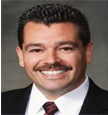
Marcelo Blanco
Faced with overwhelming resident resistance to their proposal to raise water rates, Upland city officials this week abruptly cancelled a public hearing on the matter for which more than 50 residential ratepayers had shown up at City Hall. When a number of those residents sought to provide the city council with their input on the matter, Upland City Manager Bill Manis, at the behest of Mayor Debbie Stone, threatened them with arrest.
City staff had placed on the agenda for the Monday March 12 city council meeting a proposed multi-year water & recycled water service rate schedule. In accordance with the California Government Code, the agenda was posted 72 hours in advance of Monday night’s meeting to give the public adequate notice of the action the council was to potentially take.
Accompanying the action proposal, which was designated on the agenda as item 12B, was city staff’s recommendation that the city council approve a resolution establishing and adopting a multi-year schedule of water and recycled water rates and charges and so-called temporary demand-management surcharge rates as needed.
City officials asserted the proposed action would establish equitable fees, ensure the city meets its debt service obligations relating to financing arrangements previously made for system expansion and improvements, maintenance, rehabilitation and replacement of components, as well as cover operating expenses and pay for a number of unanticipated costs. Many residents, however, are not convinced that the rate increases as proposed are warranted, and they have concerns some of the revenue the city is hoping to capture by the rate increases will be used for purposes unrelated to the city’s water and wastewater recycling systems.
The proposal waiting for approval by the Upland City Council would increase water rates 17 percent effective April 1, 2018; 9 percent effective January 1, 2019, 9 percent January 1, 2010, 5 percent January 1, 2021; and 3 percent January 1, 2022. The charge will go to $1.76 per 100 cubic feet of water unit used in households or businesses up to the first 20 units; thereafter that below-threshold unit rate will increase to $1.91 on January 1, 2019, $2.07 on January 1, 2020; $2.18 on January 1, 2021; and $2.34 on January 1, 2022. Water used beyond the 20 unit threshold and up to 50 units will thereafter cost $2.32 per 100 cubic foot unit beginning April 1, 2018; $2.52 as of January 1, 2019, $2.73 as of January 1, 2020; $2.87 as of January 1, 2021; and $2.96 as of January 1, 2022. Cost on water use beyond 50 units will increase to $2.78 per 100 cubic foot unit as of April 1, 2018; $3.01 on January 1, 2019; $3.26 on January 1, 2020; $3.43 on January 1, 2021; and $3.54 on January 1, 2022.
The fixed bi-monthly charge for those using the system with 5/8s inch pipe, the type used by virtually all of Upland’s domestic water users, is to be $46.90 as of April 1, 2018; $52.25 as of January 1, 2019; $57.85 as of January 1, 2020; $60.80 as of January 1, 2021; and $62.75 as of January 1, 2022.
On January 22, 2018, the city began notifying property owners and tenants within the city by mail that the hearing on the rate increases was to be held this week at the March 12 city council meeting. There was a sizable turnout of residents at the meeting, with dozens prepared to offer their views with regard to the rate increases.
After an executive session behind closed doors in which certain matters were discussed outside the presence of the public including the performance and/or continued status of city manager Bill Manis in his current position, the council reconvened in public. After ceremonial presentations, remembrances, a convocation and the recitation of the Pledge of Allegiance, Mayor Debbie Stone sized up the crowd. Perceiving that the vast majority of those in attendance were in opposition to the rate escalations, Stone, without consulting with the remainder of the council, abruptly chose to cancel the public hearing relating to the rate hikes.
“Before we go any further, based on the inquiries and questions that have arisen since the public hearing for item Number 12B [the water rate hike], I would like to allow the city staff ample time to digest these comments and address concerns that have been expressed by the public,” Stone said, having not yet heard from the public. “As a result, I would like to make a motion to continue this item to the second meeting in April, which I believe makes it April 23.”
At that point, Stone indicated that those who had come to the council chambers that evening would still be allowed an opportunity to provide input on the matter.
“If anyone is here in the public for this, this evening, and had planned to speak and if you’re not able to attend on April 23, you could go ahead and speak to the city council at this time, but first of all I need to see if I can get a second from someone,” Stone said.
A city resident, later identified as Steve Carvalho, approached the public speaker’s podium, seeking to be heard. Stone declared Carvalho out of order, while assuring him that he would be allowed to speak. Councilwoman Janice Elliott suggested that before the rescheduled public hearing and vote by the council on the rate increase proposal is held, the city hold workshops to inform the city’s residents on the need for the rate changes “and why this is being put on the agenda.” Elliot proposed an alternate motion to hold two such workshops and postpone the hearing and vote until April 23. That motion was passed unanimously.
Stone then allowed Carvalho to come forward.
Carvalho noted that as a city resident he had “experienced rate hikes every year. I protest the water rate hike.” He indicated his belief, and that of many of those present, that the city council was going seek, through a loophole, to get around Proposition 218 protections intended to prevent taxes from being levied without those being taxed approving them. Carvalho’s reference was to a specific provision in Proposition 218 which allows public entities to bypasses the taxpayer-approval requirement on taxes by allowing a city to declare that it will impose a new tax or tax/rate increase and then invite those to be taxed to protest. Under that provision, if a majority of those to be subjected to the tax do not lodge protests, then the tax or tax/rate increase is presumed to be favored by a majority of those to be taxed and is deemed to have been approved by the taxpayers. Carvalho proposed an alternative to the council’s intended use of that loophole, saying, “An election should take place. The ballot is the more democratic tool to obtain opinions as opposed to an invitation to make a written protest requiring 51 percent participation. The cost of service should be the only factor involved in my water bill. If the City of Upland has other money problems, they should find another way to deal with it.”
Upon the completion of Carvalho’s comments, city attorney James Markman interjected, “Well, this is not on the agenda, so if 40 other people want to get up and speak to it, it’s no longer appropriate for this time of the agenda.”
“Okay, “ said Stone, indicating she was rescinding her earlier assurance that the council would allow those who had come to the hearing expecting to be heard with regard to the water rate hike to speak their piece.
Markman, nevertheless, reacted to the substance of what Carvalho had said, essentially offering a legalistic defense of proceeding with a “protest vote” rather than a “vote to approve” while suggesting that the city will have met its burden of transparency and responsive governance if the city council gives those in the community interested in weighing in against the rate hike the opportunity to glean information in workshops and use a later hearing to make their protests known.
“I want to respond,” said Markman. “I guess I can respond to a procedural comment. Whoever drafted Prop[osition] 218 took water rates and sewer rates and specified this protest process rather than taking it to an election, and I don’t know if I disagree or agree, but it does seem impossible that there could ever be a 50 percent plus one protest on a water rate that hits every house in town. You’d have to have half the population in the council chambers. So, obviously, I agree with the gentleman [Carvalho] that’s not a practical remedy. The remedy is to have hearings and have people get up and express their views on it.”
Councilwoman Elliott, at that point concerned that the council was going to preclude those members of the public who had come that evening expressly to address the concept and prospect of the water rate hike from being heard, attempted to point out that the council had advertised the consideration of the rate hike as a public hearing. “We do have on the agenda a public hearing and oral communications pertaining to that,” Elliott said. “We’re postponing the vote but we wanted to hear…”
Stone cut her off, saying “We’re postponing the whole item.”
In reaction to what the mayor said, audible protests were made by numerous individuals in the assembled crowd. “That’s not what it says,” one man could be heard saying, in reference to the agenda.
Elliott briefly attempted to persuade Stone and Markman to allow public input as part of the hearing to proceed, but then, cowed by the mayor and city attorney, Elliott desisted.
“So now we’ll continue with oral communications for items that are on the agenda, minus number 14 B or A, excuse me,” Stone said, apparently misreferencing the item she was trying to exclude.
Deputy city clerk Keri Johnson said, “This is the time for any citizen to comment on any item listed on the agenda only. Anyone wishing to address the legislative body is requested to submit a speaker card to the city clerk prior to speaking.” Johnson then called Marjorie Mikels, an Upland resident and attorney whose law office is based in the city, to the podium. Mikels greeted city manager Bill Manis and the council and began, “Water is life and our rates are really high now…”
“Marjorie,” Stone interrupted her, “that item is off the agenda. We won’t be discussing it this evening.” Stone shut off the power to the public speaker’s podium microphone. “Could you please have a seat and we’ll move forward with the next speaker,” Stone said.
The crowd roared, indignantly. “Let her speak” was heard from several members of the crowd.
Mikels stood at the podium, stunned, the sound of the crowd welling behind her.
City manager Manis, whose performance since his contract began on January 1, 2018 was evaluated in the closed session immediately prior to that evening’s public session, noting Mikels was lingering at the speaker’s podium, leapt into the breach at the opportunity to demonstrate his command and support of the council’s authority, threatening Mikels with arrest. “Excuse me, so, we can’t have disruption during the council meeting,” Manis intoned. “It is a misdemeanor. You will be removed from the council chambers if you disrupt the meeting. It’s on the front of the agenda, so I would like to politely request that you please conduct yourself in a quiet manner.”
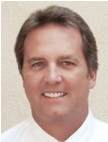
Bill Manis
With the crowd momentarily hushed, Mikels then said in a voice loud enough that her statement, despite the lack of amplification, could be heard, “Exercising First Amendment rights is not a misdemeanor in this state and city and country, so far as I know, Mr. Manis. I’m going to exercise my rights…”
“Excuse me, Ma’am,” Manis said. “Ma’am…”
At that point, acting Upland Police Captain Marcelo Blanco, who was in uniform, approached the podium, and stood within 18 inches of Mikels to her right, making a show of preparing to arrest her, waiting for a signal from Manis to do so.
“We have on the front of the agenda that you’re not to disrupt a public city council meeting,” Manis said.
When Mikels inquired how she was being disruptive, Manis said, “Because you are speaking out of order.”
Audible from the crowd was a male voice “She’s not speaking out of order.”
Manis then sought to justify the mayor shutting off the speaker’s podium microphone by saying “That item is not to be discussed until April 23 and you started out discussing the water item and the mayor politely reminded you that item is not on the agenda tonight now and so I’m just asking you to please respect our policy on disrupting a city council meeting. If you could, please, sit down.”
Mikels, on the verge of being arrested and recognizing discretion to be the better part of valor, returned to where she had been sitting.
Blanco, to ward off what his political masters deemed any further interruptions, used his cell phone to summon four police units to City Hall, redirecting them from their normal patrol rounds, to facilitate the arrests of any others at the meeting who might test the council’s authority by seeking to comment on the proposed water rate increases.
On Wednesday, the Sentinel sought from Manis an explanation as to his rationale for the council’s cancelling at the last minute what turned out to be a well-attended public hearing that had been noticed to the public well in advance and the scheduling for which had been reconfirmed with the required notice 72 hours in advance of the meeting.
“We moved the public hearing date to the second meeting in April, which is April 23,” said Manis. “That item will come back later. I can’t speak to the council’s reason for the postponement except to say it is the council’s intention to bring it back for a hearing then.”
As to whether the city council will be scheduled to make its decision at that point, Manis said there was such a possibility but indicated a vote would not necessarily have to take place. “It is the council’s intention to have the item heard on April 23,” he said.
Queried as to why the council did not utilize the opportunity it had on March 12, with so many members of the public assembled in compliance with the council’s advertisement of that meeting as being the “time and place” for the public to offer input on the rate hikes, to get input from its constituents at that stage, Manis deflected the question. “We are having a couple of workshops where the public will have the opportunity to get information before the public hearing,” he said. “Let me go to my calendar. The first will be on April 2, a Monday, at 6:30 (p.m.) in the council chambers and then again on Saturday April 7 at 9 or 10 in the morning. “
Asked directly if he thought it to be an example of good governance to summon residents to a hearing for the provision of input and informational exchange and to then abruptly cancel the hearing and thereafter threaten those who seek to be heard with arrest, Manis emphasized that the item relating to the water rates issue had been removed from the agenda, abrogating the public hearing. “She was out of order,” Manis said with regard to Mikels. “The item had been taken off the agenda at that point in time.”
Manis characterized the use of Blanco’s presence at the side of the podium as a “polite” way of persuading Mikels to discontinue her remarks and dissuade any of the others at the meeting from speaking with regard to the water rates issue.
Manis suggested that the input the public could provide as of Monday night, given how little is known about the rate hike schedule and why the city deems it necessary, was not worth listening to. “Apparently they [the council] did not feel the public had enough information [regarding the water rate proposal and the rationale for seeking it],” Manis said. He said it was not true that the city council was reluctant to hear the public’s input on the matter. “The city has received comment from the time everyone was notified,” Manis said.
In shutting off the public comment with regard to the water rate increases, Manis said, “The council’s intention was a good one. They did not want this to be rushed. They pushed the item to another meeting. They are trying to be transparent on this. It is appropriate to hold public workshops so we can address whatever questions the residents have.”
Cory Briggs, another attorney based in Upland, said the way the council and Manis had conducted themselves on Monday night is not an appropriate use of civil authority or a way to carry out public business.
“It sounds like the mayor, city manager, and the police need to be arrested for their Brown Act stupidity,” said Briggs, referencing the Ralph M. Brown Act, the State of California’s open public meeting law. “Anyone may talk about any city business during public comment. That is beyond debate.”
-Mark Gutglueck
Federal Jury Awards Family $33.5 Million In Sheriff Deputy’s Shooting Of Son
A federal jury has awarded the family of Nathanael Pickett, Jr. $33.5 million based on its collective conclusion that the 29-year-old man’s civil rights were violated when a San Bernardino County sheriff’s department deputy fatally shot him during a 2015 encounter at the El Rancho Motel in Barstow. The jury verdict repudiated a finding by the district attorney’s office that the homicide was justified.

Nathanael Pickett
Nathanael Pickett II, was shot and killed by San Bernardino County Sheriff’s Deputy Kyle Woods on November 19, 2015. Based on deputy Woods’ statements and his police report, the sheriff’s office maintained the deputy’s use of lethal force was reasonable. Woods, according to a sheriff’s department news release at the time, suffered multiple injuries, including broken bones. Furthermore, according to the sheriff’s department, Pickettt had a history of resisting arrest, having been twice convicted, in 2006 and again in 2011, of “obstructing an executive officer,” such that he merited the use of deadly force against him. In 2012, Pickett was sentenced to three years of conditional and revocable release stemming from the 2006 misdemeanor obstructing an executive officer arrest and was simultaneously sentenced to three years of supervised probation following a no contest plea to two counts of felony obstructing an executive officer and a felony false impersonation charge stemming from a 2011 arrest.
The San Bernardino County District Attorney’s Office released a report and finding in November 2016 which categorized the shooting as justified. Prosecutors said that Woods believed Pickett was under the influence of a controlled substance and that Pickett had resisted arrest and punched the deputy, fracturing his nasal bone and knocking his head on cement. According to the district attorney’s office, Woods and a civilian reserve deputy accompanying him were justified in their action because they believed, mistakenly it would later be determined, that Pickett was trespassing on the El Rancho Motel grounds. Killing Pickett was further justified, according to the district attorney’s office, given the results of a toxicology report showing Pickett had marijuana in his system and a blood-alcohol level of 0.01.
In defending against the suit, the county maintained the shooting was a justified use of deadly force in which the deceased tempted fate through his own behavior. A video of the incident along with eyewitness testimony, however, led the jury to a different conclusion.
Woods and the citizen volunteer were on duty the evening in question when, according to their account, they witnessed at approximately 9:07 p.m., a man, subsequently identified as Pickett, jumping over a fence at the El Rancho Motel in Barstow.

Kyle Woods
When the officers moved to question Pickett, according to the department, he furnished the pair with a “false name and became uncooperative. As the deputy attempted to handcuff the suspect, he attempted to run and a fight between the two broke out. Pickett struck the deputy numerous times in the face and refused to comply with the repeated verbal commands to stop hitting him and move away. The deputy fired his weapon, striking the subject, at which time the assault ceased.”
Nevertheless, witnesses say it was Woods who was punching Pickett rather than the other way around. Nor did video footage captured by a security camera at the El Rancho Motel, where Pickett had been living, bear out the department’s and Woods’ version of events. Woods activated an audio recorder on his uniform belt. At various times during the encounter Pickett can be heard asking Woods, “What’s the problem?” The video depicts Woods talking to Pickett, then Pickett running from the deputy, who pursues Pickett off camera. A few minutes later, Pickett reappears on video, running down the motel corridor and being chased by Woods. Pickett trips and falls. Woods, seen on the video from behind, at that point appears to be pointing his gun at Pickett. Pickett scoots back, away from the approaching deputy, but does not appear to be hitting or in any way striking Woods. A single flash of gunfire briefly flickers and Pickett is then seen prone on the ground. At no point is Pickett seen striking Woods. Woods, however, can be seen punching Pickett repeatedly. At one point, the reserve deputy can be seen assisting Woods.
Nathanael Pickett I, represented by attorney Bob Conaway, originally filed suit against the county, the sheriff’s department and Woods in state court on November 1, 2016 over the death of his son. Pickett’s mother, Dominique Archibald, represented by attorneys Dale Galippo, Sharon Bruner and Jim Terrell, filed suit in U.S. Federal Court in Riverside on May 31, 2016.
A synthesis of the two lawsuits relates that Pickett suffered from an undiagnosed mental illness, most likely schizophrenia or bipolar disorder, while alleging Pickett was subjected to unjustifiably brutal treatment at the hands of Woods, who “unlawfully, improperly and maliciously shot” and then reholstered his gun, and with the reserve deputy punched and kicked Pickett as he lay on the doorstep of death. Woods evinced deliberate indifference to Pickett’s medical needs, according to the suits. Evidence presented by the attorneys for the senior Pickett and his ex-wife showed that the shooting of their son occurred at approximately 9:15-9:16 pm; the paramedics, who were less than two miles away, were notified at 9:20 p.m. and arrived at 9:25 p.m. But when they arrived, the paramedics were “staged out of the area” and given access only after being escorted in, so the fire paramedic unit was not cleared into the area until 9:58 p.m. This represented a “furtherance of the care denial,” according to the suit filed in state court. The suits propounded that the Barstow Fire Protection District was given a delayed notice of the incident while the sheriff’s officers at the scene restricted the paramedics’ access to Pickett, such that when they arrived, Pickett had expired. Conaway presented evidence that Pickett’s body had been moved to a location close to the fence to support a falsified set of scenarios to justify the shooting. Conaway maintained, and the jury apparently concurred, that the version the department finally settled upon was demonstrably a fabrication.
The case went to trial on March 6. After all of the evidence and testimony was presented, the eight-member jury deliberated for less than three hours before unanimously awarding the parents of Nathaniel Harris Pickett Jr. $15.5 million in compensatory damages and $18 million in punitive damages.
The county has indicated it will appeal the verdict and the award.
-Mark Gutglueck
County Sheriff’s Department To Add Two Military Surplus Aircraft To Aviation Fleet
The San Bernardino County Sheriff’s Department is adding two aircraft to its aviation division.
The state and federal government are making, through the California Emergency Management Agency Excess Property Program, a Bell UH-1H Huey helicopter and a Beechcraft C-12 King Air fixed-wing aircraft available to the county for the taking. The board of supervisors on Tuesday voted to accept both.
According to sheriff’s captain Robert O’Brine, “Both aircraft are airworthy, meaning they are able and safe to fly. The UH-1H Huey helicopter (Serial No. 68-16568) would be used to enhance the department’s rescue, medical transport, firefighting, and other public safety efforts throughout the county. The King Air fixed-wing aircraft (Serial No. N121CA/BD-09) would be used for staff and prisoner transportation.”
O’Brine said that the county in 2009 applied to participate in the California Emergency Management Agency 1033 Excess Property Program, which empowers the Secretary of Defense under Section 1033 of the National Defense Authorization Act of 1996 to transfer excess Department of Defense property to local law enforcement agencies for law enforcement purposes. That same year the sheriff’s department submitted an application to obtain up to five flyable UH-1H helicopters through the 1033 Program upon their availability. In March and August of 2014, the county accepted two UH-1H Huey helicopters, and an additional UH-1H Helicopter and one fixed-wing King Air airplane respectively, through the 1033 Program. The sheriff’s department placed two of the helicopters into service and one which is non-flyable is used for spare parts. The department currently utilizes both of these helicopters for rescue, medical transport, firefighting, drug interdiction, rapid response for the department’s Special Weapons Assault Team, evacuations and mass causality incidents.
In December 2017, the sheriff’s department was advised that the California Department of Justice was going to release a UH-1H Huey helicopter and a King Air fixed-wing aircraft back to the U.S. Department of Defense. Both aircraft were airworthy and could have been immediately utilized by the sheriff’s department.
“The county was the first agency considered to receive these aircraft, and official notification of the award was received on February 14, 2018,” O’Brine said. “The aircraft will be flown by existing pilots and no additional staffing is required. The sheriff’s department currently utilizes the military surplus King Air aircraft, accepted by the board of supervisors on August 5, 2014, to transport essential personnel, prisoner transports and for other public safety missions. Due to the size of San Bernardino County, the use of a fixed-wing aircraft is important and saves valuable time during emergency operations or incidents. This aircraft will require engine replacement(s) or overhaul(s) in the next two years at an estimated cost of $750,000 to $1,000,000.” Accordingly, O’Brine said, the department was recommending that the county “accept a King Air aircraft from the Department of Justice, which is in excellent condition and the engines will not need to be replaced for about eight years. Receiving these Department of Justice surplus aircraft will ensure that the sheriff’s department has flyable aircraft and will save approximately $1,000,000 in replacement or overhaul costs, as the military surplus King Air aircraft will be returned to the Department of Defense in approximately two years.”
The sheriff’s department has 13 helicopter pilots and five fixed wing aircraft pilots, and has four volunteers who fly the department’s aircraft. The department currently has six Airbus ASTAR 350/B3 patrol helicopters; three Huey UH-1 helicopters; one Bell 212 helicopter; one Bell 500 helicopter; two King Air fixed wing aircraft; one Commander fixed wing aircraft; and one Cessna Airvan.
The Airbus B3 helicopters are used primarily for patrolling the 20,105 square miles of San Bernardino County and sometimes the outlying areas of Inyo, Kern, Los Angeles and Riverside counties, as well as areas in bordering Nevada and Arizona. They can also be used as rapid response aircraft to wildland fires and search and rescue calls. The Huey UH-1 and Bell 212 helicopters are primarily used as rescue helicopters at higher elevations. Within its confines, San Bernardino County has 10,064-altitude Mt. Baldy, 11,503 foot elevation Mt. San Gorgonio, 10,680-altitude Shields Peak, 11,205 foot Jepson Peak, 10,649 foot high San Bernardino Peak, 8,696 foot altitude Ontario Peak and 8,862 foot high Cucamonga Peak. As the air gets thinner at higher altitudes, the need for a stronger helicopter exists.
If it were a national military force, the San Bernardino County Sheriff’s Department, with its fifteen aircraft, would be tied with the Republic of the Congo and Mozmbique as the 120th and 121st largest air fleets in the world. It would be larger than Mali, the 122nd largest military air fleet with 14 craft, Lithuania, the 123rd largest with 10 craft, Mongolia, the 124th largest with nine aircraft, South Sudan, the 125th largest with nine aircraft, Kyrgystan, the 126th largest with six aircraft, Estonia, the 127th largest with six aircraft, Ivory Coast, the 128th largest with five aircraft, Sierra Leone, the 129th largest with five aircraft, Latvia, the 130th largest with four aircraft, Bhutan, the 131st largest with four aircraft, Central African Republic, the 132nd largest, with four aircraft; and Suriname, the 133rd largest, with three aircraft.
–Mark Gutglueck
Sheriff’s Helicopter Crew Finds Dead Hiker
The lifeless body of a hiker was found Monday morning on Mt. Baldy by a San Bernardino County Sheriff’s Department helicopter crew, two days after a report that he was missing.
Sheriff’s deputies responded to Mt. Baldy around 6 p.m. on Saturday March 10 to a report of a man who left on a hike early that morning and had not returned. Information as to which trailhead the missing hiker, identified as Xiangfeng Ma, 41 of Anaheim, was using was not provided to the search party.
Ma’s vehicle was eventually located at Mt. Baldy and San Antonio Falls roads. Based upon that information, a search party numbering 40 sheriff’s search and rescue team members initiated a search. Bad weather hampered the search and because of cloud conditions and falling rain and snow, a helicopter could not be deployed.
Following a change in the weather Monday morning, a helicopter crew was dispatched to the area. Just after 8:30 a.m., the flight crew spotted foot tracks in the area of Devils Backbone Road and Forest Service Road 3N06D. Crew members traced the tracks down a slope of the mountain and found Ma’s lifeless corpse near a stream.
Sheriff’s Emergency Air Rescue Ship 306 recovered the victim.
Nickel In Effort To Keep Ramos From Claiming 40th For Dems
Republican incumbent 40th District Assemblyman Marc Steinorth’s decision to opt out of seeking reelection this year will not necessarily abandon the post to the Democrats, who will have multimillionaire James Ramos carrying the standard in the June Primary and most likely again in the November run-off.
The GOP is staking its hopes of hanging onto the 40th District on San Bernardino City Councilman Henry Nickel. The district spreads across Rancho Cucamonga, Lytle Creek, Devore, a sparsely inhabited expense across the San Bernardino Mountain foothills, Highland, much of San Bernardino, Loma Linda, Redlands and Mentone.
Ramos, the former chairman of the San Manuel Indian Tribe and San Bernardino County’s Third District supervisor since 2012, represents a formidable candidate. The San Manuel Reservation in the foothills of the San Bernardino Mountains above Highland is host to a casino, the proceeds from which are making members of the tribe richer by the day. It has been reported that as one of the tribe’s leaders, Ramos’ share of the casino take is $18,000 a day – $540,000 per month or $6.57 million per year. Ramos has not been reluctant to use that money to advance his own political candidacy, nor in supporting his political allies. This has turned him into something of a political juggernaut in San Bernardino County. And the 40th District, which lies at the core of what used to be solidly Republican San Bernardino County, was pretty close to evenly divided between the Republicans and Democrats when Steinorth first won there in 2014. But by 2016, the registration advantage in the 40th had shifted to some five percentage points in favor of the Democrats, as the whole of San Bernardino County itself was swinging more and more into the Democratic camp. As of this week, of the 40th Assembly District’s 222,348 registered voters, 89,319 or 40.2 percent are Democrats; 73,210 or 32.9 percent are Republicans; and 48,289 or 21.7 have no party preference; and 5.2 percent are affiliated with minority parties such as the American Independent, Libertarian, Peace and Freedom or Green. While Steinorth has said that his decision to leave the Assembly after just two terms and four years in Sacramento and instead run for Second District County supervisor was driven in the main by his desire to be closer to his family on a daily basis and that he thought he could in 2018 repeat his victory in the face of stronger Democratic registration as he had in 2016, the advantages that have accrued to Ramos – his wealth and the creeping Democratization of the 40th District – have led most political handicappers to conclude that Steinorth was a long shot to remain in the Assembly.
According to Nickel, however, the California Republican Party has concluded there are compelling reasons to not give up the ghost in the 40th and no one should assume that Ramos is a shoo-in. Rather, Nickel declared, Party of Lincoln stalwarts and donors believe there is a realistic pathway for Ramos to be beaten, and that he, Nickel, is the candidate to do so.
“It is a seat we have to hold onto,” Nickel told the Sentinel. “It’s really about making sure we have good representation in Sacramento. Marc (Steinorth) approached me a week or so ago, and then the party leadership contacted me and said they wanted me to run. I talked with my family and my employer to make sure this is the right decision. We do need representation in Sacramento and we need to know we have people speaking for us who have the perception and perspective of what our challenges are here.”
The strength of his candidacy lies, Nickel said, in his basic philosophy being more in tune with what a solid majority of the 40th District’s voters – Republicans, Democrats and unaffiliated ones – believe than that espoused by Ramos.
“I know James well,” Nickel said “He has some ambition and he sees this more or less as a steppingstone. He has aspirations for higher office. I’m not opposed to that, but given the situation in Sacramento, there are problems that will be created in giving the Democrats an even stronger hold than they already have. We need a diversity of ideas in Sacramento. We don’t have to just assume that we have to accept that the rest of California is going to be saddled with the culture that prevails in Sacramento. In the state capital they are out of touch with much of the rest of the state and the Inland Empire in particular. I have known James for many years. I have met him at regional government joint powers meetings and while attending board meetings. He’s a gentleman. I’ve gotten to know him. We have common interests and some shared values. The tribe has an interest in the future of the city [San Bernardino] and they have the hotel and casino projects and we are both working to make those projects as successful. We both want the best for the community. I’m sure he wants to run a clean campaign and doesn’t want to risk getting into the mud and getting dirty. I want to run a clean campaign, as well. I have invited him to sit down for lunch before we tap gloves. At the end of this he will still be a supervisor or I will still be on the council, so we will still have common interests. We want there to be a decent, civilized discussion of public issues. This will be good. I’m looking forward to a debate and discussion that gives voter a real choice in this election.”
Nickel said he was confident of his position and as enthused as he could be going into the political fray. Asked how he figured he could win, Nickel said, “I’m not going to get into what our strategy is going to be. We obviously have our strategy figured out. I have the full leadership of the Republican Party behind me.”
Nickel continued, “This isn’t anything personal. I don’t believe James has a good grasp of what the majority of people have to deal with on a daily basis. It is going to be a real contest. He has advantages in terms of money. In some ways there are weaknesses and liabilities in having that kind of income, which is completely out of step with the majority of the 40th District. People facing everyday problems don’t have the luxury of living in a gated community. The wealthy don’t have to deal with the realities of crime. The culture in Sacramento and the Democratic Party is completely foreign to the way people live their lives here. I don’t own a casino. I don’t own a hotel. People are really struggling. His money and advantages do not align with the lives and the realities of the majority of the constituents in the 40th District.”
Nickel said he believes that in appealing to the voters in the 40th District, he can press the advantage of his philosophy and approach to governance over that of Ramos and the Democratic Party Ramos is affiliated with.
“The gas tax is something we have to get repealed,” said Nickel. “It is hurting working families intensely. It puts an unfair burden on working families, the people who can afford it the least. I am opposed to the gas tax and I support the repeal of Proposition 47 [which reduced certain drug possession felonies to misdemeanors] and Proposition 57 [which allowed prison inmates convicted of nonviolent felony offenses to be considered for early release].”
Nickel admitted his campaign could be blunted if Ramos adopts conservative positions on these issues, and went so far as to say he would not mind if Ramos did just that. “I hope he is independent enough that he won’t be aligning himself with people in the Democratic Party, and he will do the best for the people of the state and the Inland Empire, but to be honest, I am a little concerned about who is backing him. He will not be aligned with the people in this district if he goes against the repeal of the gas tax and he is not aligned with the people if he is in support of propositions 47 and 57. The people in this district support law enforcement. It is not reform to release sex offenders back into the community. San Bernardino County has been the canary in the coal mine with a lot of these liberal experiments. The state is responsible for devastating circumstances in the City of San Bernardino and the region, both of which have had an uptick in crime.”
Nickel said he is prepared to go right down the line in illustrating how the Republican approach to governance is superior to the nostrums offered by the Democrats.
“Take home ownership,” Nickel said. “We have to make home ownership affordable. Sacramento is making home building more complicated and expensive. Democrats say low income housing is the way to go but the reality is building more homes is the way to get people into homes. When you have a regulatory environment that is constantly keeping the cost of building high, nothing is going to change. There won’t be change until we have change in Sacramento.”
Nickel asserted that his track record as a council member in San Bernardino is more impressive than the accomplishments Ramos can boast of as supervisor. Nickel was elected to a partial term on the council in 2014 to replace Chas Kelley, who was forced to resign as a consequence of criminal charges against him. Nickel was elected to a full term in 2015. The City of San Bernardino had declared bankruptcy in 2012, filing for Chapter 9 protection. Nickel, who has served as a member of the city’s Ways and Means, Legislative Review, Audit and Community Development Block Grant committees and as chairman of the Grants Committee, credited himself with having worked with his council colleagues to structure a fiscal recovery for the city. “We have been able to move the needle in San Bernardino, often against tremendous odds,” Nickel said. “It has been hard and it hasn’t always been pretty. We came out of bankruptcy. There have been a number of changes since I came into office, and we together, regardless of the differences in personalities, brought improvement to a city that was seriously in trouble. I see parallels in what is happening in Sacramento. There is intense disagreement between the state and federal government. Irrespective of what you think of the current president, we have to find a way to work with the administration to do what is best for California. The best interest of our state and our citizens is being set aside in favor of the political aspirations of a few politicians interested in their own careers.”
Nickel said, “I have a fairly good sense of what senior citizens, working families, law enforcement, and small businesses are dealing with. There is a lot of dissatisfaction with Sacramento. We need to do the right thing and quit playing politics with people’s lives. The decisions in Sacramento affect people’s lives. We have politicians in Sacramento who no longer understand what people are dealing with. Crime is going up, taxes are going up, small business are leaving the state and jobs are leaving the state. Sacramento is out of control. Politicians should ultimately make decisions that make our lives better, not worse. The decisions by Sacramento are making people’s lives worse.”
Nickel said he is just what the doctor ordered.
“I pride myself on being a good listener,” he said “Many politicians believe they are the boss and we work for them. I work for the people who elected me. They make the decisions and I cast the votes. I want my vote to be reflective of what they want accomplished.”
Nickel was able to jump into the election because the filing period, which was previously set to elapse on March 9, was extended when Steinorth, the incumbent, did not file for reelection. Under California’s elective system, the two top vote-getters in the primary, regardless of party affiliation and even if one receives more than 50 percent, qualify for a run-off in November. In addition to Nickel and Ramos, Libbern Cook, a Democrat, has also qualified as a candidate in the 40th District primary.
–Mark Gutglueck
Colton Taking Another Look At Reducing Council’s Ranks From Seven To Five
The Colton City Council next week will consider restructuring its composition by dispensing with its expansion to seven members effectuated more than two decades ago and returning to being a five member panel.
Last year, a similar proposal was considered, and a public discussion took place among the council members at the April 4, 2017 council meeting. While there was indication at least three members of the council saw some merit in the concept, at the end of the discussion a motion to reduce the number of electoral wards in the city from six to four was opposed by councilman David Toro, Jack Woods, Isaac Suchil and then-councilwoman Summer Zamora Jorrin, while councilman Luis González, councilman Frank Navarro and Mayor Richard DeLaRosa supported it.
Last July, Jorrin resigned, and has been replaced as District Two council member by Ernest Cisneros.
Arguments for and against the reduction in the number of council districts and council members have been made. Named after David Colton, the director of the Central Pacific Railroad who was instrumental in bringing the rail system through Southern California in the 1870s, Colton is the second oldest of San Bernardino County’s current 24 incorporated cities. It has some of the most mature and complete infrastructure among local municipalities, and stands out from practically all of its surrounding cities in that it offers very close to a full line of services, with its own police department, fire department, water and electrical utility divisions, public works department, cemetery division and library. In 1996 Colton privatized its long existing sanitation division.
Colton’s 54,800 population ranks it as the 14th largest of the county’s cities in terms of number of residents and its 16.04 square miles ranks as 19th among the 24 cities in area.
Twenty-two of the county’s 24 cities have city councils composed of five members. Only Colton and San Bernardino have councils with seven members.
An issue those advocating for the reduction in the number of wards in Colton will need to confront is the possible resistance of those council members in place presently who might be concerned that the reduction could result in their removal from the council as a consequence of the consolidation of their districts with others. For Toro, Woods and Suchil, such a consideration may prove defining. All three resisted the reduction last year. González, who was last year and is currently the prime mover toward making the change, is favorably disposed to the concept, as are DeLaRosa and Navarro. A crucial swing vote, therefore, appears to be Cisneros.
Based upon previous public and private statements, the entirety of the council seems intent on keeping the mayor as an at-large elected position. Some San Bernardino County cities elect five council members, and those elected then elevate one from among their ranks to serve as mayor.
-Mark Gutglueck
Bald Eagle Count Confirms 15
Despite the rain and fog, over 150 people came out March 10 for the last winter bald eagle count of the season in San Bernardino National Forest and at two California State Parks. 15 bald eagles were confirmed: 10 adults, three juveniles and the two chicks from the nest in Big Bear.
The bald eagle chicks hatched live on a webcam on March 11 and 12. Chicks grow rapidly and are usually one-foot tall at this age and will be fully grown by week nine, when their first flights may occur. They and their parents can be observed live on a webcam provided by the nonprofit Friends of the Big Bear Valley (to view, select “Big Bear Eagle Cam, Big Bear Lake” at the link). To protect the eagles from disturbance, the area surrounding the nest, which is near Big Bear Lake, is completely closed to all public entry.
As thousands watched the chicks online, 158 participants fanned out across the region counting bald eagles at five lakes. The results:
Big Bear Lake: 2 adults, 2 chicks, and possibly 1 subadult (54 participants)
Lake Arrowhead: 2 adults (17 participants)
Silverwood Lake: 2 adults and 2 subadults (23 participants)
Lake Perris: 2 adults and 1 subadult (59 participants)
Lake Hemet: 2 adult nesting bald eagles (5 participants)
Grace Bernal’s California Style: Tuning In To The Tunic
 I am looking forward to all of the spring fashion trends that will keep us on our toes this spring. Thank the biggest trendsetters for setting the fashionable sneak peek at what’s to come around this spring. The neat thing about fashion trends is that there’s always something for everyone. With the varied fabrics and futuristic shapes, it’s going to look like a man on the moon theme. With that said, let’s tune into the tunic top. The piece is a basic no brainer that can be transformed from day to evening and worn anywhere. How fun! You can wear a tunic as a dress, with leggings, skirts, slacks, and denim. It’s all really basic with the tunic, and make with it what you want. Add booties, sandals, heels, or sneakers to your outfit.
 Enjoy tuning in with tunics this spring and have fun creating your outfit.
“Clothes mean nothing until someone lives in them.” — Marc Jacobs.